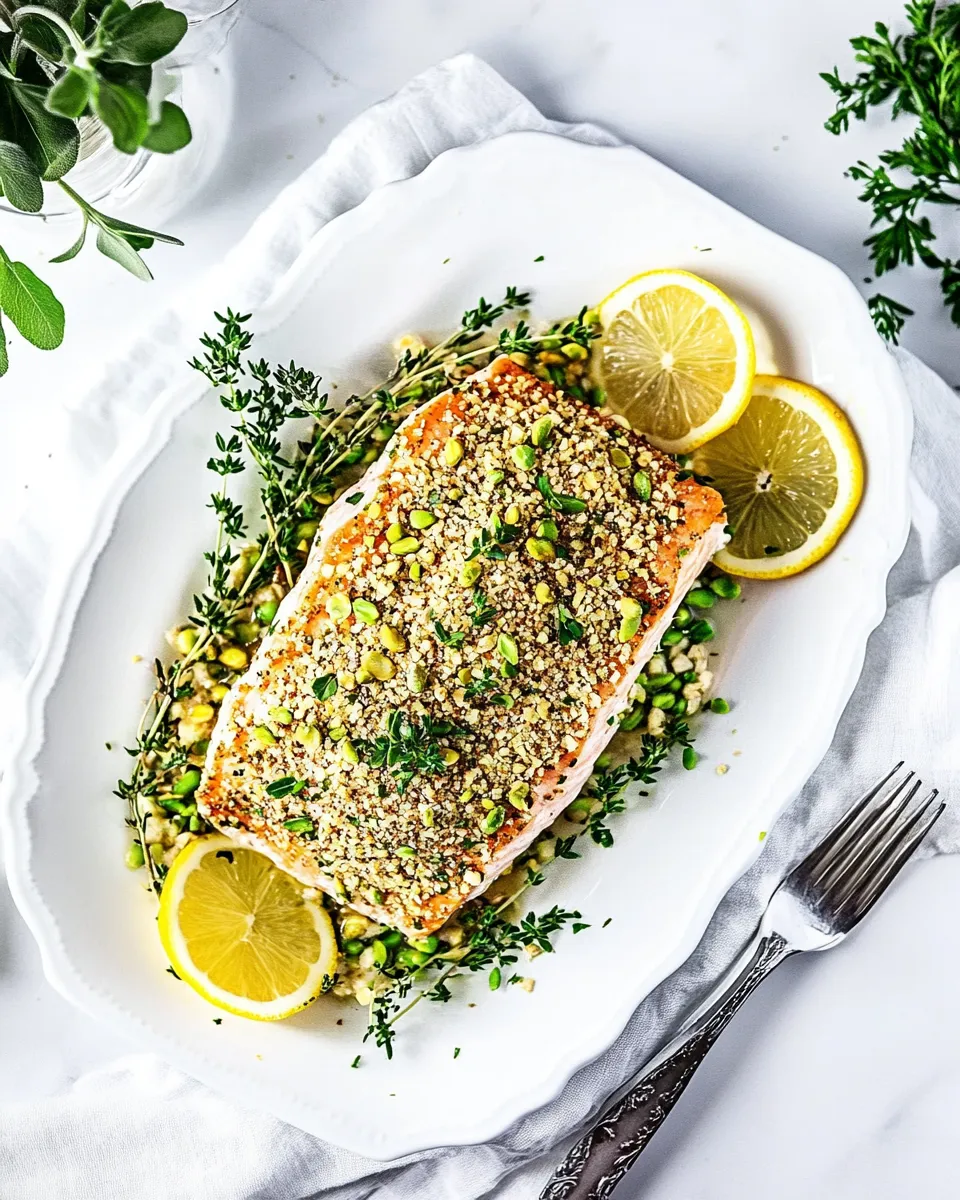
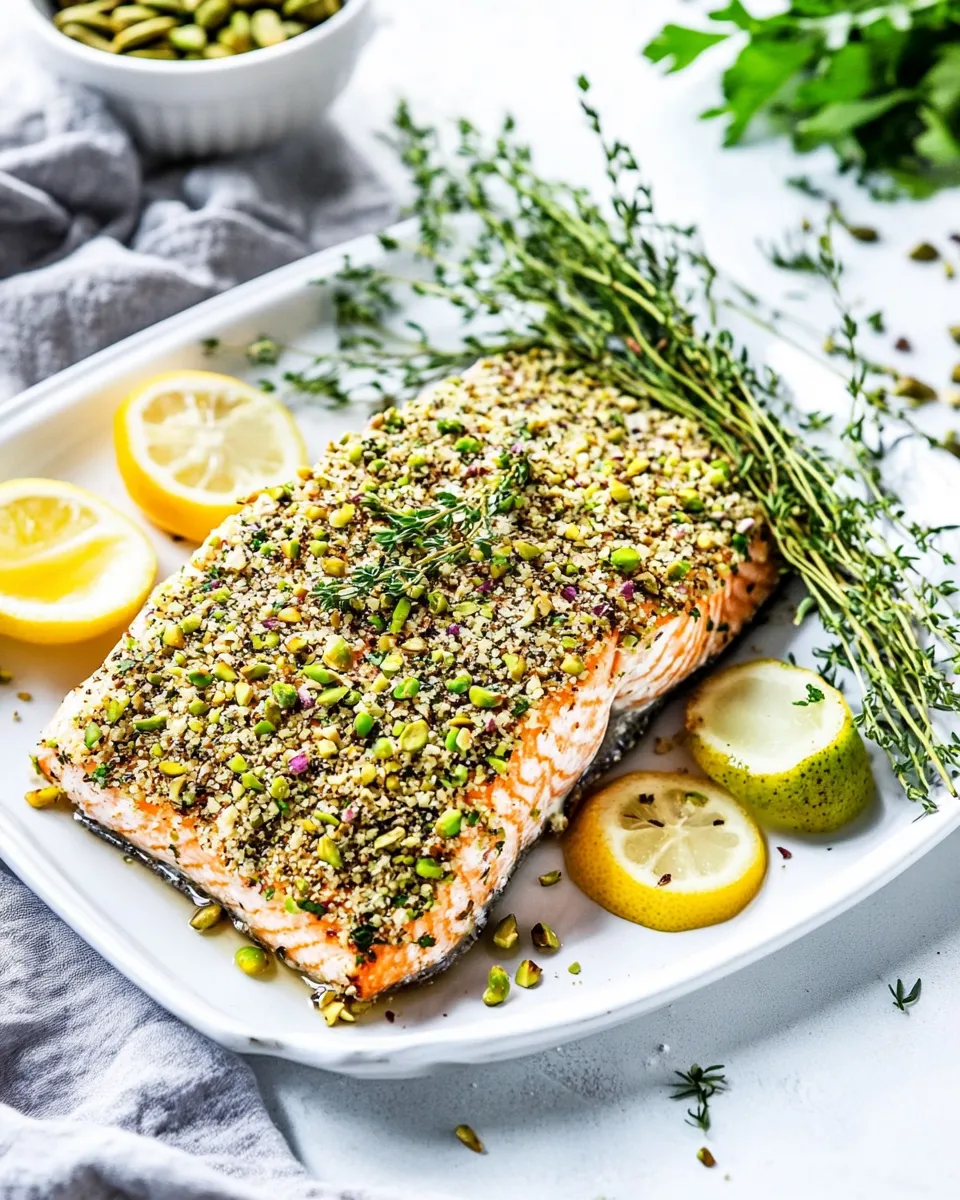
I make this pistachio-crusted salmon whenever I want a weeknight dinner that feels special without the fuss. The crust adds a bright, nutty crunch while the honey-lemon-Dijon glaze keeps the fish glossy and just-tangy. It takes little hands-on time and the oven does the rest.
This recipe works whether you’re cooking for two or hosting a small dinner — scale the fillet size, keep the method the same. Timing is forgiving as long as you keep an eye on the thickness of the fish. The result: tender, flaky salmon with a crunchy, slightly sweet topping that complements the natural richness of the fish.
Below you’ll find a clear ingredient list, step-by-step directions copied from the source, and practical notes: swaps, troubleshooting, storage, and serving ideas. No fluff. Just straightforward guidance so you can nail this the first time.
What You’ll Need
Ingredients
- 1 1/2 pound whole salmon fillet, skin on — the centerpiece: skin on helps hold the fillet together and crisps slightly against the pan.
- Kosher salt and freshly ground black pepper — seasons the fish simply and lets the other flavors shine.
- 1 tablespoon fresh lemon juice — brightens the glaze and cuts the salmon’s richness.
- 2 teaspoons olive oil — adds body to the glaze and helps the crust adhere.
- 2 teaspoons honey — gives a subtle sweetness and helps the pistachio crust brown.
- 1 teaspoon Dijon mustard — gives tang and a little savory backbone to the glaze.
- 1 clove fresh garlic, minced — a small hit of garlic rounds out the glaze.
- 1/4 cup panko — light binder that adds crunch without weighing down the crust.
- 1/3 cup crushed pistachios — the star crunchy element; toast or use raw depending on your preference.
- 2 tablespoons freshly grated Parmesan cheese — lends savory depth and helps the crust set.
- Zest of 1 lemon — concentrated citrus perfume to lift the whole dish.
- Lemon wedges for serving, optional — a fresh squeeze brightens each bite; optional but recommended.
Mastering Pistachio Crusted Baked Salmon: How-To
- Preheat the oven to 400°F (200°C). Line a large rimmed baking sheet with parchment paper.
- Pat the 1 1/2 pound whole salmon fillet (skin on) dry with paper towels and place skin-side down on the prepared baking sheet. Season the top of the salmon with kosher salt and freshly ground black pepper to taste. Set aside.
- In a small bowl, whisk together 1 tablespoon fresh lemon juice, 2 teaspoons olive oil, 2 teaspoons honey, 1 teaspoon Dijon mustard, and 1 clove fresh garlic (minced) until smooth.
- In a separate small bowl, combine 1/4 cup panko, 1/3 cup crushed pistachios, 2 tablespoons freshly grated Parmesan cheese, and the zest of 1 lemon. Mix to distribute evenly.
- Drizzle the lemon-honey mixture evenly over the top of the salmon (some may run off onto the parchment). Use a spoon or brush to spread it over the top surface.
- Sprinkle the pistachio-panko mixture evenly over the sauced top of the salmon, then gently press the mixture down so it adheres to the fish.
- Place the baking sheet on the center oven rack and bake 10 to 14 minutes, depending on the thickness of the fillet, until the salmon flakes easily with a fork and an instant-read thermometer inserted into the thickest part reads 125–130°F.
- Remove the salmon from the oven, let rest 1–2 minutes to set the crust, then serve immediately with lemon wedges, if desired.
Why I Love This Recipe
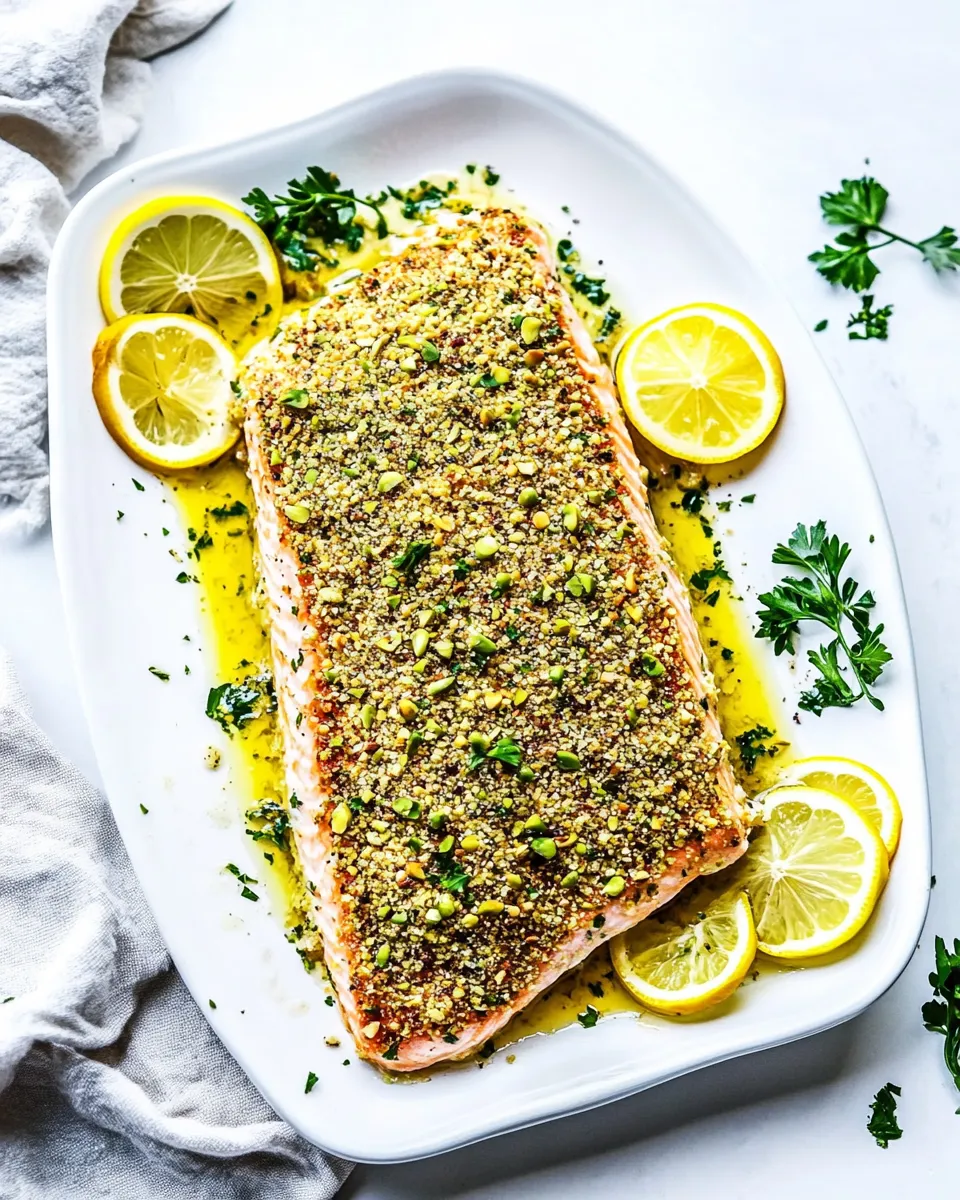
This preparation balances texture and flavor in a direct way. The fish cooks quickly and stays moist because the glaze seals in juices while the oven temperature is high enough to set the crust without drying the interior. Pistachios add a distinct, slightly sweet nuttiness that plays beautifully with lemon and the savory Parmesan. The result is elegant but unpretentious.
It also scales easily. Whether you buy a large fillet or individual portions, the method is the same. The glaze is simple — a few pantry staples — yet it transforms the salmon into something special. That reliability is why I reach for this recipe on busy nights or when guests drop by without notice.
Budget & Availability Swaps
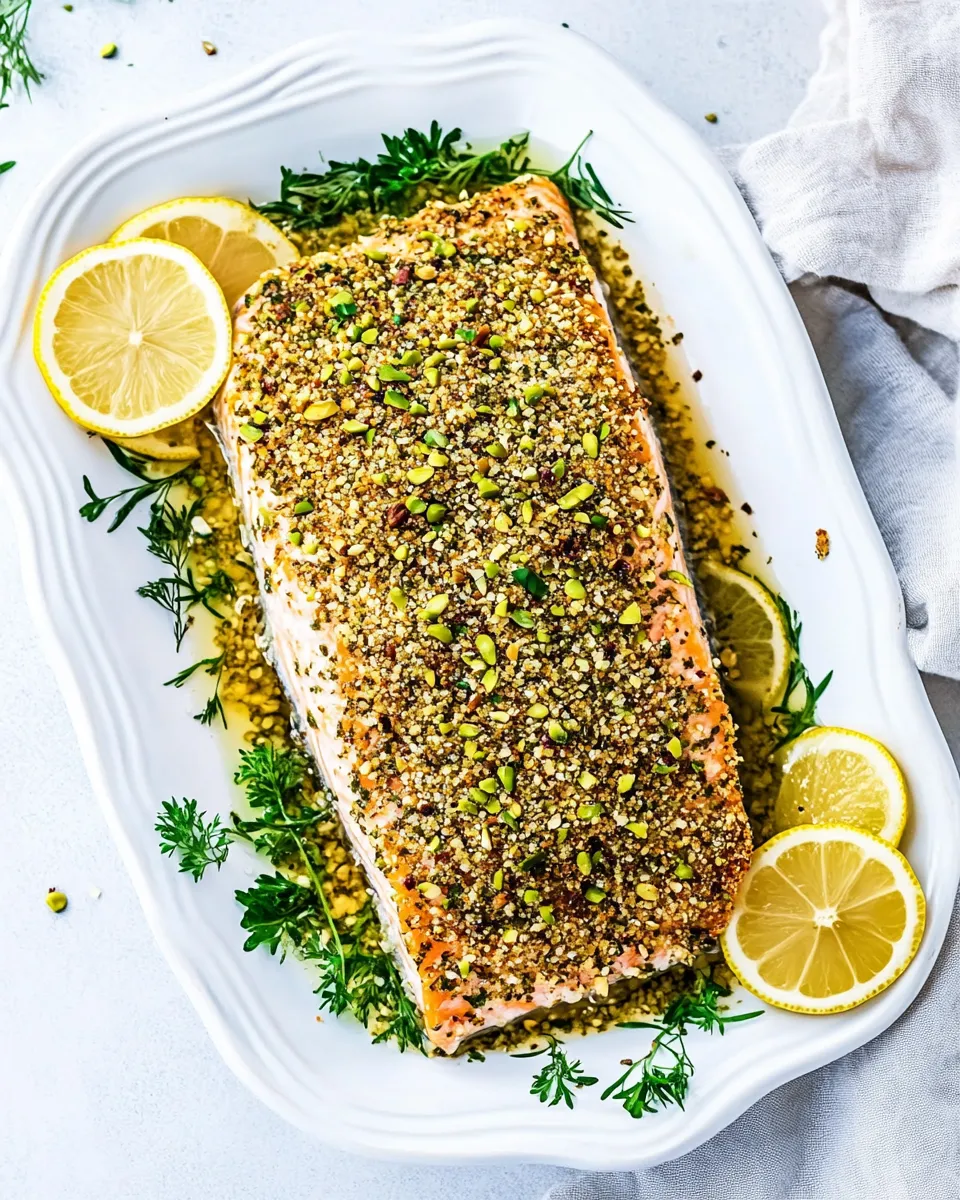
- Pistachios: If pistachios are expensive or hard to find, substitute toasted shelled almonds or walnuts at a 1:1 volume. They provide crunch and toasty flavor, though the color and character will change.
- Parmesan: Use another dry, hard cheese like Pecorino Romano or Asiago if needed. Keep the same 2 tablespoons measurement.
- Panko: If you don’t have panko, use regular breadcrumbs. The texture will be slightly denser; reduce the amount by a tablespoon if you prefer a lighter crust.
- Fresh salmon fillet: If fresh whole fillet isn’t available, use portioned salmon (about 6–8 oz per serving). Baking time will be shorter; check early. Keep the glaze and topping proportions roughly the same for every 1–1.5 pounds total fish.
- Lemon juice: Bottled lemon juice can be used in a pinch, though fresh brightens the glaze more.
Equipment & Tools
- Rimmed baking sheet: Prevents any glaze runoff from making a mess in the oven.
- Parchment paper: Keeps the fish from sticking and makes cleanup fast.
- Instant-read thermometer: The most reliable way to achieve perfect doneness (125–130°F target for medium-rare to medium).
- Two small bowls: One for the glaze, one for the pistachio-panko mixture.
- Spoon or pastry brush: To spread the glaze evenly over the fish.
Troubles You Can Avoid
Overcooking (the most common)
Salmon goes from tender to dry quickly. Use an instant-read thermometer and start checking at the lower end of the bake time. Thicker fillets will need the full 14 minutes; thinner ones may be done in 10. Pull the fish when it reaches 125–130°F — it will continue to carryover cook during the 1–2 minute rest.
Crust sliding off
If the pistachio topping slides off after baking, it usually means the glaze wasn’t spread evenly or the crust wasn’t pressed gently enough to adhere. Press the mixture onto the sauced surface before baking and don’t overload the top with loose crumbs. A thin, even coat adheres better.
Bitter or burnt nuts
Watch pistachios closely if toasting them first; they can go from fragrant to bitter fast. Lightly toast in a dry skillet for 1–2 minutes, stirring constantly, if you prefer a more pronounced nutty flavor. Cool before crushing and combining with panko.
Spring to Winter: Ideas
Spring: Serve with a simple arugula salad dressed with lemon and olive oil, and new potatoes tossed with dill. The peppery greens mirror the lemon in the dish.
Summer: Plate the salmon over a bed of chilled orzo salad with cucumber, cherry tomatoes, and feta. The warm crust contrasts beautifully with cool, bright sides.
Fall: Roast root vegetables glazed with a little maple syrup and tahini on the side. The earthiness of beets or carrots pairs well with the nutty crust.
Winter: Make a broccoli rabe sautéed with garlic and lemon or mashed cauliflower to keep the plate cozy. Add a side of braised lentils for extra heartiness.
Notes on Ingredients
Keep these practical points in mind when you shop and prep.
- Salmon fillet: Look for a bright, firm fillet with moist flesh. Skin-on is recommended for structure and flavor. If your fillet is very thick, allow an extra minute or two of bake time and rely on the thermometer.
- Pistachios: Shelled pistachios are easiest. Crush them roughly — you want varied texture, not a powder. If they’re already salted, reduce added salt on the fish.
- Panko and Parmesan: Panko keeps the crust light. Freshly grated Parmesan melts into the mix and gives savory depth; pre-grated powder won’t behave exactly the same but will work.
- Honey and Dijon: Honey helps the topping brown and adds balance to the mustard’s tang. If you prefer less sweetness, reduce honey by half, but keep some to help with browning and adhesion.
- Lemon zest vs juice: Juice goes in the glaze for acidity. Zest goes into the crust to add concentrated citrus aroma without extra moisture.
Refrigerate, Freeze, Reheat
Refrigerate: Store leftover cooked salmon in an airtight container in the fridge for up to 2 days. The crust will soften but the flavor remains good.
Freeze: I don’t recommend freezing the cooked crusted salmon — nuts and panko lose texture and the topping can become soggy when reheated. If you need to freeze, wrap tightly and use within a month; expect a change in texture.
Reheat: Reheat gently in a 300°F oven for 8–10 minutes, uncovered, until warmed through. A quick 2–3 minute finish under the broiler (watch closely) can help re-crisp the topping. Avoid microwave reheating if possible; it will steam and soften the crust.
Handy Q&A
- Q: Can I make the pistachio crust ahead?
A: Yes. Mix the pistachio, panko, Parmesan, and lemon zest and store in an airtight container for up to 24 hours. Wait to press it onto the sauced fish until just before baking to preserve texture. - Q: What internal temperature should I aim for?
A: Aim for 125–130°F in the thickest part of the fillet for moist, slightly translucent center. If you prefer fully opaque, cook to 140°F but expect drier texture. - Q: Can I use frozen salmon?
A: Yes, but thaw completely in the refrigerator first and pat dry. Excess moisture prevents proper adhesion of the glaze and crust. - Q: Is the recipe spicy?
A: Not usually. Dijon adds tang but not heat. Add a pinch of red pepper flakes to the glaze if you want a hint of heat. - Q: How to get a crispier bottom skin?
A: If you want the skin crisped, you can sear the skin-side down in a hot skillet with a little oil for 2–3 minutes before transferring to the baking sheet and continuing with the recipe. The method above bakes the skin but doesn’t guarantee a crispy bottom.
Bring It Home
This pistachio-crusted baked salmon is reliable, quick, and impressive. The technique emphasizes a short hands-on prep time, a flavorful glaze, and a crunchy top that transforms simple salmon into a dinner that feels celebratory. Keep the tools simple, trust the thermometer, and serve with a bright lemon wedge. You’re ready to serve a dish that guests will ask about — and that you can make on a weeknight.
Pistachio Crusted Baked Salmon
Ingredients
Ingredients
- 1 1/2 poundwhole salmon fillet skin on
- Kosher salt and freshly ground black pepper
- 1 tablespoonfresh lemon juice
- 2 teaspoonsolive oil
- 2 teaspoonshoney
- 1 teaspoonDijon mustard
- 1 clovefresh garlic minced
- 1/4 cuppanko
- 1/3 cupcrushed pistachios
- 2 tablespoonsfreshly grated Parmesan cheese
- Zest of 1 lemon
- Lemon wedgesfor serving optional
Instructions
Instructions
- Preheat the oven to 400°F (200°C). Line a large rimmed baking sheet with parchment paper.
- Pat the 1 1/2 pound whole salmon fillet (skin on) dry with paper towels and place skin-side down on the prepared baking sheet. Season the top of the salmon with kosher salt and freshly ground black pepper to taste. Set aside.
- In a small bowl, whisk together 1 tablespoon fresh lemon juice, 2 teaspoons olive oil, 2 teaspoons honey, 1 teaspoon Dijon mustard, and 1 clove fresh garlic (minced) until smooth.
- In a separate small bowl, combine 1/4 cup panko, 1/3 cup crushed pistachios, 2 tablespoons freshly grated Parmesan cheese, and the zest of 1 lemon. Mix to distribute evenly.
- Drizzle the lemon-honey mixture evenly over the top of the salmon (some may run off onto the parchment). Use a spoon or brush to spread it over the top surface.
- Sprinkle the pistachio-panko mixture evenly over the sauced top of the salmon, then gently press the mixture down so it adheres to the fish.
- Place the baking sheet on the center oven rack and bake 10 to 14 minutes, depending on the thickness of the fillet, until the salmon flakes easily with a fork and an instant-read thermometer inserted into the thickest part reads 125–130°F.
- Remove the salmon from the oven, let rest 1–2 minutes to set the crust, then serve immediately with lemon wedges, if desired.