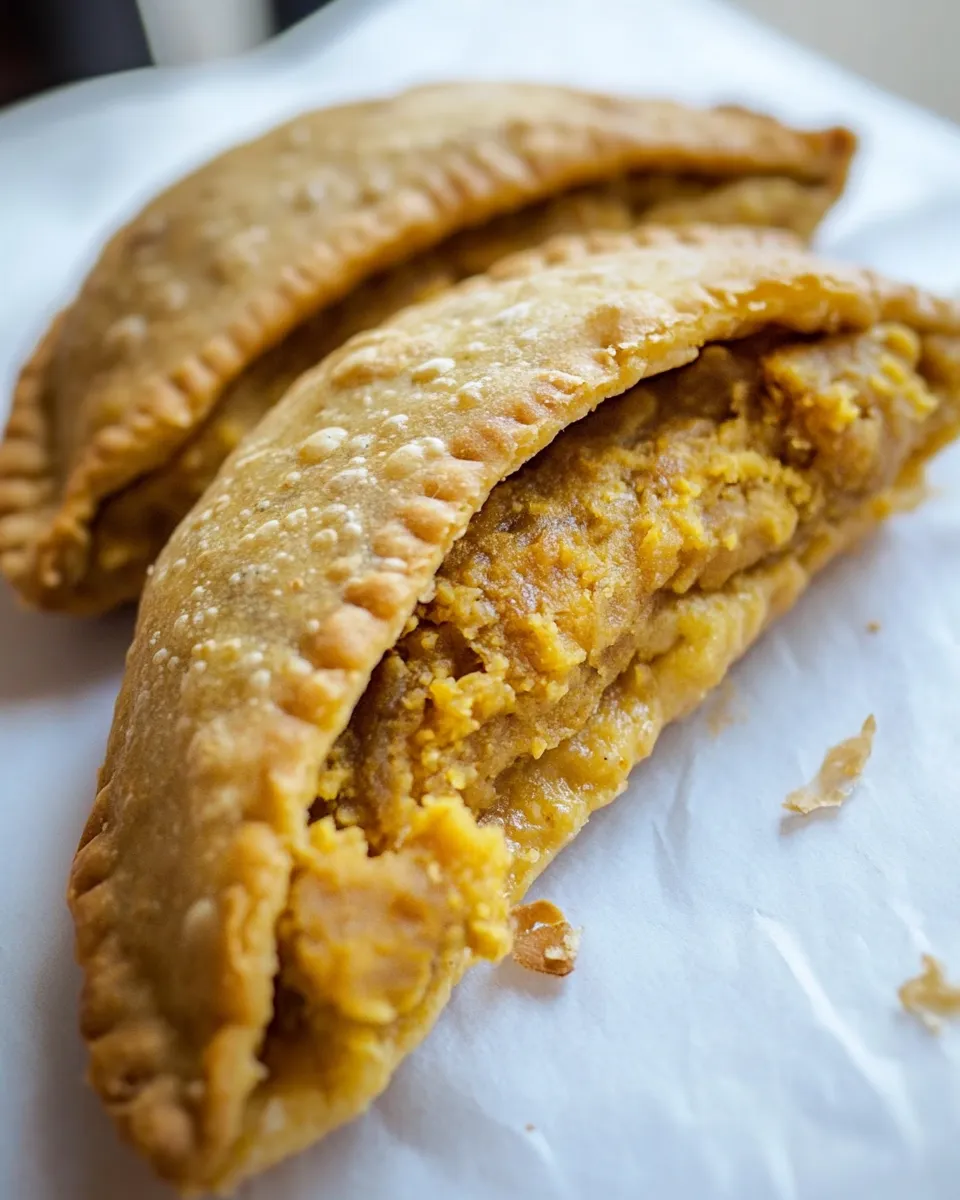
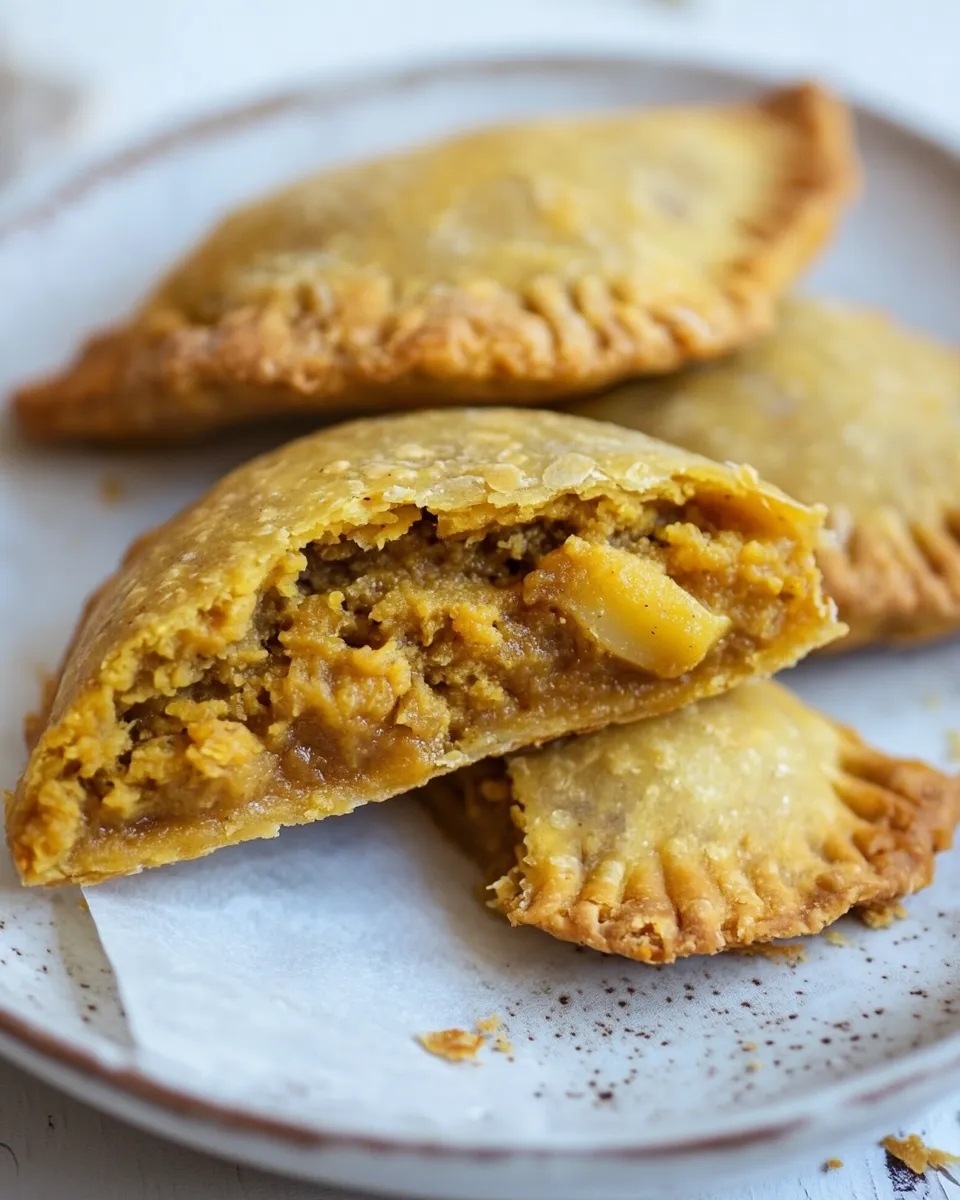
These plantain empanadas are a small recipe with big payoff — sweet, gently spiced plantain filling wrapped in a tender corn-based dough. They bake up golden and slightly crisp on the outside, soft and tender inside. I make them when ripe plantains arrive at the market and when I want something simple, handheld, and satisfying.
No deep frying, no fiddly fillings. The dough is cornflour-forward and quick to bring together; the filling is just two very ripe yellow plantains, a little coconut sugar and cinnamon. The method is forgiving, so this is a great entry point for anyone who wants a naturally gluten-free, dairy-free sweet empanada.
Below you’ll find exactly what I use, the step-by-step guide I follow, and practical tips for avoiding the common mistakes that turn a good batch into a great one. Read once, then feel free to jump straight to the baking — these empanadas are that easy to make consistently.
What We’re Using
Ingredients
- 1 cup cornflour — the base of the dough; gives structure and that cornmeal-like tenderness.
- ½ cup cornmeal — adds texture and body so the dough isn’t too gummy.
- ½ tsp sea salt — balances sweetness and enhances flavor.
- ½ cup warm water — hydrates the dough without cooling it too fast; warm helps bind the flours.
- 1 tbsp coconut oil — used in the dough to add tenderness and a subtle coconut note.
- 2 very ripe yellow plantains, chopped — the heart of the filling; very ripe is important for sweetness and mashability.
- 1 tbsp coconut oil — used to cook the plantains so they soften and caramelize slightly.
- 1 tsp coconut sugar — lifts the plantain sweetness with a mild caramel flavor.
- ½ tsp cinnamon — warms and rounds the filling; a little goes a long way.
Plantain Empanadas: Step-by-Step Guide
- Preheat the oven to 350°F and line a baking sheet with parchment paper.
- In a bowl, combine 1 cup cornflour, ½ cup cornmeal, and ½ tsp sea salt; stir to blend. Make a well in the center, pour in ½ cup warm water and 1 tbsp coconut oil, then stir until the mixture comes together. Form into a tight ball, cover or leave in the bowl, and set aside for 20 minutes.
- While the dough rests, heat the remaining 1 tbsp coconut oil in a small saucepan over medium heat until melted. Add the 2 very ripe yellow plantains (chopped) and cook, stirring, until the plantains are softened and can be mashed. Reduce the heat and mash with a fork or potato masher until smooth. Stir in 1 tsp coconut sugar and ½ tsp cinnamon and mash/stir until evenly combined. Remove from heat and let the filling cool slightly.
- To shape each empanada: place the dough ball on one sheet of parchment paper. Break off a ½ cup–sized piece of dough, place it on the parchment, cover with a second sheet of parchment, and roll the dough flat to about ¼ centimeter thickness. Remove the top sheet.
- Cut rounds from the rolled dough using a circular lid or saucer. Gather any excess dough and return it to the dough ball in the bowl to reuse.
- Spoon about 2 tablespoons of the plantain mash onto the bottom half of each dough round, keeping the filling away from the edges. Use the parchment to fold the dough in half over the filling and press the edges firmly to seal (pinch or crimp with your fingers or a fork).
- Gently transfer each sealed empanada to the prepared baking sheet.
- Bake the empanadas for 25 minutes, until the dough is set and lightly golden. Let cool a few minutes before serving.
Why Plantain Empanadas is Worth Your Time
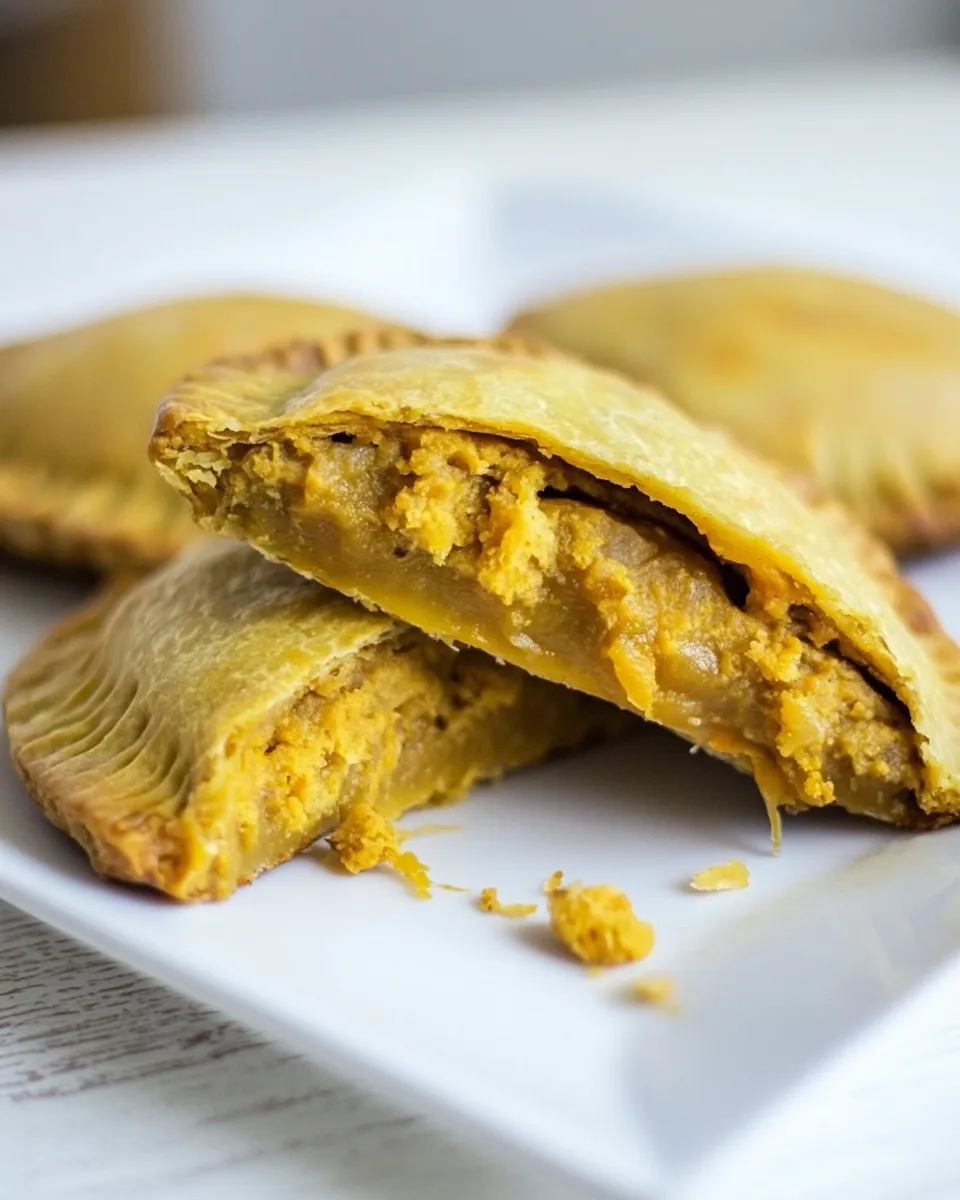
They take ingredients you might already have on hand and turn them into something portable and memorable. The ratio here — cornflour to cornmeal — creates a crust that holds together without feeling heavy. The filling is pure plantain flavor, amplified with a touch of coconut sugar and cinnamon, which plays beautifully against the neutral corn dough.
These empanadas travel well and work as morning pastries, afternoon snacks, or a simple dessert. They’re naturally free of wheat and dairy, so they fit many diets without compromise. Most importantly, they’re quick to assemble once the dough has had its short rest, and they reward patience with a tender, flavorful bite.
Texture-Safe Substitutions
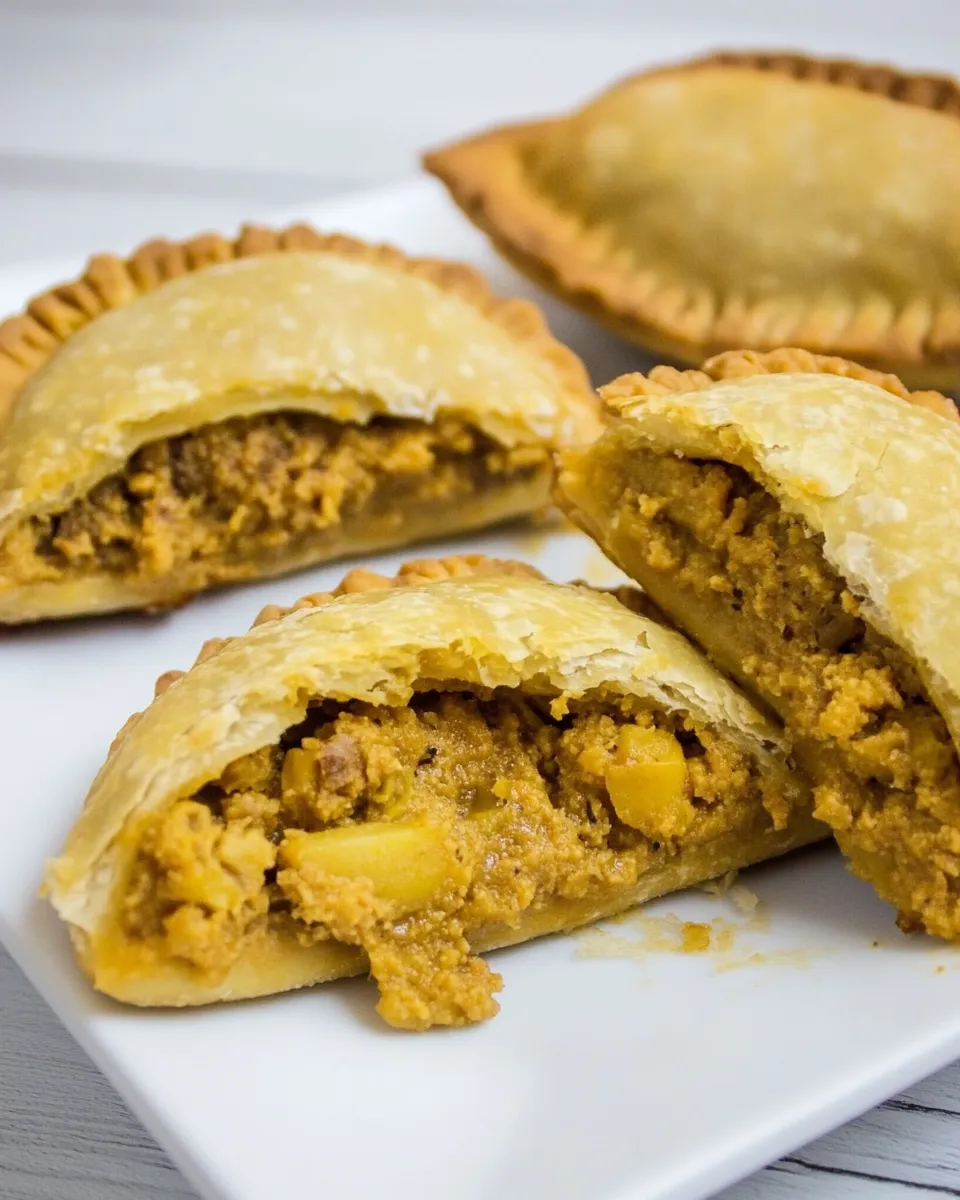
- Cornflour — If cornflour isn’t available, a finely ground masa harina can work, but expect a slightly different corn flavor and a firmer texture. Use an equal amount and test a small piece first.
- Cornmeal — If you prefer a smoother dough, use a finer cornmeal. Coarse cornmeal will give more bite; fine cornmeal keeps the dough tender.
- Coconut oil — Any neutral-flavored oil will work (avocado or light olive oil). Coconut oil adds a subtle roundness; a neutral oil keeps the plantain flavor forward.
- Coconut sugar — Light brown sugar or panela can be used if you need a substitute — same volume — but they will alter the flavor slightly.
Kitchen Gear Checklist
- Baking sheet — for baking the empanadas.
- Parchment paper — prevents sticking and makes rolling and folding easier.
- Mixing bowl — to combine dough ingredients and rest the dough.
- Small saucepan — to soften and mash the plantains.
- Fork or potato masher — for mashing the filling smooth.
- Rolling pin or flat bottle — for rolling the dough thin between sheets of parchment.
- Circular lid or saucer — to cut rounds from the rolled dough.
- Fork — optional, for crimping edges if you prefer a forked seal.
Errors to Dodge
- Using underripe plantains — green plantains are starchy and dry; you need very ripe yellow ones for sweetness and mashability. If the plantain isn’t easily mashable, the filling will be grainy and not sweet enough.
- Skipping the rest — the dough needs 20 minutes to hydrate. Skipping that can make rolling difficult and the final texture uneven.
- Overfilling the rounds — too much filling makes sealing impossible and can cause leaks while baking. Stick to about 2 tablespoons per round.
- Rolling too thick or too thin — aim for roughly ¼ centimeter. Too thin and they’ll break; too thick and the dough will overwhelm the filling.
- Placing empanadas too close together — give them room on the baking sheet so hot air can circulate and the edges dry slightly for a crisper finish.
Make It Year-Round
Plantains are generally available year-round in many grocery stores, but they come into peak sweetness seasonally. When you find very ripe plantains, make a double batch of filling and freeze portions in airtight containers. Thaw in the fridge overnight before assembling.
Leftover assembled empanadas freeze well. Freeze them flat on a tray until solid, then transfer to a freezer bag. Reheat from frozen at 350°F for 15–20 minutes, or until warmed through and the dough is set. For best texture, let frozen empanadas rest at room temperature for 10 minutes before baking to avoid uneven cooking.
Author’s Commentary
I love how this recipe leans on simplicity. Two ripe plantains, two tablespoons of filling, a straightforward corn-based dough — and you have a snack that feels special but doesn’t require a lot of fuss. My first attempts used a skillet and frying, but baking gave me a cleaner, more approachable version that’s easier to scale.
My favorite little ritual with these is to sprinkle a faint pinch of flaky sea salt over warm empanadas right before serving. That contrast — sweet plantain and a tiny hit of salt — makes them feel upscale. If you prefer them very sweet, a light dusting of powdered sugar does the same job in a different direction.
Save It for Later
If you want to keep this recipe handy, save the page or bookmark it in a folder labeled “weekend baking” or “snacks.” I also recommend photographing your first batch and noting any adjustments — for example, if you prefer a slightly tangier filling, try a touch of lime zest the next time and write that down.
For meal prep: make the filling and the dough earlier in the day, store separately in the fridge, and assemble just before baking. That halves your hands-on time when company arrives.
Helpful Q&A
- Q: Can I make the dough ahead of time?
A: Yes. After forming the dough ball, wrap it tightly and refrigerate up to 24 hours. Let it come to room temperature before rolling so it’s pliable. - Q: Are these vegan?
A: Yes. The recipe uses no animal products as written (coconut oil is used for both dough and filling). - Q: Can I fry instead of bake?
A: The recipe is written for baking. If you prefer frying, use a neutral oil and shallow-fry until golden, but expect a slightly different texture and higher oil content. - Q: My filling is watery — what happened?
A: That usually means the plantains were overripe and releasing too much liquid or the pan was not hot enough to evaporate moisture. Cook a little longer to reduce moisture, or cool the filling thoroughly before filling the dough rounds.
Bring It to the Table
Serve warm. They’re delightful plain, but you can pair them with a small pot of coconut yogurt for dipping, a drizzle of caramel, or a scoop of vanilla ice cream for dessert. For breakfast, a smear of nut butter on the side works nicely.
These empanadas also travel well for picnics and pack lunches. Arrange them on a platter with fresh fruit and a few savory bites for balance. The presentation is simple: a stack of warm empanadas, a small bowl of dip, and a scattering of fresh herbs or a pinch of flaky salt to finish.

Plantain Empanadas
Ingredients
Ingredients
- 1 cupcornflour
- 1/2 cupcornmeal
- 1/2 tspsea salt
- 1/2 cupwarm water
- 1 tbspcoconut oil
- 2 very ripe yellow plantains chopped
- 1 tbspcoconut oil
- 1 tspcoconut sugar
- 1/2 tspcinnamon
Instructions
Instructions
- Preheat the oven to 350°F and line a baking sheet with parchment paper.
- In a bowl, combine 1 cup cornflour, ½ cup cornmeal, and ½ tsp sea salt; stir to blend. Make a well in the center, pour in ½ cup warm water and 1 tbsp coconut oil, then stir until the mixture comes together. Form into a tight ball, cover or leave in the bowl, and set aside for 20 minutes.
- While the dough rests, heat the remaining 1 tbsp coconut oil in a small saucepan over medium heat until melted. Add the 2 very ripe yellow plantains (chopped) and cook, stirring, until the plantains are softened and can be mashed. Reduce the heat and mash with a fork or potato masher until smooth. Stir in 1 tsp coconut sugar and ½ tsp cinnamon and mash/stir until evenly combined. Remove from heat and let the filling cool slightly.
- To shape each empanada: place the dough ball on one sheet of parchment paper. Break off a ½ cup–sized piece of dough, place it on the parchment, cover with a second sheet of parchment, and roll the dough flat to about ¼ centimeter thickness. Remove the top sheet.
- Cut rounds from the rolled dough using a circular lid or saucer. Gather any excess dough and return it to the dough ball in the bowl to reuse.
- Spoon about 2 tablespoons of the plantain mash onto the bottom half of each dough round, keeping the filling away from the edges. Use the parchment to fold the dough in half over the filling and press the edges firmly to seal (pinch or crimp with your fingers or a fork).
- Gently transfer each sealed empanada to the prepared baking sheet.
- Bake the empanadas for 25 minutes, until the dough is set and lightly golden. Let cool a few minutes before serving.
Equipment
- Oven
- Baking Sheet
- Parchment Paper
- Small Saucepan
- Fork or Potato Masher
- Rolling Pin
- circular lid or saucer