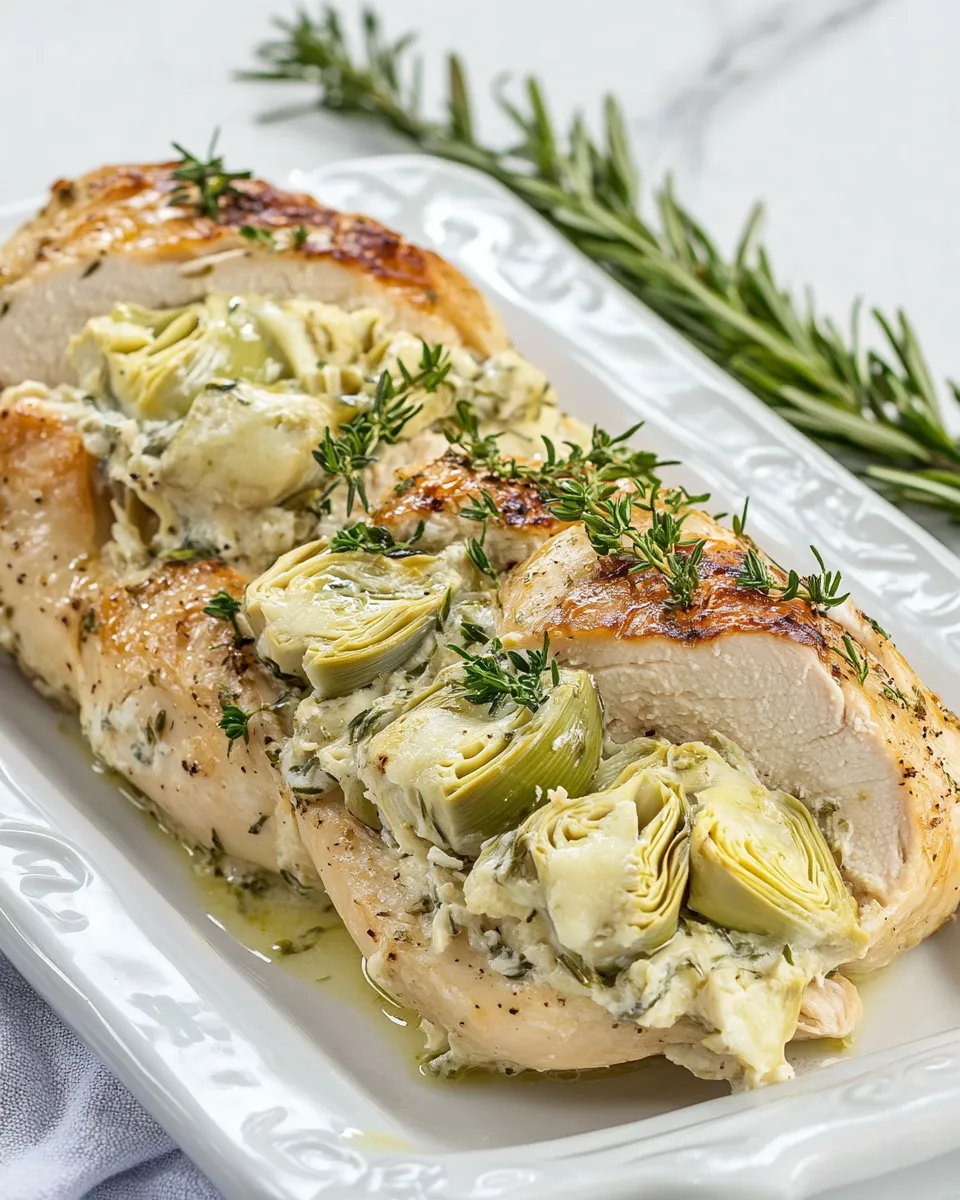
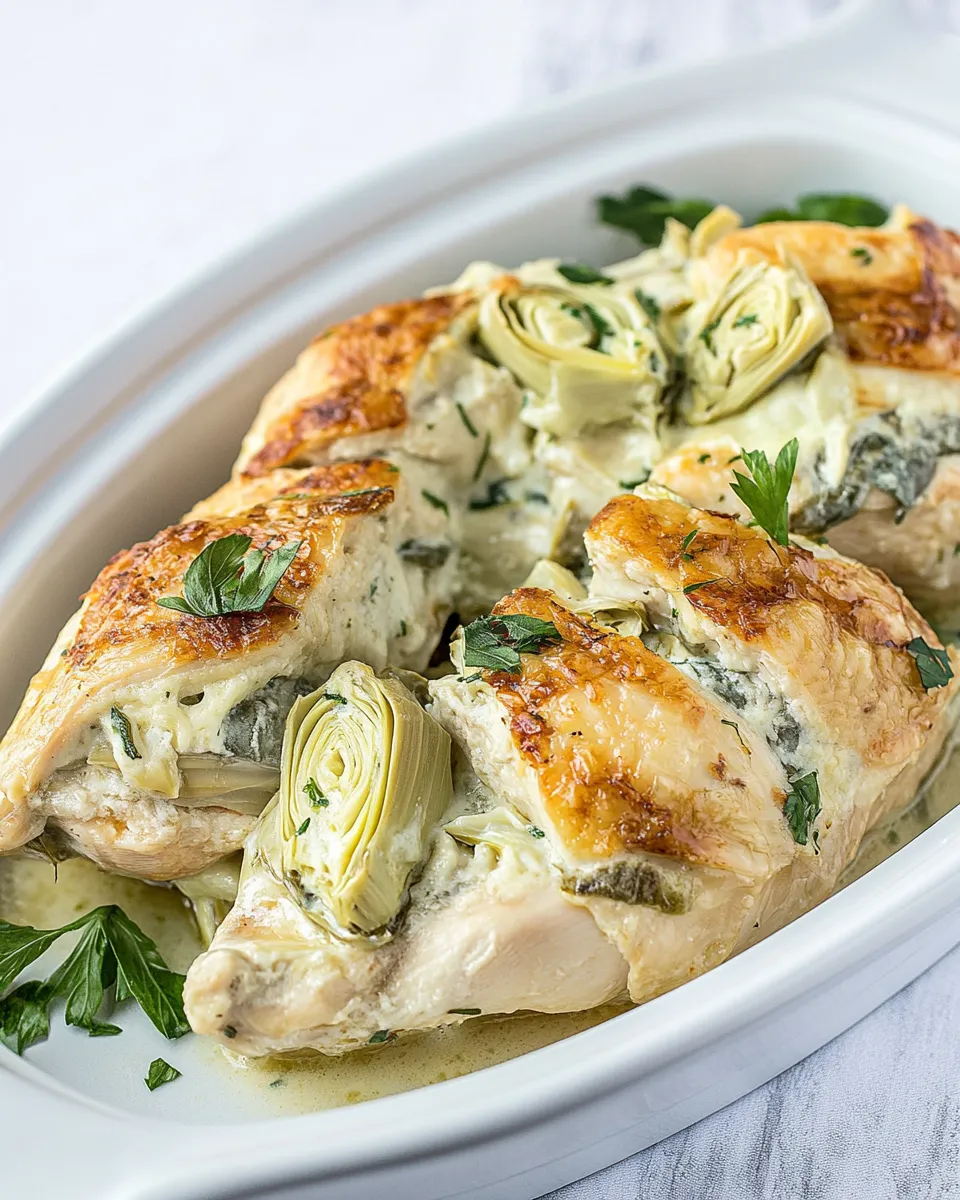
I test recipes until they behave. This one started as a simple weeknight plan and turned into my go-to when I want dinner that looks thoughtful but doesn’t demand a babysitter. Bright lemon, tender artichokes and tangy crumbled goat cheese tuck into a chicken pocket that sears up golden and stays juicy. The pan sauce is quick — it ties everything together without fuss.
If you’re juggling a busy evening, this recipe gives clear timing and predictable results. It’s straightforward to scale for a family or to make ahead for a dinner party. Read through the steps once, gather the few tools called for, and you’ll have a tidy, flavorful main that pairs well with simple sides.
What’s in the Bowl
Ingredients
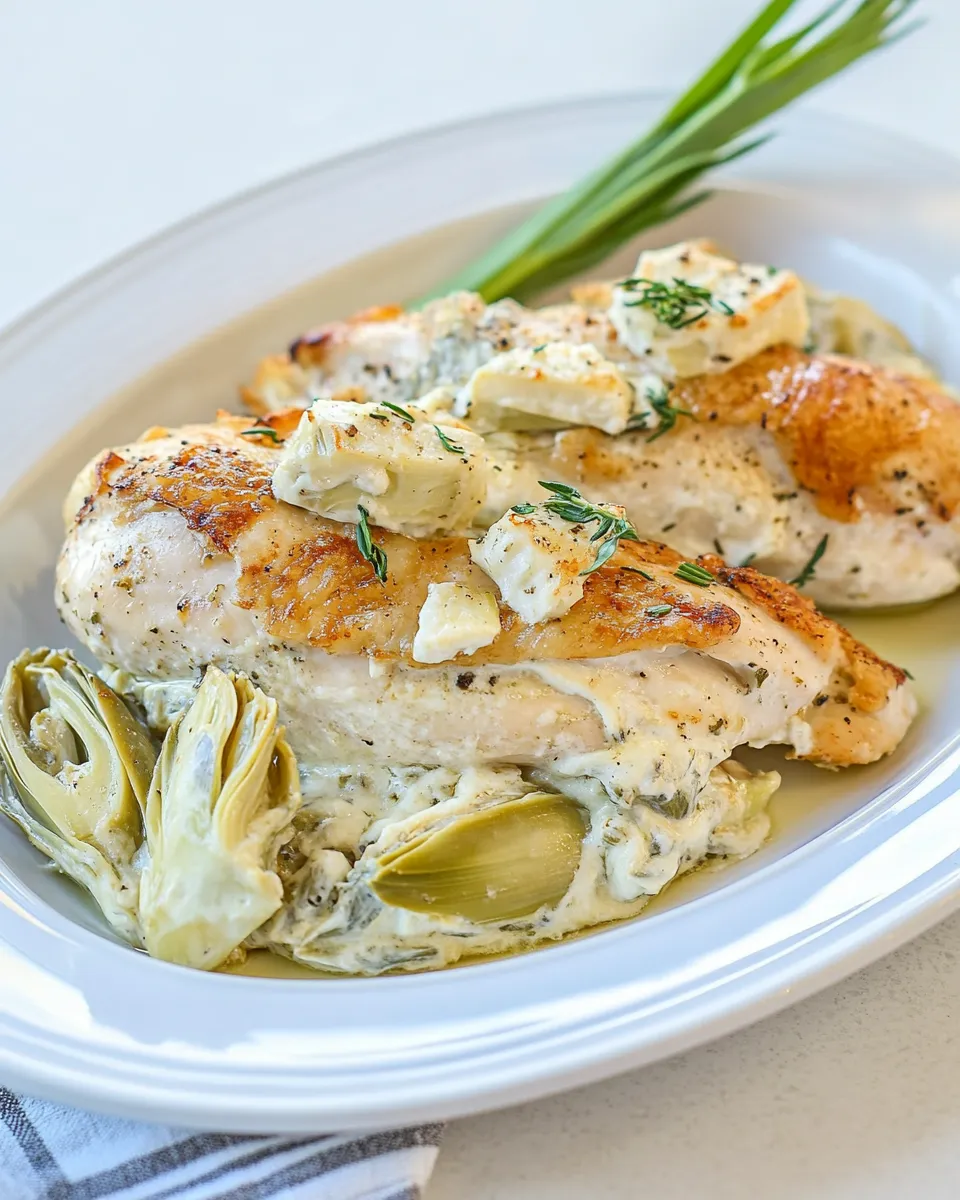
- One 14-ounce can artichoke hearts — the base of the filling; drain and reserve the liquid for the pan sauce.
- ½ cup (2 ounces) crumbled goat or feta cheese — adds tang and creaminess; either works, goat gives a slightly softer tang.
- ¼ cup chopped fresh chives, divided — bright, oniony notes; some go into the filling, some finish the dish.
- 1½ teaspoons chopped fresh thyme, divided — earthy herb lift; split between filling and sauce for balance.
- 1½ teaspoons grated lemon zest, divided — concentrated lemon flavor; a little in the filling, a little in the sauce keeps it fresh.
- Eight 6-ounce skinned, boned chicken breast halves — each gets a pocket for the stuffing; dry them well for a good sear.
- ¼ teaspoon freshly ground black pepper — simple seasoning for the exterior before searing.
- 2 teaspoons extra virgin olive oil, divided — for searing; use half for the first batch and the rest for the second.
- 1 teaspoon cornstarch — thickens the pan sauce quickly without cloudiness.
- 2 tablespoons freshly squeezed lemon juice — brings acidity to the sauce and lifts the whole dish.
Step-by-Step: Artichoke and Goat Cheese Stuffed Chicken
- Drain the 14-ounce can of artichoke hearts in a colander set over a bowl, reserving the liquid. Coarsely chop the artichoke hearts.
- In a medium bowl, combine the chopped artichokes, 1/2 cup crumbled goat or feta cheese, 2 tablespoons chopped fresh chives, 1 teaspoon chopped fresh thyme, and 1 teaspoon grated lemon zest. Stir until well mixed.
- Pat the eight 6-ounce skinned, boned chicken breast halves dry. Cut a horizontal slit through the thickest portion of each breast to form a pocket, taking care not to cut all the way through.
- Stuff about 1/4 cup of the artichoke mixture into each chicken pocket. Press the opening closed and sprinkle each breast with 1/4 teaspoon freshly ground black pepper.
- Heat 1 teaspoon extra virgin olive oil in a large skillet over medium-high heat. Add 4 stuffed chicken breasts (do not crowd the pan) and cook about 6 minutes per side, until golden and cooked through (internal temperature 165°F) or until juices run clear. Transfer the cooked chicken to a plate and keep warm. Repeat with the remaining 1 teaspoon oil and the remaining 4 chicken breasts.
- Return the skillet (with any browned bits) to medium heat. Add the reserved artichoke liquid, the remaining 1/2 teaspoon chopped fresh thyme, and the remaining 1/2 teaspoon grated lemon zest. Bring to a simmer, scraping up any browned bits from the pan.
- In a small bowl, whisk together 1 teaspoon cornstarch and 2 tablespoons freshly squeezed lemon juice until smooth. Stir the cornstarch mixture into the skillet. Cover and simmer for about 2 minutes, stirring once, until the sauce thickens and is heated through.
- Spoon the sauce over the stuffed chicken breasts, then sprinkle the remaining 2 tablespoons chopped fresh chives over the top. Serve immediately.
Why This Artichoke and Goat Cheese Stuffed Chicken Stands Out
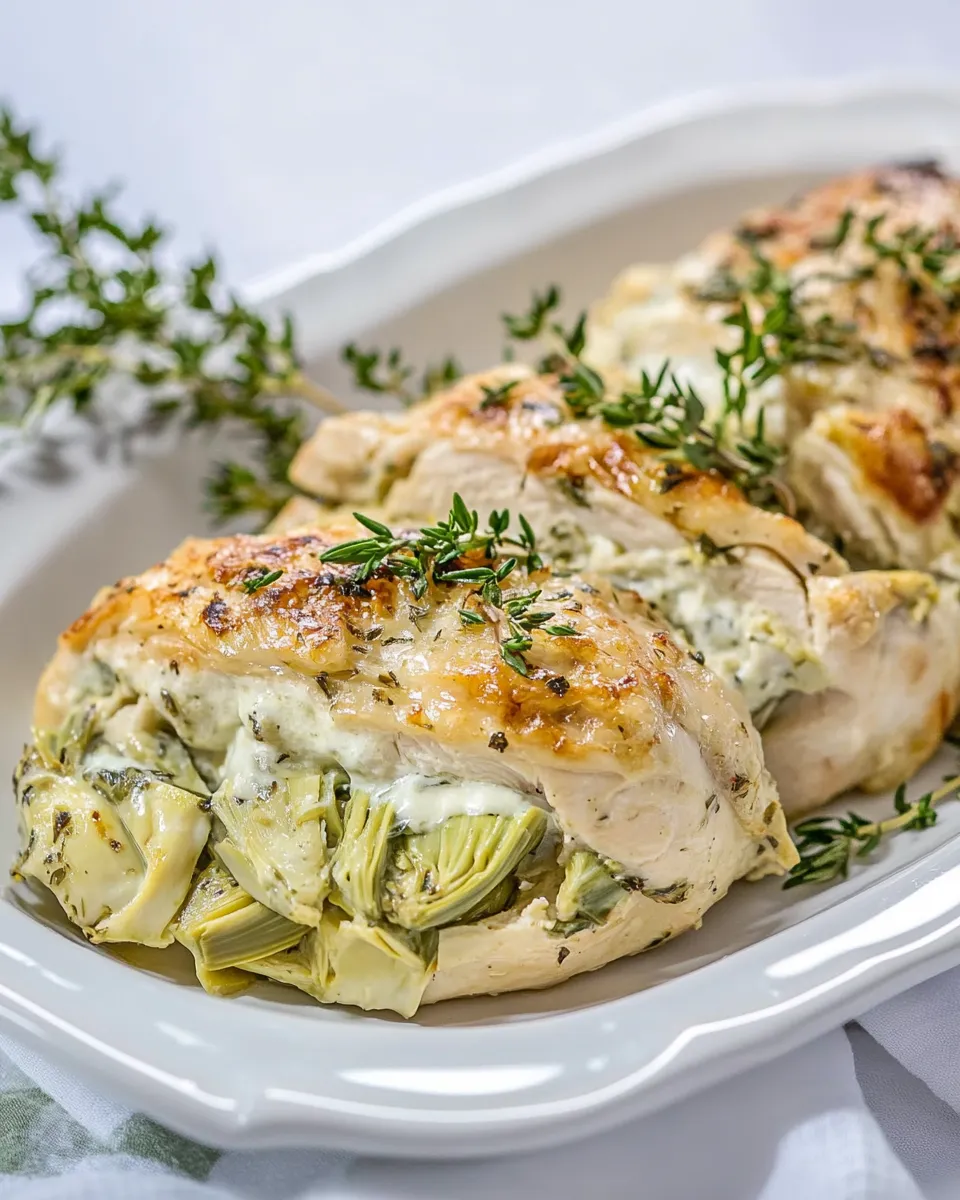
There are a few clear reasons this dish earns a place in a regular rotation. First, the filling is concentrated flavor — artichokes give body, goat cheese adds richness, chives and lemon zest keep it lively. Second, the technique is forgiving: the pocket method creates juicy meat by holding moisture and the sear locks in texture.
The pan sauce is intentionally modest. It uses the reserved artichoke liquid plus lemon and cornstarch to become glossy and bright without overpowering the breasts. That keeps the stuffed interior as the star rather than burying it under a heavy sauce.
Swap Guide
- Cheese flexibility — the recipe already allows goat or feta; either delivers tang and creaminess. Stick to one of those to keep texture and salt levels predictable.
- Fresh herbs — the recipe relies on chives and thyme. If you need to simplify, use all of one herb from those two that you have on hand rather than adding new herbs.
- Oil and pan — the method needs a hot pan and a neutral, high-smoke-point fat. The recipe calls for extra virgin olive oil; if you prefer a different cooking fat you already own, use your usual pan-searing choice.
- Artichokes — the instructions assume canned artichoke hearts with reserved liquid. If you must change format, plan for a similar volume and save any cooking liquid available to maintain sauce balance.
Gear Up: What to Grab
- Large skillet — a heavy-bottomed skillet that holds four breasts without crowding is essential for a clean sear.
- Colander and small bowl — one to drain and reserve artichoke liquid, the other to mix cornstarch and lemon.
- Sharp knife — for making the pocket in each chicken breast safely and evenly.
- Instant-read thermometer — helpful to check for 165°F and avoid overcooking; reliable shortens guesswork.
- Mixing bowl and spoon — for composing the filling so it’s easy to scoop into each pocket.
Avoid These Mistakes
- Don’t skip drying the chicken — moisture on the surface steams the meat, preventing a good brown crust. Pat each breast thoroughly before cutting pockets.
- Don’t overstuff — the recipe gives about 1/4 cup per breast. Too much filling can split the pocket or prevent even cooking.
- Don’t crowd the pan — sear in batches as instructed. Crowding drops temperature and yields a pale, uneven sear.
- Don’t scatter the artichoke liquid — reserve it in step 1 and bring it back into the skillet; it’s the base for the sauce and concentrates the flavor from the can.
- Don’t skip the simmer — the cornstarch needs about two minutes to activate and thicken the sauce properly; skip that and the sauce will stay thin.
Year-Round Variations
Keep the core method and adjust only what’s in your pantry. In warmer months focus on parallel fresh elements like a lemony green salad; in colder months serve this with something hearty to absorb sauce. The stuffed breasts themselves don’t need seasonal ingredient swaps to deliver seasonal feeling — change the sides and plating instead.
For a simpler weeknight plate, slice the breasts and serve over grains or roasted potatoes that pick up the pan sauce. For company, leave breasts whole and arrange on a platter with the sauce spooned over; the presentation feels composed but requires little extra effort.
Notes on Ingredients
Each ingredient has a clear job in the recipe. The artichoke hearts provide texture and a slightly nutty, vegetal base for the filling. The goat or feta contributes creamy tang; goat tends to be softer and mellower, while feta is crisper and saltier. Chives add a mild onion note without overpowering, and fresh thyme brings earthy, savory depth. Lemon zest and juice supply bright, citrusy lift — the zest in the filling gives aromatic brightness, and the juice in the sauce balances richness.
The reserved artichoke liquid is a calculated flavor move: it keeps the pan sauce rooted in the same flavor profile as the filling, which makes the dish cohesive. Cornstarch is used instead of a roux so you can finish the sauce quickly and keep it clear and glossy.
How to Store & Reheat
Store cooled leftovers in an airtight container in the refrigerator for up to 3 days. Keep the sauce with the chicken at first if you plan to reheat for a single portion; if storing multiple portions separately, spoon a little sauce over each breast so reheating is even.
Reheat gently: cover and warm in a 325°F oven until heated through, about 10–15 minutes depending on thickness, or reheat covered in a skillet over low heat until warmed. If using a microwave, heat in short bursts at medium power to avoid drying the chicken; add a splash of water or reserved sauce to maintain moisture.
Artichoke and Goat Cheese Stuffed Chicken FAQs
Can I prepare the filling ahead of time? Yes. The filling can be mixed and refrigerated up to 24 hours before stuffing. Keep it covered and cold; bring it back briefly to room temperature before stuffing if the cheese firms up in the fridge so it’s easier to portion.
What if my chicken breasts are very uneven in thickness? Pound them lightly between plastic wrap to even thickness before cutting the pocket so they cook evenly and you get consistent stuffing capacity.
Can I use frozen chicken? Only if fully thawed. The instructions assume fresh or thawed breasts so you can form pockets and get an even sear.
How do I know when the chicken is done? Use an instant-read thermometer in the thickest part of the breast; the safe internal temperature is 165°F. Look for clear juices and a firm but still springy texture.
Bring It Home
This Artichoke and Goat Cheese Stuffed Chicken hits practical marks: it’s flavorful, predictable, and fast enough for a weeknight while pretty enough for guests. The recipe balances bright citrus, herbal notes, and creamy tang with a straightforward technique. Follow the steps, watch the pan temperature, and you’ll end up with juicy breasts and a quick, satin sauce to spoon over the top. Serve it with a simple side and call it a reliably good meal.
Artichoke and Goat Cheese Stuffed Chicken
Ingredients
Ingredients
- One14-ounce canartichoke hearts
- 1/2 cup 2-ouncescrumbled goat or feta cheese
- 1/4 cupchopped fresh chives divided
- 1 1/2 teaspoonschopped fresh thyme divided
- 1 1/2 teaspoonsgrated lemon zest divided
- Eight6-ounceskinned boned chicken breast halves
- 1/4 teaspoonfreshly ground black pepper
- 2 teaspoonsextra virgin olive oil divided
- 1 teaspooncornstarch
- 2 tablespoonsfreshly squeezed lemon juice
Instructions
Instructions
- Drain the 14-ounce can of artichoke hearts in a colander set over a bowl, reserving the liquid. Coarsely chop the artichoke hearts.
- In a medium bowl, combine the chopped artichokes, 1/2 cup crumbled goat or feta cheese, 2 tablespoons chopped fresh chives, 1 teaspoon chopped fresh thyme, and 1 teaspoon grated lemon zest. Stir until well mixed.
- Pat the eight 6-ounce skinned, boned chicken breast halves dry. Cut a horizontal slit through the thickest portion of each breast to form a pocket, taking care not to cut all the way through.
- Stuff about 1/4 cup of the artichoke mixture into each chicken pocket. Press the opening closed and sprinkle each breast with 1/4 teaspoon freshly ground black pepper.
- Heat 1 teaspoon extra virgin olive oil in a large skillet over medium-high heat. Add 4 stuffed chicken breasts (do not crowd the pan) and cook about 6 minutes per side, until golden and cooked through (internal temperature 165°F) or until juices run clear. Transfer the cooked chicken to a plate and keep warm. Repeat with the remaining 1 teaspoon oil and the remaining 4 chicken breasts.
- Return the skillet (with any browned bits) to medium heat. Add the reserved artichoke liquid, the remaining 1/2 teaspoon chopped fresh thyme, and the remaining 1/2 teaspoon grated lemon zest. Bring to a simmer, scraping up any browned bits from the pan.
- In a small bowl, whisk together 1 teaspoon cornstarch and 2 tablespoons freshly squeezed lemon juice until smooth. Stir the cornstarch mixture into the skillet. Cover and simmer for about 2 minutes, stirring once, until the sauce thickens and is heated through.
- Spoon the sauce over the stuffed chicken breasts, then sprinkle the remaining 2 tablespoons chopped fresh chives over the top. Serve immediately.
Equipment
- Colander
- Medium Bowl
- Small Bowl
- Large Skillet
- Plate