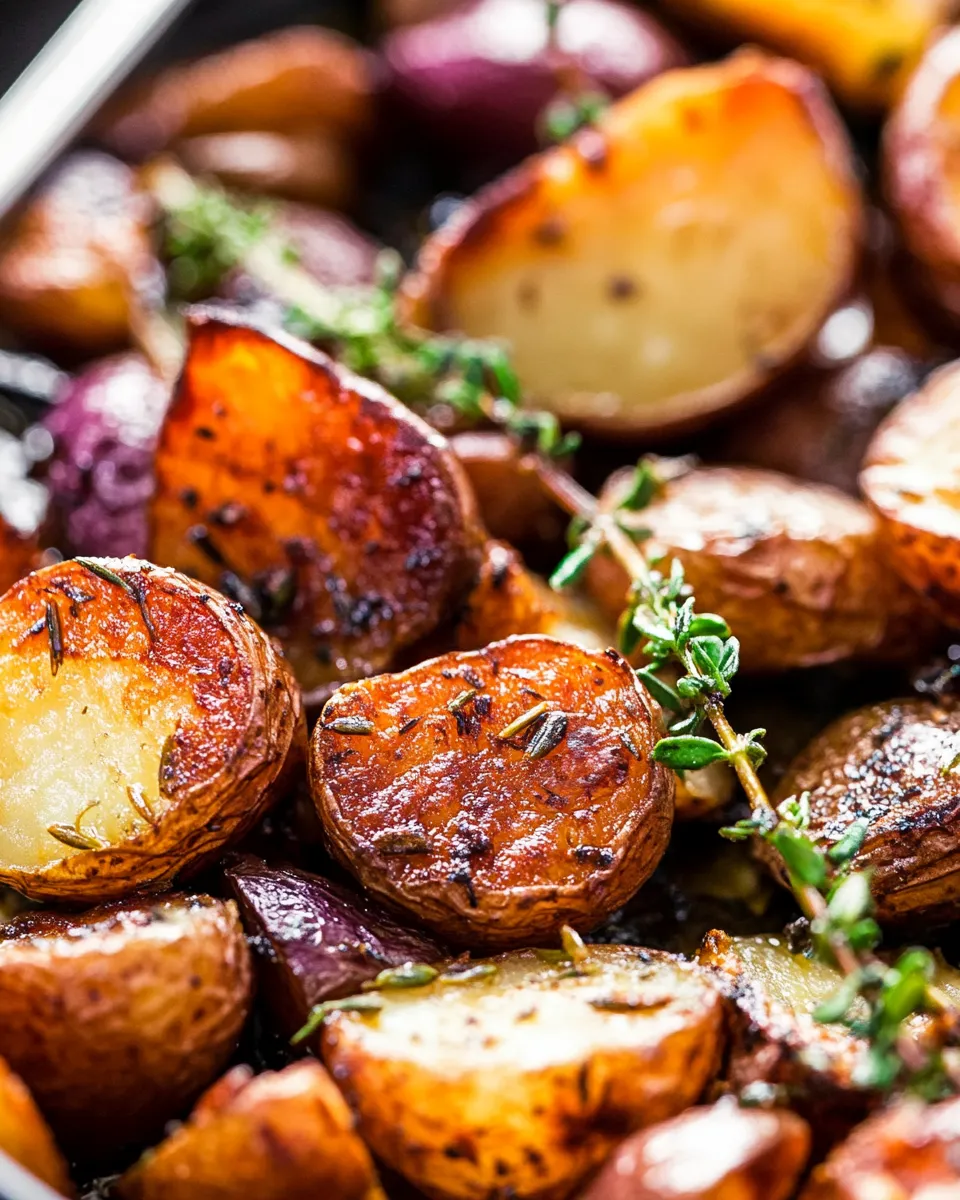
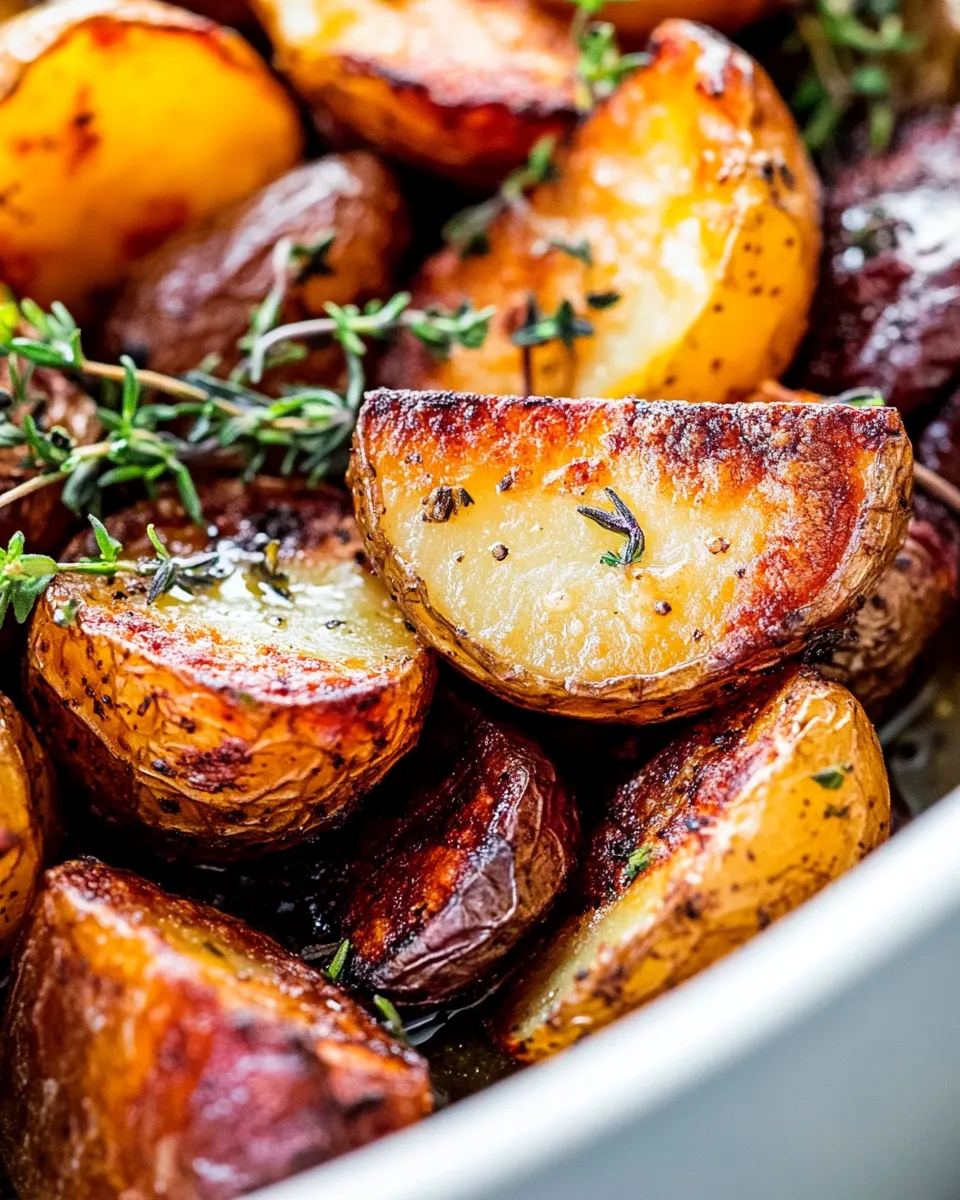
There’s something reassuring about a simple pan of potatoes done right. Crisp, golden cut sides, tender middles, and the warm, woodsy lift of fresh thyme—this recipe is exactly that. It’s the kind of side I reach for when dinner needs to be dependable, satisfying, and ready in under an hour.
These skillet potatoes are straightforward but precise. A hot skillet, a little oil and butter for flavor and browning, fresh thyme to perfume the pan, and patient cooking make all the difference. Follow the order and small notes here and you’ll get consistent results every time.
What Goes In
- 2 tablespoons olive oil — for high-heat browning and a clean flavor base.
- 2 tablespoons butter (unsalted) — adds richness and helps the potatoes brown; unsalted lets you control seasoning.
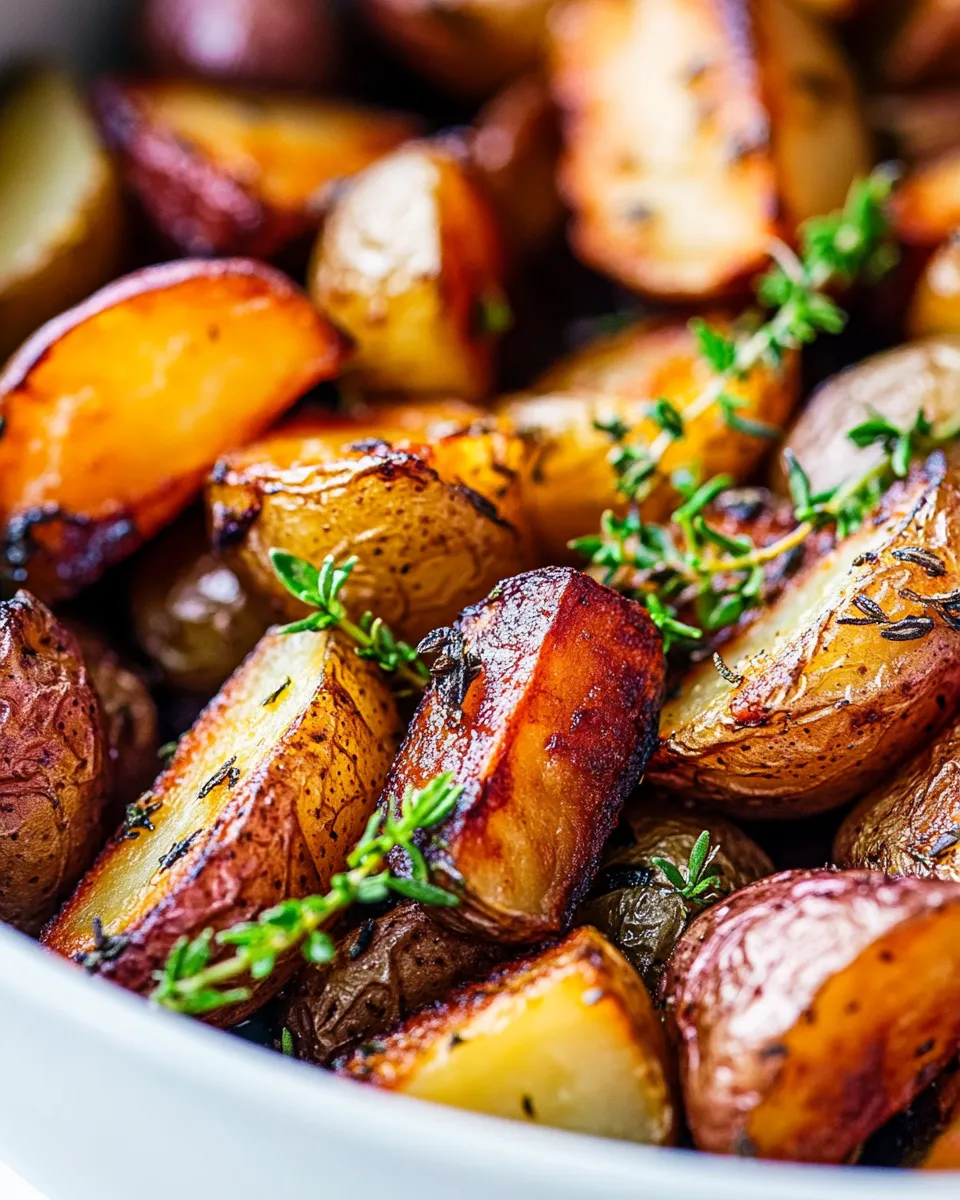
- 1 tablespoon fresh thyme (chopped) — fresh thyme infuses the oil; chopping releases more aroma.
- 2 pound baby potatoes (cut in half) — halved so they brown quickly and cook through evenly.
- ½ teaspoon salt (or to taste) — seasons the potatoes; adjust to your preference after tasting.
- ¼ teaspoon pepper (or to taste) — simple, complementary pepper for finishing.
Perfect Thyme Skillet Potatoes in Steps
- Heat a large 12-inch skillet over medium heat.
- Add 2 tablespoons olive oil and 2 tablespoons unsalted butter to the skillet and heat until the butter melts and the oil is hot but not smoking.
- Add 1 tablespoon chopped fresh thyme and stir to infuse the oil.
- Arrange 2 pounds baby potatoes (cut in half) in the skillet in a single layer with the cut sides down; avoid overcrowding (cook in batches if necessary).
- Cook undisturbed over medium heat for about 10 minutes, until the cut sides are brown and crisp.
- Turn the potatoes over and sprinkle evenly with ½ teaspoon salt and ¼ teaspoon pepper.
- Cover the skillet and continue cooking over medium heat for another 8 to 10 minutes, or until the potatoes are fork-tender.
- Remove from heat, transfer the potatoes to a serving dish, and serve.
Why This Recipe Belongs in Your Rotation
This skillet method hits the sweet spot between speed and texture. Roasting in the oven takes time; boiling alone yields no crispness. Pan-searing the cut sides first locks in a golden, crunchy exterior while the covered finish steams the centers to creamy tenderness. You get contrast in each bite, and that’s what makes these potatoes feel special.
The ingredient list is short and pantry-friendly. Olive oil and butter are staples; fresh thyme is optional but highly recommended. Because it uses baby potatoes halved, it’s forgiving—there’s less peeling and more even cooking. It’s a dependable side for weeknight dinners and small gatherings alike.
Allergy-Friendly Substitutes
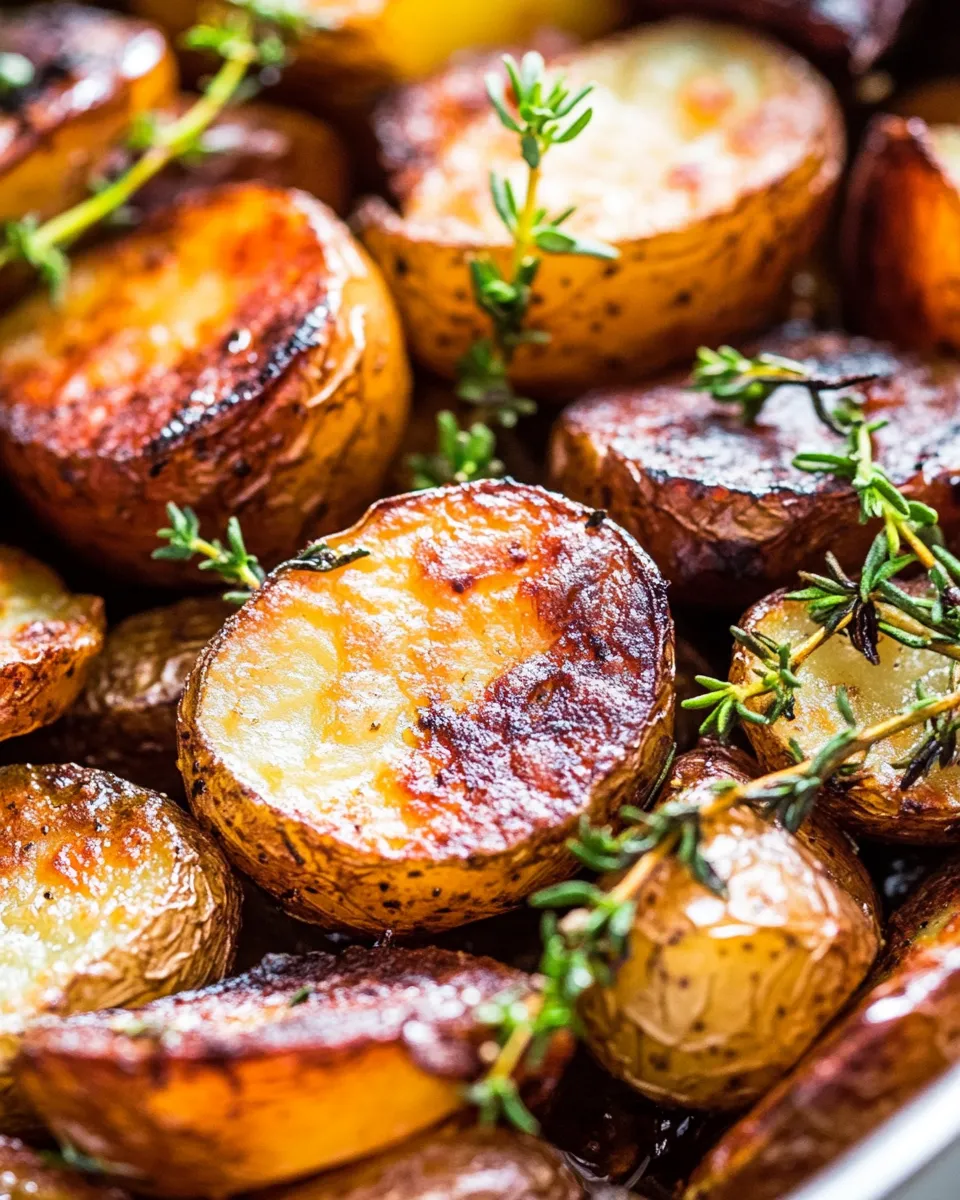
If you need to adapt for dietary restrictions, keep the method and amounts but swap where required.
- Butter swap: Use a neutral oil (like avocado) or a plant-based butter for a dairy-free option. Keep the same 2 tablespoons measure; plant butter gives similar browning and flavor lift.
- Herb swap: If fresh thyme isn’t available, rosemary or sage work—use slightly less rosemary since it’s stronger. Dried thyme can be used in a pinch at about one-third the volume of fresh.
- Oil swap: If olive oil isn’t preferred, sunflower or grapeseed oil handle high heat well.
What You’ll Need (Gear)
- 12-inch skillet — a heavy-bottomed skillet (cast iron preferred) holds heat and promotes even browning. The recipe specifies a large 12-inch skillet for space and heat retention.
- Stovetop with a consistent medium heat — maintain steady medium heat; too hot will burn the butter and herbs.
- Sharp knife and cutting board — to halve the baby potatoes neatly for even cooking.
- Spatula or tongs — to turn potatoes without scraping the browned surfaces.
Steer Clear of These
Small missteps change the result quickly. Avoid overcrowding the pan; if the skillet is jam-packed, potatoes will steam instead of crisp. Don’t rush the initial sear—moving them too soon prevents proper browning. Also watch the heat: butter burns fast at high temperatures, so keep an eye on the skillet and lower the heat if the butter begins to darken too quickly.
Variations by Season
Adjust aromatics and finishing touches to match what’s available or seasonal.
- Spring: Fold in chopped chives or sliced green onions after cooking for a bright, fresh finish.
- Summer: Add a squeeze of lemon and a handful of chopped parsley just before serving to lift the dish.
- Autumn: Toss in a sprinkle of smoked paprika or a few torn sage leaves during the thyme step for earthier notes.
- Winter: Add a spoonful of grainy mustard or a drizzle of browned butter (if not avoiding extra butter) once off the heat for deep warmth.
Pro Perspective
There are a few professional habits that make these reliably excellent. First, use a well-heated, heavy pan; cast iron or stainless with a thick base ensures steady contact and even color. Second, add the thyme to hot fat early so the aromatics bloom and mildly infuse the oil rather than sit raw on the potatoes. Third, resist stirring during that first 10-minute sear—patience equals color and texture.
Finally, taste and adjust salt at the end. The recipe gives a baseline of ½ teaspoon salt and ¼ teaspoon pepper, but potatoes vary and your salt brand/size may differ too. A quick taste when they’re done tells you whether to add a pinch more.
Meal Prep & Storage Notes
To prep ahead, halve the potatoes and store them submerged in water in the refrigerator for up to 24 hours to prevent browning. Drain and dry them thoroughly before cooking; moisture on the surfaces will reduce browning.
Leftovers keep well. Cool completely, then store in an airtight container in the fridge for up to 3 days. Reheat in a skillet over medium heat with a splash of oil to re-crisp the cut sides. Microwaving will warm them but sacrifice the crisp texture.
Troubleshooting Q&A
Q: My potatoes steamed and didn’t get crisp—what happened?
A: They were likely overcrowded or not dry enough. Work in batches so each piece has contact with the hot pan. Pat the potatoes dry after rinsing or draining to promote browning.
Q: The butter burned—how do I prevent that?
A: Lower the heat slightly and add the butter after the oil is hot. The oil raises the smoke point. If butter starts browning too fast, reduce heat and finish with the lid on at a gentler temperature.
Q: The centers are still raw after the covered step—now what?
A: Return the pan to medium-low, cover, and cook a few minutes longer. You can also add a tablespoon or two of water, cover, and let the steam finish them more quickly, but watch closely so the skins don’t soften too much.
Q: Can I use larger potatoes?
A: Yes, but adjust cooking times. Cut larger potatoes into uniform pieces so they brown and cook through evenly. They may need a longer covered finish.
Final Bite
Perfect Thyme Skillet Potatoes are a small, dependable triumph: minimal ingredients, maximum texture, and a comforting herbal note. They pair with almost any main—chicken, fish, steak, or a simple vegetable roast—and they elevate weeknight meals without drama. Follow the steps, mind the heat, and you’ll have a pan that’s irresistibly crisp on the outside and tender inside every time.
Perfect Thyme Skillet Potatoes
Ingredients
Ingredients
- 2 tablespoonsolive oil
- 2 tablespoonsbutter unsalted
- 1 tablespoonfresh thyme chopped
- 2 poundbaby potatoes cut in half
- 1/2 teaspoonsalt or to taste
- 1/4 teaspoonpepper or to taste
Instructions
Instructions
- Heat a large 12-inch skillet over medium heat.
- Add 2 tablespoons olive oil and 2 tablespoons unsalted butter to the skillet and heat until the butter melts and the oil is hot but not smoking.
- Add 1 tablespoon chopped fresh thyme and stir to infuse the oil.
- Arrange 2 pounds baby potatoes (cut in half) in the skillet in a single layer with the cut sides down; avoid overcrowding (cook in batches if necessary).
- Cook undisturbed over medium heat for about 10 minutes, until the cut sides are brown and crisp.
- Turn the potatoes over and sprinkle evenly with ½ teaspoon salt and ¼ teaspoon pepper.
- Cover the skillet and continue cooking over medium heat for another 8 to 10 minutes, or until the potatoes are fork-tender.
- Remove from heat, transfer the potatoes to a serving dish, and serve.
Equipment
- 12 inch cast iron skillet
Notes
You can store your thyme potatoes for up to 1 week in a sealed airtight container. Cooked potatoes also freeze really well too! If you store them in an airtight container they will last in the freezer from 10 – 12 months.