
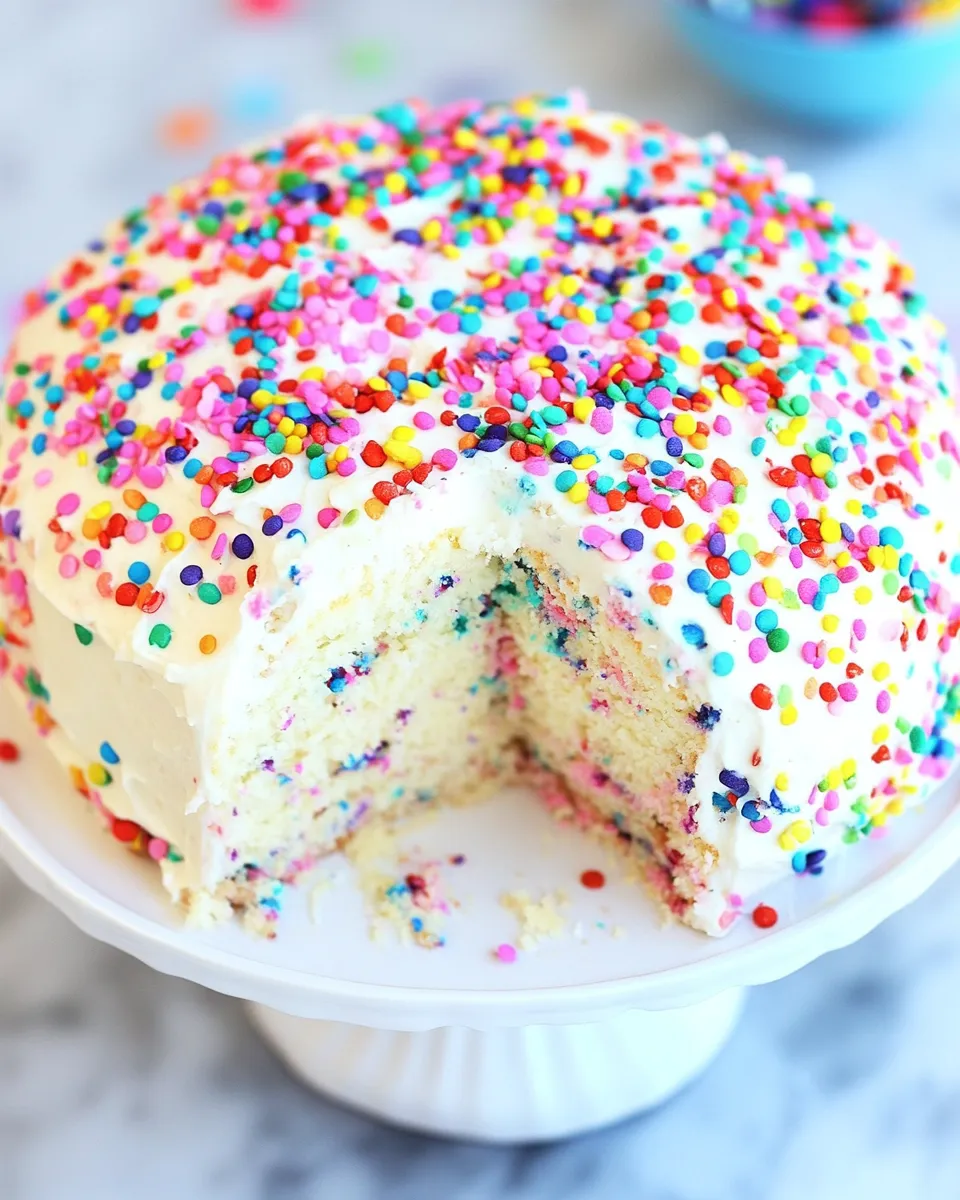
This is my weeknight-to-weekend cake: bright, forgiving, and endlessly crowd-pleasing. The crumb is tender, the texture is classic American layer cake, and those rainbow jimmies make every slice feel like a small celebration. I turn to this recipe when I want something uncomplicated that still looks like I spent time on it.
There are small, practical tricks in here that make a big difference—temperatures, a reserved splash of the milk–egg mix, and how you fold the sprinkles so they don’t bleed color through the batter. I’ll walk you through the ingredients, the exact steps, what to watch for, and smart swaps if you need them.
Bring an hour or so, a stand mixer or a sturdy hand mixer, and a good offset spatula. Follow the steps below and you’ll have a classic Funfetti Cake that slices cleanly, frosts easily, and tastes like a simple, perfect celebration.
The Ingredient Lineup
Ingredients
- 2 1/4 cups cake flour — provides a fine, tender crumb; reserve a bit for dusting the pans as noted.
- plus more for dusting the pans — helps the parchment and pan release cleanly after baking.
- 1 cup whole milk — at room temperature; adds richness and helps the batter hydrate the flour.
- at room temperature — (applies to the milk note above) ensures even mixing and better rise.
- 6 large egg whites — at room temperature; they lighten the cake without extra yolk fat.
- 2 teaspoons vanilla extract — in the milk–egg mixture; brings classic vanilla flavor into the crumb.
- 1 3/4 cups granulated sugar — sweetens and contributes to structure and browning.
- 4 teaspoons baking powder — the primary leavening; make sure it’s fresh for the best rise.
- 1 teaspoon salt — balances sweetness and enhances the other flavors.
- 3/4 cup unsalted butter — at room temperature; folded into the dry mix to create a fine crumb.
- Sprinkles — rainbow jimmies; folded in by hand near the end to prevent color bleed.
- 1 1/2 cups unsalted butter — at room temperature; for the buttercream, beaten until smooth.
- 5 cups confectioners’ sugar — sifted; the base of the buttercream for a silky texture.
- 1/4 teaspoon salt — in the buttercream; rounds out the sweetness.
- 1 tablespoon vanilla extract — in the buttercream; for clear, vanilla-forward frosting.
- 3-4 tablespoons milk or heavy cream — added 1 tablespoon at a time to reach spreadable consistency.
- Sprinkles for decorating — extra jimmies for the outside and top after frosting.
Cook Funfetti Cake Like This
- Preheat oven to 350°F. Spray two 9-inch round cake pans with nonstick cooking spray. Line the bottoms with parchment or waxed paper rounds, spray the paper, then dust the pans with cake flour; invert each pan and tap to remove excess flour. Set pans aside.
- In a medium bowl, whisk together 1 cup whole milk, 6 large egg whites, and 2 teaspoons vanilla extract until well blended. Set this milk–egg mixture aside.
- In the bowl of a stand mixer fitted with the paddle/beater blade, combine 2 1/4 cups cake flour, 1 3/4 cups granulated sugar, 4 teaspoons baking powder, and 1 teaspoon salt. Mix on low just to combine.
- Add 3/4 cup unsalted butter (room temperature) to the dry ingredients and beat on low speed until the mixture resembles moist crumbs.
- Measure and reserve 1/2 cup of the milk–egg mixture. Add the remaining milk–egg mixture to the mixer (the portion you did not reserve) and beat at medium speed for 1 1/2 minutes.
- Add the reserved 1/2 cup of milk–egg mixture and beat 30 seconds more. Stop the mixer, scrape down the sides and bottom of the bowl, then return to medium speed and beat an additional 20 seconds.
- Fold the rainbow jimmies (sprinkles) from the ingredient list into the batter by hand until evenly distributed.
- Divide the batter evenly between the two prepared pans and smooth the tops with a rubber spatula. Place the pans on the middle oven rack and bake 23–25 minutes, or until a toothpick inserted in the center comes out clean.
- Remove the pans from the oven and let the cakes rest in the pans for 3–5 minutes. Run a knife around the edges to loosen, invert the cakes onto wire cooling racks, remove the parchment rounds, and let the cakes cool completely.
- While the cakes cool, make the buttercream: in the stand mixer bowl, beat 1 1/2 cups unsalted butter (room temperature) on medium speed with the paddle/beater blade until smooth, about 3 minutes.
- With the mixer on low, add 5 cups sifted confectioners’ sugar to the butter 1/2 cup at a time, mixing until incorporated after each addition.
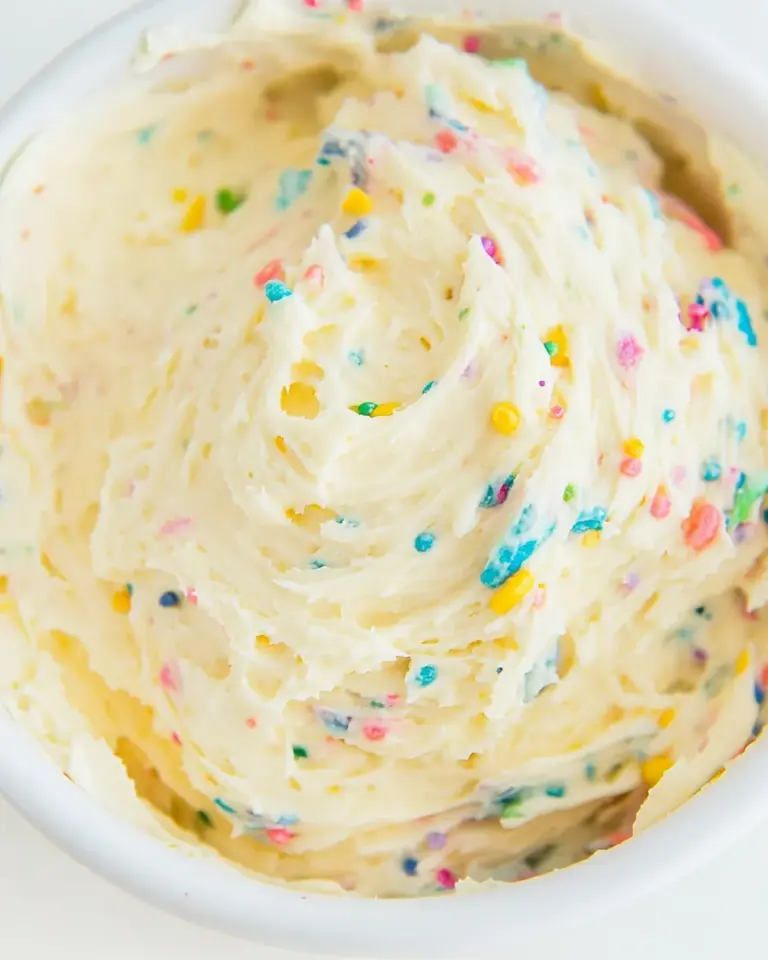
- Add 1 tablespoon vanilla extract and 1/4 teaspoon salt; mix to combine. Add 3–4 tablespoons milk or heavy cream, 1 tablespoon at a time, until the frosting reaches your preferred spreading consistency. If you want a thicker frosting, add more confectioners’ sugar 1/4 cup at a time; for thinner frosting, add more milk/cream 1 tablespoon at a time.
- If needed, use a serrated knife to level the tops of the cooled cakes by trimming a very thin layer from each to create even surfaces. Save the trimmings if desired.
- Place one cake layer (cut-side up if you trimmed, or top-side up if not) on a cake stand or serving plate. Spread an even layer of vanilla buttercream over the top. Sprinkle with the decorating sprinkles from the ingredient list, if desired.
- Place the second cake layer on top, cut-side down (so the tops are aligned and you have a smooth surface to frost). Frost the top and sides of the assembled cake with the remaining buttercream using an offset spatula or knife. Decorate the top and sides with additional sprinkles as desired.
- Slice and serve.
- Make-ahead and storage: cake layers can be baked, cooled, and wrapped tightly in plastic wrap the day before and stored at room temperature. Buttercream can be made the day before, stored in an airtight container in the refrigerator, brought to room temperature and re-whipped before using. Once assembled, keep the cake covered at room temperature for up to 2 days; it is best the day it is made.
Why You’ll Love This Recipe

This recipe hits the sweet spot between foolproof and festive. It doesn’t demand temperamental techniques like custards or staged sugar work. The method relies on straightforward creaming and paced mixing steps that consistently produce a tender, even crumb. Those reserved egg-white-milk measures and the two-stage mixing keep the batter well-emulsified and prevent overworking the flour.
The flavor is unobtrusive in the best way: vanilla-led, buttery, and sweet enough to pair well with a rich buttercream without tasting cloying. Texture-wise, it’s soft but not fragile—easy to slice for parties and sturdy enough for layered decorations.
International Equivalents

Measurements here are in U.S. customary cups and teaspoons as written in the source. If you prefer metric, convert dry ingredients by weight for the most consistent results: cake flour at about 120 g per cup, granulated sugar around 200 g per cup, and confectioners’ sugar approximately 120 g per cup. For liquid, 1 cup is roughly 240 ml.
Baking powder and other leaveners vary by brand and country. If you must substitute self-rising flour, don’t—this recipe relies on cake flour’s low protein and the specific leavening amounts. For best results outside the U.S., weigh the ingredients or use tested local equivalents measured by weight.
Setup & Equipment
Stand mixer with a paddle/beater blade is preferred. It saves time and gives consistent creaming for both the cake and the buttercream. A medium bowl and whisk for the milk–egg mixture keep things tidy.
Two 9-inch round cake pans, parchment rounds, an offset spatula, and wire racks are essential for cooling and smooth frosting. A serrated knife or cake leveler helps if you want perfect layers. Nonstick spray and cake flour for dusting help the layers release without tearing.
Easy-to-Miss Gotchas
- Room-temperature ingredients — the recipe calls for room-temperature milk, butter, and egg whites. Cold ingredients will not incorporate properly and can give a dense cake.
- Reserve the 1/2 cup — don’t skip the step where you reserve 1/2 cup of the milk–egg mixture. It’s a small detail that evens out the batter and prevents lumps.
- Fold sprinkles gently — jimmies can bruise and bleed color if overmixed. Fold by hand only until evenly distributed.
- Parchment + dusting — both are called for. Use them. They prevent sticking and make flipping the cake out quick and clean.
- Don’t overbake — 23–25 minutes is a narrow window. Start checking at 23 minutes; a clean toothpick or few moist crumbs is perfect.
Smart Substitutions
If you need to swap: use unsalted butter throughout so you control salt; the recipe already specifies unsalted. For dairy-free, you can try a plant-based milk with an emulsifying oil, but flavor and texture will change. I don’t recommend swapping all-purpose flour for cake flour without adjusting; cake flour’s lower protein is part of this cake’s texture. If you must, replace each cup of cake flour with 1 cup minus 2 tablespoons all-purpose plus 2 tablespoons cornstarch, though results will differ slightly.
Behind the Recipe
This Funfetti approach is classic Americana—plain vanilla cake made festive with sprinkles. The technique here borrows from professional layer-cake methods: dry ingredients sifted and mixed first, butter worked into dry to a crumb before liquids are added, and staged liquid additions to ensure a smooth batter. Those steps yield an even rise and prevent pockets of butter or dry flour.
The frosting is a standard American buttercream: a high-sugar, high-butter emulsion that spreads smoothly and holds shape. Slight adjustments in milk or confectioners’ sugar let you dial consistency based on your decorating plan.
Storing, Freezing & Reheating
Store the assembled cake covered at room temperature for up to 2 days; it’s best the first day. For longer storage, wrap cooled, unfrosted layers tightly in plastic wrap and store at room temperature for one day or in the refrigerator for up to 3 days. Layers can also be frozen: wrap tightly in plastic and a layer of foil, then freeze up to one month. Thaw overnight in the refrigerator, then bring to room temperature before frosting.
Buttercream keeps well: make it a day ahead and chill in an airtight container. When ready, bring it to room temperature and re-whip to restore volume before using. Once the cake is assembled with buttercream, avoid refrigerating if possible; refrigeration can change frosting texture and cake dryness. If you must refrigerate, allow the cake to come to room temperature before serving.
Handy Q&A
Q: Can I use whole eggs instead of egg whites?
Not without changing the recipe’s balance—yolks add fat and will alter texture. If you swap, expect a richer, denser crumb and adjust other fats accordingly.
Q: Can I tint the frosting?
Yes. Gel or paste food coloring gives strong color without thinning the buttercream. Add a small amount at a time and re-whip.
Q: My sprinkles bled into the batter—what happened?
That usually happens with sugar sanding-type sprinkles or when they’re overmixed. Use rainbow jimmies as specified and fold gently by hand.
Q: The top browns too quickly while baking.
If that happens, tent with foil during the last few minutes of baking, but check with a toothpick first to avoid overbaking.
Time to Try It
Preheat, prep your pans, and mix in the order above. The recipe is straightforward and forgiving, but follow the mixing steps and the reserved milk–egg portion. Level if you want, frost confidently, and add extra jimmies for drama. Slice with a sharp serrated knife and serve at room temperature.
Make it for birthdays, small victories, or a weekday treat. The smiles are guaranteed, and cleanup is reasonable. If you try it, come back and tell me whether you kept it classic or gilded it with extra sprinkles and piped borders. Enjoy every colorful bite.

Funfetti Cake
Ingredients
Ingredients
- 2 1/4 cupscake flourplus more for dusting the pans
- 1 cupwhole milkat room temperature
- 6 large egg whitesat room temperature
- 2 teaspoonsvanilla extract
- 1 3/4 cupsgranulated sugar
- 4 teaspoonsbaking powder
- 1 teaspoonsalt
- 3/4 cupunsalted butterat room temperature
- Sprinklesrainbow jimmies
- 1 1/2 cupsunsalted butterat room temperature
- 5 cupsconfectioners sugarsifted
- 1/4 teaspoonsalt
- 1 tablespoonvanilla extract
- 3-4 tablespoonsmilk or heavy cream
- Sprinkles for decorating
Instructions
Instructions
- Preheat oven to 350°F. Spray two 9-inch round cake pans with nonstick cooking spray. Line the bottoms with parchment or waxed paper rounds, spray the paper, then dust the pans with cake flour; invert each pan and tap to remove excess flour. Set pans aside.
- In a medium bowl, whisk together 1 cup whole milk, 6 large egg whites, and 2 teaspoons vanilla extract until well blended. Set this milk–egg mixture aside.
- In the bowl of a stand mixer fitted with the paddle/beater blade, combine 2 1/4 cups cake flour, 1 3/4 cups granulated sugar, 4 teaspoons baking powder, and 1 teaspoon salt. Mix on low just to combine.
- Add 3/4 cup unsalted butter (room temperature) to the dry ingredients and beat on low speed until the mixture resembles moist crumbs.
- Measure and reserve 1/2 cup of the milk–egg mixture. Add the remaining milk–egg mixture to the mixer (the portion you did not reserve) and beat at medium speed for 1 1/2 minutes.
- Add the reserved 1/2 cup of milk–egg mixture and beat 30 seconds more. Stop the mixer, scrape down the sides and bottom of the bowl, then return to medium speed and beat an additional 20 seconds.
- Fold the rainbow jimmies (sprinkles) from the ingredient list into the batter by hand until evenly distributed.
- Divide the batter evenly between the two prepared pans and smooth the tops with a rubber spatula. Place the pans on the middle oven rack and bake 23–25 minutes, or until a toothpick inserted in the center comes out clean.
- Remove the pans from the oven and let the cakes rest in the pans for 3–5 minutes. Run a knife around the edges to loosen, invert the cakes onto wire cooling racks, remove the parchment rounds, and let the cakes cool completely.
- While the cakes cool, make the buttercream: in the stand mixer bowl, beat 1 1/2 cups unsalted butter (room temperature) on medium speed with the paddle/beater blade until smooth, about 3 minutes.
- With the mixer on low, add 5 cups sifted confectioners’ sugar to the butter 1/2 cup at a time, mixing until incorporated after each addition.
- Add 1 tablespoon vanilla extract and 1/4 teaspoon salt; mix to combine. Add 3–4 tablespoons milk or heavy cream, 1 tablespoon at a time, until the frosting reaches your preferred spreading consistency. If you want a thicker frosting, add more confectioners’ sugar 1/4 cup at a time; for thinner frosting, add more milk/cream 1 tablespoon at a time.
- If needed, use a serrated knife to level the tops of the cooled cakes by trimming a very thin layer from each to create even surfaces. Save the trimmings if desired.
- Place one cake layer (cut-side up if you trimmed, or top-side up if not) on a cake stand or serving plate. Spread an even layer of vanilla buttercream over the top. Sprinkle with the decorating sprinkles from the ingredient list, if desired.
- Place the second cake layer on top, cut-side down (so the tops are aligned and you have a smooth surface to frost). Frost the top and sides of the assembled cake with the remaining buttercream using an offset spatula or knife. Decorate the top and sides with additional sprinkles as desired.
- Slice and serve.
- Make-ahead and storage: cake layers can be baked, cooled, and wrapped tightly in plastic wrap the day before and stored at room temperature. Buttercream can be made the day before, stored in an airtight container in the refrigerator, brought to room temperature and re-whipped before using. Once assembled, keep the cake covered at room temperature for up to 2 days; it is best the day it is made.
Equipment
- 9-inch Round Cake Pans
- nonstick cooking spray
- Parchment Paper
- Stand mixer
- paddle/beater blade
- Rubber spatula
- wire cooling racks
- serrated knife
- Offset spatula