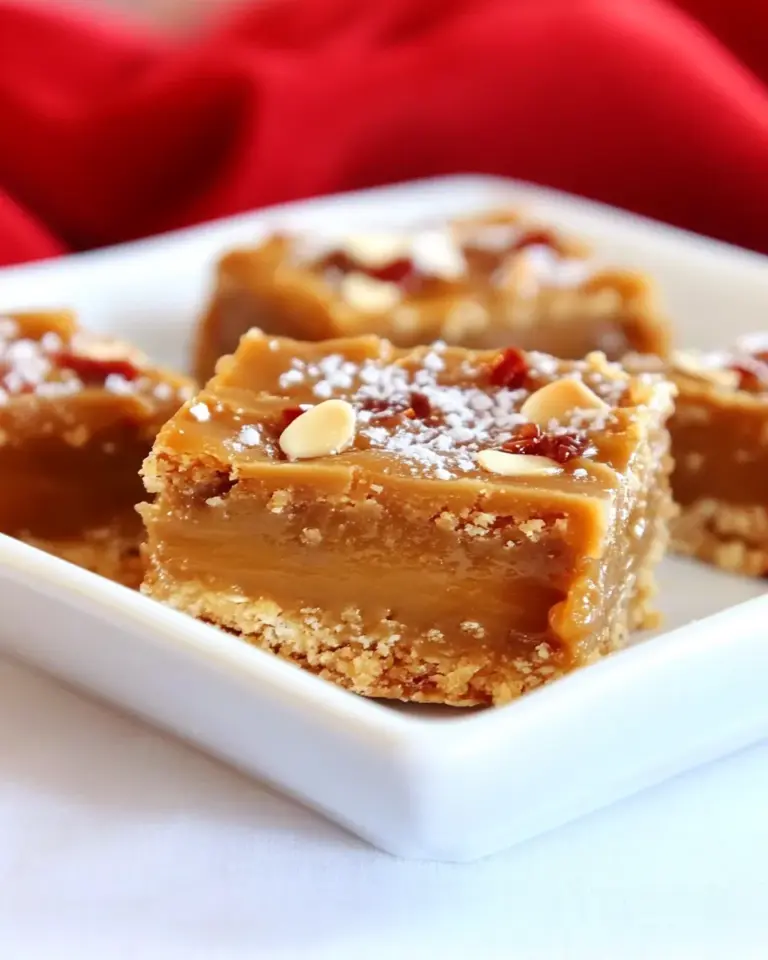
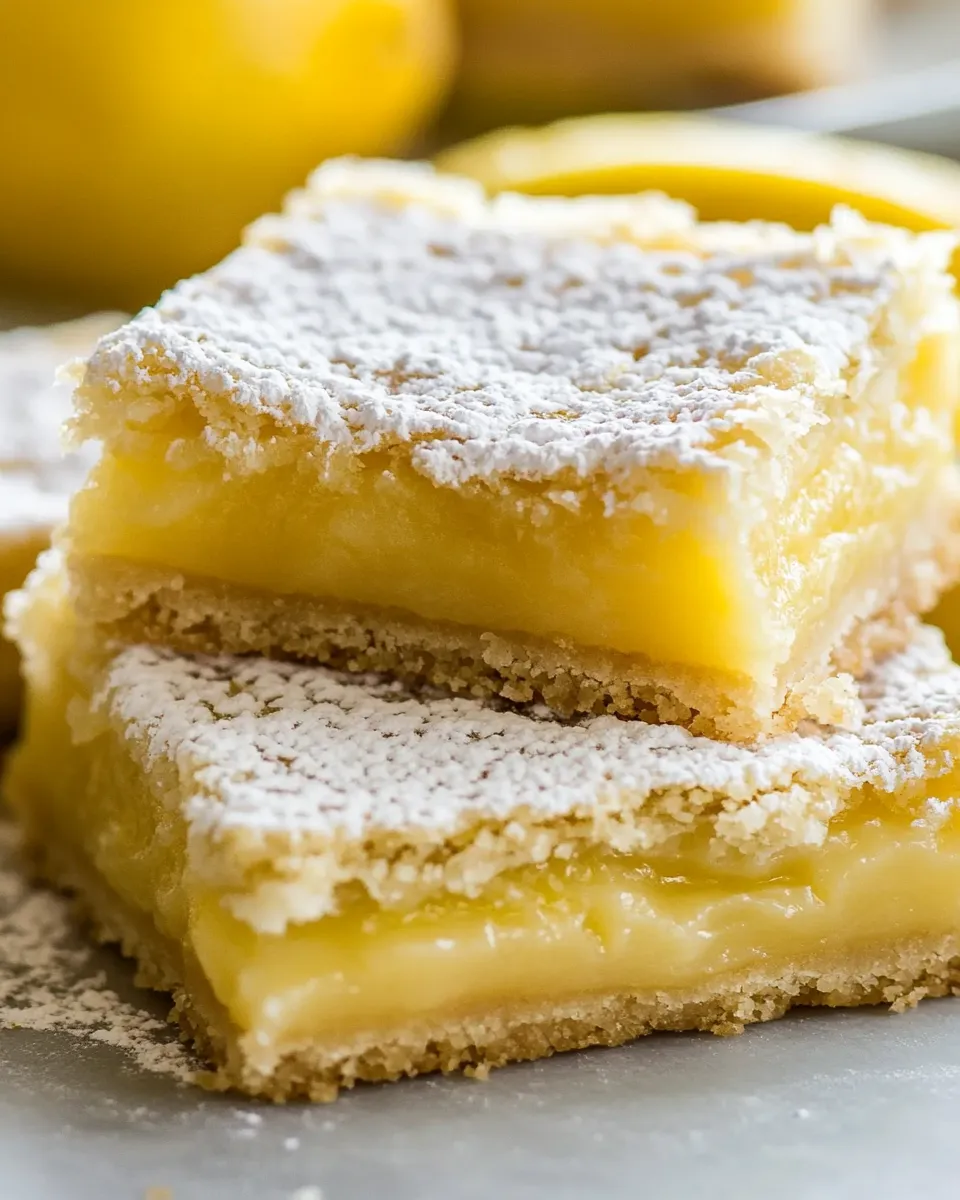
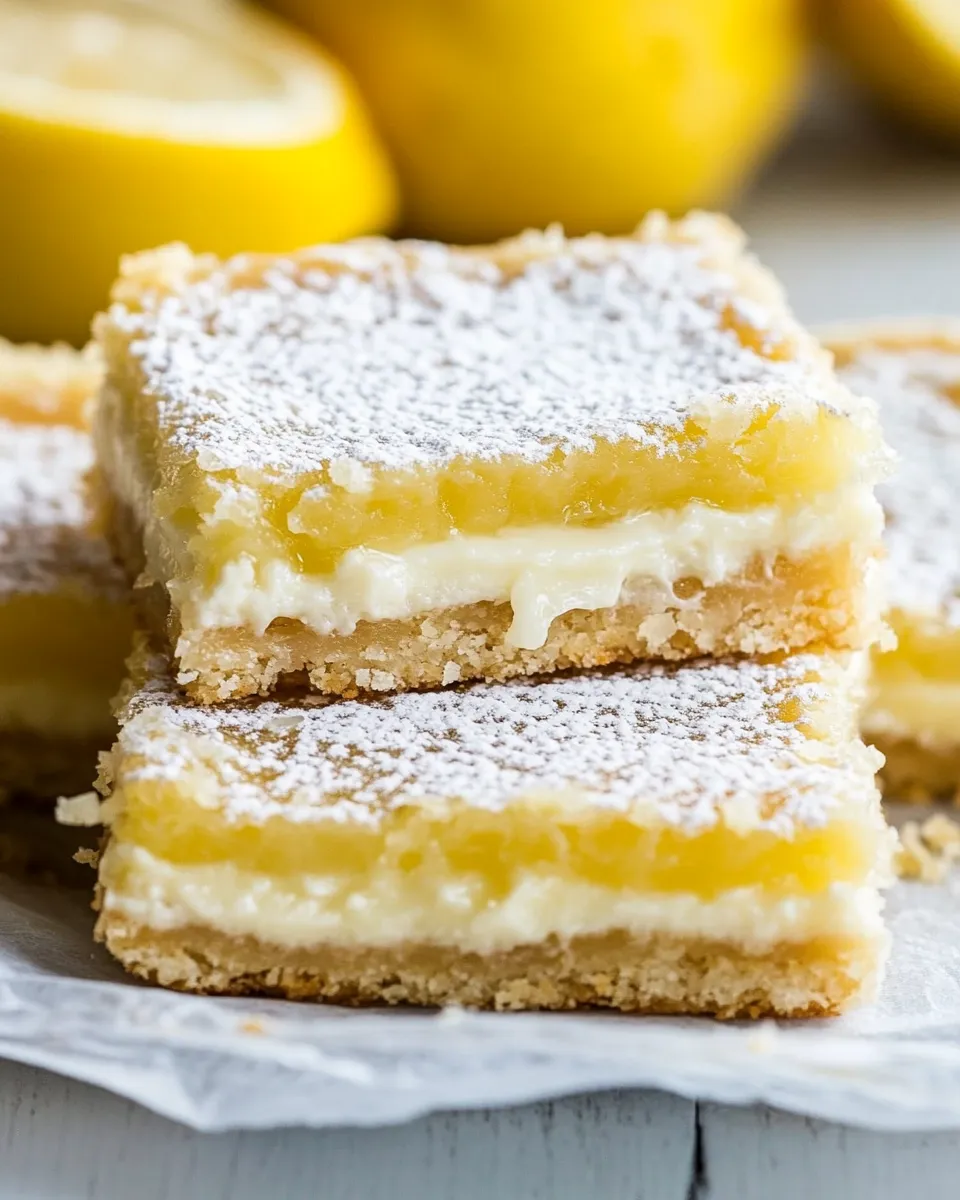
Bright, tangy lemon bars are the kind of dessert that disappears faster than you can dust them with confectioners’ sugar. They’re a weeknight-friendly bake that feels special enough for guests. The balance of a crisp, buttery shortbread and a velvet-smooth lemon filling is what keeps people coming back for another square.
I make these when I want something that travels well, keeps in the fridge, and doesn’t require fancy technique. The crust presses into the pan, the filling whisks up in one bowl, and a little chill time does the rest. Simple steps, big payoff.
Below you’ll find clear ingredient notes, the full cooking guide, troubleshooting tips, and sensible swaps if you need to adapt. Read through once, then set a timer and enjoy the process.
Ingredient Notes
Ingredients
- 1/2 lb unsalted butter (16 Tbsp), room temperature — Butter provides the shortbread crust’s flavor and structure; room temperature makes it easy to cream.
- 1/2 cup granulated sugar — Sweetens the crust and helps it brown slightly during the initial bake.
- 1 1/2 tsp vanilla extract — Rounds the flavor of the crust and complements the lemon in the filling.
- 2 cups all-purpose flour — Main dry ingredient for the crust; gives it that tender, sandy texture.
- 1/4 tsp salt — Enhances all the flavors, including the lemon brightness.
- 7 large eggs, room temperature — Eggs set the lemon filling and give it that custardy texture; room temperature yields a smoother mix.
- 3 cups granulated sugar — Sweetens and stabilizes the lemon filling.
- 2 Tbsp lemon zest, from 4 to 5 lemons — Zest gives concentrated lemon oil and aroma; it’s essential for bright lemon flavor.
- 1 cup lemon juice, freshly squeezed (from 5 large or 8 medium lemons) — Fresh juice provides the clean, acidic lemon profile; bottled juice won’t be as bright.
- 1 cup all-purpose flour — Thickens the lemon filling so it sets into bars when chilled.
- Confectioners sugar — For dusting the finished bars; adds a touch of sweetness and visual polish.
Lemon Bars Cooking Guide
- Preheat the oven to 350°F (175°C). Line a 13x9x2‑inch baking pan with parchment paper, leaving an overhang on two opposite sides so you can lift the bars from the pan after baking.
- In the bowl of a stand mixer fitted with the paddle attachment, cream together 1/2 lb (16 Tbsp) unsalted butter (room temperature) and 1/2 cup granulated sugar until light and slightly fluffy, about 1–2 minutes.
- Add 1 1/2 tsp vanilla extract, 2 cups all-purpose flour, and 1/4 tsp salt. Mix on low speed until the dough is crumbly and no dry flour remains.
- Press the dough evenly into the bottom of the prepared pan using your fingertips or the bottom of a measuring cup to create an even crust. Bake the crust in the preheated 350°F oven for 18–20 minutes, or until the edges are lightly golden.
- Remove the crust from the oven and transfer the pan to a wire rack to cool slightly while you make the filling (about 5–10 minutes). Keep the oven at 350°F.
- While the crust bakes, zest 4–5 lemons to yield 2 Tbsp lemon zest, then squeeze enough lemons to yield 1 cup fresh lemon juice (about 5 large or 8 medium lemons). Use room-temperature lemons/eggs for best results.
- In a large mixing bowl, whisk together 7 large eggs (room temperature) and 3 cups granulated sugar until blended and slightly combined.
- Add the 1 cup fresh lemon juice and the 2 Tbsp lemon zest to the egg–sugar mixture and whisk to combine.
- Add 1 cup all-purpose flour to the lemon mixture and whisk until the filling is smooth and no dry flour remains.
- Pour the filling evenly over the warm crust. Return the pan to the center of the preheated 350°F oven and bake for 30–35 minutes, or until the filling is set — the center should no longer be liquid and should have only a slight jiggle.
- Remove the pan from the oven and cool on a wire rack at room temperature for at least 1 hour. Then refrigerate the pan for at least 2 hours to fully set the lemon bars.
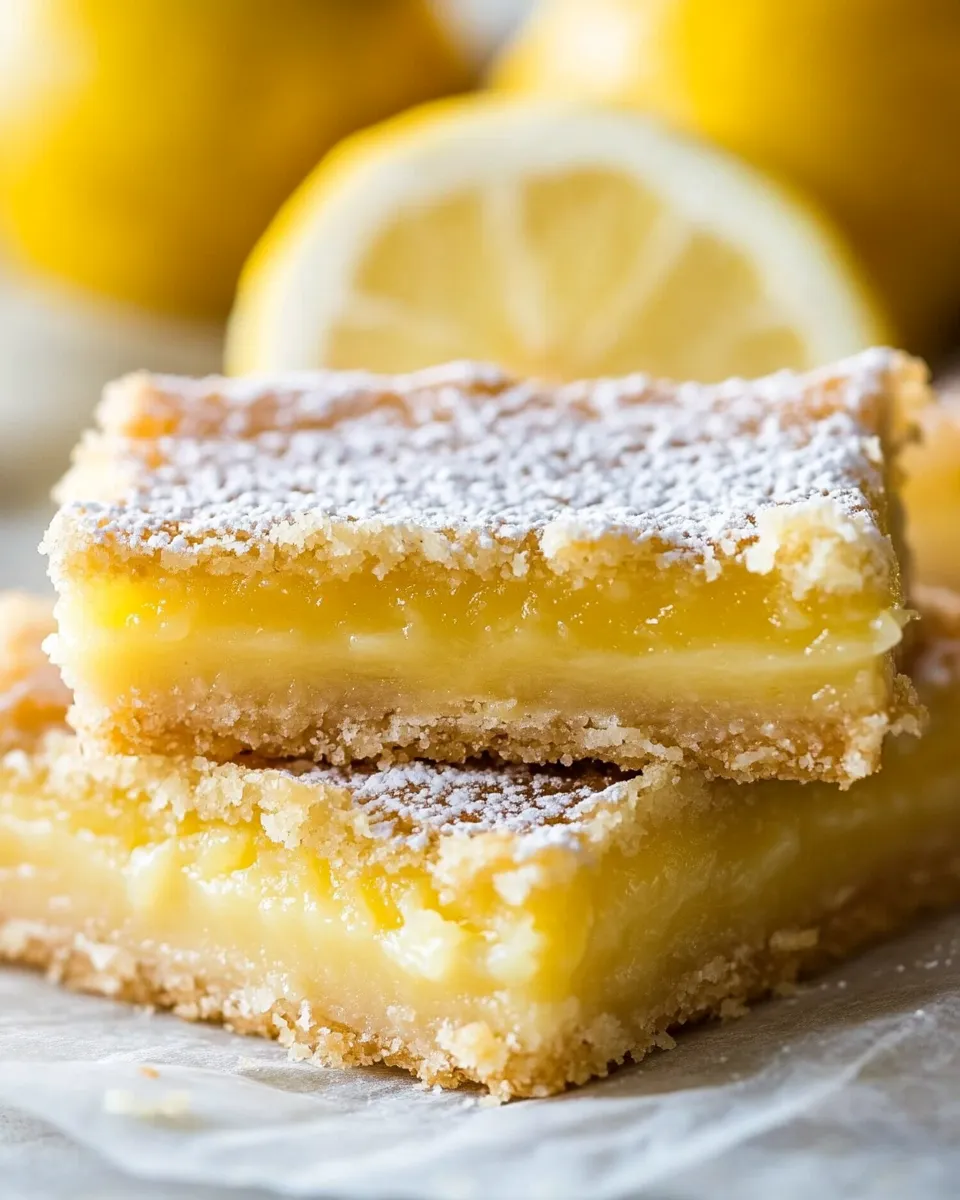
- Use the parchment overhang to lift the chilled lemon slab from the pan onto a cutting board. Trim the edges if desired, then cut into 18–20 squares. Dust the tops with confectioners’ sugar before serving.
Why This Recipe is a Keeper
This recipe nails three things: a reliable shortbread crust, a bright filling, and an easy, single-bowl filling method. The crust presses into the pan and bakes quickly, which means less hands-on time. The filling comes together in one mixing bowl and relies on eggs and flour for structure rather than starch-heavy shortcuts.
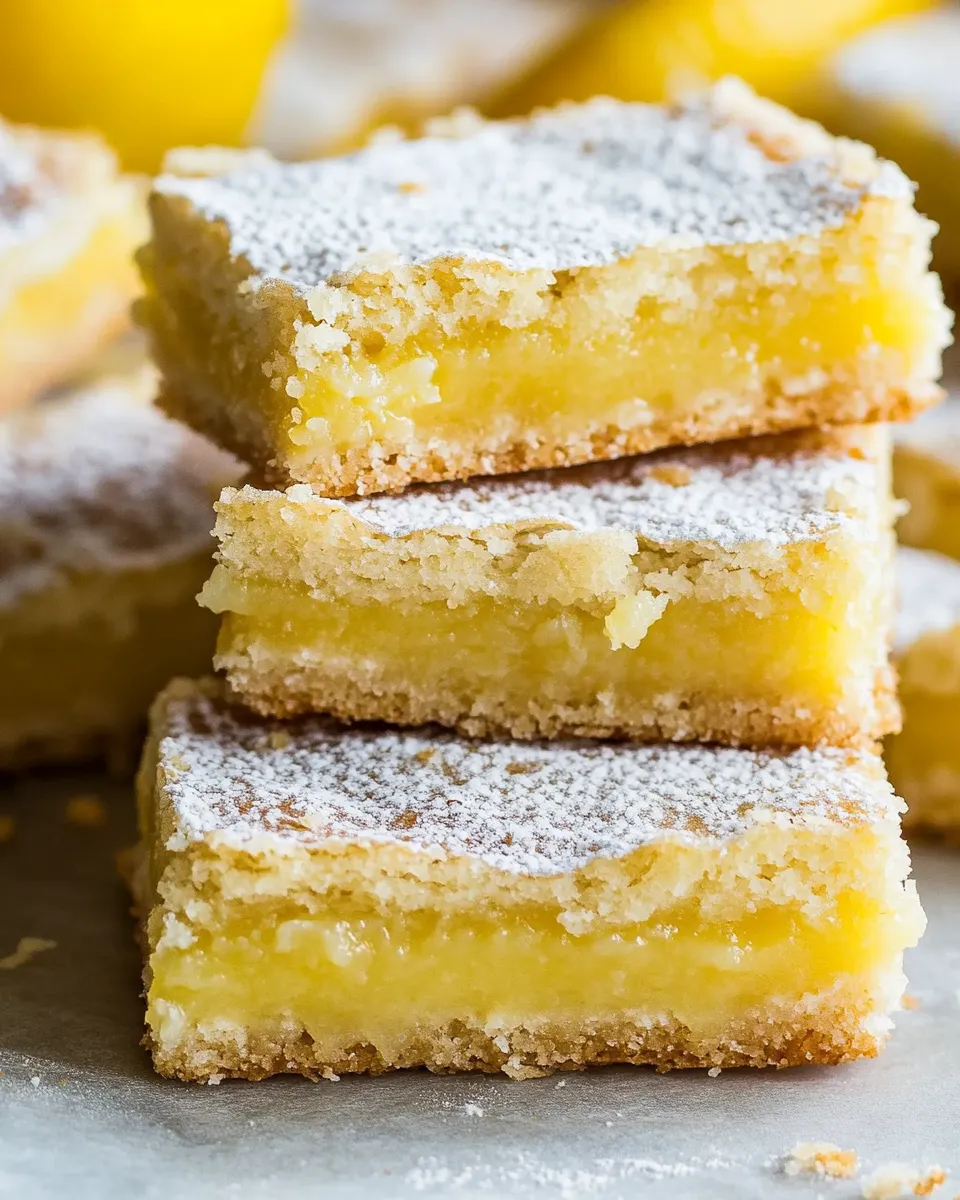
The flavor is balanced. Using both zest and fresh juice gives layers of lemon—zest for aromatic oils, juice for clean acidity. Multiple eggs and ample sugar create a custard that sets firm after chilling without becoming rubbery. Once you’ve made this a couple of times, you’ll know the visual cues: lightly golden crust, set-but-slightly-jiggly center after baking, and fully chilled bars that cut cleanly.
Vegan & Vegetarian Swaps
Vegetarian: This recipe is naturally vegetarian as written, since it contains no meat or gelatin.
Vegan: Converting these bars to vegan is possible but takes technique. You’ll need to replace butter and eggs with plant-based alternatives and expect the texture to change. Use a firm vegan butter substitute for the crust and a tested egg replacer system for the filling. Keep in mind the filling’s structure relies on eggs; successful vegan versions often use commercial egg replacers formulated for baking or combinations of starches and gelling agents. If you follow a vegan recipe specifically developed for lemon bars, you’ll get a result closer to the original.
Hardware & Gadgets
Use tools that make the process smooth and consistent:
- Stand mixer or hand mixer — Speeds up creaming the butter and sugar; a bowl and sturdy whisk can work but takes more elbow grease.
- 13x9x2‑inch baking pan — The recipe is calibrated to this pan size for thickness and bake times.
- Parchment paper — Essential for easy removal and clean edges.
- Microplane or fine grater — For zesting lemons without the bitter pith.
- Citrus juicer — Helpful for extracting 1 cup of juice efficiently.
- Wire rack — For cooling the pan before chilling.
- Ruler or sharp knife — For even cuts; a bench scraper also works well.
Errors to Dodge
Don’t skip the room-temperature step for eggs and butter. Cold eggs shock the filling and can cause uneven mixing; cold butter won’t cream properly, leaving a dense crust. Also, don’t overbake the filling. You want the center to have only a slight jiggle when it comes out of the oven—carryover heat will finish it as it cools.
A common mistake is cutting too soon. If you don’t chill the bars for the full recommended time after cooling, the filling will be soft and messy when you slice. Another trap is zesting too aggressively and including the pith; that adds bitterness. Finally, don’t forget the parchment overhang—otherwise removing the slab from the pan becomes fiddly.
Make It Year-Round
Lemons aren’t a seasonal luxury in many supermarkets, so these bars are easy to make any time. In warmer months, chill the bars thoroughly and serve cold; they make a refreshing finish to a picnic or barbecue. In cooler months, the bars pair nicely with a hot cup of tea or a coffee break dessert.
For slight seasonal twists, consider adding a thin layer of fresh berries on top after chilling in summer, or a sprinkle of finely chopped candied ginger in winter for warmth. Keep the core technique intact: sturdy crust, bright filling, proper chilling.
Little Things that Matter
Small details make a big difference. Zest before juicing so you don’t lose any fragrant oil. Use a fine microplane to collect zest without the bitter white pith. Press the crust firmly and evenly so the filling spreads smoothly and bakes uniformly. When whisking the eggs and sugar, you don’t need to pale them completely—just blend until homogenous before adding lemon.
When dusting with confectioners’ sugar, wait until just before serving to maintain that fresh look. If you want perfectly square slices, chill the slab until firm, then warm your knife slightly under hot water, dry it, and make clean cuts.
Storage & Reheat Guide
Store lemon bars in an airtight container in the refrigerator. They keep well for up to 4–5 days. For longer storage, freeze individual squares on a baking sheet until firm, then stack with parchment between layers in a freezer container for up to one month. Thaw overnight in the refrigerator before serving.
There’s no need to reheat chilled bars—the texture is best cold. If you prefer a slightly softer bite, let a refrigerated bar sit at room temperature for 10–15 minutes before eating.
Ask & Learn
Q: My filling cracked on top. What happened? A: Cracking usually means the oven was too hot or the filling overbaked. Watch for the center to have slight jiggle; remove at that point.
Q: The crust is soggy in the middle. A: Make sure the crust is baked long enough during the initial bake. Press it firmly and bake until edges are lightly golden so it firms up and resists the wet filling.
Q: Can I halve the recipe for a smaller pan? A: Yes, but bake times and pan size will change. If you reduce the scale, watch the crust and filling closely and adjust baking time down as needed.
The Takeaway
These lemon bars are a dependable, bright dessert that balances a tender shortbread crust with a smooth, lemony custard. The method is straightforward: press and pre-bake the crust, whisk together the filling, bake until just set, then chill. Pay attention to room-temperature ingredients, bake times, and chilling—those steps determine texture and clean slices.
Make them for a weeknight treat, a potluck, or when you want a dessert that feels both homey and elegant. Once you’ve made this recipe, it becomes a go-to for any time you want a little citrus sunshine on a plate.

Lemon Bars Recipe
Ingredients
Ingredients
- 1/2 lbunsalted butter (16 Tbsp) room temperature
- 1/2 cupgranulated sugar
- 1 1/2 tspvanilla extract
- 2 cupsall-purpose flour
- 1/4 tspsalt
- 7 large eggs room temperature
- 3 cupsgranulated sugar *
- 2 Tbsplemon zest from 4 to 5 lemons
- 1 cuplemon juice freshly squeezed (from 5 large or 8 medium lemons)**
- 1 cupall-purpose flour
- Confectioners sugar to dust
Instructions
Instructions
- Preheat the oven to 350°F (175°C). Line a 13x9x2‑inch baking pan with parchment paper, leaving an overhang on two opposite sides so you can lift the bars from the pan after baking.
- In the bowl of a stand mixer fitted with the paddle attachment, cream together 1/2 lb (16 Tbsp) unsalted butter (room temperature) and 1/2 cup granulated sugar until light and slightly fluffy, about 1–2 minutes.
- Add 1 1/2 tsp vanilla extract, 2 cups all-purpose flour, and 1/4 tsp salt. Mix on low speed until the dough is crumbly and no dry flour remains.
- Press the dough evenly into the bottom of the prepared pan using your fingertips or the bottom of a measuring cup to create an even crust. Bake the crust in the preheated 350°F oven for 18–20 minutes, or until the edges are lightly golden.
- Remove the crust from the oven and transfer the pan to a wire rack to cool slightly while you make the filling (about 5–10 minutes). Keep the oven at 350°F.
- While the crust bakes, zest 4–5 lemons to yield 2 Tbsp lemon zest, then squeeze enough lemons to yield 1 cup fresh lemon juice (about 5 large or 8 medium lemons). Use room-temperature lemons/eggs for best results.
- In a large mixing bowl, whisk together 7 large eggs (room temperature) and 3 cups granulated sugar until blended and slightly combined.
- Add the 1 cup fresh lemon juice and the 2 Tbsp lemon zest to the egg–sugar mixture and whisk to combine.
- Add 1 cup all-purpose flour to the lemon mixture and whisk until the filling is smooth and no dry flour remains.
- Pour the filling evenly over the warm crust. Return the pan to the center of the preheated 350°F oven and bake for 30–35 minutes, or until the filling is set — the center should no longer be liquid and should have only a slight jiggle.
- Remove the pan from the oven and cool on a wire rack at room temperature for at least 1 hour. Then refrigerate the pan for at least 2 hours to fully set the lemon bars.
- Use the parchment overhang to lift the chilled lemon slab from the pan onto a cutting board. Trim the edges if desired, then cut into 18–20 squares. Dust the tops with confectioners’ sugar before serving.
Equipment
- Stand mixer
- paddle attachment
- 13x9x2-inch baking pan
- Parchment Paper
- Wire Rack
- Measuring Cup
- Zester
- Cutting Board
Notes
*If using Meyer lemons, cut the sugar down to 2 cups for the filling.
**Avoid using more lemon juice than what is called for or the filling won’t set properly.