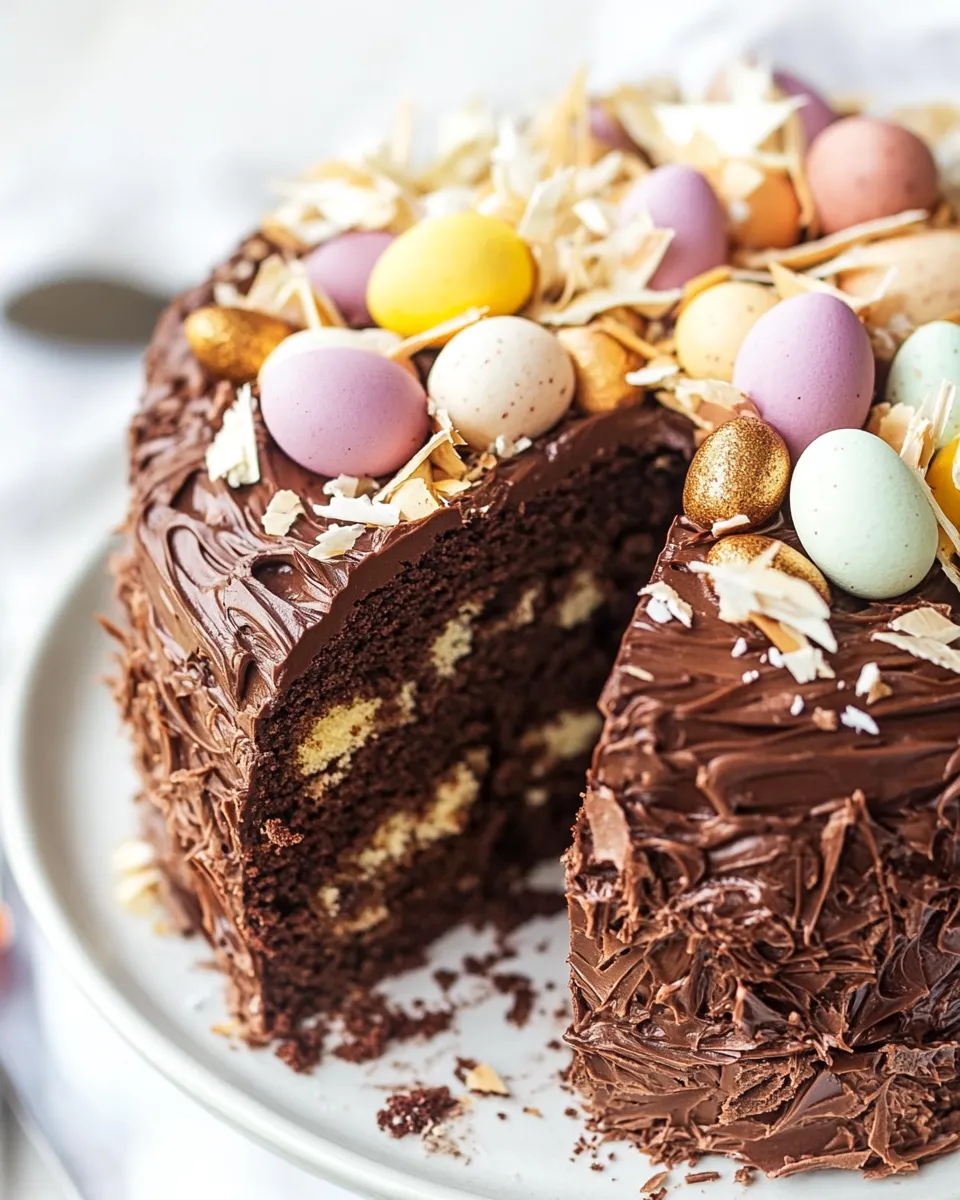
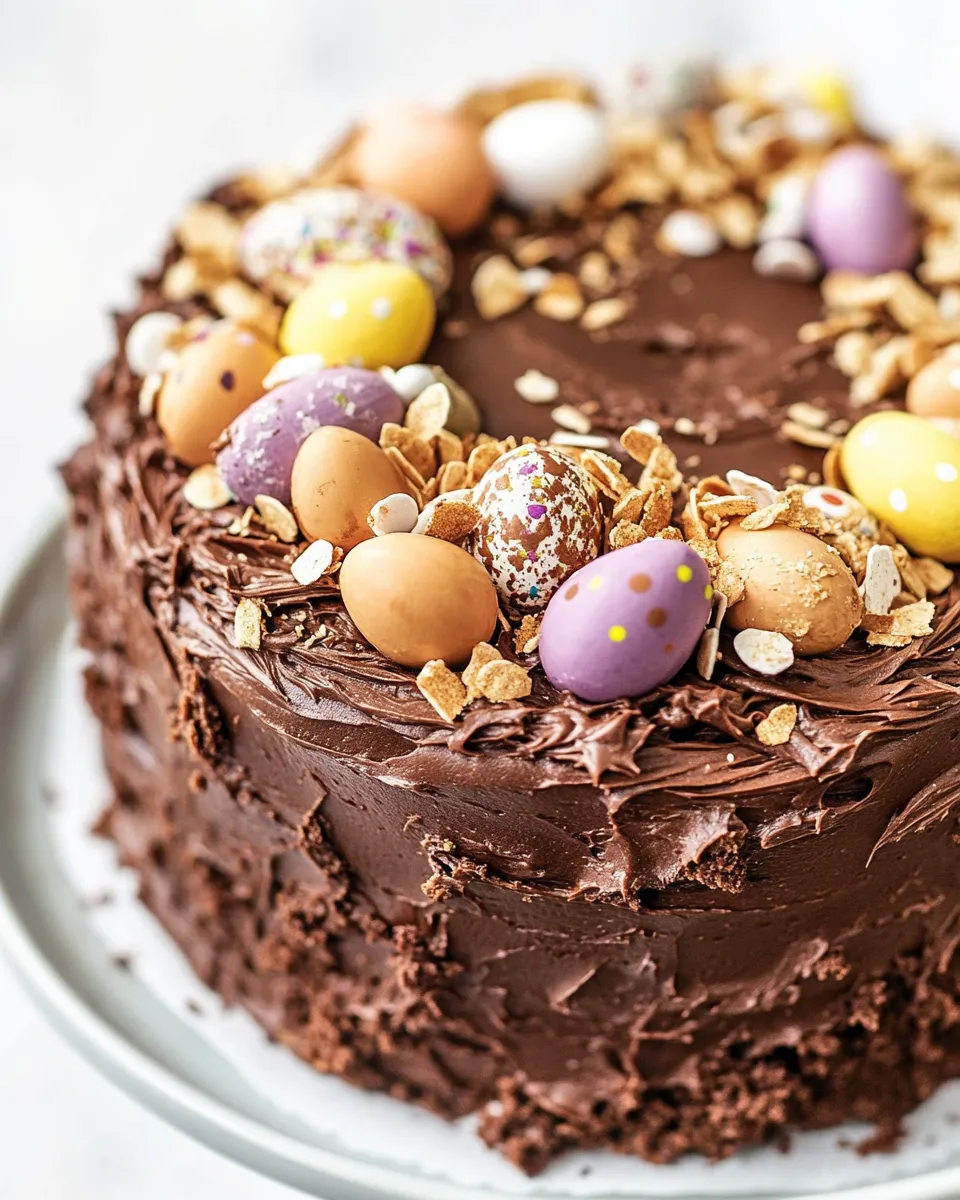
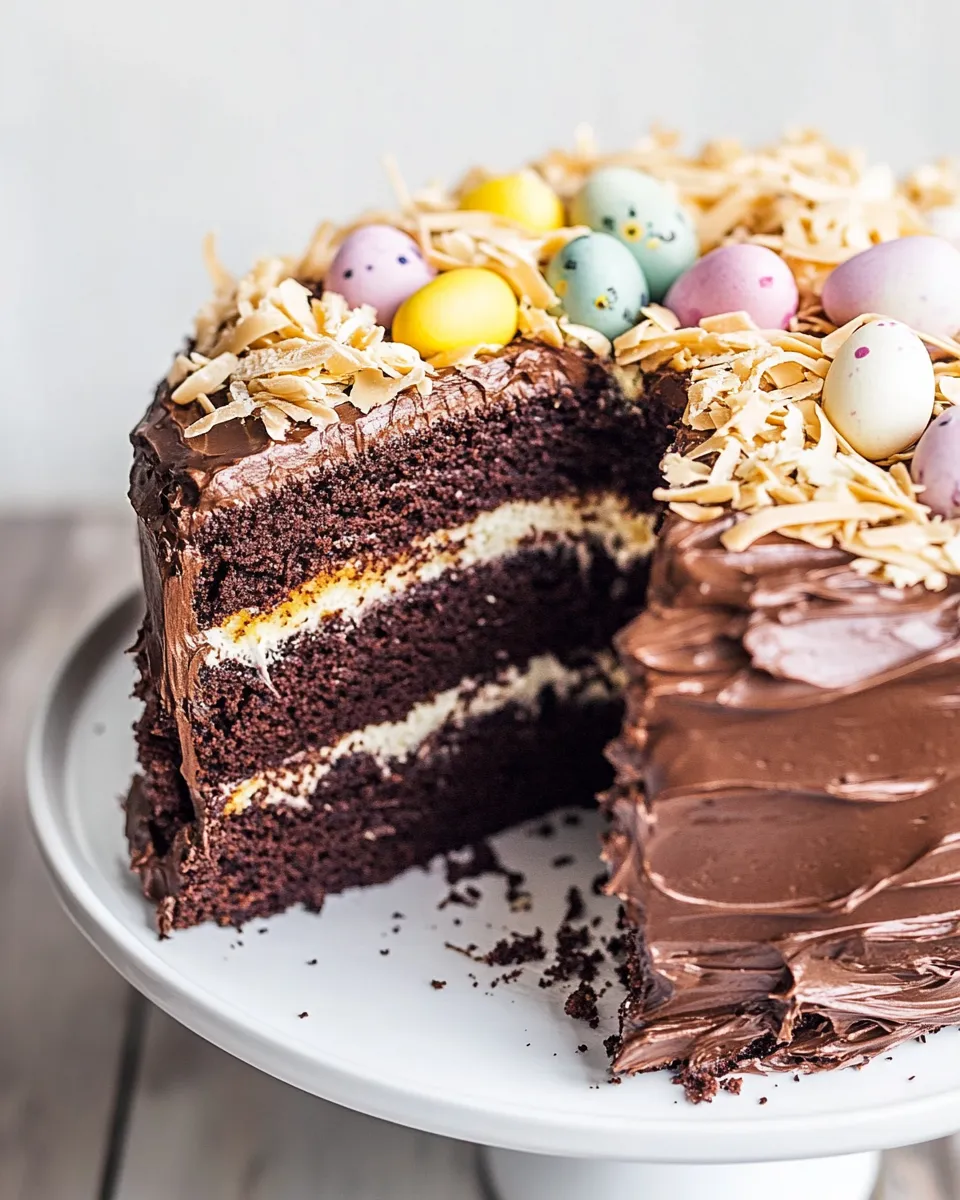
This Chocolate Easter Nest Cake is the sort of dessert I make when I want something that looks festive but doesn’t require a pastry degree. It’s a tender, chocolate layer cake covered in a creamy chocolate buttercream, finished with toasted coconut shaped into a “nest” and filled with Cadbury mini eggs. The result is playful, chocolatey, and reliably popular at gatherings.
I like this cake because the components are straightforward and forgiving. The batter is thin after the hot water is added, which makes for a moist crumb. The buttercream holds toasted coconut well, so you get texture and visual impact without complicated piping. Little assembly steps — leveling, a quick crumb coat, a short chill — make the final finish clean and easy.
Read through the ingredients and the step-by-step method first. Follow the baking and frosting order exactly and you’ll avoid common pitfalls. Below I walk through the ingredients, the exact method from prep to plate, helpful equipment, troubleshooting pointers, and answers to questions I get most often.
Ingredient Checklist
Ingredients
- 1 ¾ cups (210 g) all-purpose flour — provides structure; spoon and level for accurate measuring.
- ¾ cup (75 g) unsweetened cocoa powder — deepens the chocolate flavor in the cake batter.
- 1 ½ teaspoons baking powder — helps the cake rise evenly.
- 1 ½ teaspoons baking soda — works with the wet ingredients for lift and a tender crumb.
- 1 teaspoon salt — balances sweetness and enhances chocolate notes.
- 2 cups (400 g) granulated sugar — sweetens and contributes to the cake’s texture.
- 2 large eggs (2 oz each) — bind and add richness; bring to room temperature for better mixing.
- 1 cup (240 ml) buttermilk (or milk) — adds moisture and acidity; buttermilk gives a slightly tangy depth.
- ½ cup (120 ml) oil (vegetable or canola) — keeps the cake moist; do not substitute with solid fats.
- 2 teaspoons (10 ml) pure vanilla extract — lifts the chocolate flavor; use pure extract for best taste.
- 1 teaspoon espresso powder (optional) — amplifies chocolate notes; omit if you prefer no coffee flavor.
- 1 cup (240 ml) boiling water — thins the batter and blooms the cocoa for a more intense chocolate profile.
- ½ cup (113 g) unsalted butter, softened at room temperature — base for the buttercream; unsalted lets you control seasoning.
- ¾ cup (75 g) cocoa powder — for the frosting; unsweetened to balance powdered sugar.
- 3 cups (360 g) powdered sugar — sweetens and stabilizes the buttercream.
- 3 tablespoons (45 ml) milk — you might need a little more — thins the frosting to spreading consistency.
- 1 teaspoon (5 ml) pure vanilla extract — rounds the buttercream flavor.
- 80 g Cadbury mini eggs — the nest’s colorful center; sub another candy if unavailable but these give the classic look.
- 75 g shredded coconut — toasts into the “nest”; press onto the frosting so it adheres.
Chocolate Easter Nest Cake: From Prep to Plate
- Preheat the oven to 350°F (180°C) or 160°C for a fan oven. Grease two 8-inch (20 cm) cake pans and line the bottoms with parchment paper; grease the parchment.
- In a large bowl sift together 1 ¾ cups (210 g) all-purpose flour, ¾ cup (75 g) unsweetened cocoa powder, 1 ½ teaspoons baking powder, 1 ½ teaspoons baking soda, and 1 teaspoon salt. Add 2 cups (400 g) granulated sugar and whisk to combine. Set aside.
- In a separate bowl whisk together 2 large eggs, 1 cup (240 ml) buttermilk (or milk), ½ cup (120 ml) oil, and 2 teaspoons (10 ml) pure vanilla extract until blended.
- Pour the wet ingredients into the dry ingredients and mix gently until just combined. Do not overmix.
- In a small heatproof bowl dissolve 1 teaspoon espresso powder (if using) in 1 cup (240 ml) boiling water. Stir the boiling water (with dissolved espresso if used) into the batter. The batter will be thin.
- Divide the batter evenly between the prepared pans and smooth the tops.
- Bake for about 30 minutes, or until a toothpick inserted in the center comes out clean. Remove from the oven.
- Let the cakes cool in the pans on a wire rack for 10 minutes. Run a knife around the edges, invert the cakes onto the rack, peel off the parchment, and cool completely.
- Meanwhile make the buttercream: in a stand mixer fitted with the paddle (or with a hand mixer), beat ½ cup (113 g) softened unsalted butter on medium-high for 3 minutes until creamy.
- Add ¾ cup (75 g) unsweetened cocoa powder to the butter and beat at medium speed for 2 minutes.
- With the mixer on low, add 3 cups (360 g) powdered sugar slowly until incorporated. Increase speed to medium and beat for 2 minutes.
- Add 3 tablespoons (45 ml) milk and 1 teaspoon (5 ml) pure vanilla extract and beat for 1 minute. If the frosting is too stiff to spread, add a little more milk a small amount at a time until you reach a spreadable consistency.
- Toast 75 g shredded coconut in a dry skillet over medium heat, stirring constantly, until golden brown; transfer immediately to a plate to stop cooking. Alternatively, spread the coconut on a baking sheet and toast in the oven at 320°F (160°C) for about 5 minutes, watching closely so it does not burn. Let cool.
- If the cake layers are domed, level them with a serrated knife so the layers stack evenly.
- Place one cake layer on your serving plate or cake board. Spread an even layer of buttercream on top (use part of the frosting for this filling).
- Place the second cake layer on top. Apply a thin crumb coat of buttercream over the entire cake to lock in crumbs.
- Chill the crumb-coated cake in the refrigerator for 20 minutes to set the frosting.
- Remove the cake from the fridge and apply the remaining buttercream to fully cover and smooth the cake.
- To decorate, place 80 g Cadbury mini eggs in the center of the top of the cake to form a nest. Pile and arrange the toasted coconut around the eggs on the top to resemble a nest, and press the toasted coconut gently onto the sides of the cake so it adheres to the frosting.
Why It’s Crowd-Pleasing
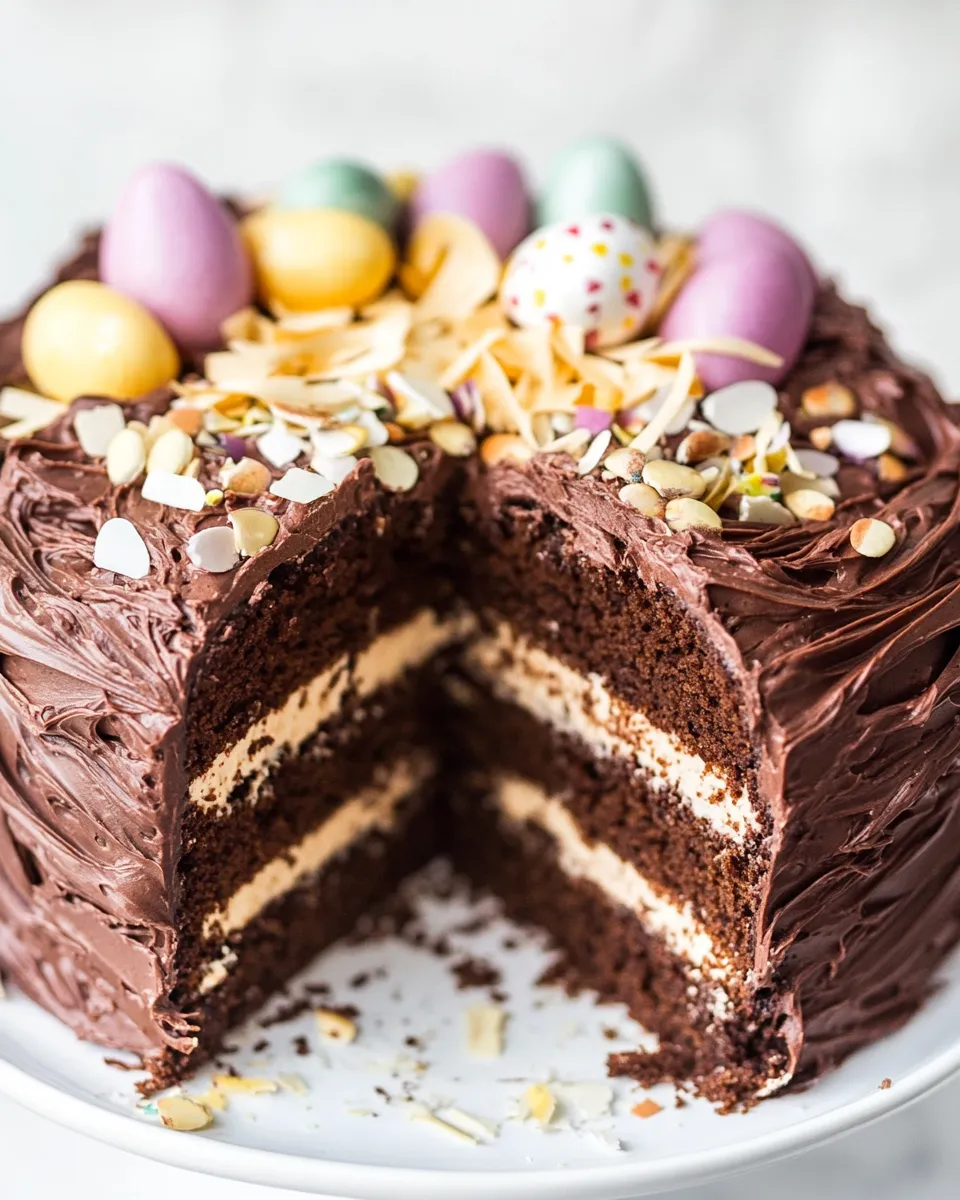
This cake strikes a balance between familiar and festive. Chocolate is a nearly universal crowd-pleaser, and the toasted coconut adds a nutty, crunchy contrast to the silky buttercream. The nest of coconut and Cadbury eggs is eye-catching without demanding delicate decoration skills, so it reads as special even if you have just basic tools.
Flavor-wise, the hot water (and optional espresso) intensifies the cocoa, giving a deep, rich base that pairs well with the slightly sweet, cocoa-forward buttercream. The texture is forgiving: oil in the batter keeps slices moist even when the cake sits for a day, which helps at parties and potlucks.
No-Store Runs Needed
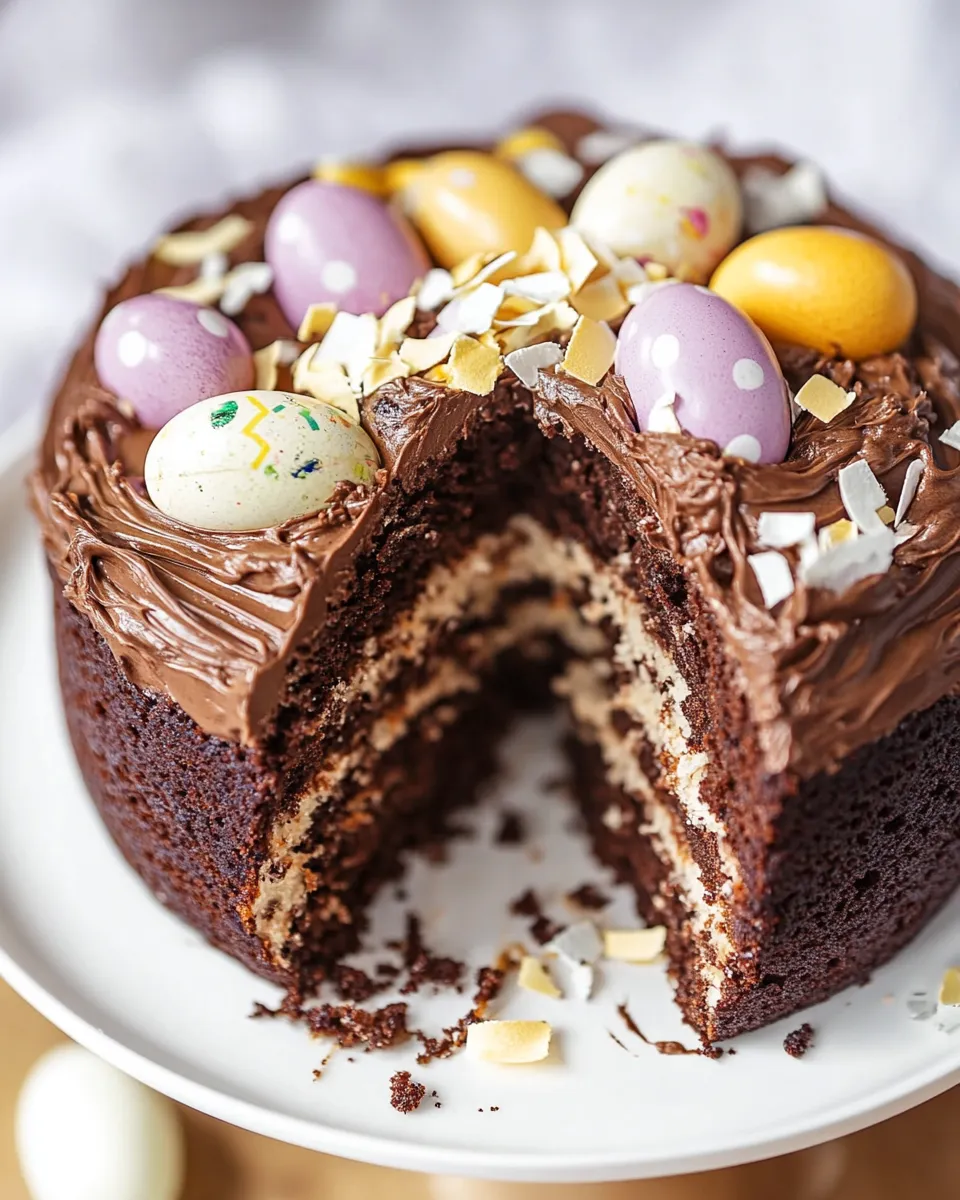
One of the best things about this recipe is it uses pantry staples. You probably have flour, sugar, cocoa, baking soda, and baking powder already. The only items some homes might lack are Cadbury mini eggs and shredded coconut — both are optional in a pinch (use any small candy and unsweetened coconut or skip it for a simpler finish).
If you don’t have buttermilk, use regular milk. If you don’t have espresso powder, skip it; the cake still bakes into a moist, flavorful chocolate layer. The method is designed to be forgiving and use what you have.
Appliances & Accessories
- Oven — reliable temperature is vital; use an oven thermometer if yours runs hot or cold.
- Two 8-inch (20 cm) cake pans — for even layer baking; use same-sized pans for stacked cakes.
- Parchment paper — prevents sticking and makes removing layers simple.
- Stand mixer or hand mixer — speeds buttercream; you can mix by hand but it will take longer.
- Wire rack — for cooling the cakes evenly.
- Serrated knife or cake leveler — for trimming domes and stacking cleanly.
- Offset spatula or bench scraper — for spreading frosting and smoothing the crumb coat.
- Dry skillet or baking sheet — for toasting shredded coconut.
Errors to Dodge
Overmixing the batter after combining wet and dry will develop gluten and make the cake tough. Mix only until ingredients come together. Likewise, don’t skip the hot water step — it blooms the cocoa powder and creates a thin batter that bakes into a moist cake.
When toasting coconut, stay with it. Coconut moves from golden to burnt very quickly. As soon as you see a light golden color and smell the nutty aroma, remove it from the heat and cool on a plate.
Also, don’t apply your final frosting while the crumb coat is still tacky; chill it for the recommended 20 minutes so crumbs don’t mar the finish. If your buttercream is too stiff, add milk a teaspoon at a time — but don’t add too much or you’ll lose structure for the coconut to stick to the sides.
Holiday & Seasonal Touches
For Easter, use pastel-colored eggs as shown. You can swap the Cadbury mini eggs for jelly beans, colored chocolate chips, or small candy-coated chocolates for a different palette. Add small edible flowers or chopped toasted nuts around the base for a rustic spring look.
For other occasions, change the candy center to match the season — red and green for winter holidays, or a ring of fresh berries for a spring berry affair (press the toasted coconut more thinly so the berries sit securely).
Method to the Madness
Break the process into three focused stages: batter, frosting, and finish. Make the batter and bake both layers together to save time. While the cakes cool, make the buttercream and toast the coconut. Level, fill, crumb-coat, chill, then finish and decorate. Working in stages keeps the kitchen tidy and reduces the risk of rushed, sloppy frosting.
When mixing the butter and cocoa for the frosting, beat sufficiently to remove lumps and to aerate the butter a bit — that gives a smoother, lighter finish. Add powdered sugar on low so it doesn’t puff into the air; then speed up to medium for a glossy, smooth texture.
Meal Prep & Storage Notes
You can bake the cake layers a day ahead and wrap them well in plastic wrap at room temperature. The assembled, unfrosted layers keep better than a fully frosted cake in terms of preventing the coconut from absorbing moisture.
Once frosted and decorated, store the cake in a cake box or loosely covered at cool room temperature for up to 24 hours. For longer storage, refrigerate: keep the cake wrapped or in an airtight container for up to 4 days. Coconut may soften over time in the fridge; if you plan to store longer, toast extra coconut and reapply right before serving for peak texture.
Your Questions, Answered
Can I make this gluten-free? Use a 1:1 gluten-free flour blend that includes xanthan gum and follow the recipe as written. The texture will vary slightly, but the overall method holds.
Can I freeze the cake? Yes. Freeze individual unfrosted layers wrapped tightly in plastic and foil for up to 3 months. Thaw in the refrigerator overnight, bring to room temperature, then assemble and frost.
Why did my frosting get grainy? If your butter was too cold, the cocoa and powdered sugar may not incorporate smoothly. Beat the butter until creamy before adding dry ingredients. If grains persist, beat longer at medium speed and add a teaspoon of milk to help smooth it out.
Final Thoughts
This Chocolate Easter Nest Cake is a reliable showstopper that’s kinder to your time and nerves than it looks. The combination of a tender, deeply chocolate cake, creamy cocoa buttercream, and toasted coconut nest is simple and effective. Follow the method, respect the chill for the crumb coat, and you’ll have a festive centerpiece that disappears fast.
Happy baking — and if you make this, stash an extra Cadbury mini egg or two for the person who sneaks a piece before dessert is served.

Chocolate Easter Nest Cake
Ingredients
Ingredients
- ?1 3/4 cups 210 gall-purpose flour
- ?3/4 cup 75 gunsweetened cocoa powder
- ?1 1/2 teaspoonsbaking powder
- ?1 1/2 teaspoonsbaking soda
- ?1 teaspoonsalt
- ?2 cups 400 ggranulated sugar
- ?2 largeeggs2 oz each
- ?1 cup 240 mlbuttermilkor milk
- ?1/2 cup 120 mloilvegetable or canola
- ?2 teaspoons 10 mlpure vanilla extract
- ?1 teaspoonespresso powderoptional
- ?1 cup 240 mlboiling water
- ?1/2 cup 113 gunsalted buttersoftened at room temperature
- ?3/4 cups 75 gcocoa powder
- ?3 cups 360 gpowdered sugar
- ?3 tablespoons 45 mlmilkyou might need a little more
- ?1 teaspoon 5 mlpure vanilla extract
- ?80 gCadbury mini eggs
- ?75 gshredded coconut
Instructions
Instructions
- Preheat the oven to 350°F (180°C) or 160°C for a fan oven. Grease two 8-inch (20 cm) cake pans and line the bottoms with parchment paper; grease the parchment.
- In a large bowl sift together 1 ¾ cups (210 g) all-purpose flour, ¾ cup (75 g) unsweetened cocoa powder, 1 ½ teaspoons baking powder, 1 ½ teaspoons baking soda, and 1 teaspoon salt. Add 2 cups (400 g) granulated sugar and whisk to combine. Set aside.
- In a separate bowl whisk together 2 large eggs, 1 cup (240 ml) buttermilk (or milk), ½ cup (120 ml) oil, and 2 teaspoons (10 ml) pure vanilla extract until blended.
- Pour the wet ingredients into the dry ingredients and mix gently until just combined. Do not overmix.
- In a small heatproof bowl dissolve 1 teaspoon espresso powder (if using) in 1 cup (240 ml) boiling water. Stir the boiling water (with dissolved espresso if used) into the batter. The batter will be thin.
- Divide the batter evenly between the prepared pans and smooth the tops.
- Bake for about 30 minutes, or until a toothpick inserted in the center comes out clean. Remove from the oven.
- Let the cakes cool in the pans on a wire rack for 10 minutes. Run a knife around the edges, invert the cakes onto the rack, peel off the parchment, and cool completely.
- Meanwhile make the buttercream: in a stand mixer fitted with the paddle (or with a hand mixer), beat ½ cup (113 g) softened unsalted butter on medium-high for 3 minutes until creamy.
- Add ¾ cup (75 g) unsweetened cocoa powder to the butter and beat at medium speed for 2 minutes.
- With the mixer on low, add 3 cups (360 g) powdered sugar slowly until incorporated. Increase speed to medium and beat for 2 minutes.
- Add 3 tablespoons (45 ml) milk and 1 teaspoon (5 ml) pure vanilla extract and beat for 1 minute. If the frosting is too stiff to spread, add a little more milk a small amount at a time until you reach a spreadable consistency.
- Toast 75 g shredded coconut in a dry skillet over medium heat, stirring constantly, until golden brown; transfer immediately to a plate to stop cooking. Alternatively, spread the coconut on a baking sheet and toast in the oven at 320°F (160°C) for about 5 minutes, watching closely so it does not burn. Let cool.
- If the cake layers are domed, level them with a serrated knife so the layers stack evenly.
- Place one cake layer on your serving plate or cake board. Spread an even layer of buttercream on top (use part of the frosting for this filling).
- Place the second cake layer on top. Apply a thin crumb coat of buttercream over the entire cake to lock in crumbs.
- Chill the crumb-coated cake in the refrigerator for 20 minutes to set the frosting.
- Remove the cake from the fridge and apply the remaining buttercream to fully cover and smooth the cake.
- To decorate, place 80 g Cadbury mini eggs in the center of the top of the cake to form a nest. Pile and arrange the toasted coconut around the eggs on the top to resemble a nest, and press the toasted coconut gently onto the sides of the cake so it adheres to the frosting.
Equipment
- 2 8" inch cake pans
Notes
Use cake pans instead of springform pans as the batter of this cake is thin and might cause leakage.
Before you start, make sure that your baking powder is active and not past its expiry date. To check, add half a teaspoon of baking powder to a bowl with 2 teaspoons of hot water. If the baking powder bubbles, then it’s good to go. If not, then it’s dead and you need to get a new one.
This cake makes 8 to 10 servings.
Storing: You can bake the cake and wrap it in parchment paper followed by plastic wrap and store it at room temperature for up to 2 days. Frosted cakes keep perfectly for 4-5 days covered at room temperature. If it’s hot where you are, store it in the fridge but take it out of the fridge 1 hour before serving).
Nutrition: a rough estimate is calculated per slice of cake without the frosting or decoration.