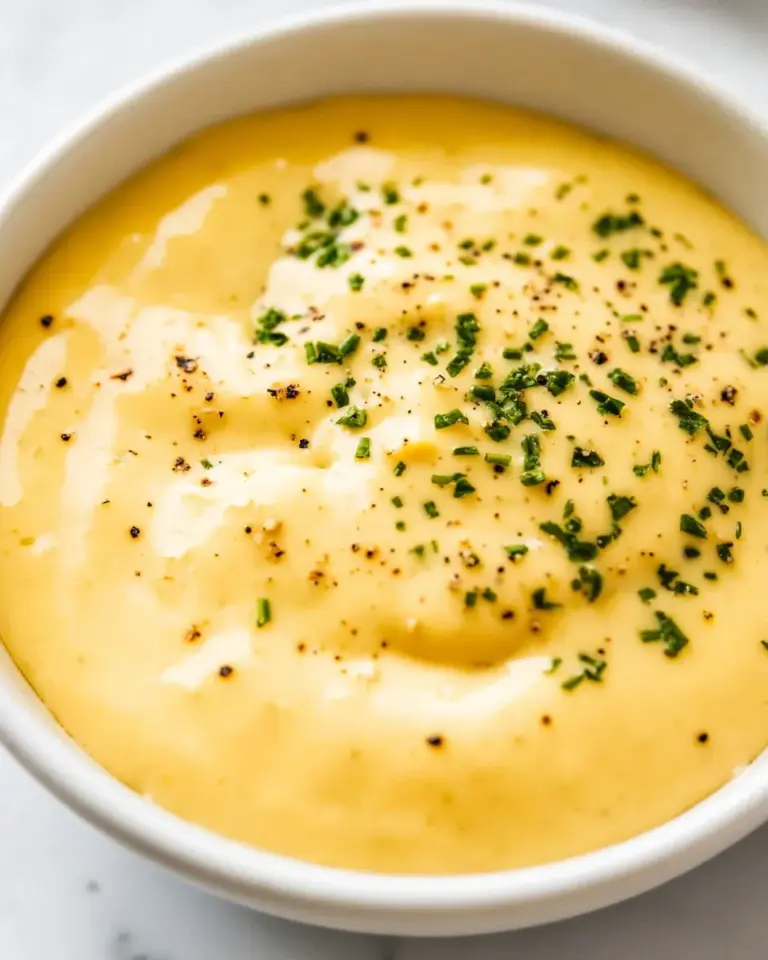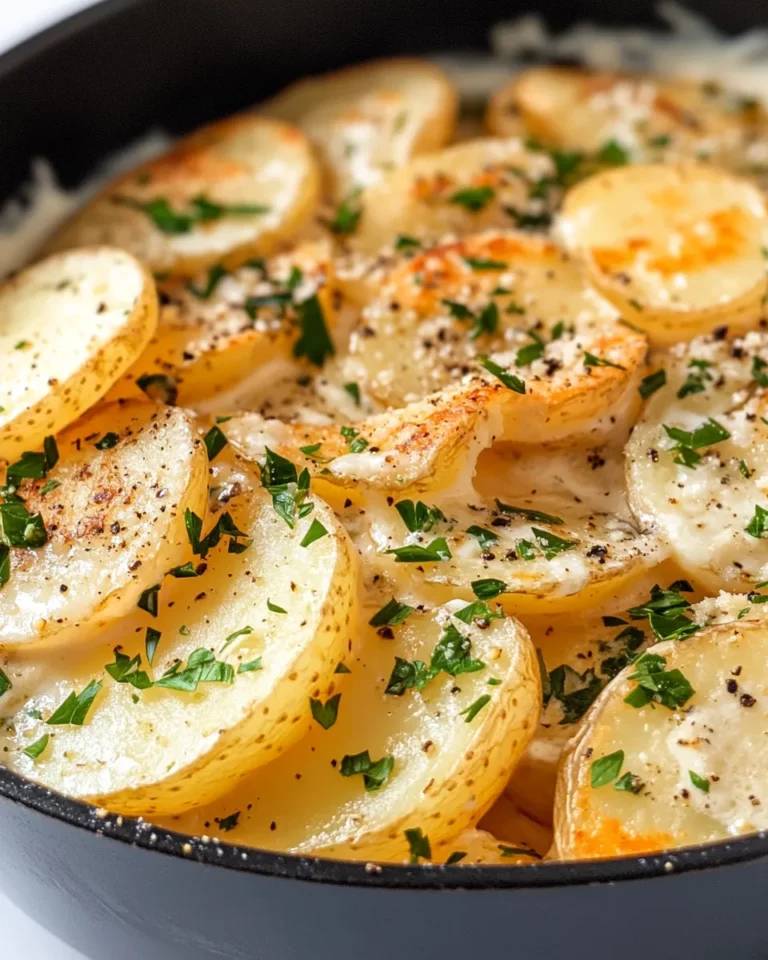
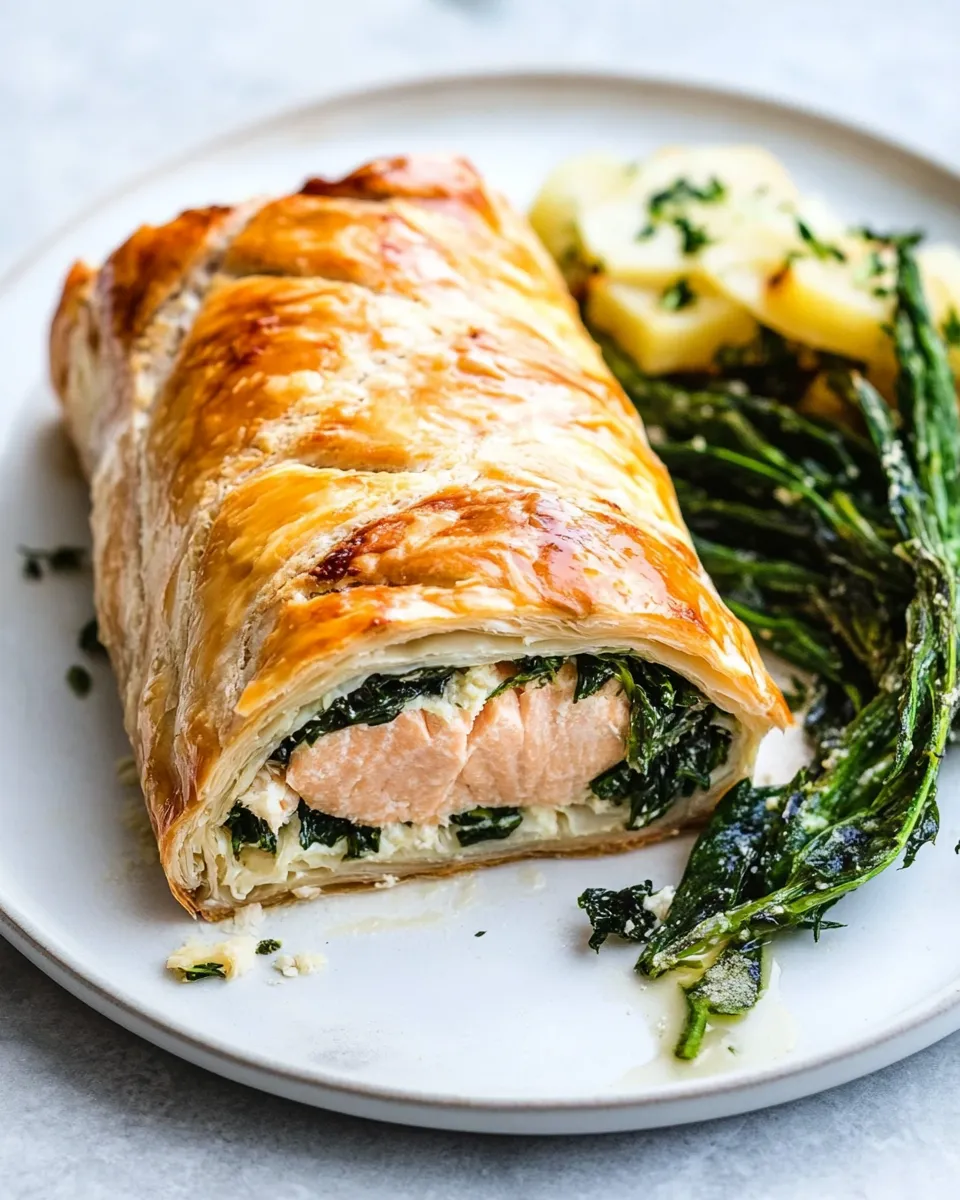
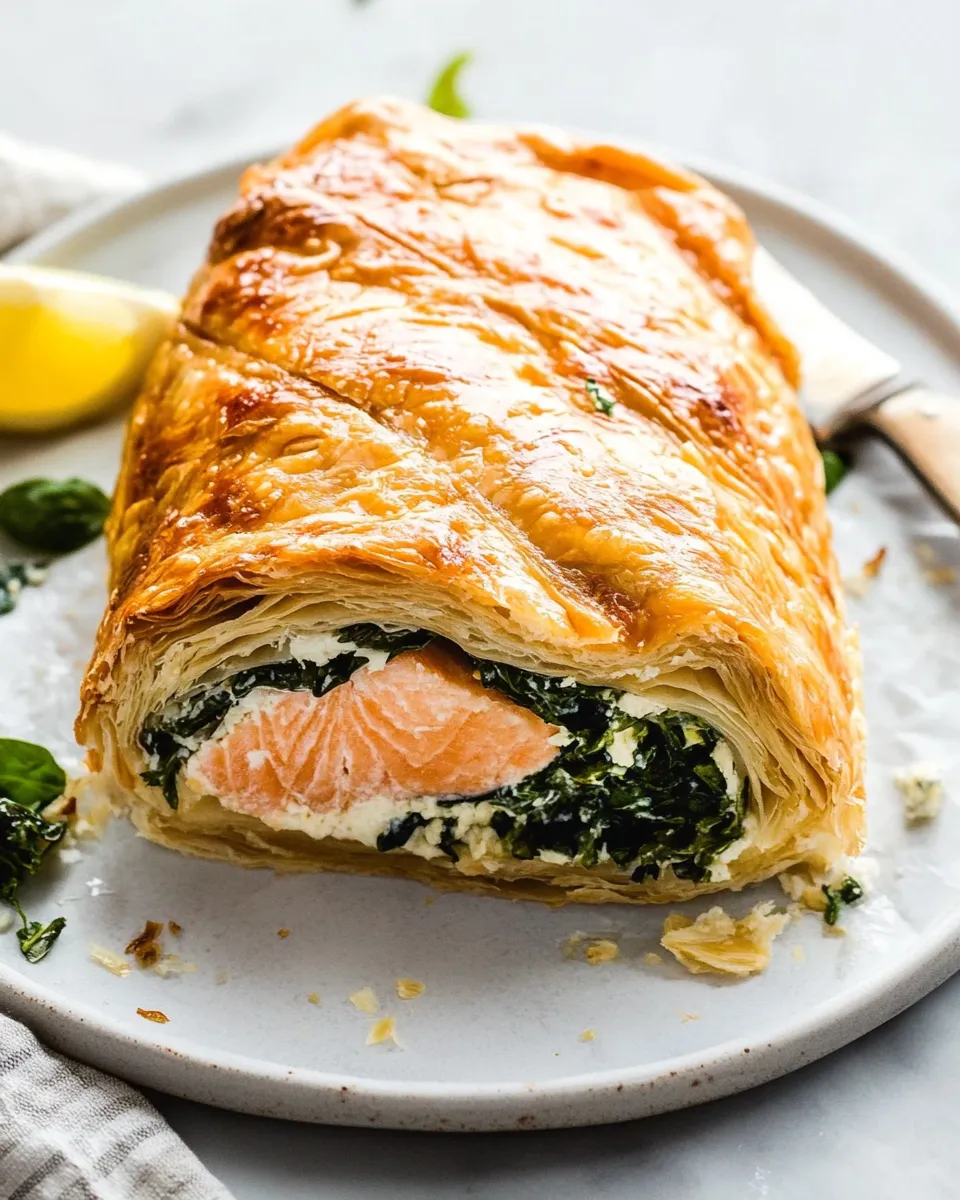
This Salmon Wellington is one of those recipes that looks restaurant-level but comes together without drama. Flaky puff pastry, a creamy spinach filling, and tender salmon fillets make a composed, impressive dinner that’s easy to time and easy to plate. I use it for dinner parties and weeknight celebrations alike.
The assembly is straightforward: a quick sauté for the spinach mixture, season the fish, wrap each fillet in pastry, and bake. The result is golden, flaky pastry surrounding a moist, flavorful center—comforting and refined at once. You’ll get consistent results even the first time you try it, as long as you follow a few simple sequencing rules.
Below you’ll find a concise shopping list, exact ingredients, step-by-step instructions from start to finish, and practical notes—what to watch for, smart substitutions, and storage tips so you can plan ahead. No fluff, just everything you need to make a great Salmon Wellington.
Shopping List
- 2 tablespoons unsalted butter — for sautéeing the onion and spinach.
- 1 yellow onion (diced) — provides sweetness and structure to the filling.
- 4 cups (120 grams) baby spinach leaves (about 4 ounces) — the main green for the filling.
- 2 cloves garlic (minced, about 2 teaspoons) — aromatic lift for the filling.
- ½ teaspoon salt — total measured salt for seasoning; split in the recipe.
- ¼ teaspoon ground black pepper — total measured pepper; split in the recipe.
- 1 cup (100 grams) cream cheese, softened — gives the filling its creamy body.
- ¼ cup (25 grams) dried breadcrumbs — helps absorb moisture and bind the filling.
- ¼ cup (25 grams) parmesan — savory, salty flavor for the filling.
- 1 sheet frozen puff pastry, thawed in the fridge — the golden, flaky exterior.
- 4 (6 ounce) salmon fillets, skin removed — the stars of the dish.
- 1 egg, beaten — for an egg wash to get a glossy, golden crust.
Salmon Wellington in Steps
Ingredients
- 2 tablespoons unsalted butter — for sautéing the onion and spinach so they don’t stick.
- 1 yellow onion, diced — adds sweetness and a soft texture to the filling.
- 4 cups (120 grams) baby spinach leaves (about 4 ounces) — wilts down into the cream cheese base.
- 2 cloves garlic, minced (about 2 teaspoons) — quick burst of flavor; add toward the end of cooking.
- ½ teaspoon salt — divided; half seasons the spinach mixture, half seasons the salmon.
- ¼ teaspoon ground black pepper — divided; a touch on the spinach and on the salmon fillets.
- 1 cup (100 grams) cream cheese, softened — makes the filling rich and cohesive when mixed with spinach.
- ¼ cup (25 grams) dried breadcrumbs — controls moisture and gives structure to the filling.
- ¼ cup (25 grams) parmesan — umami and salt in the filling.
- 1 sheet frozen puff pastry, thawed in the fridge — cut into four rectangles to wrap each fillet.
- 4 (6 ounce) salmon fillets, skin removed — use uniform thickness for even cooking.
- 1 egg, beaten — egg wash for sealing edges and browning the pastry.
- Preheat the oven to 200°C (390°F). Line a baking sheet with parchment paper or lightly grease it.
- Make the spinach filling: melt 2 tablespoons unsalted butter in a large skillet over medium heat. Add the 1 yellow onion (diced) and cook, stirring occasionally, until the onion is soft and translucent, about 5–7 minutes.
- Add 4 cups (120 grams) baby spinach leaves to the skillet and cook, stirring, until the spinach just wilts. Add 2 cloves garlic (minced) and cook for 30 seconds.
- Season the mixture by adding half of the measured seasoning: 1/4 teaspoon of the 1/2 teaspoon salt and 1/8 teaspoon of the 1/4 teaspoon ground black pepper. Stir to combine.
- Add 1 cup (100 grams) softened cream cheese to the skillet and stir until it melts and blends into the spinach. Stir in 1/4 cup (25 grams) grated parmesan and 1/4 cup (25 grams) dried breadcrumbs until evenly combined. Remove the pan from the heat and let the filling cool slightly.
- Prepare the puff pastry and salmon: on a clean work surface, unfold or roll the 1 sheet frozen puff pastry (thawed in the fridge) if needed to make it large enough to cut. Cut the sheet into four equal rectangles (one rectangle per salmon fillet). If a rectangle is too small for a fillet, gently roll it larger.
- Divide the remaining seasoning between the four fillets: sprinkle the remaining 1/4 teaspoon salt and 1/8 teaspoon ground black pepper evenly over the 4 (6-ounce) salmon fillets (skin removed).
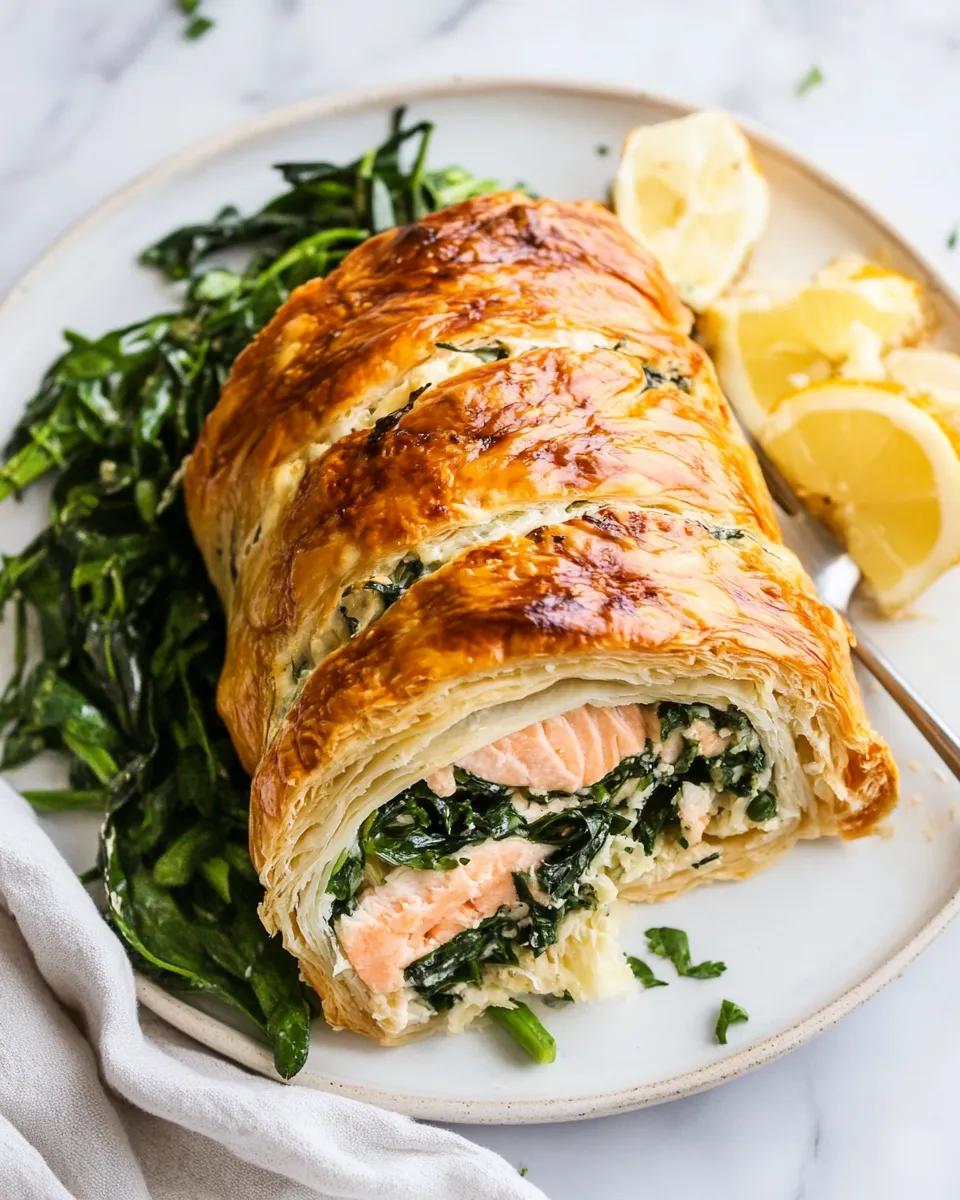
- Assemble each Wellington: place one seasoned salmon fillet in the center of a pastry rectangle, leaving about 2 inches of pastry around the edges. Spoon an even portion of the spinach-cream cheese mixture on top of each fillet.
- Brush the edges of each pastry rectangle with the beaten egg. Fold the pastry up and over the salmon to enclose it, sealing the edges and pressing gently to close. Place each Wellington seam-side down on the prepared baking sheet. Use a sharp knife to make shallow crosshatch slits on the top of each Wellington to allow steam to escape. Brush the tops with any remaining beaten egg.
- Bake in the preheated oven for 30 minutes, or until the pastry is golden brown. Remove from the oven and let the Wellingtons rest a few minutes before serving.
Why You’ll Keep Making It
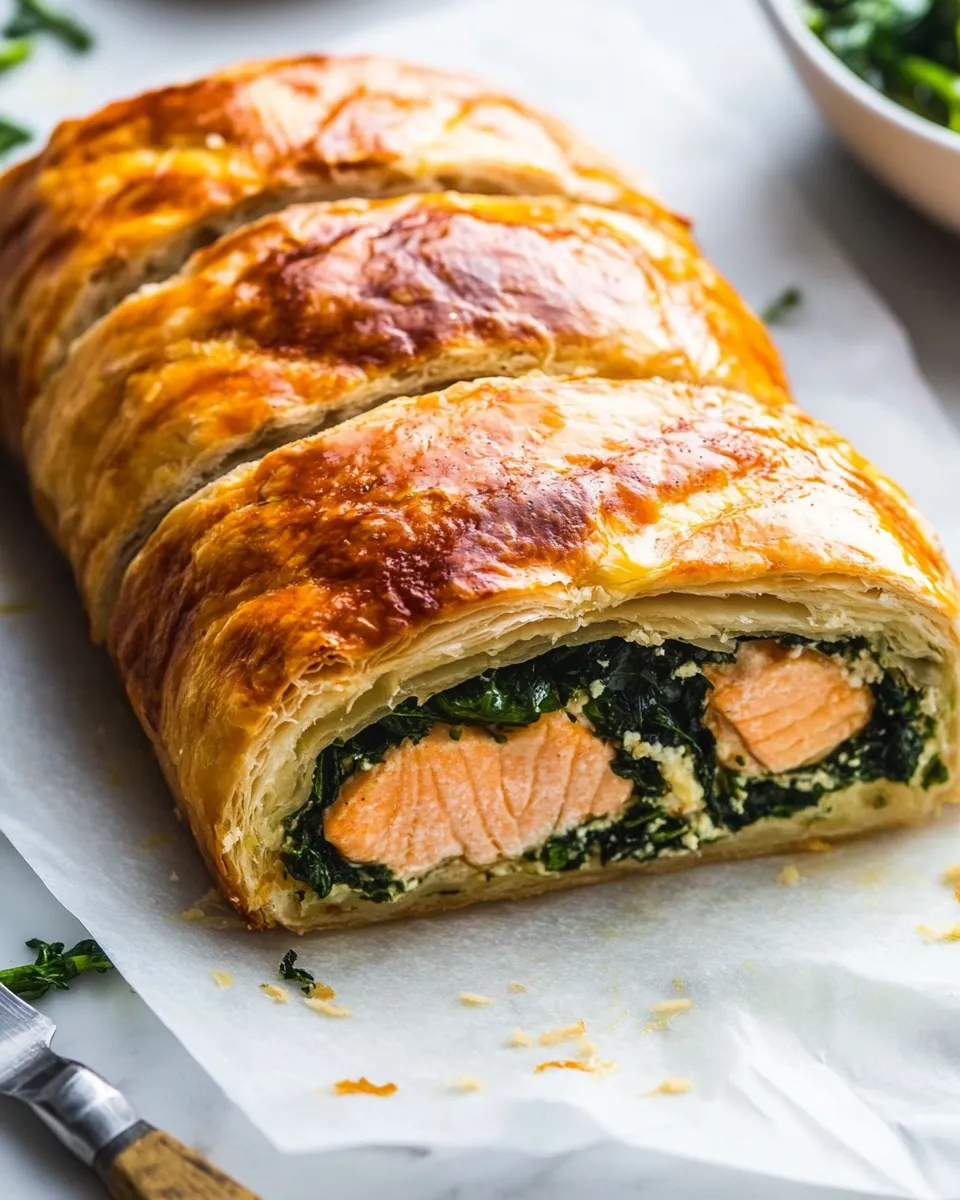
Salmon Wellington combines three strengths: speed, presentation, and reliable flavor. It’s fast to assemble once your filling is ready, and it looks like something you’d pay for at a fine restaurant. The components—spinach, cream cheese, parmesan, and salmon—play well together, producing a balanced, satisfying bite every time.
It’s also flexible on timing. You can make the filling and portion it ahead of time, then finish the assembly before guests arrive. The technique translates across fish and proteins, too: learn this once and you’ll find yourself wrapping shrimp, cod, or even a vegetable parcel in puff pastry on repeat.
Flavor-Forward Alternatives
- Herbed cream cheese: Fold in a tablespoon of chopped fresh dill or chives to the cream cheese for a brighter, herb-forward filling.
- Mustard glaze: Brush a thin layer of Dijon mustard on the salmon before the spinach for a tangy contrast that cuts through the richness.
- Citrus lift: Add finely grated lemon zest (about 1 teaspoon) into the cream cheese mixture to brighten the filling.
- Smoky touch: Substitute smoked salmon slices under the puff pastry for a smoky, cured note—reduce added salt accordingly.
- Nuts for texture: Stir in a tablespoon of finely chopped toasted pine nuts or walnuts into the filling for crunch.
Hardware & Gadgets
- Sharp knife — for slicing the puff pastry cleanly and scoring the tops.
- Baking sheet with parchment — prevents sticking and ensures even browning.
- Large skillet — needed to cook the onion and spinach with room to stir.
- Pastry brush — for an even egg wash that produces glossy color.
- Rolling pin (optional) — only if you need to gently enlarge pastry rectangles.
Things That Go Wrong
Here are the common missteps and how to avoid them.
- Soggy bottom: If your spinach filling is too wet, the pastry can go soggy. Make sure to cook until the spinach is just wilted, and allow the filling to cool a bit before assembling so it doesn’t steam the pastry from the inside.
- Underbaked interior: If your salmon fillets are thick, the 30-minute bake may leave them underdone. Use fillets of consistent, moderate thickness (about 6 oz each as directed), and rest a few minutes after baking—the carryover heat will finish them.
- Overbrowned pastry before fish cooks: If your oven runs hot, tent the tops lightly with foil toward the end of baking so the pastry doesn’t darken while the fish finishes.
- Pastry sealing fails: If the egg wash is too cold, it won’t act as glue. Brush room-temperature beaten egg on the pastry edges and press gently but firmly to seal.
- Filling falls out when cutting: Let the Wellingtons rest a few minutes after baking so the filling sets; cut with a sharp knife in a single smooth motion.
Dietary Customizations
- Lower sodium: Omit the added parmesan and reduce the added salt; finish plates with a lemon wedge for brightness instead of salt.
- Dairy-free: Replace cream cheese with a firm, dairy-free spread that tolerates heat. Note: texture will differ and some binders like a few tablespoons of cooked quinoa or extra breadcrumbs may help.
- Gluten-free: Use a certified gluten-free puff pastry sheet and gluten-free breadcrumbs. Baking time may vary slightly—watch for a golden crust.
- Vegetarian option: Replace salmon fillets with thick halved portobello mushrooms or a slab of roasted butternut squash; keep the filling as-is or swap parmesan for a vegetarian hard cheese.
Pro Tips & Notes
Before you begin
- Thaw the puff pastry in the fridge overnight. Cold pastry is easier to handle and holds its layers better when baked.
- Remove salmon from the fridge 15–20 minutes before assembling so the fillets lose their chill slightly—this helps even cooking.
Assembly and bake
- Work on a lightly floured or parchment-lined surface to prevent sticking when cutting pastry rectangles.
- Leave about 2 inches of pastry around the fillet as directed—this gives you enough pastry to seal without over-stretching the sheet.
- Score shallow crosshatch slits on top just before baking so steam can escape and the pastry puffs evenly.
- Watch oven color in the last 5 minutes—golden brown is the target.
Prep Ahead & Store
Make the spinach-cream cheese filling up to 48 hours ahead and keep it refrigerated in an airtight container. Assemble the Wellingtons up to 2 hours before baking and keep them covered in the fridge on the baking sheet; brush with egg wash right before baking for best color.
Leftovers: Cool to room temperature, then refrigerate in an airtight container for up to 2 days. Reheat in a 180°C (350°F) oven for 10–12 minutes to refresh the pastry. Avoid microwaving, which will make the pastry soggy.
Freezing: Fully assembled, unbaked Wellingtons can be flash-frozen on a tray, transferred to a freezer bag, and baked from frozen—add ~10–15 minutes to the baking time and tent with foil if the tops brown too fast.
Ask the Chef
Q: Can I use salmon with skin on? A: Yes, but remove or crisp the skin beforehand; the recipe assumes skin removed so the pastry seals tightly. If leaving the skin, consider placing the fillet skin-side down and trimming any excess to avoid uneven wrapping.
Q: Can I swap the cream cheese for ricotta? A: Ricotta is looser and will make the filling wetter; if you swap, drain the ricotta well and add a tablespoon or two of breadcrumbs to compensate.
Q: Can I make larger single Wellingtons to slice? A: Yes. If you use a larger fillet, adjust baking time—thicker pieces need more time. Use an instant-read thermometer and remove at around 50–52°C (122–125°F) for medium-rare to medium, depending on your preference.
Bring It Home
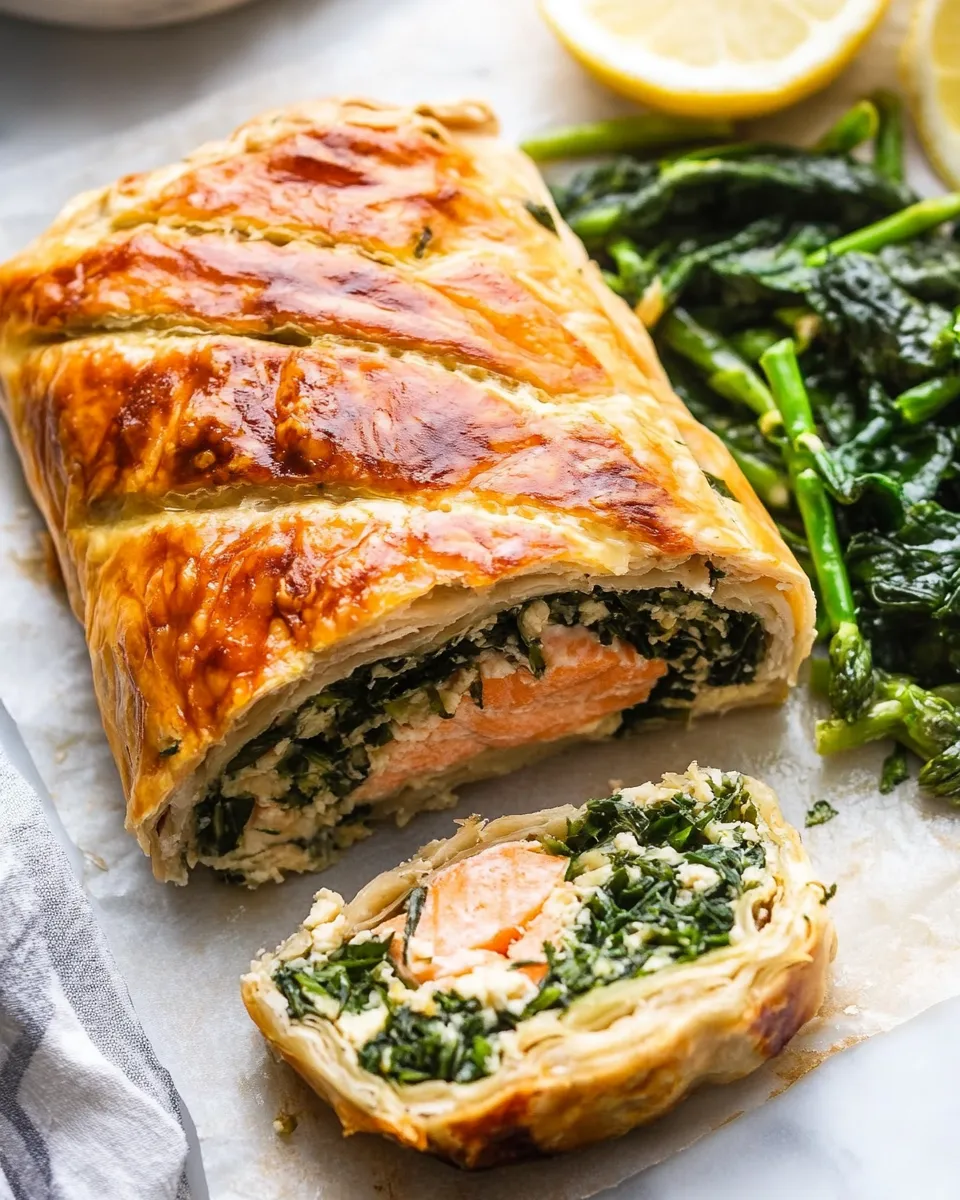
To serve, let each Salmon Wellington rest 3–5 minutes after it comes out of the oven so the filling firms slightly. Slice gently and plate with a simple green salad, steamed asparagus, or lemon-herb roasted potatoes. A squeeze of fresh lemon over the top brightens the richness and ties the dish together.
This is a dependable, crowd-pleasing recipe that rewards small attentions: cool the filling, seal the pastry well, and time your bake. Follow the steps above and you’ll have a show-stopping Salmon Wellington with minimal stress. Enjoy.
Salmon Wellington
Ingredients
Ingredients
- ?2 tablespoonsunsalted butter
- ?1 yellow oniondiced
- ?4 cups 120 gramsbaby spinach leavesabout 4 ounces
- ?2 clovesgarlicminced about 2 teaspoons
- ?1/2 teaspoonsalt
- ?1/4 teaspoonground black pepper
- ?? cup 100 gramscream cheesesoftened
- ?1/4 cup 25 gramsdried breadcrumbs
- ?1/4 cup 25 gramsparmesan
- ?1 sheetfrozen puff pastrythawed in the fridge
- ?4 6 ouncesalmon filletsskin removed
- ?1 eggbeaten
Instructions
Instructions
- Preheat the oven to 200°C (390°F). Line a baking sheet with parchment paper or lightly grease it.
- Make the spinach filling: melt 2 tablespoons unsalted butter in a large skillet over medium heat. Add the 1 yellow onion (diced) and cook, stirring occasionally, until the onion is soft and translucent, about 5–7 minutes.
- Add 4 cups (120 grams) baby spinach leaves to the skillet and cook, stirring, until the spinach just wilts. Add 2 cloves garlic (minced) and cook for 30 seconds.
- Season the mixture by adding half of the measured seasoning: 1/4 teaspoon of the 1/2 teaspoon salt and 1/8 teaspoon of the 1/4 teaspoon ground black pepper. Stir to combine.
- Add 1 cup (100 grams) softened cream cheese to the skillet and stir until it melts and blends into the spinach. Stir in 1/4 cup (25 grams) grated parmesan and 1/4 cup (25 grams) dried breadcrumbs until evenly combined. Remove the pan from the heat and let the filling cool slightly.
- Prepare the puff pastry and salmon: on a clean work surface, unfold or roll the 1 sheet frozen puff pastry (thawed in the fridge) if needed to make it large enough to cut. Cut the sheet into four equal rectangles (one rectangle per salmon fillet). If a rectangle is too small for a fillet, gently roll it larger.
- Divide the remaining seasoning between the four fillets: sprinkle the remaining 1/4 teaspoon salt and 1/8 teaspoon ground black pepper evenly over the 4 (6-ounce) salmon fillets (skin removed).
- Assemble each Wellington: place one seasoned salmon fillet in the center of a pastry rectangle, leaving about 2 inches of pastry around the edges. Spoon an even portion of the spinach-cream cheese mixture on top of each fillet.
- Brush the edges of each pastry rectangle with the beaten egg. Fold the pastry up and over the salmon to enclose it, sealing the edges and pressing gently to close. Place each Wellington seam-side down on the prepared baking sheet. Use a sharp knife to make shallow crosshatch slits on the top of each Wellington to allow steam to escape. Brush the tops with any remaining beaten egg.
- Bake in the preheated oven for 30 minutes, or until the pastry is golden brown. Remove from the oven and let the Wellingtons rest a few minutes before serving.
Equipment
- Oven
- Sheet Pan
Notes
Store:Store in the fridge in an airtight container for up to 3 days.
To reheat: Reheat in the oven at 180°C (356°F) for 10-15 minutes, or until warmed through. Or reheat in the microwave, however, puff pastry has a better texture if reheated in the oven.
Make sure that you’re using skinless salmon in this recipe. If you buy it with skin-on, you can carefully remove it with a knife.