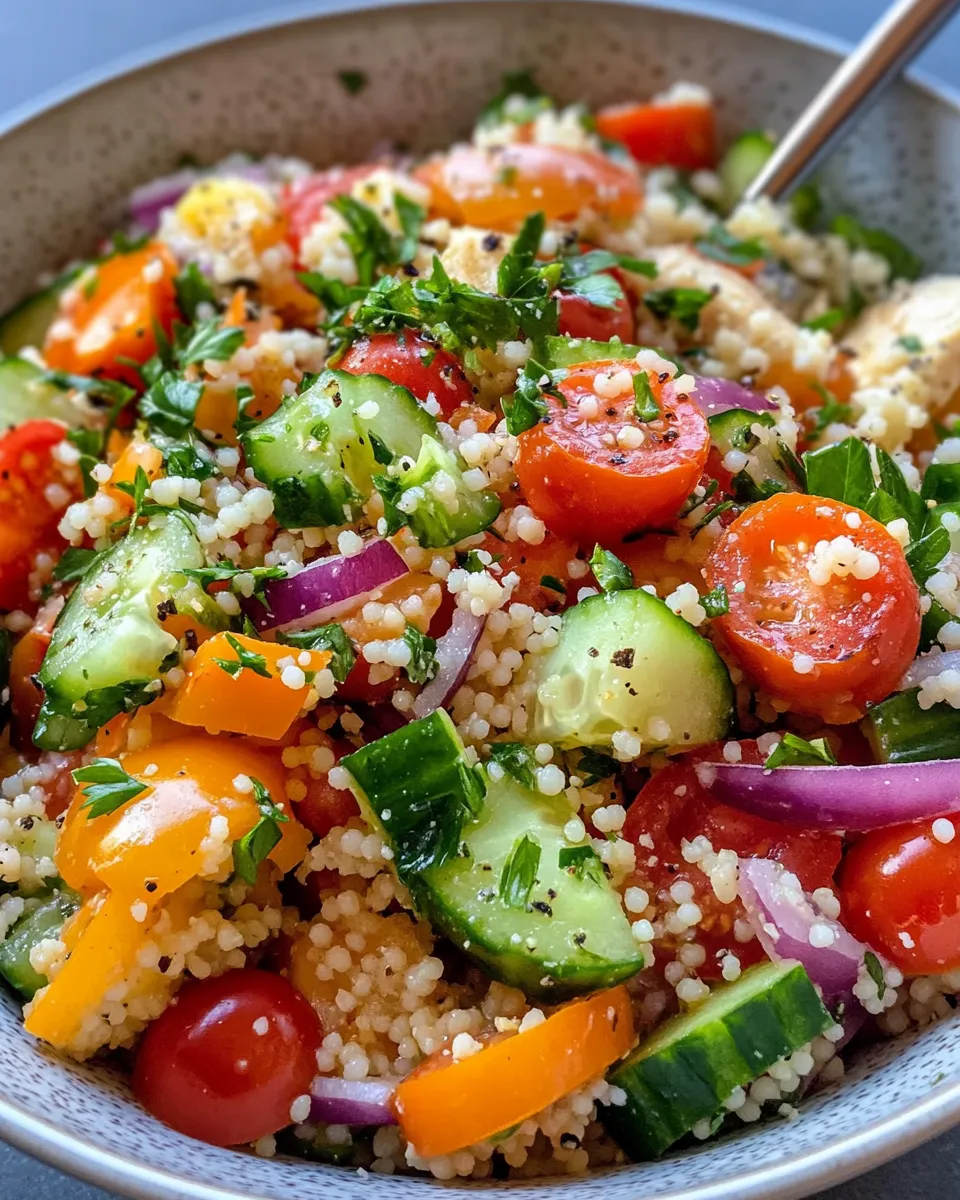
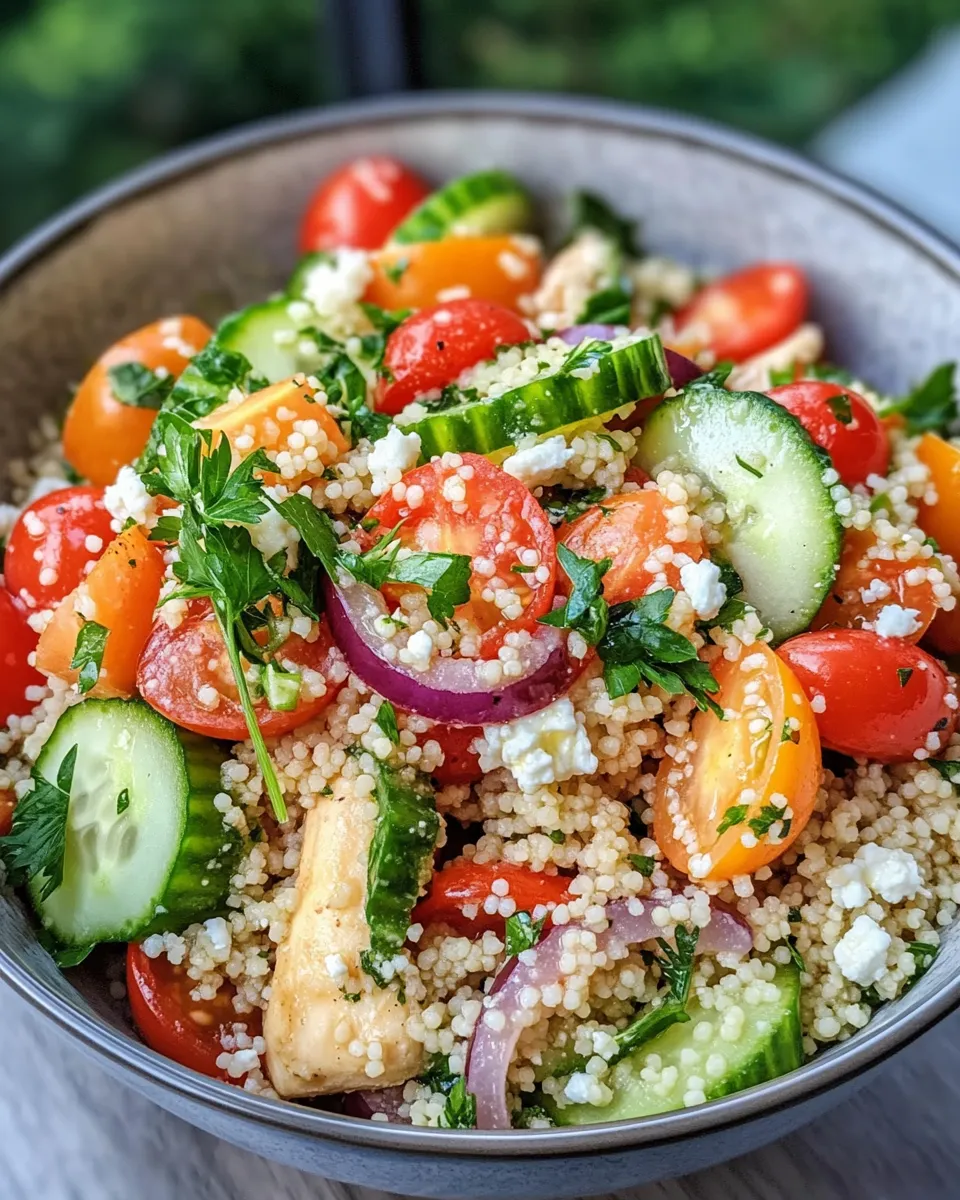
I fell for this salad the first time I made it because it’s honest, bright, and impossibly easy to put together. It’s the kind of dish you can rely on when you need something that travels well, serves a crowd, or rescues a busy weeknight. The warm, fluffy couscous soaks up lemony dressing and holds little pops of tomato, briny olives, and tender artichoke for texture in every bite.
This recipe makes a very large amount, which is perfect for potlucks, lunches, or keeping on hand for several meals. It plays beautifully as a side or as a main when you add a protein. The dressing is simple but balanced: olive oil, garlic, lemon juice, and herbs — nothing to fuss over, but everything to the point.
I’ll walk you through what goes into this salad, how to execute the steps exactly, and practical options for swapping ingredients, storing, and fixing common hiccups. No fluff—just the reliable, warm guidance I use in my own kitchen.
What Goes Into Mediterranean Couscous Salad
Ingredients
- 116 oz. package couscous — the bulk of the salad; provides that light, fluffy base that carries the dressing.
- 2 cups halved grape tomatoes — bright acidity and color; halve them so they blend well through the couscous.
- 2 cups jarred artichoke hearts drained and chopped — tender, slightly tangy bites that add body and contrast.
- 1 1/2 cups chopped kalamata olives pits removed — salty, savory pockets; chop to distribute flavor evenly.
- 1/2 cup chopped fresh basil — fresh herb lift; add straight into the salad for aroma and freshness.
- 1/2 cup olive oil — the dressing’s fat; use good-quality extra-virgin if you have it.
- Juice of 2 large lemons — bright acid to balance the oil and salt.
- 3 cloves garlic minced — pungent backbone for the dressing; mince fine so it disperses.
- 2 teaspoons chopped fresh oregano — earthy, Mediterranean herb that pairs well with basil and lemon.
- 1 tablespoon chopped fresh basil — extra basil in the dressing to echo the herb in the salad.
- Salt and pepper to taste — essential seasonings; adjust at the end after tossing with dressing.
Mediterranean Couscous Salad Cooking Guide
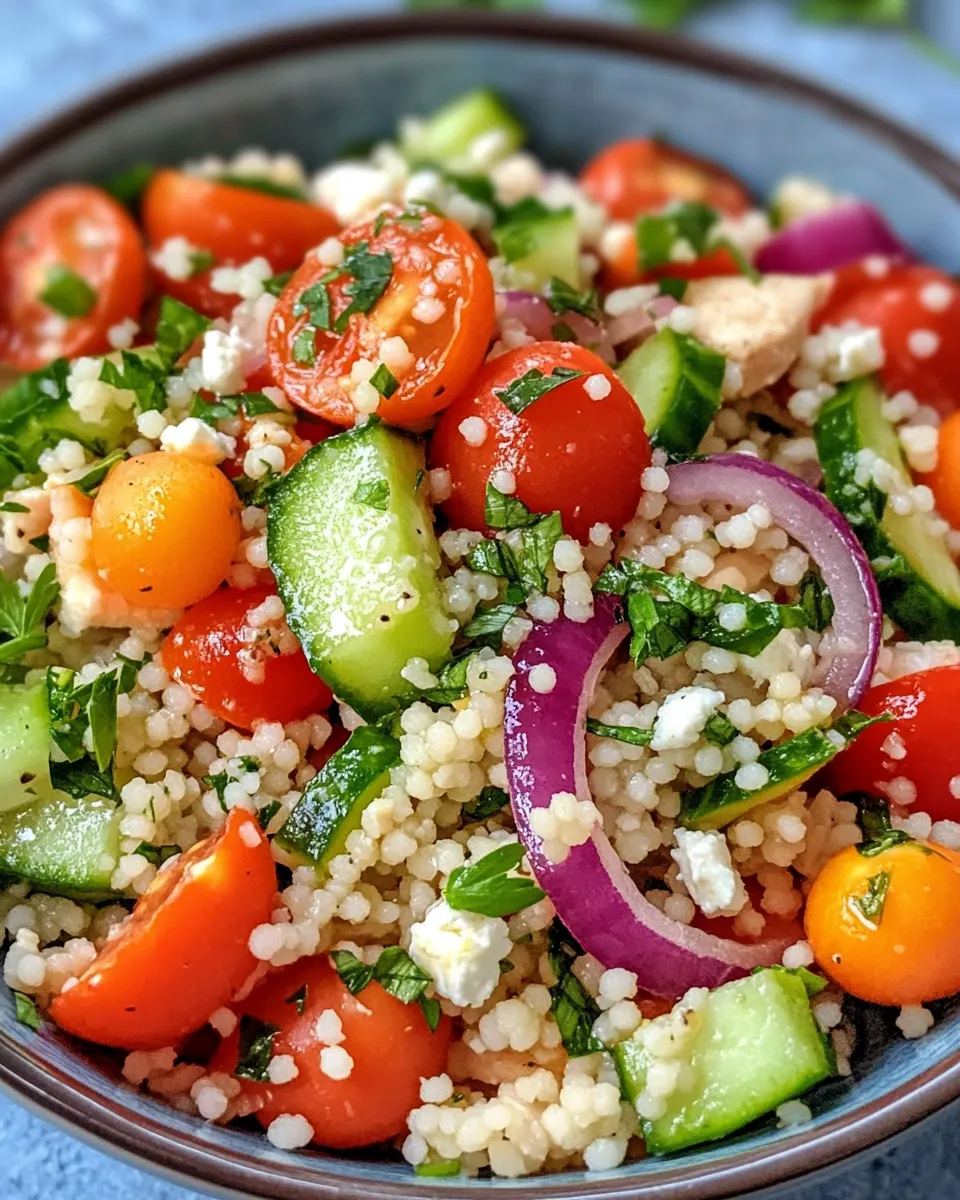
- Cook the 116 oz. package couscous according to package instructions. Transfer the cooked couscous to a large bowl, fluff with a fork, and let it cool slightly (about 10–15 minutes) until not piping hot.
- Prepare the salad ingredients: halve the 2 cups grape tomatoes; drain and chop the 2 cups jarred artichoke hearts (drained and chopped); ensure the 1 1/2 cups kalamata olives have their pits removed and are chopped as needed; chop the 1/2 cup fresh basil.
- Add the halved tomatoes, drained chopped artichoke hearts, chopped kalamata olives, and the 1/2 cup chopped fresh basil to the cooled couscous. Toss gently to combine.
- Make the dressing: in a small bowl whisk together 1/2 cup olive oil, the juice of 2 large lemons, 3 cloves garlic (minced), 2 teaspoons chopped fresh oregano, and 1 tablespoon chopped fresh basil. Season the dressing with salt and pepper to taste.
- Pour the dressing over the couscous mixture and toss until everything is evenly coated. Taste and adjust salt and pepper if desired.
- Serve immediately or refrigerate. This salad makes a large amount—you can cut the recipe in half if needed—and will keep in the refrigerator for up to 3 days.
Why This Mediterranean Couscous Salad Stands Out
There are no dramatic techniques here. What makes this salad sing is balance and texture. The couscous is neutral and airy, which lets the vibrant components — lemon, garlic, tomatoes, olives, and herbs — take the lead. Each bite gives you acidity, salt, herbaceous freshness, and a soft grain to soothe the palate. That’s a reliable formula for a satisfying salad.
It’s also built for flexibility: it travels well, keeps its texture in the fridge, and adapts to scale. The dressing doubles as a marinade if you want to toss in cooked chickpeas or grilled chicken. Importantly, the recipe avoids heavy creamy elements; that keeps the profile bright and makes it pairable with many main dishes.
Smart Substitutions
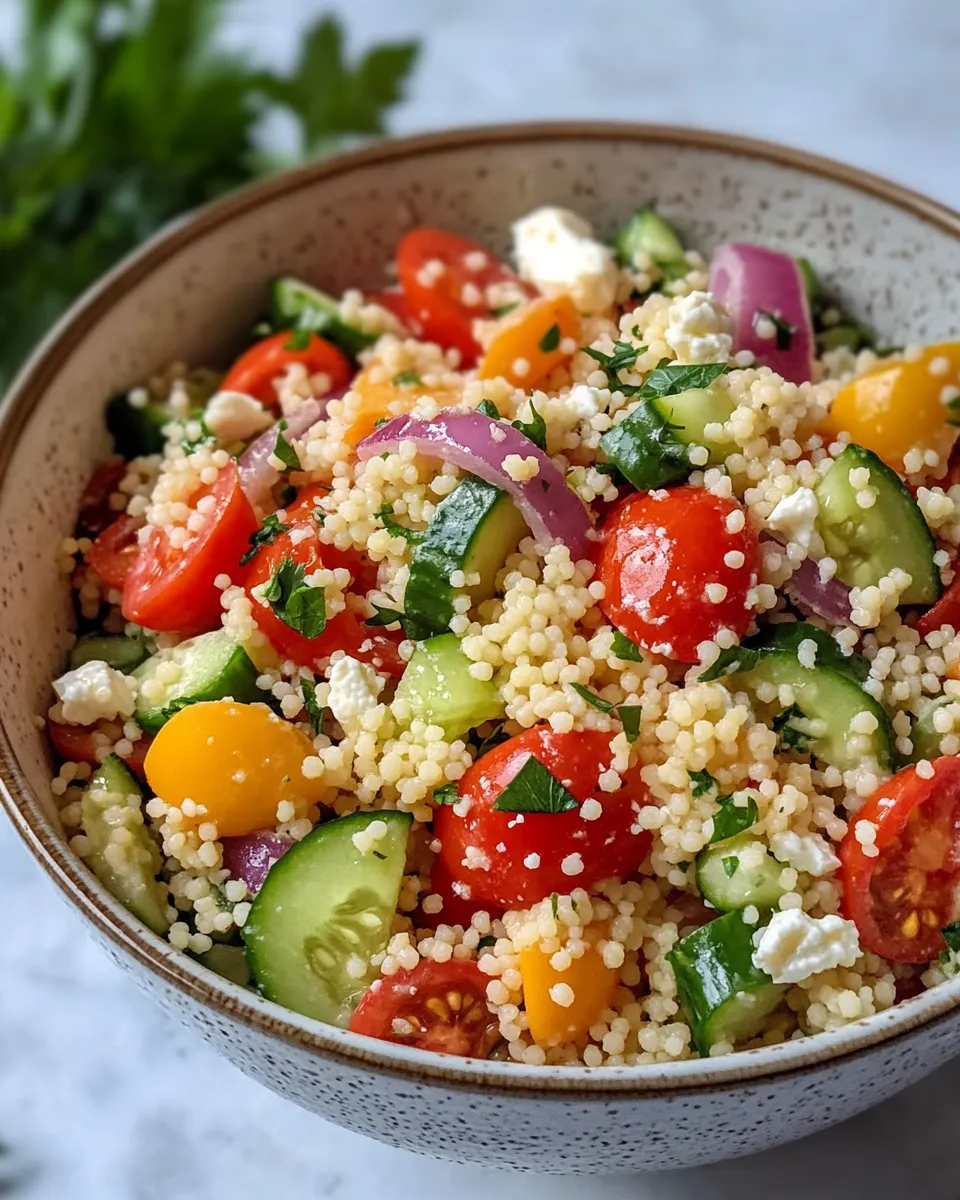
If you need swaps, choose ones that maintain the same role in the salad: acid for acid, brine for brine, herb for herb.
- Grain swap — If you don’t have couscous, try small pearl couscous (Israeli) or quinoa. Note: cooking times and liquid ratios will differ.
- Tomatoes — If grape tomatoes are out of season, use cherry tomatoes or diced plum tomatoes, but remove excess juices so the salad doesn’t get soggy.
- Artichokes — Freshly roasted or steamed artichoke hearts work, but jarred is convenient and already seasoned. If you skip them, add extra olives or roasted red peppers for similar body.
- Olives — Kalamata are classic. If you need milder saltiness, use black olives or Castelvetrano for a buttery note.
- Herbs — Fresh basil and oregano are called for. If you only have dried oregano, use about one-third the amount and add it while the dressing rests to rehydrate.
Appliances & Accessories
You don’t need fancy gear. Basic tools get this done quickly:
- Large pot — to cook the couscous per package instructions.
- Large mixing bowl — gives you room to toss without spills.
- Fork — for fluffing couscous so it doesn’t clump.
- Small bowl and whisk — for the dressing; a fork works fine if you don’t own a whisk.
- Chef’s knife and cutting board — for chopping tomatoes, olives, herbs, and artichokes.
Optional extras that help: a citrus juicer for easy lemon extraction and a mesh strainer if you need to drain jarred artichoke liquid thoroughly.
Missteps & Fixes
Common slip-ups are simple to correct.
Too salty
If the salad tastes too salty from the olives, bulk it up with more couscous (cook and cool a small extra portion) or add more halved tomatoes and a squeeze of lemon to balance the brine. A small peeled, diced cucumber can also mellow salt without changing character.
Soggy salad
Soggy couscous usually comes from adding dressing while the couscous is still piping hot. Let the grains cool for the 10–15 minutes suggested, then add dressing. If you already mixed while hot, chill the salad uncovered in the fridge for 15–20 minutes to let excess steam escape and any clumps relax.
Flat flavor
If it tastes flat, add a pinch more salt and another splash of lemon, toss, and taste again. Fresh herbs can fade quickly; if your basil seems lackluster, add a bit more and give it a final toss just before serving.
Better Choices & Swaps
Make small upgrades where they matter most: olive oil, lemons, and olives. Those three shape the salad’s personality.
- Olive oil — A fruity extra-virgin olive oil lifts the dressing; you don’t need top-shelf, but avoid harsh, bitter oil.
- Olives — Buy kalamata with pits if you can pit them yourself for the freshest flavor, but pitted work fine for speed.
- Lemons — Use freshly squeezed lemon juice; bottled lemons lack brightness in this simple dressing.
For a heartier main-dish version, fold in cooked chickpeas, grilled shrimp, or sliced grilled chicken. To keep it vegetarian and protein-rich, toss in warm roasted chickpeas and a handful of toasted pine nuts for crunch.
Little Things that Matter
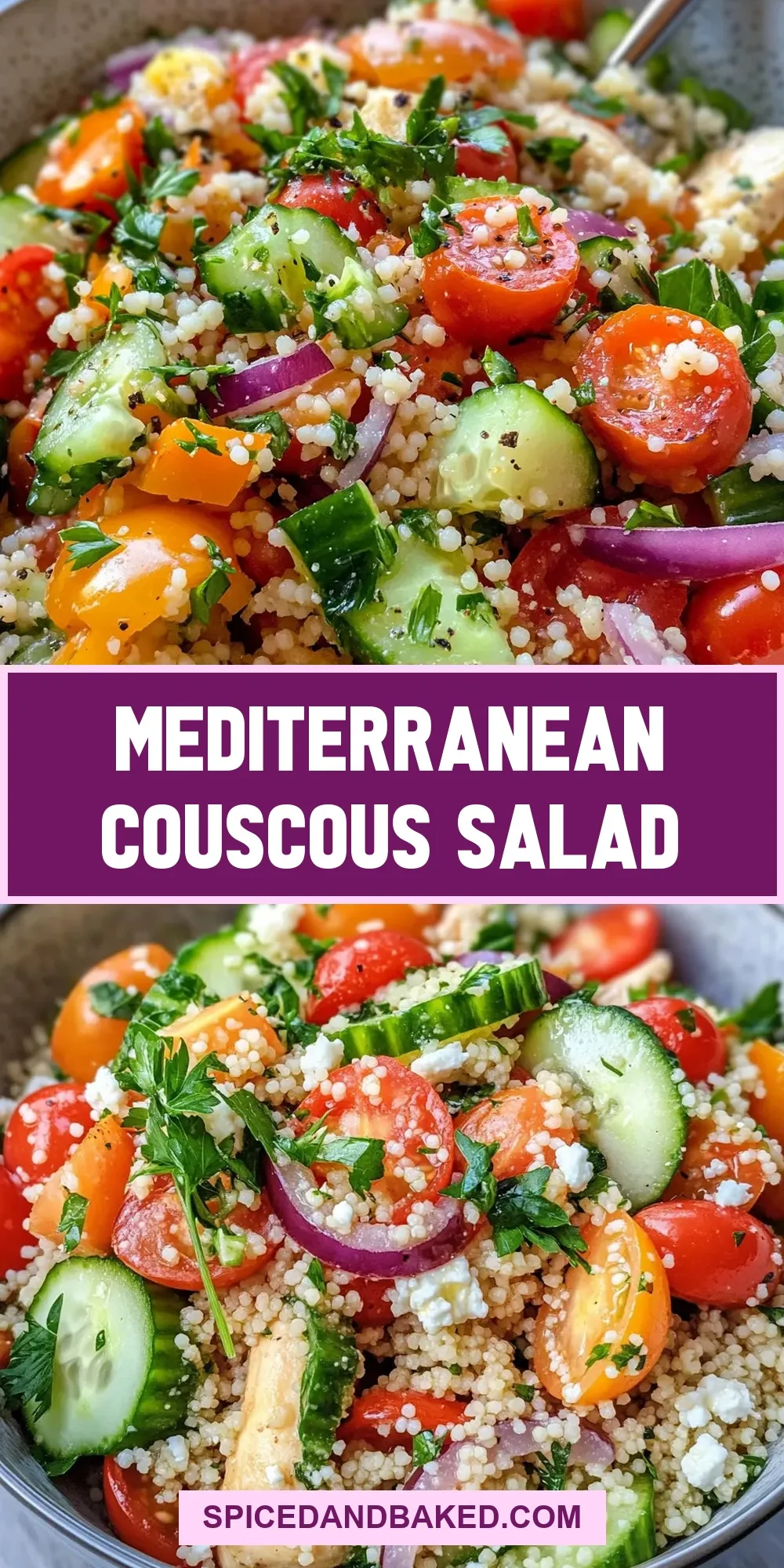
Small details make a big difference in a dish this simple. Finely mince the garlic so you don’t get big raw bites. Chop olives and artichokes so their flavor is distributed. Let the couscous cool just enough; warm but not hot is ideal so it absorbs dressing but doesn’t steam the herbs. Finally, taste as you go. With savory, bright salads, tiny adjustments to salt and acid transform the result.
Prep Ahead & Store
This salad is built for make-ahead life. You can cook the couscous a day in advance and keep it chilled in the fridge. Make the dressing up to two days ahead and store in a sealed jar. Assemble the salad up to a few hours before serving, or toss everything together and refrigerate up to 3 days as the recipe states.
If you expect to store leftovers, slightly underdress the salad at first; add the rest of the dressing when you’re about to serve so the couscous stays pleasantly textured. Stored in an airtight container, flavors meld pleasantly over 24–48 hours. After 3 days, the texture and brightness begin to fade.
Helpful Q&A
Q: Can I halve this recipe? A: Yes. The notes in the cooking guide mention that directly: you can cut the recipe in half if needed. Be mindful to keep the dressing ratio balanced.
Q: Is this gluten-free? A: Not as written. Traditional couscous is made from wheat. To make this gluten-free, substitute cooked quinoa or gluten-free pearl couscous, adjusting liquid and cooking times accordingly.
Q: Can I use dried herbs instead of fresh? A: You can, but fresh herbs are recommended for brightness. If you must use dried oregano, reduce the quantity (about one-third the fresh amount) and let it rehydrate in the dressing before tossing.
Q: How do I serve it for a crowd? A: Serve it at room temperature in a large bowl with a small extra bowl of dressing and lemon wedges on the side. That allows guests to adjust seasoning to their taste.
See You at the Table
This Mediterranean Couscous Salad is one of those recipes that earns a place in your regular rotation: quick to make, forgiving, and consistently delicious. It’s bright enough to wake up a heavy meal and steady enough to carry a lunch through a busy week. When you make it, taste carefully, adjust simply, and don’t be afraid to scale. Bring it to a potluck. Pack it for lunches. And enjoy the way small, quality ingredients come together without fuss.
If you take the salad to a gathering, I like tucking a small sprig of basil on top just before serving — it looks inviting and smells wonderful. See you at the table; I’d love to hear which swaps worked for you and what you paired it with.
Mediterranean Couscous Salad
Ingredients
Ingredients
- 116 oz. package couscous
- 2 cupshalved grape tomatoes
- 2 cupsjarred artichoke heartsdrained and chopped
- 1 1/2 cupschopped kalamata olivespits removed
- 1/2 cupchopped fresh basil
- 1/2 cupolive oil
- Juice of 2 large lemons
- 3 clovesgarlicminced
- 2 teaspoonschopped fresh oregano
- 1 tablespoonchopped fresh basil
- Salt and pepperto taste
Instructions
Instructions
- Cook the 116 oz. package couscous according to package instructions. Transfer the cooked couscous to a large bowl, fluff with a fork, and let it cool slightly (about 10–15 minutes) until not piping hot.
- Prepare the salad ingredients: halve the 2 cups grape tomatoes; drain and chop the 2 cups jarred artichoke hearts (drained and chopped); ensure the 1 1/2 cups kalamata olives have their pits removed and are chopped as needed; chop the 1/2 cup fresh basil.
- Add the halved tomatoes, drained chopped artichoke hearts, chopped kalamata olives, and the 1/2 cup chopped fresh basil to the cooled couscous. Toss gently to combine.
- Make the dressing: in a small bowl whisk together 1/2 cup olive oil, the juice of 2 large lemons, 3 cloves garlic (minced), 2 teaspoons chopped fresh oregano, and 1 tablespoon chopped fresh basil. Season the dressing with salt and pepper to taste.
- Pour the dressing over the couscous mixture and toss until everything is evenly coated. Taste and adjust salt and pepper if desired.
- Serve immediately or refrigerate. This salad makes a large amount—you can cut the recipe in half if needed—and will keep in the refrigerator for up to 3 days.