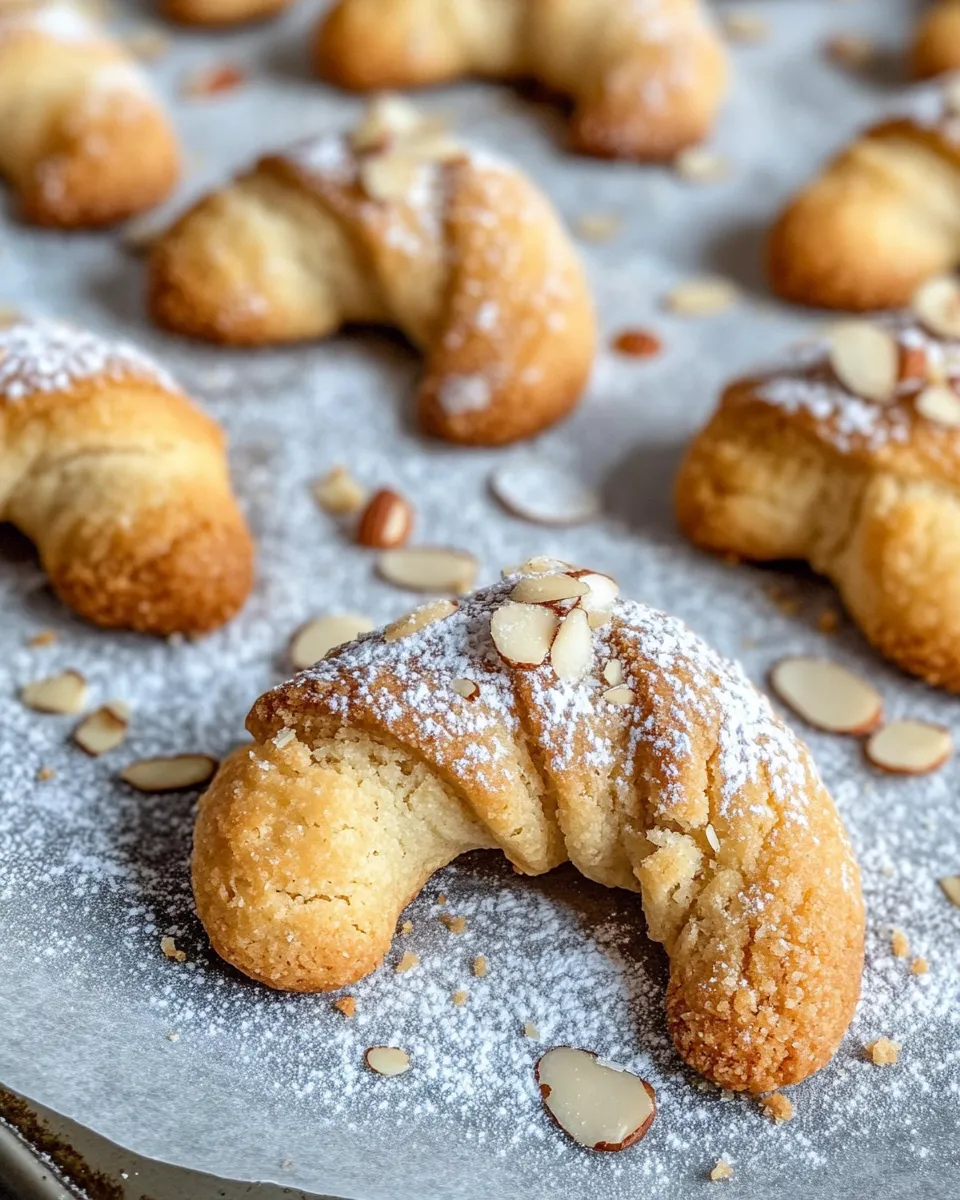
These almond crescent cookies are exactly the kind of recipe I turn to when I want something buttery, compact, and oddly comforting. They bake up tender with a subtle almond backbone and a snow-dusting of powdered sugar that makes them look like winter even in July. No fuss, no complicated technique—just a few straightforward steps and ingredients you likely already have or can get in one shop run.
I tested this version to strike a balance between a tender shortbread-like bite and the delicate almond flavor that gives the cookies their name. The almond flour brings that nutty softness; the all-purpose flour keeps the shape; the optional chopped almonds add a pleasant crunch if you want it. They’re reliable: they hold a crescent shape, they don’t spread wildly, and they’re done in under ten minutes in the oven.
Below you’ll find everything you need: a clear ingredients section, step-by-step baking instructions drawn directly from the test kitchen method, troubleshooting tips, and storage notes. If you want to make them tonight, there’s a quick checklist near the end so you can jump into the kitchen without rereading the whole post.
What Goes In

Ingredients
- 1 cup (225 g) unsalted butter, softened to room temperature — the base fat; soft butter creams with sugar for tender, rich cookies.
- ¾ cup (150 g) granulated sugar — sweetens and helps the cookies brown slightly at the edges.
- 1 teaspoon vanilla extract — rounds and softens the flavor profile.
- ½ teaspoon almond extract — delivers the pronounced almond aroma that defines the cookies.
- 1 ¼ cups (180 g) almond flour — adds that silky, nutty tenderness and helps create the cookie’s texture.
- 2 cups (240 g) all purpose flour — provides structure so crescents hold their shape.
- ½ cup (55 g) finely chopped almonds, optional — folded in for texture and contrast; skip if you prefer uniformly soft cookies.
- ½ cup (120 g) powdered sugar, for dusting — dusts the warm cookies for the classic snowy finish.
Almond Crescent Cookies: From Prep to Plate

- Preheat the oven to 350°F (180°C). Line two baking sheets with parchment paper or silicone baking mats and set aside.
- In a large bowl, cream together the softened unsalted butter (1 cup / 225 g) and granulated sugar (3/4 cup / 150 g) with an electric mixer on medium speed until light and fluffy, about 2–3 minutes. Scrape down the sides of the bowl.
- Add the vanilla extract (1 teaspoon) and almond extract (1/2 teaspoon) and mix just until incorporated. Scrape the bowl again.
- Add the almond flour (1 1/4 cups / 180 g) to the bowl and about half of the all-purpose flour (about 1 cup of the 2 cups / ~120 g). Mix on low speed until combined.
- Add the remaining all-purpose flour (the other ~1 cup / remainder of the 2 cups / 240 g total) and mix on low until the dough comes together. The dough may look a bit crumbly in the bowl but should hold together when pinched between your fingers.
- If using, fold in the finely chopped almonds (1/2 cup / 55 g) until evenly distributed.
- Using a heaping tablespoon of dough for each cookie, portion the dough, roll each portion briefly into a small cylinder, then gently bend and pinch the ends to form a crescent shape. Place the crescents on the prepared baking sheets at least 1 inch apart.
- Bake in the preheated oven for 8–10 minutes, or until the cookies have puffed and the bottoms are lightly golden.
- While the cookies are still hot from the oven, lightly dust them with the powdered sugar (1/2 cup / 120 g) from a small bowl. Transfer the cookies to a wire rack and allow them to cool completely before serving.
Why This Recipe Belongs in Your Rotation
These cookies are low-effort and high-return. The dough comes together in a single bowl after creaming the butter and sugar, and shaping takes minutes. You don’t need chilling time, so you can go from mixing to baking quickly. That makes them perfect for last-minute hosting, holiday baking, or an easy bake with kids.
Texture-wise, they walk the line between tender and structured. Almond flour gives them a melt-in-your-mouth quality while the all-purpose flour prevents the crescents from collapsing or spreading. And the almond extract—used modestly—gives them a distinct identity without overpowering the butter and vanilla.
Flavor-Forward Alternatives

Keep variations small and intentional to preserve the cookie’s delicate balance.
If you prefer a brighter almond note, lean into the almond extract and either omit or reduce the vanilla for a purer almond flavor. Use the optional chopped almonds when you want texture: they add a pleasant contrast, especially if you like some chew in the center.
For a richer-looking finish, dust more powdered sugar after the cookies have cooled, but be aware that additional coating makes them sweeter. If you want less sweetness, dust lightly or set the powdered sugar aside for diners to add individually.
Gear Checklist
- Electric mixer (hand or stand) — for creaming the butter and sugar smoothly.
- Large mixing bowl — roomy enough for creaming and mixing flours.
- Baking sheets (two) — so you can bake a full batch in two rounds if needed.
- Parchment paper or silicone baking mats — prevents sticking and simplifies cleanup.
- Tablespoon or small cookie scoop — for portioning consistent cookies.
- Wire rack — for cooling so the bottoms don’t steam and soften.
Avoid These Traps
Overworking the dough. Mix until just combined. If you overmix at the final flour stage the cookies can get tough. Low-speed mixing for the flour additions is the right move.
Don’t skip the powdered sugar step on hot cookies. Dusting while the cookies are warm helps the sugar cling and creates that traditional soft, snowy finish.
Using cold butter. The recipe calls for softened butter. If it’s too cold, the creaming won’t incorporate air and sugar properly; if it’s melted, the cookies will spread too much. Aim for soft but still solid butter.
Substitutions by Diet
If you’re avoiding nuts: this recipe centers almond flour and almond extract, so it isn’t suitable as written. You’d need to replace almond flour with a different base (which will change texture) and skip the almond extract and chopped almonds.
If you prefer fewer added sugars: you can try reducing the granulated sugar slightly, but know that will affect spread, browning, and texture. Powdered sugar for dusting is optional and can be omitted.
For preferences around texture: the optional chopped almonds are the easiest way to alter crunch without changing the overall chemistry of the cookie.
Notes from the Test Kitchen

I tested batches with and without the optional chopped almonds. With them, the cookies have a pleasing crunch and a more pronounced nutty aroma. Without, the cookie is silkier and melts faster in the mouth. Both are good; choose based on the experience you want.
Bake time affects chew. An 8-minute bake yields a puffier, more tender cookie; at 10 minutes the bottoms and edges pick up light golden color and a slightly firmer bite. Watch the bottoms rather than the tops to judge doneness. They shouldn’t be dark—just lightly golden.
Portioning consistency matters. Using a heaping tablespoon—or a small cookie scoop—keeps bake times uniform across the tray. If you make larger or smaller cookies, adjust baking time by a minute or two and monitor closely.
Leftovers & Meal Prep
Stored in an airtight container at room temperature, these cookies keep well for 3–4 days. The powdered sugar absorbs a little moisture over time and the surface will look less snowy, but the flavor and texture remain good.
For longer storage, freeze baked cookies in a single layer on a baking sheet until firm, then transfer to a freezer-safe container. Thaw at room temperature before serving. If you freeze unbaked dough, shape the crescents, freeze on a sheet until solid, then transfer to a bag; bake from frozen but add a minute or two to the time.
Frequently Asked Questions
Can I make the dough ahead of time? You can mix the dough and refrigerate it for a day or two; bring it back to a workable consistency before shaping. If you refrigerate, the dough will firm up and may be easier to shape, but letting it sit untouched for longer than a couple of days can dull the fresh almond aroma.
Why does the recipe use both almond flour and all-purpose flour? Almond flour gives the cookie its tender, nutty crumb; all-purpose flour provides the gluten structure so crescents hold their shape and don’t fall apart. The combination balances texture and form.
Can I skip the powdered sugar dusting? Yes. The dusting is traditional and pretty, but skipping it is purely an aesthetic and sweetness choice.
Make It Tonight
Ready to bake? Preheat the oven to 350°F (180°C), line your sheets, and cream butter with sugar for 2–3 minutes. Follow the step-by-step method above: fold in the almond and all-purpose flours in stages, shape a heaping tablespoon of dough into crescents, and bake 8–10 minutes until the bottoms are lightly golden. Dust with powdered sugar while warm, cool on a wire rack, and enjoy with coffee or tea.
If you want the shortest path: mix, shape, bake. The whole process from unpacking ingredients to first cookie usually fits within an hour for a single batch—less if you’re practiced. Happy baking, and don’t forget to save a few for tasting straight from the cooling rack.

Almond Crescent Cookies
Ingredients
Ingredients
- ?1 cup 225 gunsalted buttersoftened to room temperature
- ?3/4 cup 150 ggranulated sugar
- ?1 teaspoonvanilla extract
- ?1/2 teaspoonalmond extract
- ?1 1/4 cups 180 galmond flour
- ?2 cups 240 gall purpose flour
- ?1/2 cup 55 gfinely chopped almondsoptional
- ?1/2 cup 120 gpowdered sugarfor dusting
Instructions
Instructions
- Preheat the oven to 350°F (180°C). Line two baking sheets with parchment paper or silicone baking mats and set aside.
- In a large bowl, cream together the softened unsalted butter (1 cup / 225 g) and granulated sugar (3/4 cup / 150 g) with an electric mixer on medium speed until light and fluffy, about 2–3 minutes. Scrape down the sides of the bowl.
- Add the vanilla extract (1 teaspoon) and almond extract (1/2 teaspoon) and mix just until incorporated. Scrape the bowl again.
- Add the almond flour (1 1/4 cups / 180 g) to the bowl and about half of the all-purpose flour (about 1 cup of the 2 cups / ~120 g). Mix on low speed until combined.
- Add the remaining all-purpose flour (the other ~1 cup / remainder of the 2 cups / 240 g total) and mix on low until the dough comes together. The dough may look a bit crumbly in the bowl but should hold together when pinched between your fingers.
- If using, fold in the finely chopped almonds (1/2 cup / 55 g) until evenly distributed.
- Using a heaping tablespoon of dough for each cookie, portion the dough, roll each portion briefly into a small cylinder, then gently bend and pinch the ends to form a crescent shape. Place the crescents on the prepared baking sheets at least 1 inch apart.
- Bake in the preheated oven for 8–10 minutes, or until the cookies have puffed and the bottoms are lightly golden.
- While the cookies are still hot from the oven, lightly dust them with the powdered sugar (1/2 cup / 120 g) from a small bowl. Transfer the cookies to a wire rack and allow them to cool completely before serving.
Equipment
- Electric hand mixer or stand mixer
- Mixing Bowl
- cookie sheets
Notes
Make Ahead:Mix the dough for almond crescents and store it in the refrigerator for up to 1 day or in the freezer for a month or two. Allow the dough to thaw all the way to room temperature before shaping and baking the cookies.
Add Powdered Sugar:You want to add the sugar to still-hot cookies so that it melts in and adheres better. If after storing you find that too much of the sugar has melted, feel free to add a fresh dusting before serving.
Storage:Baked cookies will stay fresh for 1 week at room temperature or 3 months in the freezer, in an airtight container.