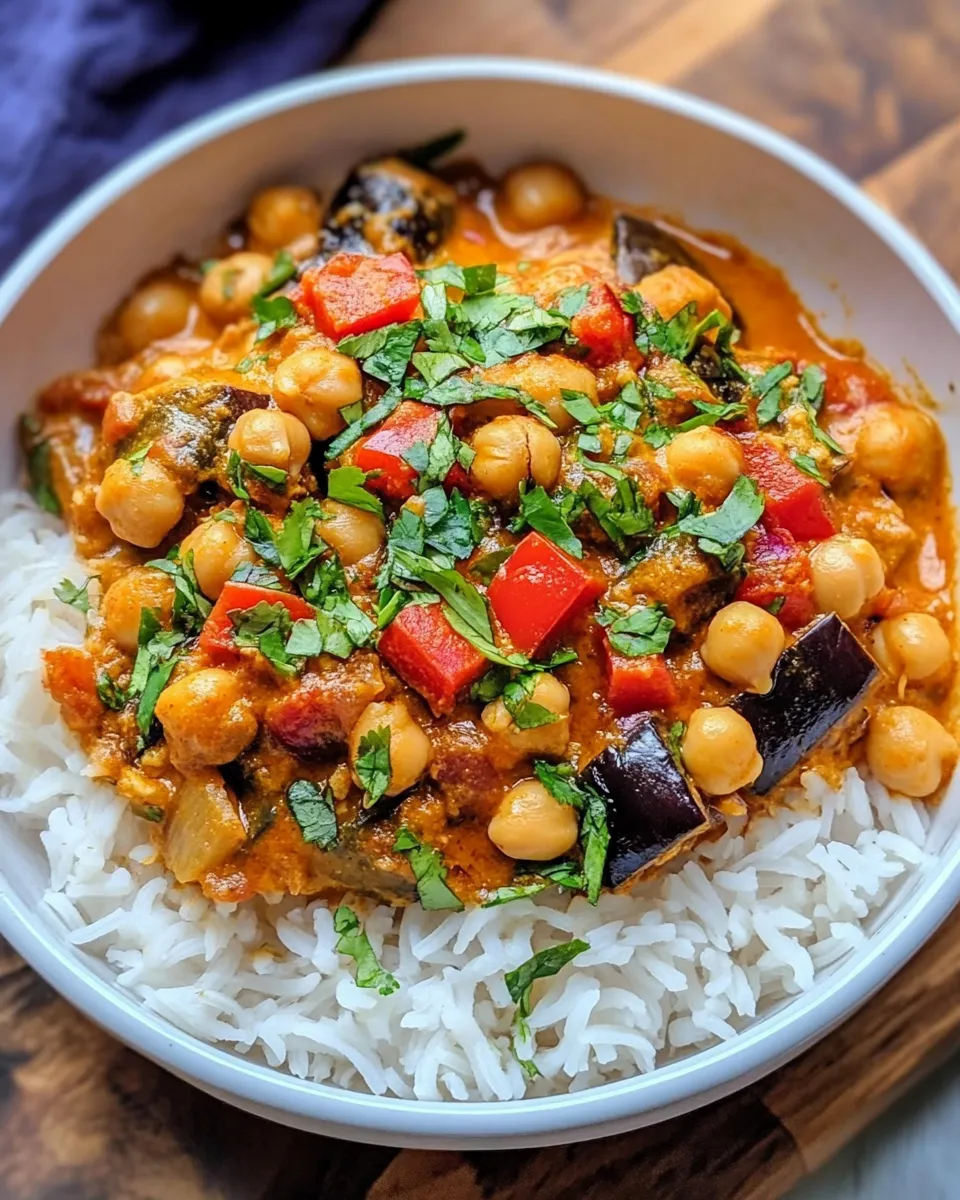
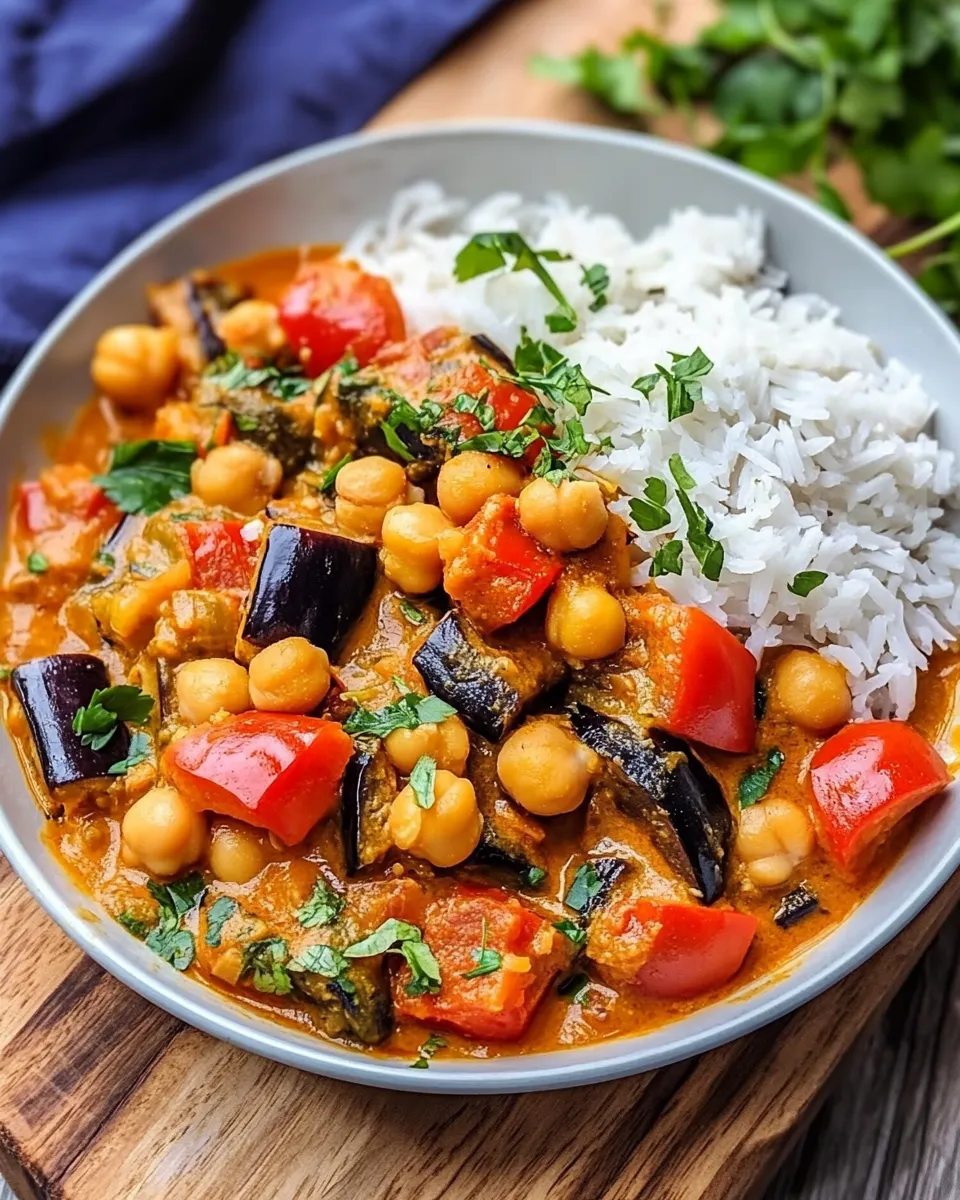
This aubergine and chickpea curry is one of those weekday heroes — straightforward, fragrant, and deeply satisfying. It layers roasted aubergine with a spiced tomato-coconut base and hearty chickpeas, so you get a lovely balance of soft, silky vegetables and a comforting, saucy bite. It’s gentle on the hands but bold on the plate.
I love that it doesn’t demand fancy techniques. You roast the aubergine to concentrate sweetness and get a bit of caramelization, then build the curry in one pot with spices, tomatoes, and creamy coconut milk. The recipe behaves reliably, which makes it perfect for a busy evening when you still want food that tastes like effort was involved.
Serve it with rice, flatbreads, or a simple side salad. It also keeps and reheats well, so it’s a great option for planning dinners or batch-cooking for the week. Below I’ll walk you through the exact ingredients, the step-by-step method, swaps if you need them, and a few tips to avoid little mistakes that can dull the flavors.
The Ingredient Lineup
- 1 large aubergine (eggplant), cubed — the star vegetable; roasting brings out sweetness and concentrates flavour.
- 1 tablespoon olive oil, not extra virgin — for roasting the aubergine so the oil won’t smoke at oven temperature.
- 1 teaspoon salt and pepper — initial seasoning for the aubergine to draw out flavour while roasting.
- 1 tablespoon olive oil — for the stovetop sauté; keeps the pan from sticking and helps soften aromatics.
- 1 medium yellow onion, diced — builds the savory base; cook until translucent to sweeten and mellow sharpness.
- 2 cloves garlic, minced or crushed — quick-hit aroma and depth; add with the ginger and chili.
- 1 green chili, deseeded and diced — provides gentle heat; remove seeds for milder spice.
- 3 cm ginger, grated — fresh ginger lifts the curry with warmth and brightness.
- 1 teaspoon ground coriander — warm, citrusy spice that pairs beautifully with chickpeas.
- ½ teaspoon ground cumin — adds an earthy, toasted backbone.
- ½ teaspoon ground turmeric — for colour and a gentle, peppery note.
- 1 teaspoon garam masala — seasoning finish in the spice family; adds complexity and aroma.
- 1 can (400 g) chopped/diced tomatoes — provides body, acidity and the tomato base for the sauce.
- 1 can (240 g) chickpeas, cooked and drained — the protein and texture contrast; rinse and drain well.
- 1 can (400 ml) coconut milk — creates a creamy, slightly sweet sauce that rounds the spices.
- 1 teaspoon salt — added to the simmering curry to season the whole pot; adjust to taste.
- 1 tablespoon parsley or coriander, chopped — a fresh herb finish; coriander (cilantro) is more traditional, parsley works if you prefer.
Build Aubergine and Chickpea Curry Step by Step
- Preheat the oven to 200°C (390°F). Wash and cube the 1 large aubergine (leave the skin on). Spread the cubes on a baking sheet.
- Drizzle the aubergine with the first 1 tablespoon olive oil (not extra virgin) and season with the 1 teaspoon “salt and pepper” from the ingredient list. Toss to coat and arrange in a single layer.
- Roast the aubergine at 200°C (390°F) for about 20 minutes, flipping every few minutes, until the cubes are golden and tender. Remove from the oven and set aside.
- While the aubergine roasts, heat the second 1 tablespoon olive oil in a large pot or deep pan over medium heat. Add the 1 medium diced yellow onion and sauté until golden and translucent, about 5–7 minutes.
- Add the 2 cloves minced garlic, the diced deseeded 1 green chili, and the 3 cm grated ginger to the pan. Cook, stirring, for about 2 minutes.
- Add the spices: 1 teaspoon ground coriander, ½ teaspoon ground cumin, ½ teaspoon ground turmeric, and 1 teaspoon garam masala. Cook, stirring, for about 30 seconds to release the spices’ aroma.
- Add 1 can (400 g) chopped/diced tomatoes, the 1 can (240 g) chickpeas (ensure they are drained), and 1 can (400 ml) coconut milk. Stir in the second 1 teaspoon salt from the ingredient list. Bring to a gentle simmer, reduce the heat to low, cover, and simmer for 5 minutes.
- Stir the roasted aubergine cubes into the simmering curry and cook for 1–2 minutes more to heat through.
- Remove from the heat, stir in the 1 tablespoon chopped parsley or coriander, and serve immediately.
What You’ll Love About This Recipe

First, it’s unfussy. The method splits into two clean stages: roast and simmer. That makes the timing predictable and doable while you prep rice or a simple salad.
Second, the texture contrast is satisfying. Roasted aubergine gives those tender, slightly charred pockets that absorb the coconut-tomato sauce, while chickpeas add chew and substance so the dish feels like a real meal without meat.
Finally, the flavor is layered rather than overloaded. Toasting the spice mix briefly unlocks volatile aromatics; coconut milk carries those flavors and softens the acidity of the tomatoes. The finish of fresh herb ties everything together.
Quick Replacement Ideas
- Use coriander (cilantro) instead of parsley — the recipe already allows either; coriander will give a brighter, more traditional finish.
- If you don’t have green chili, add a pinch of red chili flakes or a small splash of hot sauce to taste.
- Swap the canned tomatoes for the same quantity of fresh, very ripe chopped tomatoes in summer — but expect a slightly looser sauce until it simmers down.
Recommended Tools

- Large baking sheet — for spreading aubergine in a single layer so it roasts, not steams.
- Large pot or deep frying pan with lid — for building the curry and simmering without losing heat or splatter.
- Grater or microplane — for easily grating the 3 cm piece of fresh ginger.
- Spoon and spatula — for stirring and folding the roasted aubergine into the sauce without breaking it apart.
Easy-to-Miss Gotchas
Don’t overcrowd the aubergine on the baking sheet. If cubes are piled up they’ll steam instead of roast and won’t caramelize. Spread them into a single layer and flip every few minutes as instructed.
Pay attention to oil type for roasting. The recipe specifies olive oil that’s not extra virgin because extra virgin olive oil has a lower smoke point and a stronger flavour that can overwhelm the aubergine when heated at high oven temperatures.
When you add the spices, don’t skip the quick 30-second toast in the pan. That short cooking time blooms their oils and changes them from raw to fragrant; otherwise the curry can taste flat.
Make It Your Way
Keep the structure but personalize the finishing touches. If you like a brighter curry, squeeze a little lemon or lime at the end. If you prefer richer, stir in a spoonful of natural peanut butter or ground almonds for body (start small — a little goes a long way).
Turn it into a one-pan meal by serving it over steamed quinoa or fold in baby spinach at the end for extra greens; the residual heat wilts the leaves without overcooking them.
Flavor Logic
The recipe balances a few essential elements: sweet roasted aubergine, creamy coconut, acidic tomatoes, and warm spices. Each component has a job. Roasting concentrates aubergine’s sugars; coconut milk smooths and carries fat-soluble flavors; tomatoes add acidity to cut richness; spices lend aroma and complexity; and fresh herbs add a lively finish.
Texture matters too. Chickpeas provide bite and protein; letting the aubergine get golden prevents it from becoming mushy in the sauce. Gentle simmering for only a few minutes after adding the aubergine keeps the cubes intact and gives a good mouthfeel.
Save It for Later
This curry stores very well. Cool to room temperature, transfer to an airtight container, and refrigerate for up to 4 days. Reheat gently on the stove over low heat, stirring occasionally. If the sauce thickens in the fridge, loosen it with a splash of water or a little extra coconut milk when reheating.
For longer storage, freeze in portion-sized containers for up to 2 months. Thaw overnight in the refrigerator before reheating.
Common Qs About Aubergine and Chickpea Curry
How spicy is it? The recipe uses one deseeded green chili for mild heat. Leave seeds in for more kick or omit entirely for a very mild curry. Adjust to your taste.
Can I make this oil-free? You can skip the olive oil for roasting and use a non-stick spray or a very light brush, but some oil helps the aubergine brown. On the stovetop, a splash of water can soften onion and garlic, but spices may not bloom as well without a little fat.
Is canned coconut milk required? Canned coconut milk gives the best creamy texture and richness. Low-fat or carton coconut milk will thin the sauce and change mouthfeel. If using an alternative, adjust simmer time and seasoning to taste.
In Closing
This aubergine and chickpea curry is practical, forgiving, and full of flavor without asking for complicated steps. Roast the aubergine, build a fragrant spice base, add tomatoes and coconut milk, then fold everything together with chickpeas. Simple habits — like not overcrowding the pan, toasting spices briefly, and seasoning thoughtfully — make a noticeable difference.
Make it this week, and you’ll find it keeps beautifully for lunches and second-day dinners. Whether you’re feeding yourself or a small crowd, it’s one of those dishes that looks and tastes like it took longer than it did. Enjoy.

Aubergine and Chickpea Curry
Ingredients
Ingredients
- ?1 largeaubergine eggplantcubed
- ?1 tablespoonolive oilnot extra virgin
- ?1 teaspoonsalt and pepper
- ?1 tablespoonolive oil
- ?1 mediumyellow oniondiced
- ?2 clovesgarlicminced or crushed
- ?1 green chilideseeded and diced
- ?3 cmgingergrated
- ?1 teaspoonground coriander
- ?1/2 teaspoonground cumin
- ?1/2 teaspoongroundturmeric
- ?1 teaspoongaram masala
- ?1 can 400 gchopped/diced tomatoes
- ?1 can 240 gchickpeascooked and drained
- ?1 can 400 mlcoconut milk
- ?1 teaspoonsalt
- ?1 tablespoonparsley or corianderchopped
Instructions
Instructions
- Preheat the oven to 200°C (390°F). Wash and cube the 1 large aubergine (leave the skin on). Spread the cubes on a baking sheet.
- Drizzle the aubergine with the first 1 tablespoon olive oil (not extra virgin) and season with the 1 teaspoon "salt and pepper" from the ingredient list. Toss to coat and arrange in a single layer.
- Roast the aubergine at 200°C (390°F) for about 20 minutes, flipping every few minutes, until the cubes are golden and tender. Remove from the oven and set aside.
- While the aubergine roasts, heat the second 1 tablespoon olive oil in a large pot or deep pan over medium heat. Add the 1 medium diced yellow onion and sauté until golden and translucent, about 5–7 minutes.
- Add the 2 cloves minced garlic, the diced deseeded 1 green chili, and the 3 cm grated ginger to the pan. Cook, stirring, for about 2 minutes.
- Add the spices: 1 teaspoon ground coriander, ½ teaspoon ground cumin, ½ teaspoon ground turmeric, and 1 teaspoon garam masala. Cook, stirring, for about 30 seconds to release the spices’ aroma.
- Add 1 can (400 g) chopped/diced tomatoes, the 1 can (240 g) chickpeas (ensure they are drained), and 1 can (400 ml) coconut milk. Stir in the second 1 teaspoon salt from the ingredient list. Bring to a gentle simmer, reduce the heat to low, cover, and simmer for 5 minutes.
- Stir the roasted aubergine cubes into the simmering curry and cook for 1–2 minutes more to heat through.
- Remove from the heat, stir in the 1 tablespoon chopped parsley or coriander, and serve immediately.
Equipment
- Oven
- Baking Sheet
- large pot or deep pan