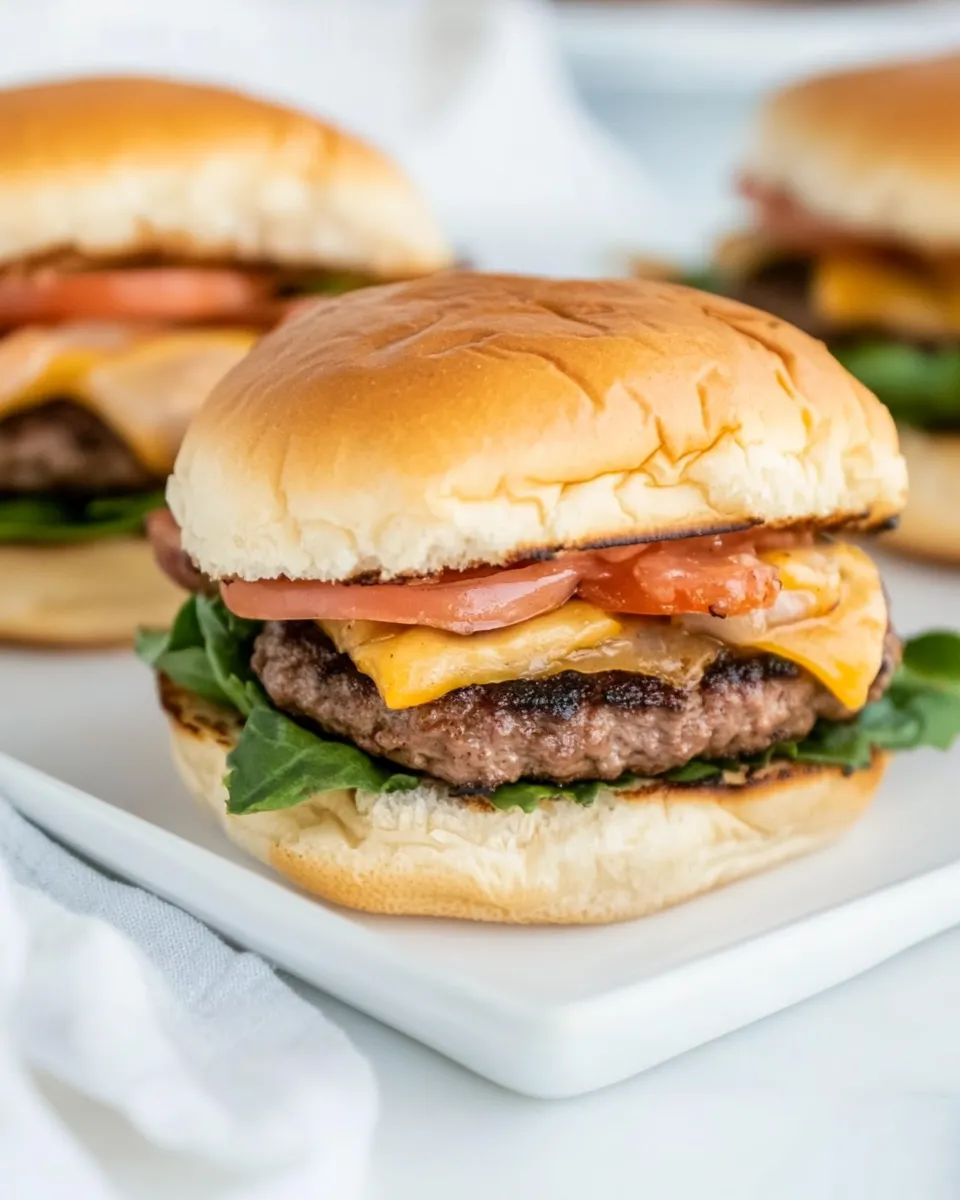
I make these baked burgers on nights when I want a simple, hands-off dinner that still tastes composed and satisfying. They’re forgiving, easy to scale, and they free up stove space for fries or a pan of vegetables. Baking is one of those quiet shortcuts: you get consistent doneness and an easy cleanup when the patties cook on a rack over a rimmed sheet.
The method is straightforward: mix, portion, shape, and bake. A quick finish under the broiler with cheddar gives you that melted, slightly browned top without flipping every patty on the stovetop. You’ll end up with burgers that hold together, stay juicy, and are perfect for busy weeknights or feeding a crowd with minimal babysitting.
I’ll walk you through the exact recipe, what makes it work, common mistakes to avoid, and options for texture or seasonal variations. No fluff—just practical guidance so your next batch of baked hamburgers comes out reliably delicious.
What You’ll Need
Ingredients
- 2 pounds ground beef 80/20 recommended — provides the fat you need for juicy, flavorful patties.
- 4 teaspoons beef seasoning — concentrates savory flavor; evenly distributed is the goal.
- 6 slices cheddar cheese — for melting on top; sharp or mild depending on preference.
- 6 buns — choose sturdy buns to hold the burger and toppings.
- Burger toppings of choice — lettuce, tomato, onions, pickles, condiments—whatever you like.
Mastering Baked Hamburgers: How-To
- Preheat the oven to 400°F (204°C).
- In a large bowl, add 2 pounds ground beef and 4 teaspoons beef seasoning. Gently combine with your hands just until the seasoning is evenly distributed—do not over-mix.
- Divide the meat into 6 equal portions. Roll each portion into a tight ball, then flatten into a patty about 3/4 inch thick, making the center slightly thinner than the edges. Smooth any cracks at the edges with the palm of your hand.
- Place a wire cooling rack inside a rimmed baking sheet. Arrange the patties on the rack, leaving space between them so air can circulate. (If you do not have a rack, place the patties directly on the rimmed baking sheet.)
- Bake at 400°F for 25–30 minutes, or until the patties are no longer pink in the center and an instant-read thermometer inserted into the thickest part reads 160°F.
- Remove the baking sheet from the oven. Place one slice of cheddar cheese on each patty. Set the oven to low broil.
- Return the baking sheet to the oven and broil for 1–3 minutes, watching closely, until the cheese is melted.
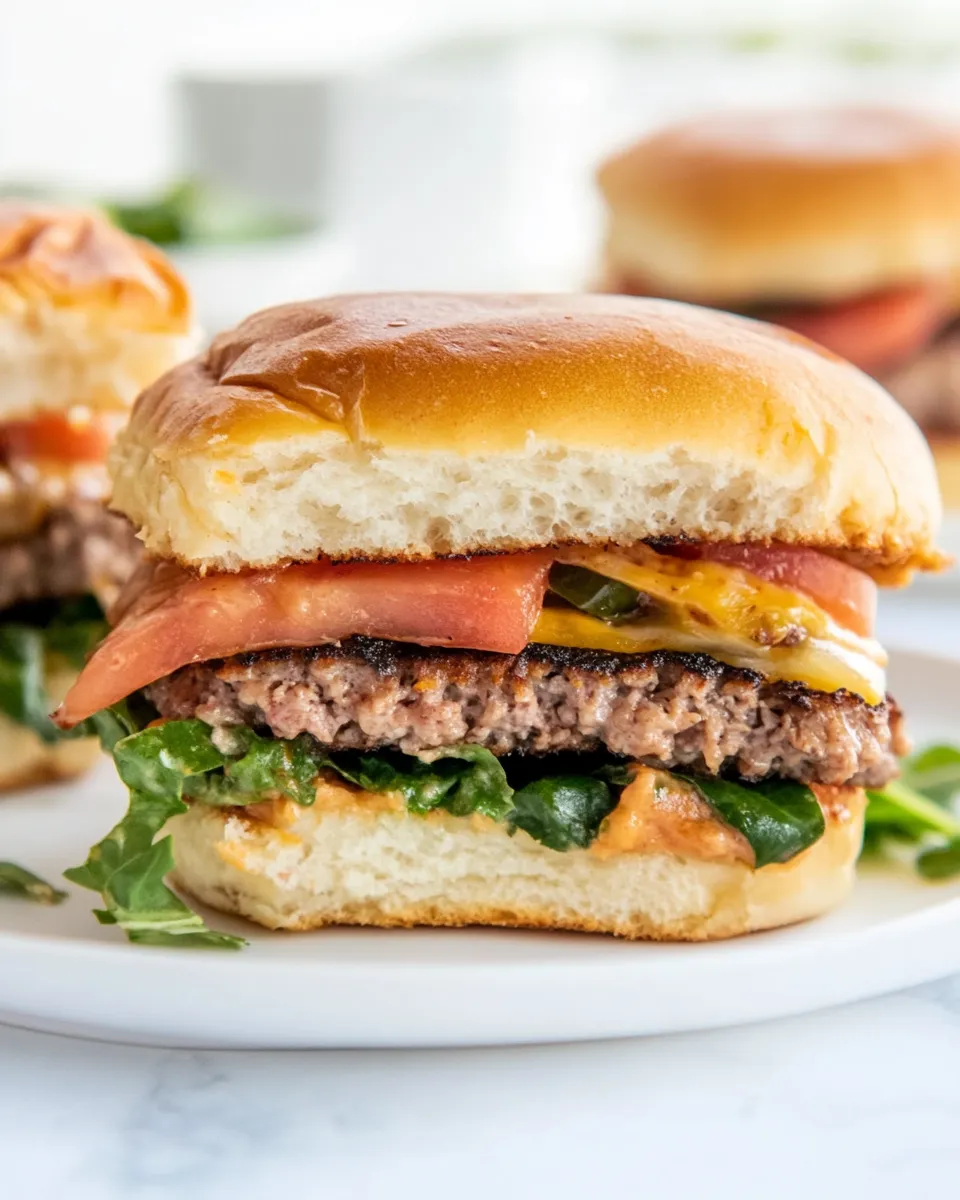
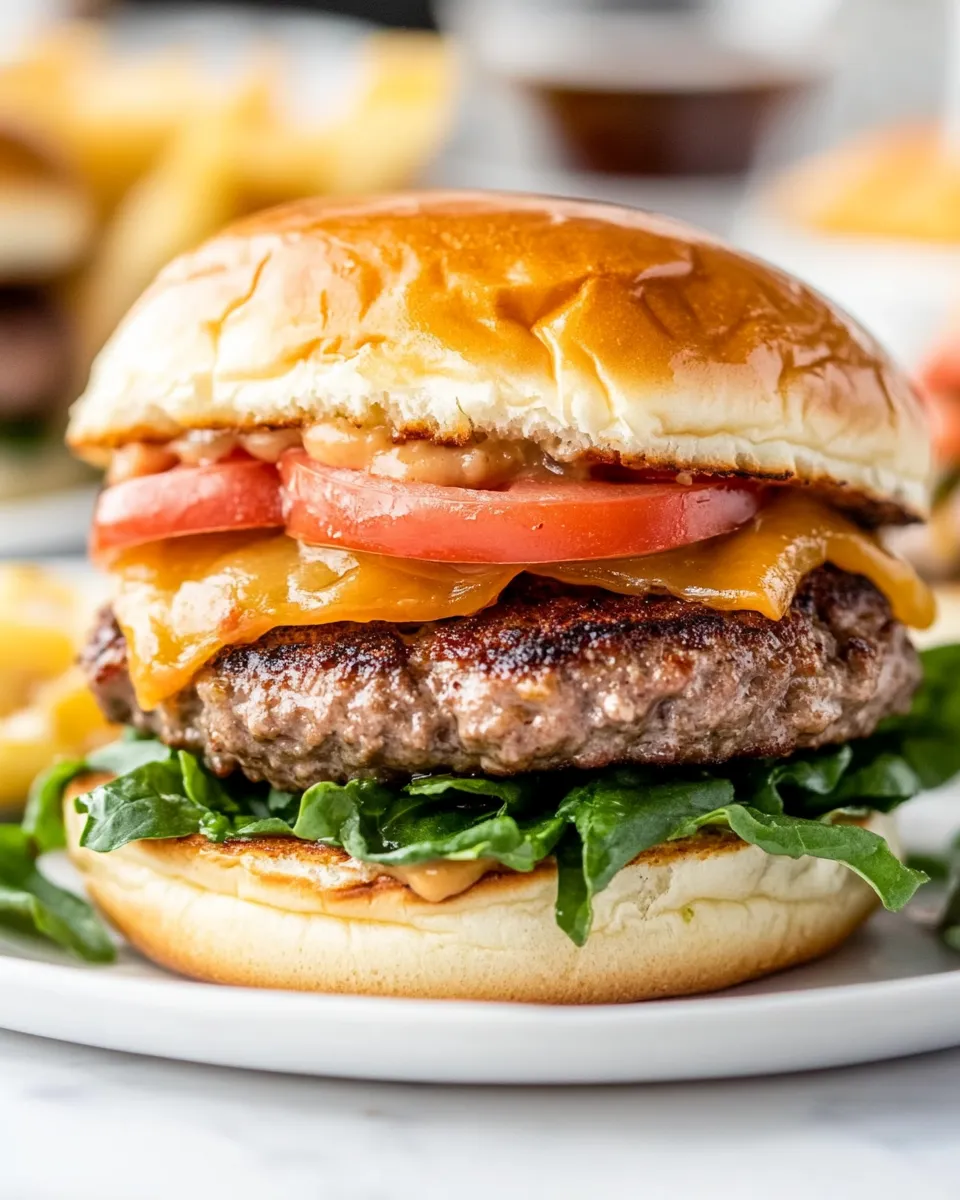
- Transfer each cheeseburger to a bun, add burger toppings of choice, and serve immediately.
What Sets This Recipe Apart
Baked hamburgers are about efficiency and consistency. Unlike pan-frying, baking cooks every patty evenly without needing to flip or babysit. The use of a wire rack lets hot air circulate, promoting even cooking and a modest crust around the edges while keeping the interior juicy. Finishing under the broiler is a small step that yields maximum return: melted cheese with a hint of browning that reads like a classic cheeseburger.
The recipe relies on a straightforward beef seasoning, so the meat itself is the star. With only two components in the mix, you get a classic beef flavor that plays well with any topping choices. It’s also simple to multiply or shrink for parties or smaller households.
Texture-Safe Substitutions
If you need to adjust texture while keeping the bake method intact, here are safe swaps that won’t compromise structure or moisture.
- Use 85/15 ground beef instead of 80/20 — slightly leaner, so expect a marginally drier burger; consider a brushed-on bit of oil to the patty surface before baking to help browning.
- For a firmer burger, briefly chill formed patties for 15–30 minutes before baking; this helps them hold shape under heat.
- To add moisture without changing texture dramatically, fold in finely grated onion or a tablespoon of Worcestershire sauce per pound—don’t overwork the meat.
Equipment at a Glance
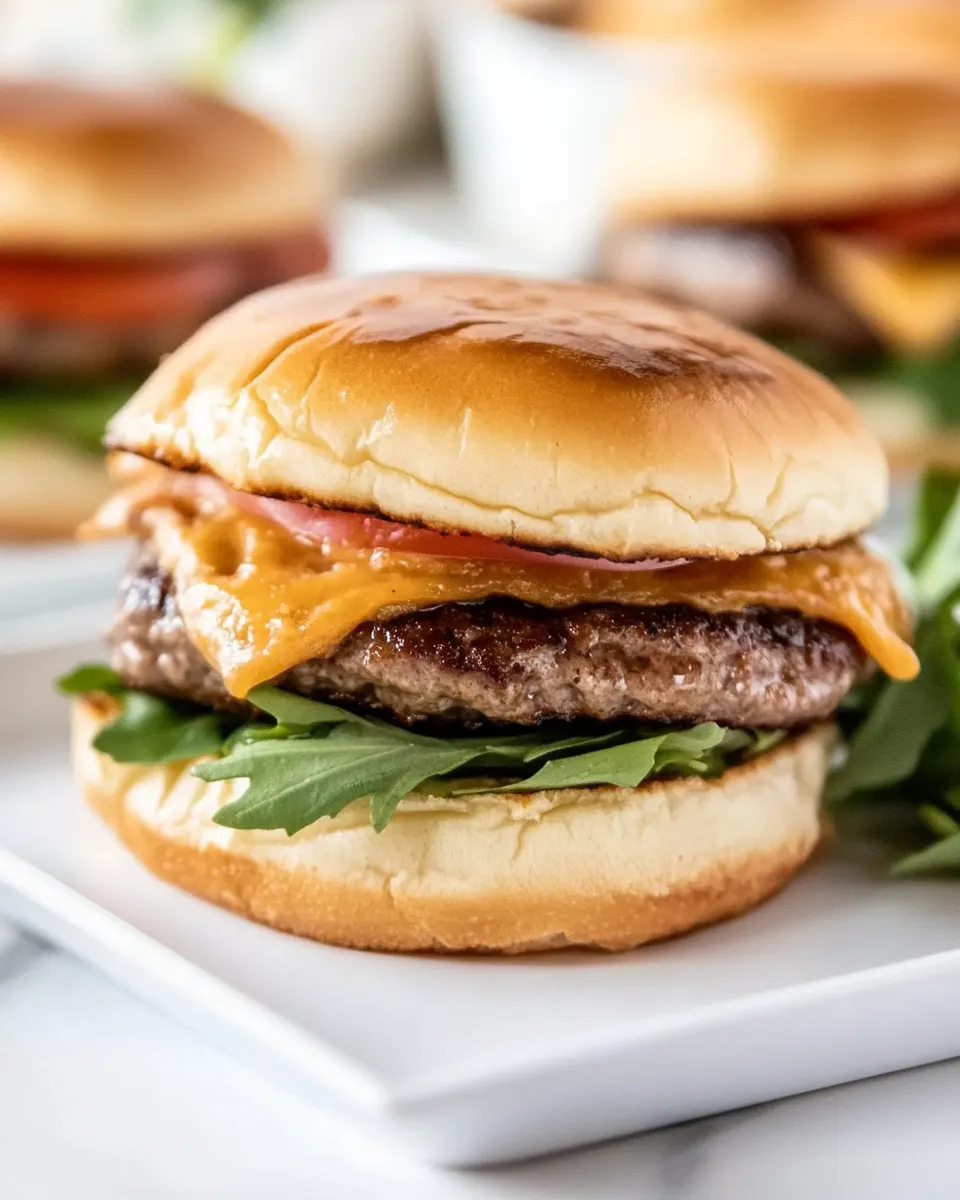
You don’t need fancy gear—these are the essentials that will make this recipe simple and successful:
- Rimmed baking sheet — catches juices and makes cleanup easier.
- Wire cooling rack that fits inside the rimmed sheet — elevates the patties for even air circulation.
- Instant-read thermometer — the fastest, safest way to confirm the internal temperature of 160°F.
- Mixing bowl and clean hands — for gentle combining and forming patties.
- Oven with reliable broil setting — used for the cheese finish.
Mistakes Even Pros Make
These are the small errors that turn an easy recipe into an inconsistent outcome. Catching them early saves you time and flavor.
- Over-mixing the meat: squeezing too much makes tough burgers. Combine just until seasonings are distributed.
- Skipping the rack: placing patties directly on the sheet can lead to steaming in their own juices and less even browning.
- Not checking temperature: an instant-read thermometer avoids guessing pinkness and ensures safety and doneness.
- Broiling too long: cheese can go from melty to burnt quickly. Watch closely for the 1–3 minute window.
Fresh Seasonal Changes
One of the joys of a basic baked burger is how well it adapts to seasonal produce. Swap toppings to highlight what’s fresh and keep the overall approach intact.
- Spring: add thinly sliced radishes, pea shoots, and a smear of herb mayo for brightness.
- Summer: ripe tomato slices, crunchy lettuce, and grilled corn salsa make the burgers sing.
- Fall: caramelized onions and sautéed mushrooms add earthiness, and a slice of smoked cheddar pairs nicely.
- Winter: pickled red onions and roasted root-vegetable slaw bring acidity and texture.
What I Learned Testing
Over multiple trials, a few practical lessons emerged. First, spacing is crucial—give patties room on the rack. Overcrowding drops oven temperature locally and creates steam pockets. Second, the center-thinner patty shape helps avoid bulging in the middle as the meat cooks. Finally, a short broil at the end is non-negotiable if you want a cheeseburger experience; without it, the cheese sits on the burger rather than bonding into it.
Testing also confirmed that this approach scales. For large batches, rotate baking sheets and monitor internal temperatures rather than relying strictly on time. Ovens vary; the thermometer is your best friend.
Refrigerate, Freeze, Reheat
Leftover baked burgers store and reheat well, but follow food-safety best practices.
- Refrigerate: Cool patties to room temperature, then refrigerate in a sealed container for up to 3–4 days.
- Freeze: Wrap individual patties tightly and freeze for up to 2–3 months. For best quality, flash-freeze on a tray before bagging so they don’t stick together.
- Reheat: Thaw frozen patties overnight in the fridge. Reheat in a 350°F oven until warmed through (about 8–12 minutes), or microwave covered on medium power, checking frequently. Add fresh cheese and broil for a minute to restore the melty top.
Baked Hamburgers Q&A
Can I make sliders instead?
Yes—reduce the portion size and bake for slightly less time. Keep an eye on internal temperature to hit 160°F.
What if I don’t have beef seasoning?
You can use a simple mix of kosher salt, black pepper, garlic powder, and a pinch of onion powder in roughly equal parts. Still, the recipe calls for 4 teaspoons total—use that total volume to maintain seasoning balance.
Will the burgers dry out in the oven?
Not when you use 80/20 beef and avoid over-mixing. The rack helps excess fat render away without creating a dry texture. If you use leaner beef, expect slightly drier results.
How do I know when to broil?
Remove the sheet at 160°F internal temp, add cheese, then switch to a low broil for 1–3 minutes. Keep the oven door nearby and watch through the window—cheese can go from melted to burned quickly.
Can I add mix-ins to the meat?
Yes, but keep additions small and finely chopped so they don’t change the patty’s structure. Anything wet (sauces, large vegetables) can make the mixture loose and harder to form.
Bring It Home
This baked method gives you dependable, juicy burgers without standing over a skillet. It’s a small amount of technique for a big payoff: uniform doneness, easy cleanup, and a simple broil to finish. Keep the seasoning modest so the beef shines, use a thermometer rather than guesswork, and don’t skip the rack if you want the best texture.
Make a double batch for game day or a week of quick dinners. Toast your buns, stack your favorite toppings, and enjoy a reliably good burger with minimal fuss. If you try the recipe, I’d love to hear how you topped yours and any tweaks you made to make it your own.
Baked Hamburgers
Ingredients
Ingredients
- 2 poundsground beef80/20 recommended
- 4 teaspoonsbeef seasoning
- 6 slicescheddar cheese
- 6 buns
- Burger toppings of choice
Instructions
Instructions
- Preheat the oven to 400°F (204°C).
- In a large bowl, add 2 pounds ground beef and 4 teaspoons beef seasoning. Gently combine with your hands just until the seasoning is evenly distributed—do not over-mix.
- Divide the meat into 6 equal portions. Roll each portion into a tight ball, then flatten into a patty about 3/4 inch thick, making the center slightly thinner than the edges. Smooth any cracks at the edges with the palm of your hand.
- Place a wire cooling rack inside a rimmed baking sheet. Arrange the patties on the rack, leaving space between them so air can circulate. (If you do not have a rack, place the patties directly on the rimmed baking sheet.)
- Bake at 400°F for 25–30 minutes, or until the patties are no longer pink in the center and an instant-read thermometer inserted into the thickest part reads 160°F.
- Remove the baking sheet from the oven. Place one slice of cheddar cheese on each patty. Set the oven to low broil.
- Return the baking sheet to the oven and broil for 1–3 minutes, watching closely, until the cheese is melted.
- Transfer each cheeseburger to a bun, add burger toppings of choice, and serve immediately.
Equipment
- Large Bowl
- wire cooling rack
- rimmed baking sheet
- Instant-read thermometer
- Oven
Notes
FRIDGE
: Transfer leftovers to an airtight container or wrap each patty individually in aluminum foil or plastic wrap. Store in the refrigerator for 3-4 days.
FREEZER
: Place patties into an airtight container, or wrap individually and place in a freezer bag. Freeze for up to 3 months. For best results, freeze without cheese. Thaw completely before reheating.
Reheat burgers in the microwave or oven until warmed through.