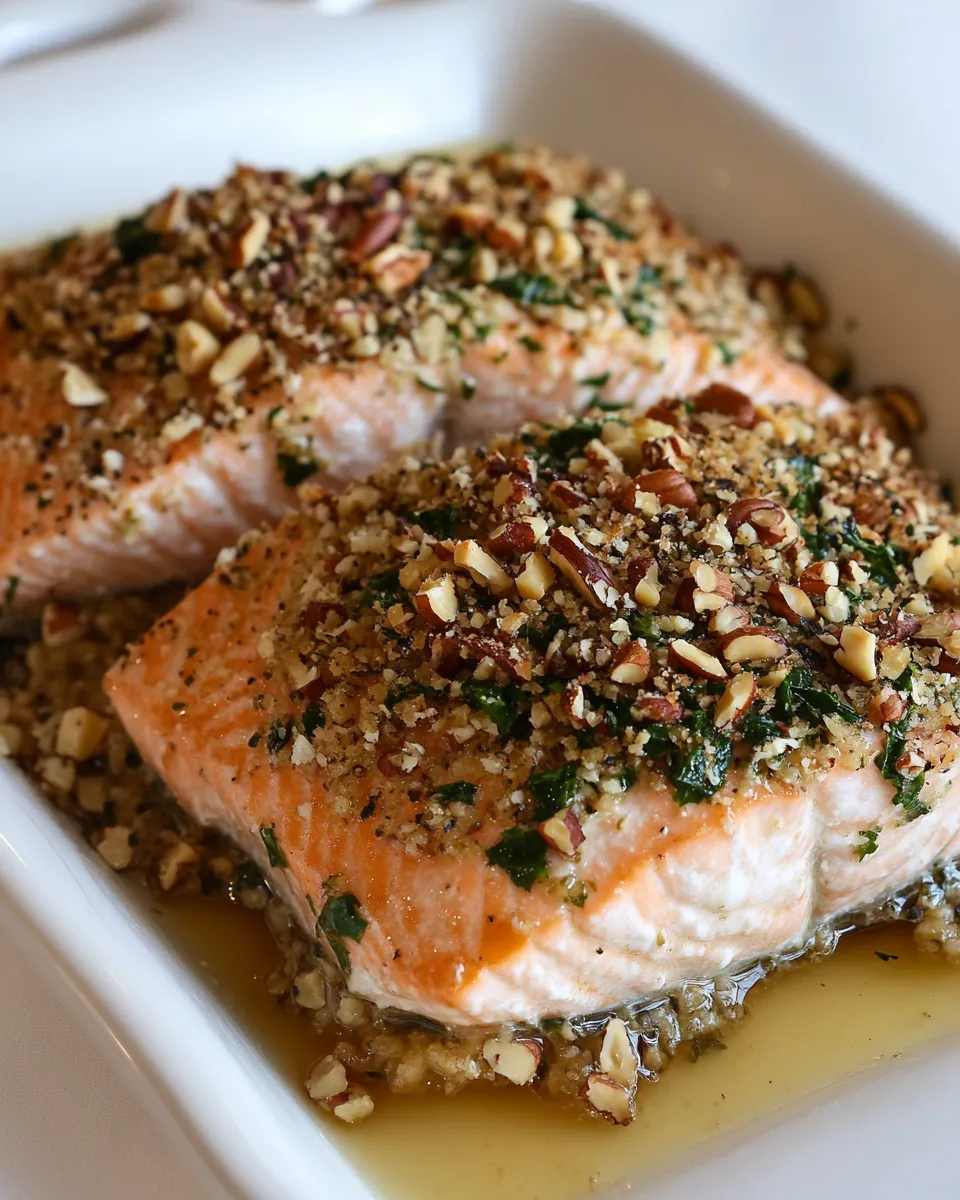
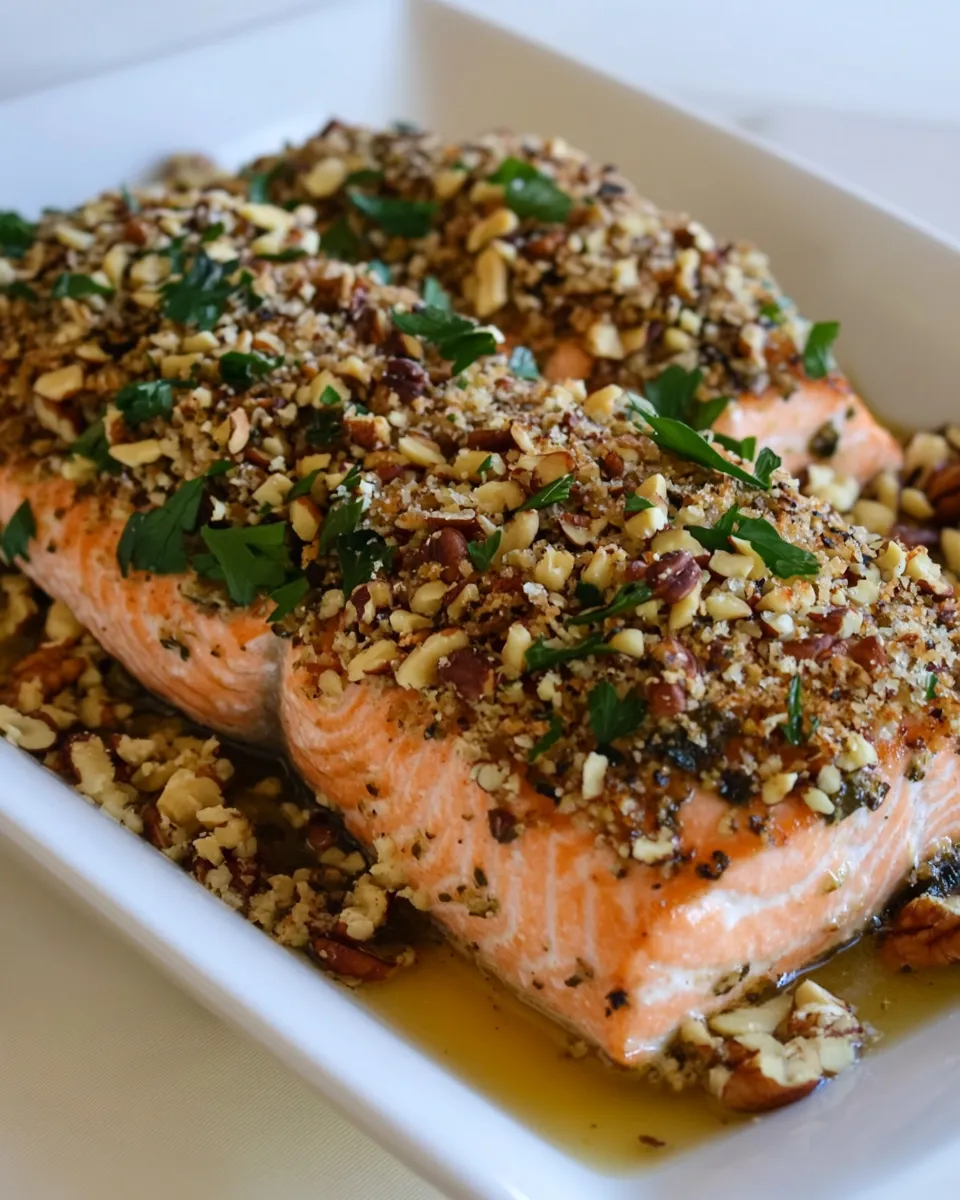
This is one of those dinners I turn to when I want something that feels a little special but comes together without drama. The honey-mustard glaze gives the salmon a sweet-tangy lift while the pecan-panko topping adds a toasty crunch that contrasts the tender fish. It’s quick, satisfying, and elegant enough for guests.
I like that it’s forgiving. The recipe works with fillets of different thicknesses and it tolerates modest timing variations—just watch the topping as the fish finishes. A squeeze of lemon at the end brightens everything, and leftovers make excellent lunches.
Below I break down ingredients and steps, cover substitutions for common allergies, list the tools I use, and answer the usual questions so you can make this confidently the first time and a dozen times after.
Ingredient Breakdown
Ingredients
- 2 tablespoons Dijon mustard — provides the tang and base for the honey-mustard glaze; sharp flavor balances the pecans’ richness.
- 2 tablespoons unsalted butter, melted — adds richness and helps the glaze bind to the fish; melted so it mixes smoothly with the mustard.
- 1 tablespoon honey — brings sweetness to round out the mustard; helps the topping brown.
- 3/4 teaspoon salt, divided — seasons both the glaze and the panko-pecan topping; the split lets you salt the fish and the crust separately for even seasoning.
- 1/4 teaspoon freshly ground black pepper — a little heat and aromatic bite in the glaze.
- 1/4 cup panko — gives the crust that airy, crisp texture; panko stays crispier than regular breadcrumbs.
- 1/4 cup finely chopped pecans — adds nutty flavor and crunch; finely chopped so the crust adheres and bakes evenly.
- 2 teaspoons finely chopped parsley (optional, for color) — optional fresh color and a subtle herb note in the topping.
- 4 (6-oz) salmon fillets — the star of the dish; 6-ounce fillets are a good individual portion and fit the bake time in the instructions.
- 1 lemon, for serving (optional) — brightens the finished fish; serve wedges or a halved lemon for squeezing at table.
Why each component matters
The mustard and honey form the flavor base and the adhesive layer for the topping; butter mellows the mustard and encourages even browning. Panko gives lift and crunch, pecans bring depth and toasted flavor, and the parsley is purely for freshness and appearance. Salt is split because you want the fish itself seasoned and the topping to have its own seasoning without over-salting.
Build Baked Salmon with Honey Mustard and Pecan-Panko Crust Step by Step
- Preheat the oven to 450°F (235°C). Set a rack in the middle position. Line a baking sheet with aluminum foil and spray the foil with nonstick cooking spray.
- In a small bowl, whisk together 2 tablespoons Dijon mustard, 2 tablespoons melted unsalted butter, 1 tablespoon honey, 1/2 teaspoon salt, and 1/4 teaspoon freshly ground black pepper. Set this honey-mustard mixture aside.
- In another small bowl, combine 1/4 cup panko, 1/4 cup finely chopped pecans, 2 teaspoons finely chopped parsley (optional), and the remaining 1/4 teaspoon salt. Stir to mix evenly.
- Pat the 4 (6-oz) salmon fillets dry with paper towels (optional) and place them on the prepared baking sheet, skin-side down if they have skin, spacing the fillets apart.
- Spoon the honey-mustard mixture evenly over the top of each fillet, spreading lightly to cover the surface (some glaze may run down the sides).
- Sprinkle the panko-pecan mixture evenly over the glazed fillets and press the topping lightly so it adheres.
- Bake on the middle rack until the salmon is cooked through—about 7 to 10 minutes per inch of thickness—or until the fish is opaque and flakes easily with a fork (internal temperature 145°F if you use a thermometer). If the topping is browning too quickly before the fish is done, loosely tent the fillets with foil and continue baking until cooked.
- Remove from the oven and serve hot or at room temperature with lemon for serving (optional). If the fillets have skin that sticks to the foil, slide a thin spatula between the skin and the flesh to remove the fish, leaving the skin behind.
Why You’ll Keep Making It
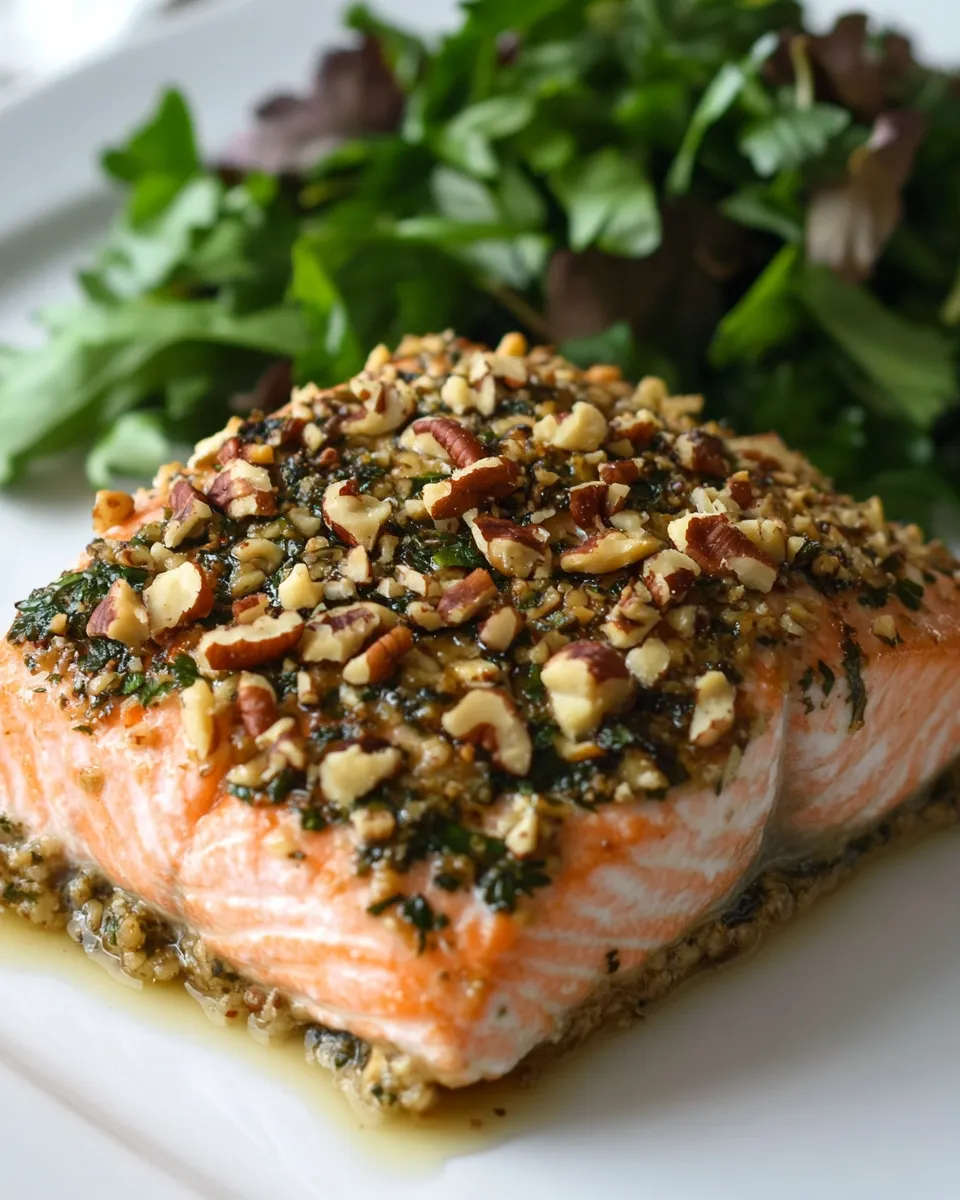
This recipe hits a rare combination: fast, flexible, and crowd-pleasing. The prep time is short because the glaze and crust come together in two small bowls, and the oven does the heavy lifting. Texture contrast—crispy topping versus silky salmon—feels elevated without extra fuss.
It’s also versatile. The topping is adaptable to what’s in your pantry, and the method scales easily for more fillets. It’s an ideal weeknight dinner when you want something more interesting than pan-seared fish, and it’s elegant enough for guests when you’re short on time but want to serve something that looks intentional.
Allergy-Friendly Substitutes
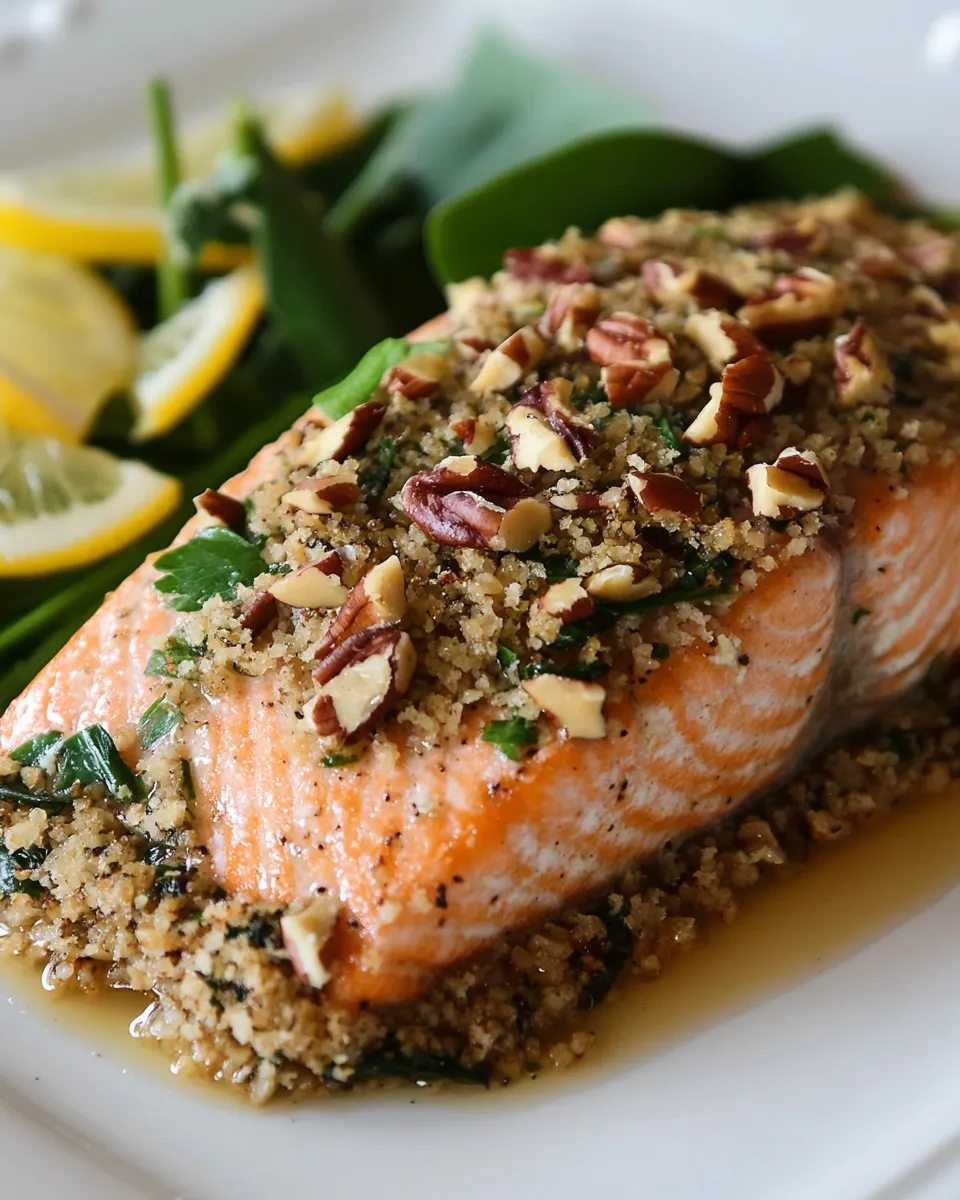
- Nut allergy (no pecans) — swap the pecans for extra panko and add a tablespoon of sunflower seeds or omit nuts entirely and increase panko for volume; the texture will still be crunchy though slightly less rich.
- Gluten-free — use gluten-free panko or crushed gluten-free crackers in place of the 1/4 cup panko.
- Dairy-free — replace the 2 tablespoons unsalted butter, melted, with an equal amount of olive oil or a neutral-tasting oil; this keeps the glaze shiny and helps with browning.
- No honey — if avoiding honey, use 1 tablespoon maple syrup or agave as a one-for-one replacement for sweetness and the same glazing quality.
- Mild mustard flavor — if Dijon is too assertive, use a milder brown mustard but keep the 2 tablespoons measurement; the balance of sweet and tang is important for the crust to adhere and flavor to pop.
Toolbox for This Recipe
- Baking sheet — large enough for four fillets with space between them.
- Aluminum foil — lines the sheet for easy cleanup and prevents sticking.
- Nonstick cooking spray — a light coating keeps the skin from hanging onto the foil.
- Two small bowls — one for the glaze, one for the panko-pecan mix; small bowls make mixing and portioning easy.
- Measuring spoons and cups — to follow the recipe amounts exactly.
- Thin spatula — useful if skin sticks to the foil when serving.
- Instant-read thermometer (optional) — handy if you like precise doneness (145°F is the target in the instructions).
Steer Clear of These
- Overcrowding the baking sheet — crowding traps steam and prevents the crust from crisping; leave space between fillets.
- Applying too thick a glaze — if you heap on glaze it can run off and pool, causing the topping to slide; spread lightly and evenly.
- Skipping the press on the topping — not pressing the panko-pecan mixture onto the glaze makes it more likely to fall off after baking.
- Leaving the oven unmonitored during the final minutes — the topping can go from perfectly golden to too dark quickly; check in the last few minutes.
- If you use skin-on fillets, pulling them off the foil too roughly — slide a thin spatula between skin and flesh to release the fillet without tearing.
Dietary Customizations
Here are practical swaps and tweaks that maintain the recipe’s spirit while fitting different dietary goals.
- Lower sodium — reduce the 3/4 teaspoon salt to taste: you can skip salting the fish itself and use only 1/8–1/4 teaspoon in the topping so the crust still has flavor without making the whole dish salty.
- Keto / low-carb — replace the 1/4 cup panko with 1/4 cup crushed pork rinds or finely ground almond meal; note texture will be different but still crisp when baked.
- Pescatarian / protein-forward — keep the same ingredients; this recipe is naturally pescatarian-friendly and pairs well with a simple salad or steamed veg to round a meal.
- Paleo — swap panko for finely chopped nuts and coconut flakes and replace butter with olive oil or ghee if allowed in your version of paleo.
If You’re Curious
Why panko and pecans work so well together
Panko is airy and creates a light, crunchy shell while pecans add fat, flavor, and a toasted note when baked. The butter in the glaze helps the panko brown and the honey encourages caramelization at the surface, giving both color and depth.
Timing and doneness
The bake time listed—about 7 to 10 minutes per inch of thickness—is a guideline because oven temps vary and fillet thickness varies. Watch for opaque flesh that flakes with a fork. If you use a thermometer, the internal temperature of 145°F confirms doneness, but many cooks prefer to pull salmon a few degrees earlier knowing it will carry over-cook slightly while resting.
Best Ways to Store
- Refrigerate — cool any leftovers to room temperature within two hours, then store in an airtight container in the fridge for up to 2 days. The crust softens but the flavors hold up well.
- Reheat — reheat in a 300°F oven on a baking sheet for 8–10 minutes until warmed through; tent loosely with foil if the topping is browning too quickly. A quick flash under a broiler can re-crisp the crust, watching carefully to avoid burning.
- Freezing — cooked fish with the nut crust doesn’t freeze and thaw gracefully; if you need make-ahead, freeze raw fillets separately and add the topping when thawed and ready to bake.
FAQ
- Can I use frozen salmon? — Yes. Thaw completely and pat dry before applying the glaze and topping so excess moisture doesn’t make the crust soggy.
- My topping fell off after baking. What went wrong? — Either the glaze wasn’t tacky enough when you pressed on the panko-pecan mixture, or the topping was too heavy. Press the mixture lightly onto the glaze so it adheres but avoid packing it so tightly it won’t crisp.
- Can I make the topping ahead? — Mix the panko and pecans ahead of time and store in an airtight container. Add parsley right before topping if you want maximum color.
- Is it okay to broil at the end to brown the topping? — You can, but watch closely. The directions already call for high heat (450°F), which browns quickly; a short broil can finish browning but will also accelerate the interior cooking.
- How do I scale this recipe? — The method scales linearly. Keep the same ratios for the glaze and topping and arrange fillets on multiple baking sheets if needed, avoiding crowding.
Final Bite
This Baked Salmon with Honey Mustard and Pecan-Panko Crust delivers a reliable balance of texture and flavor with minimal effort. It’s forgiving, fast, and adaptable—great for weeknights and easy enough to dress up for company. Follow the steps, watch the crust in the final minutes, and don’t skip the lemon if you like a little lift. I hope it becomes one of your go-to salmon recipes.
Baked Salmon with Honey Mustard and Pecan-Panko Crust
Ingredients
Ingredients
- 2 tablespoonsDijon mustard
- 2 tablespoonsunsalted butter melted
- 1 tablespoonhoney
- 3/4 teaspoonsalt divided
- 1/4 teaspoonfreshly ground black pepper
- 1/4 cuppanko
- 1/4 cupfinely chopped pecans
- 2 teaspoonsfinely chopped parsley optional, for color
- 4 6-ozsalmon fillets
- 1 lemon for serving (optional)
Instructions
Instructions
- Preheat the oven to 450°F (235°C). Set a rack in the middle position. Line a baking sheet with aluminum foil and spray the foil with nonstick cooking spray.
- In a small bowl, whisk together 2 tablespoons Dijon mustard, 2 tablespoons melted unsalted butter, 1 tablespoon honey, 1/2 teaspoon salt, and 1/4 teaspoon freshly ground black pepper. Set this honey-mustard mixture aside.
- In another small bowl, combine 1/4 cup panko, 1/4 cup finely chopped pecans, 2 teaspoons finely chopped parsley (optional), and the remaining 1/4 teaspoon salt. Stir to mix evenly.
- Pat the 4 (6-oz) salmon fillets dry with paper towels (optional) and place them on the prepared baking sheet, skin-side down if they have skin, spacing the fillets apart.
- Spoon the honey-mustard mixture evenly over the top of each fillet, spreading lightly to cover the surface (some glaze may run down the sides).
- Sprinkle the panko-pecan mixture evenly over the glazed fillets and press the topping lightly so it adheres.
- Bake on the middle rack until the salmon is cooked through—about 7 to 10 minutes per inch of thickness—or until the fish is opaque and flakes easily with a fork (internal temperature 145°F if you use a thermometer). If the topping is browning too quickly before the fish is done, loosely tent the fillets with foil and continue baking until cooked.
- Remove from the oven and serve hot or at room temperature with lemon for serving (optional). If the fillets have skin that sticks to the foil, slide a thin spatula between the skin and the flesh to remove the fish, leaving the skin behind.
Equipment
- Oven
- Baking Sheet
- Aluminum Foil
- nonstick cooking spray
- Small Bowl
- Whisk
- Spatula
- Paper Towels
Notes
Make Ahead Instructions:
The salmon can be glazed, coated with the panko-pecan mixture, and refrigerated up to 3 hours ahead of time.