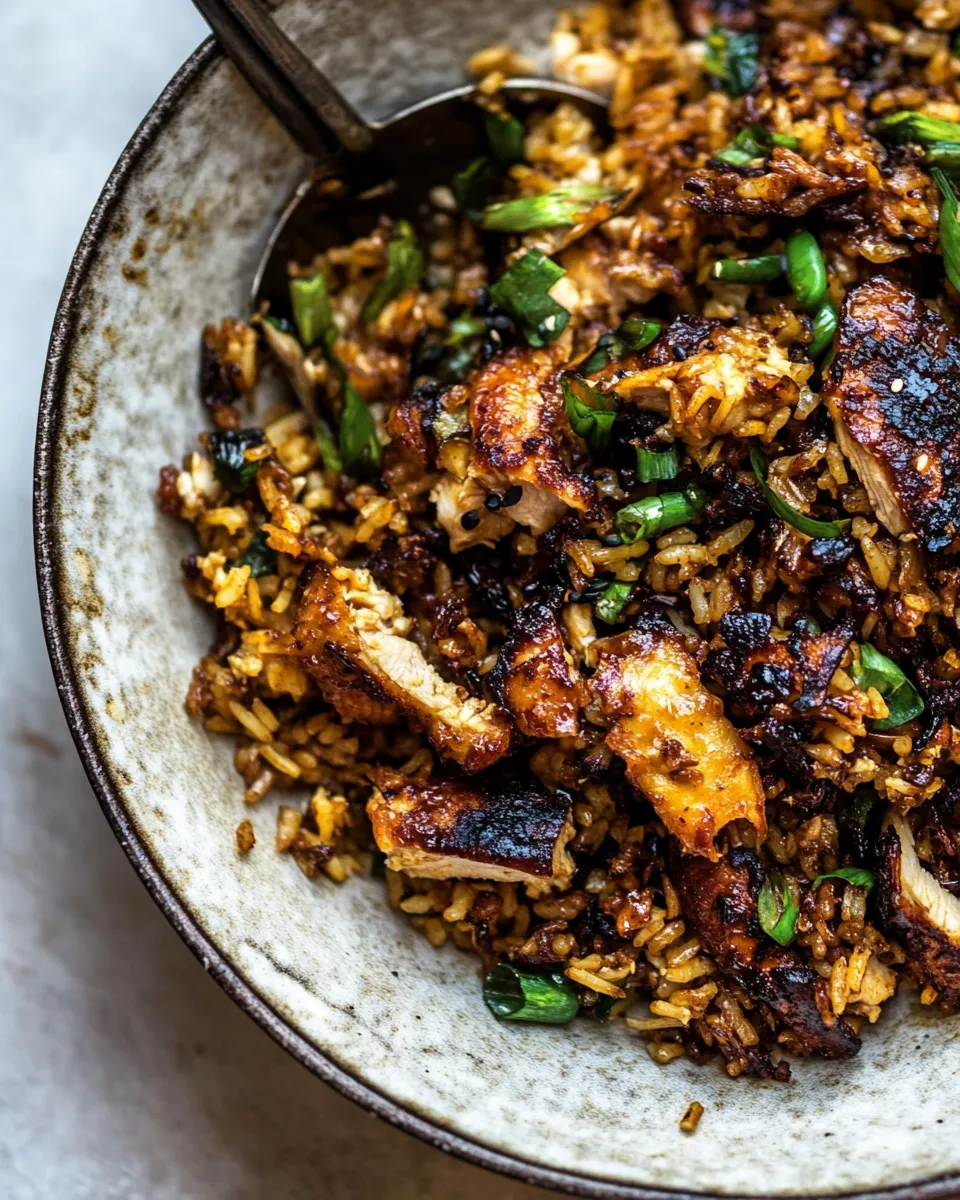
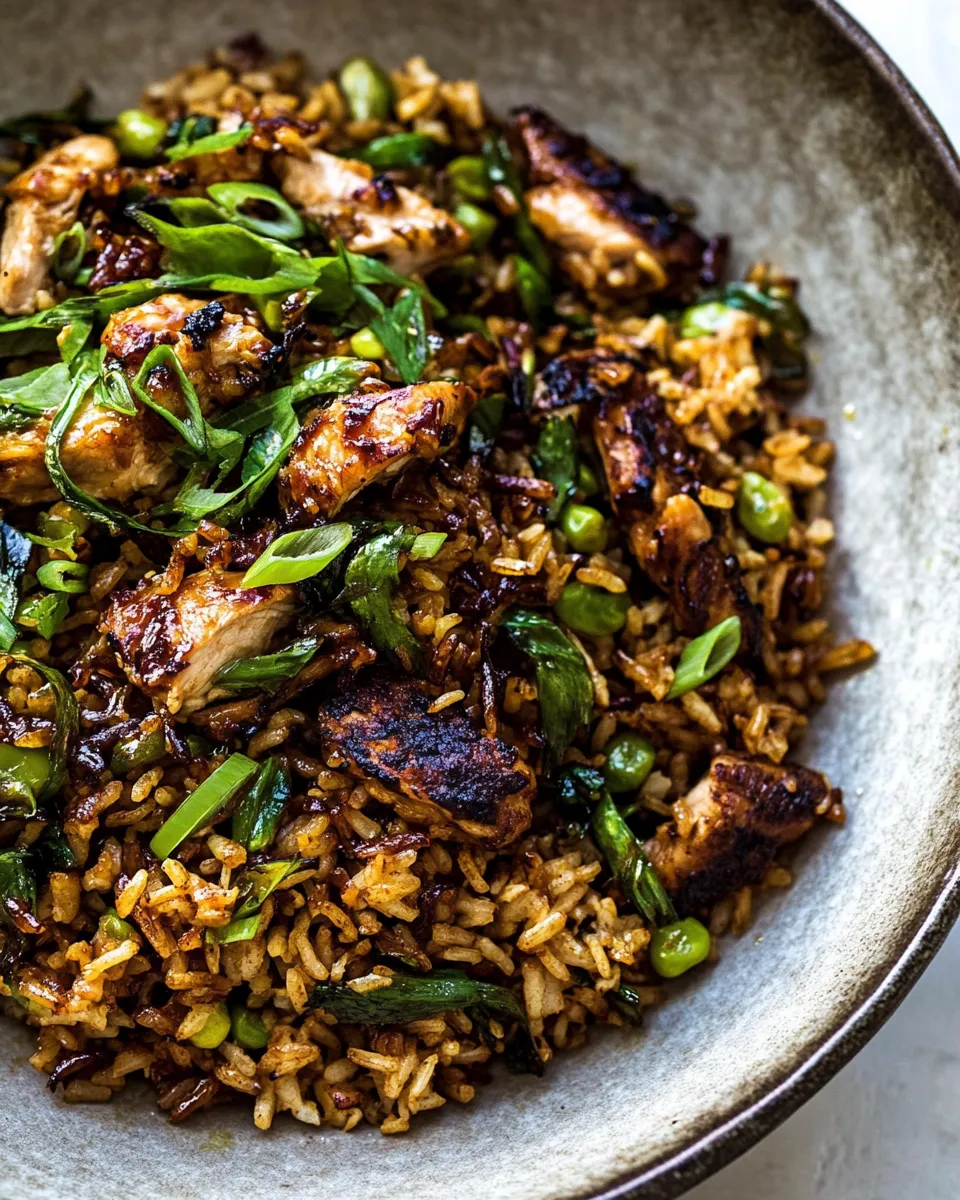
This is the kind of weeknight dinner that feels restaurant-worthy but comes together with the ease of pantry cooking. It’s built around bold sesame and hoisin flavors, bright ginger, crisped mushrooms, and the forgiving texture of day‑old rice. I’ve taught this to friends, made it for a crowd, and tested small changes until it reliably outperformed takeout.
No fancy tricks here: sensible mise en place, hot pan, and a simple sauce that doubles as a glaze for the chicken and seasoning for the rice. The components are flexible, and the method rewards attention to timing more than elaborate technique. Read on for the exact ingredient checklist and the step-by-step method I use every time.
This recipe is practical. I’ll tell you what matters — the rice temperature, the order you cook vegetables and protein, and why toasted sesame oil belongs in the sauce. If you want to simplify or scale, I include safe swaps and storage notes below.
Ingredient Checklist
- 1/4 cup low-sodium soy sauce — base of the sauce, controls salt without overwhelming the dish.
- 2 tablespoons toasted sesame oil — adds nutty aroma; part of the sauce’s signature flavor.
- 2 tablespoons hoisin sauce (make sure to use GF, if needed) — sweet, savory depth and glossy finish for the chicken.
- 1–2 teaspoons chili flakes — heat control; use to your taste.
- 3 eggs, beaten (optional) — adds indulgent silk and pockets of soft texture in the fried rice.
- 5 tablespoons extra virgin olive oil or sesame oil — for cooking; sesame oil will amp flavor, olive oil tolerates higher heat and is neutral.
- Kosher salt and black pepper — seasoning throughout; add sparingly early and adjust at the end.
- 2 cups shiitake or cremini mushrooms, roughly torn — provide umami and a meaty texture when caramelized.
- 4 baby bok choy or 2 cups spinach, roughly chopped — leafy green component; bok choy keeps a bit more bite, spinach wilts quickly.
- 4 green onions, chopped — aromatic; reserve one whole green onion for garnish.
- 2 inches fresh ginger, grated — fresh ginger brightens and lifts the sauce and vegetables.
- 4 garlic cloves, minced or grated — quick-cooking aromatics; grating integrates better and reduces biting raw garlic pockets.
- 1/2 pound chicken breasts, cubed — lean protein that cooks quickly; cut into uniform cubes for even browning.
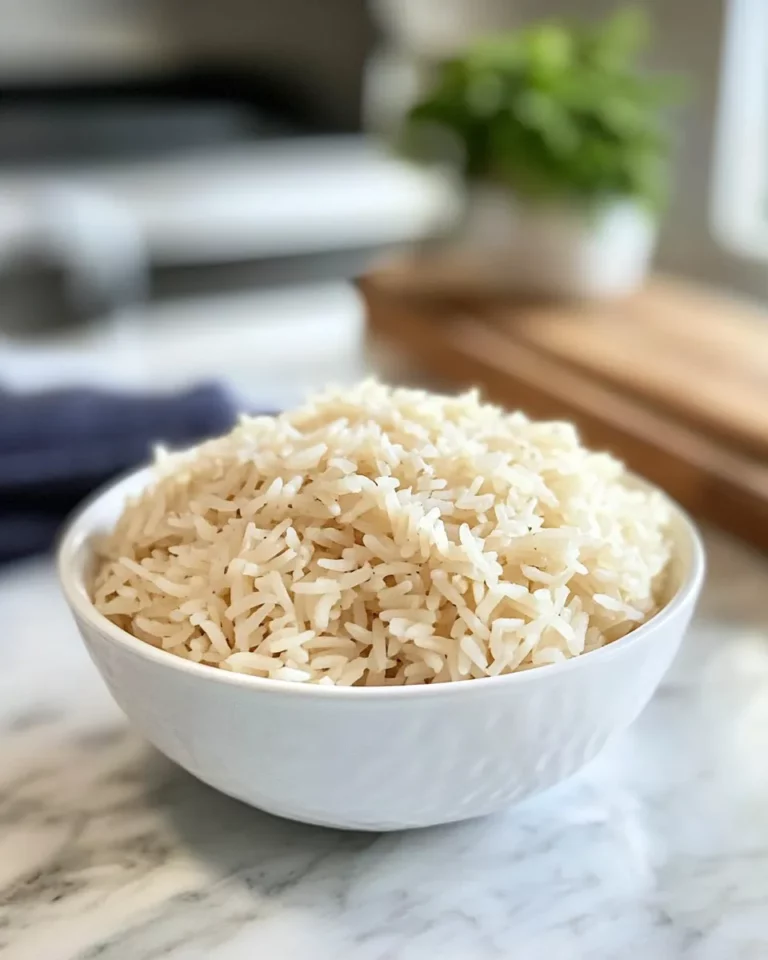
- 4 cups cooked, day-old rice — essential for proper separation and a toasted mouthfeel; cold rice breaks apart and crisps.
- 1/2 cup fresh basil or cilantro, chopped — final herbaceous lift; basil gives sweetness, cilantro gives brightness.
Stepwise Method: Better Than Takeout Sesame Ginger Chicken Fried Rice.
- Make the sauce: in a small bowl whisk together the 1/4 cup low-sodium soy sauce, 2 tablespoons toasted sesame oil, 2 tablespoons hoisin sauce, and 1–2 teaspoons chili flakes. Set the sauce aside.
- Prep ingredients: chop the green onions and set aside one whole green onion for garnish; beat the eggs if using; tear the mushrooms, roughly chop the bok choy (or spinach), grate the ginger, mince the garlic, and break up any clumps in the day-old rice with a fork.
- Heat 1 tablespoon of the oil in a large skillet over medium heat. If using eggs, add the beaten eggs, season lightly with kosher salt and black pepper, cook until the edges just begin to set (about 1–2 minutes), roughly scramble, then transfer the eggs to a plate and set aside.
- Increase the heat to medium-high and add 2 tablespoons of oil to the skillet. When the oil shimmers, add the mushrooms and cook, stirring occasionally, until they are browning and crisping on the edges (about 5 minutes). Season with kosher salt and a generous pinch of black pepper.
- Add the chopped green onions (except the reserved one), grated ginger, and minced garlic to the mushrooms. Add the chopped bok choy or spinach and cook, stirring, until the greens have wilted and the mushrooms are caramelized, about 2–3 minutes. Transfer the mushroom-and-greens mixture to the plate with the eggs.
- Return the skillet to medium-high heat and add the remaining 2 tablespoons of oil. Add the cubed chicken in a single layer and cook, stirring occasionally, until the chicken is browned and cooked through, about 5 minutes. Stir in 2 tablespoons of the prepared sauce and cook 1–2 minutes to glaze the chicken.
- Add the 4 cups of cooked day-old rice to the skillet. Break up any remaining clumps, stir to combine with the chicken, and cook, stirring occasionally, until the rice is toasted and heated through, about 4–5 minutes. Pour in the remaining sauce, toss well, and cook another 1–2 minutes.
- Return the reserved mushroom, greens, and scrambled eggs to the skillet. Toss everything together off the heat or over very low heat just until combined. Stir in the 1/2 cup chopped basil or cilantro. Taste and adjust seasoning with kosher salt and black pepper if needed.
- Divide the fried rice among bowls and garnish with the reserved chopped green onion. Serve immediately.
Why Cooks Rave About It
There are three reasons this dish beats takeout: clear, bright aromatics; deliberate textural contrasts; and a sauce that ties everything together without drowning flavors. The ginger and garlic cut through the richness of hoisin and sesame. Crisped edges on mushrooms and toasted rice give a pleasant chew next to tender chicken and soft scrambled eggs.
The method distributes flavor efficiently. Glazing the chicken with part of the sauce locks flavor into the protein. Toasting the rice in the skillet develops a toasty note that mimic deep-wok flavors. Finally, finishing with fresh herbs keeps the dish lively instead of flat and one-dimensional.
Texture-Safe Substitutions
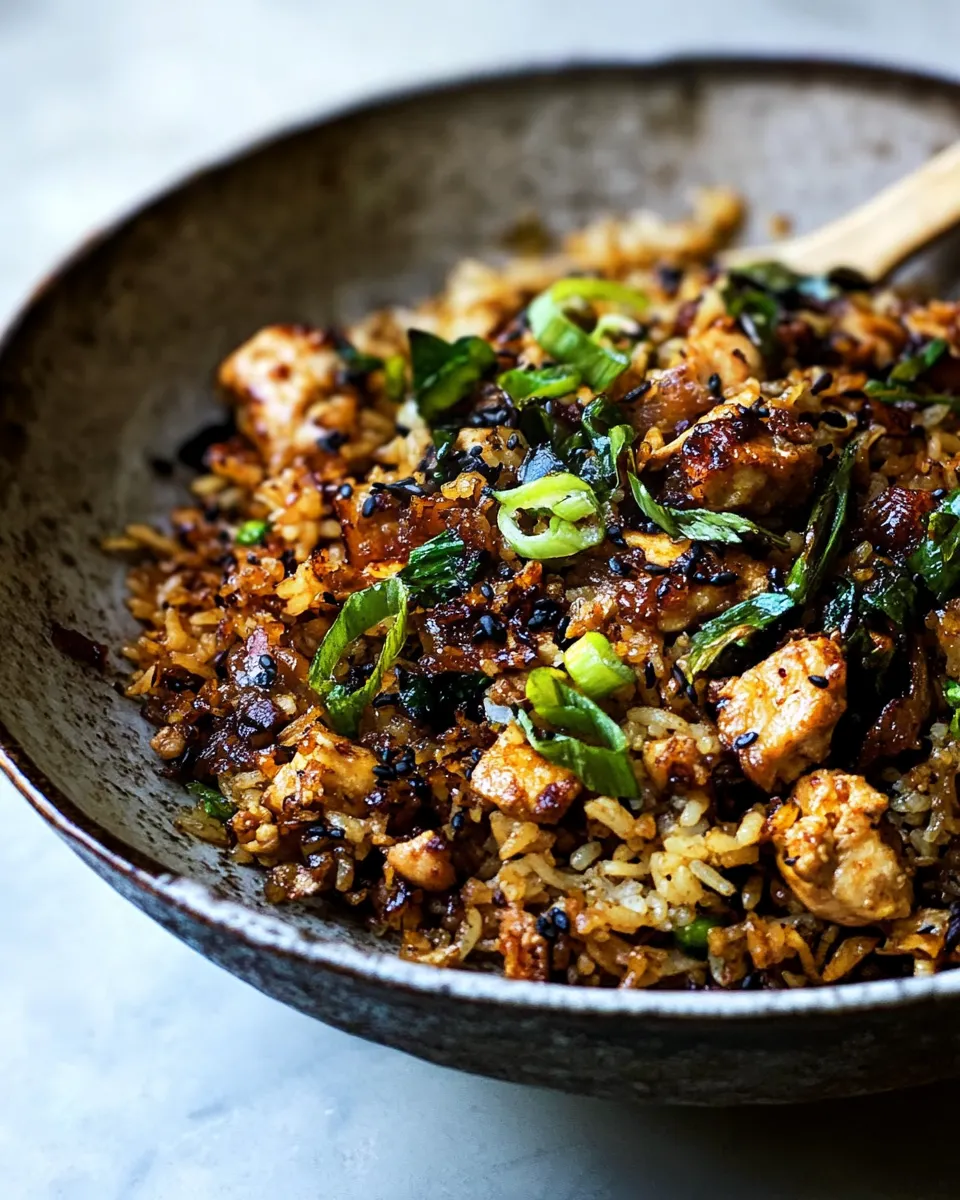
- Swap shiitake for cremini mushrooms — both are listed and provide similar meaty texture when browned.
- Use spinach instead of baby bok choy — quicker wilting and slightly softer mouthfeel, already acknowledged in the recipe.
- Skip the chicken and increase mushrooms and eggs if you prefer a mostly vegetarian plate without changing technique.
- For a nuttier finish, use sesame oil for the cooking oil in place of olive oil, but keep at least a neutral oil if you need higher heat tolerance.
Gear Up: What to Grab
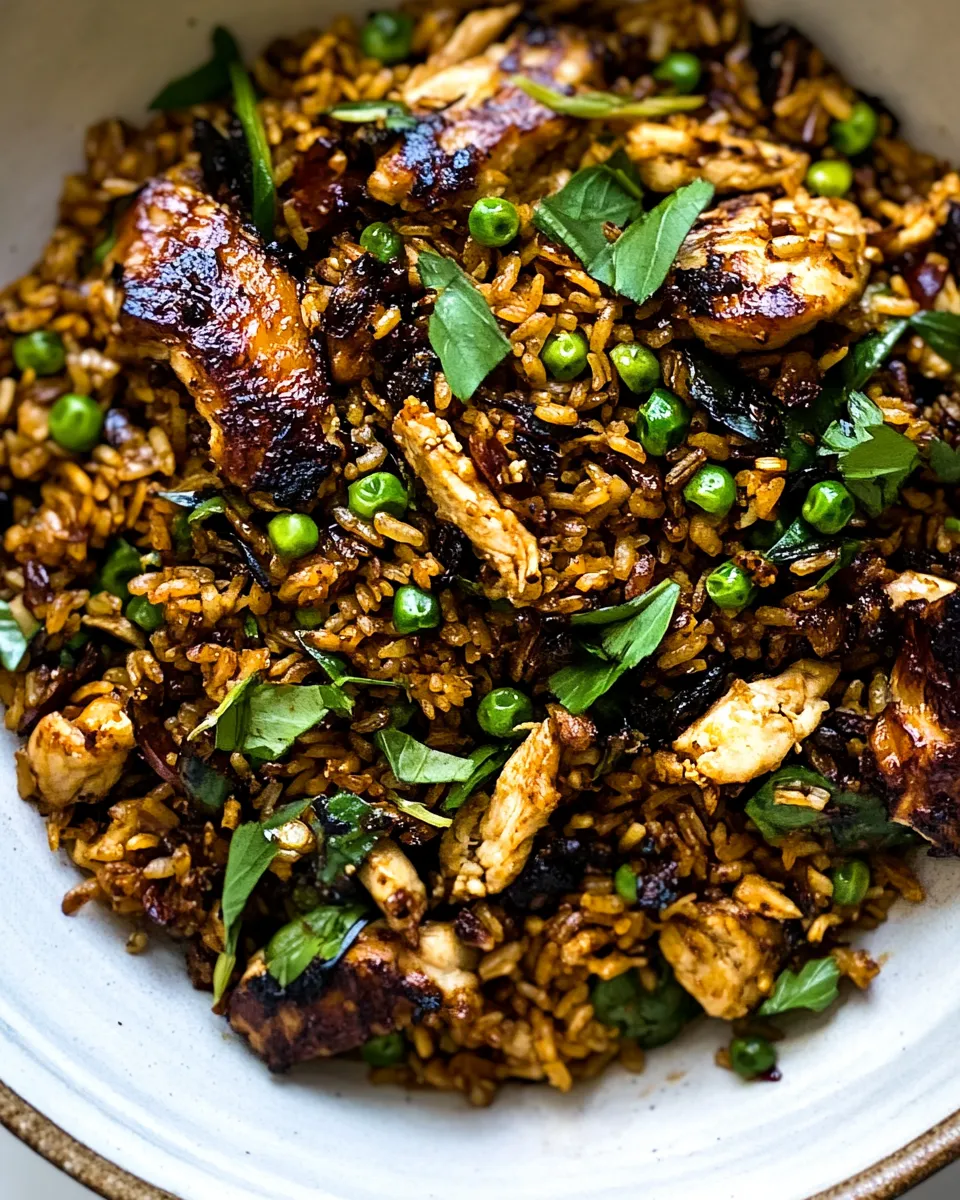
- Large skillet or wok — a wide surface lets rice toast instead of steam.
- Heatproof spatula or wooden spoon — you’ll need to scrape and toss efficiently.
- Small mixing bowl and whisk — for the sauce.
- Box grater or microplane — for ginger and garlic if you prefer grating.
- Sharp knife and cutting board — uniform cubed chicken and evenly chopped aromatics speed cooking.
- Fork — to break up day-old rice clumps before adding to the skillet.
Mistakes That Ruin Better Than Takeout Sesame Ginger Chicken Fried Rice.
Here are the pitfalls I encountered while testing, and how to avoid them.
- Using hot, freshly cooked rice. Fresh rice holds too much steam and becomes gummy. Day‑old, cold rice lets each grain separate and toast.
- Overcrowding the pan. If you pile in too much at once, ingredients steam instead of caramelize. Work in stages: mushrooms, then chicken, then rice.
- Cooking aromatics too early or at too high heat. Garlic burns in seconds and becomes bitter. Add grated garlic and ginger only once the mushrooms are developing color and oil is hot.
- Adding all the sauce at once to raw chicken. A small amount used to glaze the chicken creates a seared, sticky surface; pouring all the sauce too early can steam the meat and dilute flavor.
- Not tasting at the end. With hoisin and soy in the recipe, final adjustments with salt and pepper are still necessary — hoisin can be sweeter than expected.
Seasonal Adaptations
Because the recipe centers on mushrooms, greens, and aromatics, it’s easy to tilt the final flavor toward the season without changing technique. In spring, favor the tender bok choy and fresh basil for brightness. In fall and winter, maximize earthy mushrooms — they caramelize beautifully and lend depth. If you have tender summer herbs, swap cilantro or basil as your palate prefers.
Adjust cooking times slightly for tougher greens (cook a touch longer) or very delicate leaves (add at the very end). The method — sear, wilt, glaze, toast — stays the same year-round.
What I Learned Testing
Repeated tests taught me to respect the rice temperature and pan heat above most other variables. Cold rice and a smoking-hot skillet are what mimic restaurant wok flavor at home. I also learned the value of dividing the sauce: a little goes on the chicken early to create a glaze; the rest seasons the rice at the end so nothing tastes flat or oversauced.
Another lesson: eggs are optional but worth the extra step. They create pockets of silk that elevate the textural profile, especially if you like the comforting familiarity of delivery-style fried rice. Lastly, don’t underestimate the final handful of fresh herbs; they transform the dish from hearty to finished.
Meal Prep & Storage Notes
Portion the fried rice into airtight containers and refrigerate for up to 3–4 days. For best texture, reheat gently in a skillet over medium heat with a splash of oil — press and toss to re-crisp the rice. Microwaving works for convenience but will soften the grains.
To freeze: let cool completely, then freeze in single portions for up to 2 months. Thaw overnight in the fridge before reheating. If you plan to freeze, skip adding the fresh herbs and reserve them to toss in after reheating.
Frequently Asked Questions
- Can I use fresh rice? You can, but results are softer and more likely to clump. Spread freshly cooked rice on a tray to cool and dry briefly if you must use it.
- Can this be made vegetarian? Yes. Omit the chicken and double the mushrooms and greens. Keep the eggs for protein, or omit them for vegan; if vegan, ensure the hoisin is vegan-friendly.
- How spicy is it? The chili flakes are 1–2 teaspoons; start at the lower end if you’re sensitive and add more to taste.
- Do I have to use hoisin? Hoisin gives sweetness and shine. If you’re avoiding it, increase toasted sesame oil slightly and add a tiny touch of a sweetener like honey, but that’s a deviation — use hoisin for the intended balance.
Bring It to the Table
Serve this fried rice hot, garnished with the reserved chopped green onion and the chopped basil or cilantro called for in the recipe. Small bowls work well for casual dinners; family-style on a large platter is nice for sharing. A simple accompaniment like a quick cucumber salad or steamed greens complements the savory rice without stealing the stage.
This recipe is forgiving and fast once you’ve prepped. Keep the sauce mixed, the rice cold, and the pan hot. That’s the short list of what matters. Follow the steps, and you’ll have fried rice that’s genuinely better than takeout.
Better Than Takeout Sesame Ginger Chicken Fried Rice.
Ingredients
Ingredients
- 1/4 cuplow sodium soy sauce
- 2 tablespoonstoasted sesame oil
- 2 tablespoonshoisin sauce make sure to use GF, if needed
- 1-2 teaspoonchili flakesuse to your taste
- 3 eggs beaten(optional)
- 5 tablespoonsextra virgin olive oil or sesame oil
- Kosher salt and black pepper
- 2 cupsshiitake or cremini mushrooms roughly torn
- 4 babybok choy or 2 cups spinach roughly chopped
- 4 green onions chopped
- 2 inchesfresh ginger grated
- 4 garlic cloves minced or grated
- 1/2 poundchicken breasts cubed
- 4 cupscooked day-old rice
- 1/2 cupfresh basil or cilantro chopped
Instructions
Instructions
- Make the sauce: in a small bowl whisk together the 1/4 cup low-sodium soy sauce, 2 tablespoons toasted sesame oil, 2 tablespoons hoisin sauce, and 1–2 teaspoons chili flakes. Set the sauce aside.
- Prep ingredients: chop the green onions and set aside one whole green onion for garnish; beat the eggs if using; tear the mushrooms, roughly chop the bok choy (or spinach), grate the ginger, mince the garlic, and break up any clumps in the day-old rice with a fork.
- Heat 1 tablespoon of the oil in a large skillet over medium heat. If using eggs, add the beaten eggs, season lightly with kosher salt and black pepper, cook until the edges just begin to set (about 1–2 minutes), roughly scramble, then transfer the eggs to a plate and set aside.
- Increase the heat to medium-high and add 2 tablespoons of oil to the skillet. When the oil shimmers, add the mushrooms and cook, stirring occasionally, until they are browning and crisping on the edges (about 5 minutes). Season with kosher salt and a generous pinch of black pepper.
- Add the chopped green onions (except the reserved one), grated ginger, and minced garlic to the mushrooms. Add the chopped bok choy or spinach and cook, stirring, until the greens have wilted and the mushrooms are caramelized, about 2–3 minutes. Transfer the mushroom-and-greens mixture to the plate with the eggs.
- Return the skillet to medium-high heat and add the remaining 2 tablespoons of oil. Add the cubed chicken in a single layer and cook, stirring occasionally, until the chicken is browned and cooked through, about 5 minutes. Stir in 2 tablespoons of the prepared sauce and cook 1–2 minutes to glaze the chicken.
- Add the 4 cups of cooked day-old rice to the skillet. Break up any remaining clumps, stir to combine with the chicken, and cook, stirring occasionally, until the rice is toasted and heated through, about 4–5 minutes. Pour in the remaining sauce, toss well, and cook another 1–2 minutes.
- Return the reserved mushroom, greens, and scrambled eggs to the skillet. Toss everything together off the heat or over very low heat just until combined. Stir in the 1/2 cup chopped basil or cilantro. Taste and adjust seasoning with kosher salt and black pepper if needed.
- Divide the fried rice among bowls and garnish with the reserved chopped green onion. Serve immediately.
Equipment
- Small Bowl
- Large Skillet
- Fork
- Plate
Notes
Homemade Hoisin:
in a small bowl, combine 1/4 cup low sodium soy sauce, 2 tablespoons creamy peanut butter, 2 tablespoons honey, 2 tablespoons balsamic vinegar, 1 tablespoon molasses, 1 teaspoon Chinese 5 spice powder, and a pinch of black pepper.
Cooking the Rice:
2 cups of dry jasmine or basmati rice yields 4 cups cooked rice. Make sure your rice is room temp and not hot before using. If you're cooking your rice just before making this recipe, cook the rice, then spread it out on a large, rimmed baking sheet. Transfer the baking sheet full of rice to the freezer and freeze for fifteen to twenty minutes to help the rice dry out.
Brown Rice:
works just a well and is a delicious, healthy twist! Quinoa works too, though I prefer brown rice.