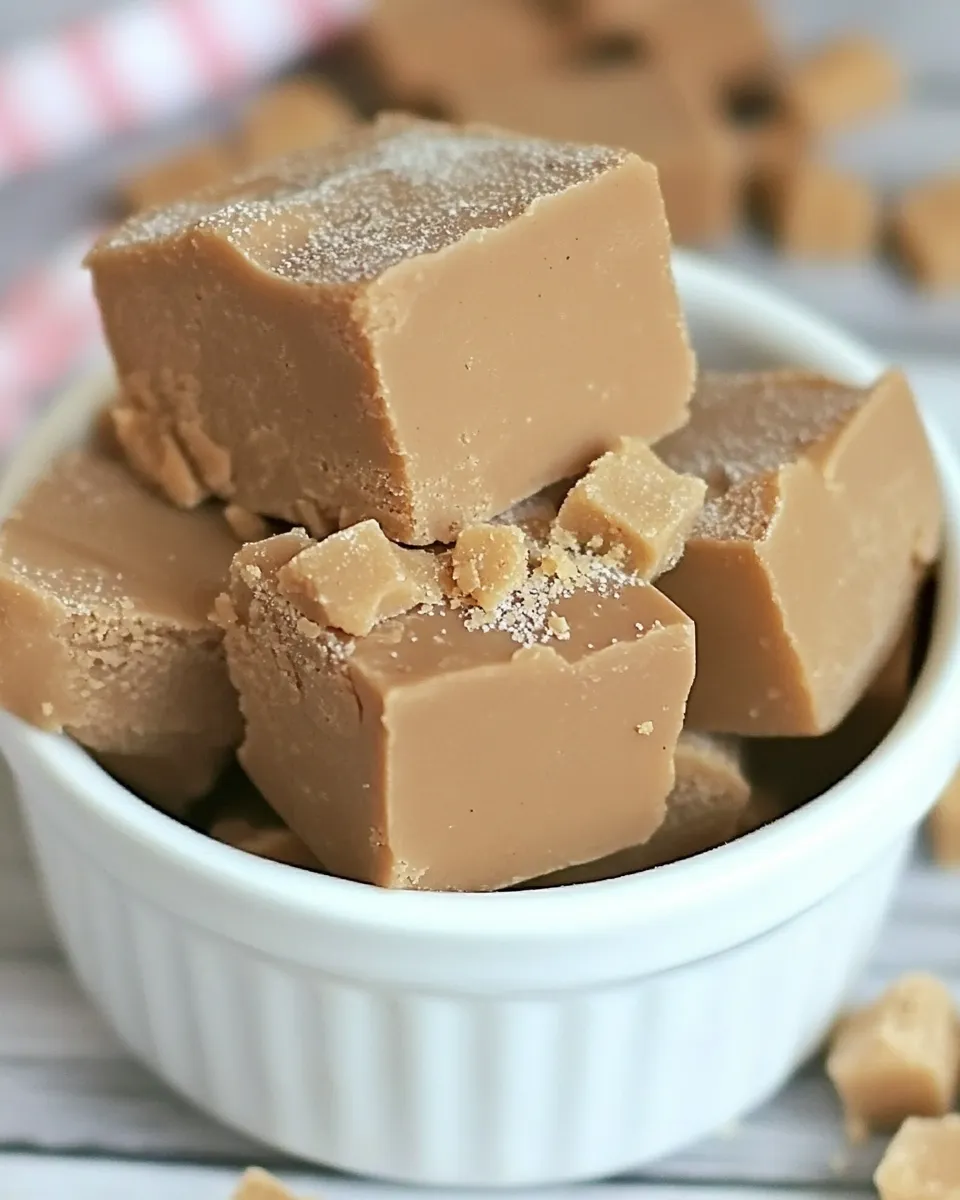
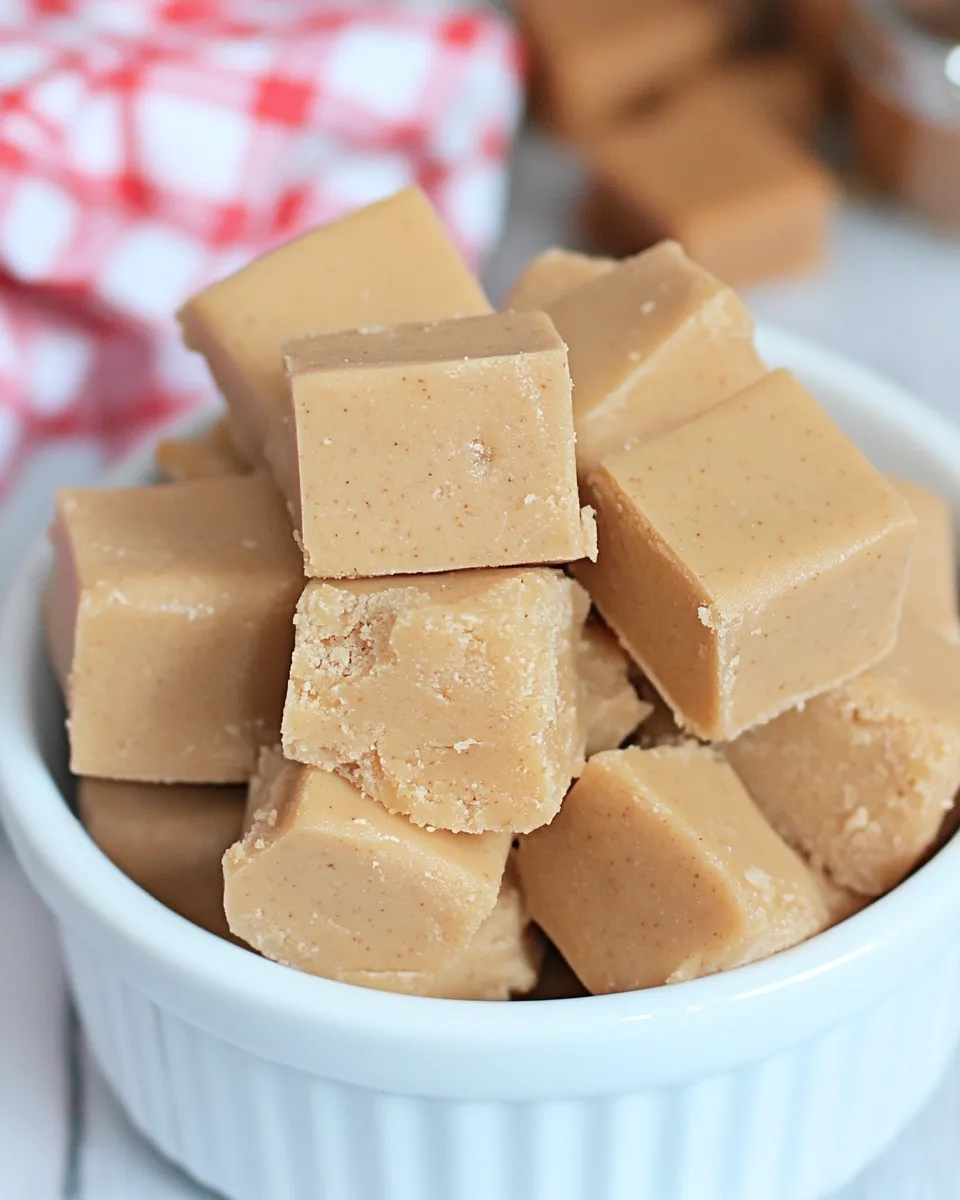
This Biscoff fudge is one of those recipes that lands in your kitchen and refuses to leave. It’s ridiculously simple — just two main components — and it sets up into a rich, spreadable, sliceable candy that disappears fast. I love it for holidays, last-minute gifts, or whenever I need a reliable sweet to bring to a gathering.
No tempering. No candy thermometer. If you can microwave and stir, you can make this. The texture is creamy and dense, with that unmistakable caramelized spice of Biscoff woven through smooth vanilla frosting. It’s comfort food in squares.
Below I break the process down step by step, explain the small tricks that make a difference, offer substitution options, and cover storage so you keep it fresh. Let’s get to the pan — this one comes together quickly, but following a few practical steps will give you the best results.
Ingredients at a Glance
- 11lb container Pillsbury vanilla frosting — the base and bulk of the fudge; provides sweetness, structure, and that classic vanilla background.
- 2 3/4c.Biscoff Spread — brings the signature spiced cookie-butter flavor and softens the frosting for a smooth, spreadable fudge.
Biscoff Fudge Made Stepwise
- Line a rimmed baking pan or pans (for example a rimmed baking sheet or multiple 8×8‑inch pans) with aluminum foil, leaving an overhang on two opposite sides for lifting. Set aside.
- Place the entire 11 lb container Pillsbury vanilla frosting and the 2 3/4 cups Biscoff Spread into a very large microwave‑safe bowl. If the full amount will not fit in one bowl or in your microwave, divide the ingredients into batches that do fit.
- Microwave on high in 30‑second intervals, removing and stirring thoroughly after each interval. Continue heating and stirring until the Biscoff is melted and the mixture is smooth and fully combined.
- Pour or spoon the warm mixture into the prepared foil‑lined pan(s) and spread evenly to the edges with a spatula.
- Refrigerate until the fudge is completely firm, at least 1–2 hours (longer or overnight if needed).
- Use the foil overhang to lift the set fudge from the pan(s). Peel back the foil and cut the fudge into pieces. Store refrigerated.
Why You’ll Love This Recipe
It’s fast, reliable, and forgiving. The ingredient list is remarkably short, and the method requires minimal skill. If you need a batch of candy with crowd-pleasing flavor and no candy-making anxiety, this fits perfectly.
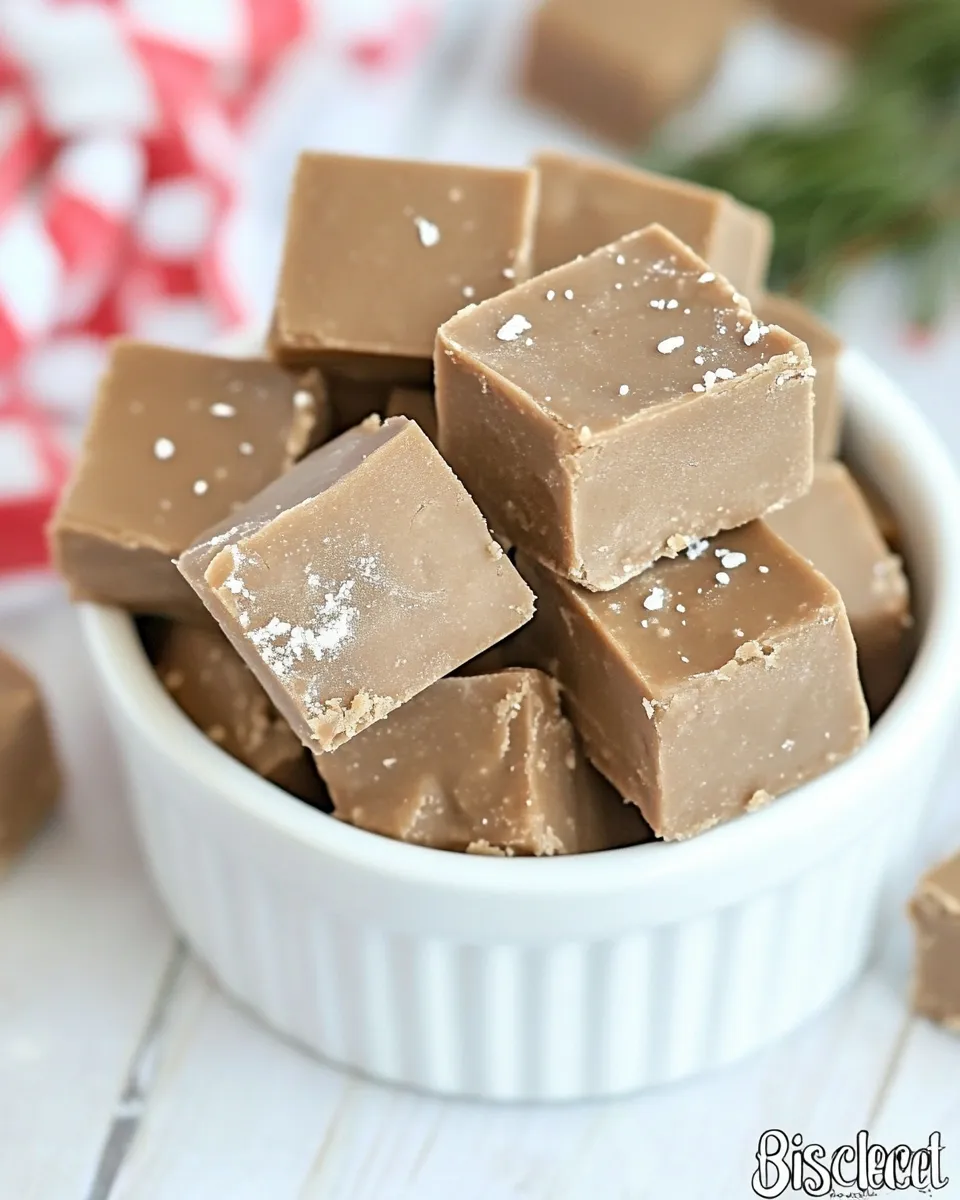
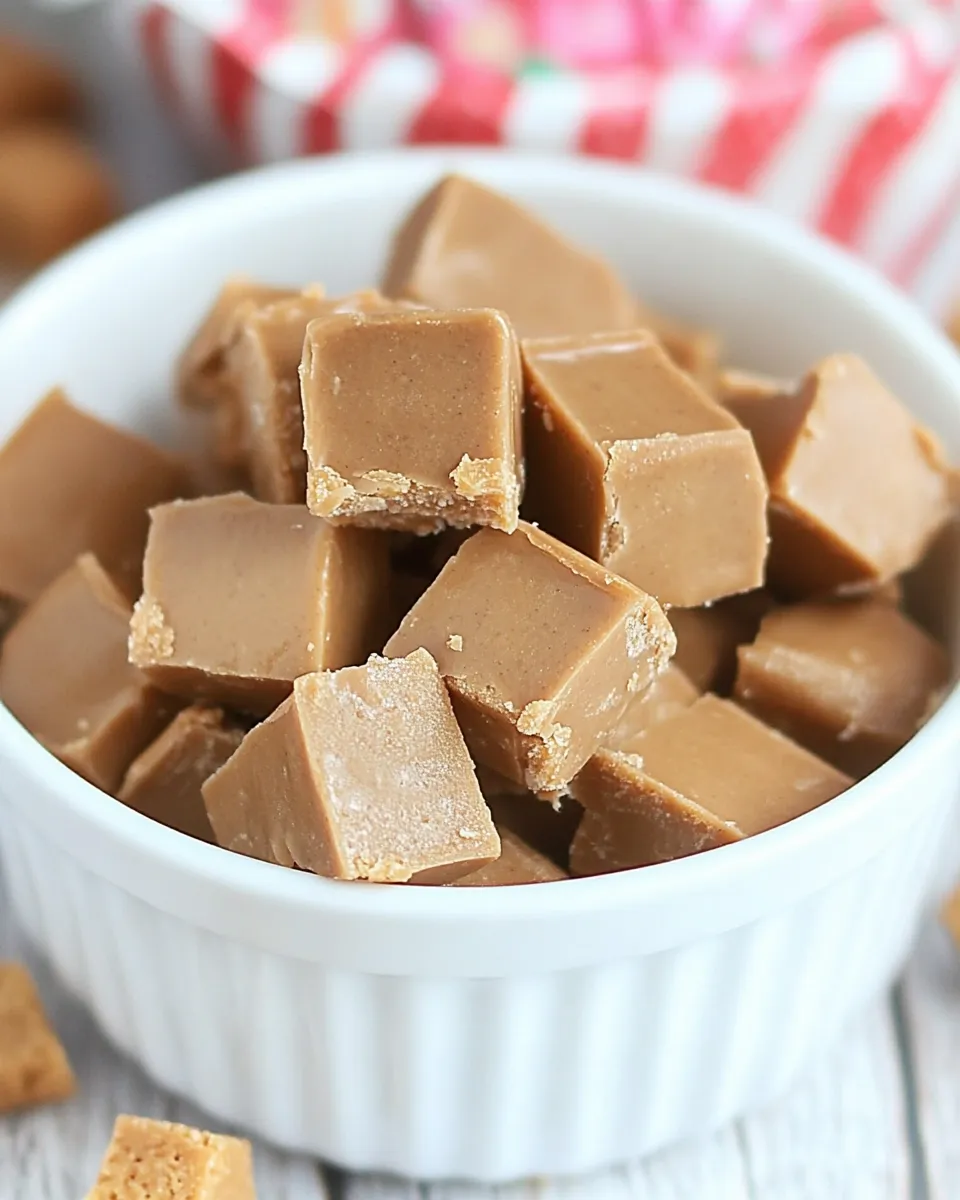
The texture is another win. The frosting gives a creamy, stable base that holds its shape when cut yet melts on the tongue. The Biscoff Spread lends a deep caramel-and-spice note that feels elevated despite the simplicity. You get a homemade vibe without hours of work.
It’s also highly portable. Once chilled and cut, the squares travel well in an airtight tin. They make inexpensive, thoughtful edible gifts when you package them in a small box or cellophane bag with a ribbon.
Ingredient Swaps & Substitutions
- For the frosting: You can use another full‑size jar or tub of branded vanilla frosting similar in sweetness and texture to the Pillsbury container listed. The key is a product with a smooth, creamy consistency; anything thinner or grainier will alter the final texture.
- For the Biscoff Spread: Use any speculoos cookie butter labeled as Biscoff or speculoos. If you only have a thick, crunchy variant, warm it slightly so it incorporates smoothly during the microwave step.
- Scaling down: If you want a smaller batch, divide both ingredients proportionally and work in a bowl that fits comfortably in your microwave. The technique stays the same.
- Flavor tweaks: If you want to add mix-ins, fold them into the warm mixture before transferring to the pan (see Year‑Round Variations). Keep in mind mix-ins will change mouthfeel and may speed up setting time slightly.
Essential Tools for Success
- Very large microwave‑safe bowl — it needs to hold the full amount or allow you to heat in manageable batches.
- Spatula — for scraping the bowl and spreading the fudge evenly into the pan.
- Rimmed baking pan(s) — a baking sheet or multiple 8×8‑inch pans; foil lining with an overhang makes removal clean and easy.
- Sharp knife — for clean-cut squares once the fudge is fully chilled.
- Measuring cup or scale (optional) — helpful if you’re dividing the recipe into smaller batches to ensure proportionality.
Slip-Ups to Skip
- Overheating the mixture. Heat in 30‑second bursts and stir between bursts. Microwave hot spots can scorch parts of the mixture, creating graininess or a burnt flavor.
- Mixing cold pans with hot mixture. If you pour the warm fudge into a very cold metal pan straight from the fridge, the outer edges can seize and become firmer than the center. Room‑temperature pans are best.
- Cutting too soon. The fudge needs to be completely firm. Cutting before it sets risks squashed pieces and messy edges. Wait the full 1–2 hours or chill overnight for the cleanest results.
- Skipping the foil overhang. Without an overhang, transferring the set fudge out of the pan is fiddly and can break pieces. The overhang is the easiest lifter you’ll ever use.
Year-Round Variations
This base is a fantastic canvas. Keep the method exactly as written for the best set; change add-ins and finishing touches to suit season or occasion.
- Holiday crunch: Fold in finely chopped speculoos cookies or crushed gingersnaps just before spreading into the pan for texture and extra spice notes.
- Chocolate swirl: Warm 4–6 ounces of dark or milk chocolate and ripple it through the top after spreading the main mixture. Use a skewer to create swirls before chilling.
- Salted finish: Sprinkle flaky sea salt over the top right after spreading. The salt elevates the sweetness and highlights the Biscoff’s caramel tones.
- Nutty twist: Add chopped toasted almonds or hazelnuts for crunch. Stir them in gently so they distribute evenly.
- Mini gift bars: For gifting, press the warm mixture into small lined loaf pans or mini tart pans to create individually portioned bars; chill and cut to size.
If You’re Curious
Yes, the recipe’s simplicity is deliberate. The Pillsbury vanilla frosting is formulated for a certain body and sweetness; paired with Biscoff Spread, it creates the mouthfeel and set of a fudge without boiling sugar or using condensed milk. If you’re curious about scaling or swapping techniques, test a small batch first to see how different frostings behave.
Also, the microwave method works because both components are high in sugars and fats that melt and combine easily. Stir well between bursts to ensure an even, glossy mixture before you pour it into the pan.
Keep It Fresh: Storage Guide
Store the cut fudge in an airtight container in the refrigerator. It will keep well for 2–3 weeks chilled. If you need to store longer, freeze in a single layer on a sheet pan until solid, then transfer to an airtight container with parchment between layers; frozen fudge can keep for 2–3 months.
When serving from chilled or frozen, let the pieces sit at room temperature for 10–20 minutes so they soften slightly for the best texture. Avoid leaving them out in warm rooms for extended periods; the fudge will soften and lose its neat shape.
Troubleshooting Q&A
My mixture looks grainy after microwaving. What happened?
Graininess usually comes from overheating or uneven heating. Stop microwaving as soon as the last bits look soft and stir until smooth. If small sugar crystals formed, reheating gently in short bursts and stirring can sometimes re-dissolve them. If that fails, you may need to heat more gently or blend the mixture with a hand mixer to smooth it.
The fudge didn’t set firmly. Any fixes?
If the mixture stays too soft, chill it longer. Ensure your refrigerator is cold enough; a warmer fridge can slow setting. If you’ve used a frosting much thinner than the Pillsbury tub listed, the ratio of liquid to solids may be off. For a soft batch that simply needs structure, refrigerate overnight. For a permanent fix, you would need to restart with a thicker frosting or reduce liquid additions.
Edges are sticky or too firm after chilling. Why?
Pouring into a pan that’s too cold or made of very conductive metal can cause the edges to set harder than the center. Use room‑temperature pans and spread quickly for an even set. The foil overhang helps you remove the fudge cleanly without tearing edges.
Can I use an oven or stovetop instead?
This method is designed for the microwave. Using a stovetop would require constant low heat and careful stirring to avoid scorching; it’s not recommended here because the frosting texture and spreadable consistency are engineered for melting rather than simmering.
Save & Share
If you loved this Biscoff Fudge, save the recipe where you keep favorites and share a piece with someone who loves cookie butter. It’s ideal for care packages, teacher treats, and potlucks. When you make it, note any tweaks (mix-ins, salt finish, or alternate pans) so you can replicate the winner next time.
Pin, print, or pop this into your go-to recipe folder — and if you pass a plate around, tell the people who try it that it’s shockingly simple. That’s the best part: great taste with minimal fuss.

Biscoff Fudge
Ingredients
Ingredients
- 11 lb container Pillsbury vanilla frosting
- 2 3/4 c.Biscoff Spread
Instructions
Instructions
- Line a rimmed baking pan or pans (for example a rimmed baking sheet or multiple 8×8‑inch pans) with aluminum foil, leaving an overhang on two opposite sides for lifting. Set aside.
- Place the entire 11 lb container Pillsbury vanilla frosting and the 2 3/4 cups Biscoff Spread into a very large microwave‑safe bowl. If the full amount will not fit in one bowl or in your microwave, divide the ingredients into batches that do fit.
- Microwave on high in 30‑second intervals, removing and stirring thoroughly after each interval. Continue heating and stirring until the Biscoff is melted and the mixture is smooth and fully combined.
- Pour or spoon the warm mixture into the prepared foil‑lined pan(s) and spread evenly to the edges with a spatula.
- Refrigerate until the fudge is completely firm, at least 1–2 hours (longer or overnight if needed).
- Use the foil overhang to lift the set fudge from the pan(s). Peel back the foil and cut the fudge into pieces. Store refrigerated.
Equipment
- rimmed baking pan or pans
- Aluminum Foil
- very large microwave-safe bowl
- Spatula
- Microwave
Notes
Store refrigerated.