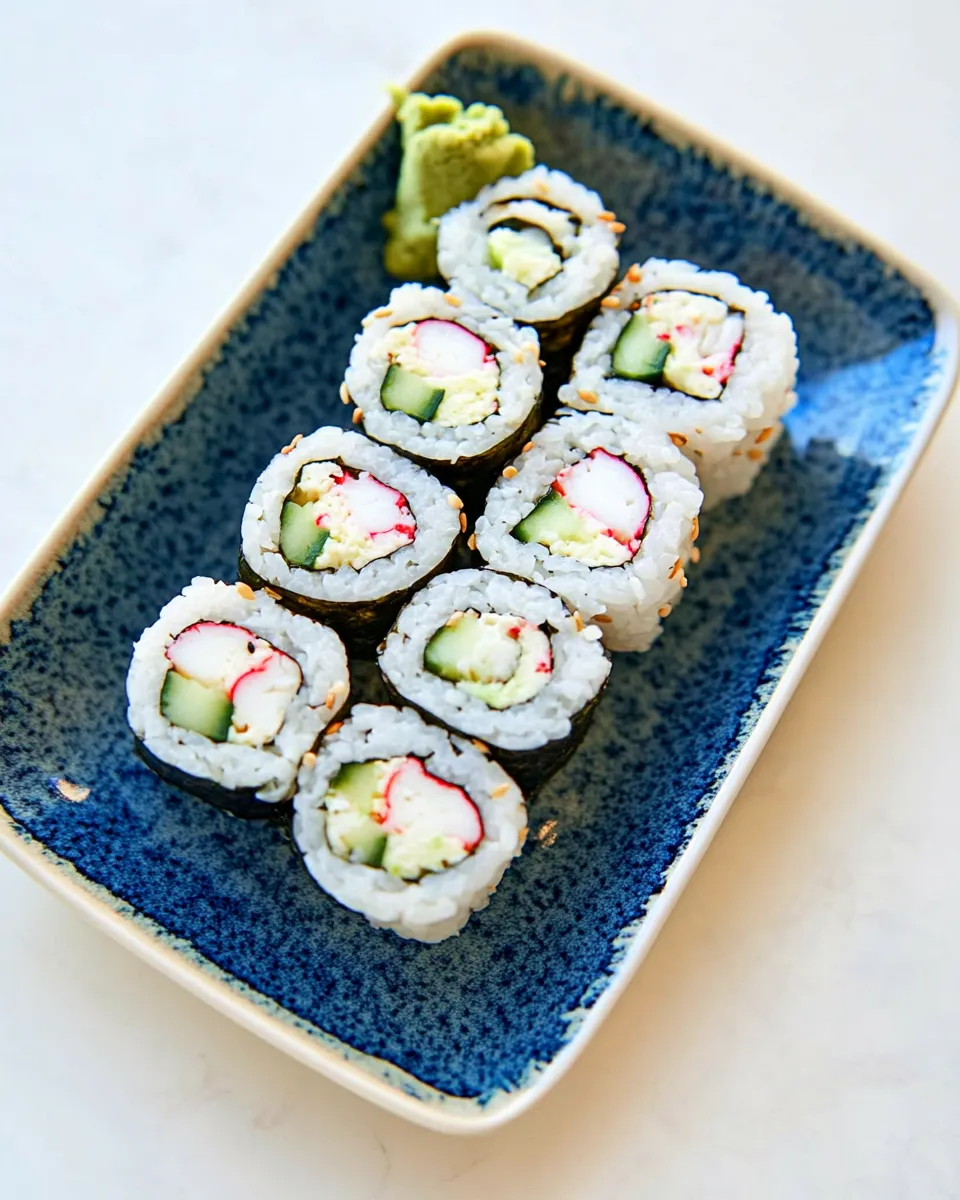
California rolls are the reason many home cooks fall in love with sushi-making. They’re forgiving, fresh, and showcase how simple ingredients—rice, nori, cucumber, avocado, and imitation crab—become something special when you pay attention to technique. I’ll walk you through everything I’ve learned so your first (or fifteenth) attempt looks and tastes like it belongs at a good sushi counter.
This post focuses on practical tips: what to buy, how to prep, common mistakes to avoid, and how to keep the procedure efficient. No fluff—just clear steps and realistic advice so you can roll confidently, serve pretty slices, and enjoy the process.
Get your bamboo mat and a sharp knife ready. With a little planning and the right rhythm, assembly moves quickly. Read through the shopping guide and gear list, set up a simple station, and the rest is straightforward.
Ingredients
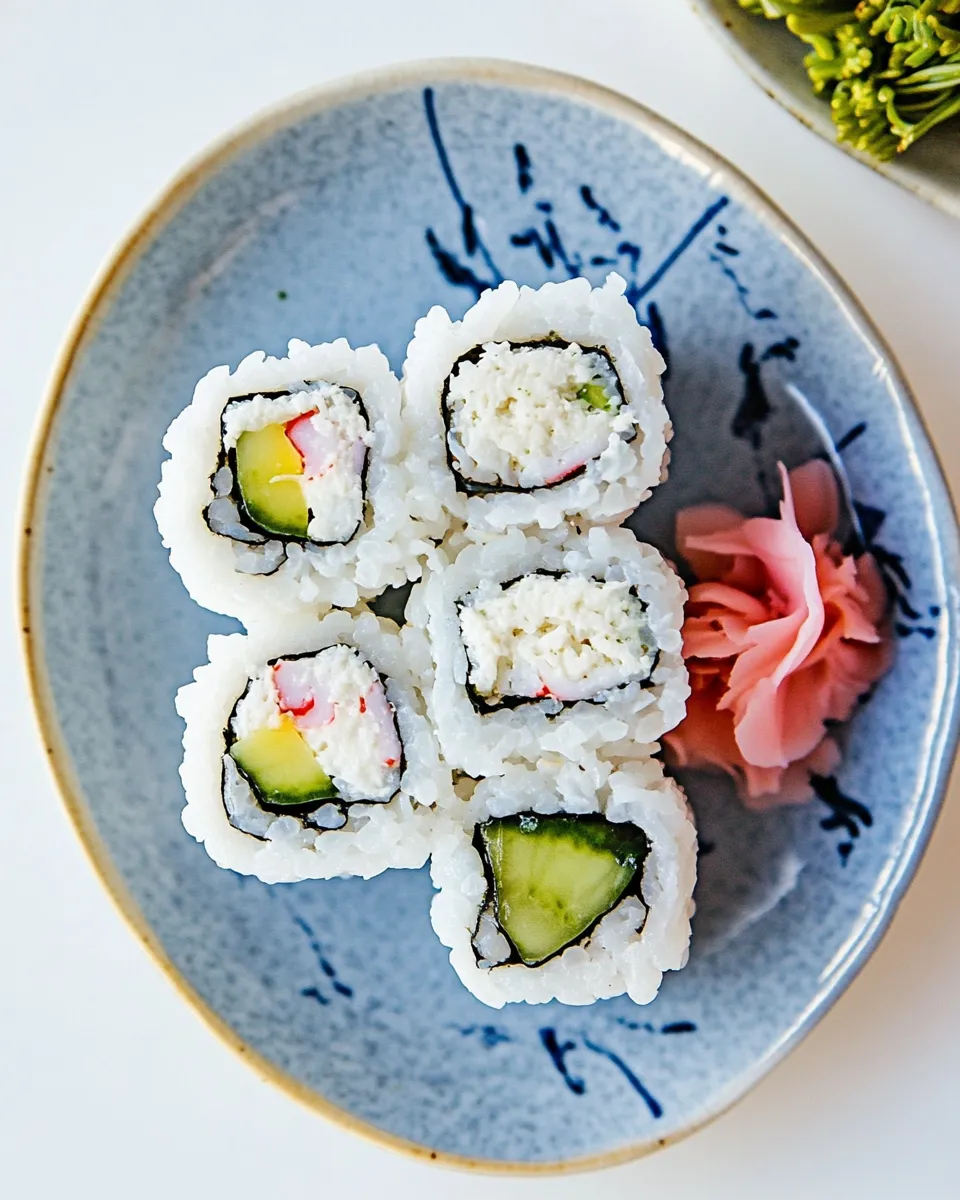
- 6 cups cooked Sushi Rice (1200g) — the base of the roll; should be seasoned and cooled to room temperature before assembling (see steps below).
- ½ of an English Cucumber (150g) — provides crunch and freshness; seedless or peeled if you prefer less moisture.
- 1 Avocado (200g) — adds creaminess and richness; use ripe but firm fruit for clean slices.
- 1 package Imitation crab sticks, 10–12 sticks — classic California roll protein; pull into strips for easy alignment in the roll.
- 1 package Nori — dried seaweed (our sushi rice recipe requires about 6 nori sheets) — whole sheets for large rolls or halved for smaller, more manageable rolls.
- 1 cup roasted white sesame seeds (150g) — adds nuttiness and visual contrast; sprinkle on the rice side before flipping.
- Wasabi — for those who like heat; serve at the side to control spice per bite.
- Pickled sushi ginger — palate cleanser; offer on the plate to brighten each bite.
- Low-sodium soy sauce — for dipping; the low-sodium version lets the roll’s flavors shine without overpowering salt.
Your Shopping Guide
Shop with a short list and you’ll save time in the store. Buy good-quality sushi rice and nori—those two ingredients affect texture and appearance the most. The imitation crab package typically contains 10–12 sticks, which is perfect for this recipe. If your grocery has a Japanese or large Asian section, you’ll find everything in one aisle.
For produce, pick a firmer avocado so it slices well without turning mushy. Choose an English cucumber for thinner skin and fewer seeds; if you use regular cucumbers, consider peeling and seeding them to avoid excess moisture.
Sesame seeds should be roasted for the best flavor. If you can’t find roasted seeds, you can quickly toast raw seeds in a dry pan for a minute or two until fragrant. Wasabi, pickled ginger, and low-sodium soy sauce are pantry items in most supermarkets that carry international foods.
California Roll Sushi Cooking Guide
This guide breaks the process into clear stages: prep, assembly, shaping, and slicing. Read the full instructions once before you begin so you know the rhythm—wet fingers, spread rice, flip the sheet, add fillings, roll tight, and slice with a wet, sharp knife.
Key timing note: the recipe relies on 6 cups of cooked sushi rice. That rice needs to be seasoned (if you have sushi vinegar) and cooled to room temperature before assembling rolls. If you’re making rice from scratch, plan about 30–45 minutes for cooking and cooling.
Protect your bamboo mat with plastic wrap and keep a small bowl of water nearby for wetting your fingers and knife; those two small steps prevent sticking and ensure smooth, clean cuts.
Why California Roll Sushi is Worth Your Time
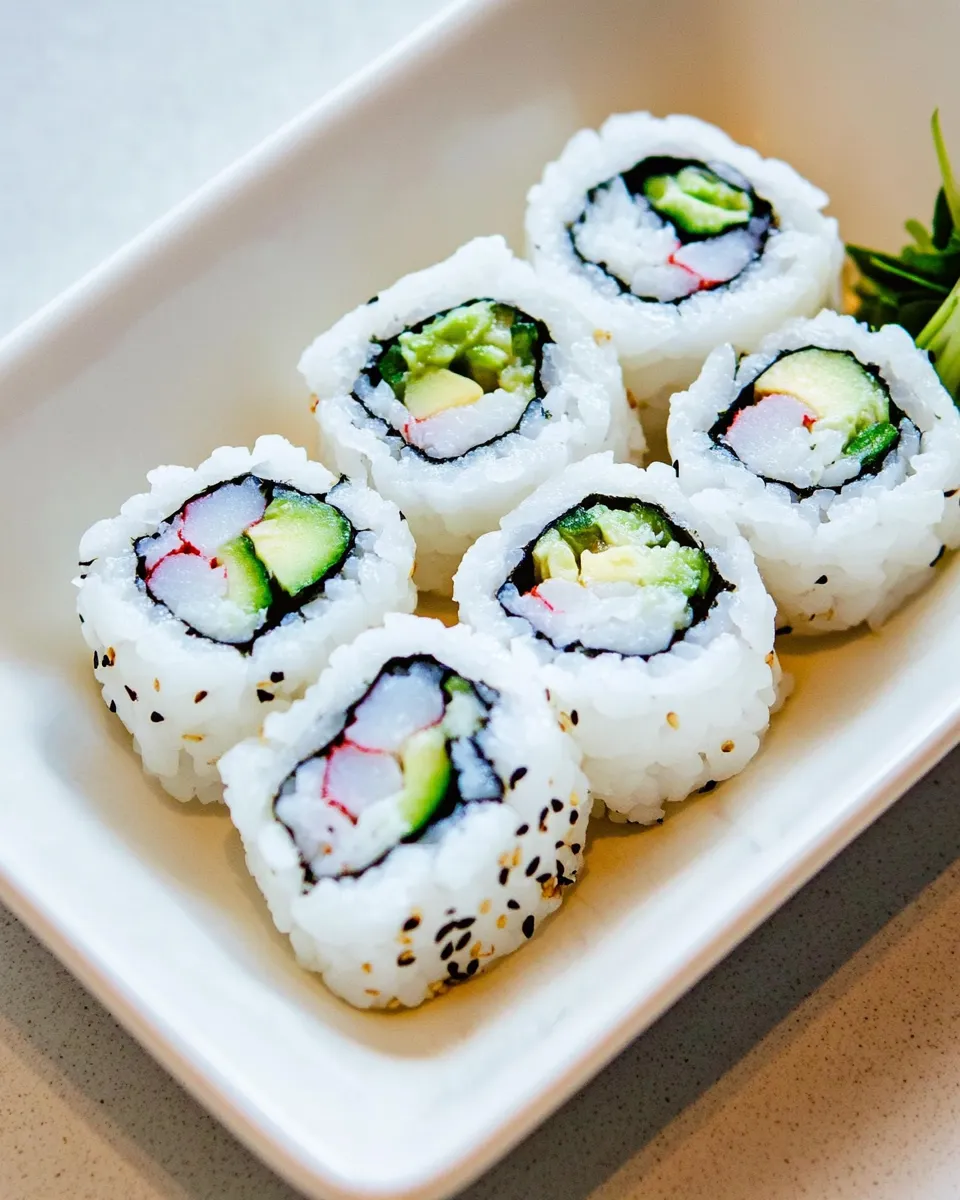
Homemade California rolls taste brighter and cleaner than many takeout versions because you control the rice seasoning and the filling ratios. They’re approachable for beginners, forgiving when your roll isn’t perfect, and they make a great social cooking project—one roll feeds practice slicing, another improves speed and presentation.
Beyond convenience, California rolls introduce texture contrast—creamy avocado, crunchy cucumber, soft rice, and the subtle snap of nori—all balanced by soy, wasabi, and ginger. They’re a crowd-pleaser and a reliable dish for casual dinner parties, lunchboxes, or a light weeknight meal.
Vegan & Vegetarian Swaps
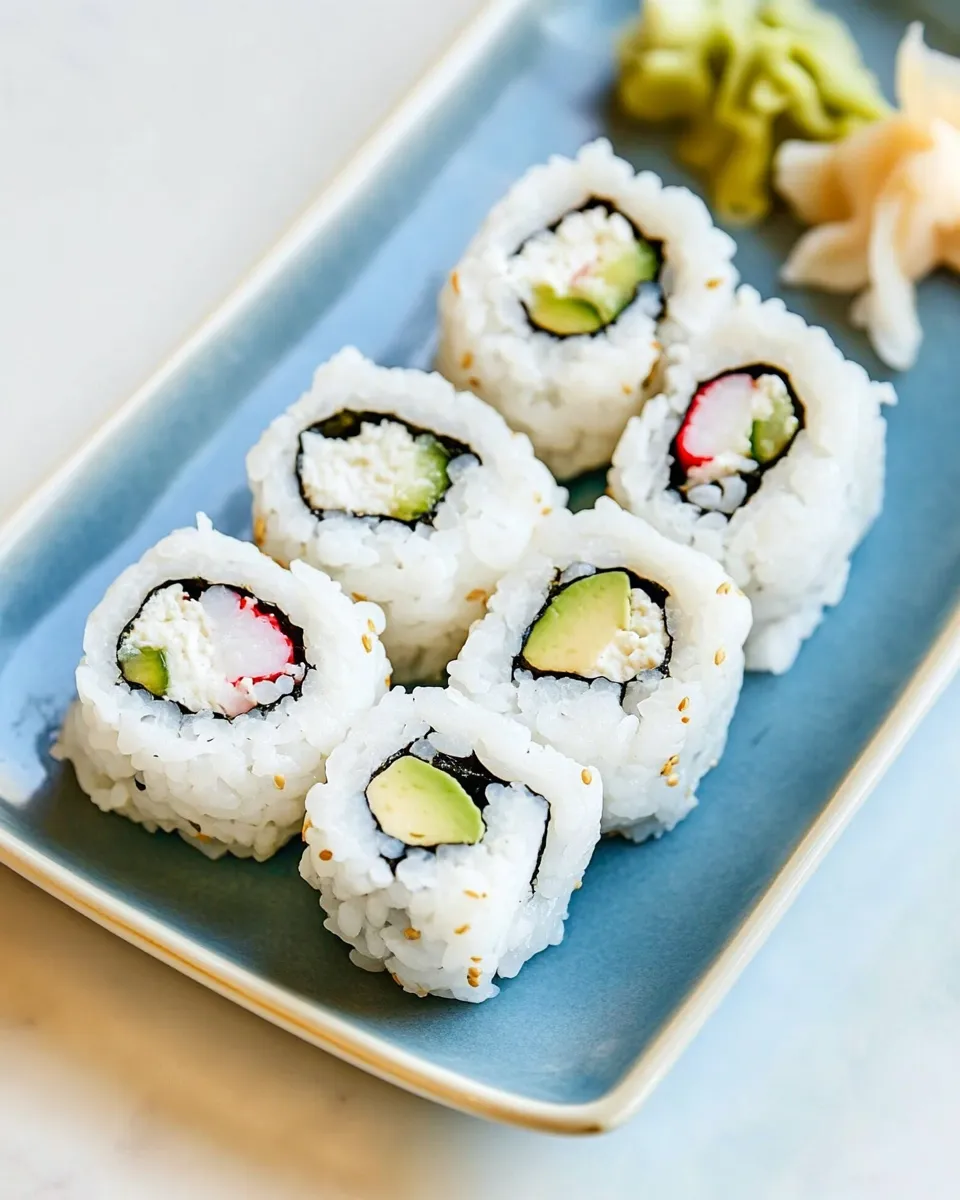
If you want to keep ingredients minimal and avoid introducing new proteins, simple swaps work well. For vegetarian rolls, omit the imitation crab and double the cucumber and avocado quantities. That keeps the texture and still feels satisfying.
For a vegan option following the same ingredient list, simply omit imitation crab and serve with wasabi, pickled ginger, and low-sodium soy sauce. Sesame seeds and extra cucumber give the roll body and flavor without adding animal products.
What’s in the Gear List
- Bamboo sushi rolling mat — provides structure and helps you roll tight.
- Plastic wrap — to protect the mat and stop rice from sticking.
- Sharp chef’s knife or sushi knife — essential for clean slices; keep a bowl of water nearby for dipping the blade between cuts.
- Rice cooker or heavy pot — for consistent sushi rice. A rice paddle or wooden spoon helps when seasoning and cooling rice.
- Cutting board and a small bowl of water — for wetting fingers and knife.
Don’t Do This
Don’t overpack the nori with rice. Too much rice makes rolling difficult and leads to thick, hard-to-eat slices. Leave about a ½-inch margin of nori clear at the top edge so the sheet seals properly.
Don’t press the rice too firmly—gently shape it. If you mash rice down, the roll becomes dense and gummy. The rice should stick together without being compacted.
Don’t skip the plastic wrap on the bamboo mat. If the mat sticks, it tears the nori and ruins the appearance of your rolls. Wrap it tightly so the mat is completely covered.
How to Make It Lighter
To reduce the overall heaviness of the rolls, use less rice per sheet—divide the 6 cups cooked rice among more sheets if you prefer thinner rolls. That increases the filling-to-rice ratio and lightens each bite without changing any ingredients.
Choose low-sodium soy sauce (already listed in the ingredients) to cut down on salt. Serve smaller slices and pair the rolls with a simple salad or steamed vegetables to balance the meal.
Testing Timeline
Plan your timing to keep the kitchen organized. Here’s an efficient timeline to follow:
- Rice cooking and cooling: 30–45 minutes if starting from raw rice (allow rice to cool to room temperature after seasoning).
- Prep fillings (cucumber, avocado, crab): 10–15 minutes—slice cucumber and avocado and pull crab sticks apart.
- Assembly and rolling: 10–20 minutes depending on practice—aim for 3–6 rolls total from the listed rice and nori count.
- Slicing and plating: 5–10 minutes—wet and wipe the knife between cuts for neat pieces.
If you’re serving multiple people, prepare fillings ahead and assemble right before eating so the nori retains its slight crispness and the avocado doesn’t brown.
Storing, Freezing & Reheating
Sushi is best eaten fresh. If you have leftovers, wrap individual rolls tightly in plastic wrap to prevent drying and store in the refrigerator for up to 24 hours. Keep wasabi, soy sauce, and pickled ginger separate and add at serving time.
Freezing is not recommended. The texture of rice and avocado suffers when frozen and thawed, and nori becomes soggy. For best results, make only what you can comfortably eat within a day.
Reheating isn’t necessary—cold is traditional. If you must warm leftover rolls, let them sit at room temperature for 10–15 minutes before serving to take the chill off, but avoid microwaving; that will ruin texture.
Your Questions, Answered
How many rolls will this recipe make? Expect about 6 full-size rolls if you use whole nori sheets and divide the 6 cups of rice evenly—roughly 1 cup per sheet. If you halve sheets, you’ll get smaller rolls and more pieces.
How ripe should the avocado be? Use ripe but still slightly firm avocados so they slice cleanly. Too ripe and they become mushy; too firm and they won’t be creamy.
Can I use pre-seasoned sushi rice? Yes. If you have sushi vinegar or pre-seasoned rice, confirm the rice is cooled to room temperature before assembling to keep the nori from becoming soggy.
What knife should I use? A very sharp knife is best—clean cuts depend on edge quality and keeping the blade wet between slices. Wipe the blade after each cut to maintain neat pieces.
Ready, Set, Cook
Step-by-step
- Prepare the rice: make sure the 6 cups cooked sushi rice are seasoned (if you have sushi vinegar) and cooled to room temperature before assembling rolls.
- Protect your bamboo mat: wrap the mat tightly in plastic wrap so the mat is covered and will not stick to the rice.
- Prepare a small bowl of water for wetting your fingers and your knife while working.
- Cut the cucumber: slice the ½ English cucumber crosswise into 3–4 inch pieces if needed, then cut each piece lengthwise into ¼-inch slices. Stack the slices and cut into ¼-inch julienne sticks. Set aside.
- Cut the avocado: slice the avocado in half, remove the pit and peel. Place the half flat side down, slice into ½-inch slabs, then turn the slabs and cut into ¼-inch sticks. Set aside.
- Prep the imitation crab sticks: unwrap the package and use your hands to pull or tear each stick lengthwise into strips (split like string cheese) so they are easier to line up in the roll.
- Prepare the nori: use whole nori sheets for larger rolls or break each sheet in half (stack, crease, and pull apart) for smaller rolls. Arrange the number of sheets you plan to use on your work surface.
- Place the bamboo mat horizontally in front of you and lay one nori sheet on the mat with the dull side up (the shiny side down). If using half-sheets orient them the same way.
- Divide the rice: divide the 6 cups of cooked sushi rice evenly among the nori sheets you will use (about 1 cup rice per whole sheet). Wet your fingers, scoop a portion of rice onto the nori, and gently spread it into an even layer across the nori, leaving about a ½-inch margin of nori clear at the top edge. Do not press the rice too firmly.
- Add sesame seeds and flip: sprinkle roasted white sesame seeds over the rice so they stick lightly. Carefully flip the entire sheet (rice side down, nori side up) so the nori is facing up and the rice/ sesame are now on the outside.
- Add fillings: place the crab strips, a row of cucumber sticks, and a row of avocado sticks in a line across the nori, slightly off-center and closest to you. Space the fillings so they are even along the length of the sheet.
- Roll the sushi: position the nori about 1 inch from the end of the bamboo mat closest to you. Lift the mat edge and begin rolling away from you, tucking the nori over the fillings to form a tight roll. Use both hands—one to guide the roll and one to pull the mat—pressing gently but firmly as you roll to seal the edge and shape the roll.
- Tighten and set: press the wrapped roll gently inside the mat to compress and shape it, then unwrap and remove the mat.
- Slice the roll: with a very sharp knife dipped in water, trim the ends if you like, then slice the roll into individual pieces. Wipe the knife clean and wet it between cuts to keep slices neat.
- Serve: stand the sushi pieces upright and serve with low-sodium soy sauce, wasabi, and pickled sushi ginger.
Finish with a small dish of low-sodium soy sauce, a dab of wasabi, and pickled ginger on the side. Present the pieces standing upright—they look best this way and make for easy picking.
If you’re making these for guests, set up an assembly station so people can try rolling themselves. It’s a fun way to learn and a great way to share a meal.
California Roll Sushi
Ingredients
Ingredients
- 6 cupscooked Sushi Rice 1200 g
- 1/2 of an English Cucumber 150 g
- 1 Avocado 200 g
- 1 package Imitation crab sticks 10-12 sticks
- 1 pckgNori-dried seaweed oursushi rice reciperequires about 6 nori sheets
- 1 cuproasted white sesame seeds* 150 g
- Wasabi
- Pickled sushi ginger
- low-sodium soy sauce
Instructions
Instructions
- Prepare the rice: make sure the 6 cups cooked sushi rice are seasoned (if you have sushi vinegar) and cooled to room temperature before assembling rolls.
- Protect your bamboo mat: wrap the mat tightly in plastic wrap so the mat is covered and will not stick to the rice.
- Prepare a small bowl of water for wetting your fingers and your knife while working.
- Cut the cucumber: slice the ½ English cucumber crosswise into 3–4 inch pieces if needed, then cut each piece lengthwise into ¼-inch slices. Stack the slices and cut into ¼-inch julienne sticks. Set aside.
- Cut the avocado: slice the avocado in half, remove the pit and peel. Place the half flat side down, slice into ½-inch slabs, then turn the slabs and cut into ¼-inch sticks. Set aside.
- Prep the imitation crab sticks: unwrap the package and use your hands to pull or tear each stick lengthwise into strips (split like string cheese) so they are easier to line up in the roll.
- Prepare the nori: use whole nori sheets for larger rolls or break each sheet in half (stack, crease, and pull apart) for smaller rolls. Arrange the number of sheets you plan to use on your work surface.
- Place the bamboo mat horizontally in front of you and lay one nori sheet on the mat with the dull side up (the shiny side down). If using half-sheets orient them the same way.
- Divide the rice: divide the 6 cups of cooked sushi rice evenly among the nori sheets you will use (about 1 cup rice per whole sheet). Wet your fingers, scoop a portion of rice onto the nori, and gently spread it into an even layer across the nori, leaving about a ½-inch margin of nori clear at the top edge. Do not press the rice too firmly.
- Add sesame seeds and flip: sprinkle roasted white sesame seeds over the rice so they stick lightly. Carefully flip the entire sheet (rice side down, nori side up) so the nori is facing up and the rice/ sesame are now on the outside.
- Add fillings: place the crab strips, a row of cucumber sticks, and a row of avocado sticks in a line across the nori, slightly off-center and closest to you. Space the fillings so they are even along the length of the sheet.
- Roll the sushi: position the nori about 1 inch from the end of the bamboo mat closest to you. Lift the mat edge and begin rolling away from you, tucking the nori over the fillings to form a tight roll. Use both hands—one to guide the roll and one to pull the mat—pressing gently but firmly as you roll to seal the edge and shape the roll.
- Tighten and set: press the wrapped roll gently inside the mat to compress and shape it, then unwrap and remove the mat.
- Slice the roll: with a very sharp knife dipped in water, trim the ends if you like, then slice the roll into individual pieces. Wipe the knife clean and wet it between cuts to keep slices neat.
- Serve: stand the sushi pieces upright and serve with low-sodium soy sauce, wasabi, and pickled sushi ginger.
Equipment
- Sushi mat
- Knife
- Sushi Rice Bowl
Notes
Sushi Sauces and Toppings: Drizzle with sriracha mayo for a Spicy California Roll, or garnish with eel sauce, salmon roe or tobiko, or fried onions.
Crunchy California Roll– spread toasted panko crumbs on top of the roll, and use a piece of plastic wrap to press them in. Add tempura shrimp inside the roll, if desired.
California Roll “Bowl”:Add rice and chopped filling ingredients to a bowl, with chopped pieces of nori. Drizzle with sriracha mayo, soy sauce, eel sauce, or whatever other toppings you'd like.