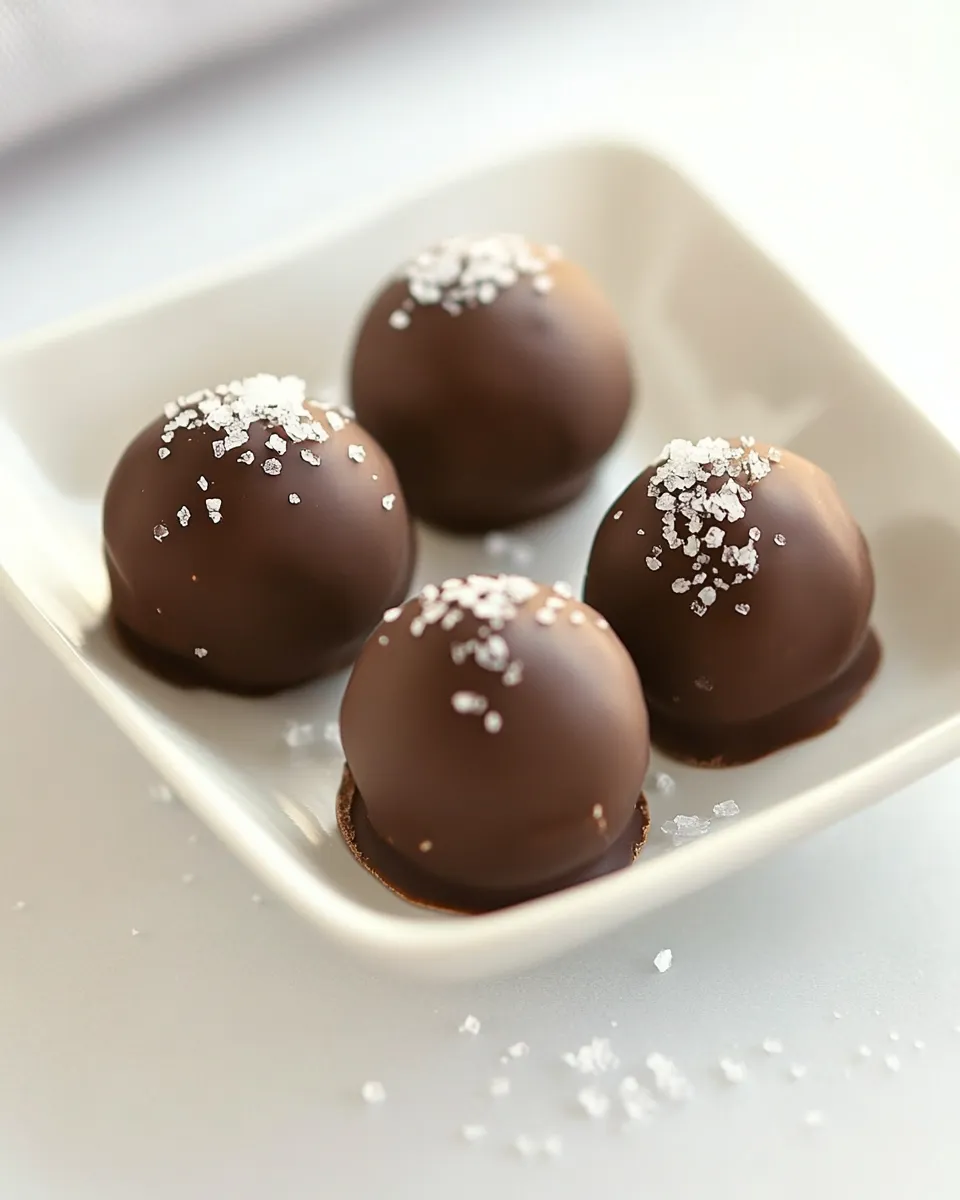
I make these truffles when I want a small luxury that’s genuinely worth the effort. No tempering tricks, no fussy equipment — just good chocolate, salted caramel, and a little patience. They dress up for guests but are easy enough to make on a quiet afternoon with a pot of tea.
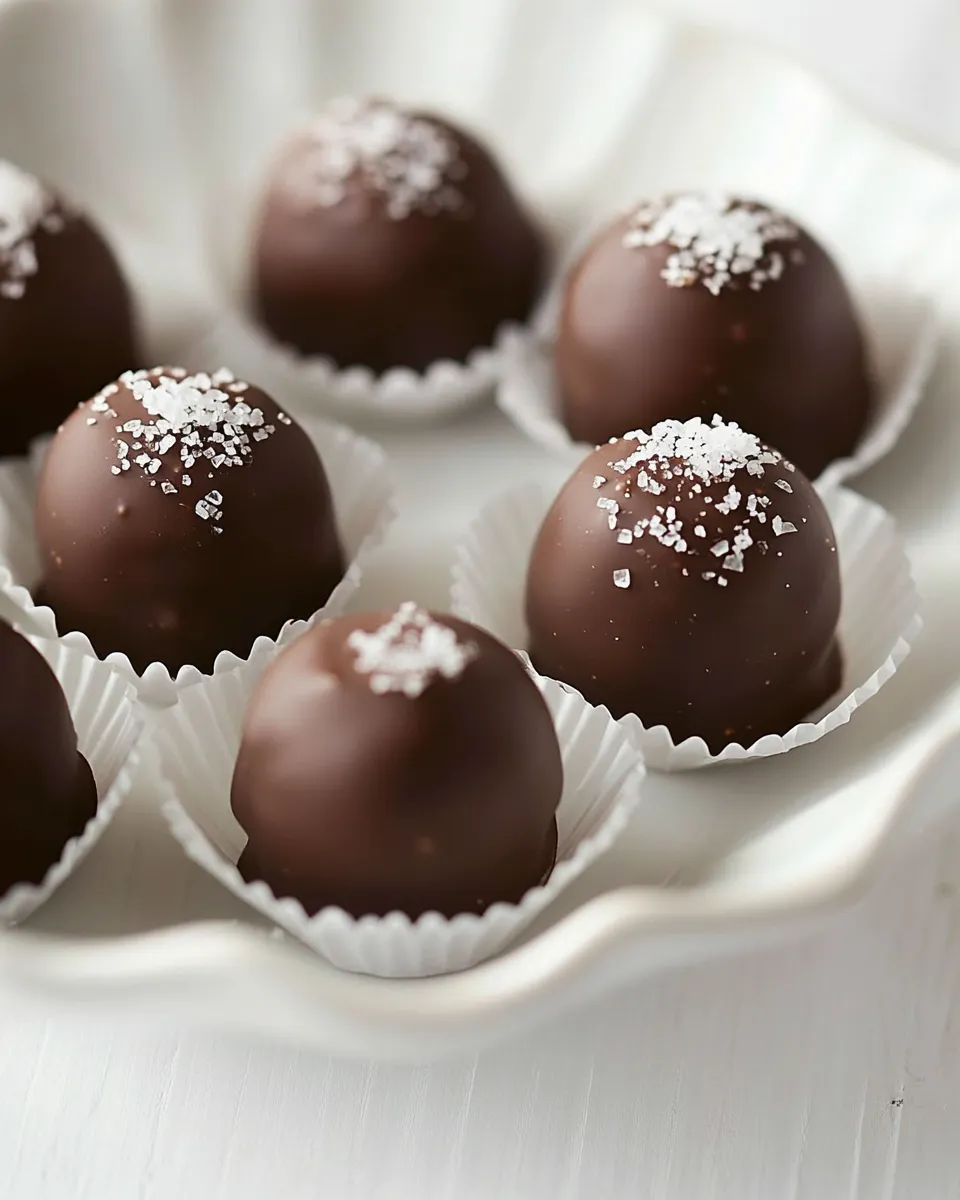
The contrast here is everything: the dense, glossy ganache center, the whisper of fleur de sel, and the crisp chocolate shell. Textures are layered, and the flavors are focused. Expect deep cocoa, buttery caramel, and that bright salt hit.
I’ll walk through the ingredients, the exact steps I follow, and practical tips for avoiding common mistakes. Whether you’re gifting a box or keeping them in the freezer for a treat, these truffles hold up beautifully.
What Goes In
Ingredients
- 8 ounces bittersweet or semisweet chocolate, finely chopped — melts into the base ganache; choose good-quality chocolate for flavor.
- 1/3 cup sugar — cooks into the caramel for structure and sweetness.
- 2 tablespoons water — helps the sugar dissolve evenly at the start of caramelizing.
- 2/3 cup whipping cream — enriches the caramel and makes the ganache silky.
- 1/4 teaspoon fleur de sel(you can also substitute 1 cup of pre-made fleur de sel caramel sauce, plus additional cream if necessary to achieve proper consistency) — the salt is a flavor punch; use the substitution only if you need a shortcut and adjust texture with extra cream as noted.
- 1/2 cup unsweetened cocoa powder — for dusting formed truffle centers and adding a bitter finish.
- 12 ounces bittersweet or semisweet chocolate, finely chopped — used for the outer coating; keep it separate from the ganache chocolate.
- Additional fleur de sel — for sprinkling on the finished, coated truffles.
Caramel-Dark Chocolate Truffles with Fleur de Sel Made Stepwise
- Finely chop 8 ounces bittersweet or semisweet chocolate and place it in a metal bowl set over a saucepan of barely simmering water (do not allow the bottom of the bowl to touch the water). Stir until the chocolate is completely smooth. Remove the bowl from the heat and set aside.
- In a small saucepan combine 1/3 cup sugar and 2 tablespoons water. Heat over medium heat, stirring only until the sugar dissolves. Occasionally brush down the sides of the pan with a wet pastry brush to prevent crystallization.
- Increase the heat and let the syrup boil, swirling the pan occasionally and brushing down the sides as needed, until the syrup reaches a deep amber color, about 4 minutes.
- Carefully add 2/3 cup whipping cream to the hot caramel (the mixture will bubble). Stir and reduce the heat to very low, then continue stirring until the caramel is smooth.
- Stir the warm caramel and 1/4 teaspoon fleur de sel into the melted chocolate from step 1 until fully combined and glossy.
- Cover or wrap the chocolate–caramel mixture and chill in the refrigerator until firm, at least 3 hours.
- Place 1/2 cup unsweetened cocoa powder in a shallow bowl.
- Using a tablespoon measure, scoop about 1 tablespoon of the chilled truffle filling for each truffle. Roll each portion quickly between your palms to form a ball, then roll each ball in the cocoa powder to coat. Arrange the cocoa-coated truffles on a baking sheet.
- Cover the baking sheet and chill the truffles overnight so they are firm and easy to handle for enrobing.
- Line a 13x9x2-inch baking sheet with foil and set aside for finished truffles.
- Finely chop the remaining 12 ounces bittersweet or semisweet chocolate and place it in a medium metal bowl set over a saucepan of barely simmering water (do not allow the bottom of the bowl to touch the water). Stir until the chocolate is melted and smooth; a thermometer inserted into the chocolate should register 115°F. Remove the bowl from the heat.
- Working quickly while the coating chocolate is fluid, use a dipping fork (or two forks) to submerge one chilled truffle into the melted chocolate, lift it out, and tap the fork gently against the side of the bowl to let excess chocolate drip off.
- Transfer the coated truffle to the prepared foil-lined baking sheet. Repeat dipping and transferring with the remaining truffles.
- Immediately sprinkle each coated truffle lightly with additional fleur de sel.
- Let the coatings set at room temperature until firm, at least 1 hour.
- (Make-ahead/storage) These truffles can be made up to 1 week ahead: cover and chill. Bring to room temperature before serving.
What Makes This Recipe Special
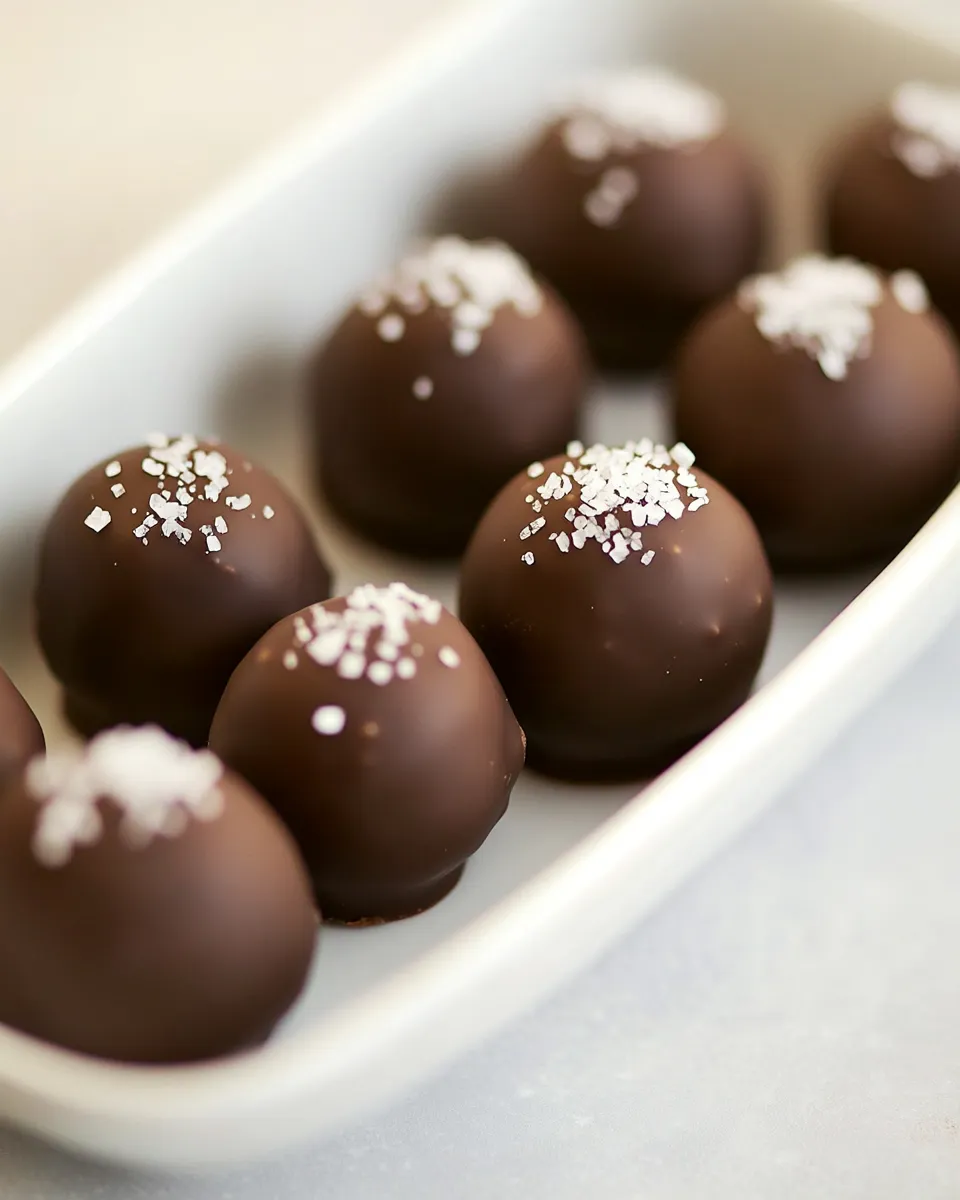
It’s the salt and texture interplay. The ganache center is rich but balanced by a bright kiss of fleur de sel, not buried beneath sugar. The exterior chocolate shell gives a satisfying snap without the complexity of full tempering because the recipe relies on solid chocolate temperature control rather than formal tempering technique.
The process separates the ganache chocolate and the coating chocolate, so you can focus on each stage without juggling too many steps at once. The overnight chill delivers clean, round centers that dip neatly and enrobe beautifully.
Budget & Availability Swaps
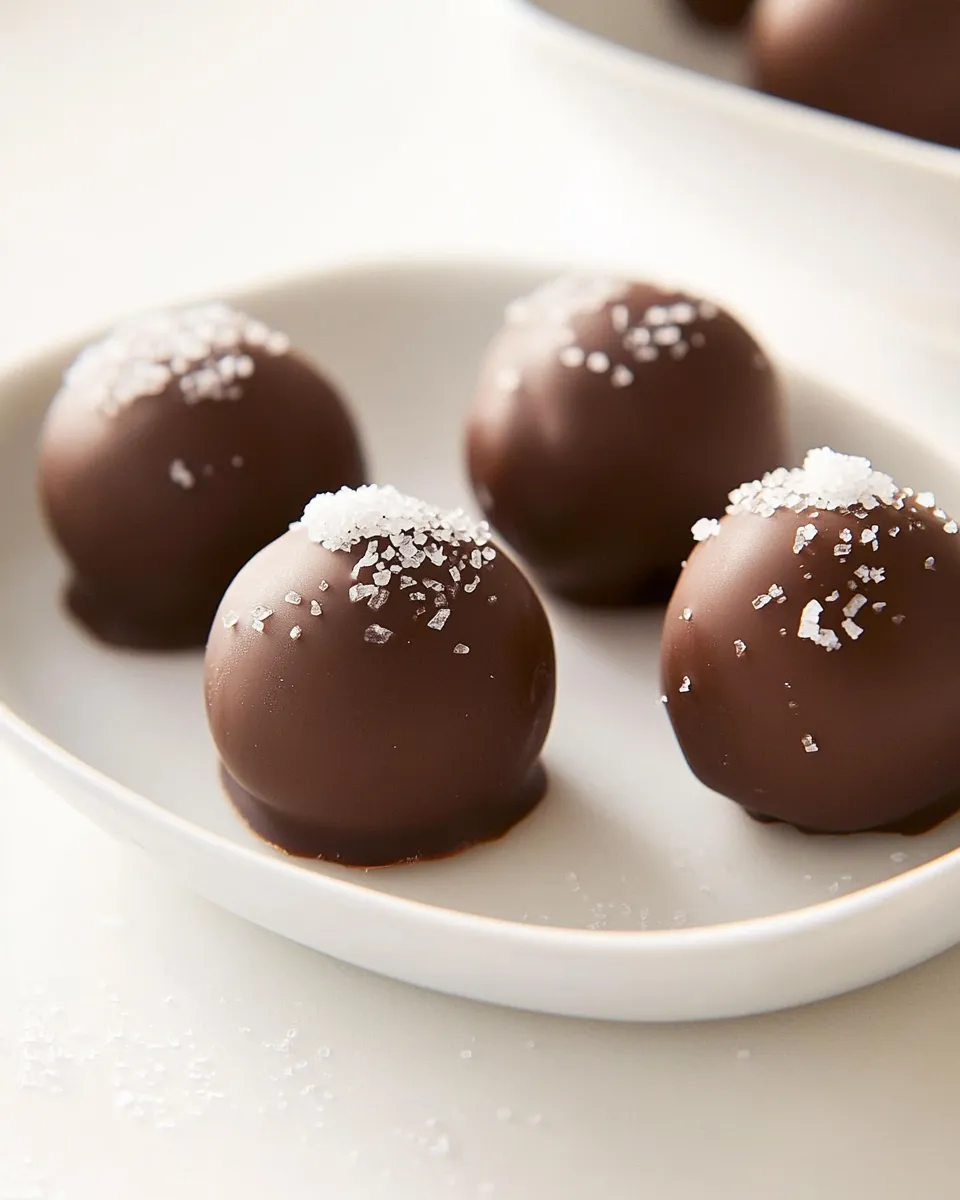
Chocolate quality matters, but you don’t need the most expensive bar. Use a reliable bittersweet or semisweet chocolate from a grocery or specialty store. If fleur de sel is hard to source, a fine sea salt will work—use sparingly so it doesn’t overpower the caramel.
If you prefer to shorten the process, the ingredient list allows a substitution: 1 cup of pre-made fleur de sel caramel sauce in place of homemade caramel (watch consistency and add extra cream if needed). It’s a practical swap when time is tight.
Toolbox for This Recipe
- Metal bowls and saucepans — for gentle double-boiler melting and caramel work.
- Thermometer — optional but useful to verify the coating chocolate reaches 115°F as specified.
- Small pastry brush — to brush down pan sides and prevent sugar crystallization.
- Dipping fork or two forks — for quick and clean enrobing.
- Tight-fitting lids or plastic wrap — for chilling ganache without absorbing fridge smells.
- Foil-lined baking sheet — makes removing finished truffles easier and keeps surfaces tidy.
Missteps & Fixes
Caramel crystallization: if sugar crystals form while making the caramel, the syrup will seize and become grainy. Fixes are limited; start over, and remember to brush the pan sides with a wet pastry brush while the sugar dissolves and boils.
Chocolate seizing: if any water gets into melted chocolate, it may seize into dry clumps. Recover by adding a spoonful of warm cream or melted butter and stirring gently, but prevention is best—keep steam and splashes away from the bowl.
Soft centers: if your ganache remains too soft to handle, chill it longer. If it’s too firm to shape, let it warm slightly at room temperature until scoopable. The overnight chill in the instructions is intentional for clean shaping and dipping.
Better-for-You Options
For a modest adjustment, choose chocolate with higher cacao percentage and lower sugar if you prefer less sweetness. Use light whipping cream or reduce the amount slightly for a denser center, but note texture will change.
If dairy is a concern, try a high-fat coconut cream in place of whipping cream as a test, but expect subtle coconut notes and altered mouthfeel. Because the recipe relies on specific fat content for texture, full swaps may require small recipe tweaks.
Pro Perspective
Work cleanly and in stages. Professional chocolatiers often separate ganache production from coating to control temperature and texture independently. The recipe mirrors that: make the caramel-forward ganache first, then focus on the enrobing chocolate the next day.
When dipping, keep chocolate fluid but not overly hot. The 115°F target in step 11 is a useful marker: warm enough to flow and set with sheen, but not so hot as to scorch or thin the coating too much. Tap excess chocolate off and give each truffle a quick evening in the fridge only if your kitchen is warm — otherwise set them at room temperature as directed.
Cooling, Storing & Rewarming
Chill the ganache until firm — at least 3 hours, and preferably overnight after shaping. Once coated and salted, let truffles set at room temperature for at least an hour. They’ll be firm with a pleasant bite.
Store finished truffles covered in the refrigerator for up to one week. For longer storage, freeze in a single layer on a tray, then transfer to an airtight container for up to 1 month. Thaw in the refrigerator, then bring to room temperature before serving to avoid condensation on the chocolate surface.
Common Questions
Can I temper the coating chocolate? Yes, if you want a shinier, crisper shell and longer shelf stability. The recipe works without full tempering, but tempering adds professional gloss and texture.
What is fleur de sel and can I use regular salt? Fleur de sel is a delicate finishing salt with a flaky texture and subtle brininess. Regular fine salt can work in a pinch, but use less and sprinkle more lightly so it doesn’t overwhelm.
Can I roll truffles in nuts or sprinkles? You can, but the recipe is designed for a classic cocoa-dusted interior and chocolate shell. If you add coatings, do it immediately after dipping so they adhere before the chocolate sets.
That’s a Wrap
These truffles are worth the few focused steps: a small, elegant confection that celebrates real chocolate and the lift of fleur de sel. Follow the steps, give the ganache time to chill, and don’t rush the dipping. The result is a candy you’ll be proud to give or eager to keep for yourself.
Make them once and you’ll find they become your go-to for celebrations, last-minute gifts, or a quiet evening treat. Simple technique, thoughtful ingredients, and reliable results.

Caramel-Dark Chocolate Truffles with Fleur de Sel
Ingredients
Ingredients
- 8 ounces bittersweet or semisweet chocolate finely chopped
- 1/3 cup sugar2 tablespoons water2/3 cup whipping cream1/4 teaspoon fleur de sel you can also substitute 1 cup of pre-made fleur de sel caramel sauce, plus additional cream if necessary to achieve proper consistency
- 1/2 cup unsweetened cocoa powder12 ounces bittersweet or semisweet chocolate finely choppedAdditional fleur de sel
Instructions
Instructions
- Finely chop 8 ounces bittersweet or semisweet chocolate and place it in a metal bowl set over a saucepan of barely simmering water (do not allow the bottom of the bowl to touch the water). Stir until the chocolate is completely smooth. Remove the bowl from the heat and set aside.
- In a small saucepan combine 1/3 cup sugar and 2 tablespoons water. Heat over medium heat, stirring only until the sugar dissolves. Occasionally brush down the sides of the pan with a wet pastry brush to prevent crystallization.
- Increase the heat and let the syrup boil, swirling the pan occasionally and brushing down the sides as needed, until the syrup reaches a deep amber color, about 4 minutes.
- Carefully add 2/3 cup whipping cream to the hot caramel (the mixture will bubble). Stir and reduce the heat to very low, then continue stirring until the caramel is smooth.
- Stir the warm caramel and 1/4 teaspoon fleur de sel into the melted chocolate from step 1 until fully combined and glossy.
- Cover or wrap the chocolate–caramel mixture and chill in the refrigerator until firm, at least 3 hours.
- Place 1/2 cup unsweetened cocoa powder in a shallow bowl.
- Using a tablespoon measure, scoop about 1 tablespoon of the chilled truffle filling for each truffle. Roll each portion quickly between your palms to form a ball, then roll each ball in the cocoa powder to coat. Arrange the cocoa-coated truffles on a baking sheet.
- Cover the baking sheet and chill the truffles overnight so they are firm and easy to handle for enrobing.
- Line a 13x9x2-inch baking sheet with foil and set aside for finished truffles.
- Finely chop the remaining 12 ounces bittersweet or semisweet chocolate and place it in a medium metal bowl set over a saucepan of barely simmering water (do not allow the bottom of the bowl to touch the water). Stir until the chocolate is melted and smooth; a thermometer inserted into the chocolate should register 115°F. Remove the bowl from the heat.
- Working quickly while the coating chocolate is fluid, use a dipping fork (or two forks) to submerge one chilled truffle into the melted chocolate, lift it out, and tap the fork gently against the side of the bowl to let excess chocolate drip off.
- Transfer the coated truffle to the prepared foil-lined baking sheet. Repeat dipping and transferring with the remaining truffles.
- Immediately sprinkle each coated truffle lightly with additional fleur de sel.
- Let the coatings set at room temperature until firm, at least 1 hour.
- (Make-ahead/storage) These truffles can be made up to 1 week ahead: cover and chill. Bring to room temperature before serving.
Equipment
- metal bowl
- Saucepan
- Pastry Brush
- shallow bowl
- tablespoon measure
- dipping fork or forks
- Thermometer
- 13x9x2-inch baking sheet
- Foil
- Refrigerator