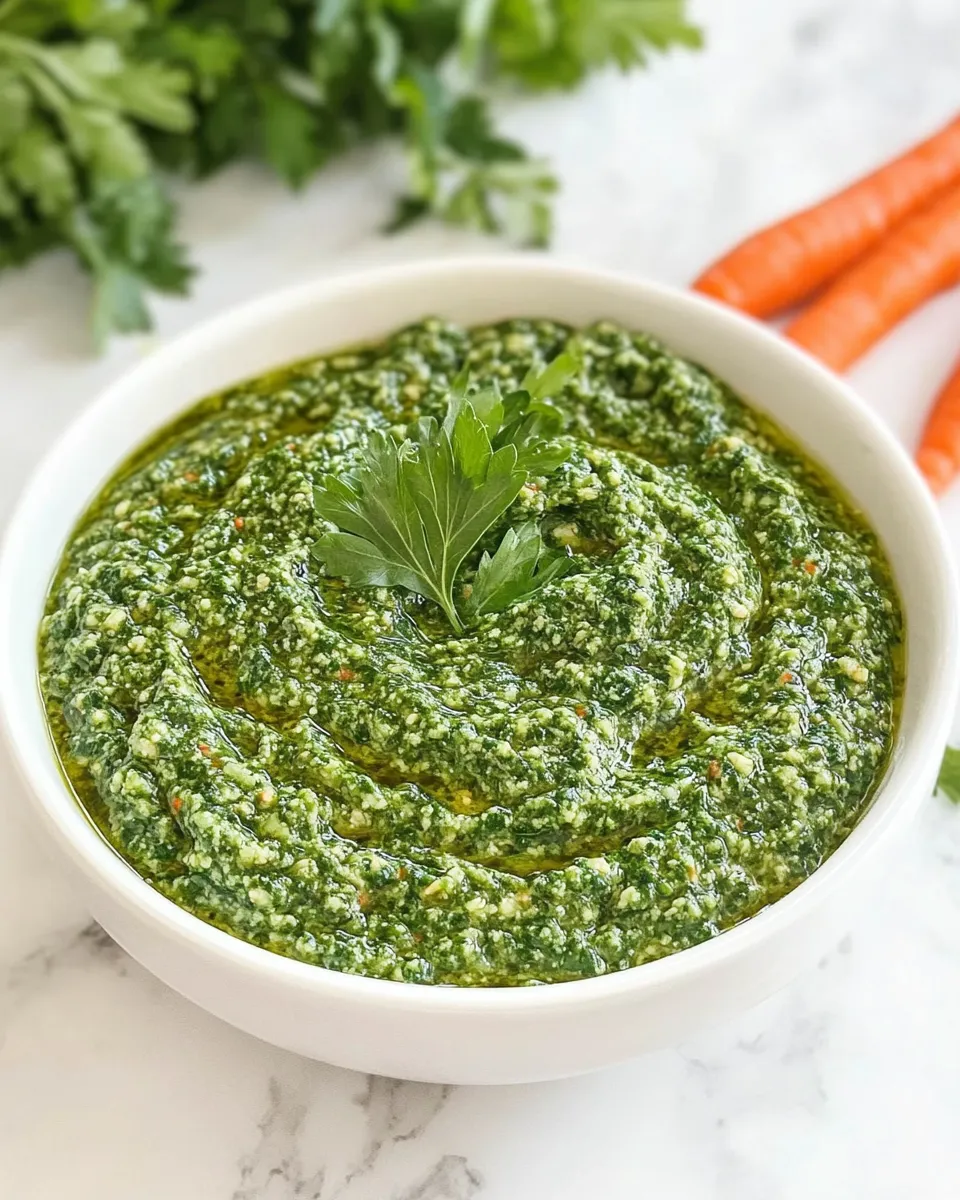
I turn carrot tops into pesto every spring, and it’s one of those small kitchen revolutions: something you would normally toss becomes a bright, green sauce that livens up pasta, sandwiches, and roasted veg. It’s fast, forgiving, and tastes fresher than anything store-bought. You’ll see why I keep a jar in the fridge all week.
This recipe uses simple ingredients and a food processor. You’ll toast the nuts, wash and dry the greens, pulse everything together, and finish with olive oil. The texture is flexible—chunky if you like it rustic, silky if you blend longer.
Ingredients
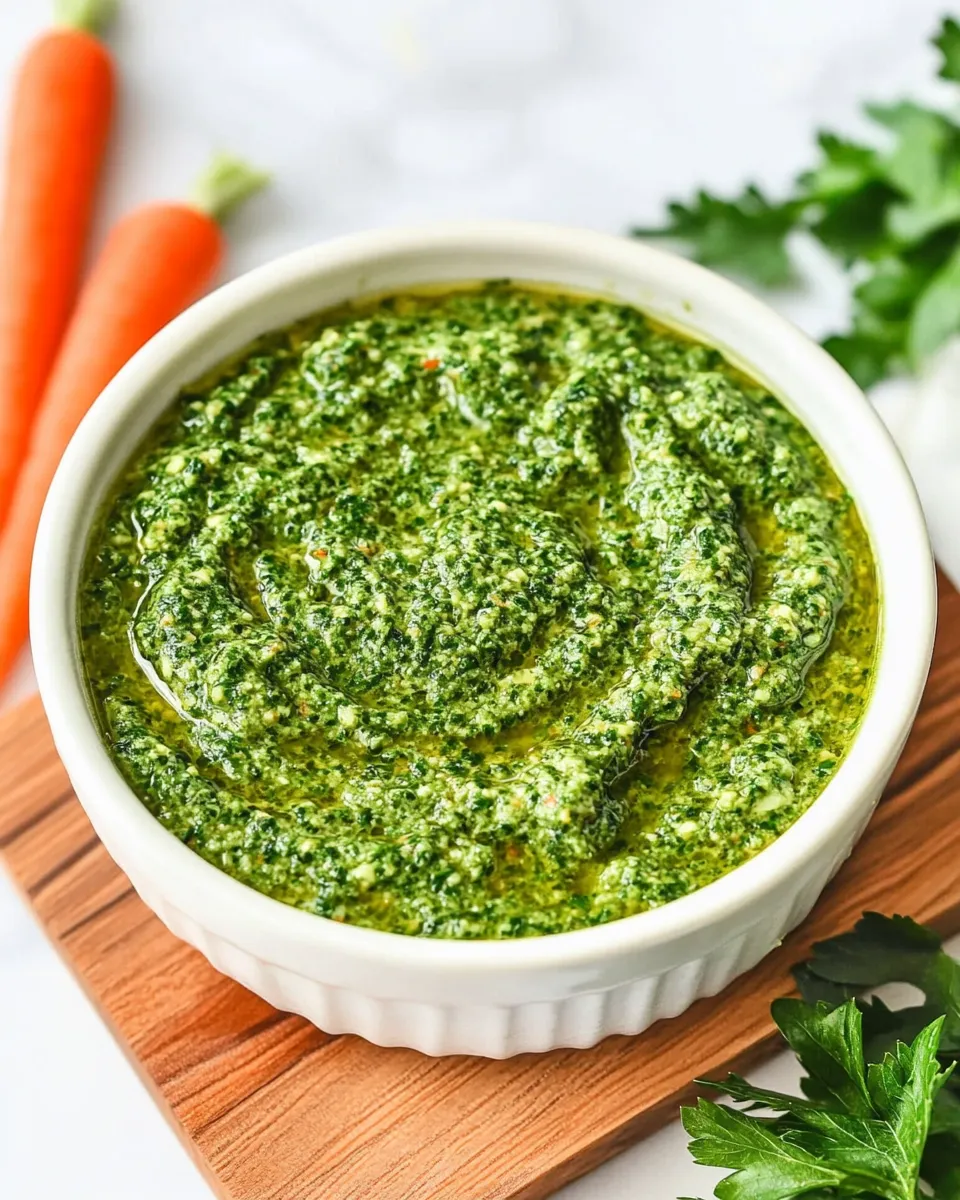
- 2 cups carrot tops — no stems; the base of the pesto, full of carrot-y brightness.
- ½ cup basil leaves — packed; optional, adds classic pesto aroma and sweetness.
- ?? cup pine nuts — or any other nut; toasts for flavor and gives body to the sauce.
- ½ cup Parmesan cheese — see notes to sub with nutritional yeast; salty, savory binder.
- 1 clove garlic — fresh and raw; sharpens the herb flavors.
- ½ cup extra-virgin olive oil — emulsifies the pesto and carries flavor.
- ½ teaspoon salt — seasons the mix; adjust to taste.
- ¼ teaspoon ground black pepper — balances and rounds the flavors.
Your Shopping Guide
Buy carrot bunches with the tops attached whenever you can; the greens are perishable and appreciated more when fresh. Look for vibrant, turgid leaves without yellowing or wilting. Store them wrapped in a damp paper towel inside a plastic bag until you’re ready to use them.
If you don’t have basil, that’s fine—the pesto will still be bright and herbaceous. The pine nuts are tradition but optional; walnuts, almonds, or sunflower seeds work. For a vegan variant, use nutritional yeast in place of Parmesan and good salt to boost the savory profile.
Stepwise Method: Carrot Top Pesto
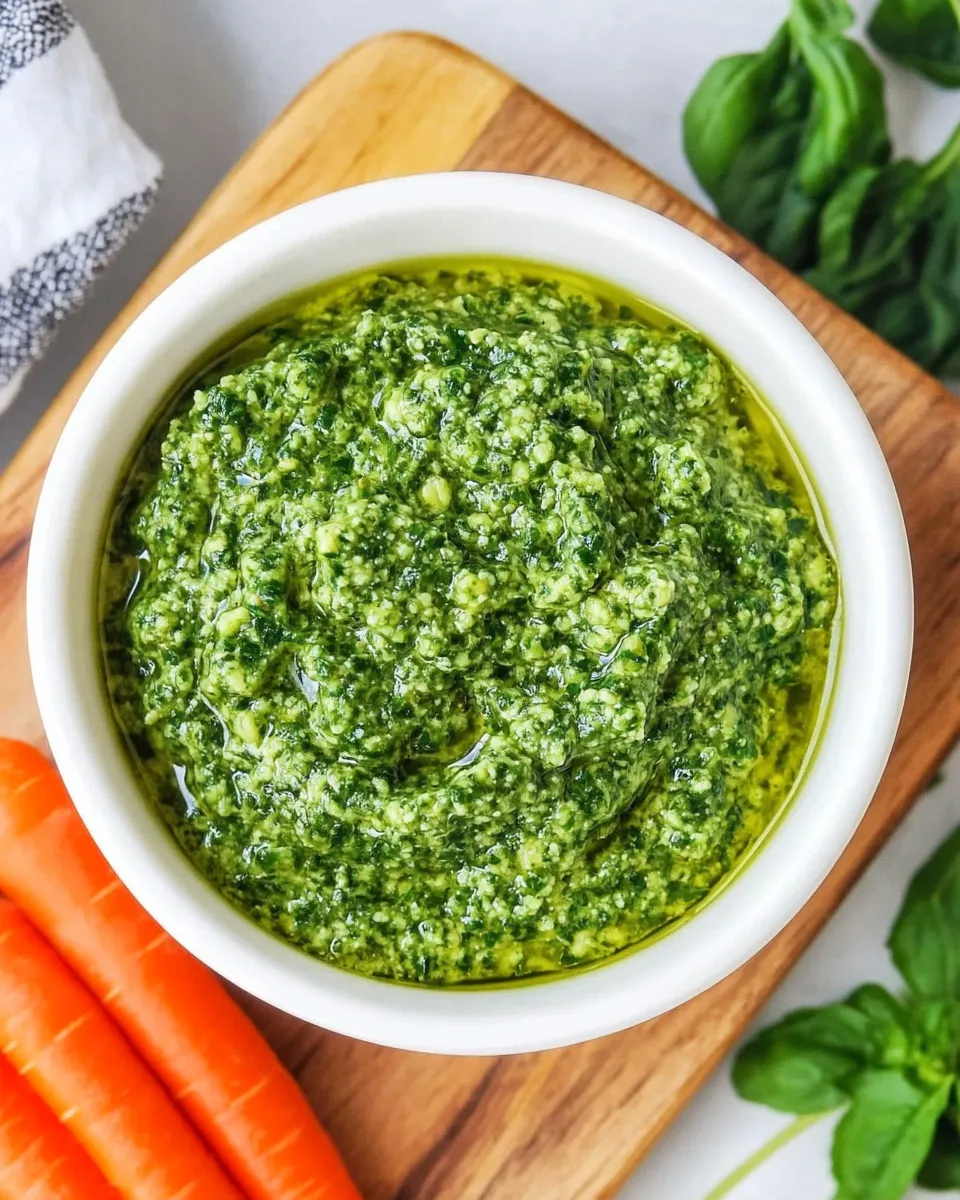
- Place the pine nuts (or other nuts) in a dry skillet over low–medium heat. Toast, stirring or shaking the pan occasionally, until fragrant and lightly golden. Remove from heat and let the nuts cool completely.
- Remove any stems from the carrot tops and (if using) the basil; rinse the leaves thoroughly under cold water. Shake off excess water and pat the leaves dry with a clean kitchen towel or spin in a salad spinner.
- Add the carrot tops, packed basil leaves (if using), cooled toasted nuts, Parmesan cheese, whole garlic clove, salt, and ground black pepper to the bowl of a food processor.
- Pulse and then blend the mixture until the ingredients are broken down, stopping periodically to scrape down the sides of the bowl with a spatula so everything is evenly processed.
- With the food processor running, slowly pour in the extra-virgin olive oil until the pesto is slightly emulsified and reaches your desired consistency.
- Taste and adjust salt or pepper if needed. Store or serve immediately.
Why Carrot Top Pesto is Worth Your Time
Because it uses an ingredient most people discard. Carrot tops are bright and slightly bitter, and when blended with nuts, cheese, and oil they become rich and balanced. The result is a sauce with a lifted, green character that complements starchy or roasted foods.
It’s economical and sustainable—turning kitchen trim into something delicious. It also saves meal time later: a jar of pesto transforms weeknight dinners without extra work. Finally, it’s flexible: adjust nuts, herbs, or cheese to match what’s on hand.
No-Store Runs Needed
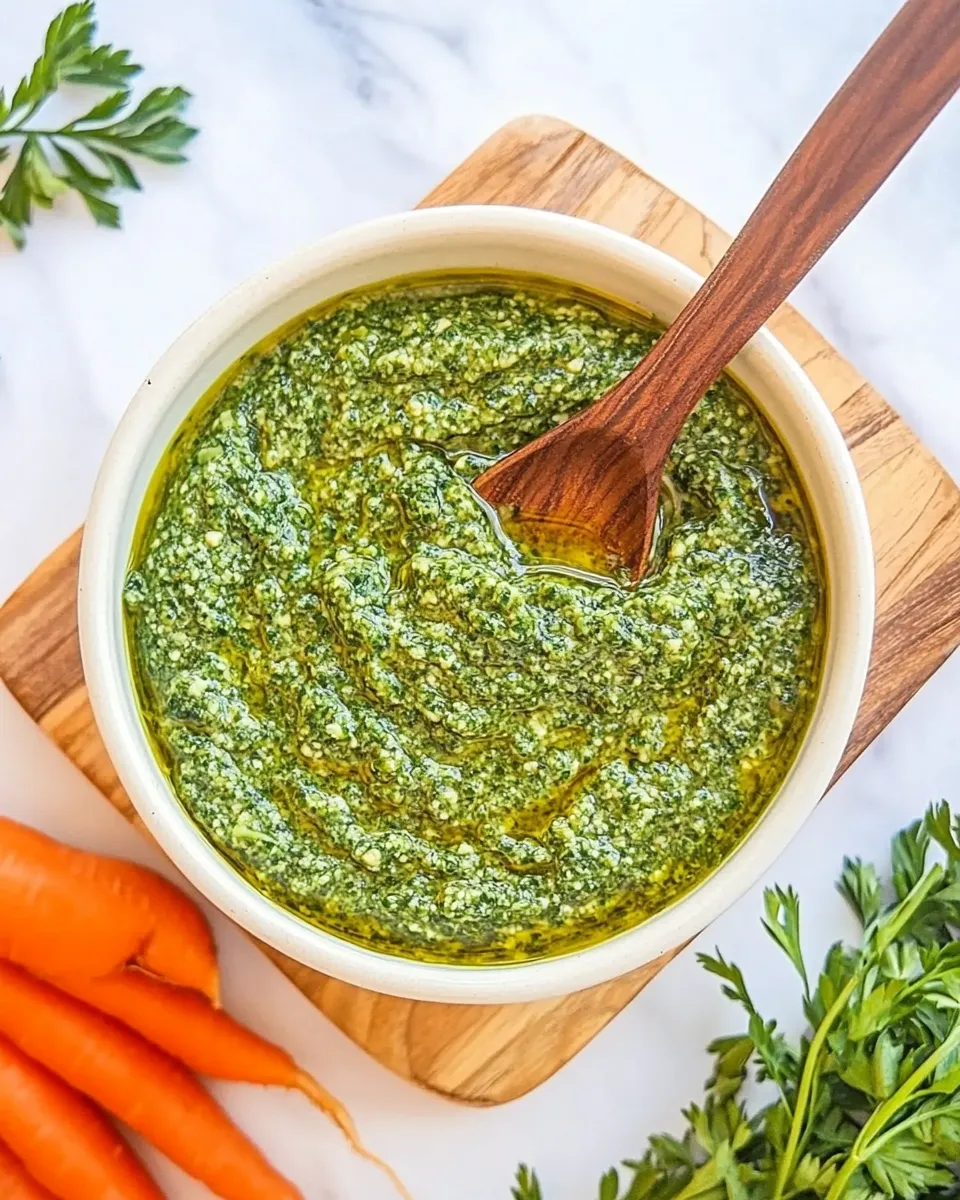
If you have carrot tops, garlic, oil, salt, and one type of nut or hard cheese, you’re set. Skip basil entirely if you don’t have it; the pesto will still be vibrant. Sub Parmesan with nutritional yeast for a pantry-friendly vegan option. Rest easy knowing this recipe was designed to rescue odds-and-ends rather than demand specialty shopping.
Appliances & Accessories
Essential: a food processor. It breaks down fibrous greens evenly and creates a good emulsion. A blender will work in a pinch but may require more scraping and added oil to reach the same texture.
Helpful extras
- A salad spinner or clean kitchen towel — for drying greens thoroughly so the pesto doesn’t become watery.
- A dry skillet — for toasting nuts to deepen flavor.
- An airtight jar — to store the pesto and keep it bright in the fridge.
Slip-Ups to Skip
Don’t add wet greens. Excess water dilutes flavor and ruins the texture. Dry carrot tops completely before processing.
Avoid overheating the nuts when toasting; they go from fragrant to bitter quickly. Toast low and watch for color more than time.
Don’t overblend if you like texture. Pulse, check, scrape, and repeat. Let the processor do the work in short bursts for the best control.
Season-by-Season Upgrades
Spring: use the freshest carrot tops and add a handful of young nasturtium leaves or garden herbs for peppery notes.
Summer: increase basil if you have an abundance; stir in lemon zest for a brighter finish. Use toasted almonds for a slightly sweeter nutty profile.
Fall: swap pine nuts for toasted walnuts and add a pinch of smoked paprika for warm depth. The pesto pairs well with roasted squash or potatoes.
Winter: rely on preserved lemon peel or a splash of red wine vinegar to cut through the richness. Nutritional yeast stands in for Parmesan if you need a vegan option.
Testing Timeline
From start to finish this pesto takes about 15–25 minutes. Toasting the nuts is the most time-sensitive step—watch them closely and allow them to cool before blending. Washing and drying the greens takes about 5–10 minutes depending on your method.
If you’re making a double batch, add an extra 5–10 minutes for processing and jarting. The recipe scales well, but process in batches if your food processor bowl is crowded.
Storage & Reheat Guide
Refrigerator: keep pesto in an airtight jar for up to 5–7 days. Press a thin layer of olive oil on top before sealing to limit oxidation and preserve the color.
Freezer: freeze in ice cube trays for easy portions. Once frozen, transfer cubes to a zip-top bag and label. Pesto keeps about 3 months frozen. Defrost in the fridge or stir a frozen cube into hot pasta or soup.
Reheating: you don’t need to heat pesto. For pasta, reserve a splash of pasta water and toss the hot pasta with pesto off heat so the sauce warms gently without cooking the herbs. If you must warm it, do so briefly over low heat mixed into another hot ingredient.
Carrot Top Pesto FAQs
Can I use stems? Remove the woody stems before processing; very tender stems are okay but large, fibrous stems will give a bitter or stringy texture.
How do I make it nut-free? Use toasted sunflower seeds or pumpkin seeds; they add body and nutty flavor without tree nuts.
Is it safe to eat carrot tops? Yes—carrot tops are edible and flavorful. Wash them thoroughly to remove grit, and avoid any wilted or slimy leaves.
How do I keep the pesto green? Minimize exposure to air. Dry the greens completely, process quickly, and press a thin layer of olive oil onto the surface before refrigerating.
Save & Share
If you enjoyed this recipe, save it for the next time you buy carrots. Carrot Top Pesto is one of those small, satisfying ways to reduce waste and increase flavor. Share it with friends—send a jar, or toss pasta with it for a quick dinner they’ll ask you to repeat.
Tag your photos when you make it: I love seeing how everyone adapts the nuts and herbs. Simple swaps make great discoveries, and a little tweak might become your new favorite.
Carrot Top Pesto
Ingredients
Ingredients
- ?2 cupscarrot topsno stems
- ?1/2 cupbasil leavespacked – no stems optional
- ??cuppine nutsor any other nut
- ?1/2 cupparmesan cheesesee notes to sub with nutritional yeast
- ?1 clovegarlic
- ?1/2 cupextra-virgin olive oil
- ?1/2 teaspoonsalt
- ?1/4 teaspoonground black pepper
Instructions
Instructions
- Place the pine nuts (or other nuts) in a dry skillet over low–medium heat. Toast, stirring or shaking the pan occasionally, until fragrant and lightly golden. Remove from heat and let the nuts cool completely.
- Remove any stems from the carrot tops and (if using) the basil; rinse the leaves thoroughly under cold water. Shake off excess water and pat the leaves dry with a clean kitchen towel or spin in a salad spinner.
- Add the carrot tops, packed basil leaves (if using), cooled toasted nuts, Parmesan cheese, whole garlic clove, salt, and ground black pepper to the bowl of a food processor.
- Pulse and then blend the mixture until the ingredients are broken down, stopping periodically to scrape down the sides of the bowl with a spatula so everything is evenly processed.
- With the food processor running, slowly pour in the extra-virgin olive oil until the pesto is slightly emulsified and reaches your desired consistency.
- Taste and adjust salt or pepper if needed. Store or serve immediately.
Equipment
- Food Processor
Notes
Use fresh carrot tops and basil leaveswithout the stems to make the pesto.
Substitute the pine nutswith walnuts, cashews, hazelnuts, pecan, macadamia, pistachios, almonds, brazil nuts, or even peanuts.
For avegan pesto, substitute½ cup ofparmesan with¼ cupnutritional yeast.
For anut-free version, substitute the nuts with sunflower or pumpkin seeds.
Storein the fridge in an airtight container for up to 3 days. A thin layer of olive oil can prevent the pesto from oxidizing and turning brown.Freezefor up to 3 months.
Yield– This recipe makes about 1 cup of pesto, we divided it into 8 portions.
Nutritionvalues are calculated per 1 portion of pesto (?a cup)