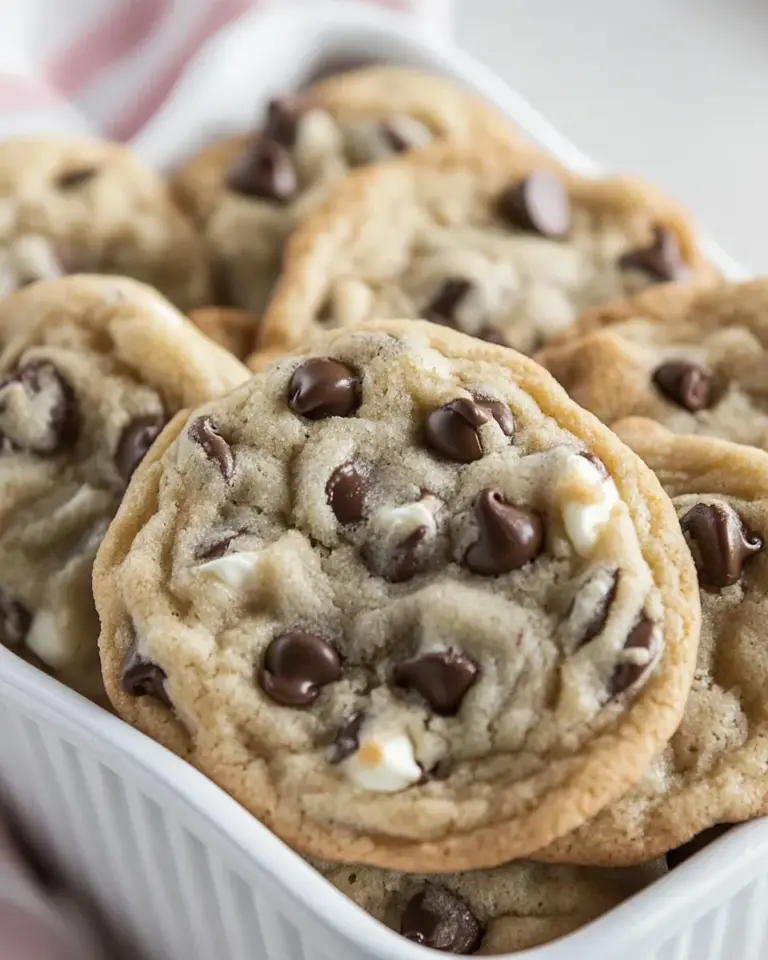
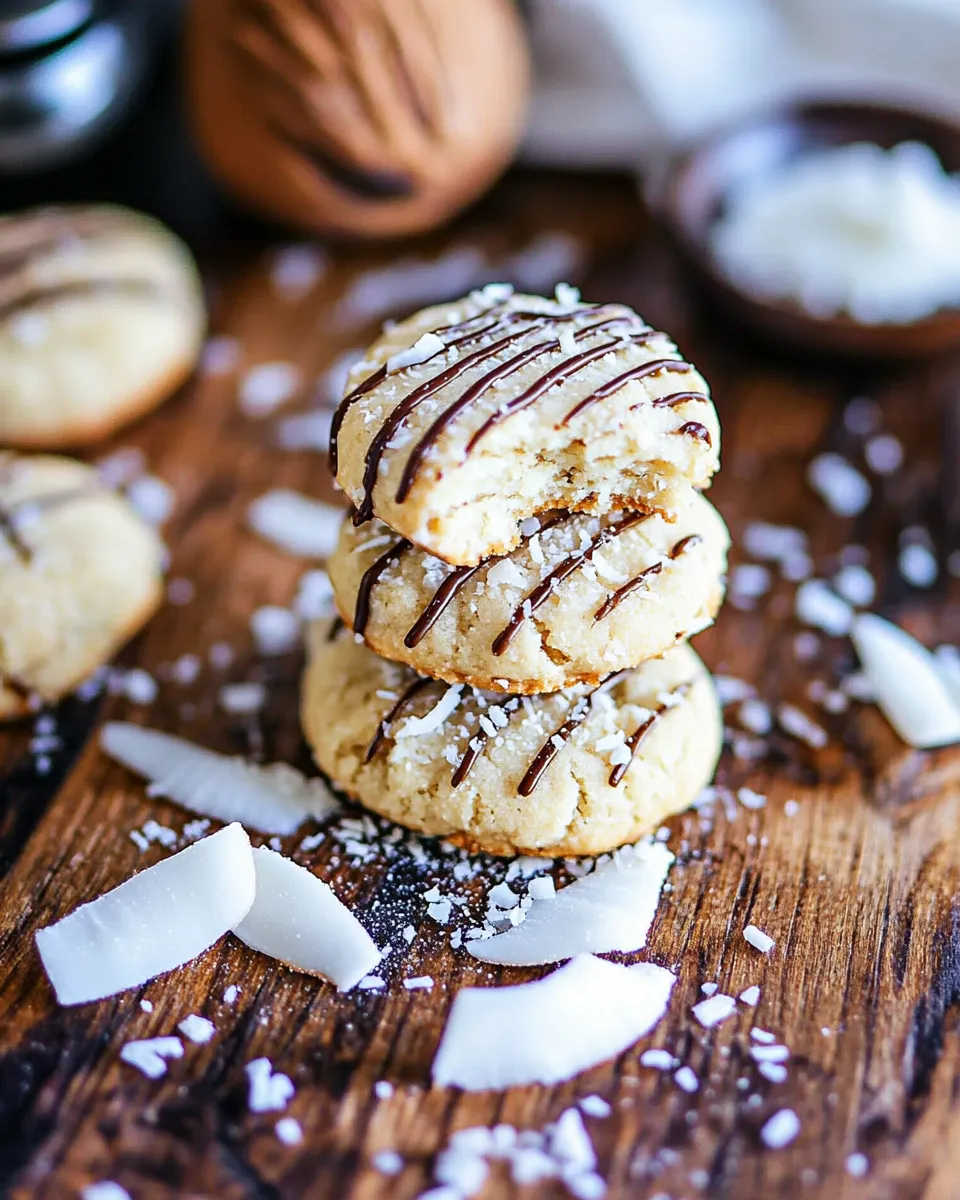
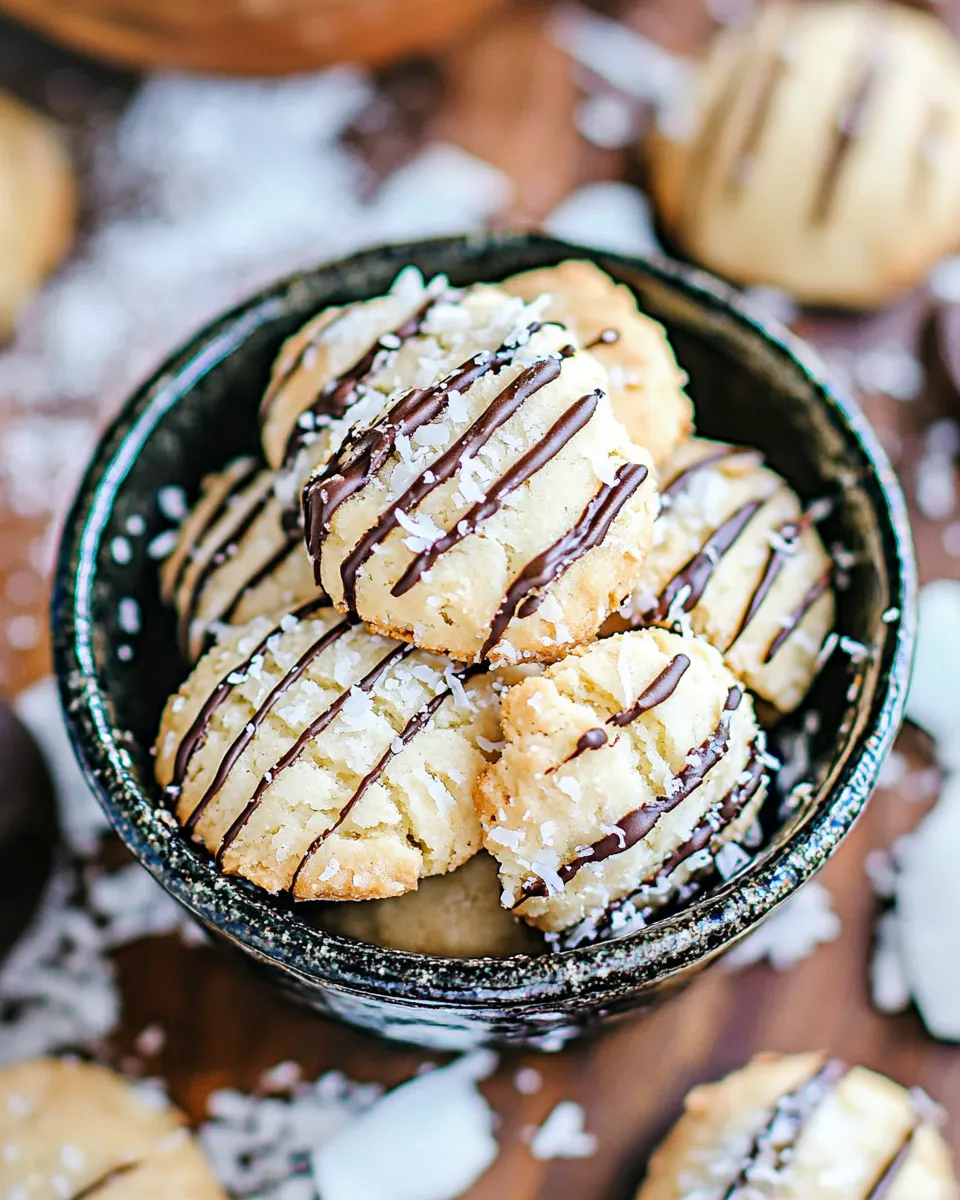
These coconut shortbread cookies are a simple, buttery treat that feels upscale but comes together fast. The dough is forgiving, the texture is tender and sandy, and the toasted coconut and chocolate finish give each bite a little lift. I often make a double batch because they disappear before the coffee cools.
I keep the method straightforward: a quick pulse in the food processor, a gentle roll, and a short bake. No temperamental steps, no obscure ingredients. If you like classic shortbread with a tropical nudge, these are for you.
Below I’ll walk you through everything from the exact ingredients and the step-by-step process to troubleshooting and storage. Practical tips, clear reasons for each choice, and a few swaps if you need them.
What You’ll Need

Ingredients
- ½ cup shredded coconut — folded into the dough for texture and coconut flavor.
- ½ cup granulated sugar — provides sweetness and helps with the cookie’s delicate structure.
- 1 tablespoon lemon juice — brightens and balances the sweetness.
- 2 ½ cups all-purpose flour — the main dry structure for the shortbread.
- 1 teaspoon pure vanilla extract — adds depth and rounds the flavors.
- 1 cup unsalted butter (2 sticks), cold, cut into 1-tablespoon pieces — the fat that creates the short, tender crumb; keep it cold for a better texture.
- Semi-sweet chocolate — for melting and drizzling over the cooled cookies.
- 1 tbsp shredded coconut, toasted — for sprinkling immediately after drizzling the chocolate; adds crunch and a toasty aroma.
Cooking Coconut Shortbread Cookies: The Process
- Preheat oven to 350°F (180°C). Line two cookie sheets with parchment paper.
- Toast the 1 tablespoon shredded coconut for sprinkling: place it in a small dry skillet over medium heat and cook, stirring constantly, until golden brown, about 1–2 minutes. Transfer to a small plate to cool.
- In a food processor, combine 1/2 cup shredded coconut, 1/2 cup granulated sugar, 1 tablespoon lemon juice, 2 1/2 cups all-purpose flour, and 1 teaspoon vanilla extract. Pulse a few times to mix.
- Add 1 cup (2 sticks) cold unsalted butter, cut into 1-tablespoon pieces. Pulse the processor in short bursts until the mixture forms a cohesive dough that holds together when pinched. The dough may look a bit dry at first.
- Turn the dough out onto a lightly floured surface and lightly knead just until the dough is smooth and holds together. If it is still crumbly, press the pieces together with your hands until cohesive; do not add other ingredients.
- Shape the dough into a ball, then roll it out to about 1/4 inch thickness on a lightly floured surface. Use cookie cutters to cut out shapes, rerolling scraps as needed.
- Place the cut cookies on the prepared parchment-lined baking sheets, spacing them about 1 inch apart.
- Bake in the preheated oven for 13–15 minutes, until the edges are set and just beginning to turn a pale golden color. Remove from oven.
- Transfer the cookies to a wire rack and let them cool completely.
- Melt the semi-sweet chocolate listed in the ingredients according to your preferred method. Drizzle the cooled cookies with the melted chocolate and immediately sprinkle each with the toasted shredded coconut. Let the chocolate set before serving.
Why It’s Crowd-Pleasing
Shortbread is universally loved because of its buttery, melt-in-your-mouth crumb. These cookies add toasted coconut and a chocolate drizzle, which combine familiar flavors with a little twist. They’re not overly sweet; the restrained sugar and bright lemon juice keep the profile balanced so a large group can snack on them without palate fatigue.
They present nicely, too. Cut into shapes and finished with chocolate and toasted coconut, they look homemade but special. That makes them a safe pick for bake sales, office treats, or a holiday platter.
Finally, they store well and travel cleanly. You can make them ahead, freeze them, or bring them to a party without much worry about crumbling or melting.
If You’re Out Of…
- Food processor — use a pastry cutter, two knives, or your fingertips to cut the cold butter into the flour mixture until it resembles coarse crumbs. It takes longer, but the result is the same.
- Shredded coconut for the dough — add the flavor with a teaspoon or two of coconut extract, or skip it entirely; the cookies will still be excellent as simple shortbread.
- Toasted shredded coconut for garnish — substitute finely chopped toasted nuts (almonds or macadamia) if you want crunch, or leave the drizzle plain.
- Semi-sweet chocolate — use dark or milk chocolate depending on preference; if you only have chocolate chips, melt them the same way.
Equipment & Tools
- Food processor — useful for a quick, even dough. Alternatives are listed above.
- Rolling pin — roll the dough to an even 1/4 inch.
- Cookie cutters — optional; any round cutter or glass works if you don’t have shapes.
- Baking sheets and parchment paper — parchment keeps bottoms from overbrowning and makes cleanup easy.
- Small dry skillet — for toasting the shredded coconut safely.
- Wire rack — essential for cooling and for the chocolate to set evenly.
Pitfalls & How to Prevent Them
Dry or Crumbly Dough
If the dough looks dry in the food processor, resist the urge to add liquid. The recipe notes this possibility; pulse until it just holds together and then press it gently on the counter until cohesive. Overworking or adding extra liquid will change the texture.
Flat or Tough Cookies
Warm butter or overworking the dough can make cookies spread or turn tough. Keep the butter cold and pulse only until combined. Knead just enough to bring the dough together — shortbread benefits from minimal handling.
Uneven Browning
Oven hot spots cause uneven edges. Rotate sheets halfway through baking if your oven runs uneven. Use the center rack when possible, and line sheets with parchment to protect the bottoms.
Chocolate Not Setting Smoothly
Allow cookies to cool completely before drizzling chocolate. If the melted chocolate is too thick, thin with a small amount of neutral oil or use a gentle double boiler to soften it evenly. Work quickly when drizzling and sprinkle the toasted coconut immediately so it adheres.
Better Choices & Swaps
Use cold unsalted butter for the best texture and control of salt level. If you prefer salted butter, reduce any extra salt in the rest of your baking. For a slightly lighter cookie, you can use part brown sugar (up to 1/4 cup swapped in), which adds a hint of caramel, but it will change both color and texture.
For a gluten-free version, swap the all-purpose flour for a 1:1 gluten-free flour blend that already contains xanthan gum. Expect a slightly different crumb but similar flavor.
If you want a vegan option, use a vegan butter that behaves like cold butter in baking, and choose a dairy-free chocolate for the drizzle. Texture may differ slightly but the technique and bake time remain similar; just watch for slight variations in browning.
Flavor Logic
Each ingredient has a clear job here. The butter provides the tender, short crumb that characterizes shortbread. The flour builds the structure; keeping it moderate (2 1/2 cups) maintains the fragile balance between fragility and hold. Sugar sweetens but also contributes to the cookie’s dry, crumbly texture — shortbread isn’t wet or chewy.
The shredded coconut in the dough gives flecks of chewy texture and coconut flavor throughout. Lemon juice is a subtle brightener; it wakes up the flavors without tasting lemony. Vanilla rounds everything out. The melted semi-sweet chocolate adds a bitter-sweet contrast, and the toasted coconut on top adds aroma and a nutty crunch that reads as intentional finishing — not an afterthought.
Keep-It-Fresh Plan
For short-term storage, keep cookies in an airtight container at room temperature for up to 5 days. Layer them with parchment to prevent sticking and protect the chocolate finish. If your kitchen is warm and the chocolate is soft, store the container in a cool spot or briefly refrigerate to keep the drizzle intact.
For longer storage, freeze baked cookies in a single layer until solid, then transfer to a freezer-safe container with parchment between layers. Thaw at room temperature; the texture stays very close to fresh for up to 2 months. You can also freeze unbaked dough discs wrapped tightly and bake from frozen — add a minute or two to the bake time.
Quick Questions
- Can I make these ahead? Yes. Baked cookies keep well for days and freeze well for months. You can also prepare the dough and refrigerate for 24–48 hours before rolling and cutting.
- Do I have to use a food processor? No. Use a pastry cutter, two knives, or your fingertips to cut the butter into the dry ingredients until the mixture holds together when pinched.
- Why pulse instead of blending continuously? Short pulses keep the butter in small, cold pieces. Continuous blending warms the butter and risks a dense or greasy texture.
- How thick should I roll the dough? About 1/4 inch. This gives a tender shortbread that holds its shape and bakes evenly in the 13–15 minute window.
- Can I skip the chocolate drizzle? Yes. The cookies are perfectly lovely on their own or dusted with powdered sugar. The drizzle adds contrast but is not essential.
Final Thoughts
These coconut shortbread cookies are a reliable, satisfying recipe to keep in your repertoire. The method is straightforward and forgiving, and the results are elegant enough for company yet simple enough for an afternoon bake. Keep the butter cold, avoid overworking the dough, and toast the coconut for a crisp, aromatic finish.
Try a test batch first to get a feel for your oven and cookie cutters, then scale up if you want to share. They’re a small project with a big payoff — buttery, coconut-scented, and just a touch sophisticated with the chocolate drizzle.

Coconut Shortbread Cookies
Ingredients
Ingredients
- ?1/2 cupshredded coconut
- ?1/2 cupgranulated sugar
- ?1 tablespoonslemon juice
- ?2 1/2 cupsall purpose flour
- ?1 teaspoonpure vanilla extract
- ?1 cupunsalted butter2 sticks of cold butter – cut into 1-tablespoon pieces
- ??cupsemi sweet chocolatemelted
- ?1 tbspshredded coconuttoasted for sprinkling
Instructions
Instructions
- Preheat oven to 350°F (180°C). Line two cookie sheets with parchment paper.
- Toast the 1 tablespoon shredded coconut for sprinkling: place it in a small dry skillet over medium heat and cook, stirring constantly, until golden brown, about 1–2 minutes. Transfer to a small plate to cool.
- In a food processor, combine 1/2 cup shredded coconut, 1/2 cup granulated sugar, 1 tablespoon lemon juice, 2 1/2 cups all-purpose flour, and 1 teaspoon vanilla extract. Pulse a few times to mix.
- Add 1 cup (2 sticks) cold unsalted butter, cut into 1-tablespoon pieces. Pulse the processor in short bursts until the mixture forms a cohesive dough that holds together when pinched. The dough may look a bit dry at first.
- Turn the dough out onto a lightly floured surface and lightly knead just until the dough is smooth and holds together. If it is still crumbly, press the pieces together with your hands until cohesive; do not add other ingredients.
- Shape the dough into a ball, then roll it out to about 1/4 inch thickness on a lightly floured surface. Use cookie cutters to cut out shapes, rerolling scraps as needed.
- Place the cut cookies on the prepared parchment-lined baking sheets, spacing them about 1 inch apart.
- Bake in the preheated oven for 13–15 minutes, until the edges are set and just beginning to turn a pale golden color. Remove from oven.
- Transfer the cookies to a wire rack and let them cool completely.
- Melt the semi-sweet chocolate listed in the ingredients according to your preferred method. Drizzle the cooled cookies with the melted chocolate and immediately sprinkle each with the toasted shredded coconut. Let the chocolate set before serving.
Equipment
- Oven
- Baking Sheets
- Parchment Paper
- Food Processor
- small dry skillet
- Wire Rack
- Cookie cutters
- small plate