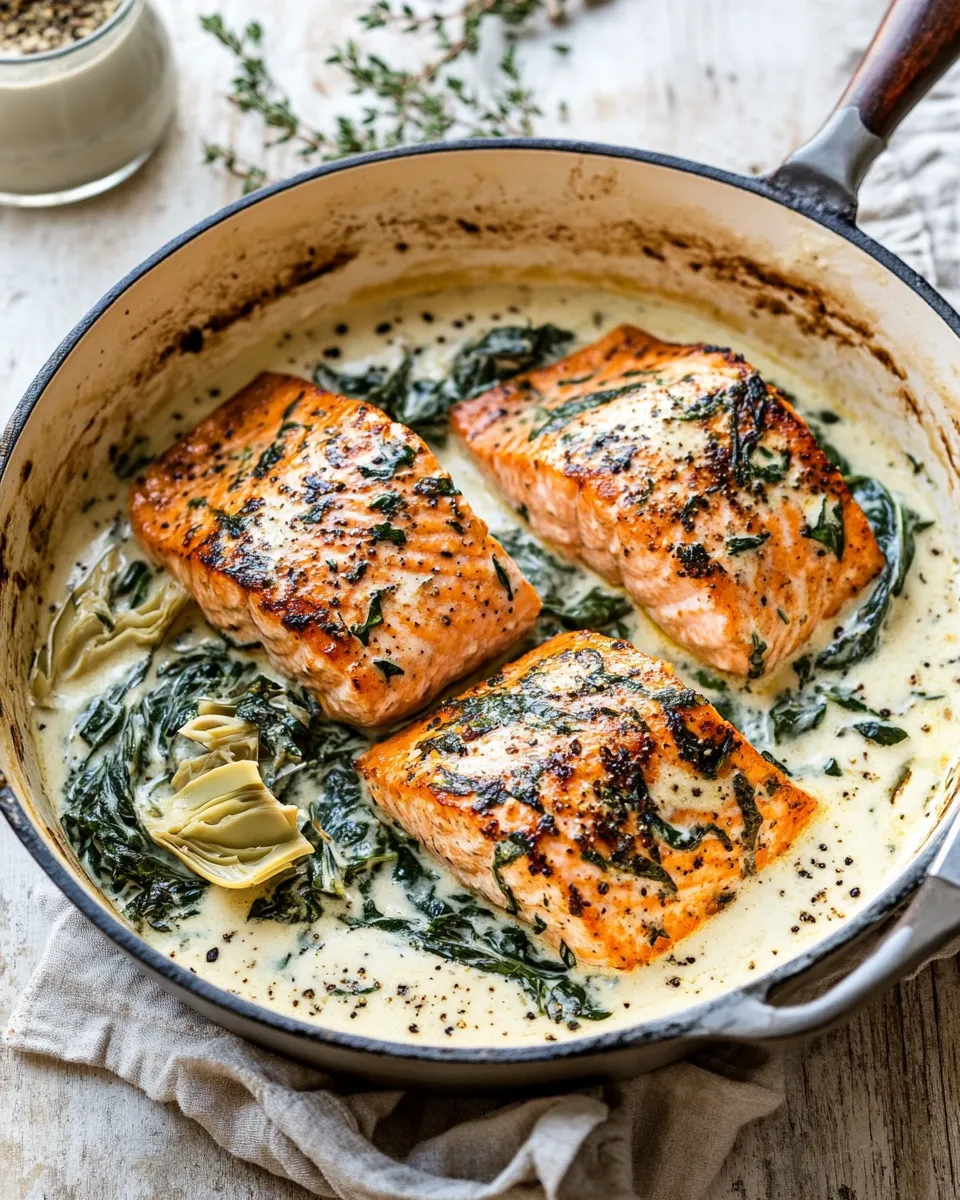
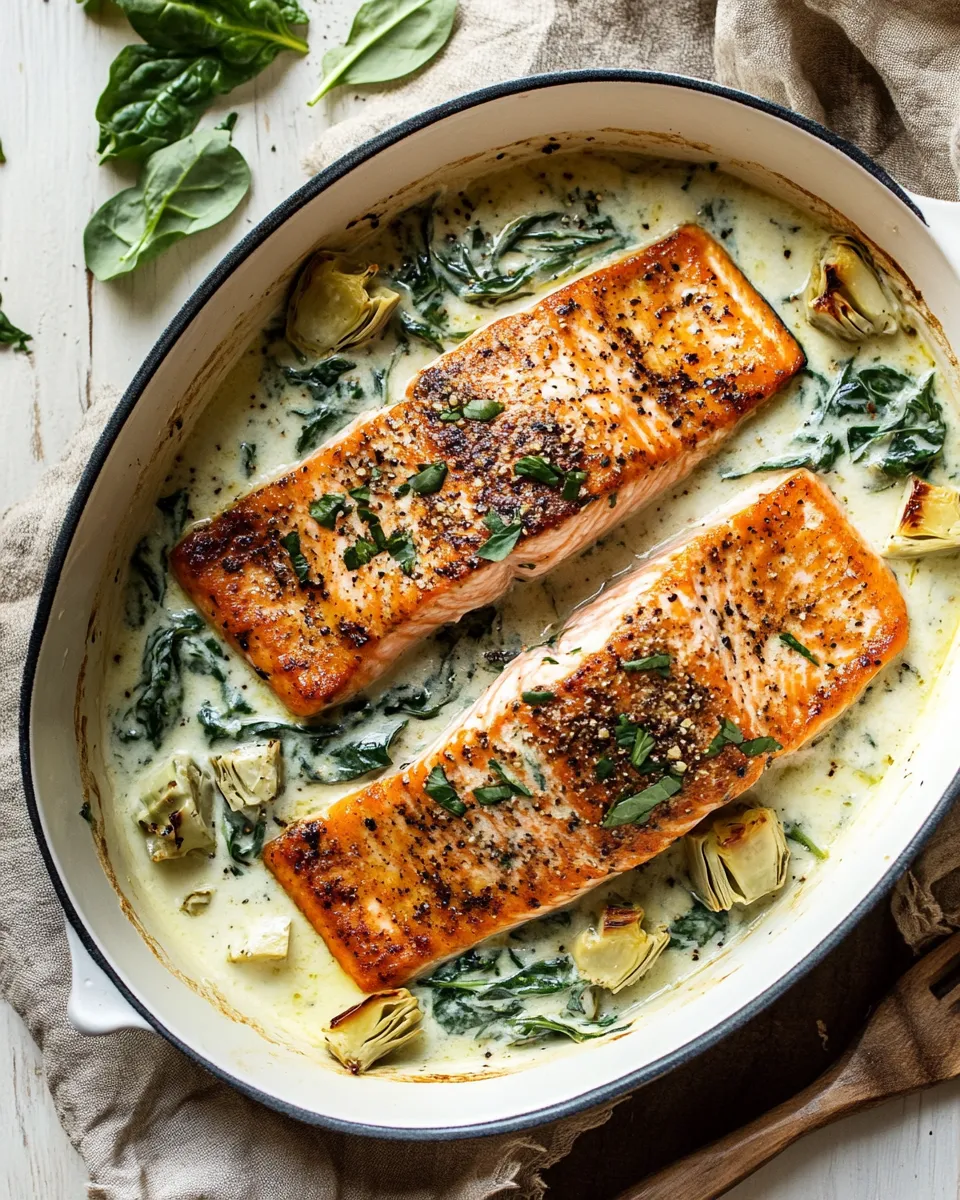
This is the weeknight dinner that feels like a celebration without the fuss. Flaky salmon meets a rich, garlicky, spinach-and-artichoke sauce that clings to the fish and brightens with a squeeze of lemon. The flavors are familiar — butter, garlic, cream, parmesan — but the addition of artichokes and sage gives it a savory lift that keeps every bite interesting.
I like this recipe because it’s forgiving and fast. You can sear the fillets for a crisp edge or skip that step and let the oven do the work. Either way, the sauce comes together in the skillet in under ten minutes and finishes in the oven while you set the table.
Below you’ll find a clear ingredient list with small tips, the exact step-by-step instructions from my tested source, and practical notes for equipment, timing, and adaptations. Read through once, then cook with confidence.
What Goes Into Creamy Spinach and Artichoke Salmon
Ingredients
- 4 salmon filets, skin on or off (your preference) — The main protein; skin-on gives a crisp texture if seared.
- kosher salt and black pepper — Basic seasoning; adjust to taste and season the fish just before cooking.
- 1/2 teaspoon paprika — Adds color and a subtle smoky note to the salmon.
- 1 tablespoon extra virgin olive oil — For an optional quick sear that helps render skin and boost flavor.
- 3 tablespoons salted butter — Carries the aromatics and browning flavors for the sauce.
- 2 small shallots, sliced or smashed — Milder than onion; they soften into the sauce and add sweetness.
- 3 cloves garlic, smashed — Aromatic backbone; smash to release more flavor quickly.
- 2 tablespoons chopped fresh sage — Earthy herb that pairs well with butter and salmon.
- 1/2 teaspoon crushed red pepper flakes — Provides gentle heat; adjust up or down to preference.
- 1 1/4 cups canned full-fat coconut milk or heavy cream — The sauce base; coconut milk gives subtle sweetness and dairy-free option, cream makes it richer.
- 2 ounces cream cheese, cubed — Helps thicken and lend silky body to the sauce.
- 1/2 cup grated parmesan or manchego cheese — Adds savory umami and helps the sauce bind.
- 4 cups fresh baby spinach — Wilts quickly into the sauce and stretches the dish into a full, veg-forward plate.
- 1 (12 ounce) jar marinated artichokes, roughly chopped — Briny, tangy bites that cut through the richness.
- juice from 1/2 a lemon — Brightens the whole dish at the end.
- flaky sea salt for sprinkling — Finishing touch that lifts texture and flavor.
Build Creamy Spinach and Artichoke Salmon Step by Step
- Preheat the oven to 350°F (175°C). Pat the 4 salmon filets dry with paper towels and rub both sides with 1/2 teaspoon paprika, kosher salt, and black pepper to taste.
- Optional sear: Heat 1 tablespoon extra virgin olive oil in a large, oven-safe skillet over high heat until shimmering. Add the salmon and sear 2–3 minutes on one side until golden (if using skin-on salmon, sear the skin side). Remove the salmon from the skillet and set aside. If you do not sear, proceed to the next step with the salmon unseared.
- Reduce the heat to medium. Add 3 tablespoons salted butter to the skillet. When the butter melts, add the 2 small shallots (sliced or smashed) and 3 cloves garlic (smashed). Cook 1–2 minutes until fragrant.
- Add 2 tablespoons chopped fresh sage and continue cooking 2–3 minutes, until the butter begins to brown and the shallots soften.
- Stir in 1/2 teaspoon crushed red pepper flakes, 1 1/4 cups canned full-fat coconut milk or heavy cream, and 2 ounces cream cheese (cubed). Season the sauce lightly with kosher salt and black pepper. Bring the mixture to a gentle simmer over medium heat, stirring until the cream cheese melts and the sauce is smooth and slightly thickened.
- Add 1/2 cup grated parmesan or manchego cheese, 4 cups fresh baby spinach, and the roughly chopped artichokes from the 12-ounce jar (drain any excess liquid if desired). Cook, stirring, until the spinach is wilted and the cheese is incorporated, about 3–5 minutes. Stir in the juice from 1/2 a lemon. Taste and adjust seasoning with salt and pepper.
- Nestle the salmon fillets into the sauce in the skillet (if you seared them earlier, place them seared-side up so the skin stays crisp; if you did not sear, place the raw seasoned fillets directly into the sauce).
- Transfer the oven-safe skillet to the preheated oven and bake 10–15 minutes, or until the salmon is cooked through and flakes easily with a fork (or reaches 145°F / 63°C on a thermometer). If your skillet is not oven-safe, transfer the salmon and sauce to a baking dish before baking.
- Remove the skillet from the oven. Optionally discard any large pieces of smashed garlic. Plate each salmon filet and spoon the creamy spinach-and-artichoke sauce over the top. Finish with a sprinkle of flaky sea salt before serving.
Why This Recipe Is Reliable
The method relies on three consistent techniques: seasoning, building flavor in the skillet, and finishing gently in the oven. Season the fish right before cooking so the salt doesn’t draw out moisture too early. Browning the butter with shallots and sage creates a depth of flavor that infuses the whole sauce. Baking at a moderate 350°F finishes the salmon evenly without overcooking the dairy-heavy sauce.
The recipe balances richness with bright elements: lemon juice and marinated artichokes cut through the cream, while parmesan or manchego helps the sauce bind and cling to the fish. Those contrasts make the dish forgiving — if the salmon hits the oven a few minutes early or late, the sauce buffers slight timing differences.
Vegan & Vegetarian Swaps
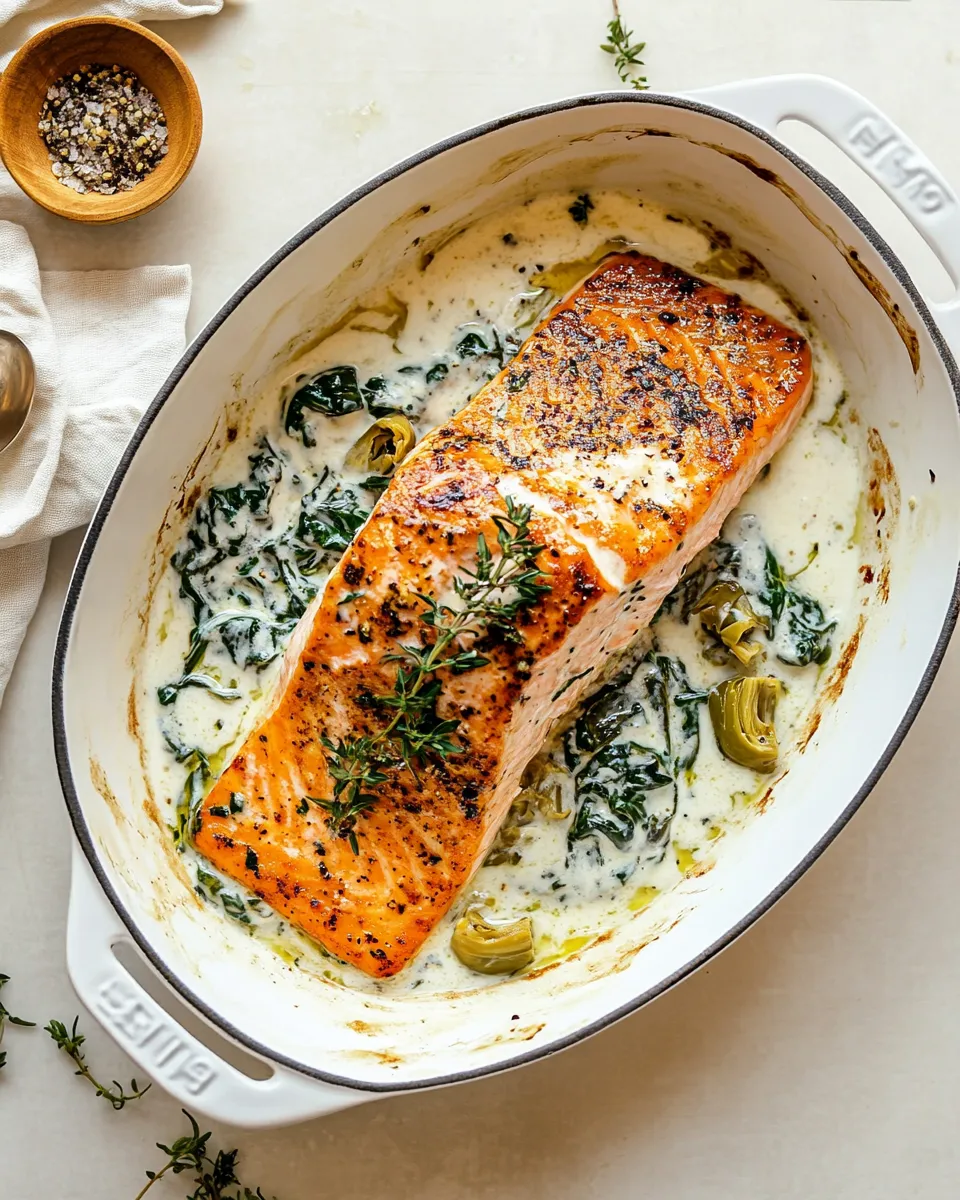
You can adapt the spirit of this dish without the salmon. For a vegetarian main, use large roasted portobello caps or thick slices of roasted cauliflower in place of the fillets. Keep the sauce but replace butter, cream, and cream cheese with plant-based alternatives: use olive oil or vegan butter, full-fat canned coconut milk, and a soft vegan cream cheese.
For a vegan, protein-rich plate, serve the creamy spinach-and-artichoke sauce over pan-seared tofu steaks or chickpea patties. Add a generous squeeze of lemon and a sprinkle of nutritional yeast or vegan parmesan for umami.
Setup & Equipment
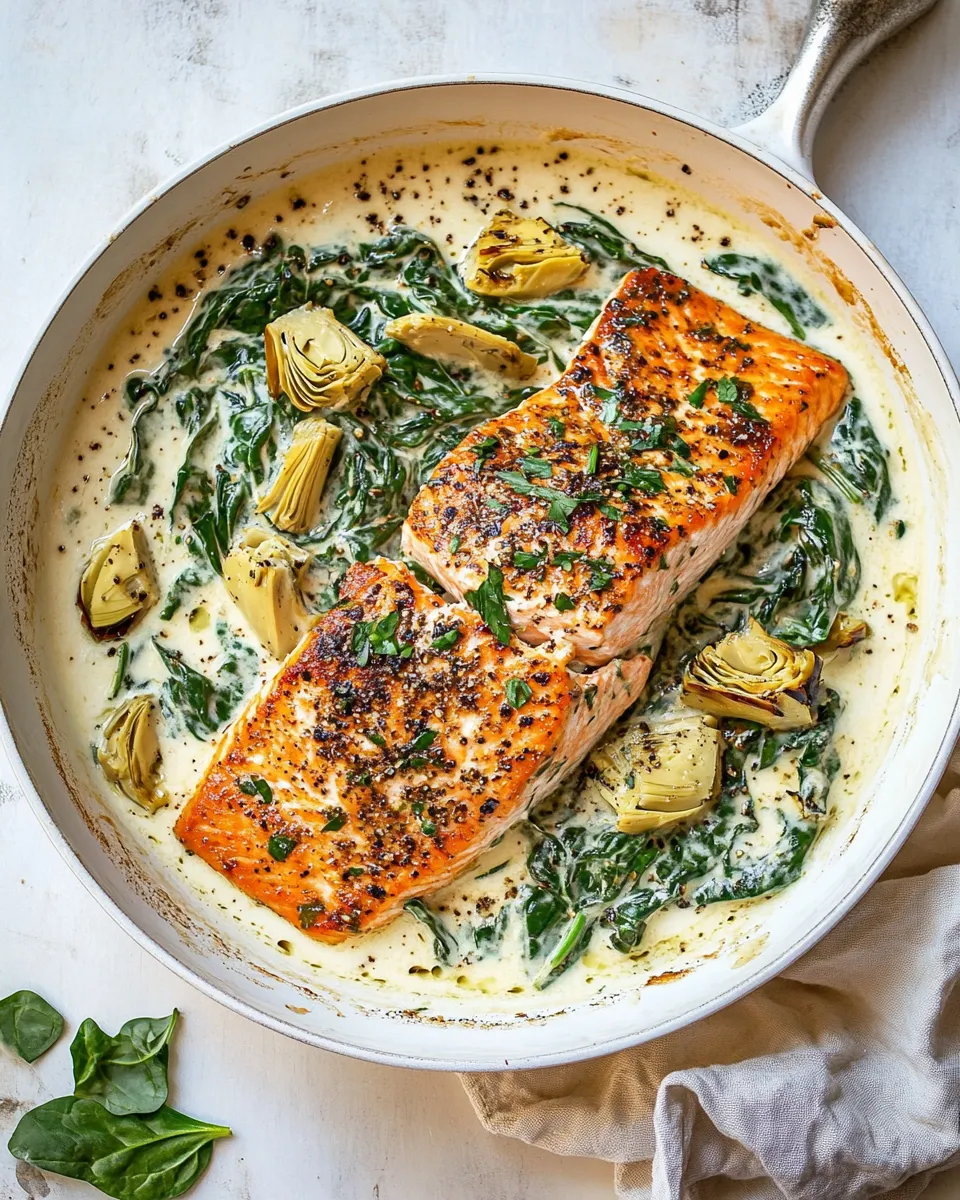
Simple tools make this easy.
- Large oven-safe skillet — Ideal because the sauce and searing happen in one pan and it goes straight into the oven. If you don’t have one, use a heavy skillet for the sauce and move everything to a baking dish before baking.
- Tongs or a spatula — For flipping and nestling the fillets into the sauce without breaking them.
- Paper towels — For drying the salmon so it sears properly and browns evenly.
- Instant-read thermometer (optional) — The most reliable way to check doneness: 145°F / 63°C for fully cooked salmon, but flaky is usually fine for home plates.
Troubles You Can Avoid
Dry or overcooked salmon
Overcooking is the most common issue. Use an oven thermometer and start checking at 10 minutes. The residual heat in the skillet can finish the fillets, so pull them once they flake and are opaque through the thickest part.
Sauces that split or separate
Cooking the sauce gently and stirring until the cream cheese fully melts prevents graininess. If you’re using coconut milk, stick with full-fat to avoid separation. If the sauce looks thin when you add the cheeses and spinach, simmer a minute longer to reduce; if it looks broken, whisk in a small knob of cold butter off heat to bring it back together.
Too salty or too bland
Taste as you go. The marinated artichokes and parmesan can add salt; add those gradually and taste before finishing. Finish with lemon juice and flaky sea salt at the table to balance flavors without over-salting in the pan.
Adaptations for Special Diets
Gluten-free: This recipe is naturally gluten-free if your jarred artichokes and any added condiments contain no gluten. Always check labels.
Dairy-free: Use canned full-fat coconut milk (already provided as an option) and swap cream cheese for a dairy-free cream cheese. Use nutritional yeast or a dairy-free grated alternative instead of parmesan/manchego.
Lower fat: Use a reduced amount of butter (drop to 1–2 tablespoons) and choose the lighter of the cream options, knowing the sauce will be a bit thinner. Increase fresh spinach so the sauce feels substantial.
Chef’s Rationale
I like starting with a hot pan and a quick sear because it creates texture and caramelized flavor that elevates the whole dish. From there, the butter, shallot, garlic, and sage form a compound base that’s savory and aromatic. The choice to offer coconut milk as an alternative to heavy cream is intentional: it preserves richness for dairy-free eaters while keeping the sauce emollient and silky.
Parmesan or manchego delivers salt and umami; cream cheese helps with body so the sauce clings to the fish. The artichokes do double duty: they add acidity and a distinctive briny note that offsets the dairy and rounds the dish out.
Shelf Life & Storage
Store leftovers in an airtight container in the refrigerator for up to 2 days. The sauce thickens as it cools; gently rewarm on low heat with a splash of milk, water, or extra coconut milk to loosen it. Avoid microwaving at high power — reheat gently on the stove to keep the salmon tender.
Do not freeze the finished salmon in sauce; the cream and cream cheese won’t always recover texturally after freezing. If you want to meal prep, freeze plain cooked salmon separately and prepare the sauce fresh when ready to eat.
Your Top Questions
Can I make the sauce ahead?
Yes. Make the sauce up to one day ahead and refrigerate. Reheat gently, add a splash of liquid to revive it, then nestle in freshly cooked or reheated salmon.
Do I have to sear the salmon?
No. Searing is optional and gives a texture contrast. If you skip it, the salmon will still be flavorful and tender after baking in the sauce.
What if I don’t have fresh sage?
Substitute with thyme or omit; the sauce will remain flavorful thanks to garlic, shallots, and the marinated artichokes.
Bring It to the Table
Serve each filet spooned with the creamy spinach-and-artichoke sauce and finished with a sprinkle of flaky sea salt and an extra squeeze of lemon if desired. This dish pairs well with simple sides that soak up sauce: buttered or herbed rice, roasted new potatoes, or a crisp green salad dressed lightly to contrast the richness.
For a weeknight, keep it casual: set out lemon wedges, a small dish of flaky salt, and some crusty bread to mop up the sauce. If you’re hosting, garnish with extra chopped sage and a scattering of grated cheese for a more polished finish. Either way, it’s a satisfying plate that looks and tastes like you spent more time on it than you did.

Creamy Spinach and Artichoke Salmon.
Ingredients
Ingredients
- 4 salmon filets skin on or off(your preference)
- kosher salt and black pepper
- 1/2 teaspoonpaprika
- 1 tablespoonextra virgin olive oil
- 3 tablespoonssalted butter
- 2 small shallots sliced or smashed
- 3 clovesgarlic smashed
- 2 tablespoonschopped fresh sage
- 1/2 teaspooncrushed red pepper flakes
- 1 1/4 cupscanned full-fat coconut milkor heavy cream
- 2 ouncescream cheese cubed
- 1/2 cupgrated parmesan or manchego cheese
- 4 cupsfresh baby spinach
- 1 12 ounce jarmarinated artichokesroughly chopped
- juice from 1/2 a lemon
- flaky sea saltfor sprinkling
Instructions
Instructions
- Preheat the oven to 350°F (175°C). Pat the 4 salmon filets dry with paper towels and rub both sides with 1/2 teaspoon paprika, kosher salt, and black pepper to taste.
- Optional sear: Heat 1 tablespoon extra virgin olive oil in a large, oven-safe skillet over high heat until shimmering. Add the salmon and sear 2–3 minutes on one side until golden (if using skin-on salmon, sear the skin side). Remove the salmon from the skillet and set aside. If you do not sear, proceed to the next step with the salmon unseared.
- Reduce the heat to medium. Add 3 tablespoons salted butter to the skillet. When the butter melts, add the 2 small shallots (sliced or smashed) and 3 cloves garlic (smashed). Cook 1–2 minutes until fragrant.
- Add 2 tablespoons chopped fresh sage and continue cooking 2–3 minutes, until the butter begins to brown and the shallots soften.
- Stir in 1/2 teaspoon crushed red pepper flakes, 1 1/4 cups canned full-fat coconut milk or heavy cream, and 2 ounces cream cheese (cubed). Season the sauce lightly with kosher salt and black pepper. Bring the mixture to a gentle simmer over medium heat, stirring until the cream cheese melts and the sauce is smooth and slightly thickened.
- Add 1/2 cup grated parmesan or manchego cheese, 4 cups fresh baby spinach, and the roughly chopped artichokes from the 12-ounce jar (drain any excess liquid if desired). Cook, stirring, until the spinach is wilted and the cheese is incorporated, about 3–5 minutes. Stir in the juice from 1/2 a lemon. Taste and adjust seasoning with salt and pepper.
- Nestle the salmon fillets into the sauce in the skillet (if you seared them earlier, place them seared-side up so the skin stays crisp; if you did not sear, place the raw seasoned fillets directly into the sauce).
- Transfer the oven-safe skillet to the preheated oven and bake 10–15 minutes, or until the salmon is cooked through and flakes easily with a fork (or reaches 145°F / 63°C on a thermometer). If your skillet is not oven-safe, transfer the salmon and sauce to a baking dish before baking.
- Remove the skillet from the oven. Optionally discard any large pieces of smashed garlic. Plate each salmon filet and spoon the creamy spinach-and-artichoke sauce over the top. Finish with a sprinkle of flaky sea salt before serving.
Equipment
- Oven
- large oven-safe skillet
- Baking Dish
- Instant-read thermometer
Notes
To Prepare Ahead of Time:
Skip step 2 completely and do not sear the salmon. Then complete the recipe through step 3. Let the sauce cool, then slide the salmon into the sauce. Chill for up to 1 day ahead of time. When ready to bake, remove the dish from the fridge 30 minutes prior to baking, then bake as directed.