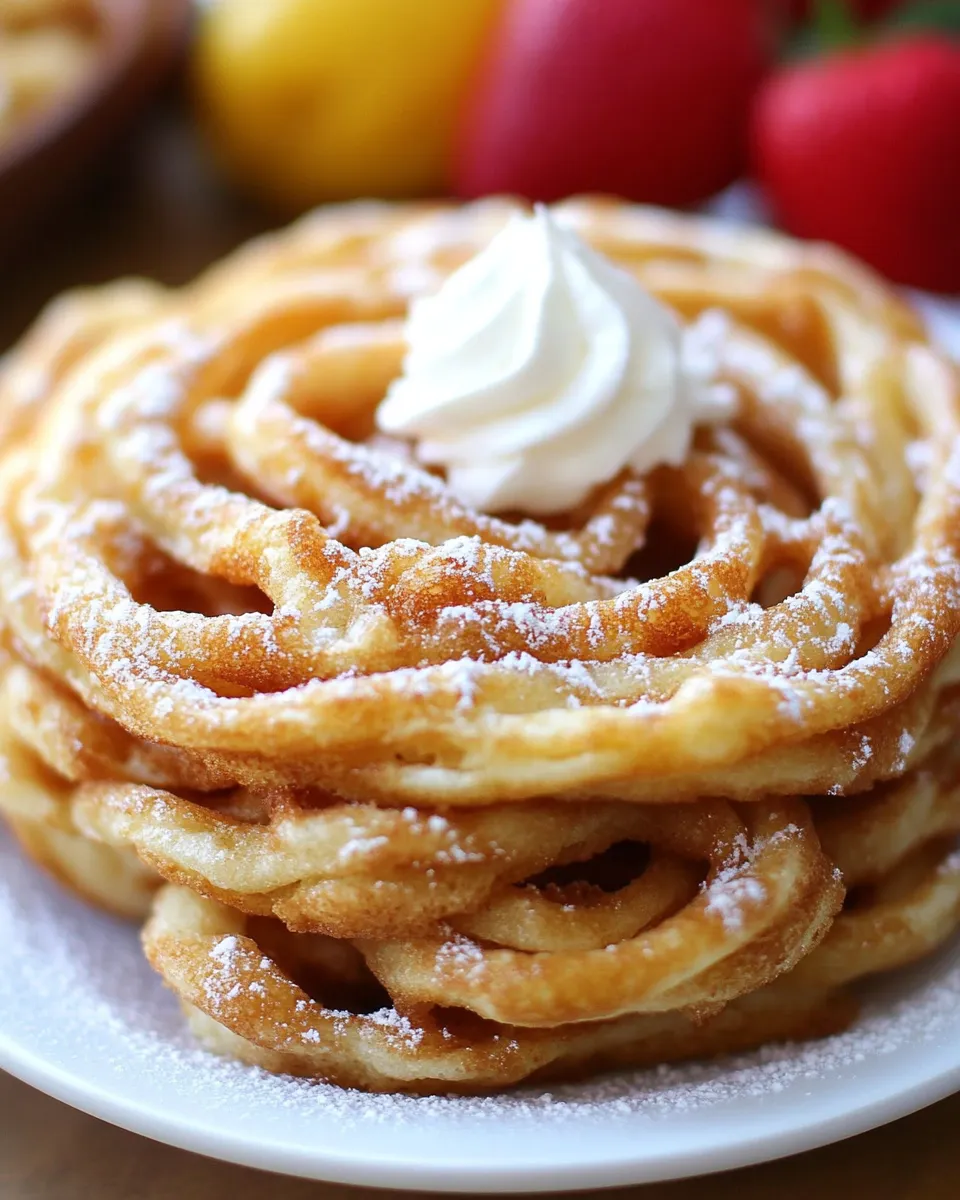
These funnel cakes bring the county fair home without the long lines. They fry up in minutes and give you that thin, lacy, crisp exterior with a tender inside—exactly what I want when I’m craving something nostalgic and simple. You don’t need special flour or complicated steps. Just a batter, hot oil, and a steady hand with a funnel.
I love making these when friends stop by on a weekend morning or when I want an indulgent treat after a slow day. They feel celebratory but they’re forgiving. The batter is straightforward, and once you get the rhythm of pouring, they’re almost meditative to make.
Below you’ll find everything from the exact ingredient list to step-by-step instructions, plus practical tips: what to watch for with the oil temperature, how to keep a consistent batter, and quick tweaks for texture. No fluff—just clear guidance so you can get these frying perfectly the first time.
What’s in the Bowl
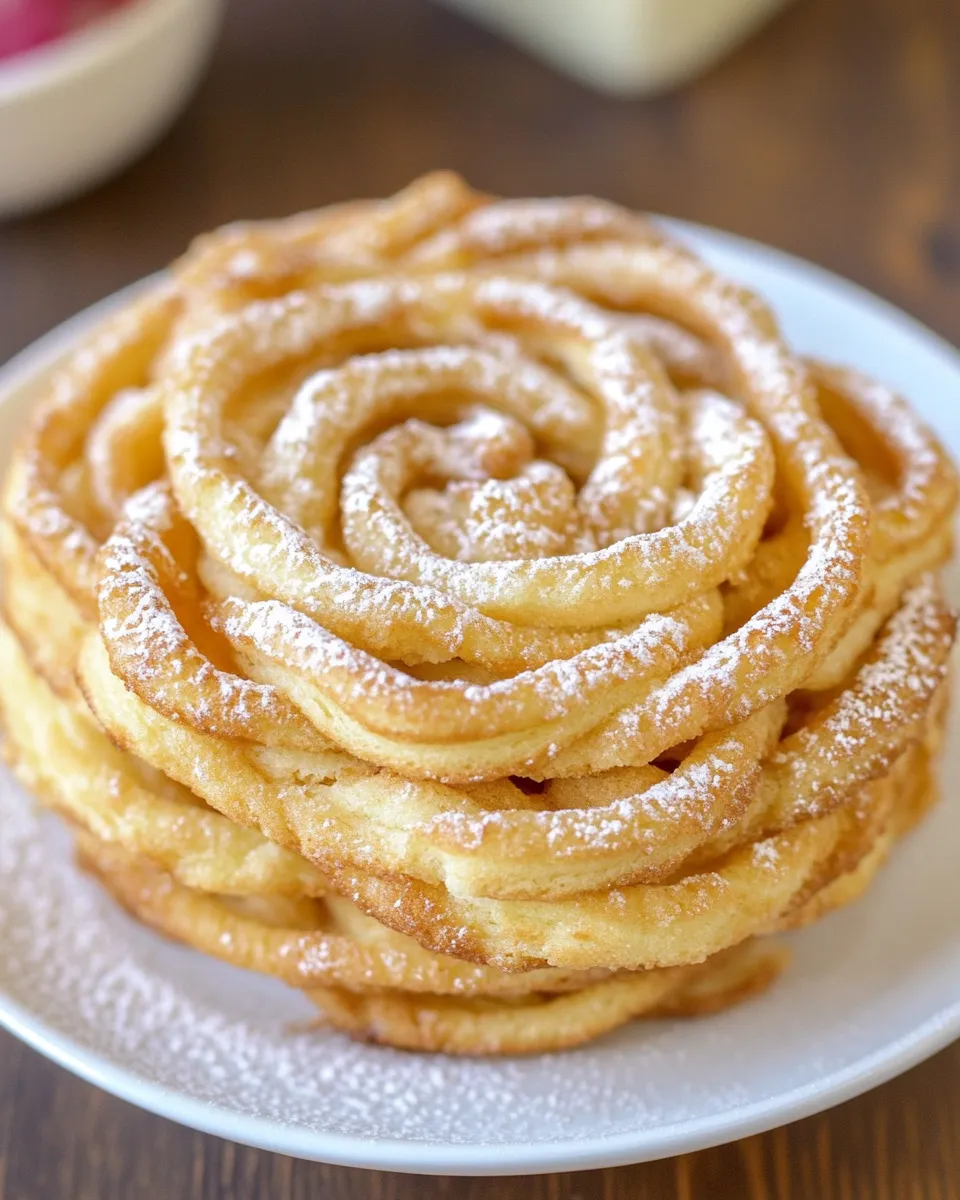
Before you heat a drop of oil, set out the components and understand what each one does. The batter is simple—liquid, egg, a touch of sugar and vanilla, and the leavening/structure from flour, salt, and baking soda. Melted butter adds richness. Powdered sugar finishes the cakes with that classic dusting.
Ingredients
- 2 cups milk — hydrates the flour and sets batter consistency; whole milk gives more richness, but any milk will work.
- 1 egg — binds the batter and helps create structure while frying.
- 1 teaspoon pure vanilla extract — adds background sweetness and aroma.
- 2 cups all purpose flour — provides the bulk and structure for the cakes.
- 1 teaspoon salt — balances sweetness and enhances flavor.
- 1 teaspoon baking soda — leavens and contributes to the puff and lightness.
- 1 tablespoon granulated sugar — a little sweetness in the batter for depth.
- 4 tablespoons unsalted butter, melted — for richness and a tender crumb; let it cool to warm before adding.
- powdered sugar for topping — the classic finishing touch; sift it for an even dusting.
- oil for frying — neutral frying oil (like vegetable or canola) works best; you need enough to create a 1–2 inch depth in the pan.
The Method for Homemade Funnel Cakes
- Whisk the milk, egg, vanilla extract, and granulated sugar together in a large bowl until combined.
- In a separate bowl, whisk the all purpose flour, salt, and baking soda until evenly mixed.
- Pour the dry ingredients into the wet ingredients and stir until the batter is smooth and free of large lumps; do not overmix.
- Add the unsalted butter (melted) once it has cooled to warm (not hot). Stir gently until just incorporated.
- Pour oil for frying into a heavy skillet to a depth of about 1–2 inches and heat to 350–375°F (175–190°C), or until a small drop of batter sizzles and rises immediately.
- Hold a funnel over the hot oil and fill it with batter. Use your finger to block the funnel tip while positioning it over the oil. When ready, release your finger and move the funnel in a circular/spiral motion to form a single spiral or desired shape.
- Fry each funnel cake until puffed and golden brown on the first side (about 1–2 minutes), then flip carefully and cook the other side until golden brown.
- Transfer the cooked funnel cake to paper towels to drain briefly, then repeat with the remaining batter, maintaining oil temperature.
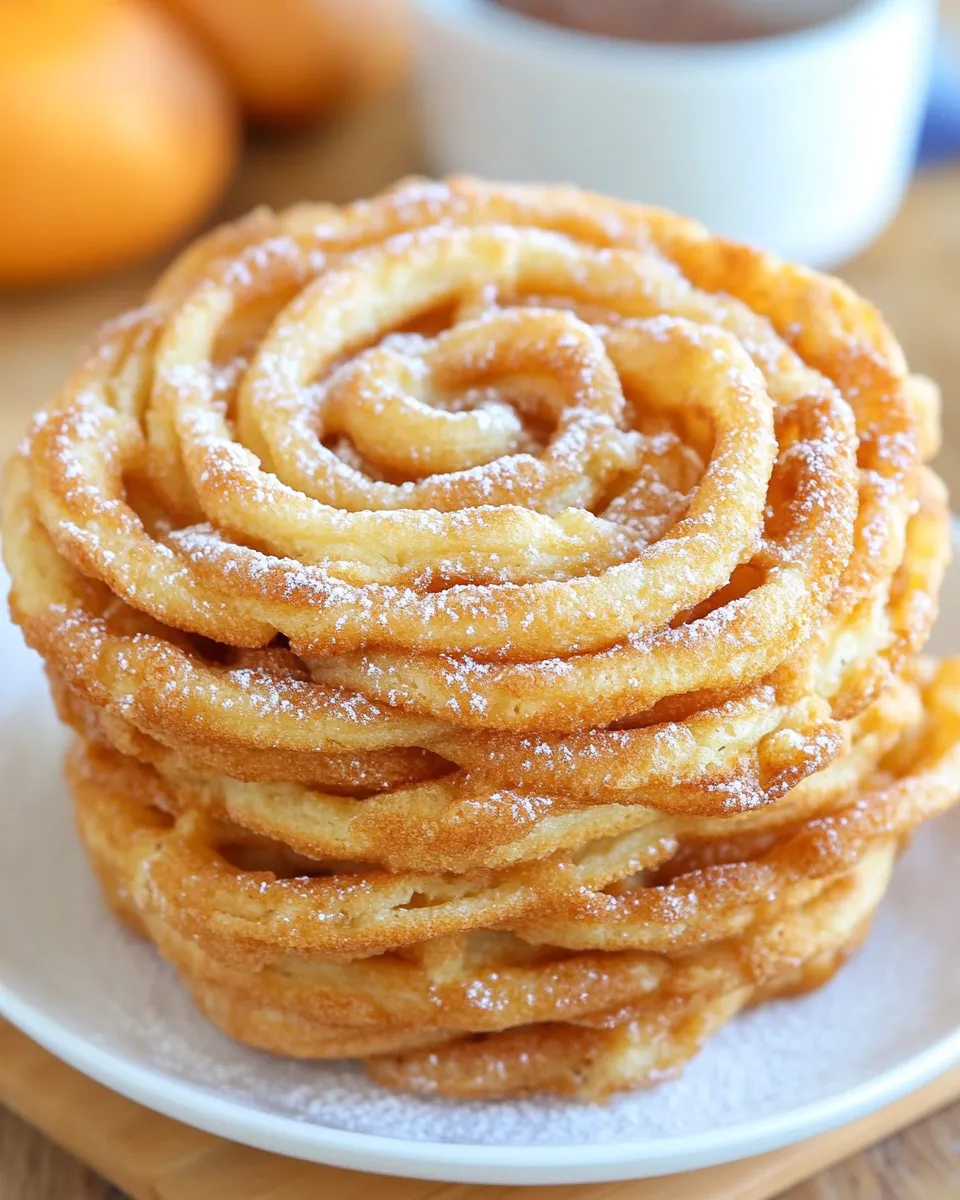
- Sprinkle the finished funnel cakes with powdered sugar and serve immediately.
Why It’s My Go-To
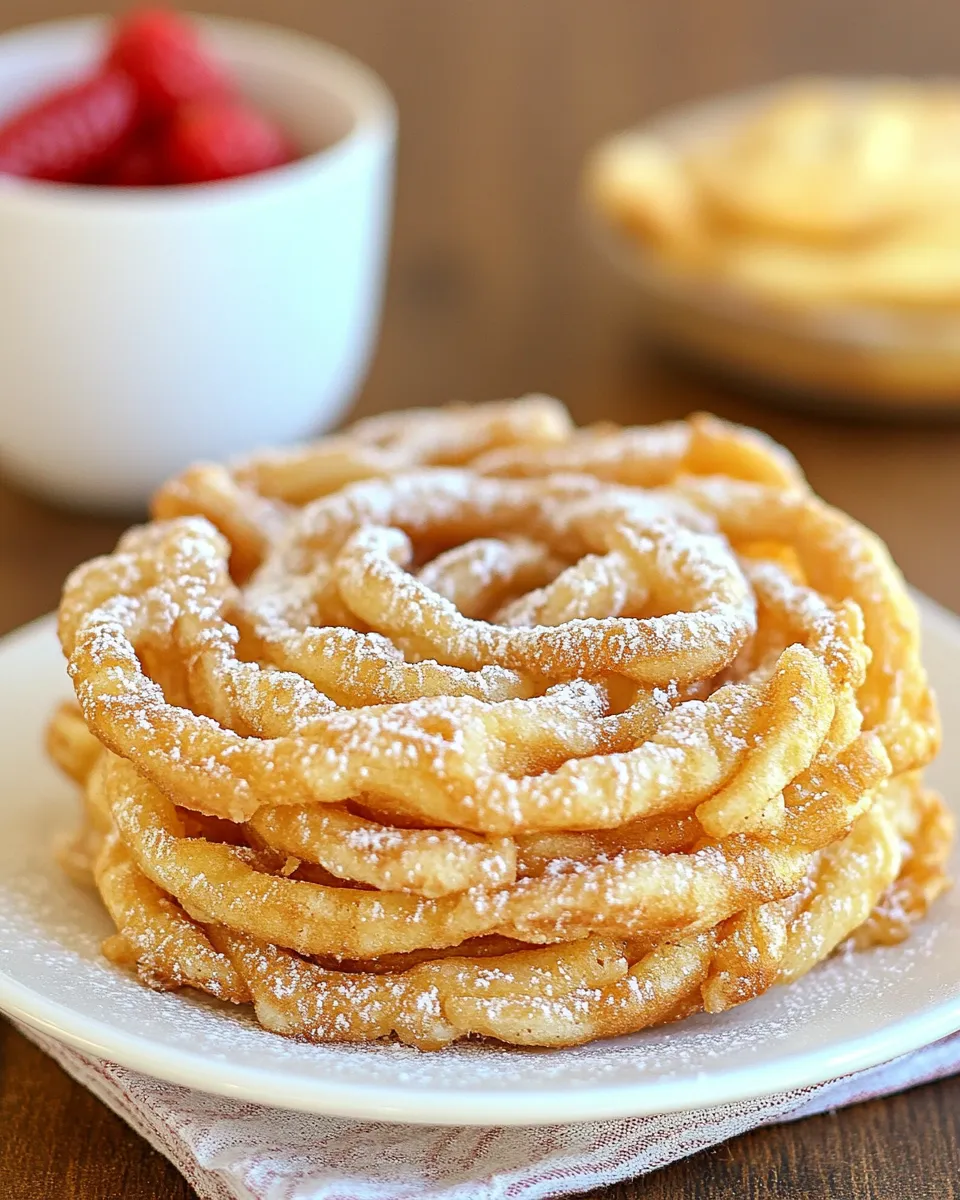
Funnel cakes are fast to execute and deliver big flavor with minimal fuss. The ingredients are pantry staples, and the technique scales: make a couple for two, or a dozen for a small gathering. I reach for this recipe when I want something nostalgic and crowd-pleasing that doesn’t require hours of prep or complicated equipment.
They also reward attention to small details—the temperature of the oil, the thickness of the batter, and the timing—so a little care produces reliably excellent results. That balance of simplicity and control is why I keep this in my regular rotation.
Texture-Safe Substitutions
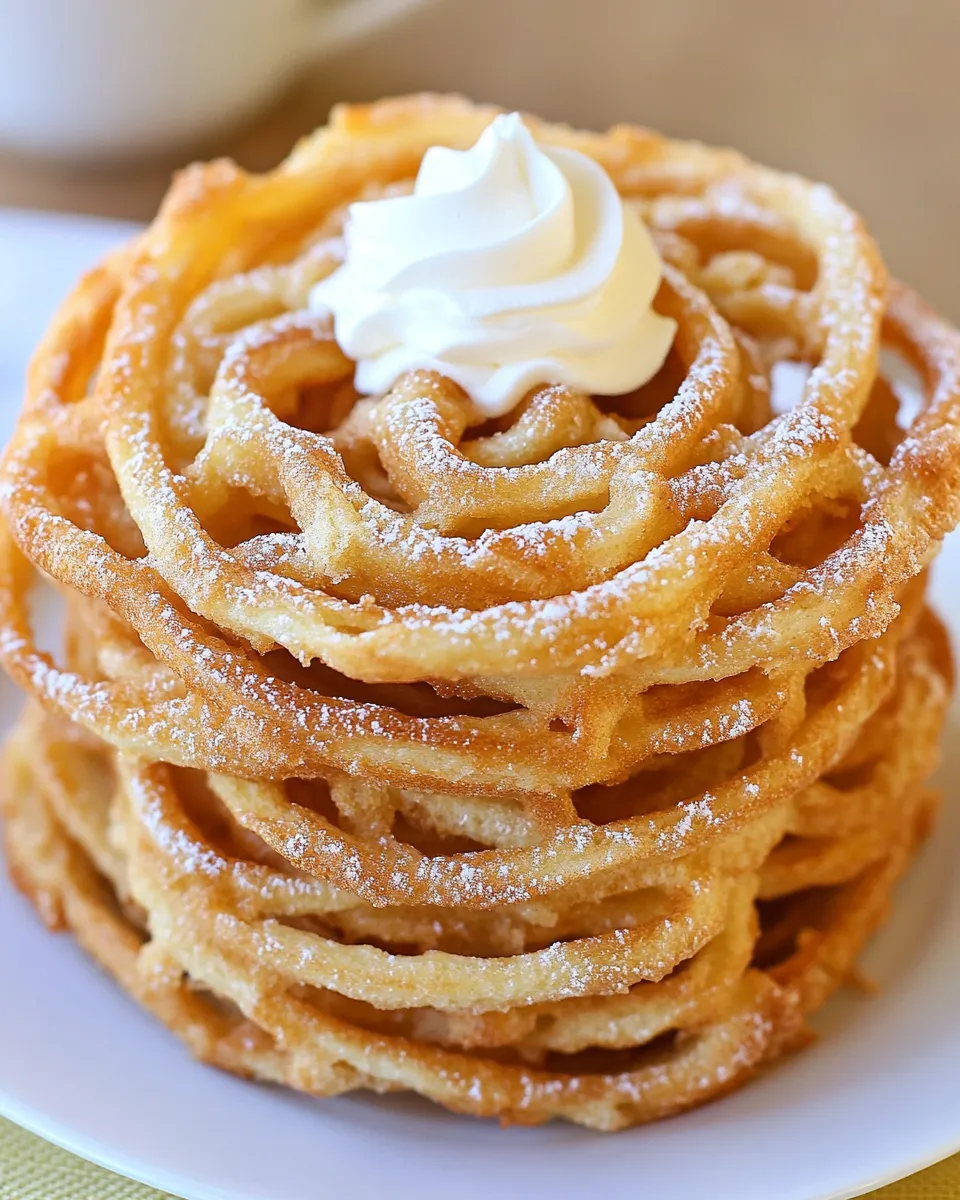
If you need to adjust for texture without changing the recipe’s character, focus on the existing ingredients’ roles rather than swapping out measured components wholesale.
- Milk variations: Using a lower-fat milk will thin the batter slightly and make a lighter mouthfeel; a higher-fat milk or cream will yield a richer, slightly denser cake.
- Butter: Reducing or skipping the butter will make the cakes less tender and flavorful. If you must omit it, accept a slightly leaner texture.
- Flour: Using a different flour will change the structure; stick to all purpose for the same crisp edge and tender body.
- Eggs and leavening: The single egg and teaspoon of baking soda work together for lift—if you alter these, expect changes in puff and internal texture.
Tools of the Trade
Must-haves
- Heavy skillet or cast-iron pan — holds oil temperature steady and gives even browning.
- Instant-read thermometer — the quickest way to ensure oil is 350–375°F (175–190°C).
- Funnel — the classic tool for forming the spiral; use one with a wide mouth.
- Slotted spatula or tongs — for careful flipping and safe removal from oil.
Nice-to-haves
- Fine-mesh sieve for powdered sugar — gives a light, even dusting.
- Paper towels or a wire rack with a baking sheet — for draining and keeping fond crisp.
Easy-to-Miss Gotchas
- Oil temperature swings. If the oil is too cool the cake will absorb oil and get greasy; too hot and the outside will brown before the inside cooks. Keep it steady at 350–375°F (175–190°C).
- Overmixing the batter. Stir until smooth and stop. Overworking develops gluten and yields tougher cakes.
- Adding butter while it’s too hot. Melted butter must cool to warm before adding, or it can affect the batter and begin to cook the egg.
- Filling the funnel too full. A funnel overloaded with batter can be hard to control and may splatter when released. Fill it so you can move it comfortably.
- Not maintaining oil depth. As you fry more cakes, oil level and temperature drop. Top up or allow the oil to recover heat between batches.
Seasonal Adaptations
Funnel cakes are a great canvas for seasonal toppings. Keep the base recipe the same and match toppings to the time of year: bright, fresh fruits in summer; warm, spiced preserves or compotes in fall; lighter dustings and citrus accents in spring. Keeping the technique identical and changing only the finish lets you keep predictable texture while celebrating seasonal flavors.
Chef’s Rationale
Each ingredient and step exists to balance flavor, structure, and fry performance. The milk gives the batter fluidity so it can be poured through a funnel. The egg binds and helps the interior set. Baking soda creates small gas bubbles under high heat to puff the batter while frying, producing the airy pockets that make funnel cakes feel light. Cooling the melted butter before adding prevents scrambled egg bits and keeps the emulsion intact. Finally, frying at the stated temperature range ensures rapid set and crisping of the exterior without overcooking inside.
Storing Tips & Timelines
Funnel cakes are best the moment they’re fried—crispy edges don’t stay crisp long. If you have leftovers, store them in a single layer on a sheet pan at room temperature for up to a few hours. For longer storage, let them cool completely, then wrap loosely and refrigerate for up to 24 hours.
Reheat in a 350°F (175°C) oven or toaster oven for 4–6 minutes to recover some crispness. Avoid the microwave unless you don’t mind a softer result; microwaving will make them soggy.
Questions People Ask
- Can I make the batter ahead of time? You can mix batter an hour ahead and keep it covered in the refrigerator. Bring it to room temperature and stir gently before frying. Avoid making it too far in advance; the baking soda’s effectiveness diminishes over time.
- What oil should I use? Use a neutral, high-smoke-point oil like vegetable or canola for consistent frying and neutral flavor.
- Why baking soda and not baking powder? Baking soda reacts quickly and helps create immediate lift in the hot oil. Baking powder contains acid salts and may change the batter’s flavor profile and timing.
- How do I get consistent shapes? Practice. Hold the funnel closer to the oil and move in steady circular motions. A squeeze bottle or pastry bag can substitute for a funnel if you prefer more control.
The Takeaway
Funnel cakes are an uncomplicated, high-reward treat. With the ingredients and steps above, you can make crisp, lacy cakes at home that taste like a fairground favorite. Pay attention to oil temperature, keep the batter just mixed, and cool melted butter before adding. The rest is rhythm: pour, fry, flip, dust, and serve. Enjoy them hot and share them with people who appreciate a little nostalgia on a plate.
Homemade Funnel Cakes
Ingredients
Ingredients
- ?2 cupsmilk
- ?1 egg
- ?1 teaspoonpure vanilla extract
- ?2 cupsall purpose flour
- ?1 teaspoonsalt
- ?1 teaspoonbaking soda
- ?1 tablespoongranulated sugar
- ?4 tablespoonsunsalted buttermelted
- ?powdered sugarfor topping
- ?oilfor frying
Instructions
Instructions
- Whisk the milk, egg, vanilla extract, and granulated sugar together in a large bowl until combined.
- In a separate bowl, whisk the all purpose flour, salt, and baking soda until evenly mixed.
- Pour the dry ingredients into the wet ingredients and stir until the batter is smooth and free of large lumps; do not overmix.
- Add the unsalted butter (melted) once it has cooled to warm (not hot). Stir gently until just incorporated.
- Pour oil for frying into a heavy skillet to a depth of about 1–2 inches and heat to 350–375°F (175–190°C), or until a small drop of batter sizzles and rises immediately.
- Hold a funnel over the hot oil and fill it with batter. Use your finger to block the funnel tip while positioning it over the oil. When ready, release your finger and move the funnel in a circular/spiral motion to form a single spiral or desired shape.
- Fry each funnel cake until puffed and golden brown on the first side (about 1–2 minutes), then flip carefully and cook the other side until golden brown.
- Transfer the cooked funnel cake to paper towels to drain briefly, then repeat with the remaining batter, maintaining oil temperature.
- Sprinkle the finished funnel cakes with powdered sugar and serve immediately.
Equipment
- funnel
- heavy skillet
- Paper Towels