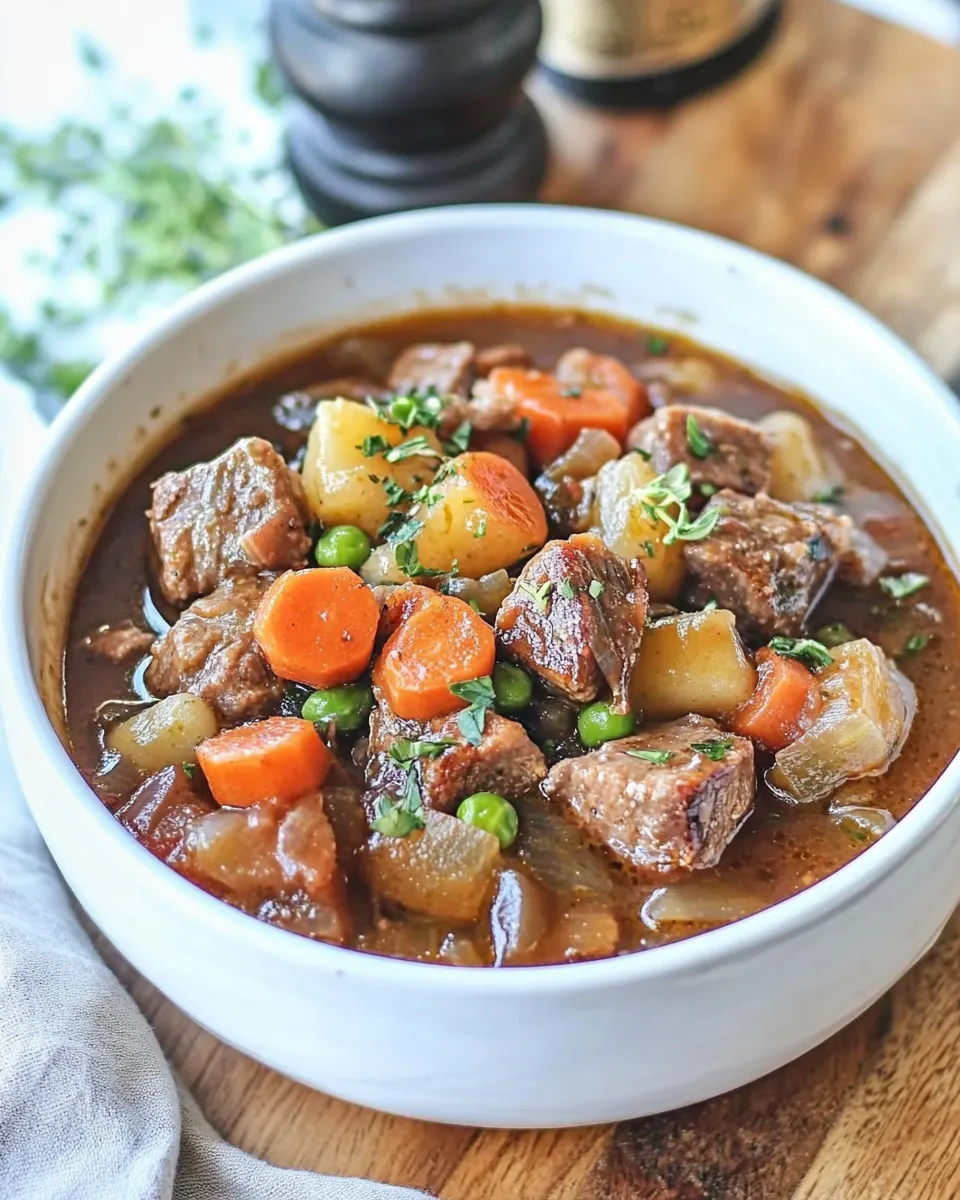
I make this Irish Lamb Stew when I want something honest and unfussy: a one-pot dinner that fills the kitchen with a warm, savory scent and renders fork-tender lamb. It’s the kind of recipe I reach for on a chilly evening, when chores are done and all that’s left is to slow-cook comfort. The technique is straightforward and the payoff is rich—no complicated sauce reductions or fancy ingredients, just good stock, browned meat, and slow oven time.
This recipe is forgiving in all the sensible ways: you brown in batches, you don’t overwork the potatoes, and you let the oven do the heavy lifting. The result is a stew with a depth of flavor from the browned bits in the pot, vegetables that hold their shape, and lamb so tender it practically falls apart. Below you’ll find everything from a clear ingredient list to step-by-step directions, practical swaps, and storage notes—written to make the process simple and satisfying.
Ingredients at a Glance
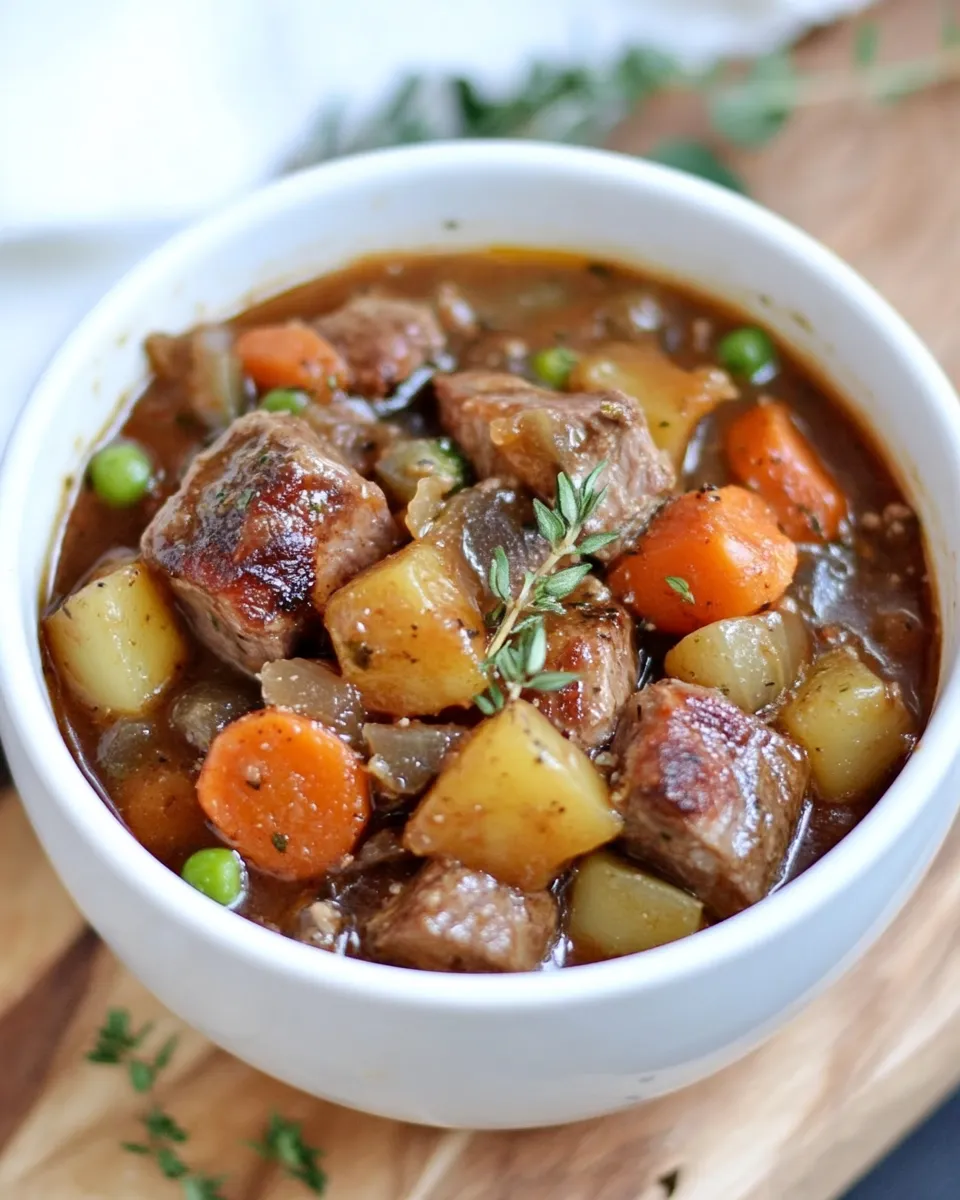
- 3 tablespoons extra virgin olive oil — for browning the lamb and building flavor in the pot.
- 2 pounds lamb cut into chunks (see notes below) — the main protein; choose pieces with some connective tissue for best tenderness.
- 3 tablespoons all purpose flour — light coating to help brown the lamb and thicken the stew slightly.
- 3 large carrots (peeled and cut into thick slices) — sweet, hearty vegetables that hold up during long cooking.
- 3 medium onions (peeled and cut into quarters) — build savory depth as they soften and mingle with the fond.
- Kosher salt and freshly ground black pepper — essential for seasoning at multiple stages; use to taste.
- 2 cups lamb or chicken stock (broth) — the cooking liquid; either works, and it’s the base of the stew’s flavor.
- 8 medium red or white potatoes (peeled and halved) — they thicken the stew a bit and provide a comforting texture.
- 2 sprigs fresh thyme — subtle herbal note that steeps into the broth during baking.
- 1 tablespoon chopped fresh Italian parsley — bright finishing herb to lift the stew at the end.
- 1 tablespoon chopped chives — gentle oniony finish sprinkled just before serving.
From Start to Finish: Irish Lamb Stew
- Preheat the oven to 325°F (160°C). Gather a Dutch oven or a flameproof casserole with a lid.
- Pat the lamb chunks dry with paper towels if needed. Put the 3 tablespoons all-purpose flour in a shallow bowl or plate and toss the lamb in the flour until evenly coated. Season the floured lamb lightly with kosher salt and freshly ground black pepper.
- Heat 3 tablespoons extra virgin olive oil in the Dutch oven over medium-high heat until shimmering.
- Working in batches to avoid crowding, add the lamb to the hot oil and brown on all sides, turning as needed (about 4–6 minutes per batch). Transfer browned lamb to a plate and set aside. Wipe out excess oil only if the pan is smoking; otherwise leave the fond (browned bits) in the pot.
- Add the 3 large peeled and thickly sliced carrots and the 3 peeled and quartered medium onions to the pot. Stir and cook over medium heat for 3–5 minutes, scraping the bottom of the pot to loosen browned bits. Season the vegetables with salt and pepper to taste.
- Return the browned lamb and any accumulated juices to the pot. Pour in 2 cups lamb or chicken stock and stir to combine, again scraping up any browned bits from the bottom of the pot. Bring the mixture to a gentle boil on the stovetop.
- Add the 8 peeled and halved medium potatoes to the pot. Season again with salt and pepper to taste. Place the 2 sprigs fresh thyme on top of the stew.
- Cover the Dutch oven with its lid and transfer it to the preheated oven. Bake for about 2 hours, or until the lamb is very tender and the potatoes are cooked through.
- Remove the pot from the oven, discard the thyme sprigs, taste and adjust seasoning if needed, then sprinkle with 1 tablespoon chopped fresh Italian parsley and 1 tablespoon chopped chives before serving.
The Upside of Irish Lamb Stew
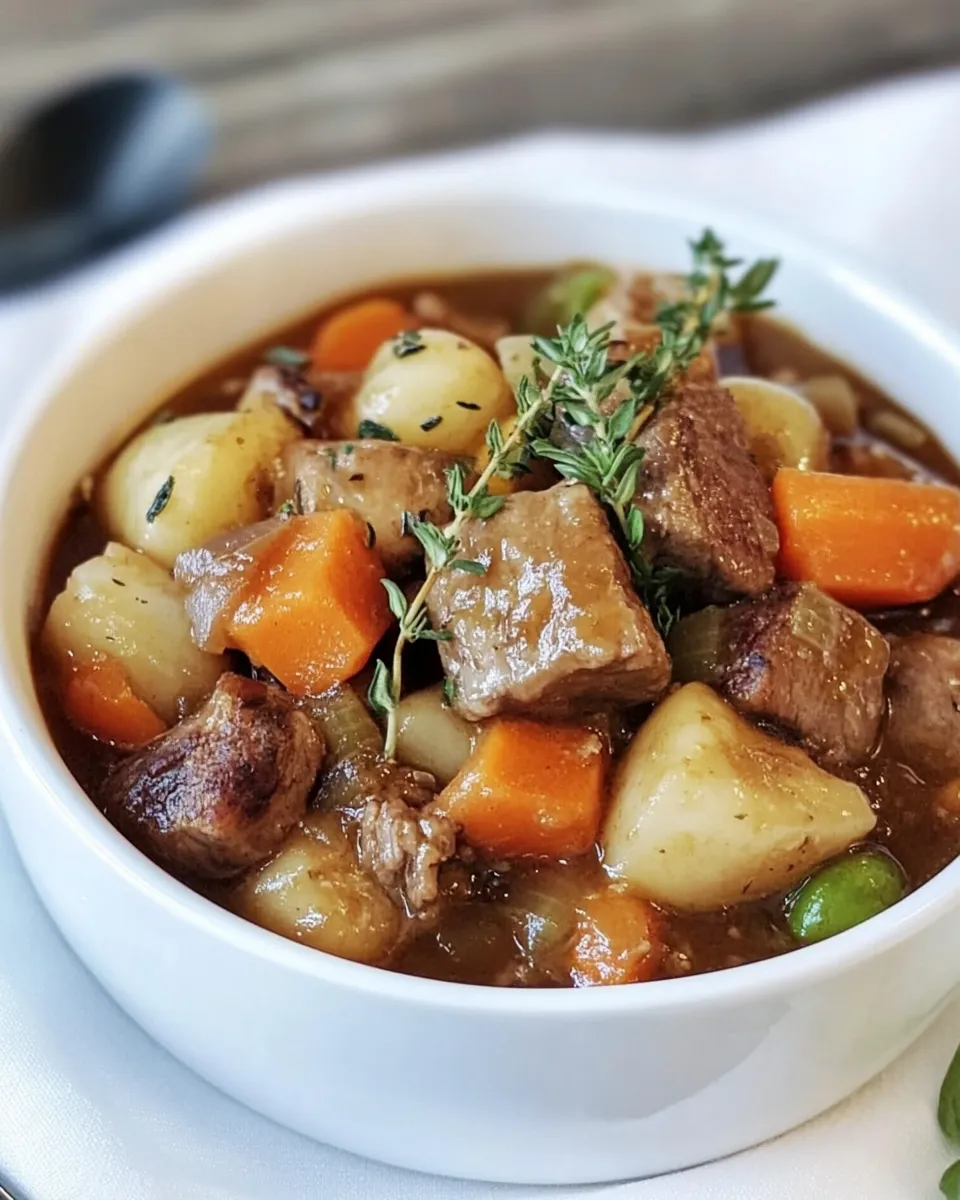
Irish Lamb Stew is a practical, comforting dish with several strong advantages. It’s truly a one-pot meal: meat, vegetables, and sauce cook together, which means lower cleanup and a cohesive flavor profile. The slow oven time turns inexpensive cuts of lamb into something tender and luxurious, so it’s a cost-effective way to feed people well. Because the recipe is simple—oil, flour, stock, root vegetables—the core technique is accessible to cooks of any level.
Another upside: make-ahead convenience. You can cook it a day in advance and either reheat gently or let the flavors rest and deepen overnight in the refrigerator. It’s also flexible in serving: spoon it into bowls with crusty bread, serve over buttered mashed potatoes for extra comfort, or plate it alongside steamed greens for a lighter contrast. The final sprinkle of parsley and chives brightens the whole pot and keeps the dish from feeling overly heavy.
Easy Ingredient Swaps
- Use either lamb or chicken stock — both are listed in the recipe and will work; lamb stock pushes the flavor further toward gamey richness, chicken stock keeps it milder.
- Choose red or white potatoes — the recipe lists both; red potatoes hold shape a bit better, white potatoes will break down a touch more and thicken the broth.
- Adjust the fresh herbs: the recipe calls for fresh thyme, Italian parsley, and chives — you can vary which finishing herb to emphasize since both parsley and chives are included.
- For browning and fat, stick with the extra virgin olive oil specified — it’s in the ingredient list and creates the fond that flavors the stew.
Equipment Breakdown
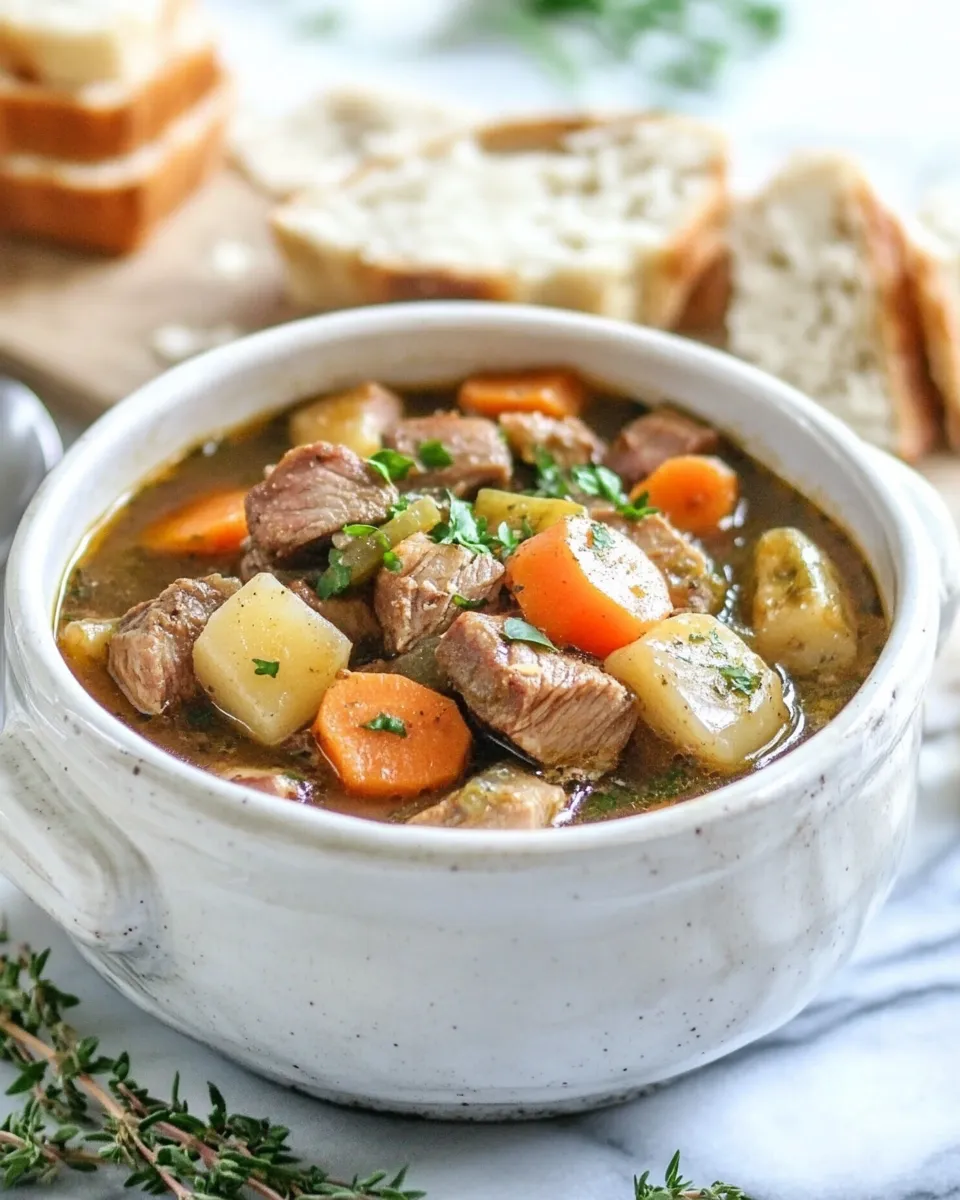
- Dutch oven or flameproof casserole with a lid — essential for browning on the stovetop and finishing in the oven as the recipe directs.
- Oven and stovetop — preheat to 325°F (160°C) and bring the pot to a gentle boil on the counter before baking.
- Shallow bowl or plate — for the 3 tablespoons of all-purpose flour used to coat the lamb.
- Paper towels — to pat the lamb dry, which helps the flour adhere and promotes better browning.
- Simple tools — a wooden spoon or spatula for scraping the fond and a heatproof spoon for serving.
Steer Clear of These
- Crowding the pan. Adding too much lamb at once drops the pan temperature and prevents proper browning. Brown in batches as instructed.
- Removing the fond unnecessarily. The browned bits stuck to the pot are flavor—don’t wipe them away unless the pan is actually smoking and you need to control the heat.
- Under-seasoning early and then panicking later. Season along the way (after browning, with the vegetables, and again before serving) rather than dumping a lot of salt at the end.
- Skipping the oven time. The gentle, steady heat of the oven is what makes connective tissue melt and gives the potatoes and carrots time to become tender without falling apart.
Spring–Summer–Fall–Winter Ideas
- Spring: Keep the stew but serve it with a side salad of young greens dressed simply—parsley and chives from the recipe echo the brightness of the season.
- Summer: Make the stew but serve smaller portions as part of a casual buffet; the fresh herbs at the end keep it from feeling too heavy in warmer months.
- Fall: This is the stew’s sweet spot. Serve with crusty bread or buttered parsnips, and lean into the heartiness—plenty of carrots and potatoes do well now.
- Winter: Let the stew be the centerpiece. Double down on the slow-cooked, warming elements and offer mashed potatoes or dense soda bread to sop up the broth.
Cook’s Commentary
Browning is not optional if you want depth. Take the time to pat the lamb dry, dust it with the flour, and brown it in batches. That fond that forms is the backbone of the stew’s flavor; when you deglaze with stock and scrape those bits up, they dissolve into the liquid and create a rich base. Leaving a little oil behind (unless the pan smokes) is intentional; it helps cook the vegetables and carries flavor.
I like the texture contrast the recipe aims for: onions and carrots that have softened but still keep shape, and potatoes that are cooked through without becoming rubble. The 2-hour oven rest is forgiving—check the lamb after 90 minutes if your pieces are small, but the general rule is that longer, gentler heat yields superior tenderness. Finish with parsley and chives right before serving: the heat will have already done its work, and the fresh herbs revive the dish.
A quick note on seasoning: because stock can vary in saltiness, I season in stages rather than at once. Taste at the end and add a final pinch if needed. If the stew tastes a touch flat after resting, a squeeze of lemon or a splash of vinegar brightens it—but that’s optional and not part of the base recipe.
Keep It Fresh: Storage Guide
- Refrigerator: Cool the stew to room temperature within two hours, then store in an airtight container for up to 3–4 days. When reheating, do so gently on the stovetop to avoid breaking the potatoes down further.
- Freezer: Freeze in airtight containers or heavy-duty freezer bags for up to 2–3 months. Thaw overnight in the refrigerator before reheating slowly.
- Reheating tips: Add a splash of stock or water if the stew seems thick after chilling. Reheat on low to medium heat, stirring occasionally until warmed through.
Quick Questions
- What cut of lamb should I use? The ingredient list specifies 2 pounds of lamb cut into chunks—your best bet is a cut with connective tissue (shoulder or similar) because long, slow cooking turns that collagen into silk. If your butcher labeled it differently, choose pieces suitable for stewing.
- Can I use chicken stock instead of lamb stock? Yes. The ingredient list already allows either lamb or chicken stock; lamb stock gives a richer, deeper flavor, while chicken stock keeps things lighter.
- Do I have to peel the potatoes? The recipe calls for peeled potatoes, halved—this produces a smoother texture and a clearer finish to the broth. If you prefer the skin on, you can leave it, but that changes the mouthfeel slightly.
- Can I make this on the stovetop only? The recipe is designed for a gentle oven finish, which provides even, surrounding heat. If you must use the stovetop, keep the pot at a very low simmer, cover tightly, and check tenderness regularly, though timing may vary.
Let’s Eat
Serve this stew straight from the pot with an extra sprinkle of parsley and chives. A bowl of warm stew, some buttered bread or mashed potatoes, and a simple green vegetable is all you need for a comforting, balanced meal. If you’ve made it ahead, reheat gently and give a quick seasoning check before serving—sometimes a small pinch of salt or a final sprinkle of herbs is all it needs to shine. Enjoy the slow, simple pleasure of a good Irish Lamb Stew.
Irish Lamb Stew
Ingredients
Ingredients
- 3 tablespoonsextra virgin olive oil
- 2 poundslamb cut into chunks see notes below
- 3 tablespoonsall purpose flour
- 3 largecarrots peeled and cut into thick slices
- 3 mediumonions peeled and cut into quarters
- Kosher salt and freshly ground black pepper
- 2 cupslamb or chicken stock broth
- 8 mediumred or white potatoes peeled and halved
- 2 sprigsfresh thyme
- 1 tablespoonchopped fresh Italian parsley
- 1 tablespoonchopped chives
Instructions
Instructions
- Preheat the oven to 325°F (160°C). Gather a Dutch oven or a flameproof casserole with a lid.
- Pat the lamb chunks dry with paper towels if needed. Put the 3 tablespoons all-purpose flour in a shallow bowl or plate and toss the lamb in the flour until evenly coated. Season the floured lamb lightly with kosher salt and freshly ground black pepper.
- Heat 3 tablespoons extra virgin olive oil in the Dutch oven over medium-high heat until shimmering.
- Working in batches to avoid crowding, add the lamb to the hot oil and brown on all sides, turning as needed (about 4–6 minutes per batch). Transfer browned lamb to a plate and set aside. Wipe out excess oil only if the pan is smoking; otherwise leave the fond (browned bits) in the pot.
- Add the 3 large peeled and thickly sliced carrots and the 3 peeled and quartered medium onions to the pot. Stir and cook over medium heat for 3–5 minutes, scraping the bottom of the pot to loosen browned bits. Season the vegetables with salt and pepper to taste.
- Return the browned lamb and any accumulated juices to the pot. Pour in 2 cups lamb or chicken stock and stir to combine, again scraping up any browned bits from the bottom of the pot. Bring the mixture to a gentle boil on the stovetop.
- Add the 8 peeled and halved medium potatoes to the pot. Season again with salt and pepper to taste. Place the 2 sprigs fresh thyme on top of the stew.
- Cover the Dutch oven with its lid and transfer it to the preheated oven. Bake for about 2 hours, or until the lamb is very tender and the potatoes are cooked through.
- Remove the pot from the oven, discard the thyme sprigs, taste and adjust seasoning if needed, then sprinkle with 1 tablespoon chopped fresh Italian parsley and 1 tablespoon chopped chives before serving.
Equipment
- Dutch oven or flameproof casserole with lid
- shallow bowl or plate
- Paper Towels
- Oven