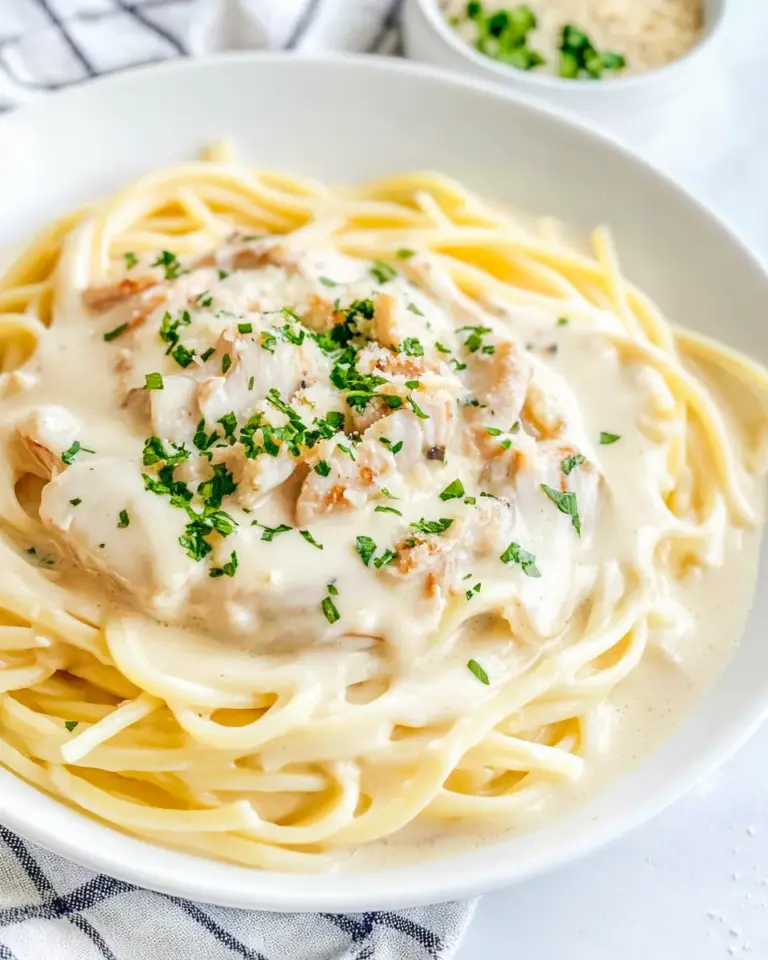
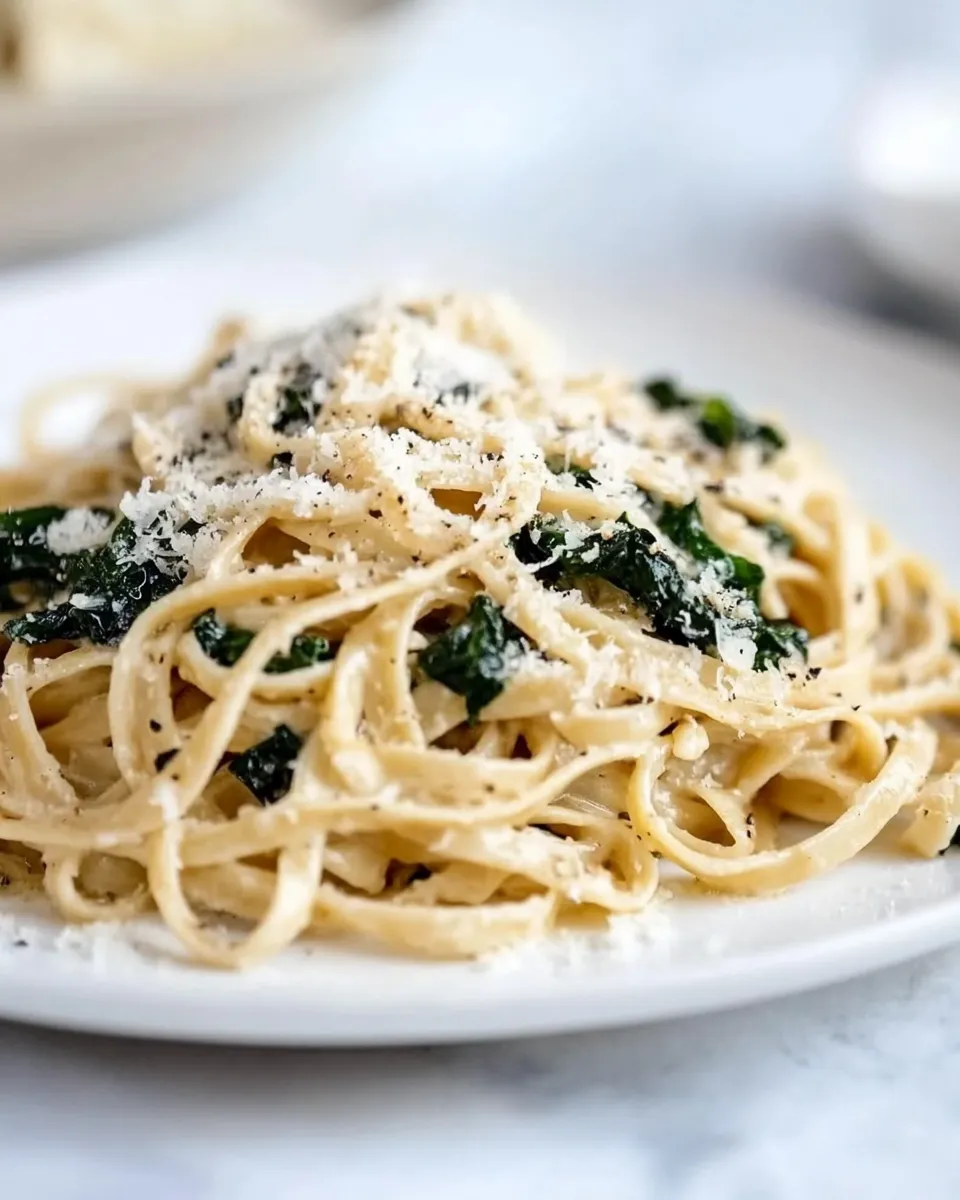
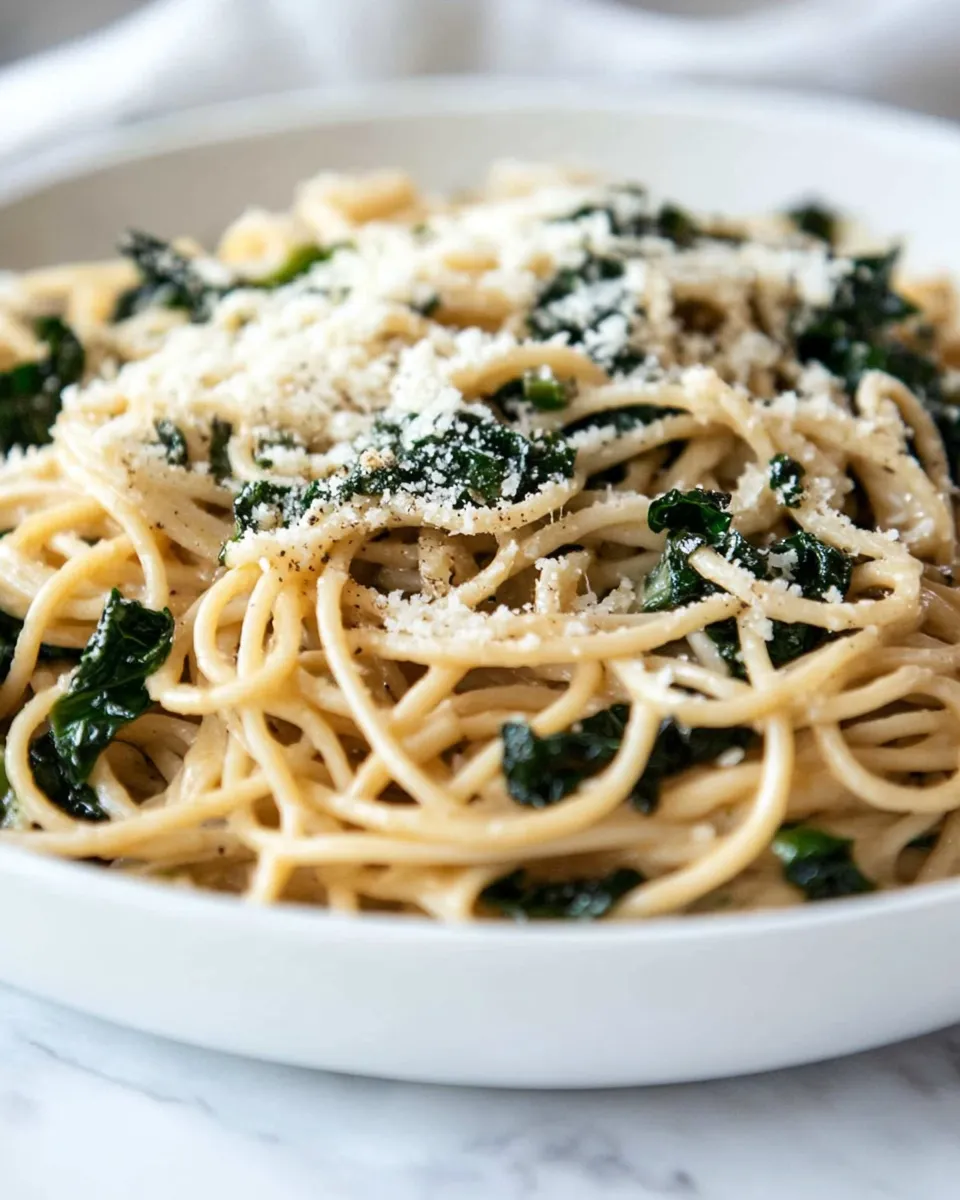
Simple, honest, and surprisingly comforting — Kale Cacio e Pepe is my weekday go-to when I want something quick that still tastes like I cared. This recipe takes the classic Roman pairing of cheese and pepper and gives it a leafy, nutrient-packed boost with kale. It cooks fast, cleans up fast, and eats faster.
I wrote this version to be practical: minimal ingredients, straightforward technique, and a few small gestures to make the sauce silky without cream. The result is bright green kale folded into peppery, cheesy strands of whole wheat spaghetti — rustic, satisfying, and a little bit elegant.
Ingredient Checklist
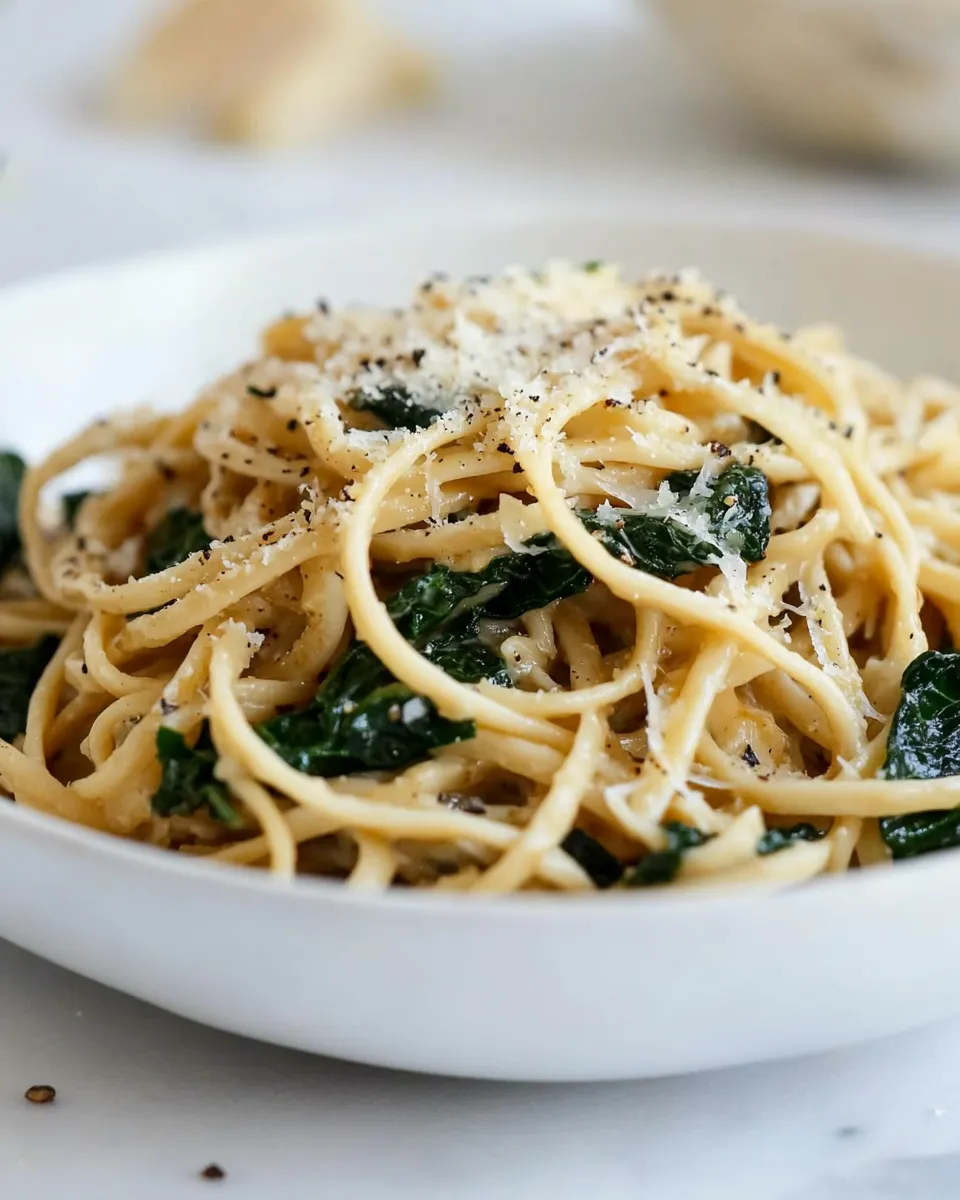
- 1/2 pound whole wheat spaghetti — provides a nutty backbone and holds sauce well; cook to al dente per package directions.
- 4 tablespoons unsalted butter — builds the fat base and carries the flavor; added in stages for a glossy finish.
- 1 teaspoon freshly cracked black pepper — the star spice for cacio e pepe; toasts briefly to bloom aroma.
- 1 large bunch of kale stems removed and chopped — adds texture, color, and nutrition; stems removed so it softens evenly.
- 3/4 cup finely grated parmesan cheese — one of the two cheeses that create the creamy coating; grate finely so it melts smoothly.
- 1/4 cup finely grated pecorino cheese — adds sharp, salty depth; combine with parmesan for balance.
- parmesan shavings for topping — optional finish for texture and presentation; add just before serving.
Make Kale Cacio e Pepe: A Simple Method
- Bring a large pot of salted water to a boil. Add 1/2 pound whole wheat spaghetti and cook according to package directions until al dente. Before draining, reserve 1 cup of the starchy pasta water, then drain the pasta.
- While the pasta cooks, heat a large skillet over medium heat. Add 2 tablespoons unsalted butter and let it melt.
- Stir in 1 teaspoon freshly cracked black pepper and toast in the melted butter for about 60 seconds, stirring so the pepper becomes fragrant.
- Add the chopped kale (stems removed) to the skillet and stir to coat with the butter and pepper. Cook until the kale begins to wilt and is bright green, about 2–3 minutes.
- Pour in about 3/4 cup of the reserved pasta water and bring the mixture to a gentle simmer.
- Add the remaining 2 tablespoons unsalted butter and the drained pasta to the skillet. Toss the pasta, kale, butter, and water together until combined and the kale continues to soften.
- Reduce the heat to low. Stir in 3/4 cup finely grated parmesan cheese and 1/4 cup finely grated pecorino cheese, tossing continuously until the cheeses melt and form a creamy sauce that coats the pasta. Add more of the reserved pasta water as needed to loosen the sauce.
- Serve immediately topped with parmesan shavings and additional freshly cracked black pepper.
Why It Deserves a Spot
This dish earns a permanent spot in my rotation for three practical reasons: speed, flavor, and balance. It takes about as long as your pasta needs to cook, yet it delivers a layered, peppery cheese sauce that feels indulgent without heavy cream. Whole wheat spaghetti brings a nutty counterpoint that pairs very well with the salty pecorino and sweet, grassy kale.
Beyond taste, Kale Cacio e Pepe is flexible. It sits nicely between weeknight simplicity and a weekend worthy plate. Feed one, two, or four — scaling is intuitive. The technique also teaches a simple but important cooking principle: starch, fat, and finely grated cheese are all you need to build an emulsion-like sauce if you respect timing and temperature.
Finally, it’s honest food. The ingredients are short, familiar, and easy to source. If you’re trying to eat more greens without complicated prep, this is a delicious, unfussy way to do it.
Dairy-Free/Gluten-Free Swaps
- Dairy-Free — Use a high-quality dairy-free butter or extra-virgin olive oil in place of the butter. Replace the cheeses with a mix of nutritional yeast for cheesiness and a plant-based parmesan alternative; texture won’t be identical, but you’ll keep the savory backbone.
- Gluten-Free — Swap the whole wheat spaghetti for your favorite gluten-free spaghetti. Cook times vary, so follow the package and reserve at least 1 cup of the cooking water just as you would here.
- Both — Use gluten-free pasta plus dairy-free butter and a blend of nutritional yeast and store-bought vegan parmesan shavings. Add a touch more starchy pasta water to coax a creamier sauce.
Before You Start: Equipment
- Large pot — for boiling pasta and providing enough room to avoid over-starchy water.
- Large skillet — wide surface for tossing pasta and kale with butter and water so everything combines evenly.
- Box grater — for finely grating parmesan and pecorino; pre-grated cheeses won’t melt as smoothly.
- Wooden spoon or tongs — tongs are helpful for tossing spaghetti; a spoon helps scrape cheese into the sauce.
- Measuring cups/spoons — for accuracy on butter, cheese, and water.
Avoid These Mistakes
- Not reserving enough pasta water. The starchy liquid is the glue that binds the cheese and butter into a silky sauce. Reserve at least 1 cup as the recipe states; you’ll likely use most of it.
- Using pre-grated cheese. It often contains anti-caking agents that prevent smooth melting. Finely grate fresh parmesan and pecorino for the creamiest coating.
- Too-high heat when adding cheese. If the pan is hot, the cheese can seize and clump. Reduce to low before adding the cheeses and toss continuously.
- Overcooking the kale. Kale should be bright and just wilted, not mushy. Add it to the buttered pan and let it soften for 2–3 minutes only.
- Skimping on pepper. Cacio e pepe depends on bold black pepper. Toasting it in butter briefly unlocks much more aroma than adding it raw.
Make It Your Way
Customization keeps this dish interesting. Here are simple, tested ways to change the mood of the plate without changing technique.
- Protein boost: Add shredded rotisserie chicken or sautéed shrimp at the end. Fold them in gently to warm through without breaking the sauce.
- Crunch element: Top with toasted breadcrumbs or chopped toasted almonds for texture contrast. Toast the crumbs in a separate pan with a touch of butter or oil until golden.
- Brighten it up: Finish with a squeeze of lemon or a few lemon zest threads. The acid lifts the richness without overwhelming the pepper-cheese profile.
- Herb lift: Stiff herbs like oregano won’t pair as well, but a scattering of chopped parsley at the end adds freshness and color.
- Mushroom option: Sauté sliced cremini or shiitake before adding kale. Cook them until they release their liquid and brown; their umami complements the cheeses.
What Could Go Wrong
When a sauce separates or turns grainy, it’s almost always a temperature, timing, or moisture issue. If the cheese clumps, remove the pan from heat and whisk in a splash more reserved pasta water gradually. The water cools the mixture and reintroduces the starch needed to bind fats and proteins.
If the dish tastes flat, check salt and pepper: whole wheat pasta and kale can mute flavors, so a final sprinkle of flaky salt or another crack of black pepper often revives the plate. If it feels thin, simmer for 30–60 seconds to concentrate, or add a small knob of butter to enrich it.
If kale is undercooked, return the pan to medium heat with a tablespoon of water and cover for a minute; steam will finish the leaves quickly without over-softening the pasta.
Keep-It-Fresh Plan
Storage is straightforward. Cool leftovers to room temperature, transfer to an airtight container, and refrigerate for up to 3 days. The sauce will firm up as the butter and cheese solidify.
To reheat, add a splash of water (or milk for creaminess) to the pasta and warm gently in a skillet over low heat, tossing until the sauce loosens. Avoid the microwave if possible; a pan preserves texture better and helps the sauce come back together.
If you plan to meal-prep, cook the pasta slightly under al dente (1–2 minutes less than package directions) so it doesn’t go mushy after reheating. Store kale mixed in or separately if you prefer it fresher when reheated.
Common Questions
- Can I use regular spaghetti? Yes. Whole wheat adds flavor and nutrition, but regular semolina spaghetti works fine. Cook according to package directions and reserve the same amount of pasta water.
- Why two cheeses? Parmesan brings nuttiness and a creamy melt, while pecorino adds sharp, salty tang. Together they create a more rounded, traditional cacio e pepe profile.
- How fine should the cheese be? Finely grated is best — it melts quickly and incorporates smoothly. Coarser shreds can make a clumpy sauce.
- Can I substitute spinach? Yes. Spinach wilts faster and is milder; reduce the cooking time by a minute and proceed the same way.
- Do I need to toast the pepper? Toasting briefly in butter revives the essential oils and gives a deeper pepper flavor. Skip this and you’ll have a flatter pepper profile.
- What if my sauce splits? Take the skillet off heat and whisk in warm reserved pasta water gradually until it comes back together. Low heat and gradual mixing are key.
Let’s Eat
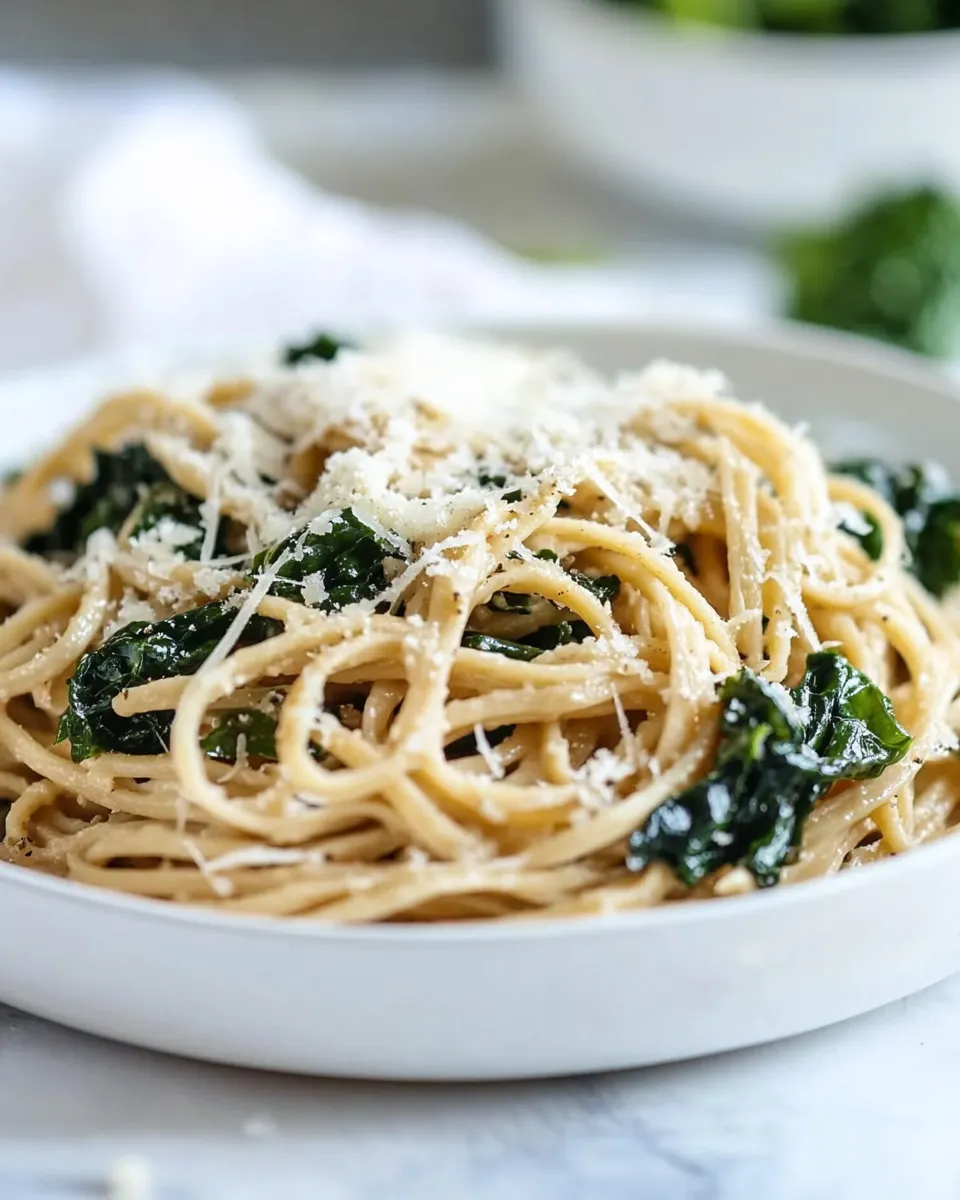
Serve Kale Cacio e Pepe hot, straight from the skillet. Add a few parmesan shavings and a final crack of black pepper on top. It looks simple, and it is — but it tastes thoughtful. Pair it with a crisp green salad or roasted vegetables and a glass of something bright. I like to keep a loaf of crusty bread nearby to mop up any leftover sauce; the bread will thank you.
Make it tonight: it’s fast, forgiving, and proves that a handful of good ingredients and a little attention to technique can make weeknight dinner feel like something special.

Kale Cacio e Pepe.
Ingredients
Ingredients
- 1/2 poundwhole wheat spaghetti
- 4 tablespoonsunsalted butter
- 1 teaspoonfreshly cracked black pepper
- 1 large bunch of kalestems removed and chopped
- 3/4 cupfinely grated parmesan cheese
- 1/4 cupfinely grated pecorino cheese
- parmesan shavings for topping
Instructions
Instructions
- Bring a large pot of salted water to a boil. Add 1/2 pound whole wheat spaghetti and cook according to package directions until al dente. Before draining, reserve 1 cup of the starchy pasta water, then drain the pasta.
- While the pasta cooks, heat a large skillet over medium heat. Add 2 tablespoons unsalted butter and let it melt.
- Stir in 1 teaspoon freshly cracked black pepper and toast in the melted butter for about 60 seconds, stirring so the pepper becomes fragrant.
- Add the chopped kale (stems removed) to the skillet and stir to coat with the butter and pepper. Cook until the kale begins to wilt and is bright green, about 2–3 minutes.
- Pour in about 3/4 cup of the reserved pasta water and bring the mixture to a gentle simmer.
- Add the remaining 2 tablespoons unsalted butter and the drained pasta to the skillet. Toss the pasta, kale, butter, and water together until combined and the kale continues to soften.
- Reduce the heat to low. Stir in 3/4 cup finely grated parmesan cheese and 1/4 cup finely grated pecorino cheese, tossing continuously until the cheeses melt and form a creamy sauce that coats the pasta. Add more of the reserved pasta water as needed to loosen the sauce.
- Serve immediately topped with parmesan shavings and additional freshly cracked black pepper.
Notes
slightly adapted from
bon appetit