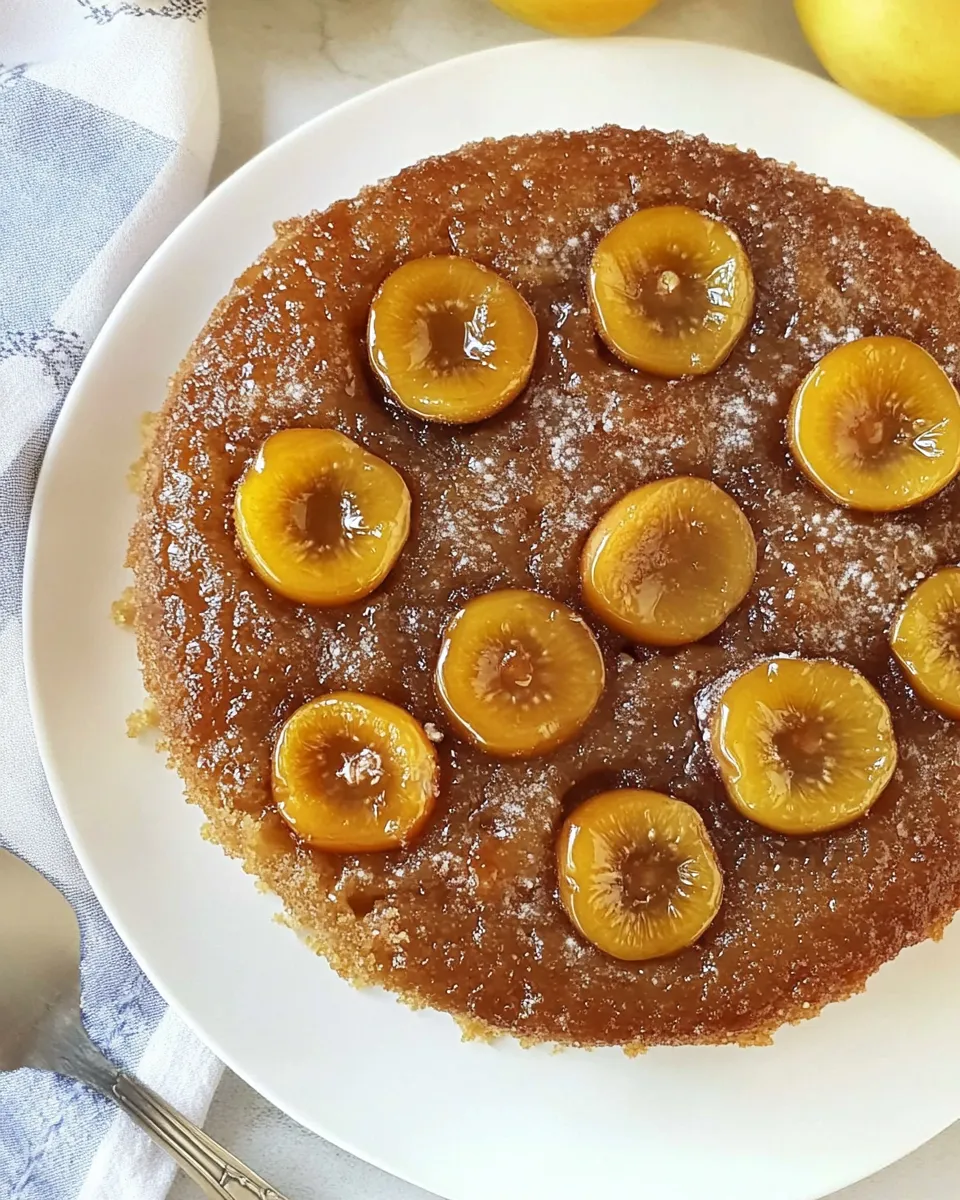
There’s something quietly joyful about a simple cake that leans on seasonal fruit. Loquats are one of those treats: sweet, floral, a bit tangy, and perfect when you want a dessert that feels both homey and a little unexpected. This upside-down version keeps things straightforward—caramel, fruit, and a tender butter cake that bakes right on top.
I test recipes the way I live my life: practically. If a cake needs a temperamental step, I call it out. If an ingredient can be swapped without drama, I say so. Below you’ll get a clear ingredients list, precise steps to follow, and the kind of tips that save a bake from ending up in the compost. No fluff—just reliable baking.
What We’re Using
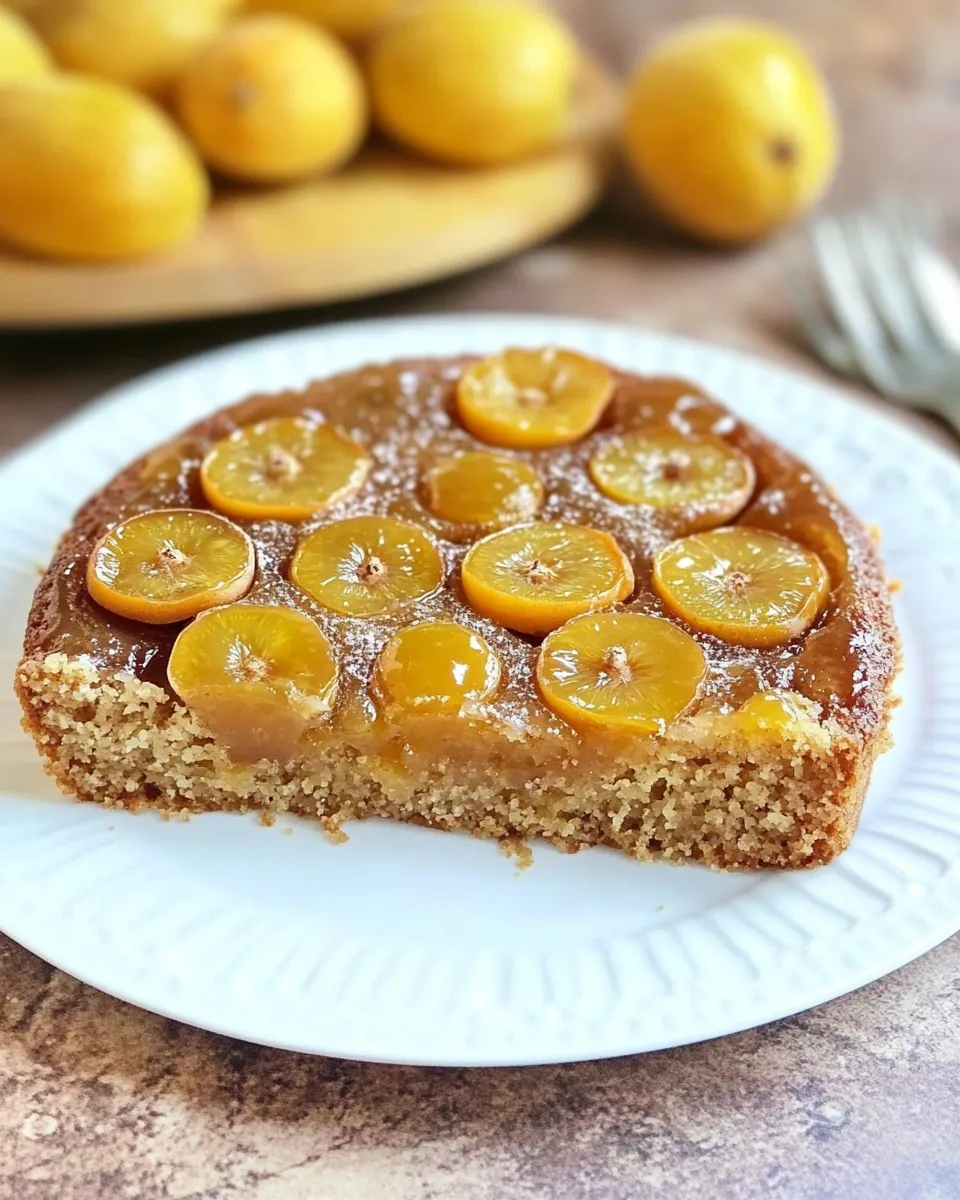
We’re working with loquats at the center, a brown sugar-butter caramel layer, and a classic butter cake batter. The technique is straightforward: make the caramel in the pan, arrange the fruit, pour the batter over, and bake. The result is a glossy, lightly caramelized fruit top once inverted.
Ingredients
- 2 tablespoons unsalted butter (for the top) — melted and combined with brown sugar to make the caramel that coats the loquats.
- ¾ cup brown sugar — provides the deep caramel flavor for the topping.
- 25 medium loquats, halved and pitted — the star fruit; arrange cut side down so they caramelize nicely.
- 1 ¾ cups all purpose flour — the cake’s structure; sifted with the leaveners for even rise.
- 1 ½ teaspoon baking powder — main leavening for a light crumb.
- ½ teaspoon baking soda — balances acidity and supports lift.
- ½ teaspoon salt — enhances flavor and balances sweetness.
- ½ teaspoon ground cinnamon — subtle warmth inside the batter.
- 1 stick (110 grams) unsalted butter — creamed with sugar to build the cake’s tender texture.
- ¾ cup granulated sugar — sweetens and aerates the butter when creamed.
- 2 teaspoons pure vanilla extract — flavor anchor for the cake.
- 2 large eggs at room temperature — structure and richness; room temperature helps them incorporate smoothly.
- ¾ cup milk (I used 2%) — moistens and loosens the batter so it pours over the fruit evenly.
Loquat Upside Down Cake: Step-by-Step Guide
- Preheat the oven to 190°C (375°F).
- Lightly grease a round cake pan using a small amount of the 1 stick (110 grams) unsalted butter.
- In a small saucepan or microwave-safe bowl, melt the 2 tablespoons unsalted butter (the butter labeled “for the top”). Stir the melted butter together with the ¾ cup brown sugar until combined and smooth.
- Arrange the 25 halved and pitted loquats in a single layer, cut side down, across the bottom of the greased pan.
- Pour the melted butter and brown sugar mixture evenly over the loquats.
- In a medium bowl, sift together 1 ¾ cups all purpose flour, 1 ½ teaspoons baking powder, ½ teaspoon baking soda, ½ teaspoon salt, and ½ teaspoon ground cinnamon. Set the dry mixture aside.
- In a separate large bowl, cream the 1 stick (110 grams) unsalted butter with the ¾ cup granulated sugar on medium speed until light and creamy, about 4–5 minutes. Scrape down the bowl as needed.
- Add the 2 large room-temperature eggs, one at a time, mixing until each is incorporated. Stir in the 2 teaspoons pure vanilla extract.
- Add the dry ingredients to the butter mixture in three additions, alternating with the ¾ cup milk (begin and end with the dry ingredients): add one-third of the dry mix, mix just until combined, add half the milk, mix, add the next third of dry mix, mix, add the remaining milk, then add the final dry mix. Mix only until the batter is uniform—do not overmix.
- Pour or spoon the batter evenly over the loquats and smooth the top gently with a spatula.
- Bake at 190°C (375°F) for about 40 minutes, or until a toothpick inserted into the center of the cake comes out clean.
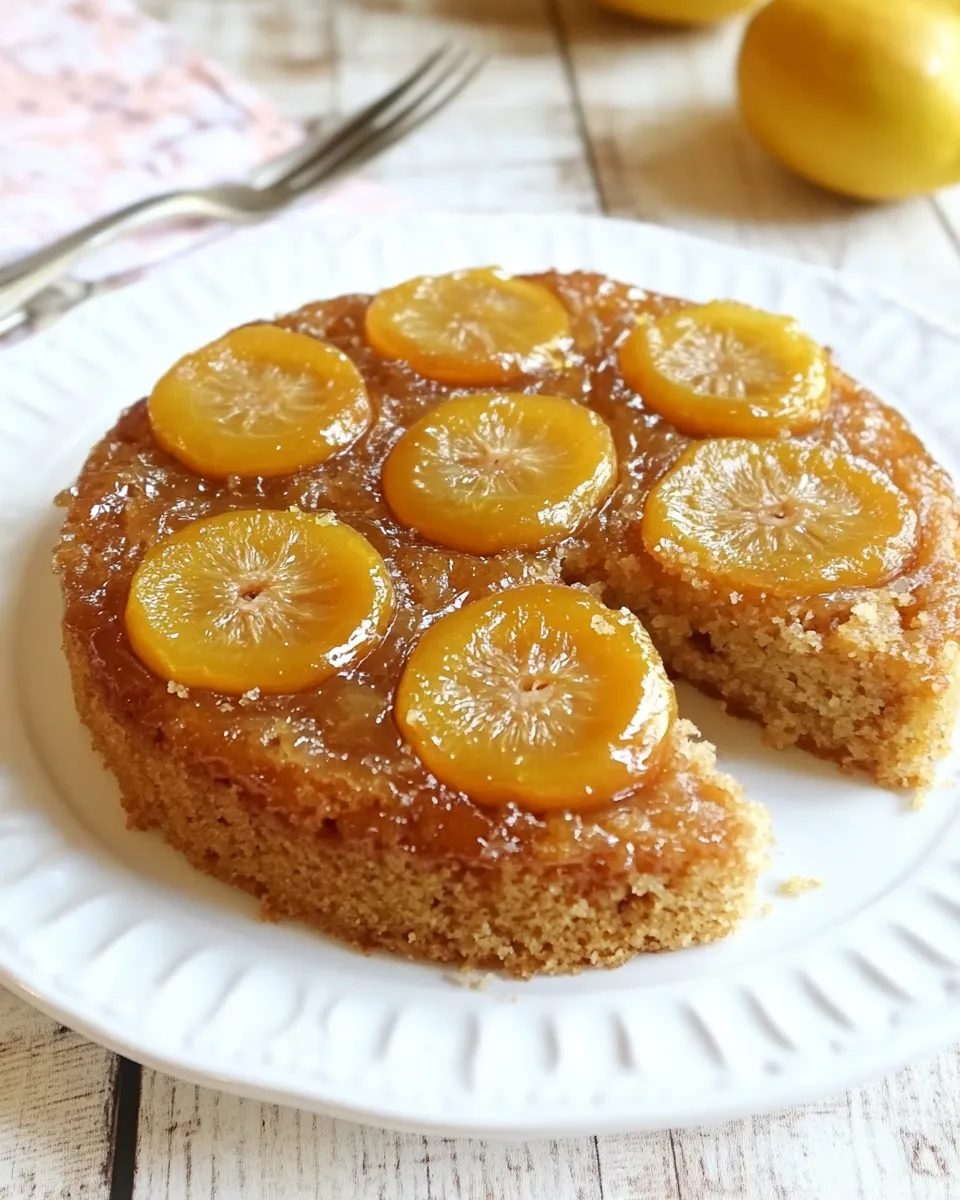
- Remove the pan from the oven and let the cake cool in the pan on a rack for 10 minutes. Run a knife around the edge to loosen, place a serving plate upside down over the pan, and carefully invert the pan to release the cake onto the plate. If the caramel is extremely hot and sticky, let the cake cool a few additional minutes before inverting.
- Serve warm or at room temperature.
Why Cooks Rave About It
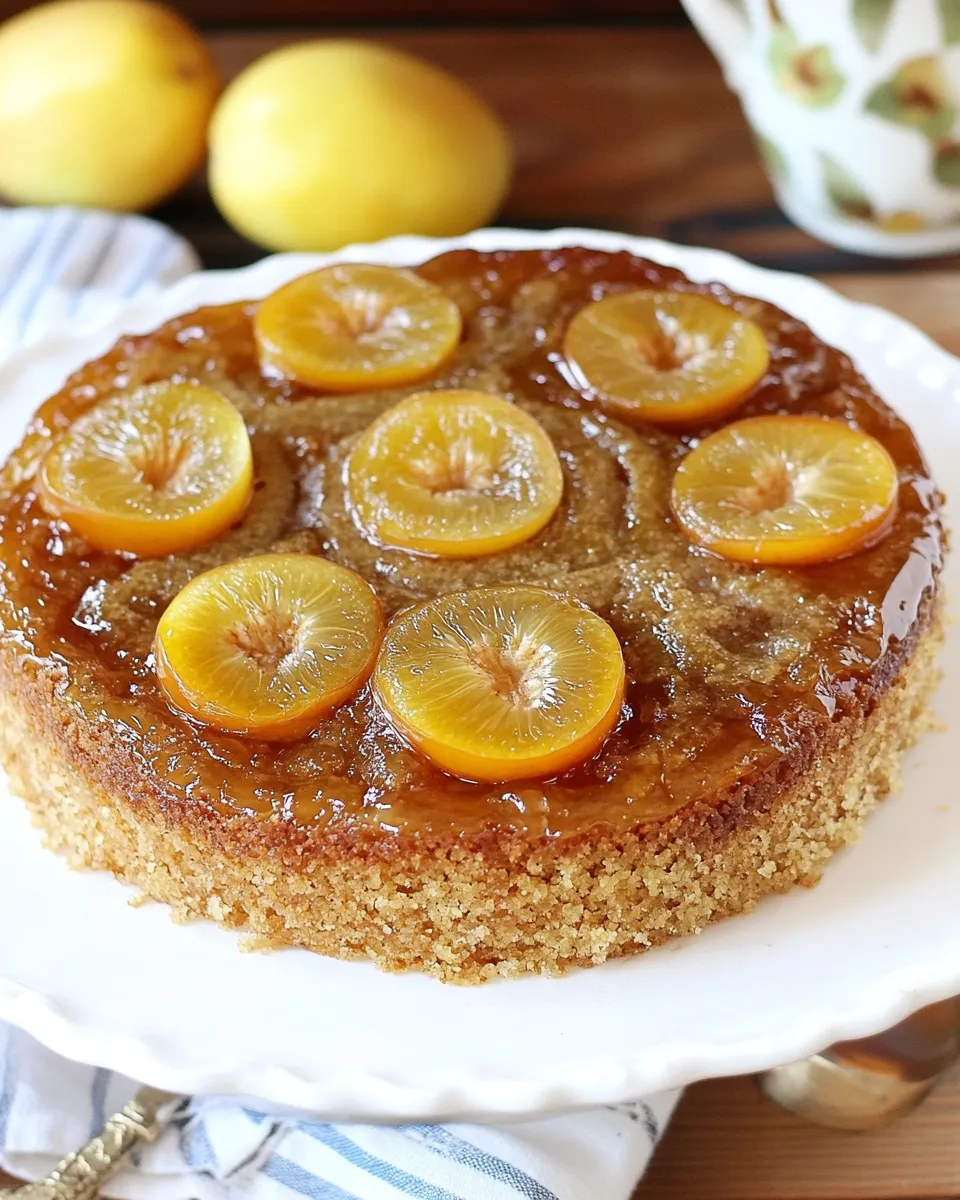
This cake is a lesson in contrasts: soft, buttery crumb against a glossy, syrupy fruit top. Loquats give a delicate, apricot-like flavor with just enough acidity to cut through the sugar, which is what keeps the bake from tasting cloying. The caramelized fruit also makes the cake look far more elaborate than it is—an advantage when you want something impressive without extra fuss.
Another reason cooks love upside-down cakes is the control: the fruit bakes in its own juices, and the caramel prevents it from drying. That makes the topping forgiving. The batter is a classic creamed-butter cake, reliable and resilient; it gives a tender texture that complements the silky fruit layer rather than overwhelming it.
Swap Guide
Here are substitutions and variations that work without breaking the recipe’s balance. I’ll note what changes to expect when you swap.
- Fruit swap: If you don’t have loquats, use halved apricots or halved peeled peaches. Expect slightly different acidity; peaches bring more juice, apricots are closer in flavor.
- Butter swap: If you must use salted butter, reduce added salt in the batter or skip an adjustment; the cake will be slightly saltier but still fine.
- Sugar swap: You can swap some or all of the granulated sugar in the batter for light brown sugar for a deeper caramel flavor. No quantity changes needed; just note the crumb will be a touch denser and more caramel-forward.
- Milk options: Any standard milk (skim, 2%, whole) will work. Using whole milk yields a slightly richer cake; lower-fat milks make a lighter crumb.
- Spice: The recipe uses cinnamon. If you prefer, replace with ¼ teaspoon ground cardamom for a floral twist—use sparingly.
Before You Start: Equipment
- Round cake pan (9-inch is standard; use whatever your recipe-tested pan size implies).
- Mixing bowls (one medium for dry ingredients, one large for creaming).
- Hand mixer or stand mixer for creaming butter and sugar.
- Sifter or fine-mesh sieve for flour and leaveners.
- Small saucepan or microwave-safe bowl for melting butter.
- Spatula and wooden spoon.
- Knife to run around the pan edge and a serving plate for inversion.
Easy-to-Miss Gotchas
These are the little traps that can turn a good bake into a mediocre one.
Don’t skip room-temperature eggs
Cold eggs can make the butter seize and the batter curdle slightly, which affects volume. If you forgot to plan, place eggs in warm (not hot) water for 5–10 minutes.
Mind the caramel temperature
If the brown sugar-butter mixture is extremely hot when you invert, it can stick badly or drip off the plate. Let the pan cool the full 10 minutes as directed—sometimes a few extra minutes help the caramel thicken just enough to release cleanly.
Don’t overmix once the flour goes in
Mix until uniform and stop. Overmixing develops gluten and tightens the crumb.
Spring–Summer–Fall–Winter Ideas
Loquats are most at home in late spring to early summer, but you can adjust presentation and accompaniments by season.
- Spring: Serve with a spoonful of lightly sweetened ricotta and a few fresh mint leaves.
- Summer: Add a scoop of vanilla bean ice cream and freshly sliced berries for contrast.
- Fall: Warm slightly and drizzle extra caramel or serve with spiced whipped cream (cinnamon or nutmeg).
- Winter: Offer alongside a warm citrus compote—loquats give a bright counterpoint to deeper winter flavors.
Cook’s Commentary
I bake upside-down cakes often because they solve dessert logistics: make ahead, flip when guests arrive, and serve warm or room temperature. Loquats are a special-case fruit—if you can find them at a farmers’ market, grab a pile. They don’t store long once ripe, so plan the bake for the day you pick them.
When I trained this cake, I learned to trust the timing. Ten minutes cooling in the pan is brief but important. The moment you hear someone ask for a slice, resist the urge to invert right away. Let the caramel settle; patience pays off with cleaner slices and less sticky hands.
Save for Later: Storage Tips
Store leftovers at room temperature for up to 24 hours covered with a cake dome or loosely tented foil. After that, keep the cake in the fridge in an airtight container for up to 4 days. Reheat slices gently in a low oven (150°C / 300°F) for 8–10 minutes if you want the caramel to loosen and the cake to taste warm again.
For longer storage, you can freeze slices individually wrapped in plastic and placed in a freezer bag for up to 2 months. Thaw overnight in the refrigerator and bring to room temperature before serving.
Reader Q&A
Can I use canned or frozen loquats?
Loquats are best fresh. Canned or frozen loquats will release more liquid and may make the caramel runnier; you can still use them but pat them dry and consider reducing the brown sugar topping slightly.
My cake rose unevenly—why?
Uneven rise usually means oven hotspots or uneven batter distribution. Rotate the pan halfway through the bake if your oven runs hot on one side. Also, check that your leaveners were fresh—baking powder and soda past their prime give weak rise.
Can I double the recipe?
Yes, you can make two pans. Bake times may vary slightly depending on the pan size—monitor with a toothpick after 35 minutes and adjust as needed.
Time to Try It
Ready to bake? Gather your loquats, set your oven to 190°C (375°F), and follow the step-by-step guide above. The process is forgiving, and the payoff is a cake that looks like you spent hours fussing. Invite a friend, pour coffee or tea, and enjoy a slice warm—preferably with a small spoon of cream or a scoop of ice cream if you like.
If you make it, take a photo and note any small changes you tried. Little adjustments—like an extra dash of cinnamon or swapping another stone fruit—are how recipes become your own. Happy baking.
Loquat Upside Down Cake
Ingredients
Ingredients
- ?2 tablespoonsunsalted butterfor the top
- ?3/4 cupsbrown sugar
- ?25 mediumloquatshalved and pitted
- ?1 3/4 cupsall purpose flour
- ?1 1/2 teaspoonbaking powder
- ?1/2 teaspoonbaking soda
- ?1/2 teaspoonsalt
- ?1/2 teaspoonground cinnamon
- ?1 stick 110 gramsunsalted butter
- ?3/4 cupgranulated sugar
- ?2 teaspoonspure vanilla extract
- ?2 largeeggsat room temperature
- ?3/4 cupsmilkI used 2%
Instructions
Instructions
- Preheat the oven to 190°C (375°F).
- Lightly grease a round cake pan using a small amount of the 1 stick (110 grams) unsalted butter.
- In a small saucepan or microwave-safe bowl, melt the 2 tablespoons unsalted butter (the butter labeled "for the top"). Stir the melted butter together with the ¾ cup brown sugar until combined and smooth.
- Arrange the 25 halved and pitted loquats in a single layer, cut side down, across the bottom of the greased pan.
- Pour the melted butter and brown sugar mixture evenly over the loquats.
- In a medium bowl, sift together 1 ¾ cups all purpose flour, 1 ½ teaspoons baking powder, ½ teaspoon baking soda, ½ teaspoon salt, and ½ teaspoon ground cinnamon. Set the dry mixture aside.
- In a separate large bowl, cream the 1 stick (110 grams) unsalted butter with the ¾ cup granulated sugar on medium speed until light and creamy, about 4–5 minutes. Scrape down the bowl as needed.
- Add the 2 large room-temperature eggs, one at a time, mixing until each is incorporated. Stir in the 2 teaspoons pure vanilla extract.
- Add the dry ingredients to the butter mixture in three additions, alternating with the ¾ cup milk (begin and end with the dry ingredients): add one-third of the dry mix, mix just until combined, add half the milk, mix, add the next third of dry mix, mix, add the remaining milk, then add the final dry mix. Mix only until the batter is uniform—do not overmix.
- Pour or spoon the batter evenly over the loquats and smooth the top gently with a spatula.
- Bake at 190°C (375°F) for about 40 minutes, or until a toothpick inserted into the center of the cake comes out clean.
- Remove the pan from the oven and let the cake cool in the pan on a rack for 10 minutes. Run a knife around the edge to loosen, place a serving plate upside down over the pan, and carefully invert the pan to release the cake onto the plate. If the caramel is extremely hot and sticky, let the cake cool a few additional minutes before inverting.
- Serve warm or at room temperature.
Equipment
- 8-inch cake pan
Notes
You can use a 7 or 8 inch cake pan for this cake.