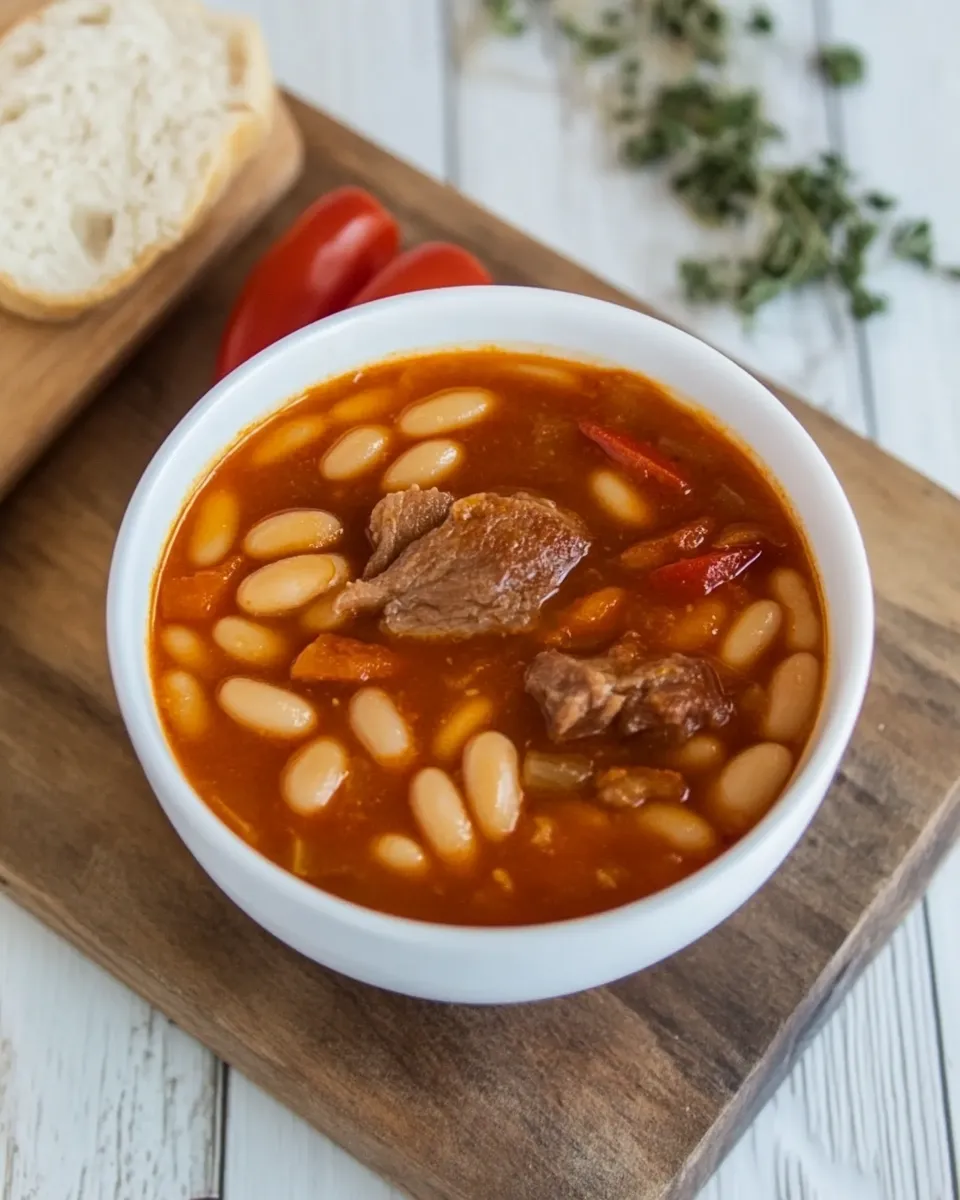
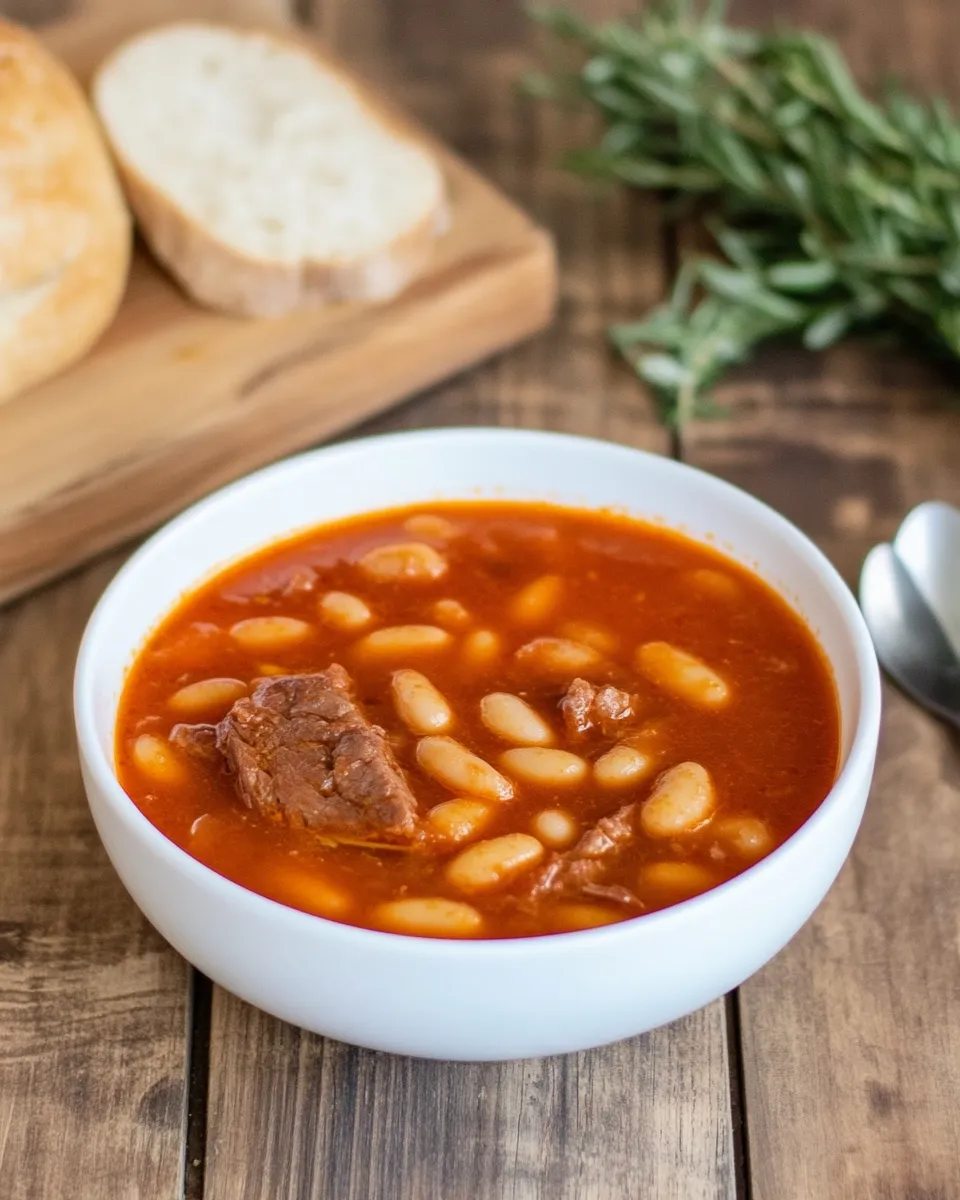
Fasoolya Bil Lahmeh is the kind of comfort food that anchors a weeknight and stars at a family table. Tender meat and soft white beans simmer together in a lightly spiced tomato broth until everything sings with savory depth. It’s unfussy, honest cooking that rewards time on the stove.
This recipe is rooted in simple technique: brown, build flavor, then slow-simmer until both meat and beans are meltingly tender. The method below follows a classic approach, with clear steps for soaking the beans and coaxing the best texture out of the meat. No fancy equipment required—just patience and a good pot.
I’ll walk you through the ingredients, the exact step-by-step instructions, tips to troubleshoot common issues, seasonal serving ideas, and practical storage notes so you can make this reliably every time. Let’s get cooking.
Ingredients at a Glance
- 2 tablespoons vegetable oil — for browning the meat and sautéing the onions.
- 2 small yellow onions, diced — build the flavor base; soften until translucent.
- 2 cloves garlic, minced — adds depth; stir in briefly so it doesn’t burn.
- 1 lb (450 g) diced beef, or mutton or lamb chops — the protein; use a cut that becomes tender with simmering.
- 5 cups hot water — the braising liquid; keep extra hot water nearby to top up if needed.
- 2 ½ cups dry white beans, soaked in warm water overnight with 1 teaspoon of baking soda — pre-soaked beans are essential for even cooking and a creamier texture.
- 2 tablespoons tomato paste — concentrates tomato flavor and colors the broth.
- ½ tablespoon baharat or allspice — warm, aromatic spice blend; baharat gives regional authenticity.
- 1 teaspoon paprika — mild sweetness and color.
- ¼ teaspoon dried rosemary — a touch of herbaceousness; use crushed to release aroma.
- ½ teaspoon ground cumin — earthiness that complements the beans and meat.
- 1 teaspoon granulated sugar (optional) — balances acidity from tomato paste if desired.
- 1 teaspoon salt — start here and adjust later after the beans finish cooking.
- ¼ teaspoon ground black pepper — for background heat and seasoning.
Fasoolya Bil Lahmeh: From Prep to Plate
- Heat 2 tablespoons vegetable oil in a large pot over medium heat.
- Add 2 small yellow onions (diced) and sauté until soft and translucent, about 5–7 minutes. Add 2 cloves garlic (minced) and cook for 1 minute, stirring.
- Add 1 lb (450 g) diced beef, mutton, or lamb and cook, stirring occasionally, until the meat is no longer pink on the outside, about 5–8 minutes.
- Stir in 2 tablespoons tomato paste, ½ tablespoon baharat (or allspice), 1 teaspoon paprika, ¼ teaspoon dried rosemary, ½ teaspoon ground cumin, 1 teaspoon granulated sugar (optional), 1 teaspoon salt, and ¼ teaspoon ground black pepper. Cook and stir for 1–2 minutes to bloom the spices and coat the meat.
- Pour in 5 cups hot water, scrape up any browned bits from the bottom of the pot, bring to a simmer, then reduce the heat to low. Cover and simmer until the meat is tender, about 45–60 minutes (time will vary by cut).
- While the meat is cooking, drain and rinse the 2½ cups dry white beans that were soaked overnight (discard the soaking water). Drain thoroughly.
- When the meat is tender, add the drained beans to the pot, stir to combine, bring back to a gentle simmer, cover, and cook, stirring occasionally, until the beans are fully cooked and tender, about 45–60 minutes. If the liquid reduces too much, add small amounts of hot water as needed to keep the beans covered.
- Taste and adjust seasoning if desired. Serve hot with cooked white rice on the side.
Reasons to Love Fasoolya Bil Lahmeh
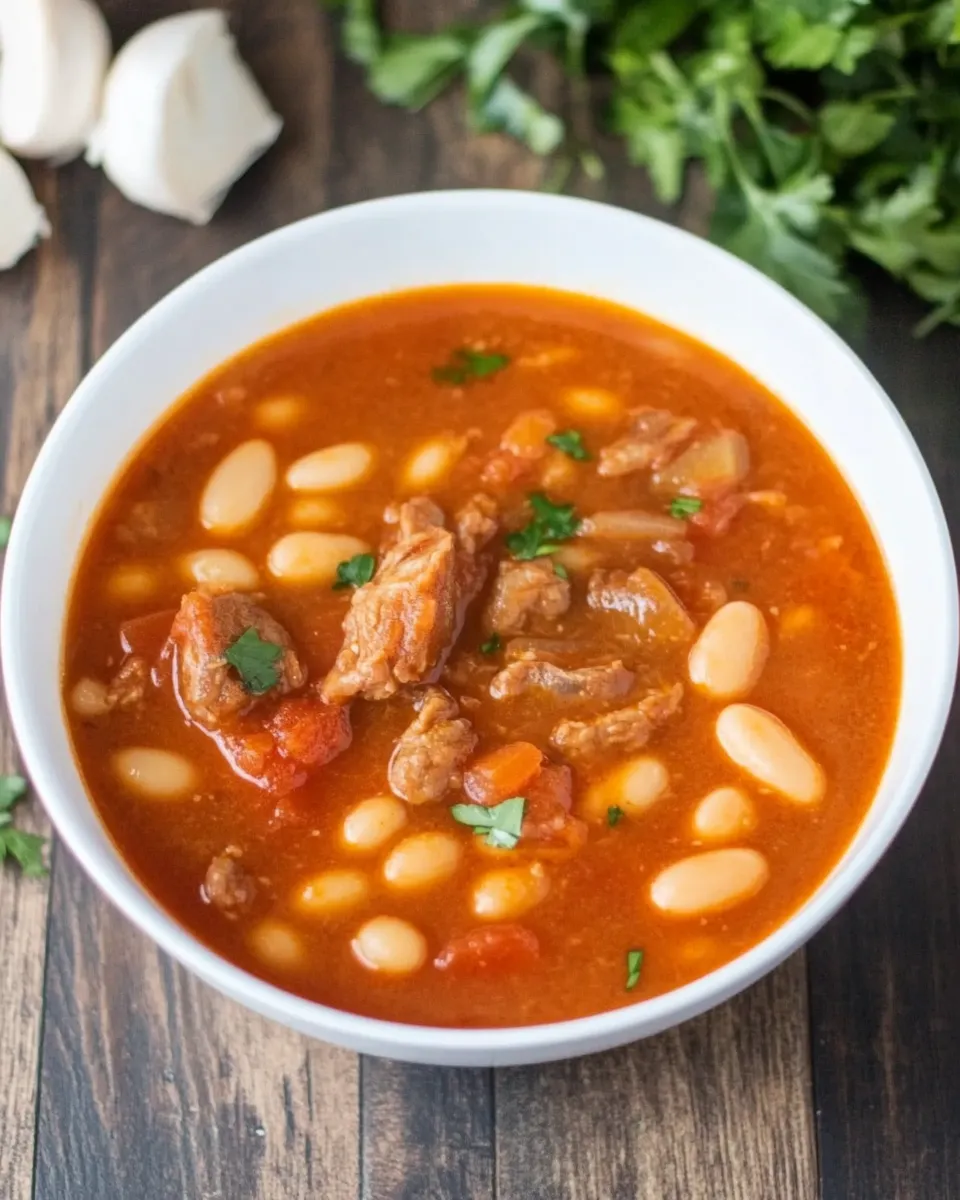
This dish balances economy and satisfaction. A modest amount of meat goes a long way because it steeps into the beans, infusing them with meaty flavor. The beans add body and make the dish genuinely filling without needing heavy sauces.
It’s flexible. Use beef, mutton, or lamb depending on what’s available or on sale. The spice mix is simple—baharat or allspice with cumin and rosemary—so the flavors feel Middle Eastern without being overpowering. The tomato paste provides a savory backbone rather than a tomato-forward sauce.
Finally, it’s a make-ahead winner. Stews like this often taste even better after a day in the fridge because the flavors meld. Reheat gently and add a splash of water if the sauce tightens up.
Low-Carb/Keto Alternatives
Traditional Fasoolya Bil Lahmeh is bean-forward, which means carbs from legumes. If you’re keeping carbs low, there are ways to preserve the spirit of the dish:
- Skip the white rice — serve the stew over cauliflower rice or a bed of sautéed greens to keep the meal low-carb.
- Use fewer beans — reduce the beans and increase the meat slightly, or bulk the pot with low-carb vegetables like zucchini, eggplant, or cauliflower florets toward the end of cooking (add them in the last 20–30 minutes so they don’t disintegrate).
- Keep the same spices — the seasonings give the sense of the dish even if the legumes are pared back.
Equipment Breakdown
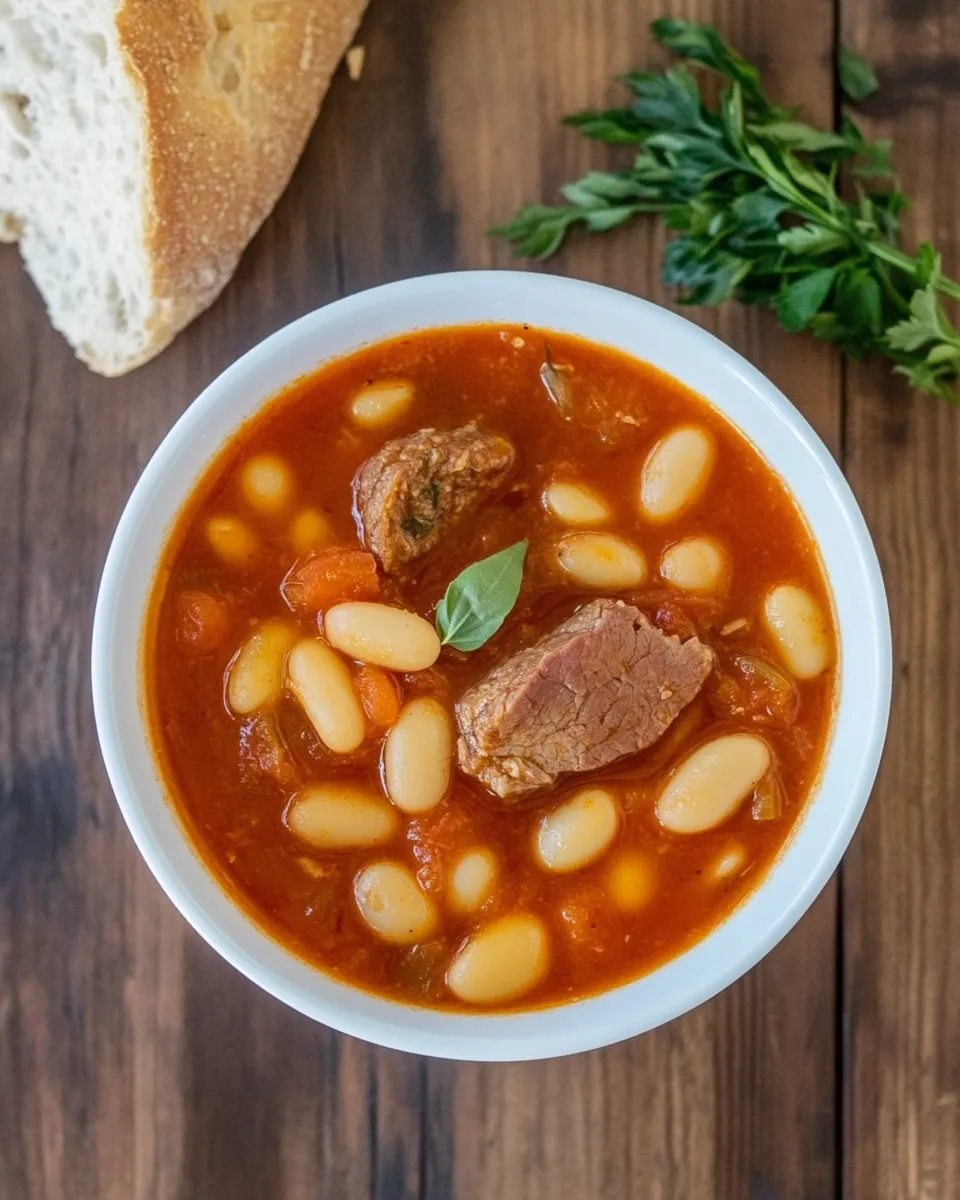
No specialized gear required. These are the essentials and why they matter:
- Large, heavy-bottomed pot or Dutch oven — ensures even heat and prevents scorching during long simmering.
- Wooden spoon or heatproof spatula — for scraping browned bits and stirring without scratching your pot.
- Knife and board — for dicing onions and cutting meat into even pieces so they cook uniformly.
- Colander — to drain and rinse the soaked beans thoroughly.
- Lid for the pot — maintain a gentle simmer and control evaporation.
Troubleshooting Tips
If the meat is still tough after the listed time
Try continuing to simmer gently with the lid on, checking every 15–20 minutes. Toughness usually means the cut needs more time; lower and slower is kinder. You can also test a piece by pressing it with a spoon—if it resists, give it more time.
If the beans are still firm after adding them
Beans vary by age. Continue to simmer covered and check every 15–20 minutes. Keep beans submerged—add hot water as needed. If they remain stubborn after a long time, you may have old beans; in that case, cook until soft but consider cooking them separately next time so you can control timing.
If the stew is too thin or too thick
Too thin: simmer uncovered for a bit to reduce and concentrate flavor. Too thick: add small amounts of hot water and stir until you reach the desired consistency. Remember to adjust seasoning after thinning.
If flavors taste flat
Layering is key: brown the meat well, toast spices briefly, and taste at the end for salt. A small squeeze of lemon or a pinch of additional salt just before serving can brighten the stew if it feels muted.
Spring–Summer–Fall–Winter Ideas
Change the accompaniments to match the season and you’ll get a new meal from the same pot.
- Spring — serve with a bright herb salad (parsley, mint, lemon) to cut the richness.
- Summer — grill vegetables like eggplant and zucchini as a smoky side, and serve the stew slightly cooled for a lighter dinner.
- Fall — make a batch with hearty roasted root vegetables alongside and plenty of crusty bread to mop the sauce.
- Winter — this is prime stew weather: double the batch and enjoy leftovers all week; a spoonful of plain yogurt on top warms and balances the spices.
Behind the Recipe
Fasoolya Bil Lahmeh has roots across the Levant and surrounding regions where beans and slow-cooked meats are kitchen staples. The combination is practical—beans stretch protein and add nutrition—yet delicious. Baharat or allspice is a small but crucial note; it gives warmth without turning the dish into a spice-forward stew.
Traditionally, cooks adapted this to whatever was on hand: different cuts of meat, dried beans, and pantry spices. The method here honors that simplicity while giving clear timing and a reliable sequence so you can expect consistent results.
Meal Prep & Storage Notes
This stew is excellent for meal prep. It holds well and often tastes better after the flavors have had time to marry.
- Refrigeration — cool to room temperature, then store in airtight containers for up to 4 days.
- Freezing — freeze in meal-sized portions for up to 3 months. Thaw overnight in the fridge and reheat gently on the stovetop with a splash of water if the sauce tightens.
- Reheating — warm over low to medium heat, stirring occasionally. Add a little hot water to loosen the sauce if it has thickened in the fridge.
- Make-ahead tips — you can cook the meat until tender, cool, refrigerate, then add the pre-soaked beans and finish cooking the next day for a fresher bean texture.
Fasoolya Bil Lahmeh FAQs
Can I use canned beans instead of dried?
Yes, but timing changes. Add two 15-ounce cans (drained and rinsed) near the end of cooking and simmer until heated through, about 10–15 minutes. Reduce added liquid accordingly because canned beans won’t absorb as much.
Do I have to soak the beans overnight?
Soaking shortens cooking time and helps produce a creamier interior. If you’re short on time, use the quick-soak method: cover beans with water, bring to a boil for 2 minutes, turn off heat, let sit an hour, then drain and use. Keep in mind cooking time will still be longer than canned beans.
What if I only have tough cuts of meat?
Tougher cuts are fine—they’re actually preferable because they break down and become tender with long, gentle simmering. Just be patient and maintain a low simmer until fork-tender.
Can I make this vegetarian?
Yes. Omit the meat and use a vegetable broth or extra hot water. Add more aromatic vegetables (carrot, celery) and perhaps a splash of soy sauce or miso for savory depth.
Bring It to the Table
Serve Fasoolya Bil Lahmeh steaming with fluffy white rice beside it for soaking up the broth. Offer lemon wedges, plain yogurt, or chopped fresh herbs (parsley or cilantro) so each diner can brighten their bowl. A simple salad or pickled vegetables on the side adds contrast and lifts the meal.
Family-style is best: a big pot at the center, bowls of rice, and a small plate of condiments. It’s a relaxed, generous dinner—one that’s built for sharing and leftovers. Enjoy the process and the comfort it brings to your table.

Middle Eastern White Beans with Meat (Fasoolya Bil Lahmeh)
Ingredients
Ingredients
- ?2 tablespoonsvegetable oil
- ?2 smallyellow onionsdiced
- ?2 clovesgarlicminced
- ?1 lb 450 g(1 lbs)diced beefor mutton or lamb chops
- ?5 cupshot water
- ?2 1/2 cupsdry white beanssoaked in warm water overnight with 1 teaspoon of baking of soda
- ?2 tablespoonstomato paste
- ?1/2 tablespoonbaharator all spice
- ?1 teaspoonpaprika
- ?1/4 teaspoondried rosemary
- ?1/2 teaspoonground cumin
- ?1 teaspoongranulated sugaroptional
- ?1 teaspoonsalt
- ?1/4 teaspoonground black pepper
Instructions
Instructions
- Heat 2 tablespoons vegetable oil in a large pot over medium heat.
- Add 2 small yellow onions (diced) and sauté until soft and translucent, about 5–7 minutes. Add 2 cloves garlic (minced) and cook for 1 minute, stirring.
- Add 1 lb (450 g) diced beef, mutton, or lamb and cook, stirring occasionally, until the meat is no longer pink on the outside, about 5–8 minutes.
- Stir in 2 tablespoons tomato paste, ½ tablespoon baharat (or allspice), 1 teaspoon paprika, ¼ teaspoon dried rosemary, ½ teaspoon ground cumin, 1 teaspoon granulated sugar (optional), 1 teaspoon salt, and ¼ teaspoon ground black pepper. Cook and stir for 1–2 minutes to bloom the spices and coat the meat.
- Pour in 5 cups hot water, scrape up any browned bits from the bottom of the pot, bring to a simmer, then reduce the heat to low. Cover and simmer until the meat is tender, about 45–60 minutes (time will vary by cut).
- While the meat is cooking, drain and rinse the 2½ cups dry white beans that were soaked overnight (discard the soaking water). Drain thoroughly.
- When the meat is tender, add the drained beans to the pot, stir to combine, bring back to a gentle simmer, cover, and cook, stirring occasionally, until the beans are fully cooked and tender, about 45–60 minutes. If the liquid reduces too much, add small amounts of hot water as needed to keep the beans covered.
- Taste and adjust seasoning if desired. Serve hot with cooked white rice on the side.
Equipment
- Large Pot
Notes
Meat can be substituted with chicken or sausage.