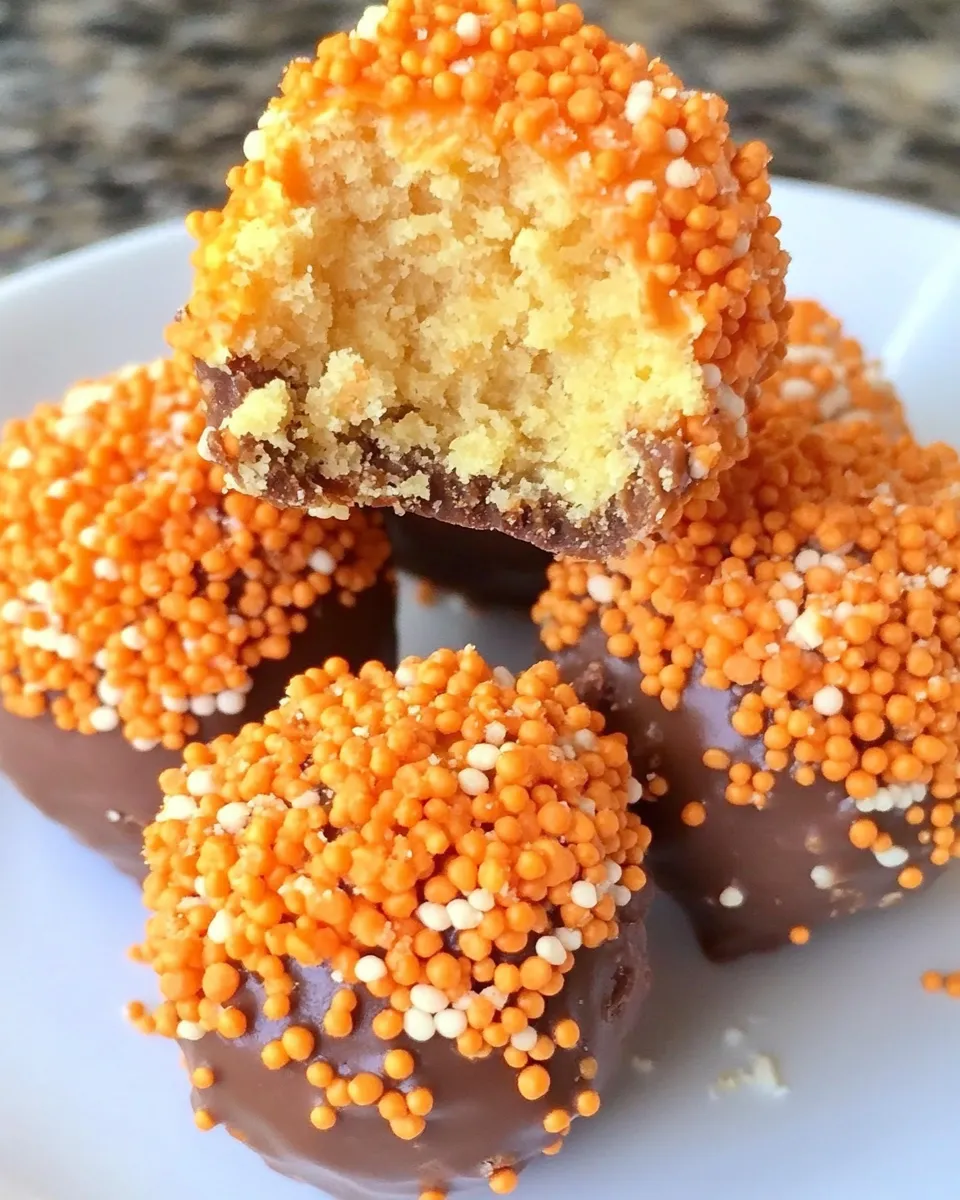
These Orange Cake Truffles are the kind of thing I fall back on when I want bright citrus flavor without fuss. They start with a tender, orange-scented cake, get folded into cream cheese frosting, and finish as perfectly bite-sized, glossy truffles. They feel celebratory but really live in the everyday—easy to make, easy to share.
I like that you can make the cake, form the truffles, and finish them over a couple of sessions. That pace makes them manageable for weeknight baking or a weekend project. The orange juice and double doses of zest keep the citrus profile lively, so the sweetness never feels one-dimensional.
Below you’ll find the ingredient breakdown, step-by-step build, troubleshooting notes, and storage tips so these truffles come out clean and pretty every time. No complicated techniques—just a few focused steps and a little patience with the coatings.
Ingredients at a Glance
- 1 box French Vanilla cake mix — the base; provides structure and sweetness with a neutral vanilla backdrop to highlight the orange.
- One 3-ounce package instant vanilla pudding mix — helps keep the cake moist and tender; adds body so crumbs hold together well.
- ¾ cup freshly squeezed orange juice — primary liquid and key citrus flavor; fresh is best for brightness.
- ½ cup canola oil — fat for moisture and tenderness; neutral-flavored so it doesn’t mask the orange.
- 4 large eggs — structure and richness; make the cake sturdy enough to crumble and bind with frosting.
- 1 tablespoon finely grated orange zest — folded into the batter for concentrated orange aroma and flavor.
- 1 teaspoon vanilla extract — rounds and deepens the vanilla notes already in the cake mix.
- 12 ounces cream cheese frosting (¾ of a container) — binds the crumbs into a moldable, creamy center; adds tang and sweetness.
- 1 tablespoon finely grated orange zest — added to the frosting and crumbs for a second lift of citrus; don’t skip it.
- 1 cup Wilton’s candy melts (or desired melting chocolate) — the coating; provides a glossy, set shell that keeps the truffles neat.
- sprinkles or candied orange peel (see tips below) — optional garnish for texture and visual contrast.
Build Orange Cake Truffles Step by Step
- Preheat the oven to 325°F. Spray a 9×13-inch pan with nonstick spray.
- In a large bowl, whisk together 1 box French Vanilla cake mix and one 3-ounce package instant vanilla pudding mix.
- Add 3/4 cup freshly squeezed orange juice, 1/2 cup canola oil, 4 large eggs, 1 tablespoon finely grated orange zest, and 1 teaspoon vanilla extract to the dry ingredients. Use an electric mixer on low speed to blend until well combined, scraping the bowl sides as needed.
- Pour the batter into the prepared pan and smooth the top. Bake for 35–40 minutes, or until the cake is set and a toothpick inserted in the center comes out clean. Let the cake cool completely in the pan on a wire rack.
- When the cake is completely cool, remove it from the pan and break it into chunks. Place the chunks in a food processor and pulse until you have fine crumbs (or crumble the cake by hand into fine crumbs). Transfer the crumbs to a large bowl.
- Add 12 ounces cream cheese frosting (¾ of a container) and 1 tablespoon finely grated orange zest to the cake crumbs. Stir with a sturdy spoon until the mixture is evenly combined and holds together when pressed.
- Shape the mixture into 1-inch balls using a small cookie scoop, spoon, or your hands, and place the balls on a waxed paper–lined baking sheet. Chill the baking sheet in the refrigerator or freezer until the balls are slightly firm, about 15–30 minutes.
- Place 1 cup Wilton’s candy melts in a microwave-safe bowl. Microwave in 20–30 second intervals on high, stirring between intervals, until the candy is fully melted and smooth.
- Using a small spoon, lower a chilled cake ball into the melted candy, rotate to coat completely, lift it out and scrape off excess chocolate against the side of the bowl, then place the coated truffle on the waxed paper. Immediately top with sprinkles or candied orange peel, if desired.
- Repeat dipping and decorating with the remaining cake balls. Let the coatings set at room temperature or refrigerate until firm. Store assembled truffles at room temperature or in the refrigerator until ready to serve.
Why You’ll Love This Recipe
These truffles are the best kind of hybrid: they combine the comfort of cake with the polish of a hand-dipped confection. The citrus keeps them from being cloying, and the cream cheese frosting adds a subtle tang that reads as grown-up sweetness.
They scale easily. Make the cake on a weeknight and finish the assembly later. They also travel well for parties or gifts—coat and chill them, then box them carefully. Finally, the method is forgiving: if the mixture feels a touch wet or dry, small adjustments and a short chill time will bring it to the right consistency.
Substitutions by Category
- Box cake mix — you can use a different one-box flavor if you want a different base, but keep the same quantity to maintain texture.
- Pudding mix — any instant pudding mix of similar size will work; it helps moisture and binding.
- Fat — the recipe calls for canola oil; other neutral oils (vegetable oil) will perform similarly.
- Coating — Wilton’s candy melts are specified for a smooth, colorful finish; you can sub in a good-quality melting chocolate or dipping compound by volume.
- Frosting — the recipe uses 12 ounces of cream cheese frosting; if you prefer, use the same weight of a comparable store-bought frosting or a homemade cream cheese frosting of equal volume.
Gear Checklist

- 9×13-inch pan — for baking the cake evenly.
- Electric mixer — speeds up batter blending and gives consistent results.
- Food processor or fork — to break the cooled cake into fine crumbs; a processor is faster.
- Small cookie scoop or spoon — for uniformly sized truffles (1-inch balls).
- Microwave-safe bowl — to melt the candy melts safely.
- Waxed paper–lined baking sheet — for chilling and setting the truffles cleanly.
- Wire rack — for cooling the baked cake completely in the pan.
Pitfalls & How to Prevent Them
- Dry or crumbly mixture — if the crumbs won’t bind, press some of the mixture together in the bowl. If it still doesn’t hold, add a teaspoon of cream cheese frosting at a time (up to a small amount) until it binds. Chill before shaping to help it firm.
- Too-soft truffles — if the balls are too soft to dip, chill longer until firm. Freezing briefly (10–15 minutes) speeds this up without freezing solid.
- Coating blooms or cracks — warm candy melts gently and avoid overheating; stir until fully smooth. Make sure truffles are cold when dipped to reduce stress on the coating and produce a neater finish.
- Uneven dipping — lower the truffle fully and rotate to coat cleanly, then lift and scrape the excess on the bowl’s edge to avoid drips that harden irregularly.
- Coating won’t set — some kitchens are humid; let coated truffles set at room temperature on waxed paper, then transfer to the refrigerator if they stay tacky after 30–60 minutes.
Health-Conscious Tweaks
If you’re watching sugar or calories, keep in mind this recipe uses boxed cake mix, frosting, and candy melts—ingredients designed for sweetness and convenience. Small adjustments can help without dismissing the recipe’s intent:
- Smaller portions — make slightly smaller balls (¾-inch) to reduce calories per piece while keeping the same flavor profile.
- More citrus, less sweet appearance — emphasize grated orange zest on the inside and as garnish; the zest increases perceived flavor so you may feel satisfied with less coating or fewer sprinkles.
- Serve with restraint — plate a limited number per guest and pair with unsweetened tea or sparkling water to balance the experience.
Little Things that Matter
Use a microplane for the orange zest. It releases oils evenly and gives a finer texture that distributes through the batter and truffle mix. Freshly squeezed orange juice is worth the extra minute—it brightens the whole batch.
When melting candy melts, stop while a few small streaks remain and stir them out; residual heat finishes the melting without overheating. If you plan to add sprinkles, have them ready before the first dipped truffle goes down—candy sets fast.
Keep-It-Fresh Plan
The recipe itself says store assembled truffles at room temperature or in the refrigerator. For best quality:
- Room temperature — keep them in an airtight container in a cool, dry place for up to 2 days.
- Refrigerator — store in a single layer if possible, or separate layers with parchment, and consume within 7 days for best texture and flavor.
- Freezing — you can freeze the uncoated chilled cake balls for up to 1 month. Thaw in the refrigerator before dipping; don’t refreeze once coated.
Reader Questions
- Q: Can I make these ahead for a party? A: Yes. Bake the cake and prepare the truffle centers a day or two ahead. Dip on the day of the event for the freshest coating, or dip and store in the refrigerator the day before.
- Q: My mixture is too sticky—how do I shape cleanly? A: Chill the mixture until firm and use slightly moistened hands or a small cookie scoop to form even balls. If needed, dust hands lightly with powdered sugar, but use sparingly to avoid changing texture.
- Q: Can I use a different citrus? A: The method works with other citrus, but swap only the juice and zest amounts as specified for orange. Taste as you go; some citrus are more pungent and may need adjustment.
Before You Go
These Orange Cake Truffles are approachable, flexible, and reliably impressive. A little time and simple tools turn a boxed cake mix into a neat, shareable confection with real citrus brightness. If you make a batch, take a photo—and if you tweak a garnish or coating that works especially well, I’d love to hear about it. Happy dipping.

Orange Cake Truffles
Ingredients
Ingredients
- 1 boxFrench Vanilla cake mix
- One3 ounce packageinstant vanilla pudding mix
- 3/4 cupfreshly squeezed orange juice
- 1/2 cupcanola oil
- 4 largeeggs
- 1 tablespoonfinely grated orange zest
- 1 teaspoonvanilla extract
- 12 ouncescream cheese frosting 3/4 of a container
- 1 tablespoonfinely grated orange zest
- 1 cupWilton's candy melts or desired melting chocolate
- sprinkles or candied orange peel see tips below
Instructions
Instructions
- Preheat the oven to 325°F. Spray a 9x13-inch pan with nonstick spray.
- In a large bowl, whisk together 1 box French Vanilla cake mix and one 3-ounce package instant vanilla pudding mix.
- Add 3/4 cup freshly squeezed orange juice, 1/2 cup canola oil, 4 large eggs, 1 tablespoon finely grated orange zest, and 1 teaspoon vanilla extract to the dry ingredients. Use an electric mixer on low speed to blend until well combined, scraping the bowl sides as needed.
- Pour the batter into the prepared pan and smooth the top. Bake for 35–40 minutes, or until the cake is set and a toothpick inserted in the center comes out clean. Let the cake cool completely in the pan on a wire rack.
- When the cake is completely cool, remove it from the pan and break it into chunks. Place the chunks in a food processor and pulse until you have fine crumbs (or crumble the cake by hand into fine crumbs). Transfer the crumbs to a large bowl.
- Add 12 ounces cream cheese frosting (¾ of a container) and 1 tablespoon finely grated orange zest to the cake crumbs. Stir with a sturdy spoon until the mixture is evenly combined and holds together when pressed.
- Shape the mixture into 1-inch balls using a small cookie scoop, spoon, or your hands, and place the balls on a waxed paper–lined baking sheet. Chill the baking sheet in the refrigerator or freezer until the balls are slightly firm, about 15–30 minutes.
- Place 1 cup Wilton's candy melts in a microwave-safe bowl. Microwave in 20–30 second intervals on high, stirring between intervals, until the candy is fully melted and smooth.
- Using a small spoon, lower a chilled cake ball into the melted candy, rotate to coat completely, lift it out and scrape off excess chocolate against the side of the bowl, then place the coated truffle on the waxed paper. Immediately top with sprinkles or candied orange peel, if desired.
- Repeat dipping and decorating with the remaining cake balls. Let the coatings set at room temperature or refrigerate until firm. Store assembled truffles at room temperature or in the refrigerator until ready to serve.
Equipment
- 9x13-inch pan
- nonstick spray
- Large Bowl
- Electric Mixer
- Wire Rack
- Food Processor
- Mixing Spoon
- Baking Sheet
- waxed paper
- small cookie scoop (optional)
- Microwave-safe Bowl
Notes
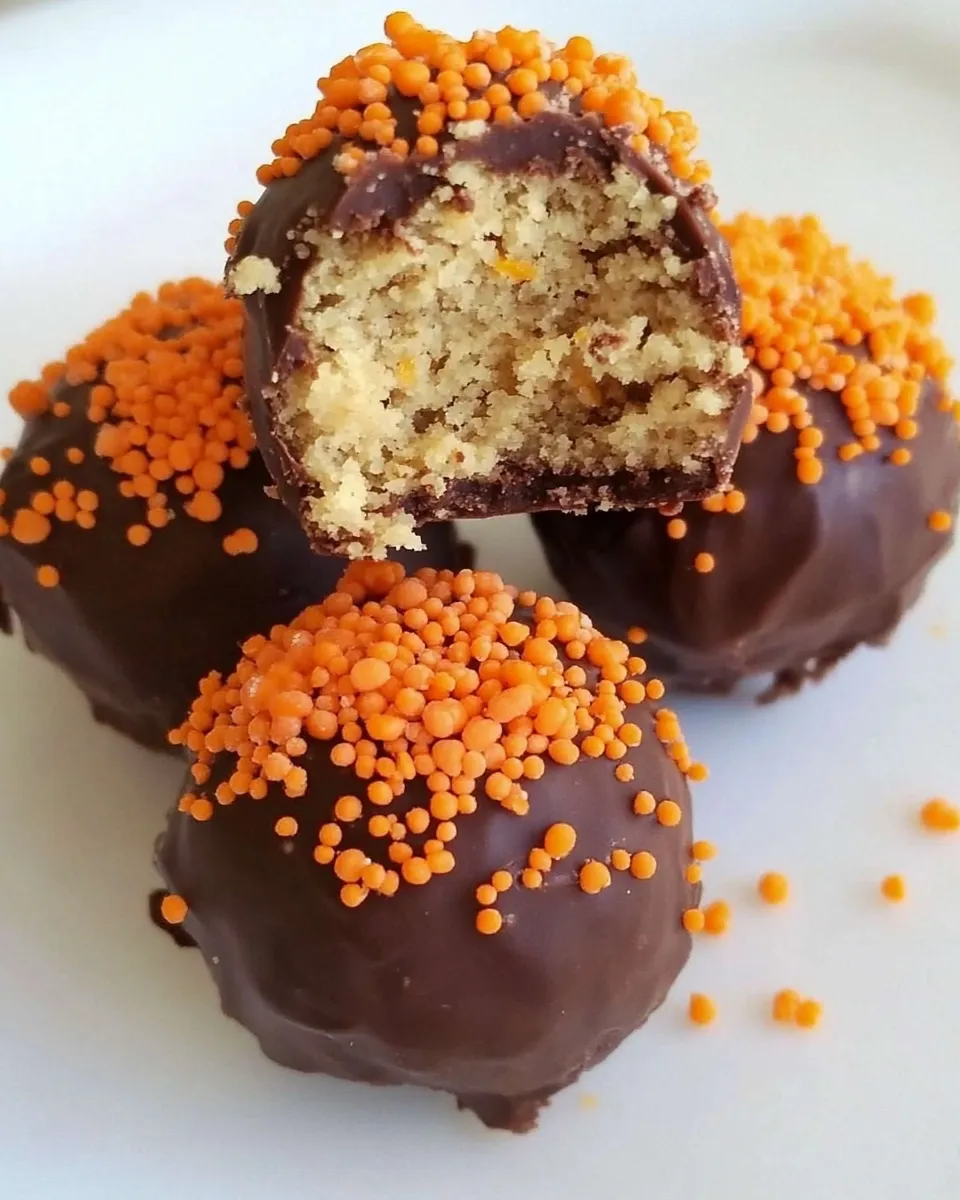
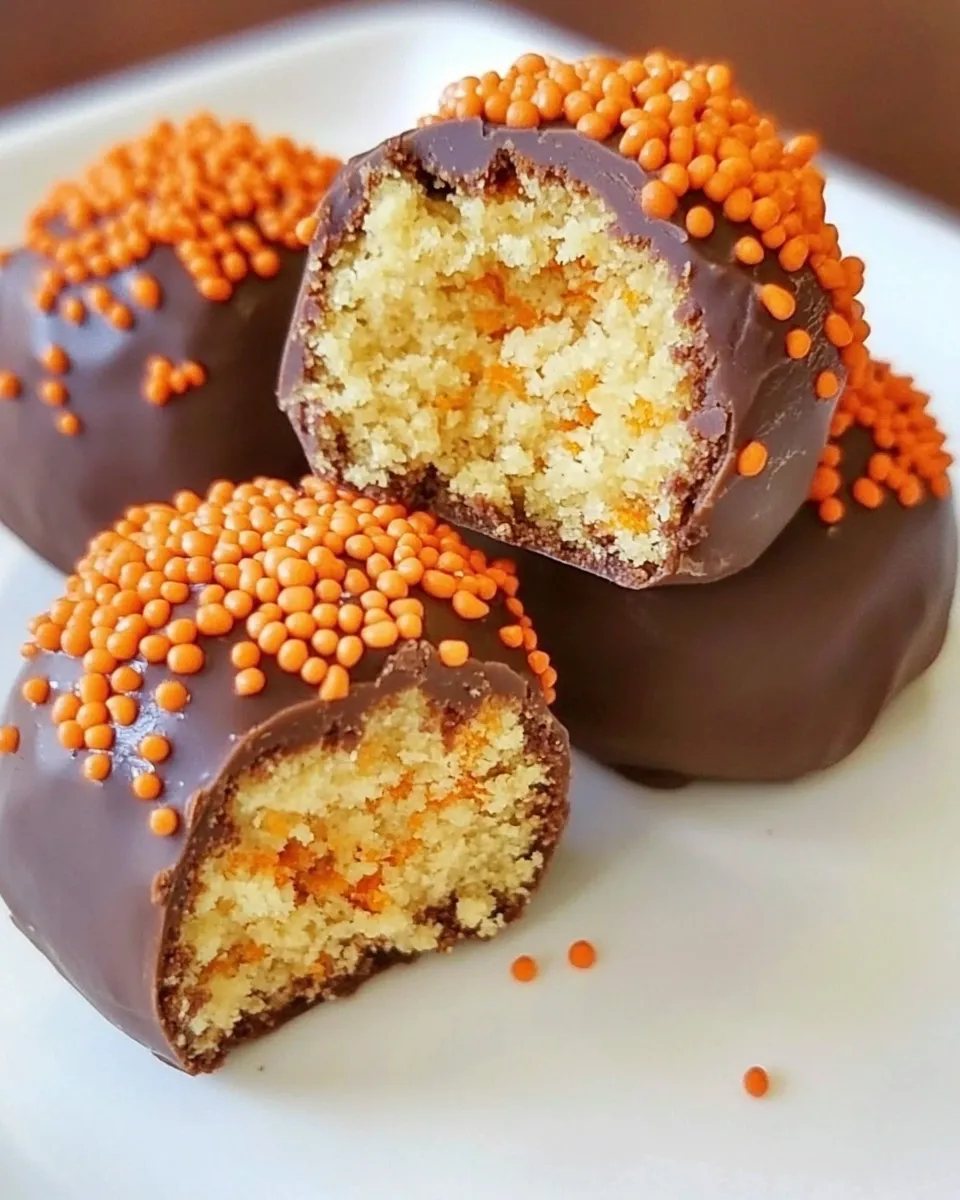
If you'd like the center of your truffles to be more "orange" than shown in the photos, add a drop or two of orange food coloring to the mix (or red/yellow).
To make a simple candied orange peel: remove as much of the white pith as possible from orange peel using a sharp knife. Cut the peel into thin strips. Heat a Tablespoon of water in a small pan. Add strips of orange peel and a teaspoon of granulated white sugar. Sauté the peel in the sugar-water until water dissolves. Remove from heat and spread orange peel on a paper towel to dry. Use to top the truffles as decor. (And, it gives a little hint as to what flavor is inside!)