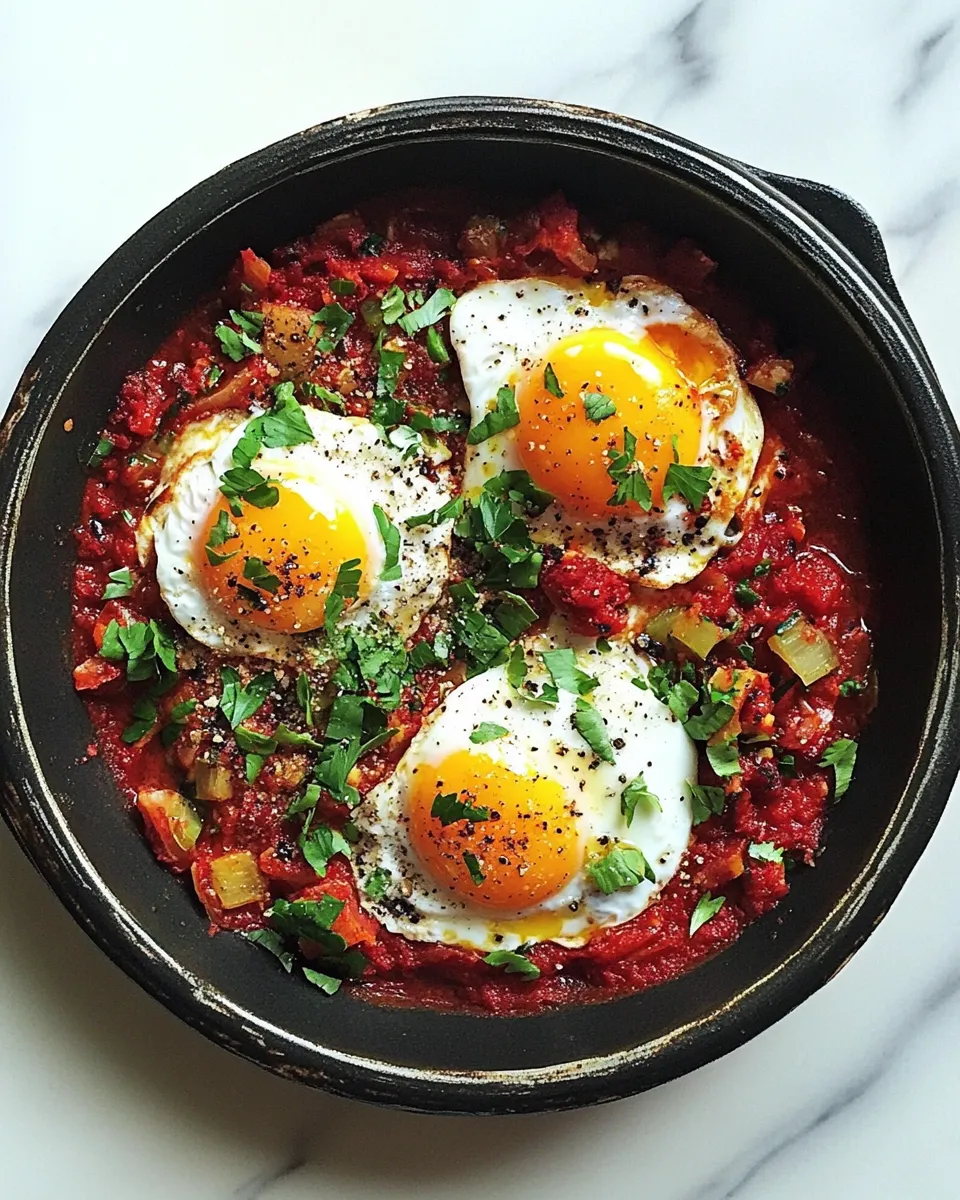
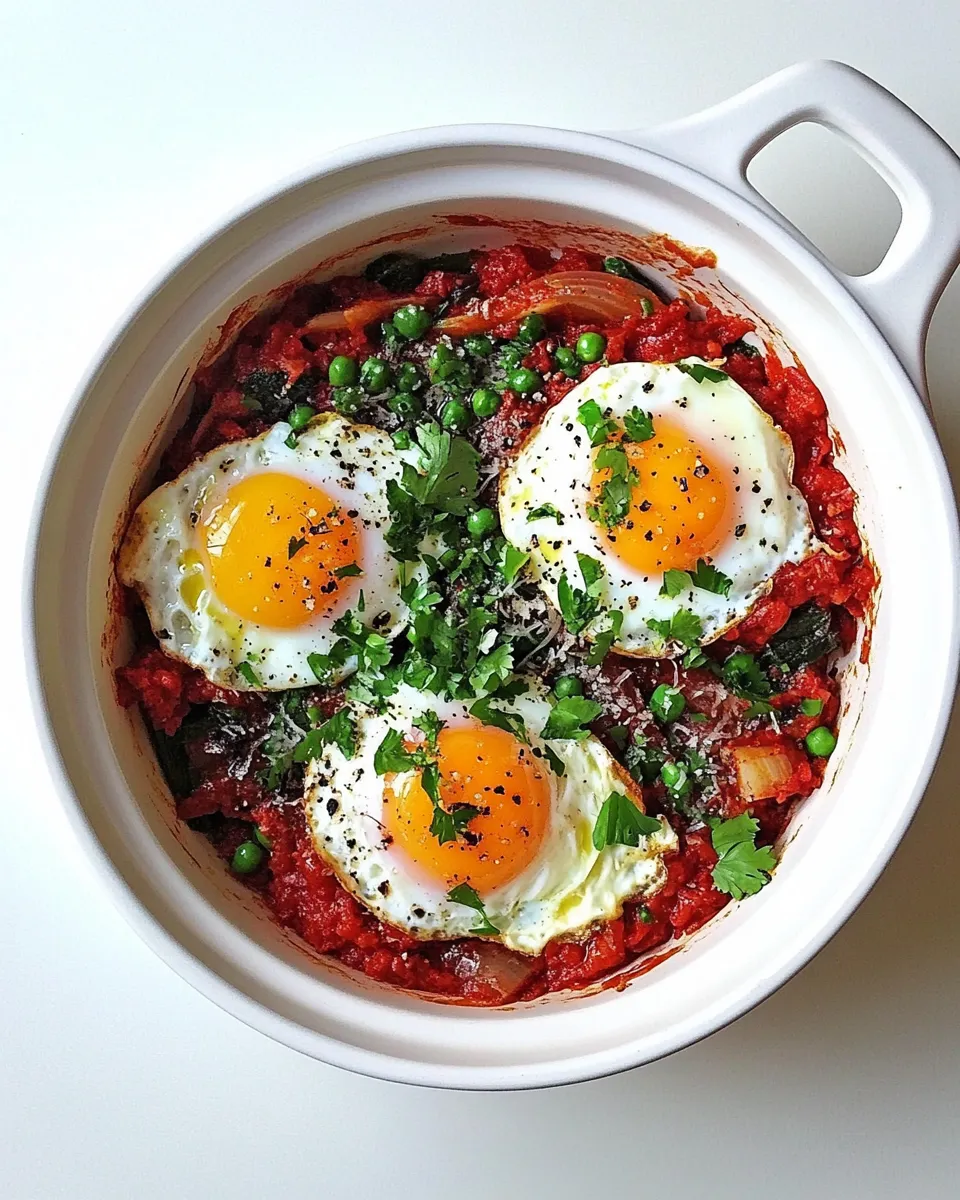
This is the kind of breakfast that feels like dinner in the best possible way: bright, salty, a little spicy, and deeply satisfying. Puttanesca Poached Eggs combines a quick pan sauce built from canned tomatoes, olives, capers, garlic, and a hint of red pepper with eggs gently poached right in the skillet. It’s rustic, fast, and perfect when you want something punchy without fuss.
I’ll walk you through a straightforward method that keeps the yolks runny and the sauce balanced. There are small timing and heat tricks that make all the difference; those are the things I focus on in the tips below. Serve with crusty bread and you have a meal that’s ready in about 15 minutes.
Whether you cook for one or want to scale up slightly, the formula is forgiving. Follow the steps in order, keep an eye on your simmer, and you’ll get consistent results that taste restaurant-level without the ceremony.
Shopping List
- Olive oil — extra-virgin preferred for flavor.
- Garlic — fresh cloves, not pre-minced, for the best aroma.
- Red pepper flakes — adjust to taste for heat.
- Capers — look for jarred in brine; you’ll rinse them before using.
- Kalamata olives — find whole or pitted for easy chopping.
- Parsley or arugula — choose parsley for brightness, arugula for peppery bite.
- One 15 oz can diced tomatoes — use a good-quality brand for best texture.
- Kosher salt — for seasoning; use measured amount in the recipe.
- Large eggs — freshest you can get for poaching reliability.
- Parmesan cheese — freshly grated if possible.
- Bread — two sturdy slices for dunking into the sauce and runny yolks.
Ingredients
- 1 1/2 tablespoons olive oil — heats quickly and carries the garlic flavor; use good olive oil for aroma.
- 2 cloves of garlic, minced — builds the aromatic base; mince finely so it softens fast without burning.
- 1/2 teaspoon red pepper flakes — adds warmth; reduce if you prefer milder heat.
- 1 tablespoon capers, drained and rinsed — provides briny contrast; rinsing tames excess saltiness.
- 5 kalamata olives, roughly chopped — bite-sized pockets of savory flavor; chop so they spread through the sauce.
- 1/4 cup parsley or arugula, roughly chopped — brightens and finishes the sauce; choose parsley for neutral herbiness, arugula for pepper.
- (1) 15 oz can diced tomatoes — the saucy body; whole or fire-roasted varieties will slightly change texture and flavor.
- 1 1/2 teaspoons kosher salt — seasons the sauce; adjust to taste if using low-sodium canned tomatoes or salted capers.
- 2 large eggs — the star; handle gently when cracking into wells.
- 2 tablespoons Parmesan cheese, grated (or more as needed) — adds savory umami and a little richness when melted over the eggs.
- 2 slices bread (your choice to serve) — for dunking; sturdy country bread or sourdough works best.
Cooking (Puttanesca Poached Eggs): The Process
- Heat 1 1/2 tablespoons olive oil in a large skillet over medium heat until the oil shimmers.
- Add 2 cloves garlic, minced, and 1/2 teaspoon red pepper flakes; cook, stirring, about 1 minute, until fragrant and the garlic just begins to soften (do not brown).
- Add 1 tablespoon capers (drained and rinsed), 5 kalamata olives, roughly chopped, and 1/4 cup parsley or arugula, roughly chopped; cook, stirring occasionally, about 2 minutes.
- Add the (1) 15 oz can diced tomatoes and 1 1/2 teaspoons kosher salt; stir to combine and bring the mixture to a simmer. Keep the heat at a gentle simmer—hot enough to poach eggs but not a vigorous rolling boil.
- Use the back of a spoon to make two small wells in the sauce. Crack 2 large eggs, one into each well.
- Sprinkle 2 tablespoons grated Parmesan cheese evenly over the eggs and sauce.
- Partially cover the skillet with a lid and cook at a gentle simmer until the egg whites are set and the yolks are still runny, about 5 minutes (check at 4 minutes if you prefer runnier yolks).
- Remove the pan from the heat, sprinkle a little more Parmesan if desired, and serve immediately with 2 slices of bread for dunking.
Why It Works Every Time
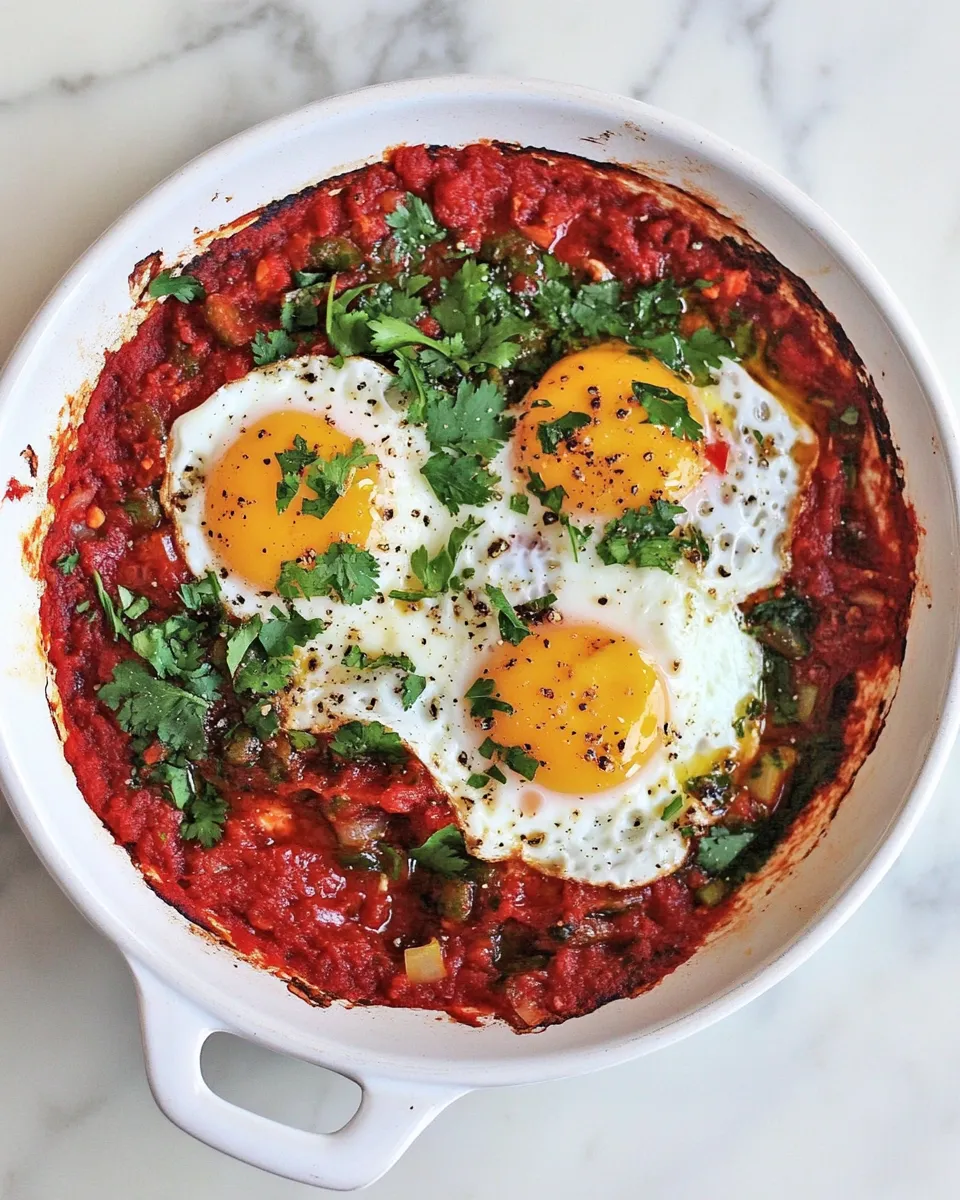
There are a few simple reasons this technique is so reliable. First, building a shallow sauce concentrates flavor quickly. The olive oil + garlic step flavors the entire pan in under a minute. Adding briny elements like capers and kalamata olives balances the acidity of canned tomatoes, so the sauce tastes full and layered without long simmering.
Second, creating wells for the eggs controls where they cook and keeps them separate from the hottest parts of the sauce. Partially covering the pan traps steam and cooks whites evenly while leaving yolks soft. Finally, the measured salt and the addition of Parmesan provide savory depth that ties everything together. No complicated timing tricks—just deliberate heat control.
Healthier Substitutions
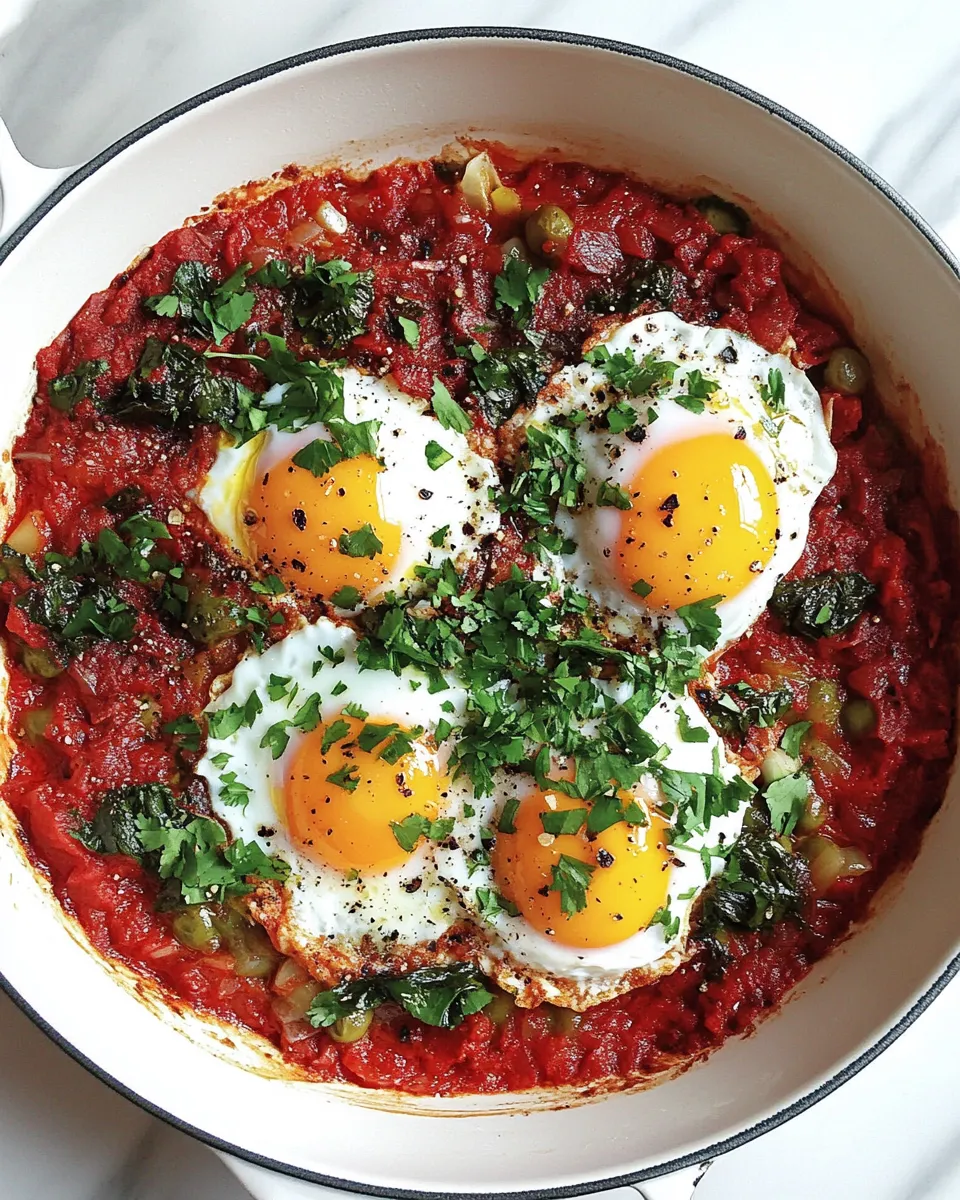
If you want to lighten the dish without losing its soul, small swaps work well. Use less olive oil (drop to 1 tablespoon) and add a splash of water if the sauce seems too sparse. Choose a no-salt-added canned tomato and rinse the capers briefly to reduce sodium. Cut the Parmesan to 1 tablespoon or use a lower-fat hard cheese if preferred.
To boost fiber and make it more filling, pile the finished eggs over a bed of wilted greens instead of serving with bread, or serve alongside a scoop of cooked farro or beans. These don’t change technique, just the way you finish the dish.
Appliances & Accessories
Nothing fancy required. A large, ovenproof or stovetop skillet with a snug-fitting lid is the most important item—you need enough surface area to spread the sauce and room for two eggs. A wooden spoon is handy for stirring without scraping the pan. A small bowl for cracking eggs helps prevent shell bits and makes it easier to slide the eggs into wells cleanly.
Optional: a microplane for freshly grating Parmesan elevates the finish. If you have a splatter screen, it can keep your stovetop tidy as the sauce simmers gently.
Mistakes That Ruin Puttanesca Poached Eggs
Too-high heat. A vigorous boil will break up the eggs and evaporate too much sauce. Keep the simmer gentle and consistent.
Burned garlic. Garlic should just soften and become fragrant; if it browns, it turns bitter. Time the garlic step carefully and stir.
Not rinsing capers. Unrinsed capers can make the sauce overly salty. Drain and rinse them briefly unless you want extra brine.
Cracking eggs directly into the sauce from a height. That increases the chance of broken yolks and shell bits. Crack into a small bowl first, then slide into the wells.
Fresh Seasonal Changes
In summer, swap canned tomatoes for fresh diced tomatoes (about 2 cups), but reduce the initial simmer time—fresh tomatoes are juicier and need less cooking to break down. Stir in a handful of chopped basil at the end instead of parsley for a bright, herbal note.
In winter, add a pinch of smoked paprika or a few anchovy fillets in the oil with the garlic for a deeper, savory backbone—anchovies dissolve into the oil and enhance umami without tasting fishy. If arugula is in season, keep it; it adds peppery freshness that offsets the salty components beautifully.
Cook’s Commentary
I make this whenever the week calls for something quick but interesting. It’s one of those recipes where small adjustments change the mood: swapping parsley for arugula makes the sauce feel more peppered and lively; adding a squeeze of lemon at the very end brightens everything. I often double the sauce and poach more eggs directly in the pan when cooking for guests—just space them farther apart and increase the pan size.
My favorite way to eat it is scooping up sauce-soaked bread, then breaking a yolk so it mingles with the tomato. The contrast of silky yolk, salty olive, and sharp Parmesan is what keeps me coming back to this simple skillet meal.
Freezer-Friendly Notes
The assembled saucy base (tomatoes, olives, capers, herbs) freezes well. Cool completely, store in an airtight container for up to 3 months, then thaw overnight in the fridge. Reheat gently on the stovetop to simmer before making wells and poaching eggs.
Do not freeze the eggs after cooking; the texture suffers when frozen and reheated. Keep the bread separate—freeze it if necessary and toast when ready to serve.
Handy Q&A
Q: Can I make this for more people?
A: Yes—double or triple the sauce quantities and use a larger skillet. Space the wells for eggs so they don’t run together. Cooking time for the eggs remains the same once the sauce is at a gentle simmer.
Q: My egg whites are still translucent after 5 minutes—what now?
A: Return the pan to low heat and keep it partially covered for another 30–60 seconds at a time until set. If whites are stubborn, a brief spoonful of simmering sauce over the whites helps finish them without overcooking yolks.
Q: Can I use other olives?
A: Yes. Kalamata provide a meaty, fruity saltiness, but green olives or Castelvetrano can work for a different flavor profile. Chop them to disperse flavor evenly.
Q: Is there an egg temperature trick?
A: Room-temperature eggs poach more evenly than cold from the fridge. If you have the time, take eggs out 10–15 minutes before cooking. Crack into a small bowl before adding to the wells for safer placement.
Before You Go
Keep this recipe in your rotation for busy mornings or low-effort dinners. It’s quick, satisfying, and a great way to use pantry staples with minimal waste. The method is forgiving: focus on gentle simmering and cautious timing for the eggs, and you’ll get delicious results every time.
Make sure to have a sturdy loaf or slices of crusty bread on hand—the sauce is meant for dunking. Make one small tweak next time (more parsley, less cheese, a touch of lemon) and see how you like it best. Then, make it again.

Puttanesca Poached Eggs
Ingredients
Ingredients
- 1 1/2 tablespoonsolive oil
- 2 clovesof garlic minced
- 1/2 teaspoonred pepper flakes
- 1 tablespooncapers drained and rinsed
- 5 kalamata olives roughly chopped
- 1/4 cupparsley or arugula roughly chopped
- 1 15 oz can diced tomatoes
- 1 1/2 teaspoonskosher salt
- 2 large eggs
- 2 tablespoonsparmesan cheese grated (or more as needed)
- 2 slicesbread your choice to serve
Instructions
Instructions
- Heat 1 1/2 tablespoons olive oil in a large skillet over medium heat until the oil shimmers.
- Add 2 cloves garlic, minced, and 1/2 teaspoon red pepper flakes; cook, stirring, about 1 minute, until fragrant and the garlic just begins to soften (do not brown).
- Add 1 tablespoon capers (drained and rinsed), 5 kalamata olives, roughly chopped, and 1/4 cup parsley or arugula, roughly chopped; cook, stirring occasionally, about 2 minutes.
- Add the (1) 15 oz can diced tomatoes and 1 1/2 teaspoons kosher salt; stir to combine and bring the mixture to a simmer. Keep the heat at a gentle simmer—hot enough to poach eggs but not a vigorous rolling boil.
- Use the back of a spoon to make two small wells in the sauce. Crack 2 large eggs, one into each well.
- Sprinkle 2 tablespoons grated Parmesan cheese evenly over the eggs and sauce.
- Partially cover the skillet with a lid and cook at a gentle simmer until the egg whites are set and the yolks are still runny, about 5 minutes (check at 4 minutes if you prefer runnier yolks).
- Remove the pan from the heat, sprinkle a little more Parmesan if desired, and serve immediately with 2 slices of bread for dunking.
Equipment
- Large Skillet
- Spoon
- Lid