
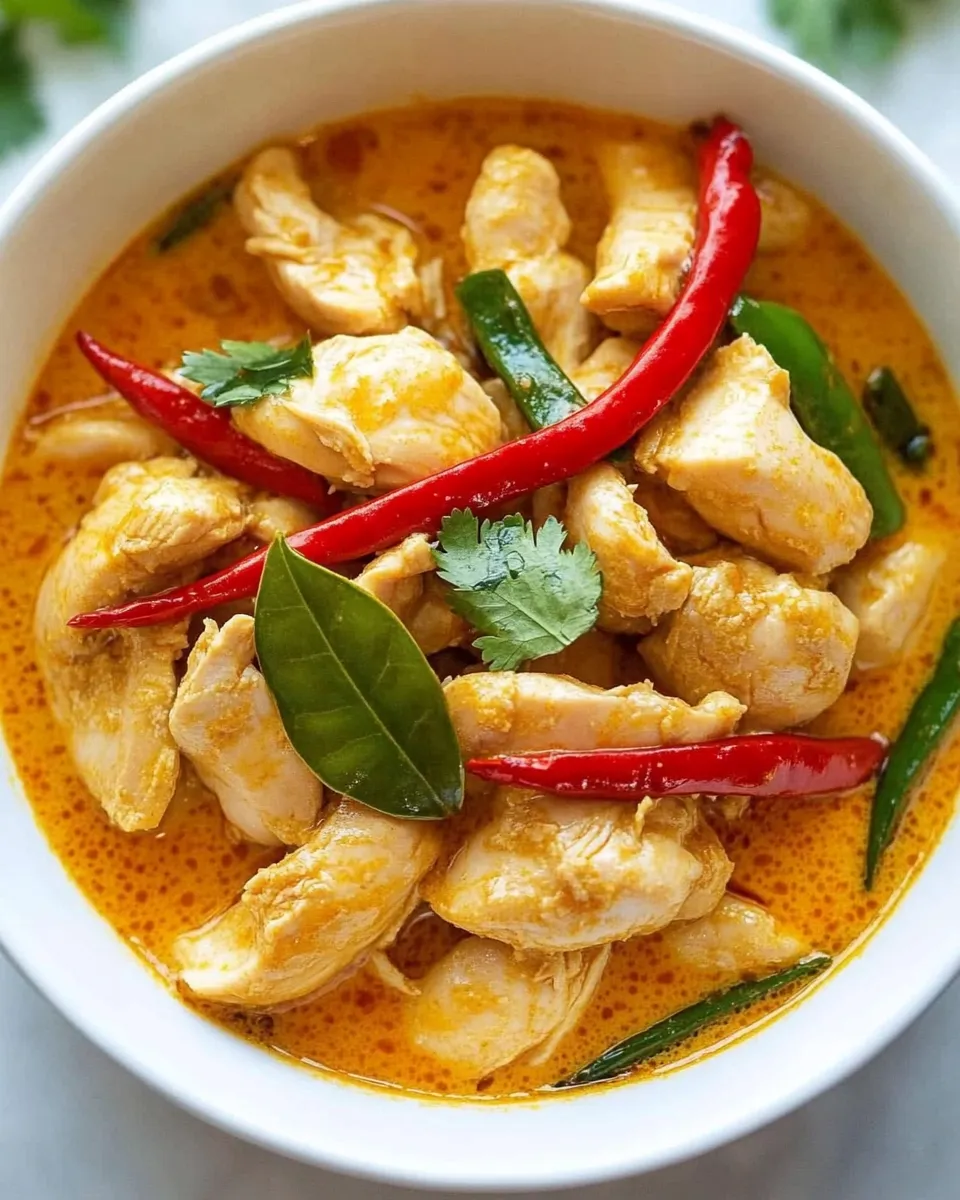
This red chicken curry is the kind of weeknight dinner that feels special without demanding a day in the kitchen. It leans on a bold red curry paste and creamy coconut to create a sauce that’s bright, fragrant, and comforting. The recipe moves quickly, so prep is the key—have everything measured and at the ready and you’ll be eating in under 30 minutes.
I test recipes for a living and I love dishes that travel well between weeknight simplicity and guests-around-the-table appeal. This curry balances savory, sweet, and tang with a short list of pantry-friendly staples. It works with chicken tenders or cubed boneless, skinless breast and finishes with fresh cilantro and lime for lift.
No fluff here—just clear notes, the exact ingredient list, and the step-by-step method so you can get comfortable with the flavors and repeat it reliably. Read through the notes, gather your tools, and let’s make a curry you’ll want to cook again and again.
Ingredient Notes
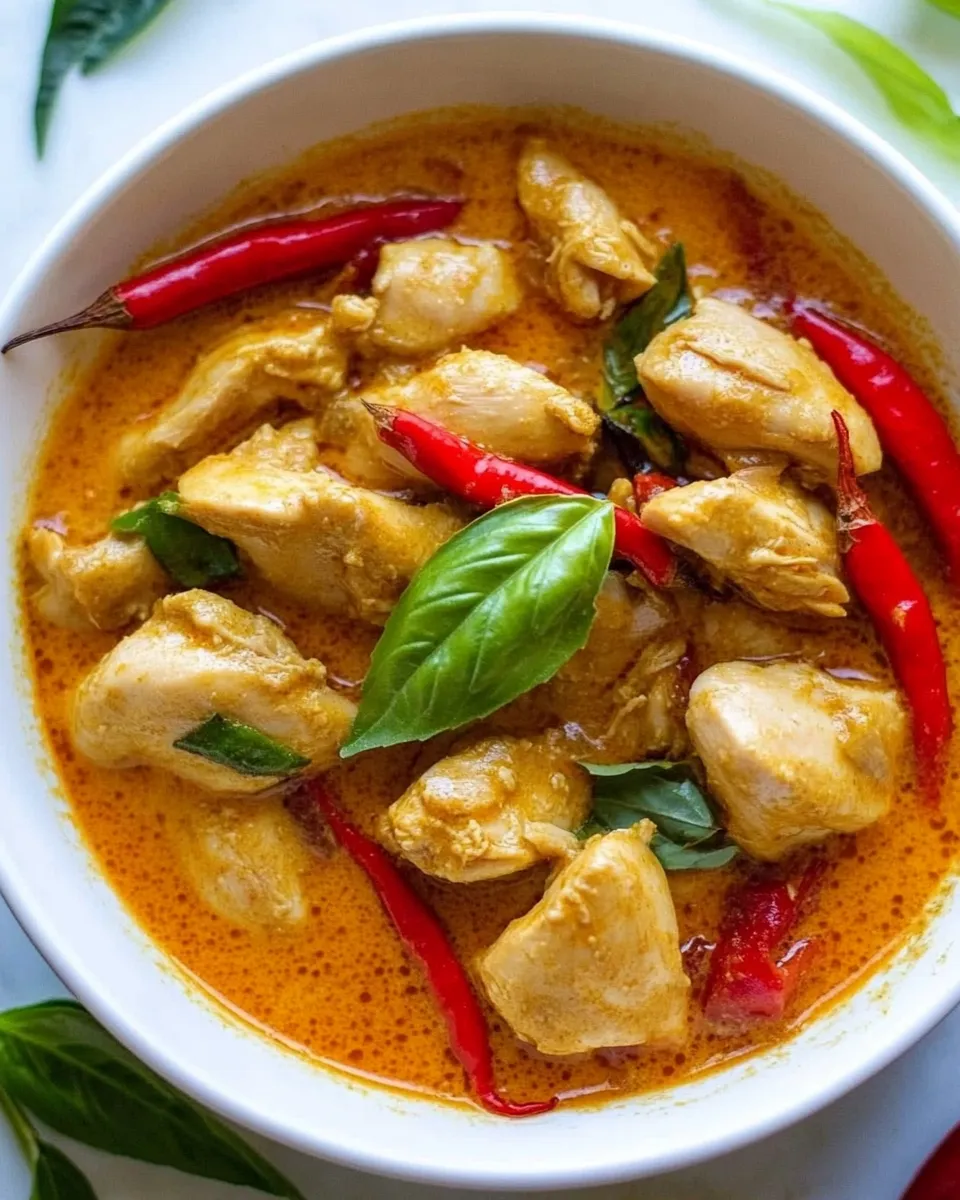
Understanding a few building blocks makes this curry easy to customize without losing the soul of the dish. Red curry paste is the backbone—it’s a concentrated mix of chilies, garlic, lemongrass, and spices. Use a reputable jarred paste if you don’t make your own; it saves time and gives consistently strong flavor.
Coconut cream gives body and silkiness to the sauce. The recipe allows coconut milk as an option (3/4 cup), but coconut cream (1/2 cup) makes a thicker, more luxurious sauce. Fish sauce and lime juice are the finishing touches that add depth and bright acidity—small amounts go a long way.
The bell pepper contributes texture and color without adding much cook time. Fresh cilantro at the end keeps the taste fresh; if you dislike cilantro, substitute a sprinkle of chopped parsley or Thai basil to keep the aromatic lift.
Ingredients
- 2 tablespoons cooking oil — for browning the chicken and carrying the curry paste flavor.
- 1 lb (500 g) chicken tenders, or boneless skinless chicken breasts, cut into cubes — main protein; tends to cook quickly and stay tender when cubed.
- 1 1/2 tablespoons red curry paste — concentrated flavor base; adjust to taste if your paste is particularly hot.
- 1 cup water — to build the sauce and control thickness.
- 1/2 cup coconut cream, or 3/4 cup coconut milk — coconut cream gives a thicker, richer sauce; coconut milk is lighter.
- 3/4 tablespoon fish sauce — salt and umami; adds depth that salt alone won’t provide.
- 1 teaspoon sugar, or brown sugar — balances acidity and heat.
- 1 teaspoon lime juice — brightens and finishes the dish.
- 2 oz (60 g) red bell pepper, seeded and cut into strips (1 small red bell pepper) — color, crunch, and mild sweetness; added late to keep texture.
- 1 tablespoon cilantro, chopped — fresh finishing herb.
- lime wedges, optional — for serving, to add extra brightness at the table.
Method: Red Chicken Curry
- Prepare ingredients: cut 1 lb (500 g) chicken tenders or boneless skinless chicken breasts into cubes; seed and cut 2 oz (60 g) red bell pepper into strips; chop 1 tablespoon cilantro; measure 1 1/2 tablespoons red curry paste, 1 cup water, 1/2 cup coconut cream (or 3/4 cup coconut milk), 3/4 tablespoon fish sauce, 1 teaspoon sugar (or brown sugar), and 1 teaspoon lime juice. Have lime wedges ready if using.
- Heat a skillet over medium heat and add 2 tablespoons cooking oil.
- Add the cubed chicken in a single layer and cook, stirring occasionally, until the surface turns white and the pieces are mostly cooked through (about 4–6 minutes).
- Add 1 1/2 tablespoons red curry paste to the skillet and stir well to coat the chicken. Cook, stirring, about 30 seconds to 1 minute until fragrant.
- Pour in 1 cup water and add 1/2 cup coconut cream (or 3/4 cup coconut milk), 3/4 tablespoon fish sauce, 1 teaspoon sugar (or brown sugar), and 1 teaspoon lime juice. Stir to combine.
- Bring the mixture to a gentle simmer, then reduce heat to low and simmer until the curry sauce thickens slightly, about 5–8 minutes.
- Add the red bell pepper strips and simmer 1–2 minutes more, until the pepper is just tender.
- Turn off the heat, stir in the chopped cilantro, and serve immediately with lime wedges, if using.
Why Red Chicken Curry is Worth Your Time
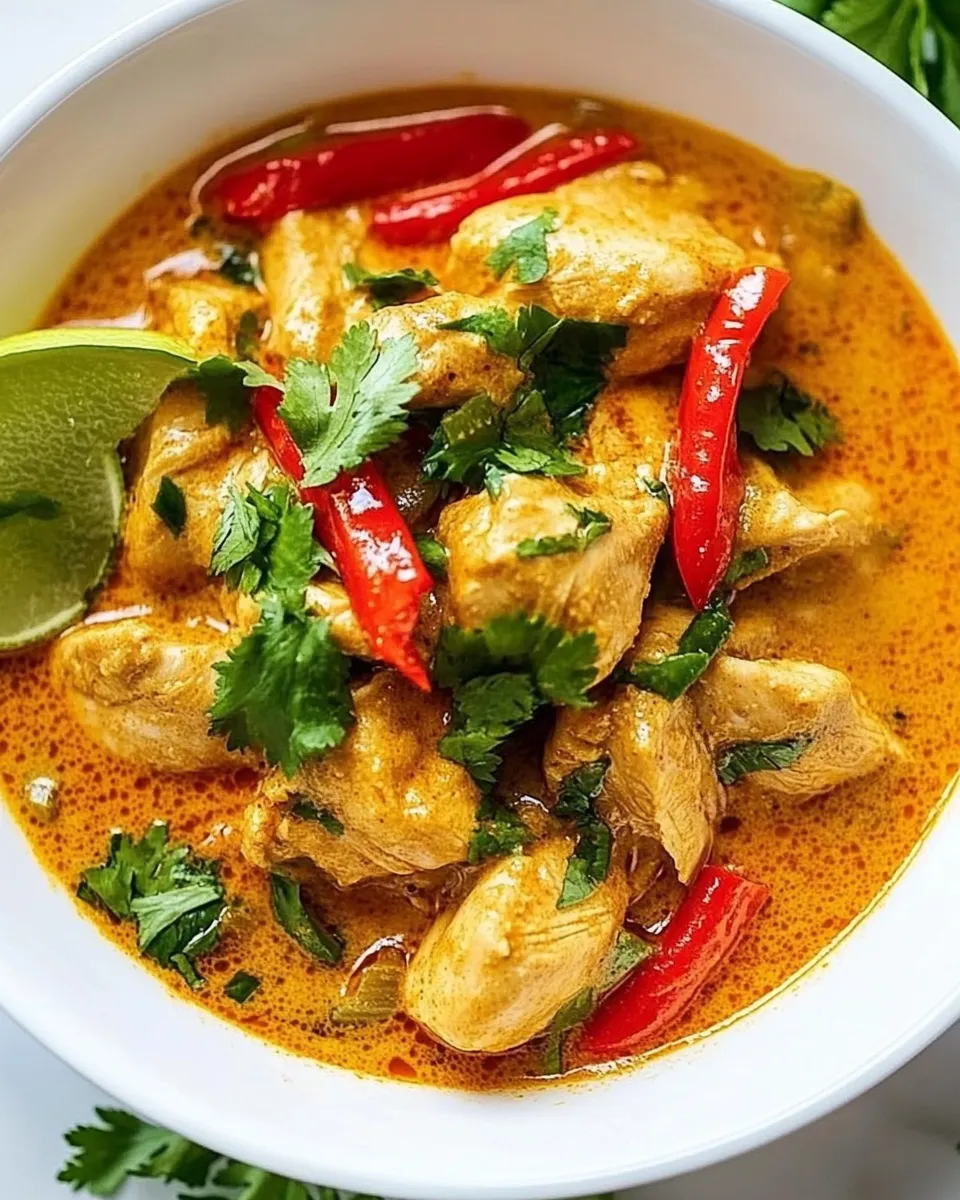
This dish delivers complex flavors with minimal fuss. The red curry paste does heavy lifting: chilies for heat, aromatics for fragrance, and savory depth to keep every bite interesting. The cooking method is fast, which preserves the chicken’s tenderness and the pepper’s texture. You get something that tastes like it took longer than it did.
It’s forgiving. The sauce is adjustable—want it thinner for saucier rice? Add an extra splash of water. Want it silkier? Use the coconut cream option. It’s a dependable recipe to build confidence with curry flavors, and once you know how the components work together, it’s simple to scale or tweak for leftovers or a crowd.
Vegan & Vegetarian Swaps
- Replace the chicken with firm tofu, extra-firm tempeh, or a mix of hearty vegetables like sweet potato and cauliflower. Press tofu well before cubing to improve texture.
- Swap fish sauce with tamari, soy sauce, or a vegan fish sauce alternative for umami. Start with a smaller amount and taste as you go.
- Use the coconut cream or coconut milk as directed—both are plant-based and provide the same creamy backbone.
- For extra protein, chickpeas can be added—rinse well if canned and add them when you add the coconut to warm through.
Before You Start: Equipment
- Large skillet or frying pan — wide enough to allow the chicken to sit in a single layer for even browning.
- Sharp knife and cutting board — for quick, uniform cubes and pepper strips.
- Measuring spoons and a liquid measuring cup — for the curry paste, water, and coconut cream/milk.
- Wooden spoon or heatproof spatula — for stirring without stripping the skillet’s surface.
- Tongs or slotted spoon — useful for turning chicken and removing pieces if needed.
Frequent Missteps to Avoid
- Overcrowding the pan when browning the chicken — it steams instead of browns. Work in a single layer as instructed.
- Adding the bell pepper too early — it should go in near the end to keep some bite and color.
- Skipping the fish sauce or lime juice — both are small additions that significantly lift the finished curry’s depth and brightness.
- Using too much water at once — start with the 1 cup in the recipe; you can thin the sauce later if you need more liquid.
Substitutions by Diet
Here are straightforward swaps tailored to common dietary needs. None require precise amounts beyond what’s in the recipe—just swap like for like where noted.
- Gluten-free: Confirm the red curry paste and fish sauce are gluten-free. Many are, but some additives can contain gluten.
- Dairy-free: The recipe is already dairy-free when using coconut cream or coconut milk.
- Low-sodium: Reduce or omit the fish sauce; add a pinch of salt at the end if needed and taste as you go.
- Nut-free: The recipe doesn’t call for nuts. If you add any garnish or sides, choose nut-free options.
What Could Go Wrong
The most common issues are texture and balance. Overcooked chicken gets dry; undercooked chicken is unsafe. The timeline in the method keeps chicken properly cooked—about 4–6 minutes to mostly cooked before adding the paste, then simmer times finish it gently. If your heat is too high during simmering, the coconut can separate; maintain a gentle simmer as directed.
Another flip-side is a bland sauce. That usually means not enough curry paste, fish sauce, or lime. Taste before serving: add a touch more curry paste for heat, a splash of fish sauce for salt/umami, or a squeeze more lime juice for brightness.
Keep-It-Fresh Plan
Leftovers are convenient and often taste even better after the flavors meld. Follow these simple storage tips.
Refrigerator
Cool the curry to room temperature (no more than two hours at room temp), then transfer to an airtight container. Store in the refrigerator for 3–4 days.
Freezer
This curry freezes well. Portion into freezer-safe containers, leaving a little headspace for expansion, and freeze for up to 2 months. Thaw overnight in the fridge before reheating gently on the stovetop. Reheat over low heat, stirring occasionally; you may need to add a splash of water to loosen the sauce.
Common Qs About Red Chicken Curry
Below are quick answers to questions I see most often.
- Can I make this spicier or milder? Yes. The easiest way is to adjust the amount of red curry paste. Taste as you go—paste brands vary widely in heat.
- Can I use other peppers? Yes. Green or yellow bell peppers work, though red is sweeter and more traditional for color contrast.
- Is coconut cream necessary? No. The recipe allows coconut milk (3/4 cup) as an alternative; coconut cream gives a thicker, richer result.
- How do I keep chicken tender? Cut uniform cubes and avoid overcooking. Browning first and finishing in a gentle simmer keeps the texture tender.
- What should I serve it with? Steamed rice is classic. For lower-carb options, serve over cauliflower rice or with a side of steamed vegetables.
Ready, Set, Cook
Quick checklist before you heat the pan: chicken cubed, pepper sliced, cilantro chopped, curry paste and coconut measured, water, fish sauce, sugar, and lime juice ready. Once the oil is hot, the recipe flows fast—browning the chicken, blooming the curry paste, building the sauce, and finishing with vibrant cilantro.
When you plate it, add lime wedges at the table so everyone can adjust the brightness. This Red Chicken Curry is a dependable, flavorful weeknight recipe that rewards clear prep and small adjustments. Enjoy—then bookmark it for the next time you want something bold without the fuss.
Red Chicken Curry
Ingredients
Ingredients
- 2 tablespoonscooking oil
- 1 lb 500 gchicken tenders, or boneless skinless chicken breasts, cut into cubes
- 1 1/2 tablespoonsred curry paste
- 1 cupwater
- 1/2 cupcoconut cream or 3/4 cup coconut milk
- 3/4 tablespoonfish sauce
- 1 teaspoonsugar or brown sugar
- 1 teaspoonlime juice
- 2 oz 60 gred bell pepper, seeded and cut into strips (1 small red bell pepper)
- 1 tablespooncilantro chopped
- lime wedges optional
Instructions
Instructions
- Prepare ingredients: cut 1 lb (500 g) chicken tenders or boneless skinless chicken breasts into cubes; seed and cut 2 oz (60 g) red bell pepper into strips; chop 1 tablespoon cilantro; measure 1 1/2 tablespoons red curry paste, 1 cup water, 1/2 cup coconut cream (or 3/4 cup coconut milk), 3/4 tablespoon fish sauce, 1 teaspoon sugar (or brown sugar), and 1 teaspoon lime juice. Have lime wedges ready if using.
- Heat a skillet over medium heat and add 2 tablespoons cooking oil.
- Add the cubed chicken in a single layer and cook, stirring occasionally, until the surface turns white and the pieces are mostly cooked through (about 4–6 minutes).
- Add 1 1/2 tablespoons red curry paste to the skillet and stir well to coat the chicken. Cook, stirring, about 30 seconds to 1 minute until fragrant.
- Pour in 1 cup water and add 1/2 cup coconut cream (or 3/4 cup coconut milk), 3/4 tablespoon fish sauce, 1 teaspoon sugar (or brown sugar), and 1 teaspoon lime juice. Stir to combine.
- Bring the mixture to a gentle simmer, then reduce heat to low and simmer until the curry sauce thickens slightly, about 5–8 minutes.
- Add the red bell pepper strips and simmer 1–2 minutes more, until the pepper is just tender.
- Turn off the heat, stir in the chopped cilantro, and serve immediately with lime wedges, if using.
Equipment
- Skillet
Notes
Coconut cream is best for this recipe. I use Kara brand coconut cream. If you use coconut milk, make sure you stir the coconut milk thoroughly before using (use more to taste if you want the curry to be creamier).