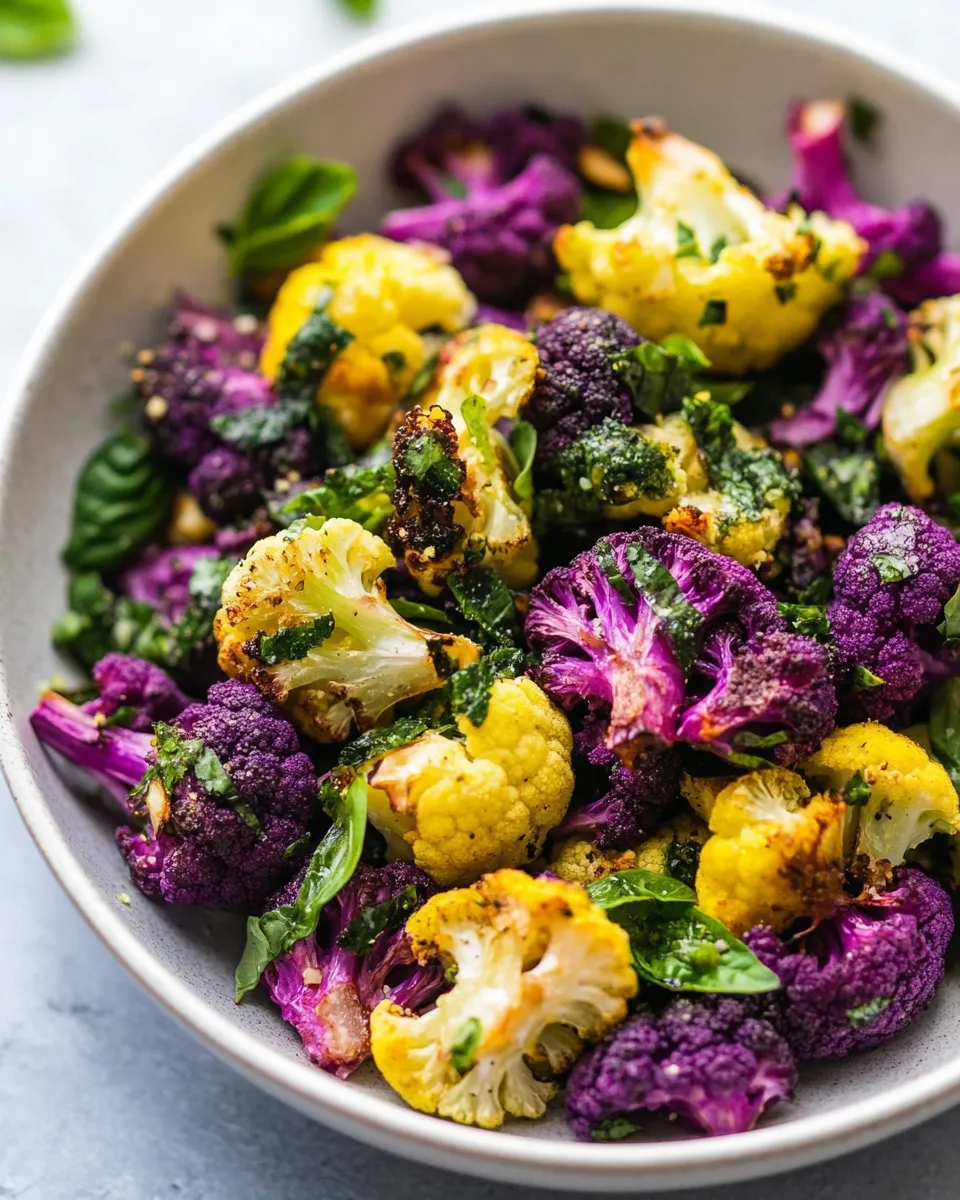
I love a dish that does most of the heavy lifting in the oven but still looks deliberate on the table. This Roasted Purple Cauliflower Salad is exactly that: bright, aromatic, and forgiving. The purple cauliflower holds its jewel-like color when roasted, while the white cauliflower and broccoli add contrast and bite. A warm, lemony dressing ties everything together.
There’s a rhythm to making this salad that I enjoy. Toss the florets with turmeric and smoked paprika, roast until edges caramelize, then dress while still warm. The almonds add the final, necessary crunch. It’s a reliable side for weeknight dinners and a confident addition to a weekend spread.
Below I’ve written the practical notes I reach for every time I make this—what the ingredients are doing, how to avoid common problems, and how to plan leftovers or meal-prep. Read straight through for the recipe steps, or jump to the sections you need.
Ingredient Notes
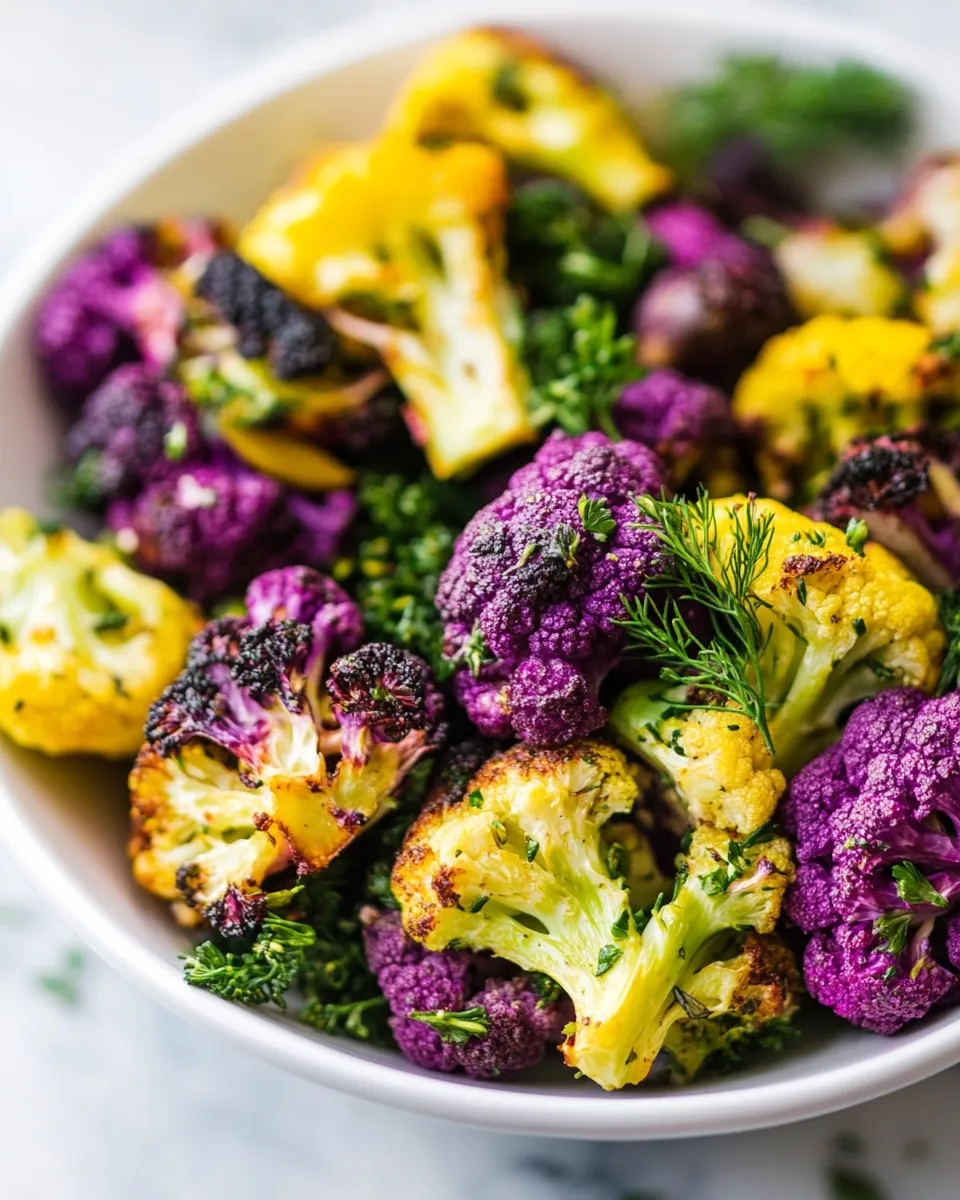
These vegetables are the backbone of the salad. Each brings a different texture and flavor: purple cauliflower for visual interest and mild sweetness, white cauliflower for a neutral, creamy balance, and broccoli for a slightly grassy bite. The spice mix—turmeric and smoked paprika—does two jobs: it deepens color and adds earthy warmth without overwhelming the vegetables.
The dressing is simple but important: extra virgin olive oil for richness, lemon juice for brightness, and a touch of Dijon and maple syrup to anchor the flavors and mellow acidity. Garlic and parsley finish the dressing with a fresh edge. Sliced almonds provide texture and a toasty counterpoint to the tender florets. Keep measurements as written; this recipe balances boldness and restraint.
Ingredients
- ½ white cauliflower head, cut into florets — provides a neutral, creamy base and soaks up the dressing.
- ½ purple cauliflower head, cut into florets — adds color and a mild, slightly sweet note.
- ½ broccoli head, cut into florets — gives contrast in texture and flavor.
- 2 tablespoons olive oil — used for coating the vegetables before roasting; helps with browning.
- 1 teaspoon ground turmeric — adds warm color and a gentle earthy flavor.
- 1 teaspoon ground black pepper — seasoning in the roast mix; provides mild heat.
- 1 teaspoon salt — for initial seasoning of the vegetables before roasting.
- ½ teaspoon smoked paprika — brings a subtle smoky depth without heat.
- 2 tablespoons sliced almonds — for finishing crunch and a nutty note.
- ¼ cup extra virgin olive oil — for the dressing; gives richness and helps emulsify the dressing.
- 2 tablespoons lemon juice — brightens the dressing and balances the oil.
- 1 teaspoon Dijon mustard — acts as an emulsifier and adds savory depth.
- 1 teaspoon maple syrup — softens the acidity and rounds flavors.
- 1 small clove garlic, minced — gives a sharp aromatic lift to the dressing.
- 2 tablespoons chopped fresh parsley, finely chopped but not packed — fresh herb note; lightens the dressing.
- ½ teaspoon salt, check if you need to add more — final seasoning note; adjust to taste after dressing.
- ¼ teaspoon ground black pepper — final seasoning note; adjust to taste.
From Start to Finish: Roasted Purple Cauliflower Salad
- Preheat the oven to 180°C (356°F). Line a sheet pan with parchment or lightly oil it.
- In a large bowl combine the white cauliflower florets, purple cauliflower florets, and broccoli florets.
- In a small bowl mix 2 tablespoons olive oil with 1 teaspoon ground turmeric, ½ teaspoon smoked paprika, 1 teaspoon salt, and 1 teaspoon ground black pepper. Pour this mixture over the vegetables and toss until the florets are evenly coated.
- Spread the coated florets in a single layer on the prepared sheet pan. Roast for 20–30 minutes, stirring or flipping once about halfway through, until the vegetables are tender and edges are lightly browned.
- While the vegetables roast, make the dressing: in a bowl or jar combine ¼ cup extra virgin olive oil, 2 tablespoons lemon juice, 1 teaspoon Dijon mustard, 1 teaspoon maple syrup, 1 small clove garlic (minced), 2 tablespoons chopped fresh parsley, ½ teaspoon salt, and ¼ teaspoon ground black pepper. Whisk or shake until the dressing is emulsified.
- When the vegetables are done, transfer them to a serving bowl. Pour the dressing over the warm roasted vegetables and toss gently to coat. Taste and add more salt or pepper if desired.
- Sprinkle 2 tablespoons sliced almonds over the salad and serve warm or at room temperature.
Why It’s Crowd-Pleasing
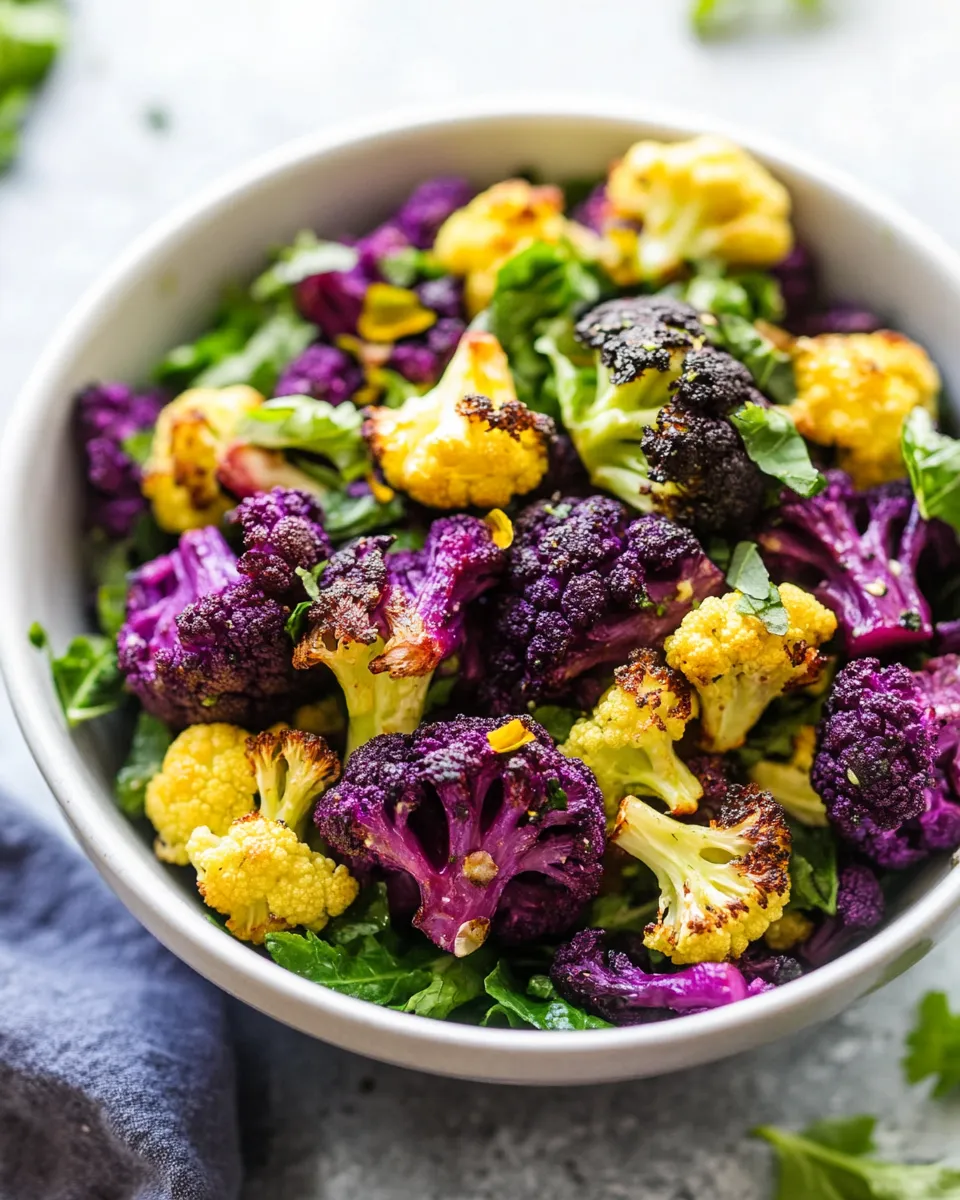
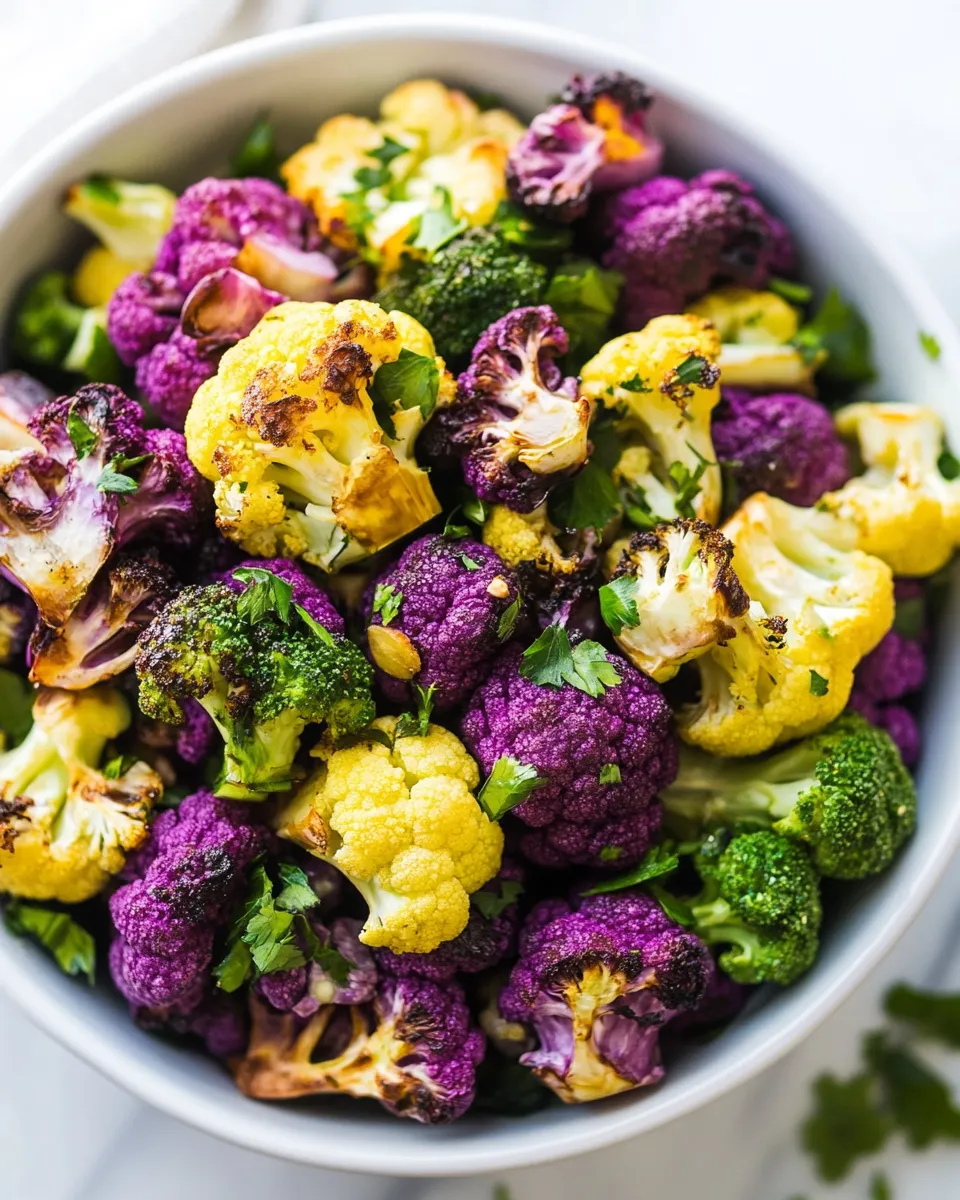
There are a few reliable reasons this salad works in a crowd. First, it’s visually appealing—the purple cauliflower is striking beside white florets and green broccoli. People respond to color; it signals attention to detail without being fussy.
Second, the contrast of textures matters. Roasting brings soft interiors and caramelized edges; the almonds bring crunch. The warm dressing softens the vegetables just enough to taste cohesive, but you still get distinct florets on the fork. Finally, the flavor profile is broad: citrus brightness, gentle smokiness, and a touch of sweetness from maple syrup. Those are flavors lots of people enjoy.
Allergy-Friendly Substitutes
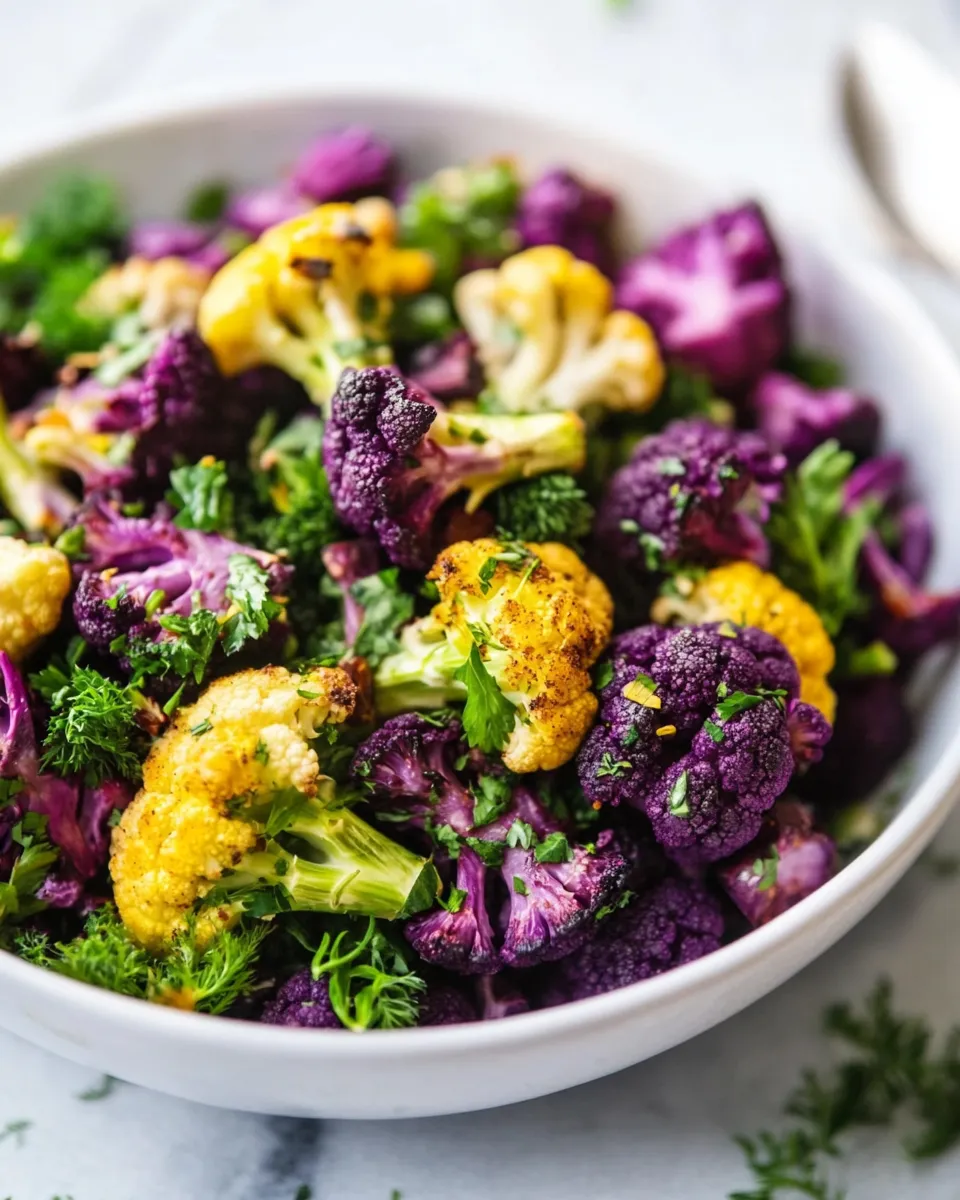
If someone at the table has a nut allergy, the easiest approach is this: skip the sliced almonds altogether. The salad still works well without them. If you want some texture instead, reserve a few extra florets before dressing and roast them a touch longer so they crisp up more—then use those for crunch.
If garlic is a problem, omit the minced clove. Increase the parsley slightly to keep the dressing lively. If you need a lower-sodium version, halve the added salt and season to taste after the dressing is mixed and tossed; the lemon and mustard will help lift the flavors even with less salt.
Essential Tools for Success
- Oven and a reliable sheet pan — for even roasting and caramelization.
- Parchment paper or a thin coating of oil — prevents sticking and makes cleanup easier.
- Large mixing bowl — for tossing the raw florets with the spice oil.
- Small bowl or jar with a lid — for whisking or shaking the dressing until emulsified.
- Spatula or tong — for stirring the vegetables on the pan and transferring to the serving bowl.
- Measuring spoons and measuring cup — follow the ratios in the dressing and spice mix for balanced flavor.
Troubles You Can Avoid
Overcrowding the pan is the most common mistake. If florets sit on top of each other, they steam instead of roast; you lose browning and end up with limp texture. Spread them in a single layer and use two pans if needed.
Another pitfall is under- or over-roasting. Check at 20 minutes; you want tender centers and lightly browned edges. If pieces are very small, they’ll finish faster—keep an eye on them. Burnt turmeric will taste bitter; mix it with the oil and coat evenly so it doesn’t scorch in hot spots.
Finally, don’t add the almonds before roasting unless you want them toasted. The recipe calls for sprinkling them at the end; toasting separately will make them darker and crunchier, but they can also burn quickly if left in the oven with the florets.
Fresh Takes Through the Year
Make this salad in winter to brighten the table with its purple hue, or in warmer months serve it at room temperature as a side for grilled vegetables or light mains. The basic method—roast, dress warm, add crunch—works across seasons.
In cooler months I keep the dressing ratio the same but increase the lemon by a half teaspoon if the vegetables taste more mellow after storage. In warmer months I sometimes let the salad cool completely and toss it over room-temperature cooked grains for a hearty salad bowl. The technique is the constant; the context changes.
Pro Perspective
Two small professional habits make this recipe feel elevated. First, roast in a single layer and rotate the pan if your oven has hot spots. Second, dress the vegetables while they’re still warm. Warm veg absorb the dressing better, so the flavors become integrated instead of sitting on top. Finally, keep the parsley finely chopped but not packed; it distributes evenly and gives a fresh lift without clumping.
Leftovers & Meal Prep
Store leftover salad in an airtight container in the fridge for up to 3–4 days. The texture softens a bit as the dressing continues to mingle with the vegetables, which makes it excellent reheated briefly or served chilled over grains the next day. If you plan to meal-prep, store the almonds separately and add them just before serving to preserve crunch.
To reheat, spread leftovers on a sheet pan and warm in a moderate oven for 6–8 minutes—just enough to take the chill off and revive some browning. Taste and adjust salt or lemon if needed after reheating.
Roasted Purple Cauliflower Salad Q&A
Can I use only purple cauliflower?
Yes. Using only purple cauliflower simplifies the presentation and keeps the color dramatic. The recipe proportions will still work, but watch cooking time—the smaller or denser pieces may cook differently.
Why turmeric in a cauliflower salad?
Turmeric gives a warm color and subtle earthiness that complements the roasted flavors. It also deepens the visual contrast between the purple and white florets when used sparingly, as in this recipe.
Should I toast the almonds?
You can toast them briefly in a dry pan or in the oven if you want a deeper, nuttier flavor. The recipe lists sliced almonds to be sprinkled at the end—if you toast them, do it separately and watch closely so they don’t burn.
How can I keep the purple color from fading?
Roast gently at the given temperature and avoid overcooking. The purple pigment can dull if vegetables are overcooked or exposed to an overly acidic dressing for too long; that’s another reason to dress when warm and serve relatively soon.
Serve & Enjoy
Serve this salad warm or at room temperature. It’s a confident, colorful side that pairs well with many mains or stands on its own as part of a composed vegetarian plate. Finish with the sliced almonds just before serving to preserve the crunch. Take a moment to taste for final seasoning—sometimes a tiny pinch more salt or pepper is all it needs. Enjoy straight from the bowl or plated with intention.

Roasted Purple Cauliflower Salad
Ingredients
Ingredients
- ?1/2 white cauliflower headcut into florets
- ?1/2 purple cauliflower headcut into florets
- ?1/2 broccoli headcut into florets
- ?2 tablespoonsolive oil
- ?1 teaspoonground turmeric
- ?1 teaspoonground black pepper
- ?1 teaspoonsalt
- ?1/2 teaspoonsmoked paprika
- ?2 tablespoonssliced almonds
- ?1/4 cupextra virgin olive oil
- ?2 tablespoonslemon juice
- ?1 teaspoonDijon mustard
- ?1 teaspoonmaple syrup
- ?1 small clovegarlicminced
- ?2 tablespoonschopped fresh parsleyfinely chopped but not packed
- ?1/2 teaspoonsaltcheck if you need to add more
- ?1/4 teaspoonground black pepper
Instructions
Instructions
- Preheat the oven to 180°C (356°F). Line a sheet pan with parchment or lightly oil it.
- In a large bowl combine the white cauliflower florets, purple cauliflower florets, and broccoli florets.
- In a small bowl mix 2 tablespoons olive oil with 1 teaspoon ground turmeric, ½ teaspoon smoked paprika, 1 teaspoon salt, and 1 teaspoon ground black pepper. Pour this mixture over the vegetables and toss until the florets are evenly coated.
- Spread the coated florets in a single layer on the prepared sheet pan. Roast for 20–30 minutes, stirring or flipping once about halfway through, until the vegetables are tender and edges are lightly browned.
- While the vegetables roast, make the dressing: in a bowl or jar combine ¼ cup extra virgin olive oil, 2 tablespoons lemon juice, 1 teaspoon Dijon mustard, 1 teaspoon maple syrup, 1 small clove garlic (minced), 2 tablespoons chopped fresh parsley, ½ teaspoon salt, and ¼ teaspoon ground black pepper. Whisk or shake until the dressing is emulsified.
- When the vegetables are done, transfer them to a serving bowl. Pour the dressing over the warm roasted vegetables and toss gently to coat. Taste and add more salt or pepper if desired.
- Sprinkle 2 tablespoons sliced almonds over the salad and serve warm or at room temperature.
Equipment
- Sheet Pan
Notes
Garnish the salad with sliced/flaked almonds, or sunflower seeds.
For an easy salad dressing, just drizzle some extra virgin olive oil and lemon juice over the salad, and season with salt and pepper.
This recipe works for any kind of cauliflower, not necessarily just purple cauliflower.