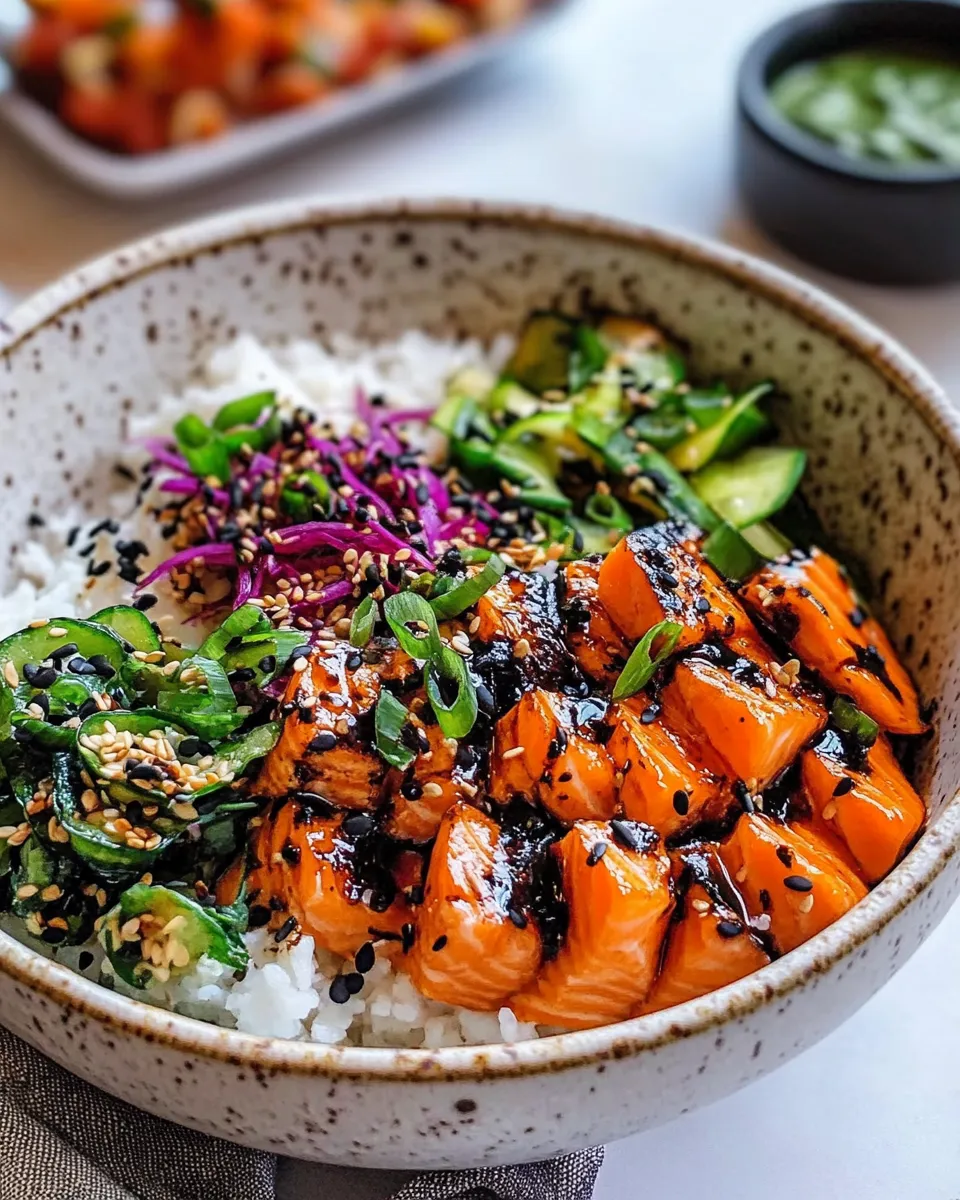
This Salmon Bowl is the weeknight dinner I turn to when I want something bright, satisfying, and a little bit special without spending hours in the kitchen. The marinade is savory with a touch of honey to caramelize under the broiler, the rice or quinoa keeps things comforting, and the creamy yogurt–Sriracha sauce ties everything together with a cooling contrast. It’s the kind of meal that looks like effort but comes together fast.
I like these bowls because they’re flexible. You can swap rice for quinoa, make the sauce milder or hotter, and add more crunch or pickles if you want. The recipe below keeps the salmon as the star and gives you assembly cues so each bowl looks and tastes balanced.
Short on time? You can prep the rice and sauce while the salmon marinates. Want to stretch the recipe for more people? Double the rice and add another tray of salmon. Read through the whole post — there are practical tips and troubleshooting notes that will save you time and prevent common mistakes.
What You’ll Need
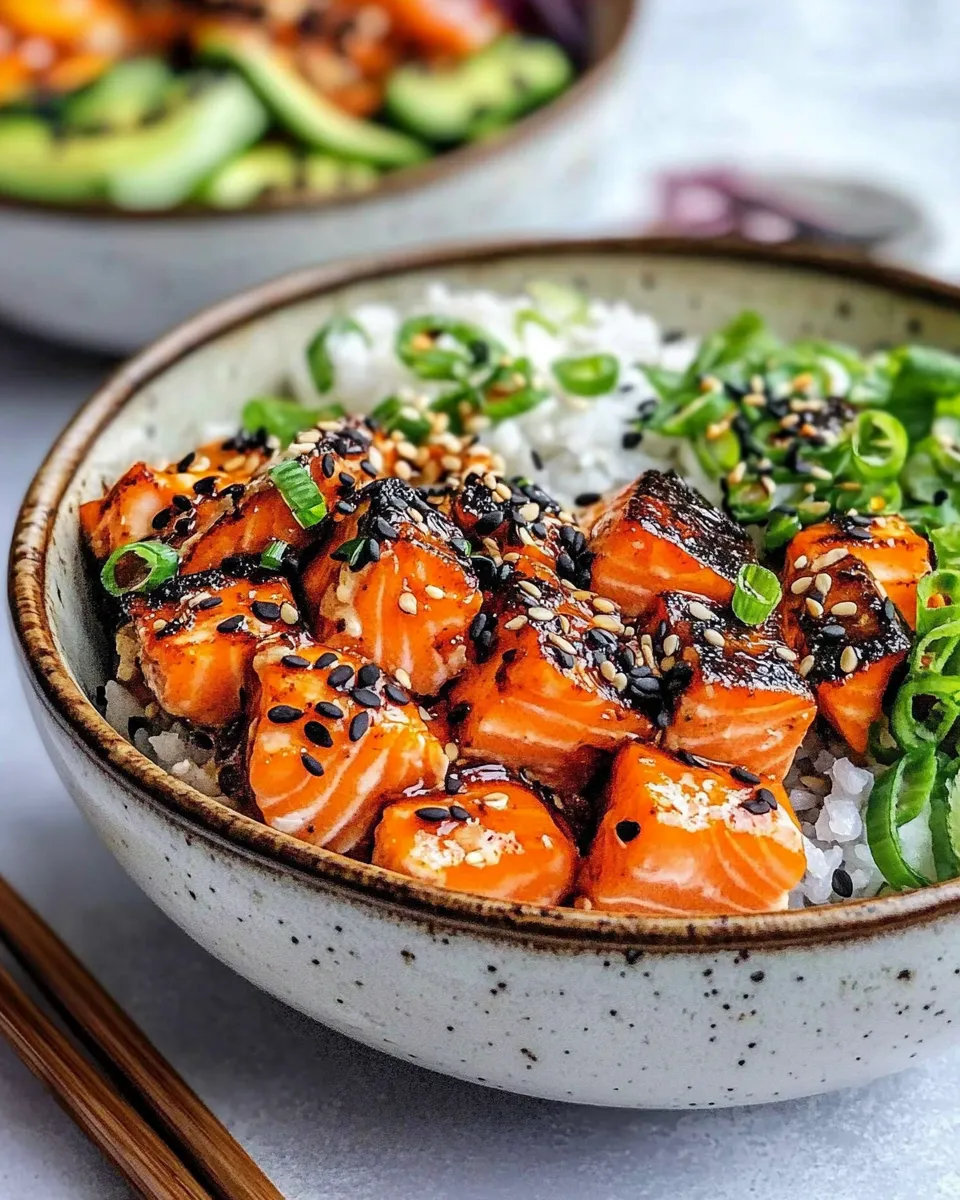
Ingredients
- ¾ cup white or brown rice or quinoa — the base for the bowl; cook according to package directions and keep warm.
- 4 (6-ounce) pieces salmon, skin removed — main protein; choose fillets of similar thickness for even cooking.
- ¼ cup low-sodium soy sauce — provides the salty, savory backbone in the marinade.
- 3 tablespoons rice vinegar — adds brightness and balances the soy sauce.
- 3 tablespoons honey — helps the salmon caramelize and adds gentle sweetness.
- 3 cloves garlic, minced (about 1 tablespoon) — aromatic flavor; mince finely so it spreads through the marinade.
- 1 tablespoon minced fresh ginger (about a 1-inch piece) — adds warmth and freshness; grate or mince finely.
- ¼ teaspoon crushed red pepper flakes, plus additional for serving — gives a subtle heat in the marinade; adjust for spice tolerance.
- 1 English cucumber, halved lengthwise, seeded, and sliced — crunch and cooling contrast in the bowl.
- 2 medium ripe avocados, peeled, pitted, and sliced or diced — creamy texture and healthy fats; add at the end to avoid browning.
- 1 cup frozen shelled edamame, thawed — protein-rich vegetable; thawed for easy assembly.
- Kosher salt — for finishing the salmon and seasoning to taste.
- Sliced green onions — fresh garnish that adds mild onion flavor and color.
- Black sesame seeds, optional for serving — visual contrast and a toasty note if you choose to use them.
- ¼ cup nonfat plain Greek yogurt — base for the creamy sauce; tangy and light.
- 1 to 2 teaspoons Sriracha, plus additional to taste — heat in the sauce; start with 1 teaspoon if you prefer mild.
- 2 to 4 teaspoons milk, plus additional as needed — thins the yogurt to a drizzle-able consistency; use the smaller amount first and add more if needed.
Build Salmon Bowl Step by Step
- Cook 3/4 cup white or brown rice or quinoa according to package directions; keep warm.
- Place oven racks in the center and upper third positions and preheat the oven to 400°F.
- In a medium bowl or large measuring cup, whisk together 1/4 cup low-sodium soy sauce, 3 tablespoons rice vinegar, 3 tablespoons honey, 3 cloves minced garlic (about 1 tablespoon), 1 tablespoon minced fresh ginger, and 1/4 teaspoon crushed red pepper flakes.
- Arrange the four 6-ounce salmon pieces (skin removed) in a baking pan sized so the pieces are nearly touching but not crowded (an 8×10 or 9×13 works). Pour three-quarters of the marinade over the salmon and reserve the remaining quarter in a small bowl or cup.
- Let the salmon marinate at room temperature for 15 minutes, flipping each piece once halfway through the marinating time.
- While the salmon marinates, make the creamy sauce: in a small bowl whisk together 1/4 cup nonfat plain Greek yogurt, 1 to 2 teaspoons Sriracha (use 1 or 2 to taste), and 2 teaspoons milk. Add additional milk, up to the remaining amount listed (2 to 4 teaspoons total), as needed until the sauce is smooth and has a drizzle-able consistency. Set aside and adjust Sriracha to taste if desired.
- Turn the salmon so the presentation (top) side is up. Spoon some of the marinade that has pooled in the pan over the top of each fillet.
- Bake the salmon at 400°F on the center rack for 6 minutes. Use a spoon to baste the tops with pan juices, then continue baking until the salmon is almost cooked through at the center—about another 5 minutes for 1-inch-thick fillets (adjust time for thicker or thinner fillets).
- Drizzle the reserved glaze over the salmon, move the pan to the upper third rack, switch the oven to broil, and broil until the salmon reaches 140°F on an instant-read thermometer for medium (or 145°F for well done). This should take about 1 to 2 minutes; watch closely so it does not burn. The temperature will rise slightly as the salmon rests.
- Remove the salmon from the oven, sprinkle each fillet with a pinch of kosher salt, and let rest a few minutes while you assemble the bowls.
- To assemble each bowl: divide the cooked rice or quinoa among serving bowls. Top each with sliced English cucumber (halved lengthwise, seeded, and sliced), a scoop of 1 cup thawed frozen shelled edamame divided among bowls, sliced or diced avocado, and one piece of salmon.
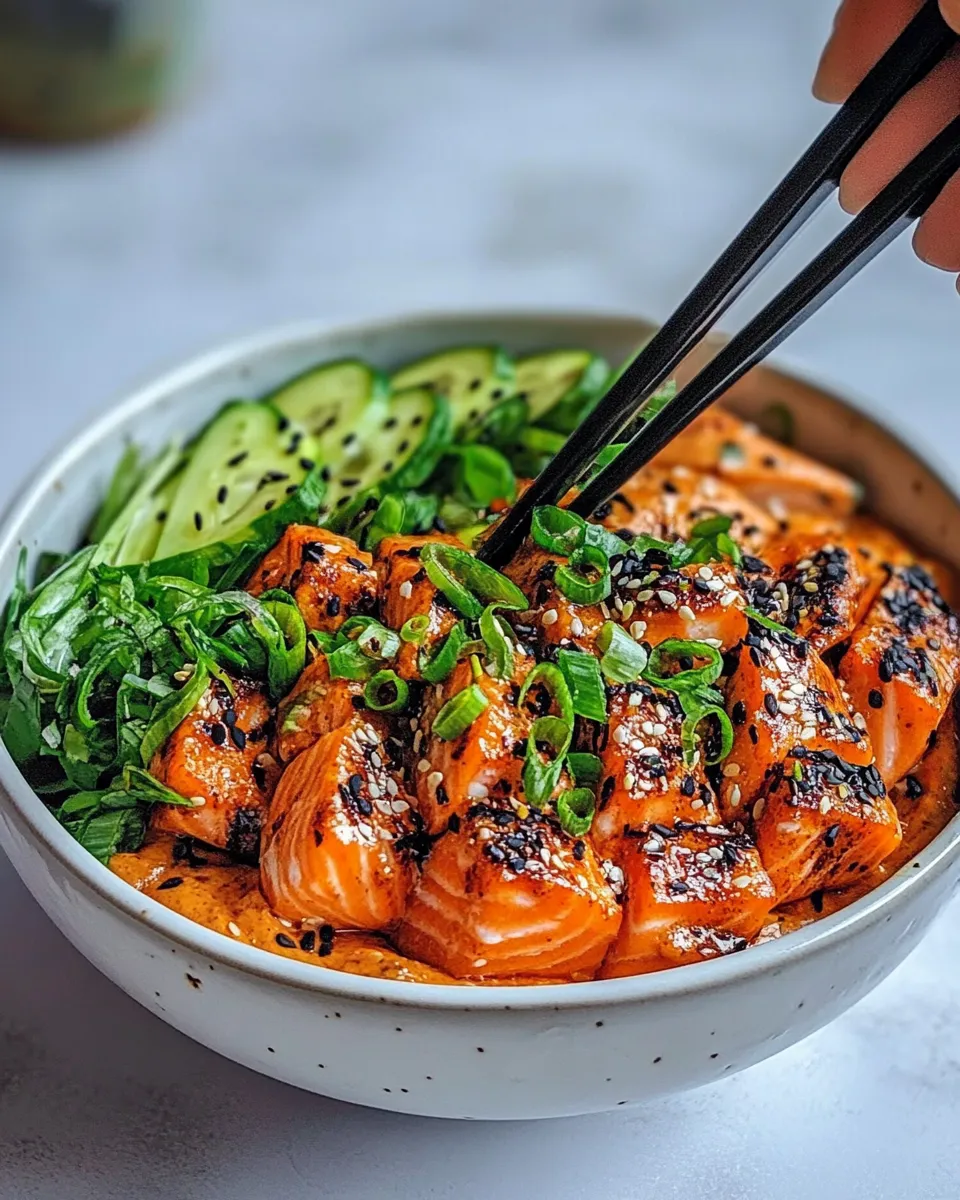
- Drizzle the creamy yogurt-Sriracha sauce over each bowl. Garnish with sliced green onions, black sesame seeds if using, and additional crushed red pepper flakes and Sriracha to taste. Serve immediately.
Why It Works Every Time
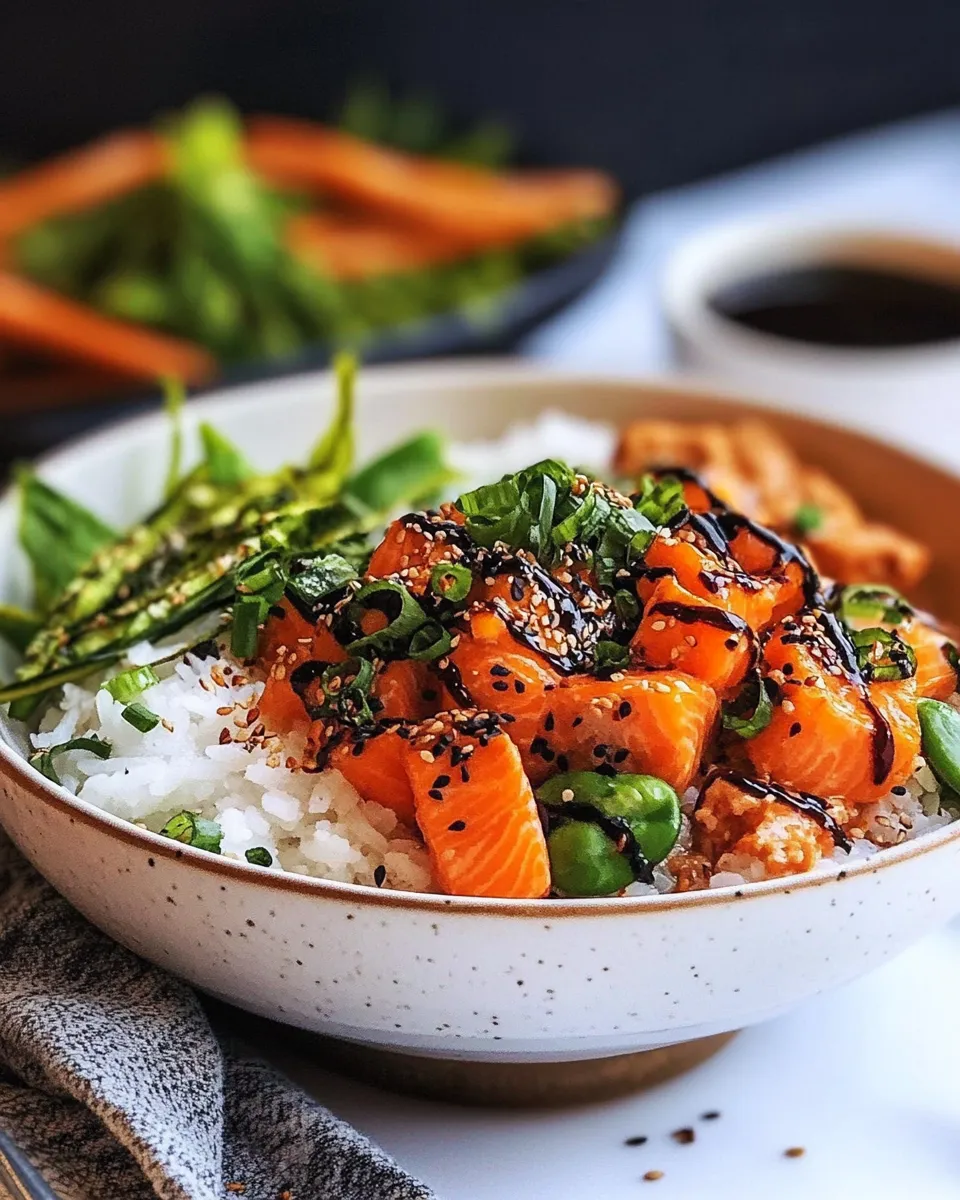
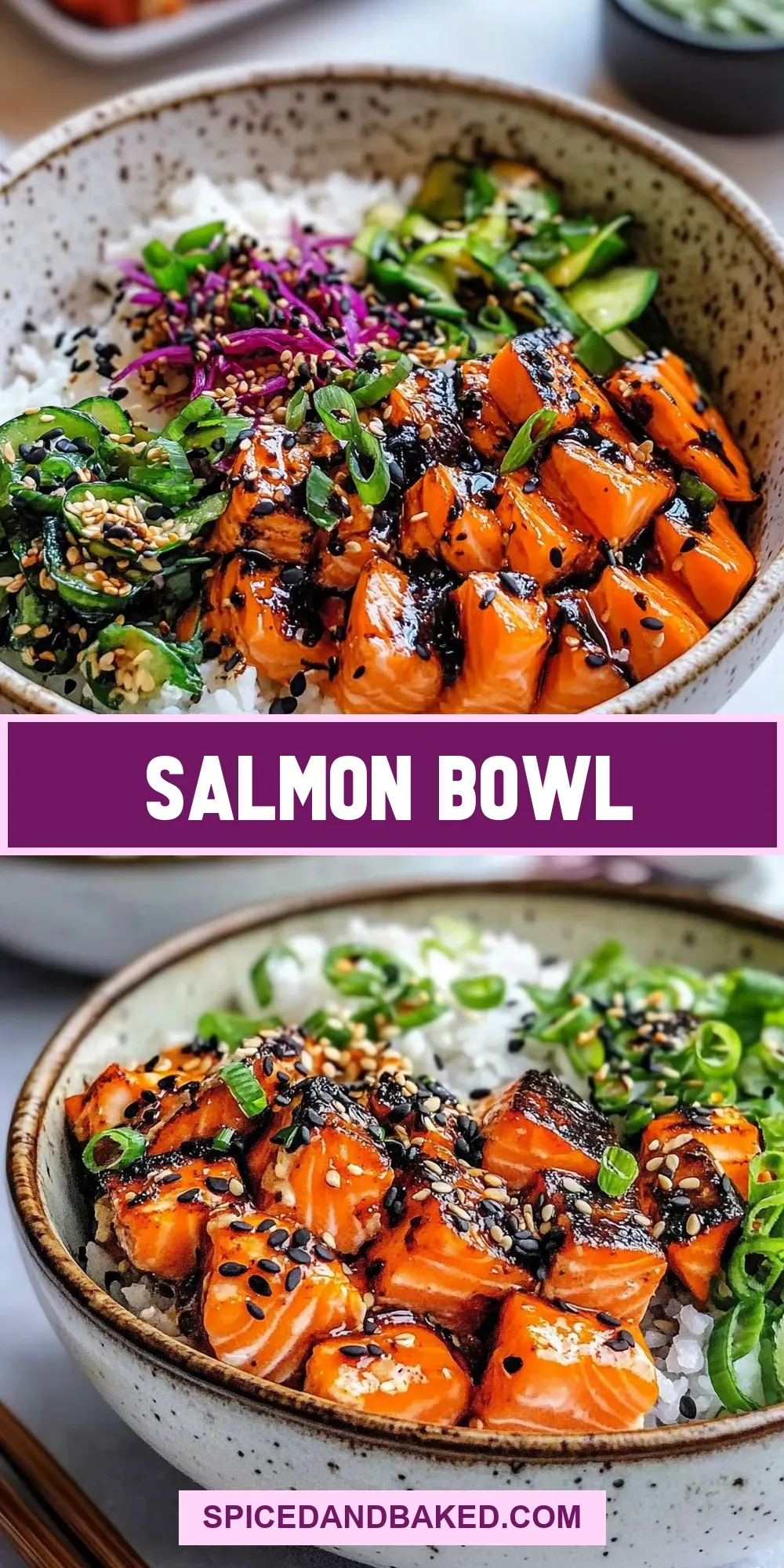
The balance in this bowl is intentional. The soy–vinegar–honey marinade adds umami, acidity, and sweetness so the salmon has layers of flavor before it even hits the oven. A quick broil at the end caramelizes the glaze and gives the top a glossy finish while the inside stays tender.
The rice or quinoa anchors the bowl and absorbs juices, while cucumber and edamame add coolness and bite. Avocado brings fat and silkiness that contrasts with the tangy, slightly spicy yogurt sauce. Each component plays a clear role: texture, temperature, fat, acid, and heat. When those are covered, the bowl feels complete.
Allergy-Friendly Substitutes
Soy: Replace low-sodium soy sauce with a gluten-free tamari if you need to avoid gluten, or use coconut aminos for soy-free, lower-sodium option—note the flavor is sweeter and less salty, so taste the marinade.
Garlic/Ginger: If you can’t use raw alliums or ginger, try a small pinch of garlic powder and ground ginger, though fresh gives the best flavor.
Dairy: For a dairy-free sauce, swap the nonfat Greek yogurt for plain unsweetened dairy-free yogurt (coconut or almond-based). Use a bit more milk or water to reach drizzle consistency since dairy-free yogurts can be thicker or runnier.
Equipment Breakdown
Nothing fancy is required. A few tools make this easier and more reliable:
- Baking pan (8×10 or 9×13) — fits four 6-ounce fillets without crowding; shallow pans let the marinade pool for basting.
- Instant-read thermometer — the fastest way to hit the correct doneness (140°F for medium, 145°F for well done).
- Small bowl and whisk — for the marinade and to whisk the yogurt sauce smooth.
- Rice pot or small saucepan — follow package instructions to get fluffy rice or perfect quinoa.
Things That Go Wrong
Overcooked salmon: it dries out fast. Solution: check doneness early, and broil only briefly. Pull the salmon at 140°F for medium; it will carryover cook during the rest.
Burned glaze under broiler: those sugars in honey brown quickly. Always watch the broiler window and keep the pan on the upper rack for just 1–2 minutes, as instructed.
Soggy rice: avoid storing cooked rice covered while it’s hot; let it sit for a few minutes to steam off excess moisture, or use a fork to fluff it before assembling bowls.
Season-by-Season Upgrades
Spring: Add a handful of thinly sliced radishes or blanched asparagus tips for a peppery crunch and visual freshness.
Summer: Swap some of the cucumber for quick-pickled summer tomatoes or sweet corn off the cob, lightly tossed with lemon and salt.
Fall: Roasted squash cubes (like delicata or butternut) give earthy sweetness that pairs well with the honey-soy glaze.
Winter: Wilted spinach or sautéed kale folded into the rice adds color and keeps the bowl hearty when cucumbers feel out of season.
Notes from the Test Kitchen
Timing
I tested fillets between 3/4- to 1-1/4-inch thickness. For 1-inch fillets the bake and broil timing in the recipe worked reliably. If your fillets are thinner, shorten the bake stage by a few minutes and check the center early. Thicker cuts may need an extra 3–5 minutes before broiling; use the thermometer rather than watch time alone.
Marinating
Fifteen minutes at room temperature is enough to flavor the surface without over-marinating. If you want a stronger punch, you can marinate longer in the fridge but bring the fish to room temperature before baking so it cooks evenly.
Prep Ahead & Store
Do as much prep as you can ahead to make assembly fast: cook rice or quinoa and chill or keep warm; make the yogurt–Sriracha sauce and refrigerate; slice cucumbers and thaw edamame. Keep avocado separate until serving to avoid browning.
Store leftovers in airtight containers for up to 2 days in the fridge. Keep salmon and sauce separate from the rice and avocado if you can—this preserves texture. Reheat gently in a low oven (300°F) just until warm to avoid drying the fish; finish with a quick hit under the broiler if you want to re-crisp the top, watching closely.
Troubleshooting Q&A
Q: My salmon tastes too salty. A: Use low-sodium soy sauce as directed and reserve some marinade rather than pouring all over. You can also serve the bowl with more rice to balance saltiness.
Q: The glaze burned during broiling. A: Broilers vary in intensity. Move the rack down one level, and broil in 30-second increments while watching closely.
Q: Sauce is too thick or too thin. A: Add milk 1 teaspoon at a time to thin, up to the 4 teaspoons. If too thin, stir in a bit more Greek yogurt slowly until you reach desired consistency.
Bring It Home
This Salmon Bowl is about balance and ease. The glaze feels restaurant-level, but the method is simple enough for a midweek dinner. Keep the yogurt–Sriracha sauce mild if you’re serving kids, and pass extra Sriracha at the table for anyone who wants more heat. With a sheet pan, a pot for grains, and 30–40 minutes you’ll have a colorful, satisfying meal that looks like you planned it all day.
Make it your own: swap the grain, add seasonal veg, or turn it into meal-prep bowls for the week. Follow the steps above, trust the thermometer, and you’ll get consistent results every time.
Salmon Bowl
Ingredients
Ingredients
- 3/4 cupwhite or brown riceor quinoa
- 4 6-ounce pieces salmonskin removed
- 1/4 cuplow-sodium soy sauce
- 3 tablespoonsrice vinegar
- 3 tablespoonshoney
- 3 clovesgarlic mincedabout 1 tablespoon
- 1 tablespoonminced fresh gingerabout a 1-inch piece
- 1/4 teaspooncrushed red pepper flakes plus additional for serving
- 1 English cucumberhalved lengthwise seeded, and sliced
- 2 medium ripe avocadospeeled pitted, and sliced or diced
- 1 cupfrozen shelled edamamethawed
- Kosher salt
- Sliced green onions
- Black sesame seedsoptional for serving
- 1/4 cupnonfat plain Greek yogurt
- 1 to 2 teaspoonsSriracha plus additional to taste
- 2 to 4 teaspoonsmilk plus additional as needed
Instructions
Instructions
- Cook 3/4 cup white or brown rice or quinoa according to package directions; keep warm.
- Place oven racks in the center and upper third positions and preheat the oven to 400°F.
- In a medium bowl or large measuring cup, whisk together 1/4 cup low-sodium soy sauce, 3 tablespoons rice vinegar, 3 tablespoons honey, 3 cloves minced garlic (about 1 tablespoon), 1 tablespoon minced fresh ginger, and 1/4 teaspoon crushed red pepper flakes.
- Arrange the four 6-ounce salmon pieces (skin removed) in a baking pan sized so the pieces are nearly touching but not crowded (an 8×10 or 9×13 works). Pour three-quarters of the marinade over the salmon and reserve the remaining quarter in a small bowl or cup.
- Let the salmon marinate at room temperature for 15 minutes, flipping each piece once halfway through the marinating time.
- While the salmon marinates, make the creamy sauce: in a small bowl whisk together 1/4 cup nonfat plain Greek yogurt, 1 to 2 teaspoons Sriracha (use 1 or 2 to taste), and 2 teaspoons milk. Add additional milk, up to the remaining amount listed (2 to 4 teaspoons total), as needed until the sauce is smooth and has a drizzle-able consistency. Set aside and adjust Sriracha to taste if desired.
- Turn the salmon so the presentation (top) side is up. Spoon some of the marinade that has pooled in the pan over the top of each fillet.
- Bake the salmon at 400°F on the center rack for 6 minutes. Use a spoon to baste the tops with pan juices, then continue baking until the salmon is almost cooked through at the center—about another 5 minutes for 1-inch-thick fillets (adjust time for thicker or thinner fillets).
- Drizzle the reserved glaze over the salmon, move the pan to the upper third rack, switch the oven to broil, and broil until the salmon reaches 140°F on an instant-read thermometer for medium (or 145°F for well done). This should take about 1 to 2 minutes; watch closely so it does not burn. The temperature will rise slightly as the salmon rests.
- Remove the salmon from the oven, sprinkle each fillet with a pinch of kosher salt, and let rest a few minutes while you assemble the bowls.
- To assemble each bowl: divide the cooked rice or quinoa among serving bowls. Top each with sliced English cucumber (halved lengthwise, seeded, and sliced), a scoop of 1 cup thawed frozen shelled edamame divided among bowls, sliced or diced avocado, and one piece of salmon.
- Drizzle the creamy yogurt-Sriracha sauce over each bowl. Garnish with sliced green onions, black sesame seeds if using, and additional crushed red pepper flakes and Sriracha to taste. Serve immediately.
Equipment
- Oven
- Baking Pan
- Medium Bowl
- Measuring Cup
- Small Bowl
- Whisk
- Spoon
- Instant-read thermometer
Notes
Recipe was updated on 2.12.24 — the prior pan version was messy and smoky to cook; this version is much neater and just as delicious.
TO STORE: Store leftover rice, veggies, and sauce separately in the refrigerator for up to 4 days. I find salmon tastes best the day it is made, but you can refrigerate the leftovers for 1 additional day.
TO REHEAT: Gently reheat rice in a large skillet over medium-low heat or in the microwave until warmed through. I recommend enjoying the leftover salmon at room temperature versus reheating it to make sure it doesn’t dry out.