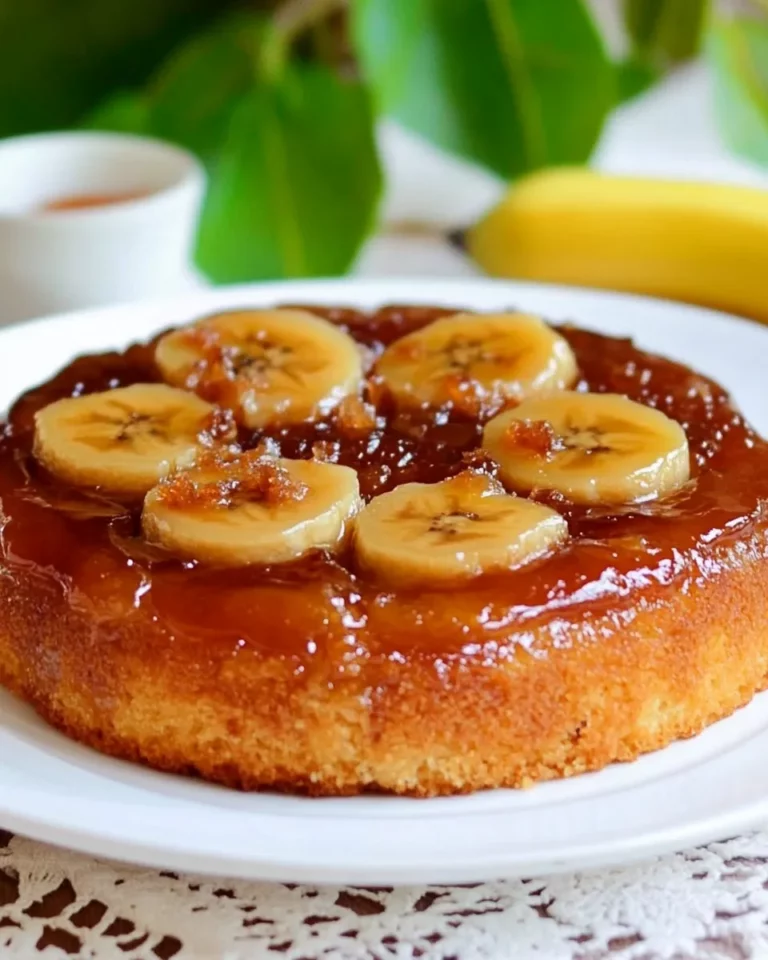
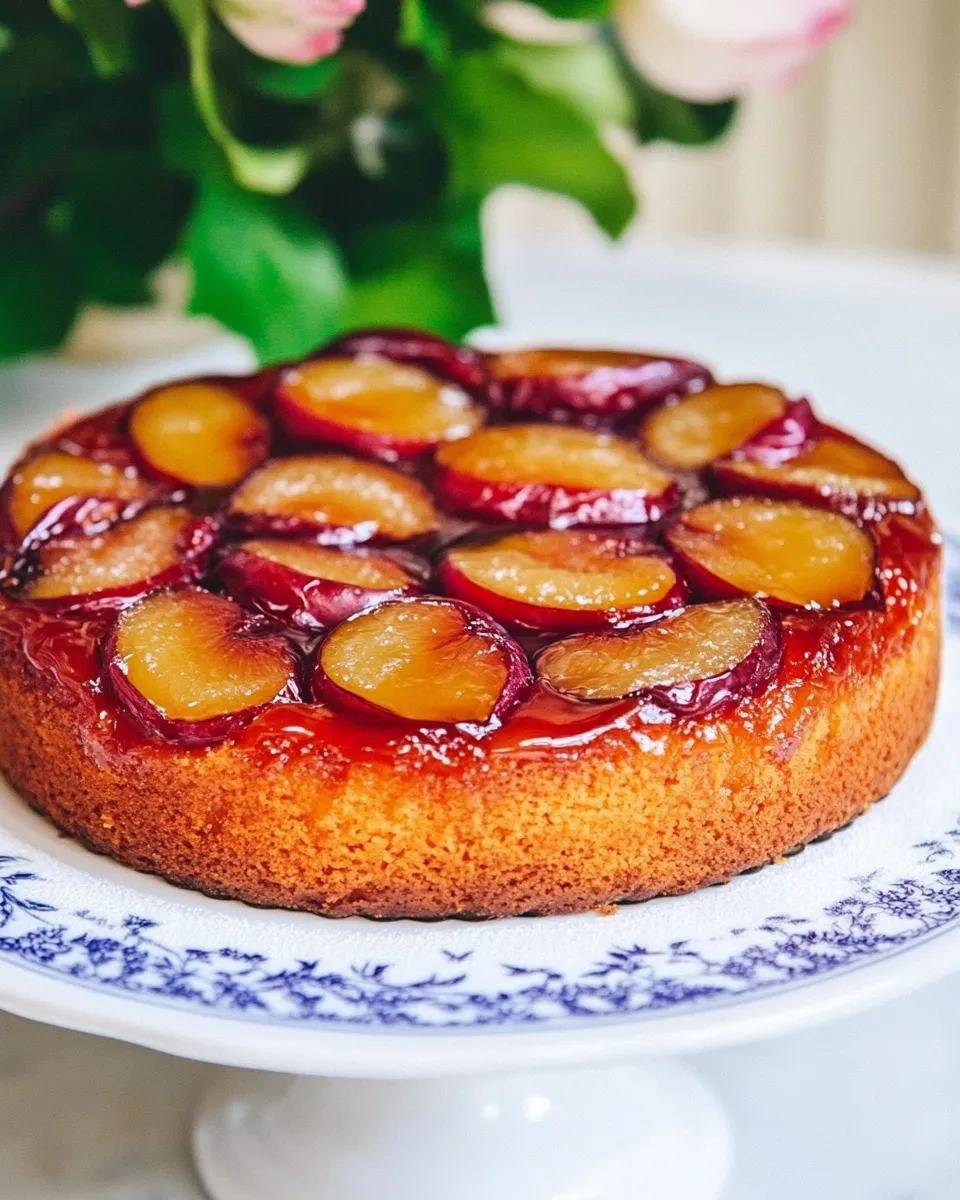
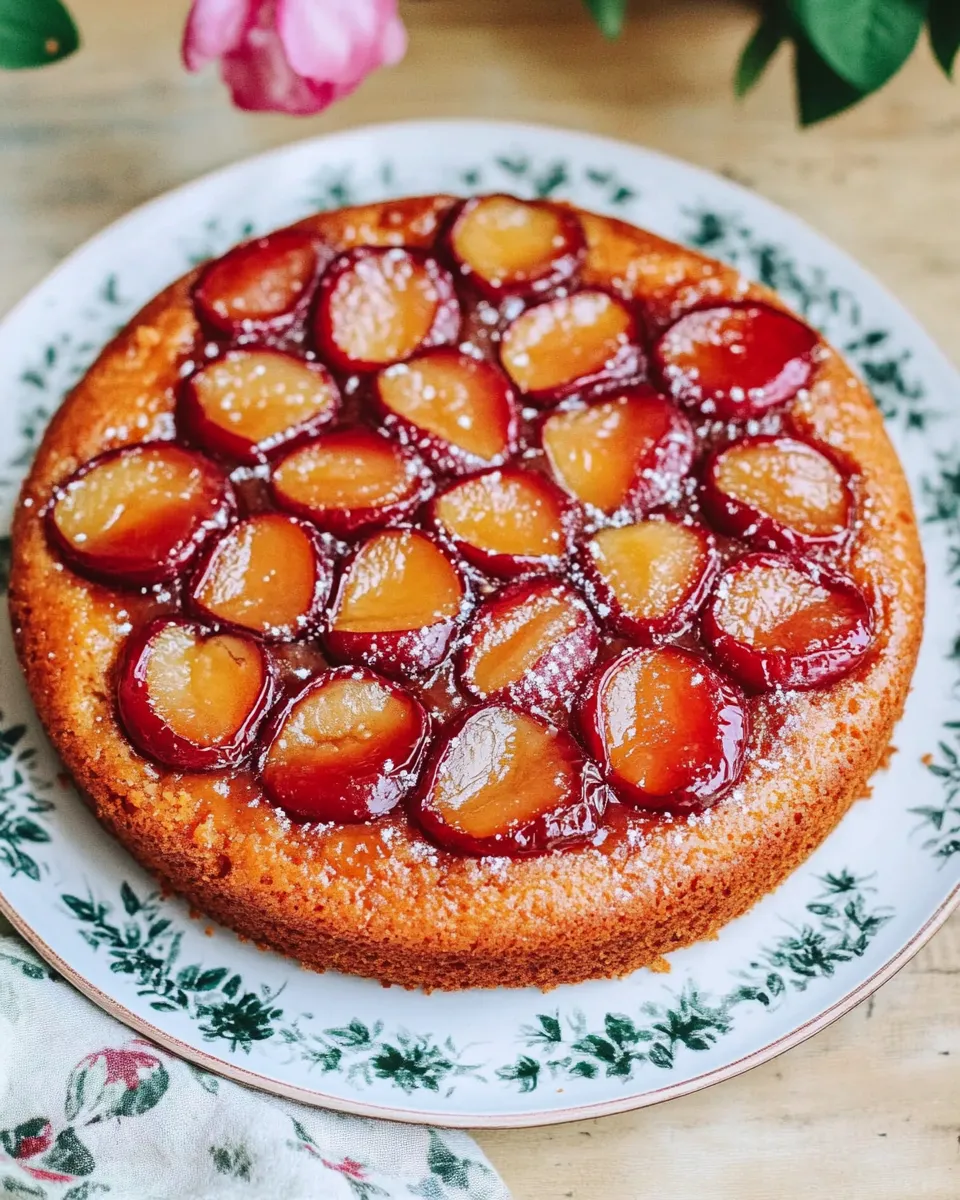
Plums and warm spice make a quietly elegant pairing. This upside-down cake celebrates that contrast: bright, juicy fruit caramelized against a gently spiced crumb. I like it warm with a dollop of crème fraîche or cooled to room temperature so the caramel sets and slices cleanly.
The method is straightforward. You’ll start by making a simple spice caramel, arrange the plums, then fold a tender, butter-forward batter over the top. The finish — flipping the cake out of the pan — is a satisfying reveal every time.
Read through the steps once, prep your ingredients, and you’ll have a showstopping but approachable dessert. No exotic equipment, just careful timing and respect for the fruit.
What Goes In
- 1 1/4 cups (150 g) all-purpose flour — provides structure for the cake; measure by spooning into the cup or use a scale for accuracy.
- 1 teaspoon baking powder — the leavening agent that gives the cake lift.
- 1/2 teaspoon salt — balances sweetness and enhances flavor.
- 3 tablespoons (40 g) light brown sugar — used in the caramel layer for a deeper, molasses note.
- 1 tablespoon (15 ml) water — loosens the caramel so it spreads evenly.
- 1 teaspoon ground cinnamon — adds warm spice to the caramel.
- 1/4 teaspoon ground ginger — gives a bright, peppery lift to the spice mix.
- 4 medium (450 g) plums, pitted and quartered — the star fruit; choose ripe but firm plums so they hold shape while baking.
- 3/4 cup (150 g) granulated sugar — sweetens the cake batter and helps create a tender crumb.
- 1/2 cup (113 g) unsalted butter, softened, plus extra for greasing — the primary fat for richness and flavor; softened butter creams more easily with sugar.
- 2 large eggs, at room temperature — add richness and help with structure; room temperature eggs incorporate more smoothly.
Spiced Plum Upside Down Cake, Made Easy
- Preheat the oven to 350°F (180°C). Lightly grease an 8-inch (20 cm) cake pan with some of the extra unsalted butter and line the base with a round of parchment paper.
- In a medium bowl, whisk together 1 1/4 cups (150 g) all-purpose flour, 1 teaspoon baking powder, and 1/2 teaspoon salt. Set aside.
- In a small saucepan over medium heat, combine 3 tablespoons (40 g) light brown sugar, 1 tablespoon (15 ml) water, 1 teaspoon ground cinnamon, and 1/4 teaspoon ground ginger. Stir constantly until the sugar dissolves and the mixture is smooth and just begins to bubble, about 1–2 minutes. Remove from heat.
- Pour the caramel mixture into the prepared pan and spread it evenly over the base.
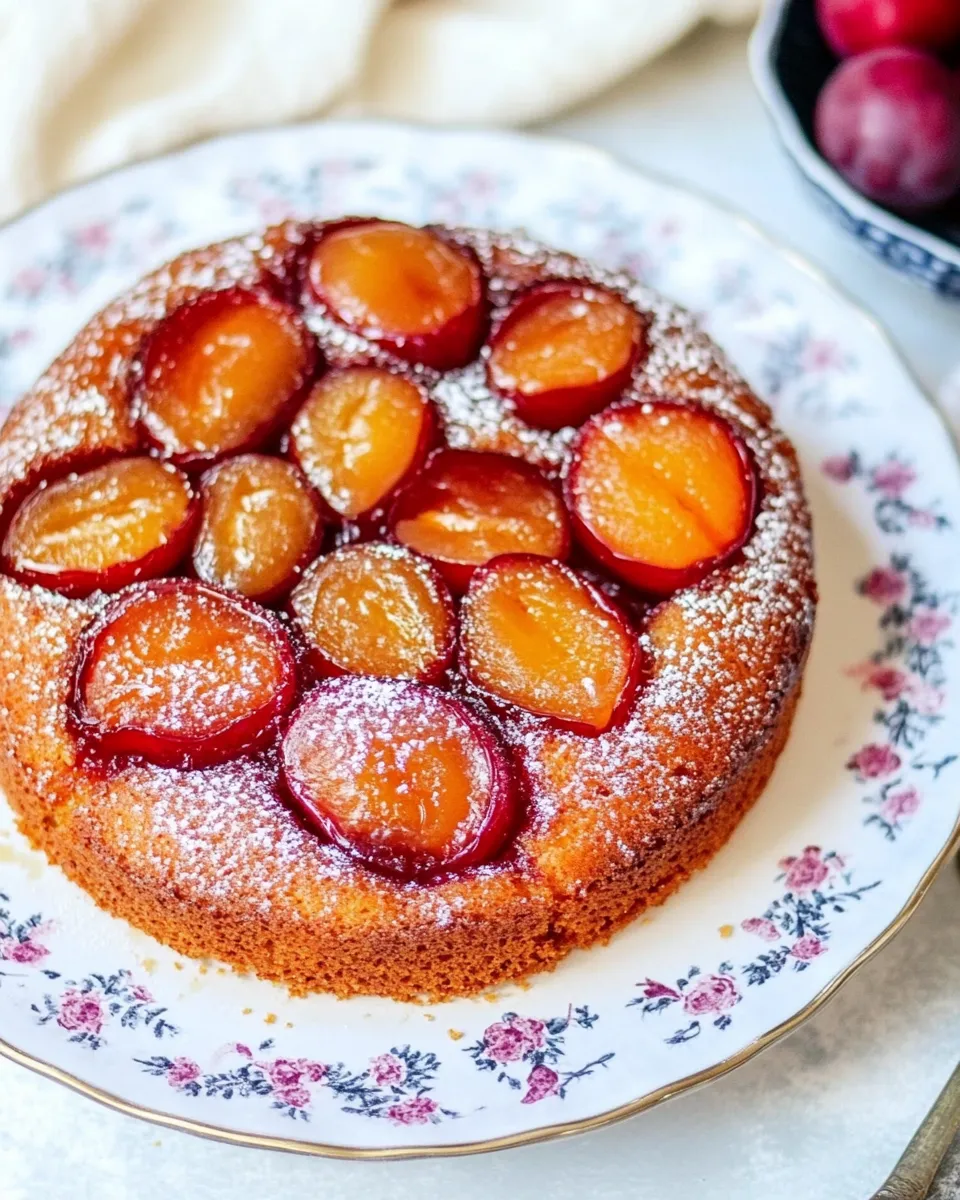
- Arrange the 4 medium (450 g) plums, pitted and quartered, in a single layer over the caramel, cut sides down, in a decorative pattern.
- In a large mixing bowl, use a hand mixer to beat 1/2 cup (113 g) softened unsalted butter and 3/4 cup (150 g) granulated sugar until light and fluffy, about 2–3 minutes.
- Add the 2 large eggs (at room temperature) one at a time, beating until each egg is incorporated and scraping down the sides of the bowl as needed. (Do not add vanilla — it is not in the ingredient list.)
- Add the dry ingredients to the butter mixture and mix on low speed just until combined. Do not overmix; the batter will be thick.
- Spoon the batter evenly over the plums, spreading gently to cover the fruit and smoothing the top with a spatula.
- Bake in the preheated oven for 35–40 minutes, or until a toothpick inserted into the center of the cake (avoiding the fruit) comes out clean or with a few moist crumbs.
- Remove the pan from the oven and set it on a wire rack. Let the cake cool in the pan for 10 minutes. Run a knife around the edge if needed to loosen.
- Place a serving plate over the pan and carefully invert the cake onto the plate. Peel off the parchment paper, then serve warm or at room temperature.
What Makes This Recipe Special
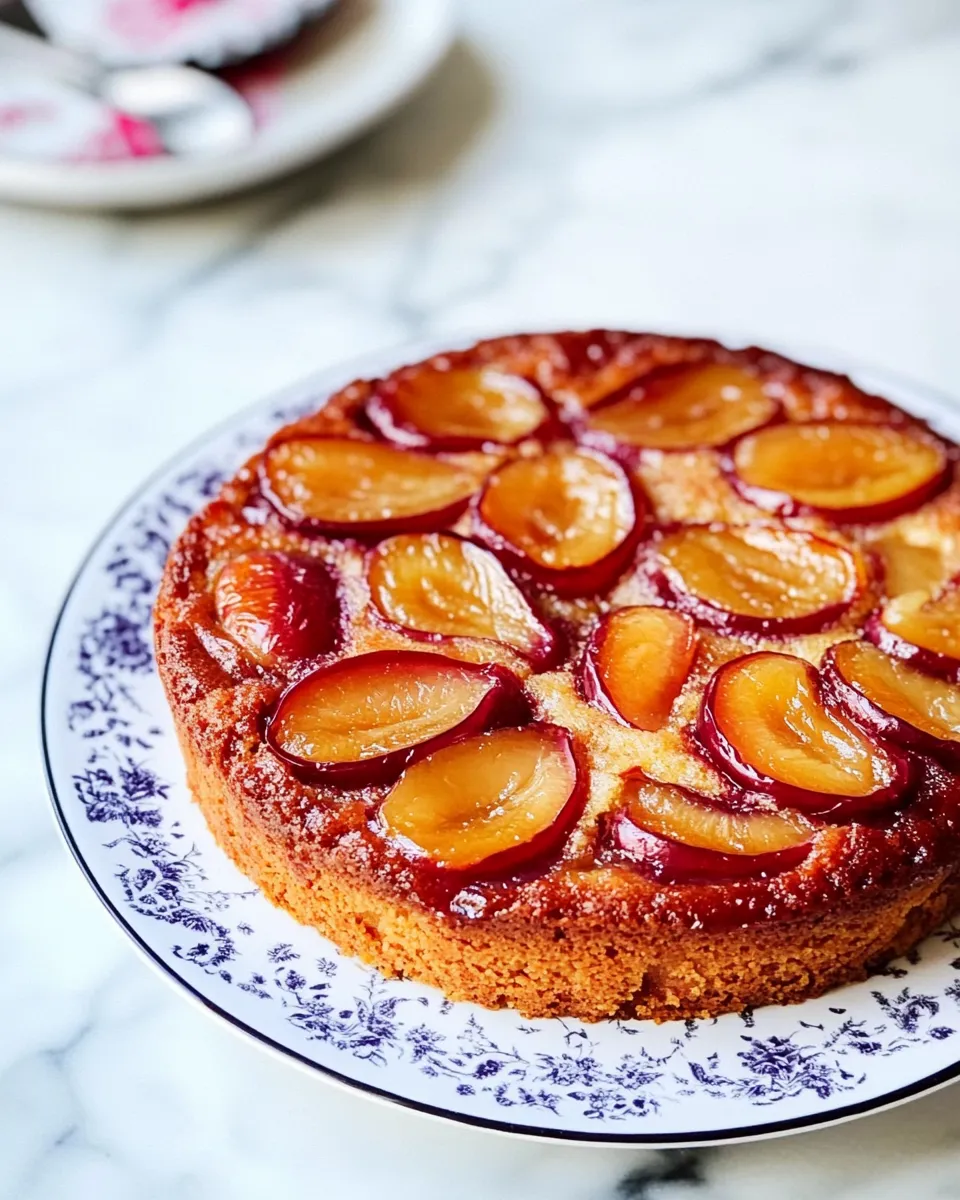
This cake hinges on a few simple contrasts: tart, juicy plums against sweet, spiced caramel; a buttery cake that isn’t overly sweet; and a rustic presentation that looks like you worked longer than you did. The caramel is intentionally light and spiced rather than heavy and cloying, so the plums retain brightness and balance.
Using quartered plums creates both visual appeal and texture variety. When the cake bakes, the fruit releases juices that mingle with the caramel, creating glossy ribbons across the surface. That glossy finish is part of the charm — it reads like a patisserie creation but is made in a single pan.
Vegan & Vegetarian Swaps
For vegetarians there’s nothing to change — the recipe is already vegetarian-friendly. If you want a vegan version, you’ll need to replace the butter and eggs. A firm vegan butter substitute measured 1:1 usually works for the creaming step. For eggs, consider using a commercial egg replacer or a flax “egg” (1 tablespoon ground flax + 3 tablespoons water per egg, chilled until gelatinous). Expect a slightly different crumb and color, and watch baking time closely — batters made with substitutes can bake a touch faster or slower.
Tools & Equipment Needed
- 8-inch (20 cm) cake pan — for the right depth and shape.
- Small saucepan — to make the caramel.
- Mixing bowls — at least one medium and one large.
- Hand mixer — speeds up creaming; you can use a stand mixer or whisk by hand if needed.
- Spatula and knife — for spreading batter and loosening the cake before flipping.
- Parchment paper and wire rack — parchment prevents sticking; the rack allows the cake to cool evenly.
Errors to Dodge
Don’t skip lining the pan with parchment. The caramel is sticky; parchment ensures a clean flip. Greasing alone is often not enough.
Don’t overmix once you add the dry ingredients. Overworking the batter creates a tough crumb. Mix just until combined — a thick batter is expected.
Use plums that are ripe but not mushy. Overripe fruit releases too much liquid and can make the bottom layer soggy. If your plums are very small, use more pieces so you still have a full layer.
Dietary Customizations
Lower-sugar option: you can cut the granulated sugar in the batter slightly (try 10–15% less), though the texture will be marginally different. Keep the brown sugar in the caramel unchanged if you want that glossy finish and proper caramelization.
Gluten-free version: substitute a 1:1 gluten-free flour blend designed for baking and ensure it contains xanthan gum or a similar binder. Texture will vary compared to all-purpose flour, but the method remains the same.
What I Learned Testing
I tested this cake with three plum varieties: Santa Rosa, Italian, and Mirabelle. Firmer plums (Italian) held their shape best and produced the prettiest slices, while very soft plums (overripe Santa Rosas) ran more and produced a saucier topping. Mid-ripe fruit gives the best balance of sliceability and juiciness.
Timing matters more than oven temperature. My oven runs slightly hot, so I checked the cake at 33 minutes during testing. The toothpick test should avoid the fruit; fruit can give a false moist reading. If the center is set but the fruit area looks glossy, you’re done.
When in doubt, cool the cake the full 10 minutes in the pan before inverting. Too soon and the caramel can run; too long and the caramel firms and sticks. Ten minutes hit the sweet spot in my tests.
Storing, Freezing & Reheating
Store leftovers covered at room temperature for up to 24 hours. After that, refrigerate in an airtight container for up to 3 days. The caramel will firm in the fridge; bring slices to room temperature before serving or warm briefly.
To reheat, warm individual slices in a 325°F (160°C) oven for 8–10 minutes or microwave for 15–25 seconds, watching the caramel so it doesn’t boil. For longer storage, wrap well and freeze for up to 1 month. Thaw overnight in the refrigerator and bring to room temperature or reheat gently.
Handy Q&A
Q: Can I use a different fruit? A: Yes — pears, peaches, or apples can work, but adjust for moisture content and slice thickness. Firmer fruits translate best.
Q: The caramel hardened in the pan — what went wrong? A: If the caramel cools too long before you add the fruit and batter, it can set. Work quickly and keep the pan warm or add the fruit and batter right after pouring the caramel.
Q: Cake stuck to the pan after flipping — how to prevent it? A: Proper parchment coverage and greasing the sides (not just the base) help. If it sticks, run a thin knife around the edge before inverting.
The Takeaway
This Spiced Plum Upside Down Cake is dependable and elegant. The technique is simple: make a spiced caramel, arrange the plums, and pour a tender batter over. Small choices — the ripeness of the plums, not overmixing the batter, and allowing the cake a short cool-down before flipping — determine success.
Make it for a casual dinner or a small celebration. It looks like effort and rewards you with a warm, spiced-sweet finish that matches both weekday suppers and weekend guests. Once you’ve baked it, you’ll find the flip is the best part.
Spiced Plum Upside Down Cake
Ingredients
Ingredients
- ?1 1/4 cups 150 gall-purpose flour
- ?1 teaspoonbaking powder
- ?1/2 teaspoonsalt
- ?3 tablespoons 40 glight brown sugar
- ?1 tablespoon 15 mlwater
- ?1 teaspoonground cinnamon
- ?1/4 teaspoonground ginger
- ?4 medium 450 gplumspitted and quartered
- ?3/4 cup 150 ggranulated sugar
- ?1/2 cup 113 gunsalted buttersoftened, plus extra for greasing
- ?2 largeeggsat room temperature
Instructions
Instructions
- Preheat the oven to 350°F (180°C). Lightly grease an 8-inch (20 cm) cake pan with some of the extra unsalted butter and line the base with a round of parchment paper.
- In a medium bowl, whisk together 1 1/4 cups (150 g) all-purpose flour, 1 teaspoon baking powder, and 1/2 teaspoon salt. Set aside.
- In a small saucepan over medium heat, combine 3 tablespoons (40 g) light brown sugar, 1 tablespoon (15 ml) water, 1 teaspoon ground cinnamon, and 1/4 teaspoon ground ginger. Stir constantly until the sugar dissolves and the mixture is smooth and just begins to bubble, about 1–2 minutes. Remove from heat.
- Pour the caramel mixture into the prepared pan and spread it evenly over the base.
- Arrange the 4 medium (450 g) plums, pitted and quartered, in a single layer over the caramel, cut sides down, in a decorative pattern.
- In a large mixing bowl, use a hand mixer to beat 1/2 cup (113 g) softened unsalted butter and 3/4 cup (150 g) granulated sugar until light and fluffy, about 2–3 minutes.
- Add the 2 large eggs (at room temperature) one at a time, beating until each egg is incorporated and scraping down the sides of the bowl as needed. (Do not add vanilla — it is not in the ingredient list.)
- Add the dry ingredients to the butter mixture and mix on low speed just until combined. Do not overmix; the batter will be thick.
- Spoon the batter evenly over the plums, spreading gently to cover the fruit and smoothing the top with a spatula.
- Bake in the preheated oven for 35–40 minutes, or until a toothpick inserted into the center of the cake (avoiding the fruit) comes out clean or with a few moist crumbs.
- Remove the pan from the oven and set it on a wire rack. Let the cake cool in the pan for 10 minutes. Run a knife around the edge if needed to loosen.
- Place a serving plate over the pan and carefully invert the cake onto the plate. Peel off the parchment paper, then serve warm or at room temperature.
Equipment
- 8 inch cake pan(20 cm)
- Parchment Paper
- Small Saucepan
- Electric mixer(hand or stand)
- Mixing bowls
Notes
You can use a mix of red and black plums for a more colorful presentation.
Syrup:Light brown sugar is simmered with water and the spices until dissolved, creating a glossy, flavorful base that coats the plums as the cake bakes.
Serve with whipped cream, crème fraîche, or vanilla ice cream for a dessert-worthy finish.