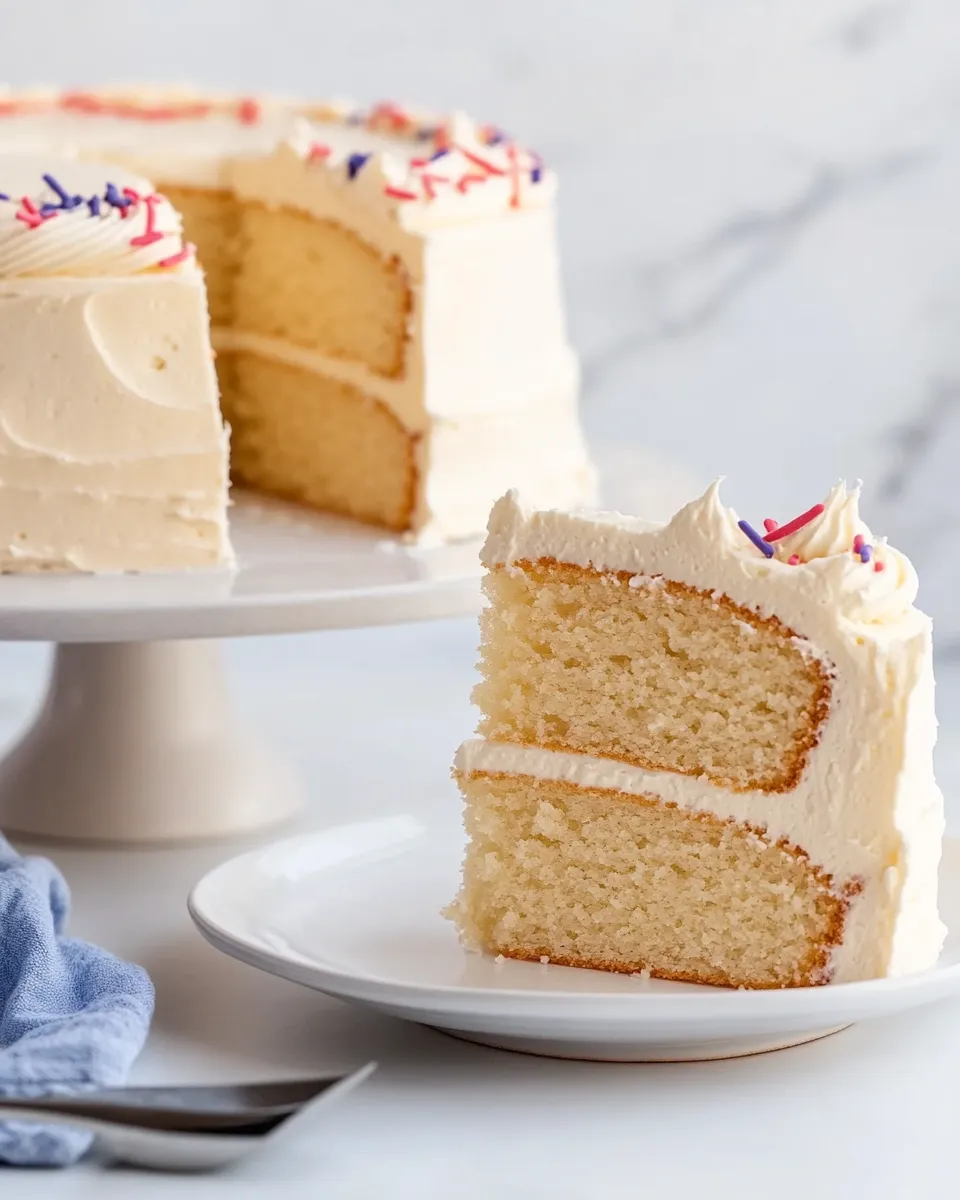
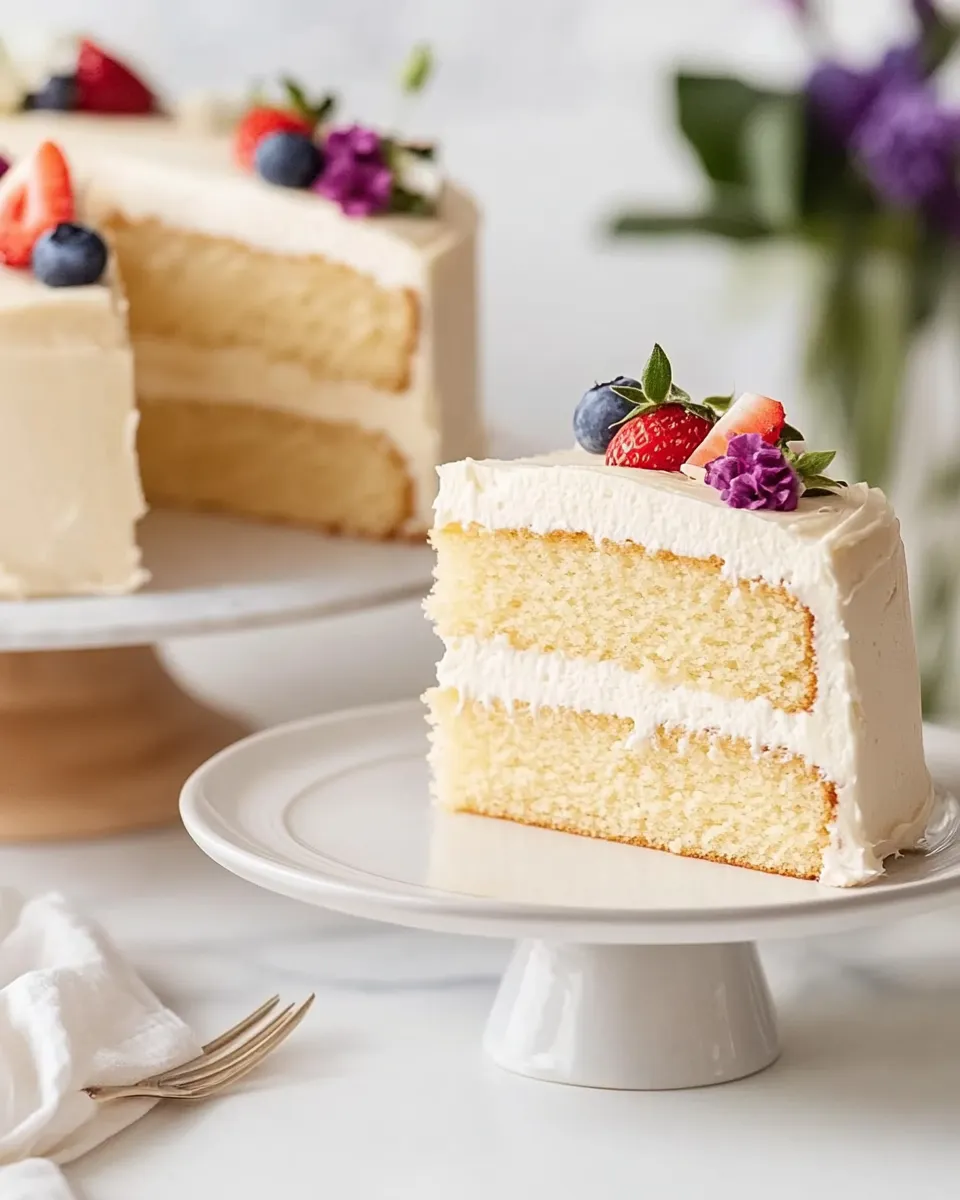
Simple, reliable, and tender—this vanilla layer cake is exactly what you want for birthdays, celebrations, or a reliably delicious weekend bake. The crumb is soft but sturdy enough for generous layers of vanilla buttercream, and the combination of buttermilk, sour cream, and oil keeps the cake incredibly moist without feeling greasy.
I developed this recipe to be straightforward in technique but generous in flavor. You don’t need fancy equipment beyond a mixer and three 9-inch pans, and the steps are organized so you can move through mixing, baking, and frosting without guesswork. Read the ingredient notes, follow the step-by-step directions, and you’ll end up with a classic, crowd-pleasing cake.
Below you’ll find a clear ingredient rundown, the full step-by-step method (kept exactly as written), troubleshooting advice, storage tips, tool recommendations, and a few seasonally inspired ideas to make this cake your own.
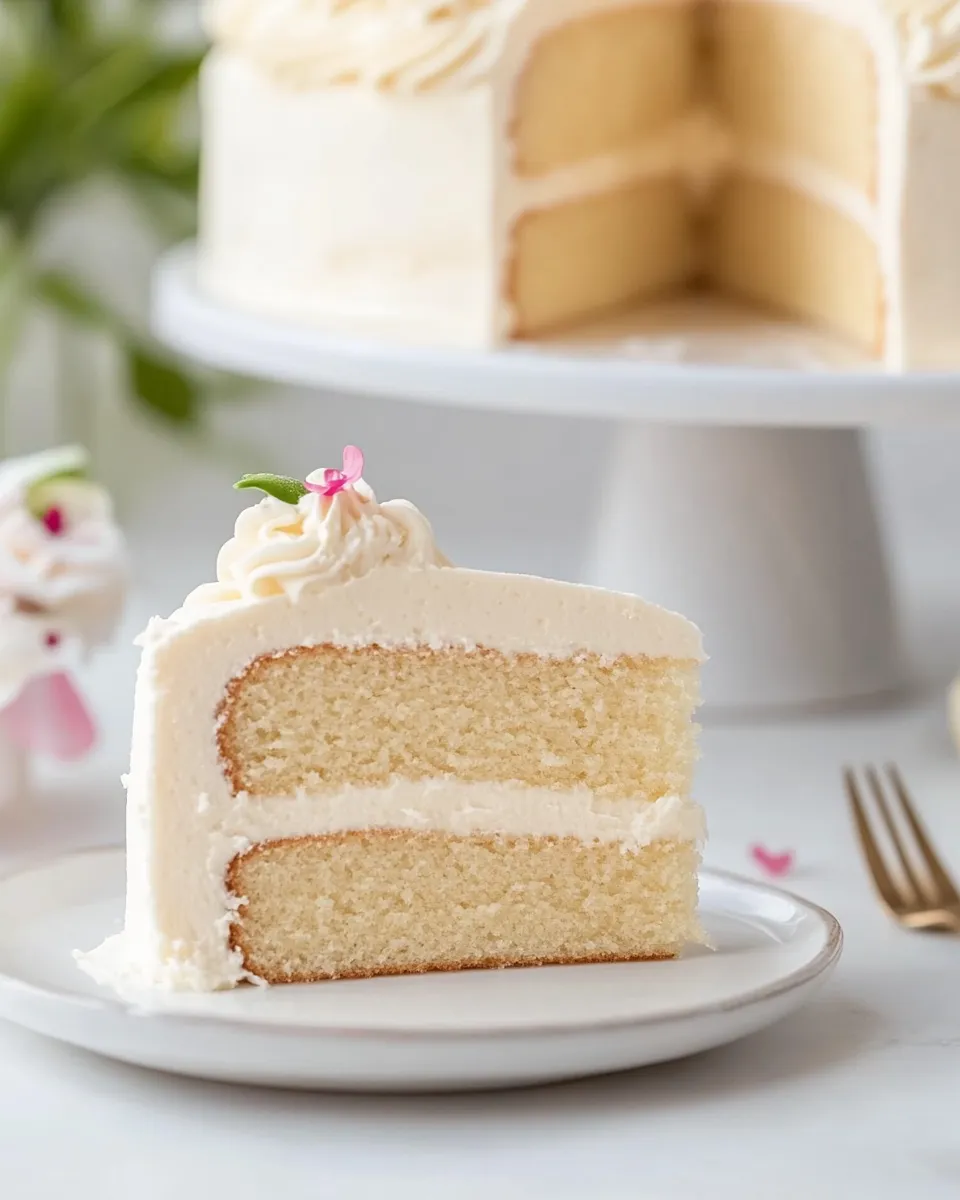
Ingredient Rundown
Ingredients
- 3 and 3/4cups (450 g)cake flour — provides a tender, fine crumb; cake flour is lower in protein than all-purpose flour.
- 1Tablespoon (14 g)baking powder — primary leavening to lift the layers.
- 3/4teaspoonbaking soda — works with the acidic ingredients for balanced rise and texture.
- 1teaspoonsalt — enhances flavor and balances sweetness.
- 1 and 1/2cups (340 g)unsalted butterroom temperature — fat for richness and structure; room temperature ensures even creaming with sugar.
- 2 and 1/4cups (447 g)granulated sugar — sweetens and aerates when creamed with butter.
- 2Tablespoons (28 ml)vanilla extract — primary flavoring for the cake layers.
- 1/4teaspoonalmond extract — a small boost of aroma that deepens the vanilla notes.
- 4largeeggsroom temperature — provide structure and richness; room temperature helps emulsify the batter.
- 3largeegg whitesroom temperature, beaten until frothy — folded in for extra lift and lightness.
- 1 and 1/4cups (284 ml)buttermilkroom temperature — acid tenderizes the crumb and reacts with baking soda.
- 1cup (227 g)sour creamroom temperature — adds moisture and a slight tang for balance.
- 1/3cup (67 ml)canola oil — keeps the cake moist and stays liquid at room temperature for softness.
- 2cups (454 g)unsalted butterroom temperature — for the buttercream; room temperature ensures a smooth, stable frosting.
- 6 and 1/2cups (741 g)confectioners’ sugarsifted — bulk and structure for the buttercream; sifting avoids lumps.
- 1/4cup (57 ml)whole milkroom temperature, more as needed — thins the buttercream to spreadable consistency.
- 2Tablespoons (28 ml)heavy creamroom temperature — adds richness and helps the frosting whip light.
- 2teaspoonsvanilla extract — flavoring for the buttercream.
- 1/4teaspoonsalt — balances sweetness in the frosting.
Step-by-Step: Vanilla Cake with Vanilla Buttercream
- Preheat the oven to 350°F (175°C). Generously grease the bottom and sides of three 9-inch round cake pans, line each with a parchment paper round, and set the pans aside.
- In a large bowl, whisk together 3 and 3/4 cups (450 g) cake flour, 1 tablespoon (14 g) baking powder, 3/4 teaspoon baking soda, and 1 teaspoon salt. Set the dry mixture aside.
- In the bowl of a stand mixer fitted with the paddle attachment, or in a large bowl with a handheld mixer, beat 1 and 1/2 cups (340 g) unsalted butter on medium speed until smooth and creamy, about 1 minute.
- Gradually add 2 and 1/4 cups (447 g) granulated sugar to the butter. After all the sugar has been added, increase the mixer speed to medium-high and beat for 2 minutes, until the mixture is lighter in color and fluffy.
- Beat in 2 tablespoons (28 ml) vanilla extract and 1/4 teaspoon almond extract until combined. Scrape down the sides and bottom of the bowl.
- Reduce the mixer speed to medium-low and add 4 large eggs, one at a time, beating well and scraping down the bowl after each addition.
- In a clean bowl, beat the 3 large egg whites until frothy. Add the frothy egg whites to the batter in three additions, beating briefly and scraping the bowl as needed after each addition.
- In a spouted measuring cup or a small bowl, whisk together 1 and 1/4 cups (284 ml) buttermilk, 1 cup (227 g) sour cream, and 1/3 cup (67 ml) canola oil until smooth.
- With the mixer on low speed, add the flour mixture to the batter in three additions, alternating with the sour cream mixture in two additions, beginning and ending with the flour (flour, wet, flour, wet, flour). Mix each addition just until combined—do not overmix.
- Divide the batter evenly among the three prepared pans (about 710 g per pan) and smooth the tops with a spatula.
- Bake the layers for 24 to 25 minutes, or until the edges are lightly browned and a toothpick inserted into the center comes out clean.
- Remove the pans from the oven and place them on a wire rack. Cool the cakes in the pans for 15 minutes. Then invert the layers onto cooling racks, remove the parchment rounds, and cool completely.
- While the cakes cool, make the buttercream. In the bowl of a stand mixer fitted with the paddle attachment, or in a large bowl with a handheld mixer, beat 2 cups (454 g) unsalted butter on medium-high speed until completely smooth, about 2 minutes.
- Reduce the mixer speed to low and gradually add 6 and 1/2 cups (741 g) sifted confectioners’ sugar. Add 1/4 cup (57 ml) whole milk, 2 tablespoons (28 ml) heavy cream, 2 teaspoons vanilla extract, and 1/4 teaspoon salt, and mix on low until the ingredients are incorporated.
- Increase the mixer speed to high and beat the frosting for 1 to 2 minutes, until very light and fluffy. If the frosting is too thin, add more sifted confectioners’ sugar as needed. If it is too thick, add a small amount of milk as needed until you reach the desired consistency.
- Assemble the cake: place one cooled cake layer on a cake plate or stand. Spread an even layer of buttercream over the top. Place the second layer on top and spread another even layer of buttercream. Top with the third layer.
- Use the remaining buttercream to frost the top and sides of the assembled cake evenly. Smooth or texture the frosting as desired.
- Allow the frosted cake to set for about 20 minutes before slicing. Slice and serve.
Why Vanilla Cake with Vanilla Buttercream is Worth Your Time
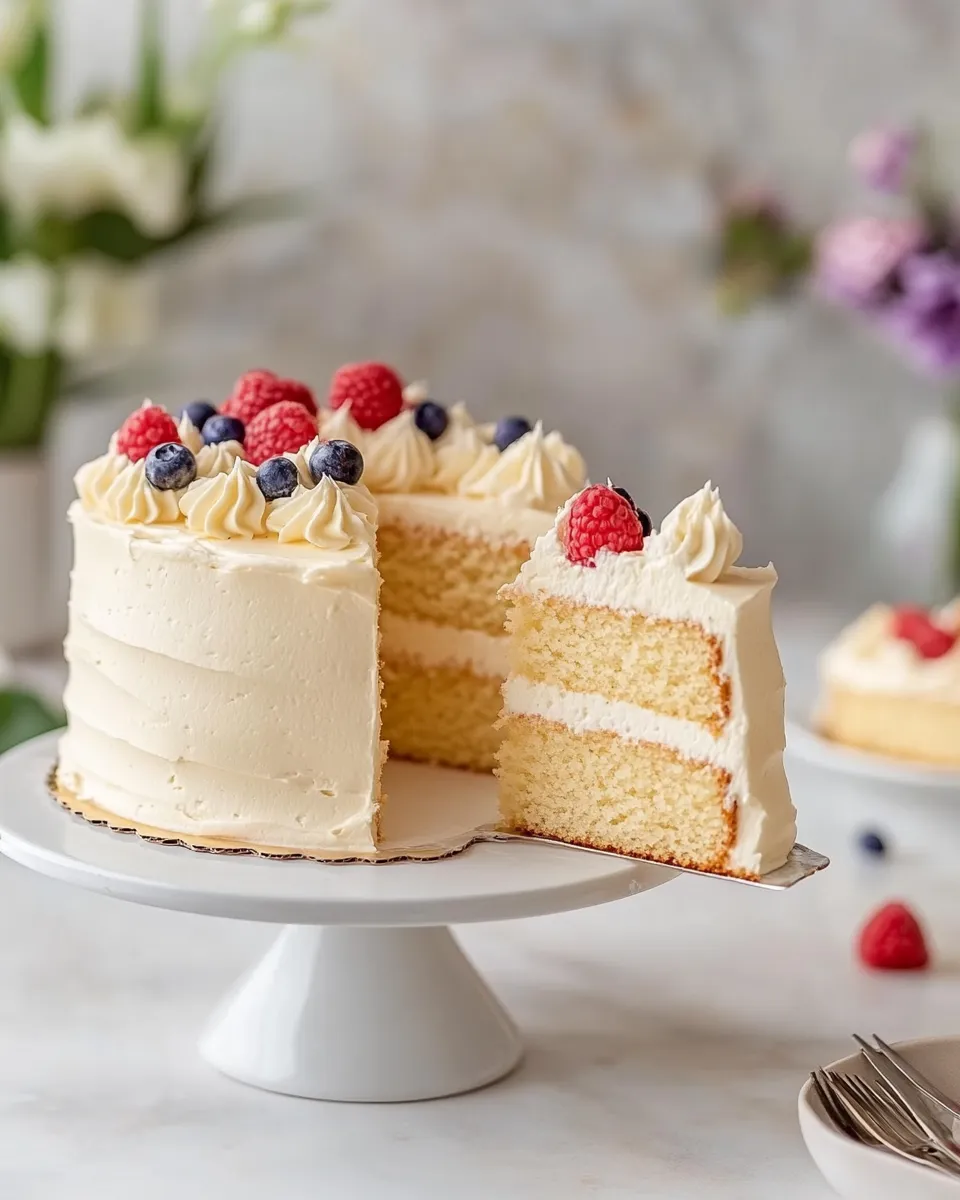
This recipe balances approachability with a reliably excellent result. The combination of cake flour, a small amount of oil, sour cream, and buttermilk gives a tender, moist crumb without sacrificing structure. That means you get even, level layers that stack well and cut cleanly.
The buttercream is rich but airy. It’s built on a base of real butter and a lot of sifted confectioners’ sugar, so it holds shape for frosting and piping while remaining light enough to enjoy a generous layer. Vanilla in both the cake and frosting creates a pure, classic flavor that pairs well with fruit, chocolate, or a simple garnish.
Finally, the steps are forgiving. Room-temperature ingredients, brief mixing stages, and a gentle folding method reduce the chance of overworking the batter. For home bakers who want a show-stopping cake without complicated techniques, this one is worth the effort.
Substitutions by Category
- Flour — If you don’t have cake flour, you can use sifted all-purpose flour; expect a slightly denser crumb.
- Leaveners — Stick to baking powder and baking soda as listed for the intended rise and texture.
- Fats — Unsalted butter is recommended for both cake and frosting. If you must use salted butter, reduce any additional salt in the recipe to taste.
- Liquid fats — Canola oil keeps the cake moist; a neutral oil can be used as a substitute.
- Dairy — Buttermilk and sour cream add tang and moisture; plain yogurt can sometimes stand in for sour cream, but results will vary.
- Sweeteners — Granulated sugar and sifted confectioners’ sugar are used for texture and structure; switching to alternative sweeteners will change both texture and stability.
- Flavorings — Vanilla is central here; you can omit the almond extract if you prefer a purer vanilla profile.
Recommended Tools
- Stand mixer with paddle attachment (or handheld mixer) — for creaming butter and whipping frosting smoothly.
- Three 9-inch round cake pans — for even, stacked layers.
- Parchment paper rounds — make removing layers easy and prevent sticking.
- Spouted measuring cups and accurate digital scale — weigh flour and sugar for consistency.
- Offset spatula and bench scraper — helpful for even frosting and smoothing sides.
- Cooling racks — for proper cooling and to avoid soggy bottoms.
Missteps & Fixes
Dense or Heavy Layers
Possible causes: overmixing after adding flour, using cold ingredients, or measuring flour too tightly. Fixes: fold gently and stop once combined; use room-temperature eggs and dairy; spoon and level flour instead of scooping.
Curved or Domed Tops
Cause: oven running hot or pans not evenly filled. Fix: rotate pans halfway through baking if your oven has hot spots; weigh batter between pans for evenness.
Grainy or Runny Buttercream
Graininess can come from unmelted butter or insufficient creaming. If your frosting is too thin, add more sifted confectioners’ sugar in small increments. If it’s too thick, add a little milk or cream, a teaspoon at a time, until it loosens.
Frosting Won’t Spread Smoothly
If the cake layers are warm, the buttercream will melt. Always cool layers completely before assembling. If the frosting softens while working, chill the cake for 10–20 minutes to set the crumb coat, then finish.
Seasonal Twists
- Spring: fold a thin layer of fresh berries or berry compote between layers (add just before serving to avoid soggy layers).
- Summer: top with lightly macerated fruit and a few decorative whole berries for color contrast.
- Autumn: stir a small pinch of warm spice into some of the buttercream to create a spiced band or accents.
- Winter: layer with a thin jam or curd (raspberry or lemon) for a bright counterpoint to the vanilla buttercream.
Notes from the Test Kitchen
Room temperature matters. Take eggs, butter, sour cream, and buttermilk out of the fridge about an hour before you bake. This helps them combine evenly and keeps the batter from breaking.
Beat the butter and sugar until noticeably lighter in color—this creates a lighter cake. When adding the flour and wet mixtures, low speed and short mixing times preserve the tender crumb.
Sifting confectioners’ sugar before adding to the buttercream avoids lumps. Taste the frosting as you go; a little more salt can improve balance if your butter is very sweet.
Cooling, Storing & Rewarming
Cool layers completely on racks before assembling. If you need to store the cake before serving, refrigerate a frosted cake in a cake box or covered lightly with plastic wrap; refrigeration firms the frosting and keeps the cake stable. Bring slices to room temperature before eating for the best texture and flavor—about 30–60 minutes depending on your room.
For longer storage, you can freeze unfrosted layers wrapped tightly in plastic and foil. Thaw in the refrigerator overnight, then bring to room temperature before frosting. A fully frosted cake can be frozen, but condensation during thawing may affect the buttercream’s finish; unwrap slowly and allow to come to temperature in the fridge before bringing to room temperature.
Ask & Learn
Q: Can I halve this recipe? A: Yes, you can scale the recipe, but be careful with baking times and pan sizes; smaller pans will bake more quickly—use a toothpick to test doneness.
Q: Why both sour cream and buttermilk? A: They serve slightly different roles: buttermilk reacts with baking soda for lift, while sour cream adds density and moisture for a richer mouthfeel.
Q: Can I make this dairy-free? A: I haven’t tested a full dairy-free version for this exact formula. Replacing butter, milk, and cream will change texture and may require further adjustments.
In Closing
This Vanilla Cake with Vanilla Buttercream is a dependable, crowd-pleasing classic. It rewards a little attention to temperature and timing and gives you a forgiving canvas for decoration and variation. Follow the steps closely, use room-temperature ingredients, and you’ll have a beautiful, delicious layer cake that looks and tastes like you spent hours in the kitchen—without the stress.
Vanilla Cake Recipe with Vanilla Buttercream (The Best!)
Ingredients
Ingredients
- 3 and 3/4 cups 450 gcake flour
- 1 Tablespoon 14 gbaking powder
- 3/4 teaspoonbaking soda
- 1 teaspoonsalt
- 1 and 1/2 cups 340 gunsalted butterroom temperature
- 2 and 1/4 cups 447 ggranulated sugar
- 2 Tablespoons 28 mlvanilla extract
- 1/4 teaspoonalmond extract
- 4 largeeggsroom temperature
- 3 largeegg whitesroom temperature beaten until frothy
- 1 and 1/4 cups 284 mlbuttermilkroom temperature
- 1 cup 227 gsour creamroom temperature
- 1/3 cup 67 mlcanola oil
- 2 cups 454 gunsalted butterroom temperature
- 6 and 1/2 cups 741 gconfectioners' sugarsifted
- 1/4 cup 57 mlwhole milkroom temperature, more as needed
- 2 Tablespoons 28 mlheavy creamroom temperature
- 2 teaspoonsvanilla extract
- 1/4 teaspoonsalt
Instructions
Instructions
- Preheat the oven to 350°F (175°C). Generously grease the bottom and sides of three 9-inch round cake pans, line each with a parchment paper round, and set the pans aside.
- In a large bowl, whisk together 3 and 3/4 cups (450 g) cake flour, 1 tablespoon (14 g) baking powder, 3/4 teaspoon baking soda, and 1 teaspoon salt. Set the dry mixture aside.
- In the bowl of a stand mixer fitted with the paddle attachment, or in a large bowl with a handheld mixer, beat 1 and 1/2 cups (340 g) unsalted butter on medium speed until smooth and creamy, about 1 minute.
- Gradually add 2 and 1/4 cups (447 g) granulated sugar to the butter. After all the sugar has been added, increase the mixer speed to medium-high and beat for 2 minutes, until the mixture is lighter in color and fluffy.
- Beat in 2 tablespoons (28 ml) vanilla extract and 1/4 teaspoon almond extract until combined. Scrape down the sides and bottom of the bowl.
- Reduce the mixer speed to medium-low and add 4 large eggs, one at a time, beating well and scraping down the bowl after each addition.
- In a clean bowl, beat the 3 large egg whites until frothy. Add the frothy egg whites to the batter in three additions, beating briefly and scraping the bowl as needed after each addition.
- In a spouted measuring cup or a small bowl, whisk together 1 and 1/4 cups (284 ml) buttermilk, 1 cup (227 g) sour cream, and 1/3 cup (67 ml) canola oil until smooth.
- With the mixer on low speed, add the flour mixture to the batter in three additions, alternating with the sour cream mixture in two additions, beginning and ending with the flour (flour, wet, flour, wet, flour). Mix each addition just until combined—do not overmix.
- Divide the batter evenly among the three prepared pans (about 710 g per pan) and smooth the tops with a spatula.
- Bake the layers for 24 to 25 minutes, or until the edges are lightly browned and a toothpick inserted into the center comes out clean.
- Remove the pans from the oven and place them on a wire rack. Cool the cakes in the pans for 15 minutes. Then invert the layers onto cooling racks, remove the parchment rounds, and cool completely.
- While the cakes cool, make the buttercream. In the bowl of a stand mixer fitted with the paddle attachment, or in a large bowl with a handheld mixer, beat 2 cups (454 g) unsalted butter on medium-high speed until completely smooth, about 2 minutes.
- Reduce the mixer speed to low and gradually add 6 and 1/2 cups (741 g) sifted confectioners' sugar. Add 1/4 cup (57 ml) whole milk, 2 tablespoons (28 ml) heavy cream, 2 teaspoons vanilla extract, and 1/4 teaspoon salt, and mix on low until the ingredients are incorporated.
- Increase the mixer speed to high and beat the frosting for 1 to 2 minutes, until very light and fluffy. If the frosting is too thin, add more sifted confectioners' sugar as needed. If it is too thick, add a small amount of milk as needed until you reach the desired consistency.
- Assemble the cake: place one cooled cake layer on a cake plate or stand. Spread an even layer of buttercream over the top. Place the second layer on top and spread another even layer of buttercream. Top with the third layer.
- Use the remaining buttercream to frost the top and sides of the assembled cake evenly. Smooth or texture the frosting as desired.
- Allow the frosted cake to set for about 20 minutes before slicing. Slice and serve.
Equipment
- stand mixer or handheld mixer
- paddle attachment
- large mixing bowls
- three 9-inch round cake pans
- Parchment Paper
- Spatula
- Measuring cups and spoons
- Wire Rack
- toothpick