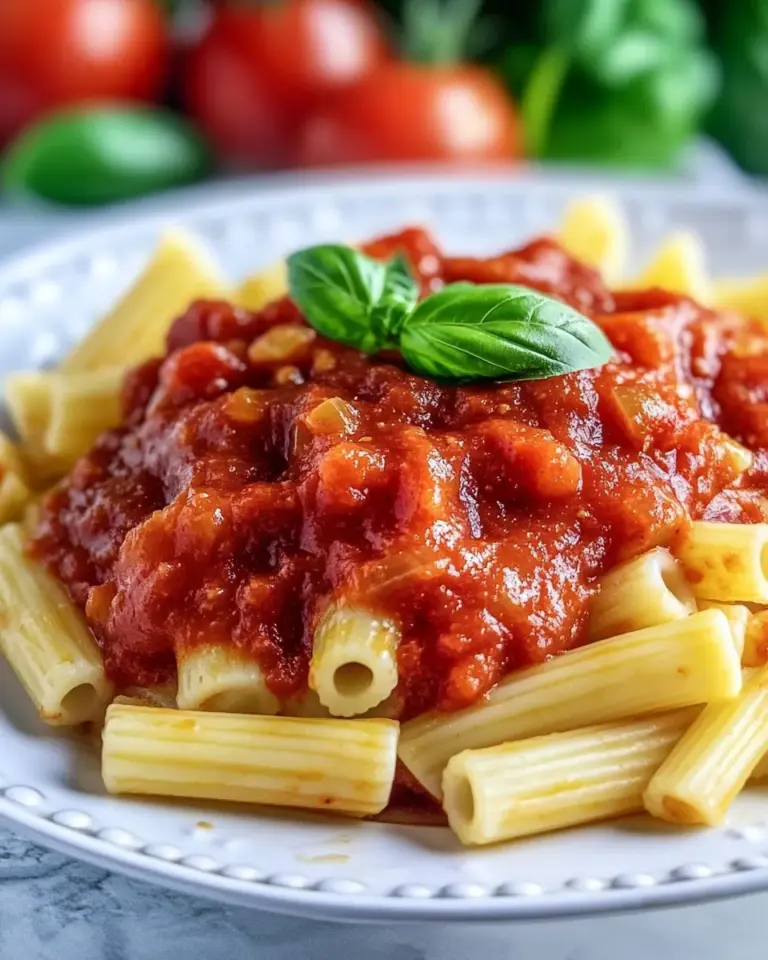
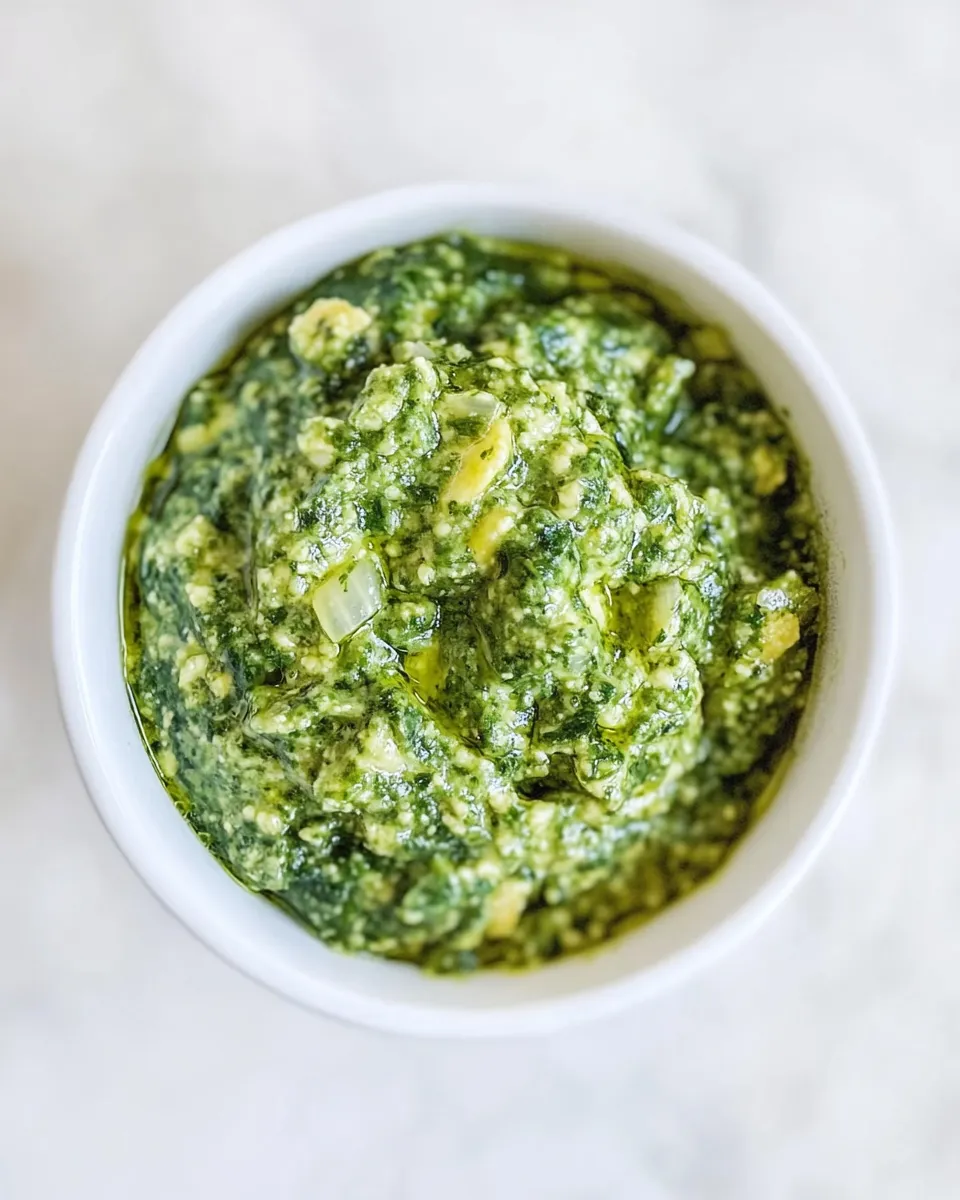
I make this vegan pesto at least once a week. It’s fast, bright, and surprisingly creamy thanks to a little help from white miso and walnuts. No parmesan, no compromise—just a handful of whole-food ingredients that come together in under ten minutes when your blender is ready.
I’ve tested this version with different nuts, different amounts of oil and water, and a few herb swaps. The one below is the balance I reach for most: walnut richness, basil freshness, garlic punch, and miso for an umami lift that replaces cheese without masking the basil.
This post is practical: clear ingredients, exact steps straight from my kitchen, and sensible variations so you can tweak for allergies, texture, or what’s in the pantry. Let’s get the blender humming.
What’s in the Bowl
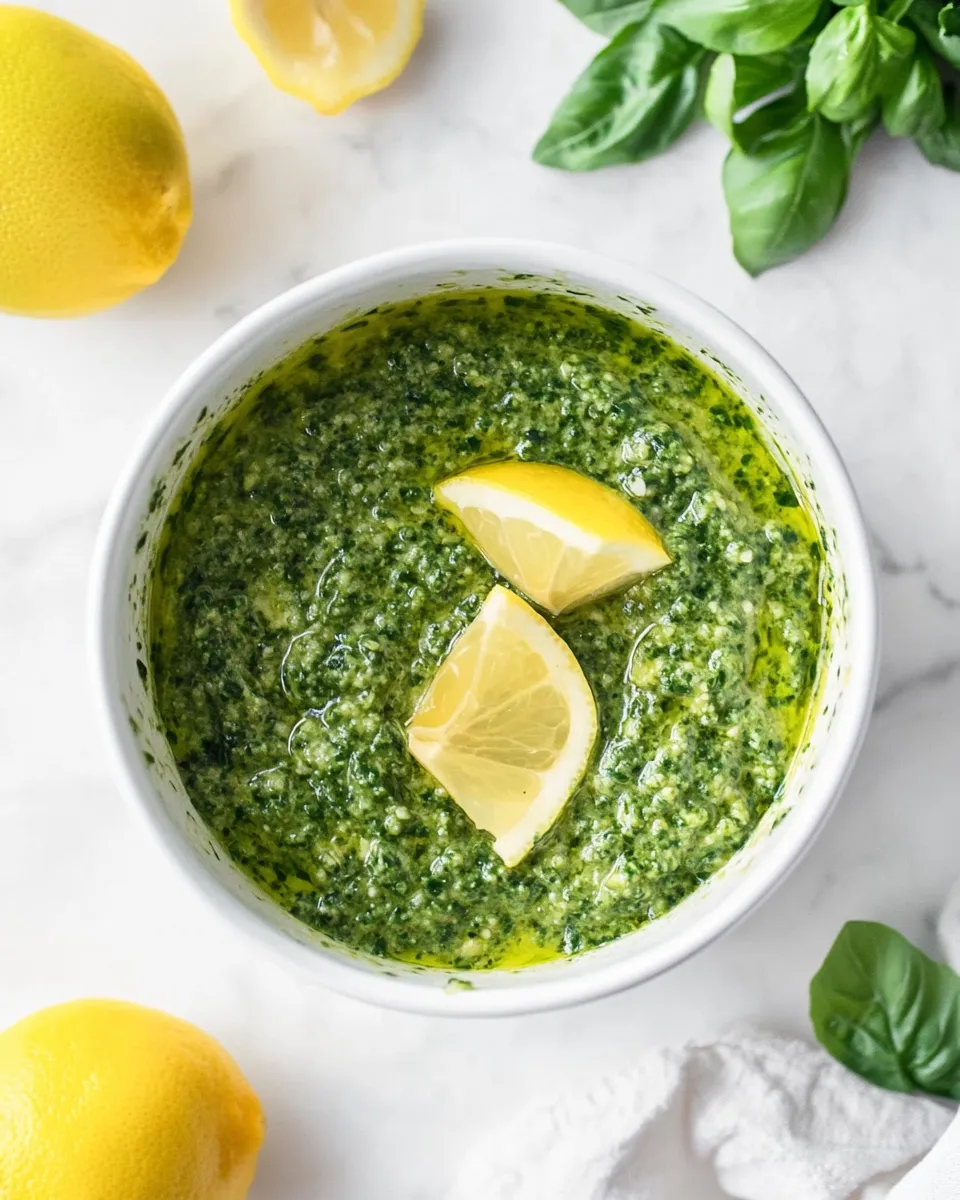
- 1/2 cup walnuts (51 grams) — provide body, creaminess, and a toasty, slightly bitter backbone; pulse first to break down evenly.
- 2 cups fresh basil leaves (no stems; 44 grams) — the bright, aromatic green that defines the sauce; remove stems for a smoother texture.
- 3 garlic cloves, minced (13 grams) — adds sharpness and depth; mince so it blends uniformly.
- 2 tablespoons white miso (37 grams) — gives savory umami and salt without dairy; balances the basil’s brightness.
- 2 tablespoons lemon juice (23 grams) — adds freshness and lifts the flavors; add more if you want extra zing.
- 1/2 teaspoon fine sea salt (3 grams) — rounds flavors; adjust to taste after blending.
- 2 tablespoons olive oil (20 grams) — increases silkiness and helps emulsify; use extra virgin for flavor.
- 1/4 cup water (2 ounces) — thins the pesto to a saucy consistency; add more sparingly if needed.
Mastering Vegan Pesto: How-To
- Measure and prepare all ingredients: 1/2 cup walnuts (51 g), 2 cups fresh basil leaves (no stems; 44 g), 3 garlic cloves minced (13 g), 2 tablespoons white miso (37 g), 2 tablespoons lemon juice (23 g), 1/2 teaspoon fine sea salt (3 g), 2 tablespoons olive oil (20 g), and 1/4 cup water (2 oz).
- Put the walnuts into a blender or food processor and pulse a few times to break them down.
- Add the basil leaves, minced garlic, white miso, lemon juice, fine sea salt, olive oil, and the 1/4 cup water to the blender.
- Blend until very smooth, stopping once or twice to scrape down the sides with a spatula and to ensure an even texture.
- Taste and adjust seasoning as needed (for example, more lemon for brightness or a small amount of water to thin). If you add anything, add in small amounts and blend briefly between additions.
- Serve immediately over pasta or on pizza, or transfer to an airtight container and refrigerate for up to 1 week. The pesto will thicken when chilled—stir before using.
Reasons to Love Vegan Pesto
This sauce is a tiny flavor machine. Here are the main reasons I reach for it:
- Speed: From measured ingredients to a bowl in minutes. The prep is shorter than boiling pasta water.
- Bright, layered flavor: Basil and lemon give lift; miso adds savory depth that mimics aged cheese.
- Texture control: You can make it ultracreamy or lightly textured by adjusting blending time and the water amount.
- Versatility: Spoon it on pasta, spread it on toast or pizza, stir through roasted vegetables, or use as a dressing for grain bowls.
- Plant-forward: Nutty richness replaces dairy without losing that indulgent mouthfeel.
What to Use Instead
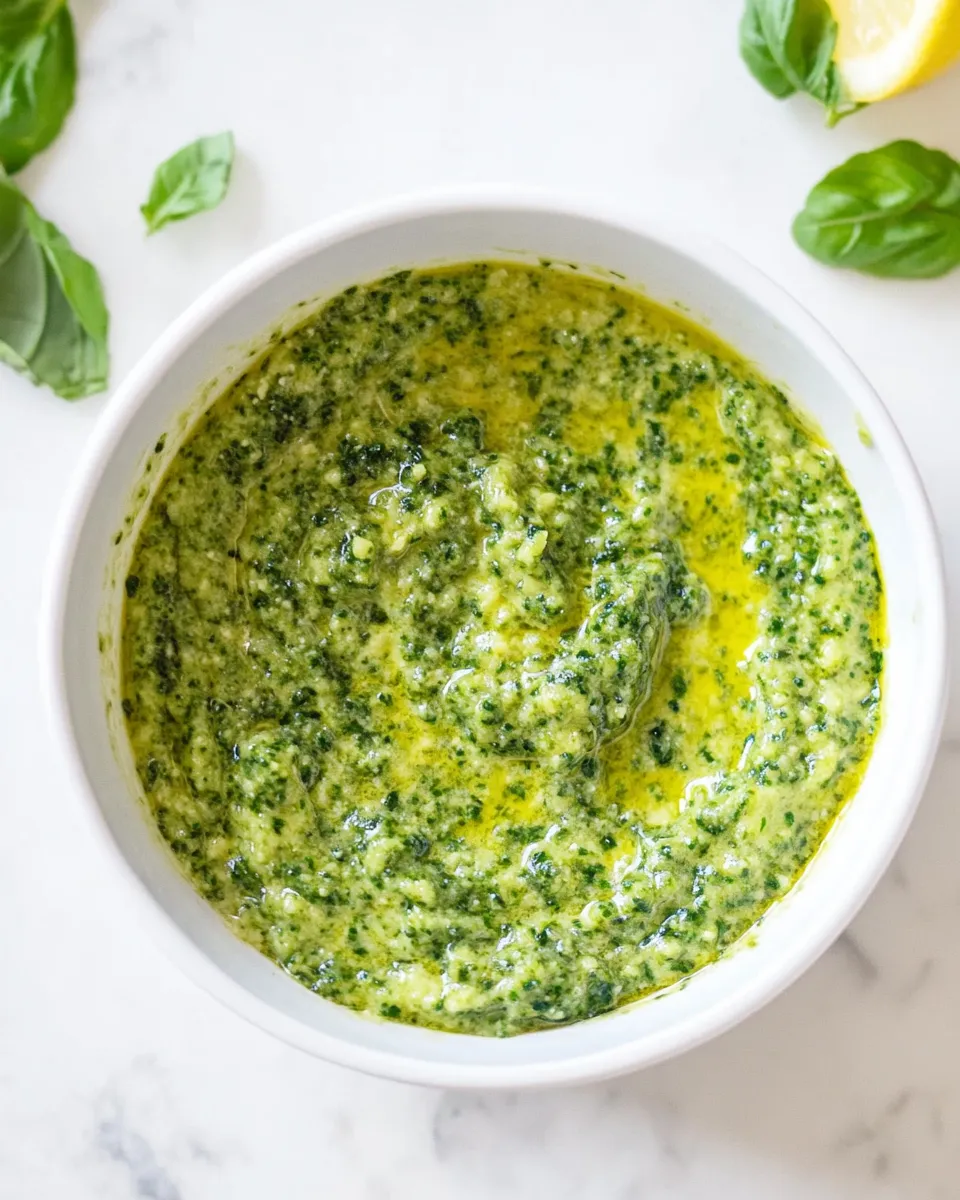
If you’re missing an ingredient, here are straightforward swaps that keep the spirit of the recipe:
- Walnuts — sub with raw almonds or cashews for creaminess; sunflower seeds for a nut-free option (toasted briefly for flavor).
- Basil — swap part or all with baby spinach or arugula for a different green profile (spinach mellows the flavor; arugula adds pepper).
- Garlic — use 1–2 small cloves or roasted garlic if you prefer a milder, sweeter note.
- White miso — replace with yellow miso or a teaspoon of tamari plus a pinch of sugar if you need another umami source.
- Lemon juice — lime works in a pinch; white wine vinegar is a slightly sharper alternative.
- Fine sea salt — kosher salt is fine (use a bit more by volume if using coarser crystals).
- Olive oil — light-tasting avocado oil or grapeseed oil will neutralize the olive flavor but keep the emulsion.
- Water — substitute with vegetable broth for more savory depth, but go light to avoid thinning too much.
Tools & Equipment Needed
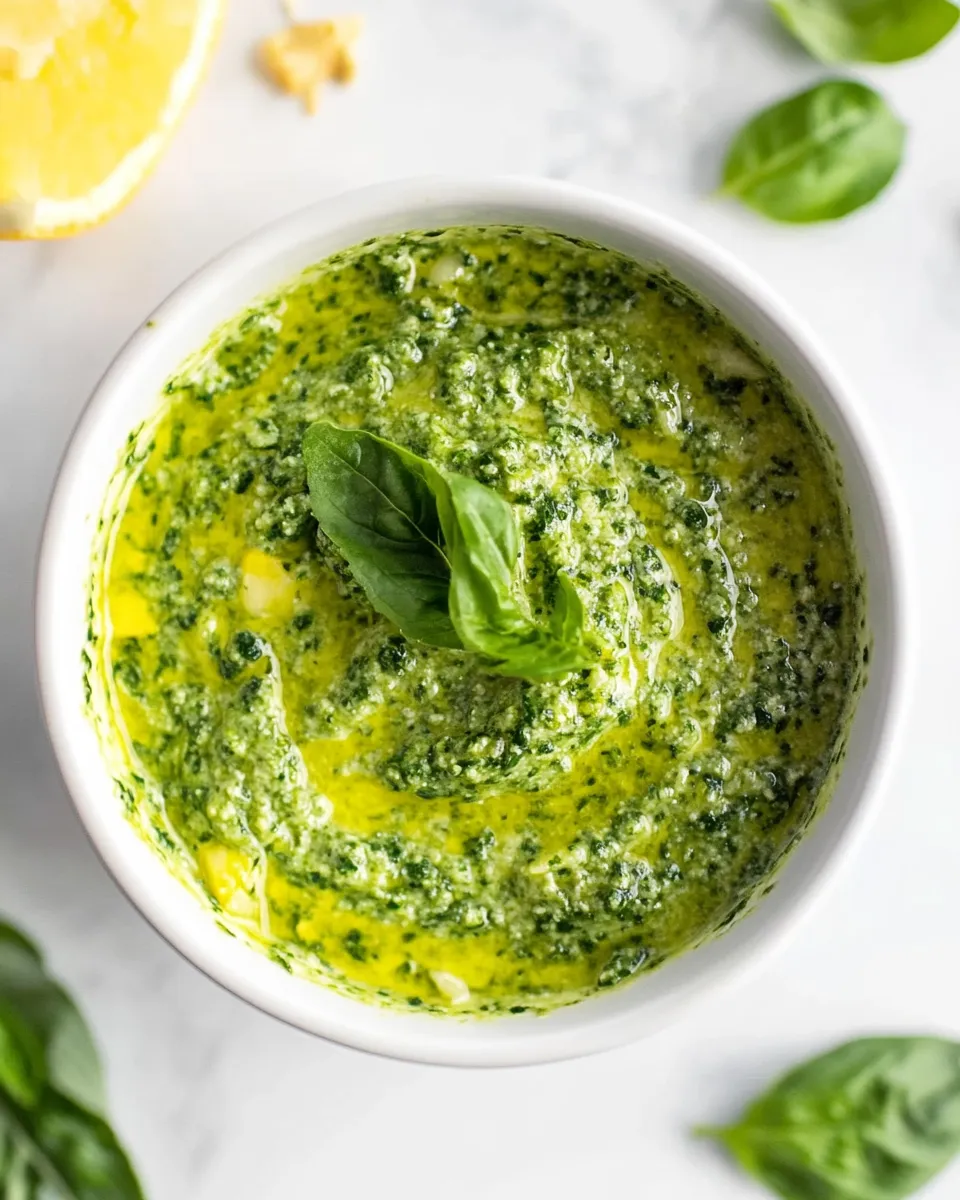
- Blender or food processor — a high-speed blender yields the smoothest texture; a food processor gives a bit more tooth.
- Measuring cups and spoons — for accurate proportions, especially the miso and salt.
- Sharp knife and cutting board — to mince garlic and remove any basil stems cleanly.
- Spatula — to scrape down the sides while blending for an even result.
- Airtight container or jar — for storing leftovers in the fridge.
- Small bowl or taste spoon — for quick seasoning checks.
Don’t Do This
- Don’t skip pulsing the walnuts first — whole nuts can clump and leave gritty chunks instead of a smooth texture.
- Don’t overload the blender with wet herbs and expect a uniform mix without scraping down the sides once or twice.
- Don’t add too much water at once. Thin incrementally; you can always add more, but you can’t take it out.
- Don’t assume miso is interchangeable by volume with salt. It adds saltiness plus umami, so taste before adding extra salt.
- Don’t store pesto at room temperature for extended periods—use the refrigerator and follow timelines below.
Dietary Customizations
This base adapts well to common dietary needs:
- Nut allergies — use roasted sunflower seeds or shelled pumpkin seeds in place of walnuts. They give body and a pleasant flavor without nuts.
- Lower fat — reduce olive oil by half and increase water or use a splash of vegetable broth to maintain texture.
- Lower sodium — start by halving the fine sea salt and the miso; add more at the end only if needed.
- Oil-free — omit the olive oil and add an extra 1–2 tablespoons of water, plus a tablespoon of aquafaba or silken tofu for creaminess if you want richness.
- Garlic-sensitive — roast the garlic first or use garlic-infused oil (if not strict garlic-free) to mellow the bite.
If You’re Curious
Quick answers to questions people often have while making this pesto.
- Why white miso? White miso is milder and slightly sweeter than darker misos. It supplies that savory, almost cheesy umami without overpowering basil.
- Will it turn brown? Like all basil-based sauces, it can oxidize and darken over time. Storing it in an airtight container and pressing a little olive oil on top slows browning.
- Can I double the recipe? Yes. Blend in batches if your processor is small to keep texture consistent.
- How smooth should it be? That’s personal. Stop when you hit the texture you like—some chunk is lovely on crostini; velvety works best for sauces.
- Is cooking needed? No—this is a raw pesto. The heat from freshly cooked pasta is all the cook time it needs.
Storing Tips & Timelines
Follow these simple rules so your pesto stays fresh and flavorful.
- Refrigerate in an airtight container for up to 1 week. The recipe instructions come from tested steps that ensure safety and quality for that time.
- The pesto will thicken when chilled—stir, add a splash of water or olive oil, and let it come to room temperature before using if you need a looser consistency.
- To freeze, spoon pesto into an ice cube tray, freeze solid, then transfer cubes to a sealed freezer bag. Freeze for up to 3 months. Thaw cubes as needed for single portions.
- To slow surface browning in the fridge, press a thin layer of olive oil over the top before sealing, or place a piece of plastic wrap directly on the surface.
Reader Q&A
Here are the questions I see most in the comments and how I answer them in the kitchen.
- Q: Can I use dried basil? A: No—dried basil lacks the fresh oils and aroma that define pesto. If that’s all you have, consider a different sauce. Fresh basil is key.
- Q: My pesto is bitter. Why? A: Overblended walnuts can release bitter oils, especially if they were raw for a long time. Lightly toasting walnuts for 3–4 minutes can round that bitterness, but avoid burning them.
- Q: Do I have to use garlic raw? A: Raw garlic gives a bright bite. If that’s too strong, roast the cloves first or use less and adjust to taste after blending.
- Q: How do I serve it on pizza? A: Dollop the pesto after baking to preserve its fresh green color and bright flavor, or add thin ribbons during the last 1–2 minutes of baking if you want it warmed through.
- Q: Can I make this oil-free? A: Yes—see Dietary Customizations. Expect a thinner texture and less glossy finish; using silken tofu or extra nuts can help mimic richness.
Make It Tonight
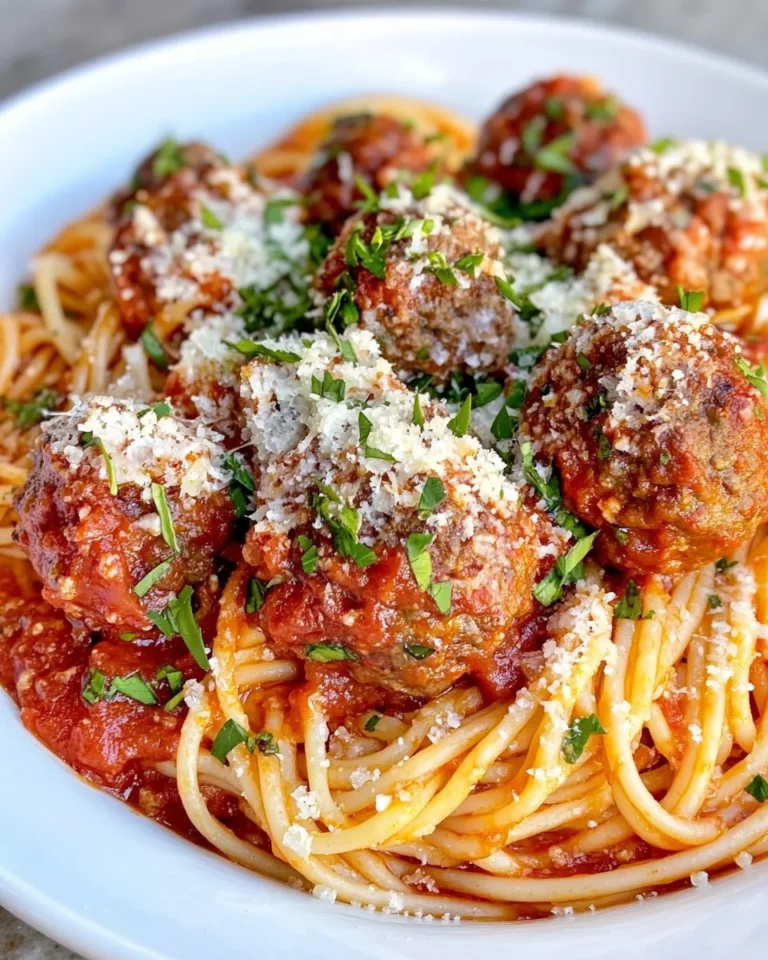
Ready for a simple dinner plan: boil pasta, reserve a cup of pasta water, and toss the hot pasta with 3–4 tablespoons of this Vegan Pesto and a splash of the reserved water until it coats the noodles. Finish with a scattering of cherry tomatoes or roasted vegetables. Or spread it on pizza, add roasted mushrooms and bake until bubbly.
Make a batch, keep some in the fridge, and use it all week as a shortcut to elevate sandwiches, bowls, and quick weeknight plates. This is the kind of staple sauce that turns ordinary ingredients into something you actually look forward to eating.

Vegan Pesto
Ingredients
Ingredients
- 1/2 cupwalnuts 51 grams
- 2 cupsfresh basil leaves no stems; 44 grams
- 3 garlic cloves minced (13 grams)
- 2 tablespoonswhite miso 37 grams
- 2 tablespoonslemon juice 23 grams
- 1/2 teaspoonfine sea salt 3 grams
- 2 tablespoonsolive oil 20 grams
- 1/4 cupwater 2 ounces
Instructions
Instructions
- Measure and prepare all ingredients: 1/2 cup walnuts (51 g), 2 cups fresh basil leaves (no stems; 44 g), 3 garlic cloves minced (13 g), 2 tablespoons white miso (37 g), 2 tablespoons lemon juice (23 g), 1/2 teaspoon fine sea salt (3 g), 2 tablespoons olive oil (20 g), and 1/4 cup water (2 oz).
- Put the walnuts into a blender or food processor and pulse a few times to break them down.
- Add the basil leaves, minced garlic, white miso, lemon juice, fine sea salt, olive oil, and the 1/4 cup water to the blender.
- Blend until very smooth, stopping once or twice to scrape down the sides with a spatula and to ensure an even texture.
- Taste and adjust seasoning as needed (for example, more lemon for brightness or a small amount of water to thin). If you add anything, add in small amounts and blend briefly between additions.
- Serve immediately over pasta or on pizza, or transfer to an airtight container and refrigerate for up to 1 week. The pesto will thicken when chilled—stir before using.
Equipment
- Blender or Food Processor
- Spatula
- Measuring Cups
- Measuring Spoons
- Airtight Container
Notes
This recipe makes roughly 1 1/2 cups of pesto sauce, so the nutrition information is for 2 tablespoons of pesto. This is automatically calculated and is just an estimate, not a guarantee.