
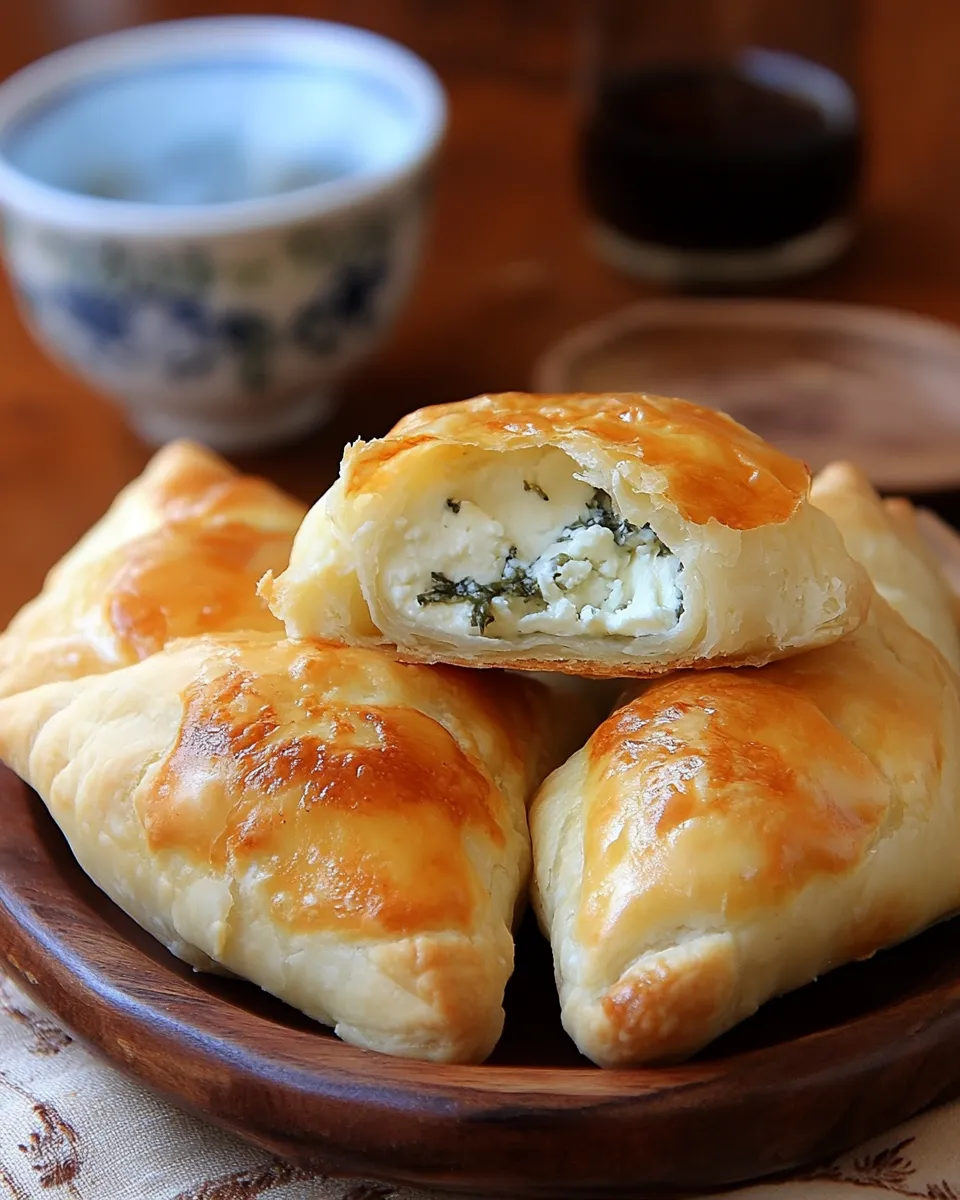
These small, hand-held cheese pastries are a staple for a reason: they’re simple, reliably delicious, and quick to assemble once the dough is ready. I make them on busy mornings and for weekend guests alike. They come out soft, slightly chewy, and flavored with salty feta and fresh parsley — or nigella seeds if you prefer a more traditional push of aroma.
No fuss, no complicated ingredients. The method uses active dry yeast and a short rest to get a dough that’s easy to shape into little ovals. The filling is straightforward: crumbled salty cheese and a little herb for brightness. If the dough puffs up well, you’ll have golden-topped pockets that stay tender inside.
Below I walk through exactly what goes in, how to handle the dough, and practical tips I’ve learned that keep the edges from leaking and the tops perfectly golden. Read the steps through once, then follow them in order; this recipe rewards a calm pace and a warm kitchen.
What Goes In

Ingredients
- 4 cups all purpose flour — the structure for the dough; measure by scooping and leveling for consistent results.
- 1 cup warm water — split between the yeast bloom and the dough; should feel warm to the touch, not hot, to avoid killing the yeast.
- 1 egg — adds richness and helps bind the dough for a tender crumb.
- 3 tablespoons olive oil — keeps the dough soft and gives the finished pastry a subtle olive flavor.
- 1 teaspoon active dry yeast mixed with a little bit of warm water and 1 teaspoon of sugar — the leavening; the sugar feeds the yeast so it becomes bubbly.
- a pinch of salt — balances the flavors in both dough and filling; don’t skip it.
- sesame seeds (optional) — for a nutty finish on the tops when you want extra texture and visual appeal.
- 1 ½ cups feta cheese or any other salty cheese — crumbled; the main filling ingredient that provides the pastry’s savory character.
- ¼ cup chopped fresh parsley (If you don’t like parsley substitute with nigella seeds/black cumin) — adds freshness and cuts through the salt of the cheese; if you prefer nigella/black cumin, use that instead for a more traditional spice note.
From Start to Finish: White Cheese Pastries (Fatayer Jebneh)
- Preheat the oven to 200°.
- In a small cup or bowl, reserve a little bit of the 1 cup warm water and mix in the 1 teaspoon active dry yeast and the 1 teaspoon of sugar. Let sit until bubbly (if it does not become bubbly, the yeast may be bad and should be replaced).
- In a medium bowl, crumble the 1 ½ cups feta cheese and mix in the ¼ cup chopped fresh parsley (or substitute nigella seeds/black cumin if you prefer). Set the filling aside.
- In a large bowl, combine the remaining warm water (the rest of the 1 cup), the 1 egg, 3 tablespoons olive oil, a pinch of salt, the flour (4 cups), and the bloomed yeast mixture. Mix until a dough forms, then knead briefly until smooth.
- Cover the dough with a clean towel or plastic wrap and leave in a warm place to rest for 30 minutes, until it has roughly doubled in size.
- Punch the risen dough down gently, then cut it into egg-sized balls. Cover the balls with a clean towel or plastic wrap and let them rest for 10 minutes.
- Working with one dough ball at a time, roll each ball into an oval shape on a lightly floured surface. Place some of the cheese filling in the center of the oval, leaving a border around the edges to allow sealing.
- Fold the dough over the filling and press the edges to seal well (pinch or crimp the edges to prevent leaking).
- Place the filled pastries on a baking sheet. Brush the tops with olive oil (optional) and sprinkle with sesame seeds if using.
- Bake in the preheated oven until the tops are golden.
Why It Works Every Time
There are a few small, intentional choices here that make the difference between a good pastry and a great one. First, the yeast is proofed separately in a bit of warm water and sugar. That quick check tells you whether the yeast is alive before it goes into the dough, protecting you from flat results.
Second, the dough is simple and lean: flour, water, egg, oil, and a pinch of salt. The egg and olive oil add enough fat to keep the crumb tender while still allowing a pleasant chew. A short rise — about 30 minutes — gives the dough just enough lift to puff without becoming over-airy and fragile.
Finally, the filling is a straightforward salty crumble with herbaceous lift. Feta’s saltiness works as both flavor and preservative; you don’t need to over-season. The outer seal matters: pinching or crimping the edges tightly prevents leaks and ensures the pocket steams perfectly inside, producing soft centers and golden exteriors.
Quick Replacement Ideas

- Cheese — use any other salty cheese you have on hand if feta isn’t available; the recipe expects a salty, crumbly cheese rather than a mild fresh cheese.
- Herb — parsley is called for, but you can switch to nigella seeds/black cumin as the recipe suggests for a more aromatic profile.
- Seed topping — sesame is optional; omit it if you don’t have any. The pastries will still brown nicely.
- Oil — the recipe uses olive oil; any neutral-flavored oil will work in a pinch, though olive oil adds characteristic flavor.
Setup & Equipment
You don’t need special tools for these — basic kitchen equipment will do the job. Line up:
- Oven preheated to 200°.
- Mixing bowls for the dough and the filling.
- A baking sheet, lightly oiled or lined with parchment.
- Rolling pin or a clean bottle to roll the dough ovals.
- A towel or plastic wrap to cover dough during rises.
- Measuring cups and spoons for accuracy.
Having a small bowl with a little water on the side can help when sealing edges — a fingertip moistened on the edge improves adhesion.
What Not to Do
Don’t rush proofing. If the dough hasn’t doubled, it won’t have the structure to be light inside. On the flip side, don’t let it over-proof until it collapses — that creates fragile dough that tears when filling.
Don’t overfill. The step to leave a border around the edges exists for a reason: too much filling leads to punctures and leaks. Use a modest mound of filling so the dough closes cleanly.
Avoid sealing with dry fingers. If the edges are too dry they won’t stick together. A quick dab of water or egg wash on the edge helps the dough bond.
Fresh Seasonal Changes
Rotate the herb for seasonal freshness. In spring and summer, swap parsley with a small amount of chopped fresh mint or basil for a bright lift (use sparingly, because the cheese is salty). In cooler months, the suggested nigella seeds bring earthier notes that pair well with warm breads.
You can also add finely chopped seasonal greens to the filling in small amounts—think a handful of wilted spinach squeezed of excess water—if you want to increase volume without changing texture too much. Keep additions modest so the dough seals properly.
Insider Tips
Handling the dough
Knead just until smooth. Over-kneading can make the dough tough. The recipe calls for a brief knead; you’re aiming for a cohesive, soft ball that springs back slightly when poked.
Shaping and sealing
Work on a lightly floured surface and roll to an oval no thicker than about 1/8–1/4 inch; too thick and they won’t bake evenly, too thin and they’re prone to tearing. Press the edges firmly and crimp once or twice for extra security.
Baking finish
If you want an extra glossy top, a light egg wash before baking will do it — otherwise brushing with olive oil adds flavor and helps sesame seed adhesion. Watch them in the final minutes; ovens vary, and golden tops can go to dark quickly.
Refrigerate, Freeze, Reheat
Refrigerate
Store leftovers in an airtight container in the refrigerator for up to 2–3 days. If you want to keep them softer, lay a piece of parchment between layers so they don’t stick.
Freeze
You can freeze these before or after baking. Freeze on a tray until firm, then transfer to a sealed container or freezer bag. They keep well for up to a month. Thaw in the refrigerator overnight before reheating.
Reheat
Reheat in a 175–180° oven for 8–12 minutes until warmed through and crisp on the outside. Microwaving will warm quickly but sacrifices the crisp edge; use an oven or toaster oven for best texture.
Ask & Learn
If you’re troubleshooting, check these common culprits first: yeast not bubbling usually means the water was too hot or the yeast is old; dough that won’t rise often means the room is too cold or the yeast wasn’t active; leaky pockets usually come from overfilling or not sealing edges well.
Tell me what happened if something went off-plan and I’ll help you zero in on the step to adjust. Include what your dough looked like at each stage and how your oven behaves (runs hot or cool), and we’ll troubleshoot together.
Final Bite
White Cheese Pastries (Fatayer Jebneh) are a forgiving, fast way to feed a small crowd or to have savory snacks ready across a few days. The recipe’s strength is its simplicity: predictable dough, salty filling, and a few minutes of shaping. Follow the proofing steps, don’t overfill, and pay attention to the oven’s color cues. You’ll get golden, tender pockets every time.

White Cheese Pastries (Fatayer Jebneh)
Ingredients
?Dough
- ?4 cupsall purpose flour
- ?1 cupwarm water
- ?1 egg
- ?3 tablespoonsolive oil
- ?1 teaspoonactive dry yeast mixed with a little bit of warm water and 1 teaspoon of sugar
- ?a pinch of salt
- ?sesame seedsoptional
?Filling
- ?1 1/2 cupsfeta cheese or any other salty cheese
- ?1/4 cupchopped fresh parsleyIf you don't like parsley substitute with nigella seeds/black cumin
Instructions
Instructions
- Preheat the oven to 200°.
- In a small cup or bowl, reserve a little bit of the 1 cup warm water and mix in the 1 teaspoon active dry yeast and the 1 teaspoon of sugar. Let sit until bubbly (if it does not become bubbly, the yeast may be bad and should be replaced).
- In a medium bowl, crumble the 1 ½ cups feta cheese and mix in the ¼ cup chopped fresh parsley (or substitute nigella seeds/black cumin if you prefer). Set the filling aside.
- In a large bowl, combine the remaining warm water (the rest of the 1 cup), the 1 egg, 3 tablespoons olive oil, a pinch of salt, the flour (4 cups), and the bloomed yeast mixture. Mix until a dough forms, then knead briefly until smooth.
- Cover the dough with a clean towel or plastic wrap and leave in a warm place to rest for 30 minutes, until it has roughly doubled in size.
- Punch the risen dough down gently, then cut it into egg-sized balls. Cover the balls with a clean towel or plastic wrap and let them rest for 10 minutes.
- Working with one dough ball at a time, roll each ball into an oval shape on a lightly floured surface. Place some of the cheese filling in the center of the oval, leaving a border around the edges to allow sealing.
- Fold the dough over the filling and press the edges to seal well (pinch or crimp the edges to prevent leaking).
- Place the filled pastries on a baking sheet. Brush the tops with olive oil (optional) and sprinkle with sesame seeds if using.
- Bake in the preheated oven until the tops are golden.
Equipment
- Oven
- Baking Sheet
- Mixing bowls
- Rolling Pin
- towel or plastic wrap