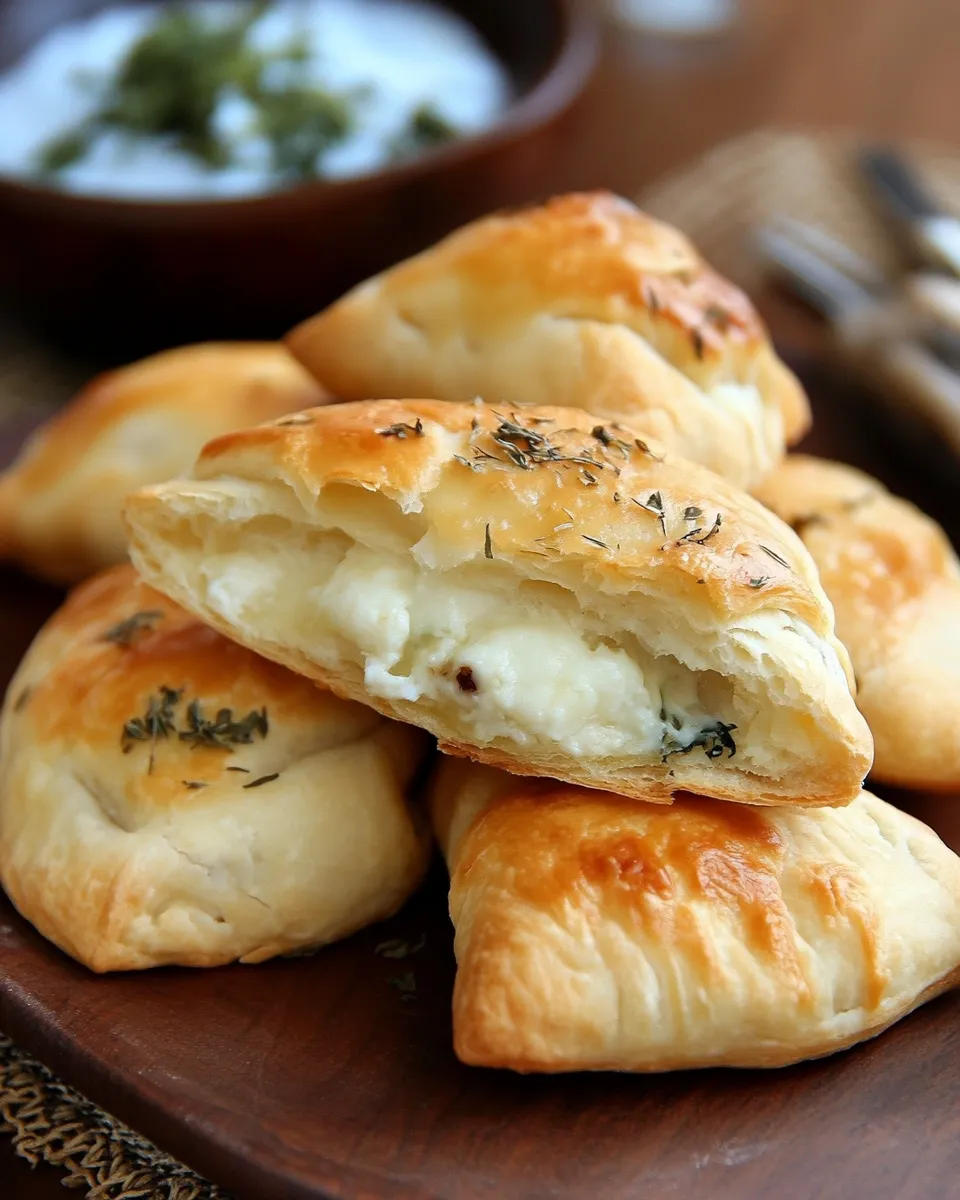
These savory turnovers are a staple in Levantine bakeries and home kitchens. Crisp, golden dough encases a salty, tangy cheese filling with a bright hint of parsley. They bake quickly and disappear faster than you can plate them.
I test this recipe for texture and timing so you can rely on it: a soft, slightly chewy interior, a thin, lightly crisp exterior, and cheese that stays moist without leaking. The method is straightforward and works in a busy kitchen.
Below you’ll find the exact ingredients and step-by-step instructions I follow. I also include practical swaps, common mistakes to avoid, and storage guidance so your batch turns out great every time.
What Goes In
Ingredients
- 4 cups all-purpose flour — the structure for the dough; measure by spooning into the cup for accuracy.
- 1 cup warm water — hydrates the flour and activates the yeast; keep it warm, not hot.
- 1 egg — binds the dough and adds richness.
- 3 tablespoons olive oil — tenderizes the dough and adds flavor.
- 1 teaspoon active dry yeast mixed with a little bit of warm water and 1 teaspoon of sugar — the leavening step to get the dough to rise; activate first as directed.
- a pinch of salt — balances flavor; don’t skip it.
- sesame seeds (optional) — sprinkle on top for aroma and crunch.
- 1 ½ cups feta cheese or any other salty cheese — the main filling; crumbly, salty cheeses work best for classic flavor.
- ¼ cup chopped fresh parsley — brightens the filling; if you don’t like parsley, substitute with nigella seeds/black cumin.
From Start to Finish: White Cheese Pastries (Fatayer Jebneh)
- Preheat the oven to 200°C (about 400°F).
- Activate the yeast: take a little of the 1 cup warm water and stir together the 1 teaspoon active dry yeast and the 1 teaspoon sugar listed with the yeast. Let sit 5–10 minutes, until bubbly. If it does not become bubbly, the yeast should be replaced.
- Prepare the filling: in a medium bowl crumble and combine the 1 ½ cups feta cheese with the ¼ cup chopped fresh parsley (or substitute nigella/black cumin if you prefer). Set aside.
- Make the dough: in a large bowl combine the 4 cups all-purpose flour and the pinch of salt. Add the 1 egg, 3 tablespoons olive oil, the remaining warm water from the 1 cup (after reserving a little for the yeast), and the activated yeast mixture. Stir until a rough dough forms.
- Knead the dough on a lightly floured surface (or in the bowl) until smooth and elastic, about 5–10 minutes by hand or until it comes together well.
- First rise: place the dough in a lightly oiled bowl, cover with a clean towel or plastic wrap, and leave in a warm place for about 30 minutes, until it has roughly doubled in size.
- Divide and rest: punch down the dough lightly, cut it into egg-sized balls, and cover them with a towel or plastic wrap. Let them rest 10 minutes to relax the gluten.
- Shape and fill: working with one ball at a time, roll each ball into an oval about 1/8–1/4 inch thick. Place a spoonful of the cheese mixture in the centre of the oval (enough to fill but not overfill). Fold the dough over the filling and press the edges firmly to seal, forming the traditional fatayer shape.
- Prepare for baking: arrange the filled pastries on a baking sheet lined with parchment or lightly greased. Brush the tops with a little olive oil (do not use an egg wash unless you add an extra egg to the ingredient list). If using, sprinkle sesame seeds on top.
- Bake: place the baking sheet in the preheated oven and bake until the tops are golden, about 12–18 minutes (oven times vary).
- Cool briefly and serve: remove from the oven, let cool a few minutes on a rack, then serve warm.
Why It Works Every Time
The balance of hydration and rest makes the dough forgiving. Four cups of flour with one cup of warm water and a brief knead creates a dough that’s soft but not sticky, and the short rise ensures the pastries keep a neat shape. The single egg adds elasticity and a touch of richness without weighing the dough down.
The cheese filling is intentionally simple: salty, crumbly cheese plus parsley keeps moisture and flavor in balance. Parsley cuts through the salt and prevents the center from tasting flat. Sealing the edges well and avoiding overfilling prevents leaks during baking.
Quick Replacement Ideas
Keep swaps conservative so the texture and baking time stay predictable.
- Cheese — use another salty, crumbly cheese if you don’t have feta. The recipe notes “any other salty cheese” as an acceptable substitute.
- Parsley — if you don’t like parsley, use nigella seeds/black cumin as noted in the ingredients.
- Sesame seeds — optional for topping; omit them if you don’t have any.
Setup & Equipment
Minimal tools make this easy:
- Large mixing bowl — for combining dough ingredients.
- Medium bowl — for the filling.
- Rolling pin — to roll balls into ovals about 1/8–1/4 inch thick.
- Baking sheet — lined with parchment or lightly greased.
- Kitchen towel or plastic wrap — to cover the dough during rests.
- Measuring cups/spoons — accurate measuring matters for consistent dough.
What Not to Do
Small mistakes make a big difference. Don’t rush these points:
- Don’t use hot water for the yeast. Water that’s too hot kills the yeast; warm (comfortable to the wrist) is correct.
- Don’t overfill the pastries. Overfilling leads to tears and leaks in the oven.
- Don’t skip the rest after dividing. The 10-minute rest relaxes the gluten and makes shaping easier.
- Don’t crowd the baking sheet. Leave some space so heat circulates and the bottoms crisp evenly.
- Don’t use an egg wash unless you add another egg. The recipe explicitly warns against using an egg wash unless an extra egg is added to the ingredient list.
Fresh Seasonal Changes
Work with what’s fresh and available but stay within the recipe’s flavor profile. The parsley can be swapped for a small amount of fresh herbs when in season — but keep it light so the salty cheese remains the star. Adding large-volume greens or watery vegetables will change texture and may require adjustment to baking time.
Sesame seeds on top are a seasonal lift; a light scatter before baking gives a toasty note that pairs well with spring herbs or late-summer tomatoes served alongside.
Insider Tips
Texture & Handling
If the dough feels sticky, dust your hands and the surface lightly with flour and knead a minute more. Avoid adding too much flour; the dough should remain soft for a tender crumb.
Filling
Drain or pat very wet cheeses if needed—excess moisture can make the dough soggy. Crumbling the cheese finely and mixing with the parsley distributes flavor and reduces pockets of intense saltiness.
Shaping
Roll each ball into a thin oval; roll thinner at the edges so the center holds the filling without creating a thick bite of dough. Press edges firmly to seal; a slight twist or pinch keeps them closed during baking.
Refrigerate, Freeze, Reheat
Cool the pastries completely before refrigerating in an airtight container for up to 3 days. Reheat in a 180°C (350°F) oven for 5–8 minutes to refresh the crust.
For freezing, you have two good options: freeze assembled uncooked pastries on a tray until solid, then transfer to a freezer bag and bake from frozen—add a few extra minutes to the bake time. Or bake them, cool, then freeze fully baked pastries; reheat in the oven from frozen until warmed through.
Ask & Learn
Common questions I get:
- What if my yeast doesn’t bubble? — Replace it. The activation step confirms the yeast is alive; if it fails to bubble, the dough won’t rise properly.
- Can I use instant yeast? — If you prefer instant yeast, you can typically add it directly to the flour, but follow the manufacturer’s substitution guidance. The recipe uses active dry yeast with an activation step.
- How thick should the rolled dough be? — About 1/8–1/4 inch thick; thin at the edges and slightly thicker in the center to hold the filling.
- Can I add spices? — The recipe keeps the filling plain and bright. If you add spices, do it sparingly so they don’t overpower the cheese.
Final Bite
White Cheese Pastries (Fatayer Jebneh) are simple, satisfying, and adaptable. Follow the measured ingredients and the rise/rest timing, and you’ll consistently get golden pastries with a tender crumb and flavorful filling. They’re perfect for breakfast, snacks, or a savory addition to any meal. Bake a tray, and keep one for the first taste warm out of the oven — that small pleasure is why we do this.

White Cheese Pastries (Fatayer Jebneh)
Ingredients
?Dough
- ?4 cupsall purpose flour
- ?1 cupwarm water
- ?1 egg
- ?3 tablespoonsolive oil
- ?1 teaspoonactive dry yeast mixed with a little bit of warm water and 1 teaspoon of sugar
- ?a pinch of salt
- ?sesame seedsoptional
?Filling
- ?1 1/2 cupsfeta cheese or any other salty cheese
- ?1/4 cupchopped fresh parsleyIf you don't like parsley substitute with nigella seeds/black cumin
Instructions
Instructions
- Preheat the oven to 200°C (about 400°F).
- Activate the yeast: take a little of the 1 cup warm water and stir together the 1 teaspoon active dry yeast and the 1 teaspoon sugar listed with the yeast. Let sit 5–10 minutes, until bubbly. If it does not become bubbly, the yeast should be replaced.
- Prepare the filling: in a medium bowl crumble and combine the 1 ½ cups feta cheese with the ¼ cup chopped fresh parsley (or substitute nigella/black cumin if you prefer). Set aside.
- Make the dough: in a large bowl combine the 4 cups all-purpose flour and the pinch of salt. Add the 1 egg, 3 tablespoons olive oil, the remaining warm water from the 1 cup (after reserving a little for the yeast), and the activated yeast mixture. Stir until a rough dough forms.
- Knead the dough on a lightly floured surface (or in the bowl) until smooth and elastic, about 5–10 minutes by hand or until it comes together well.
- First rise: place the dough in a lightly oiled bowl, cover with a clean towel or plastic wrap, and leave in a warm place for about 30 minutes, until it has roughly doubled in size.
- Divide and rest: punch down the dough lightly, cut it into egg-sized balls, and cover them with a towel or plastic wrap. Let them rest 10 minutes to relax the gluten.
- Shape and fill: working with one ball at a time, roll each ball into an oval about 1/8–1/4 inch thick. Place a spoonful of the cheese mixture in the centre of the oval (enough to fill but not overfill). Fold the dough over the filling and press the edges firmly to seal, forming the traditional fatayer shape.
- Prepare for baking: arrange the filled pastries on a baking sheet lined with parchment or lightly greased. Brush the tops with a little olive oil (do not use an egg wash unless you add an extra egg to the ingredient list). If using, sprinkle sesame seeds on top.
- Bake: place the baking sheet in the preheated oven and bake until the tops are golden, about 12–18 minutes (oven times vary).
- Cool briefly and serve: remove from the oven, let cool a few minutes on a rack, then serve warm.
Equipment
- Oven
- Mixing Bowl
- Baking Sheet
- parchment paper or oil
- Rolling Pin
- clean towel or plastic wrap