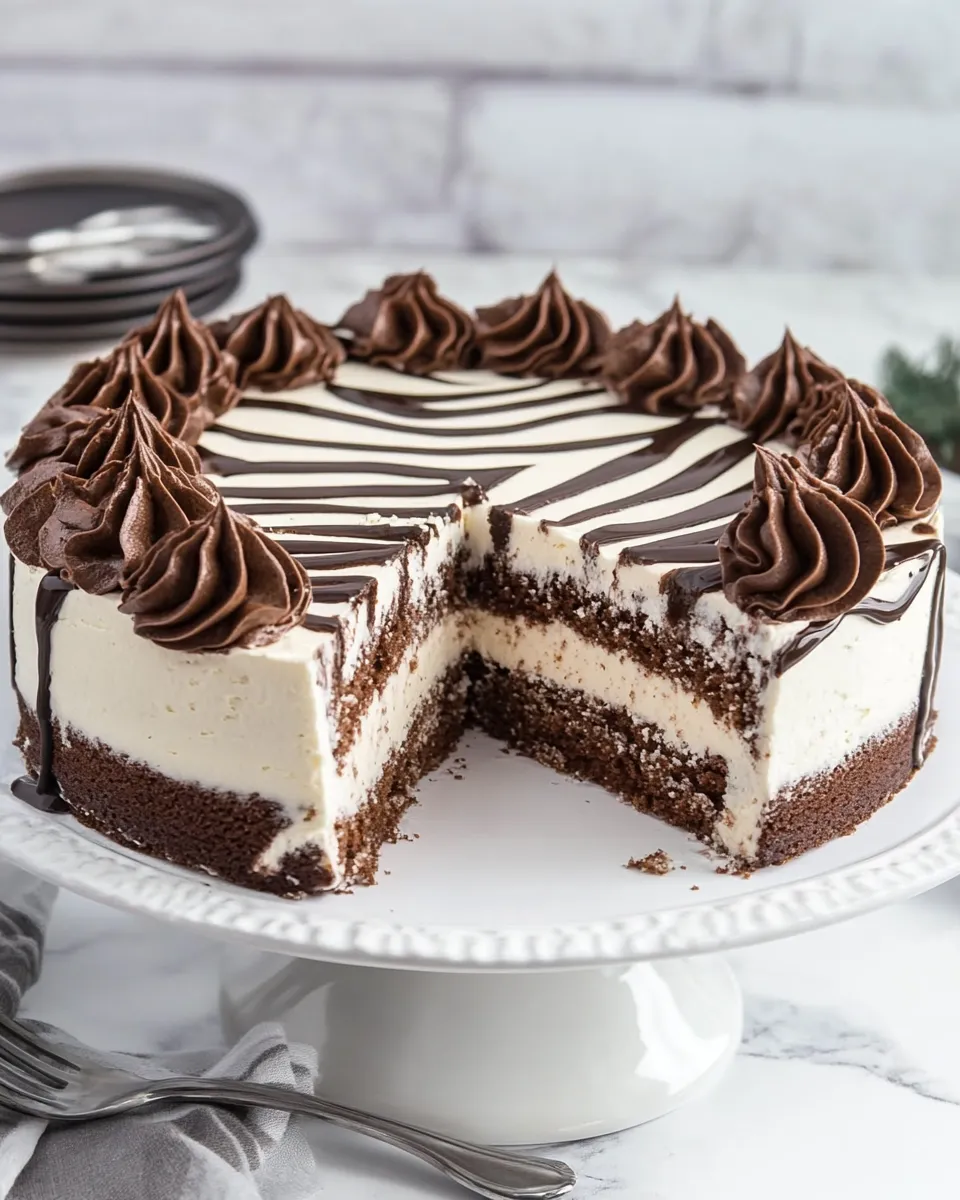
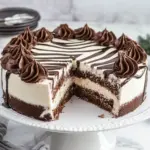
This zebra cake is a confident, unfussy dessert that looks fancy but behaves like a home cook’s friend. You’ll get distinct light and chocolatey layers with a striped, zebra-like interior—all without custards, syrups, or complicated tempering. It’s chilled, not baked, which makes it especially satisfying on warm days and reliably even for beginner bakers.
I test recipes by making mistakes on purpose so I can explain how to avoid them. With this one, the structure is simple: a crunchy, chocolate-cracker base; a marshmallow-like meringue center stabilized with gelatin; and a cocoa-swirled layer for the visual pop. The result sets in the fridge and slices cleanly.
Read the ingredient notes, follow the process in order, and keep the little technique tips in mind. The method is forgiving, but timing and temperature matter when you’re working with meringue and gelatin. Let’s walk through shopping, tools, and common pitfalls so your zebra cake comes out beautiful every time.
Ingredients
- 300 g chocolate graham crackers (or European chocolate digestive biscuits) — crushed into crumbs to form the crunchy base.
- 100 g cream cheese — binds the crumbs and adds slight tang and creaminess to the crust.
- 10 g gelatin sheets — stabilizes the meringue so the cake sets firm in the refrigerator.
- 100 ml water — used to bloom the gelatin so it dissolves smoothly.
- 5 egg whites from medium eggs — whipped into a glossy meringue that forms the cake’s light body.
- 250 g caster sugar — sweetens and stabilizes the meringue; add in batches for best texture.
- 20 g cocoa powder — folded into half the meringue to create the dark stripes.
Your Shopping Guide
Buy fresh eggs and good-quality cocoa. Fresh egg whites give the best volume for meringue. Caster sugar melts quickly and yields a glossy meringue; if you don’t have caster, a light granulated sugar can work if processed briefly in a blender to reduce grain size.
Chocolate graham crackers or chocolate digestive biscuits make the base. If you find different brands, aim for a firm, not crumbly, chocolate biscuit so the crust packs tightly. For gelatin sheets, choose clear, unflavored sheets—powdered gelatin can be substituted by weight, but follow the weight-to-volume conversion instructions if needed.
Cream cheese should be full-fat and smooth. Cold blocks are fine—the recipe softens it when mixed into the crumbs—but avoid whipped spreads as they have stabilizers that alter texture. Finally, check your kitchen for a reliable mixer and a springform pan around 20 cm (8 in); accurate tools make the process smoother.
Cooking (Zebra Cake): The Process
- Line a 20 cm (8 in) detached/springform cake pan with parchment paper.
- In a food processor, crush the 300 g chocolate graham crackers until fine. Transfer the crumbs to a large bowl, add the 100 g cream cheese, and mix by hand until the mixture is smooth and homogeneous.
- Press the crumb mixture evenly and firmly into the bottom of the prepared pan to form a base. Set the pan aside.
- Place 100 ml cold water in a small microwave-safe bowl and add the 10 g gelatin sheets. Let the sheets soak in the water until soft (about 5 minutes).
- Microwave the bowl for a few seconds, then stir until the gelatin is fully dissolved and the liquid is clear. Let the gelatin cool briefly until it is lukewarm but still liquid.
- In a clean mixer bowl, whisk the 5 egg whites on medium–high speed until foamy and soft peaks form. Add the 250 g caster sugar in batches, continuing to beat until the whites are glossy and hold stiff peaks.
- With the mixer on low, pour the lukewarm dissolved gelatin into the meringue in a thin steady stream and mix briefly to combine.
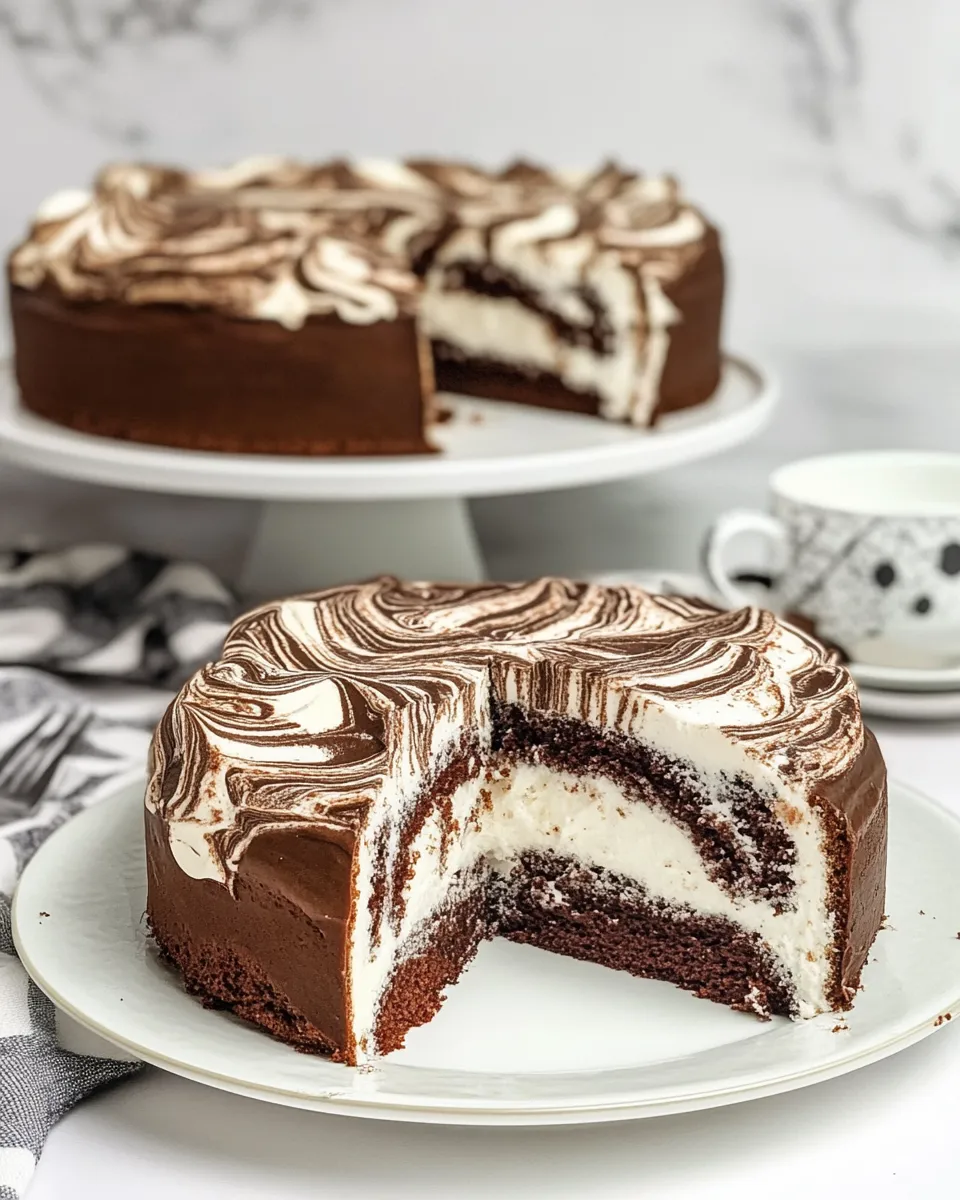
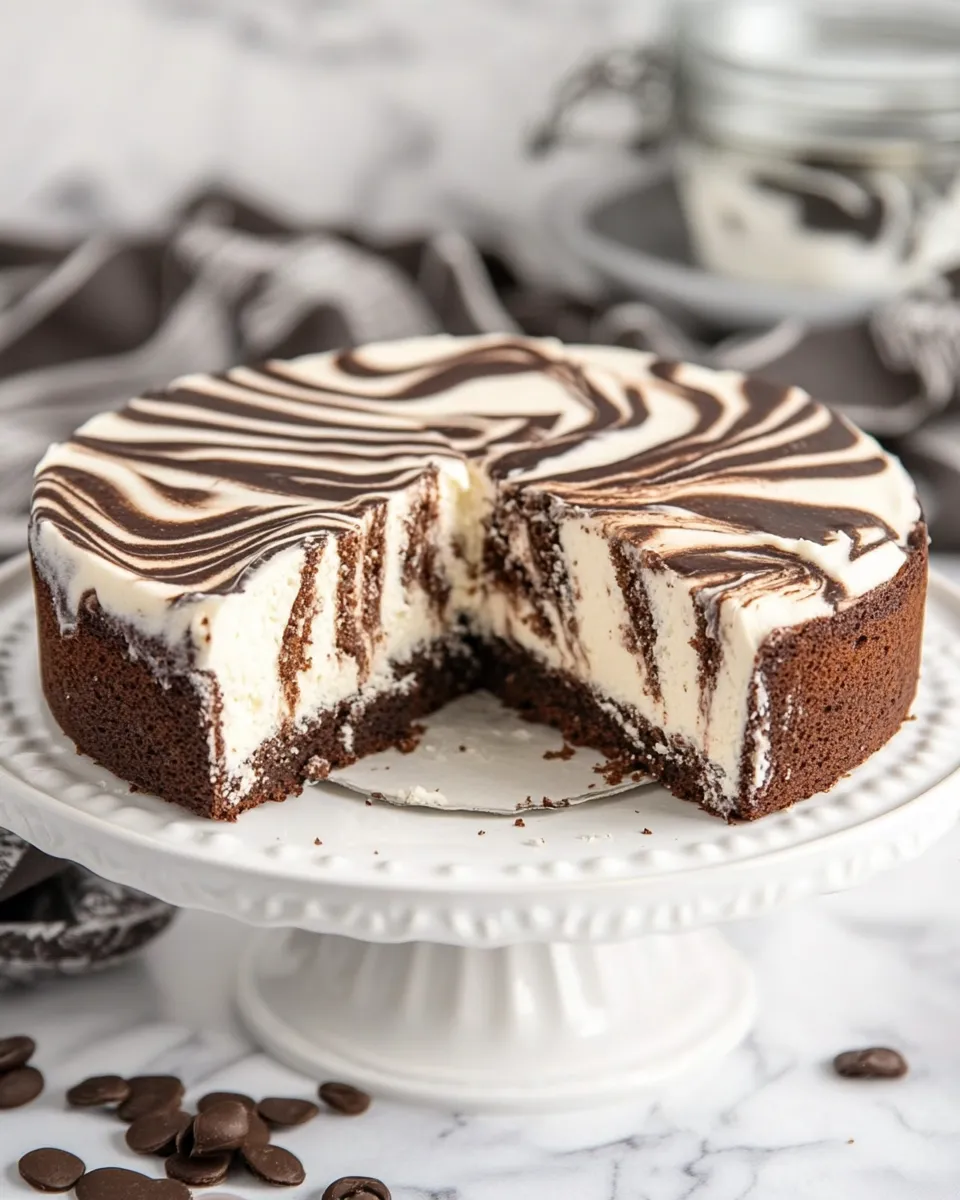
- Spoon half of the meringue mixture evenly over the prepared cracker base and smooth the surface. Add the 20 g cocoa powder to the remaining meringue and fold gently with a spatula until evenly combined and uniformly brown. Pour the cocoa mixture over the white layer in the pan. Use a spoon to gently swirl or streak the two layers to create a zebra effect — do not overmix.
- Refrigerate the cake for 4 hours, or until set. Once chilled and firm, unmold the cake and serve.
Technique notes for the steps
Step 2: Pulse the crackers until you have fine, almost sandy crumbs. Avoid over-processing into a paste; you want enough texture for a firm base. Mixing by hand with the cream cheese heats the crumbs slightly from your hands, which helps the fats bind—work quickly to keep everything cool.
Step 4–5: Bloom gelatin fully. Gelatin sheets must soften completely in cold water before gentle warming. If pieces remain hard they won’t dissolve cleanly and can leave gelatin flecks. Lukewarm is crucial: too hot can collapse the meringue structure, too cool won’t blend.
Step 6–7: Whip whites in a spotless, grease-free bowl. Add sugar gradually—this helps produce a glossy, stable meringue that’ll hold the gelatin. Add the dissolved gelatin slowly with the mixer on low so it disperses without deflating the mixture.
Step 8: When folding in cocoa, use a spatula and turn the meringue with large, gentle motions. The zebra pattern comes from distinct layers and light streaking; heavy stirring will produce a muddled brown tint instead of stripes.
Why It’s Crowd-Pleasing
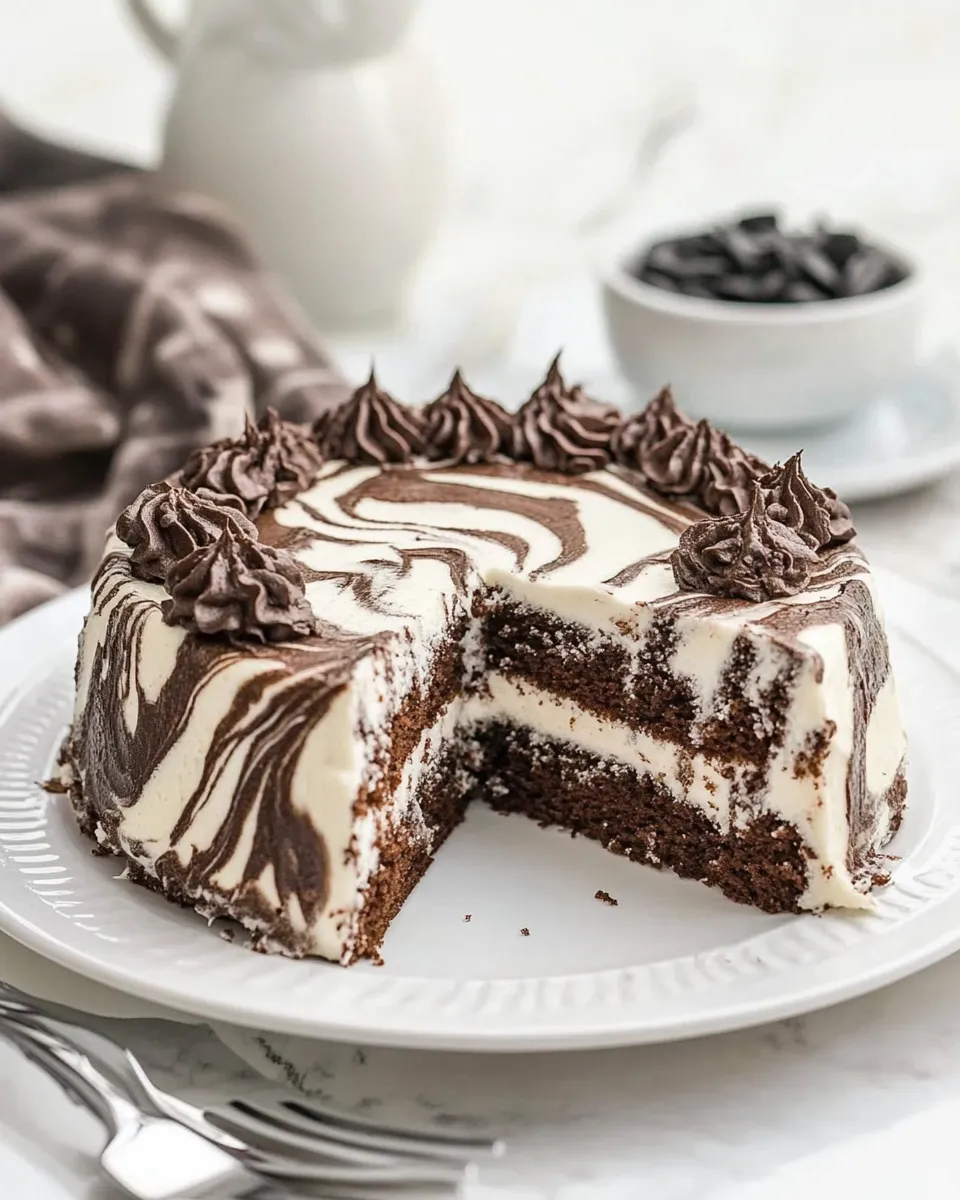
Visual appeal is half the battle: the striped interior looks sophisticated, which makes the cake a conversation starter. Taste-wise, it balances textures—crisp, creamy, and marshmallow-like meringue—so each forkful is interesting. It’s also an easy make-ahead dessert that slices neatly for parties and keeps well, which is a huge plus when you’re serving a crowd.
Because it’s chilled rather than baked, the flavor profile remains clean. The chocolate base anchors the sweetness, cream cheese adds depth, and the cocoa layer gives the contrast you expect from a zebra cake. The overall sweetness and texture are broadly appealing to both kids and adults.
What to Use Instead
If you can’t find chocolate graham crackers, use any firm chocolate biscuit—chocolate digestive, chocolate tea biscuits, or even Oreos without the filling (adjust binding slightly since Oreo crumbs are more moist). If you prefer to skip gelatin sheets, powdered gelatin may be substituted by weight: usually 1 sheet equals about 2–2.5 g powdered gelatin, but follow package guidance and bloom accordingly.
For sugar swaps, superfine (caster) sugar works best. If you must, use a very finely ground granulated sugar. Avoid liquid sweeteners in the meringue stage—they prevent reaching stiff peaks.
Recommended Tools
- 20 cm (8 in) springform pan — makes unmolding clean and easy.
- Food processor — for fine, even biscuit crumbs.
- Stand mixer or electric hand mixer — necessary to get the egg whites to stiff, glossy peaks.
- Small microwave-safe bowl — for blooming and dissolving gelatin safely.
- Flexible spatula — for folding cocoa into meringue gently.
- Parchment paper — lines the pan and prevents sticking.
Steer Clear of These
Don’t skip the gelatin if you want clean slices. Without it, the meringue will be loose and weepy rather than sliceable. Avoid adding the gelatin when it’s hot; that risks melting the air you’ve whipped into the whites and will flatten the mixture.
Do not introduce any fat or yolk into the whites. Even a speck of yolk or an oily bowl will prevent full whipping. Also avoid overmixing after adding gelatin and cocoa—gentle folds keep the structure intact and preserve the zebra pattern.
Health-Conscious Tweaks
To reduce sugar slightly, cut the caster sugar by about 10–15% but do not eliminate it: the meringue relies on sugar for structure and gloss. You can use low-fat cream cheese if you want a lighter base texture, understanding it may be less rich and a little softer.
For smaller portions, halve the recipe and use a 10–12 cm pan—timing for chilling remains similar, but set-up may be quicker. If you avoid gelatin (vegetarian preference), try agar-agar as an alternative, but note workarounds are recipe-specific; agar sets differently (firmer and at different temperatures), so experiment with small batches first.
Recipe Notes & Chef’s Commentary
Why 4 hours in the fridge? Gelatin needs time to fully gel and the base needs to firm up against the light meringue. Overnight chill is fine and often improves slicing. If the cake feels sticky at the surface after chilling, let it settle uncovered for 10–15 minutes at room temperature before unmolding to reduce tackiness.
If you want higher contrast between stripes, increase the cocoa to 25 g, tasting cautiously—this will deepen the chocolate flavor but also darken the stripes significantly. I prefer the balance at 20 g because it visually complements the white meringue and avoids bitterness.
Prep Ahead & Store
You can prepare the cake up to 24 hours in advance and keep it refrigerated, covered lightly with plastic wrap or in a cake container. For longer storage, freeze slices wrapped tightly in plastic then foil; defrost in the refrigerator overnight. Note: texture is best fresh or within 48 hours refrigerated.
Leftovers keep well for 2–3 days in the fridge. The crust may soften slightly over time as moisture migrates from the meringue; re-chilling before serving helps firm the layers again.
Helpful Q&A
Q: Can I make this without eggs?
A: No. The structure depends on whipped egg whites. There’s no direct egg-free substitute that will replicate the same light, whipped texture.
Q: My meringue lost volume after adding gelatin—what happened?
A: The gelatin was likely too hot when added. Always let dissolved gelatin cool to lukewarm before pouring it in a thin stream while the mixer runs on low.
Q: The zebra pattern blended—how to get sharper stripes?
A: Spoon layers rather than pouring both at once. After adding each layer, smooth gently. When you add the cocoa layer, fold only a few times and then spoon directly; more aggressive swirls will smear the pattern.
Serve & Enjoy
Slice with a hot, dry knife for the cleanest cuts—dip the knife in hot water, dry it quickly, then slice. Serve chilled. A dusting of fine cocoa on the top or a few chocolate shavings adds polish without changing the cake’s character.
This cake works well as an after-dinner dessert or a centerpiece for afternoon coffee. It’s approachable, portable, and forgiving when you follow the key steps about gelatin and meringue. Enjoy the look, the contrast, and the cheerful response you’ll get when you slice through to reveal those zebra stripes.
Zebra Cake Recipe
Ingredients
Ingredients
- 300 gchocolate graham crackers or European chocolate digestive biscuits
- 100 gcream cheese
- 10 ggelatin sheets
- 100 mlwater
- 5 egg whites from medium eggs
- 250 gcaster sugar
- 20 gcocoa powder
Instructions
Instructions
- Line a 20 cm (8 in) detached/springform cake pan with parchment paper.
- In a food processor, crush the 300 g chocolate graham crackers until fine. Transfer the crumbs to a large bowl, add the 100 g cream cheese, and mix by hand until the mixture is smooth and homogeneous.
- Press the crumb mixture evenly and firmly into the bottom of the prepared pan to form a base. Set the pan aside.
- Place 100 ml cold water in a small microwave-safe bowl and add the 10 g gelatin sheets. Let the sheets soak in the water until soft (about 5 minutes).
- Microwave the bowl for a few seconds, then stir until the gelatin is fully dissolved and the liquid is clear. Let the gelatin cool briefly until it is lukewarm but still liquid.
- In a clean mixer bowl, whisk the 5 egg whites on medium–high speed until foamy and soft peaks form. Add the 250 g caster sugar in batches, continuing to beat until the whites are glossy and hold stiff peaks.
- With the mixer on low, pour the lukewarm dissolved gelatin into the meringue in a thin steady stream and mix briefly to combine.
- Spoon half of the meringue mixture evenly over the prepared cracker base and smooth the surface. Add the 20 g cocoa powder to the remaining meringue and fold gently with a spatula until evenly combined and uniformly brown. Pour the cocoa mixture over the white layer in the pan. Use a spoon to gently swirl or streak the two layers to create a zebra effect — do not overmix.
- Refrigerate the cake for 4 hours, or until set. Once chilled and firm, unmold the cake and serve.
Equipment
- springform pan (20 cm / 8 in)
- Parchment Paper
- Food Processor
- Microwave-safe Bowl
- Mixer
- Spatula
- Spoon
Notes
Make sure the water for the gelatin is not too warm so as not to burn the gelatin!