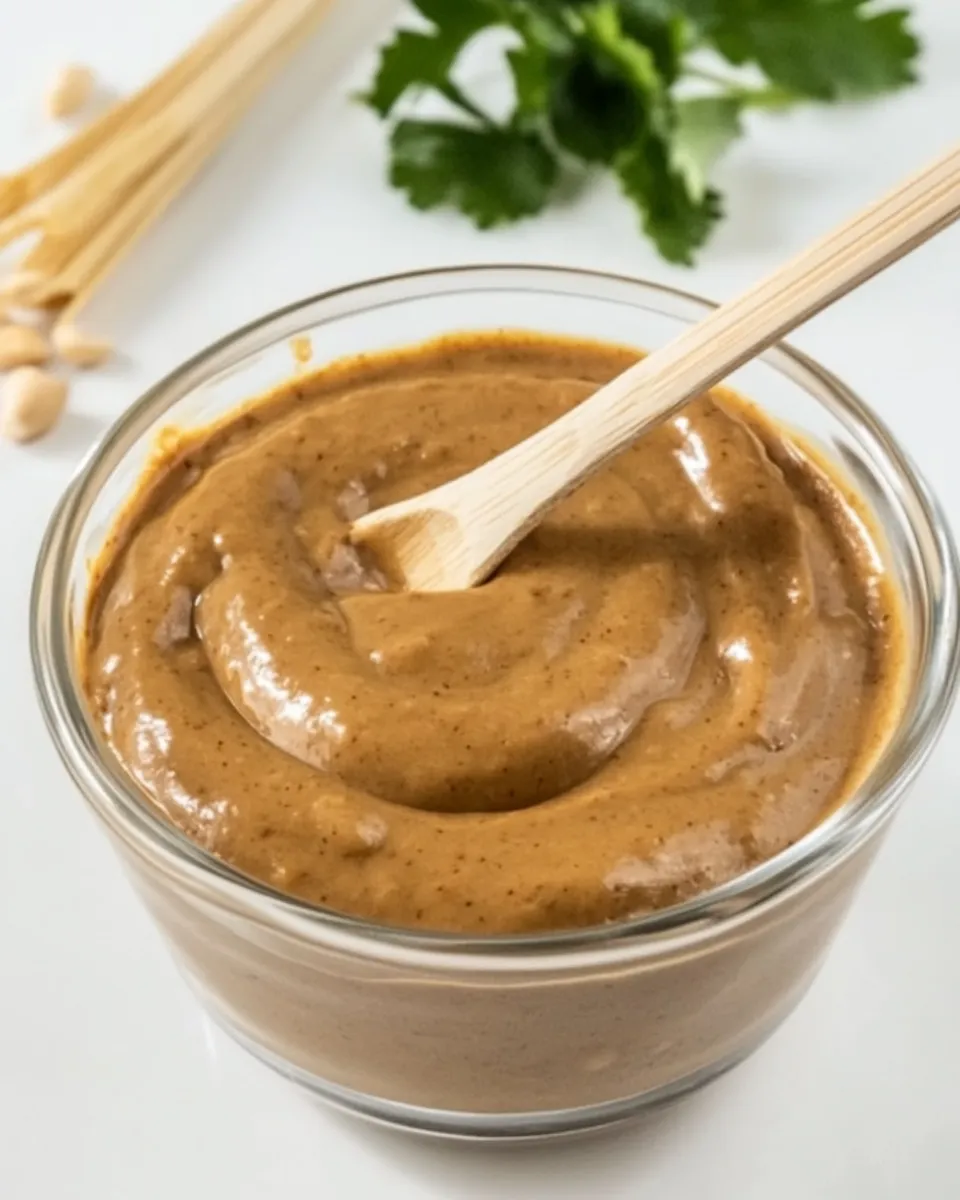
This is my go-to quick sauce when I want something that tastes like I spent more time in the kitchen than I actually did. It’s rich, nutty, and bright — a three-ingredient answer to those evenings when you need flavor fast. No long lists, no special shopping trip. Just pantry staples pulled together in minutes.
It works as a dip, drizzle, or light marinade. Use it straightaway or let it rest in the fridge for a short while so the flavors settle. I’ll walk you through exactly what to do, what to watch for, and how to make tiny swaps if you need to.
The Essentials
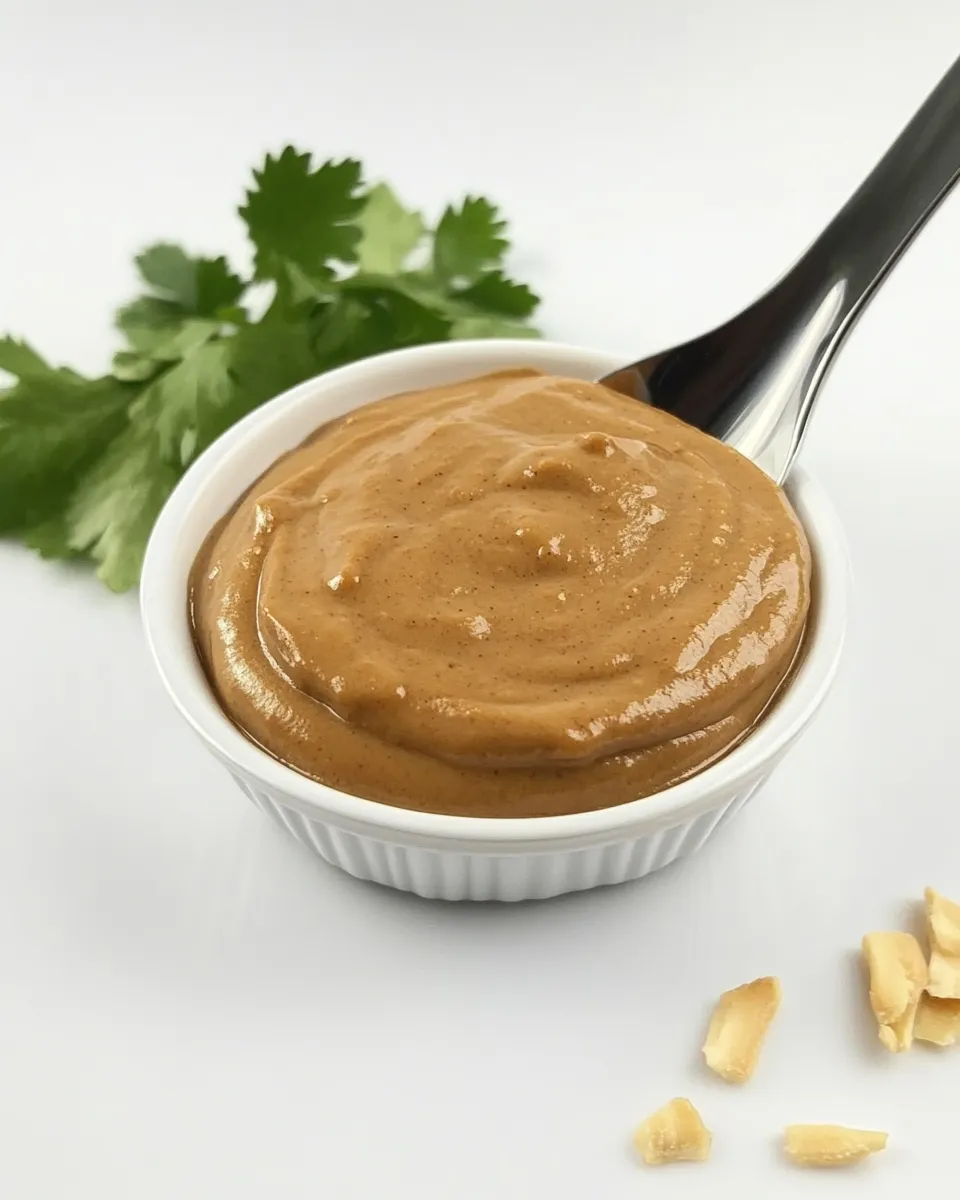
This sauce leans on creamy peanut butter for body and flavor, seasoned rice vinegar for tang, and low-sodium soy sauce for savory depth. The three components deliver balance: fat, acid, and umami. The texture should be smooth and pourable, not dry or clumpy.
It’s ultra-versatile. Serve it with grilled meats, roasted vegetables, cold noodle bowls, or as a dipping sauce for spring rolls. Because it’s so concentrated, a little goes a long way — but it’s forgiving. You can thin it with a splash of water if you want a looser consistency.
Ingredients
- 1/2 cup creamy peanut butter (your favorite brand) — provides the sauce’s base, creaminess, and nutty flavor; use a smooth variety for the silkiest finish.
- 1/3 cup seasoned rice vinegar — adds bright acidity and a touch of sweetness to balance the peanut butter.
- 3 tablespoons low-sodium soy sauce — brings salty, savory umami without overpowering; low-sodium keeps the sauce from getting too salty.
Cooking (3 Ingredient Satay Sauce): The Process
- Add 1/2 cup creamy peanut butter, 1/3 cup seasoned rice vinegar, and 3 tablespoons low-sodium soy sauce to a small mixing bowl.
- Whisk vigorously until the mixture is completely combined and smooth, about 1–2 minutes, breaking up any lumps as you go.
- Scrape down the sides and bottom of the bowl with a spatula and whisk briefly again so there are no streaks of peanut butter remaining.
- Transfer to a serving bowl and serve immediately, or cover and refrigerate for at least 15 minutes to let the flavors meld.
Top Reasons to Make 3 Ingredient Satay Sauce
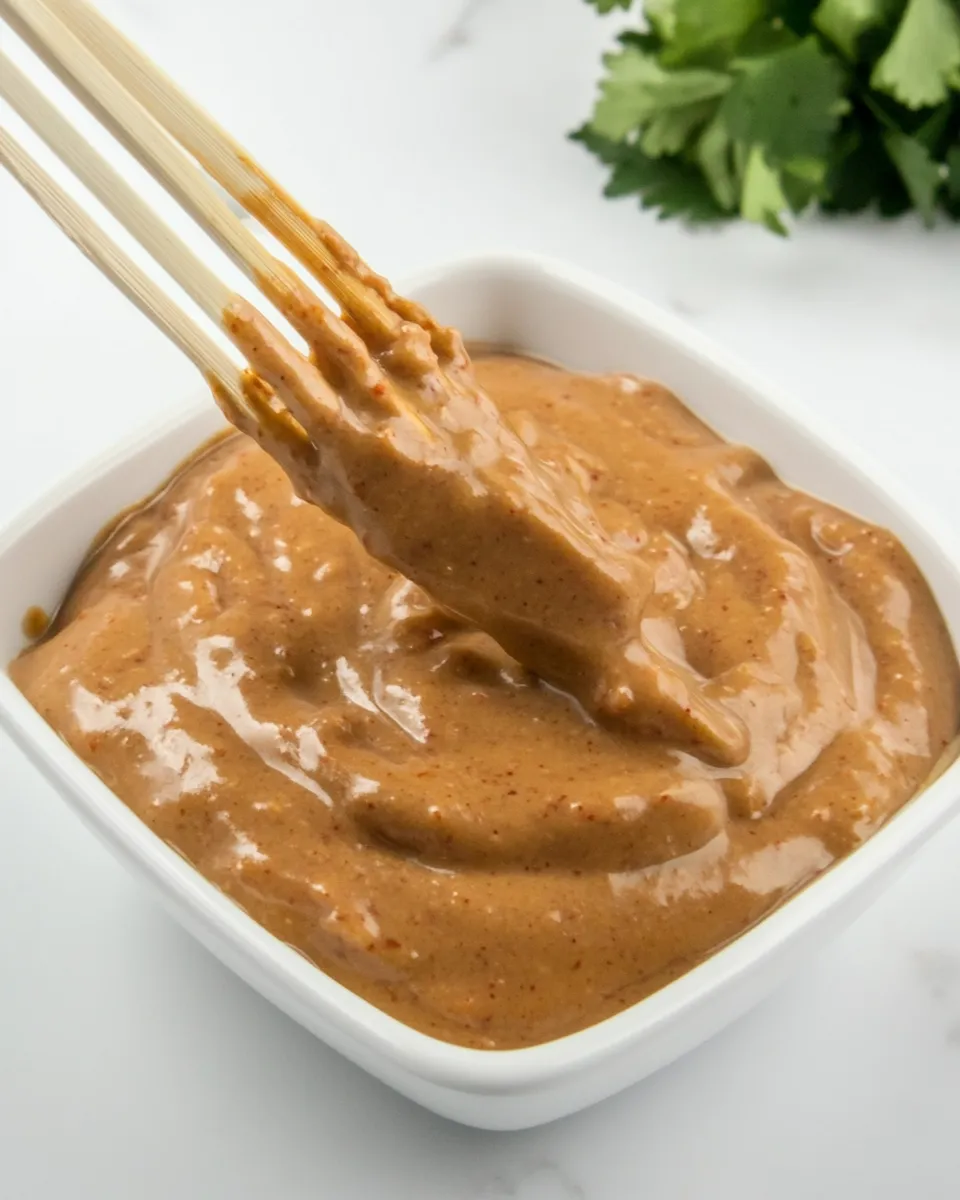
Speed: It takes minutes to make, and most of the time is passive. If you’re juggling dinner, this sauce gets you flavor without fuss.
Pantry-friendly: You likely already have everything on hand. It’s one of those recipes that rescues a weeknight meal.
Flexibility: Use it hot or cold, thick or thinned, as a dip or a sauce. It adapts to whatever you’re serving. That makes it great for meal prep and last-minute entertaining.
Quick Replacement Ideas
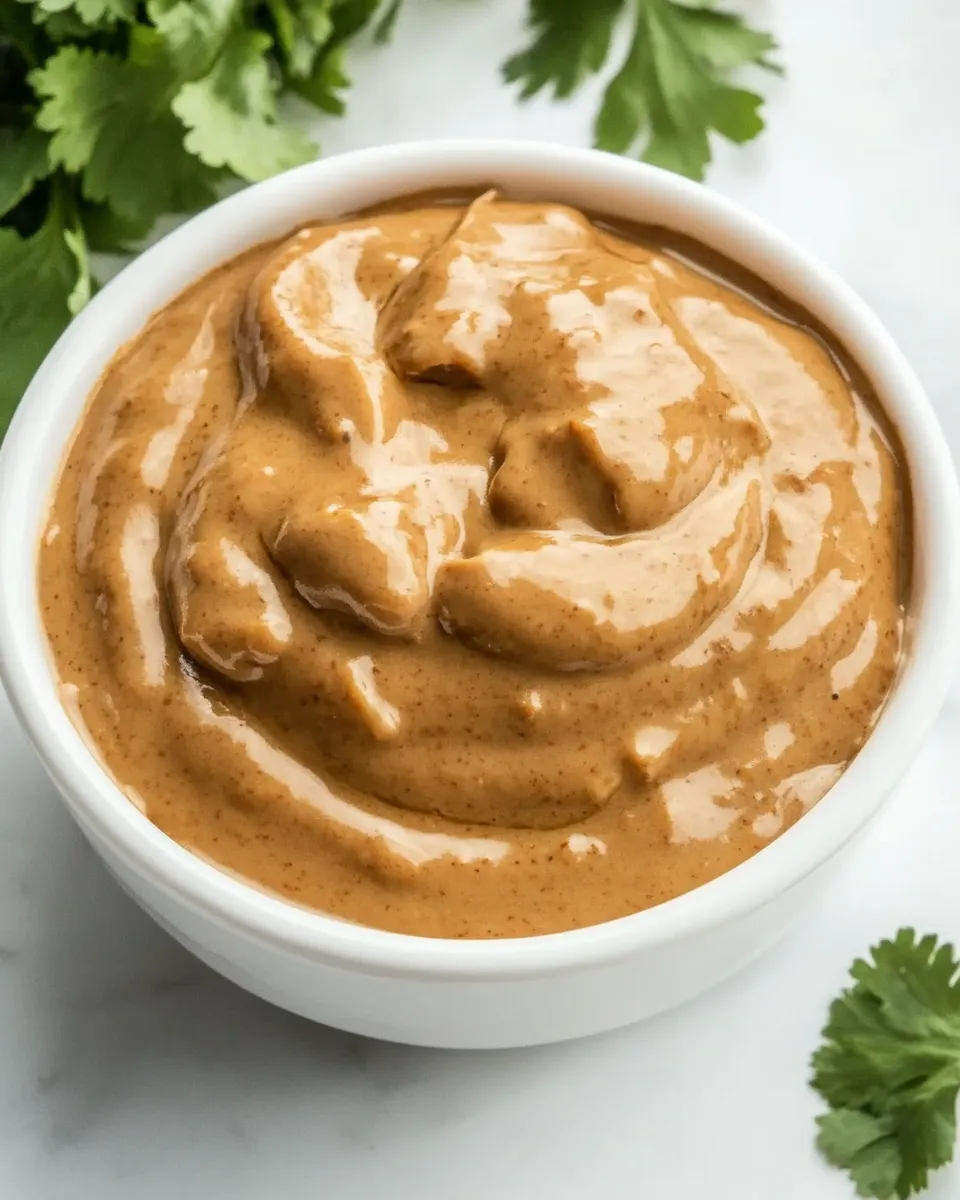
If you need to swap something, these straightforward options keep the spirit of the sauce:
- Peanut butter: Try almond or cashew butter for a different nut profile. Expect a slightly different sweetness and oil content.
- Seasoned rice vinegar: Use plain rice vinegar plus a touch of sugar, or a mild apple cider vinegar in a pinch. Adjust to taste; the goal is bright acidity.
- Low-sodium soy sauce: Tamari is a good gluten-free alternative. Regular soy sauce works too but reduce any additional salt in the dish.
Equipment & Tools
- Small mixing bowl — roomy enough to whisk without splashing.
- Whisk — a basic metal or silicone whisk works best to smooth out any lumps.
- Spatula — for scraping the sides and getting every bit of sauce mixed.
- Measuring cups and spoons — accurate amounts keep the balance right.
- Serving bowl or jar — for immediate serving or refrigeration.
Troubles You Can Avoid
Common issues and quick fixes
Too thick or clumpy: Warm the peanut butter slightly (10–15 seconds in the microwave) before mixing, then whisk. If it’s still dense, add water a teaspoon at a time until you reach the desired consistency.
Too salty: Use low-sodium soy sauce as the recipe calls for. If you already used regular soy sauce and it’s too salty, add a little more peanut butter or a splash of vinegar to balance.
Grainy texture: Whisk vigorously and scrape the bowl well. A short pulse in a blender will smooth stubborn lumps, but usually vigorous whisking is enough.
Year-Round Variations
Spring/Summer: Thin the sauce slightly with cold water or a touch of lime juice for a brighter, lighter dip for raw veggies and chilled noodles.
Fall/Winter: Warm the sauce gently with a tablespoon of coconut milk or a splash of warm water to make it spoonable over roasted vegetables or warm skewers.
Spice it up: Add a pinch of red pepper flakes, a dash of sriracha, or a little chili paste to any season for heat. Start small — the sauce amplifies strong flavors.
Cook’s Notes
Consistency is key. If you prefer a drizzling sauce, thin it with water one teaspoon at a time until it pours. For a thicker dip, keep it as-is or chill to firm it slightly.
Letting it rest for 15 minutes in the fridge softens the raw edge of the vinegar and lets the flavors marry. Taste before serving and adjust if needed.
Make it ahead: The flavors do deepen with time. Store in the fridge for a few days and whisk before using if it firms up.
Best Ways to Store
Refrigerate in an airtight container for up to 5 days. The oil in the peanut butter may separate slightly; just stir or whisk before using. If the sauce thickens in the fridge, warm it gently or thin with a teaspoon of water at a time.
Freezing is possible but not ideal — texture can change after thawing. I recommend keeping this sauce in the refrigerator and making small batches instead.
Questions People Ask
Can I use natural peanut butter? Yes, but natural varieties are oilier and may separate. Stir well before measuring and be prepared to whisk a little longer to reach a smooth texture.
Is this vegan? The three listed ingredients can be vegan depending on brand — confirm the soy sauce and seasoned rice vinegar labels. Use a plant-based soy sauce or tamari to be sure.
Can I double the recipe? Yes. Mix in a larger bowl and whisk until smooth. Transfer to airtight containers for storing.
How do I make it creamier? Use a very smooth peanut butter and whisk vigorously. A brief pulse in a blender will also create a silkier texture if needed.
Bring It Home
This 3 Ingredient Satay Sauce is the kind of recipe that quietly upgrades everything it touches. It’s fast, forgiving, and surprisingly adaptable. Keep the three core ideas in mind — creaminess, acidity, umami — and you’ll always know how to tweak it to your taste. Make it, taste it, and then use it again and again. It’s one of those small kitchen wins that makes weeknights easier and weekend gatherings a little more delicious.
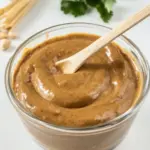
3 Ingredient Satay Sauce
Ingredients
Ingredients
- 1/2 cupcreamy peanut butter your favorite brand
- 1/3 cupseasoned rice vinegar
- 3 tablespoonslow-sodium soy sauce
Instructions
Instructions
- Add 1/2 cup creamy peanut butter, 1/3 cup seasoned rice vinegar, and 3 tablespoons low-sodium soy sauce to a small mixing bowl.
- Whisk vigorously until the mixture is completely combined and smooth, about 1–2 minutes, breaking up any lumps as you go.
- Scrape down the sides and bottom of the bowl with a spatula and whisk briefly again so there are no streaks of peanut butter remaining.
- Transfer to a serving bowl and serve immediately, or cover and refrigerate for at least 15 minutes to let the flavors meld.
Equipment
- Small mixing bowl
- Whisk
- Spatula
- Serving bowl