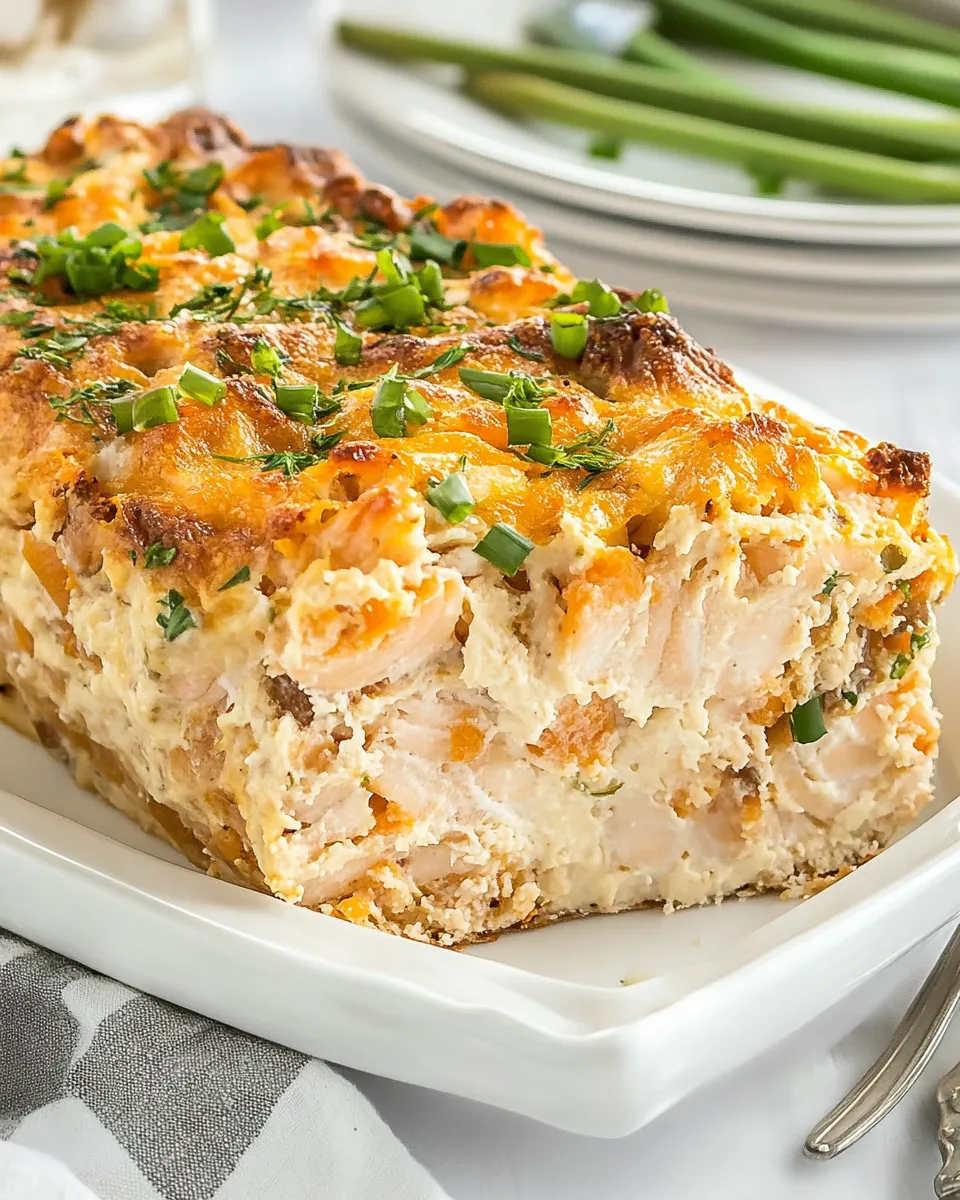
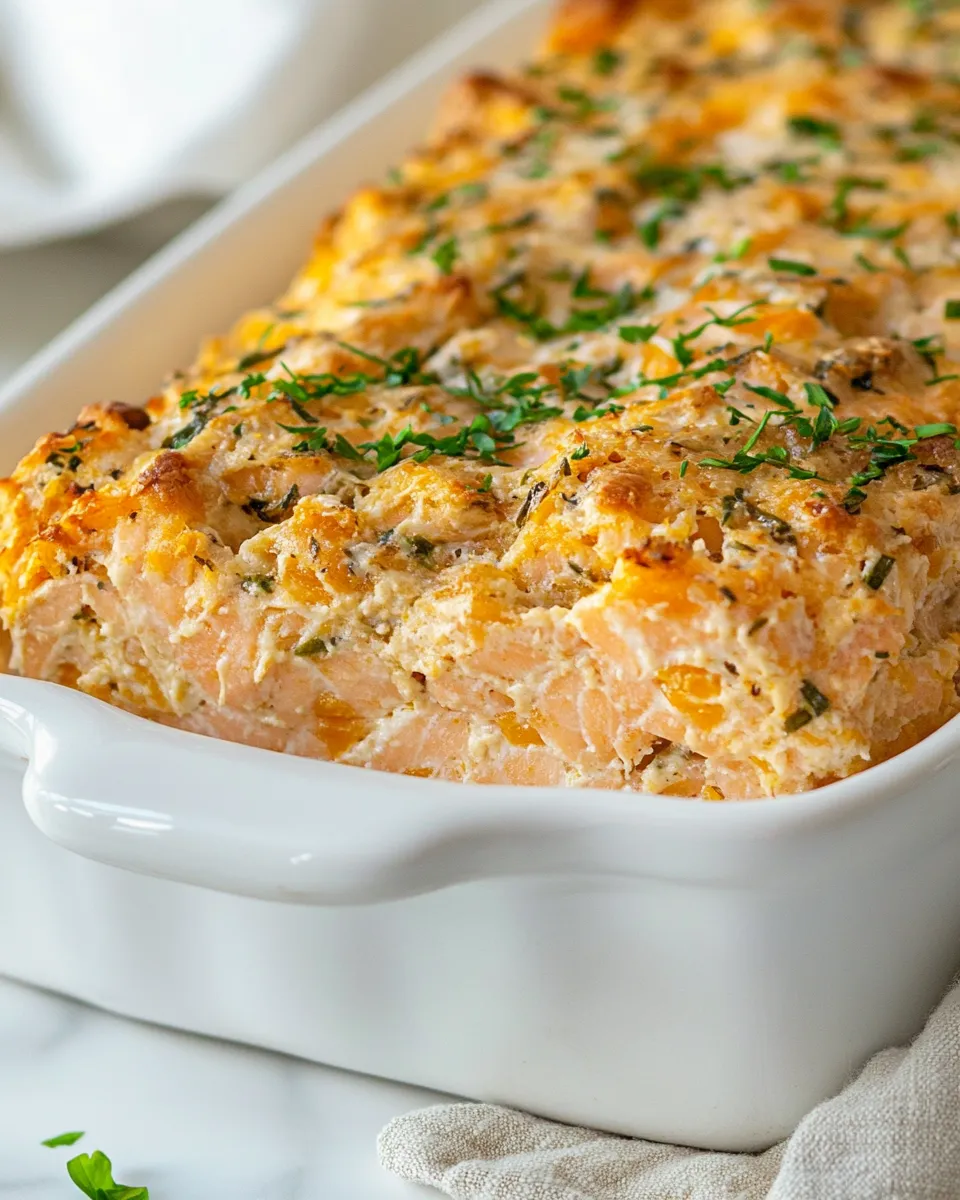
This baked salmon loaf is the kind of comfortable, no-drama dinner I turn to when I want something homey, sensible, and unfussy. It’s moist, savory, and pulls together with pantry and fridge items you probably already have. I love it for weeknights and for feeding a small crowd without a lot of hands-on time.
The texture is gentle—light bread pieces keep the loaf tender while canned red salmon brings that clean, briny flavor. It’s not a fish dish that screams “fancy”; it’s honest, straightforward, and reliable. If you like simple seafood recipes that behave well and reheat even better, this one deserves a spot in your repertoire.
What’s in the Bowl
Ingredients
- 2 eggs — bind the loaf and help it set while keeping it tender.
- ¼ cup melted butter — adds richness and helps the loaf brown.
- 1 ½ cups milk — loosens the mixture so the bread soaks through and the texture stays moist.
- 1 teaspoon salt — seasons the whole loaf; adjust to taste if your salmon is salty.
- 1 can (15 ounces) red salmon, bones and skin removed — the main flavor and protein; flake into bite-sized pieces.
- 3 slices of soft bread, cubed — the filler that keeps the loaf tender and absorbs the egg-milk mixture.
Cook Baked Salmon Loaf Like This
- Preheat the oven to 350°F. Grease a loaf pan and set it aside.
- In a medium bowl, whisk 2 eggs until blended.
- Add ¼ cup melted butter, 1 ½ cups milk, and 1 teaspoon salt to the eggs and stir until combined.
- Open the 1 can (15 ounces) red salmon and drain any excess liquid. Flake the salmon into bite-sized pieces with a fork.
- Add 3 slices of soft bread, cubed, and the flaked salmon to the egg mixture. Gently fold or toss until the bread and salmon are evenly coated.
- Scrape the mixture into the prepared loaf pan and smooth the top lightly.
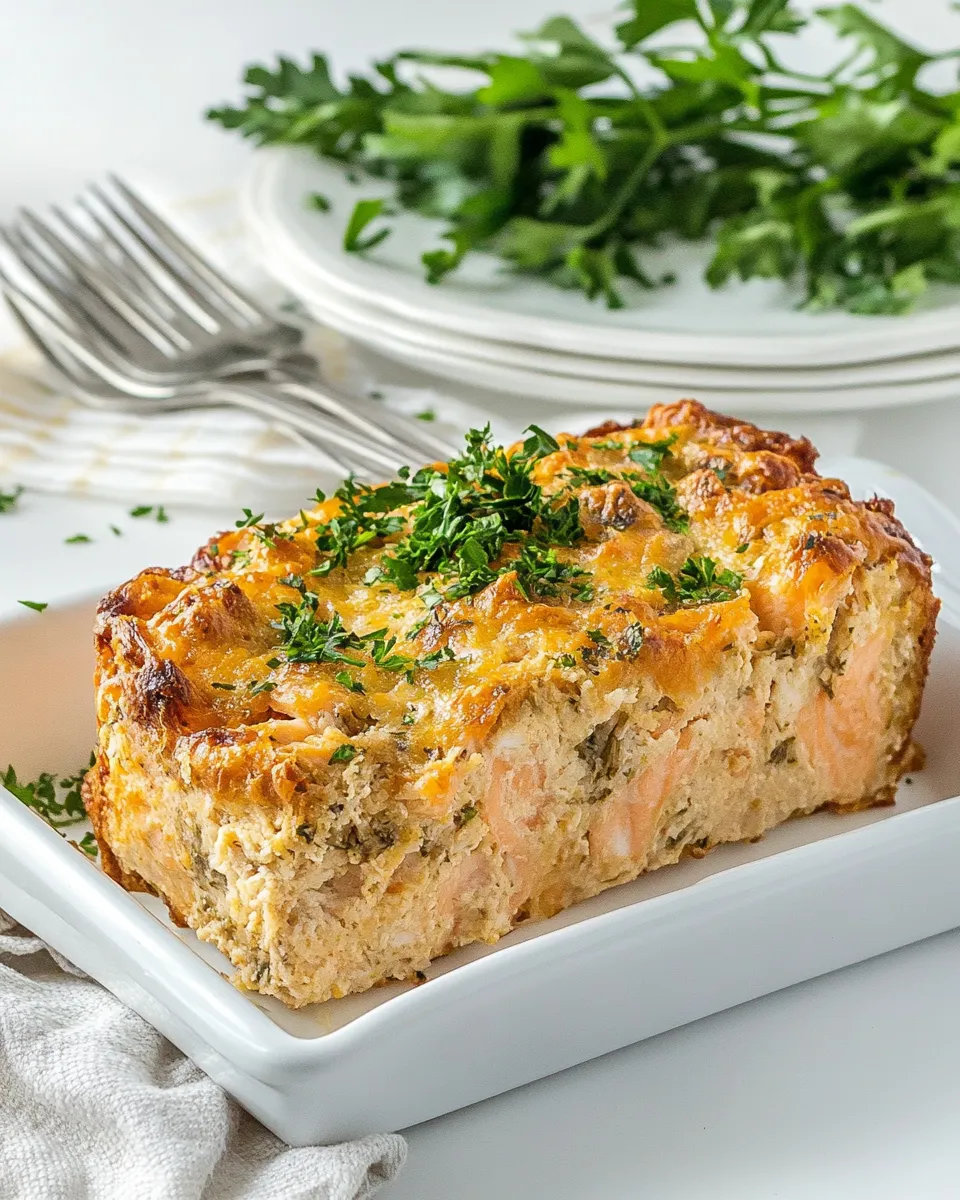
- Bake for 45–60 minutes, until the loaf is puffed, lightly browned, and a knife inserted near the center comes out mostly clean.
- Let the loaf rest in the pan for about 10 minutes before slicing and serving.
Why This Recipe Belongs in Your Rotation
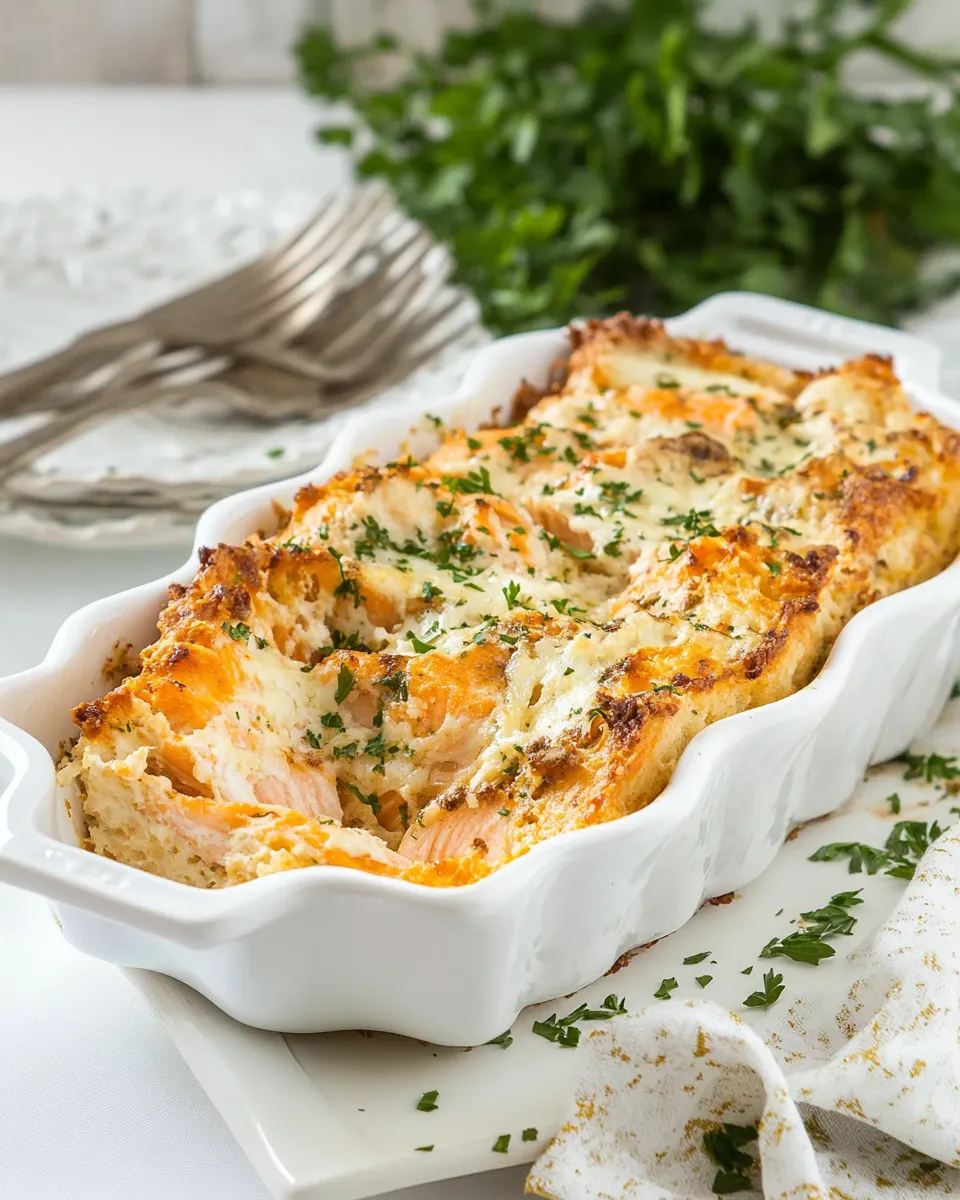
This salmon loaf is economical and forgiving. A single can of salmon becomes a dinner that feeds several people with minimal effort. It’s also quick to assemble—whisk, fold, bake—and it tolerates small variations without falling apart. If you’re short on time or want something that packs protein without fuss, this hits the mark.
It’s also comfort food that doesn’t rely on heavy sauces. The combination of milk, butter, and bread creates a gentle, almost souffle-like texture. You can dress it up or keep it simple. Either way the loaf reheats well and slices cleanly after a short rest, which makes it good for leftovers or packed lunches.
Healthier Substitutions
If you want to lighten this loaf without changing it dramatically, choose the simpler swaps that still keep the balance of wet and dry ingredients:
- Use low-fat or skim milk in place of whole milk to reduce fat while keeping the liquid component the same.
- Pick a softer whole-grain or whole-wheat sandwich bread instead of white to add fiber while preserving the “soak” behavior.
- Reduce the butter slightly or use a light spread in melted form if you prefer a leaner finish; keep in mind that cutting too much fat will change texture.
What You’ll Need (Gear)
- Loaf pan (8×4 or similar) — for the classic loaf shape and even baking.
- Medium mixing bowl — where you whisk eggs and combine everything.
- Fork or spatula — to flake the salmon and gently fold the mixture.
- Measuring cups and spoons — to keep the proportions consistent.
- Oven thermometer (optional) — helpful if your oven runs hot or cool and you want consistent results.
Troubles You Can Avoid
Problem: The loaf is soggy in the middle.
Fix: Drain the canned salmon thoroughly and squeeze any excess liquid from the bread if it feels overly wet. Also ensure the loaf bakes long enough—the center should be mostly set and a knife inserted near the center should come out mostly clean per the directions.
Problem: The top browns too quickly while the middle is underdone.
Fix: Tent the loaf loosely with foil halfway through baking to prevent excessive browning, then remove the foil for the last 10–15 minutes so it can color. Every oven is different, and the 45–60 minute range accounts for that variability.
Problem: The loaf feels dry.
Fix: Overbaking will dry this loaf. Check it toward the lower end of the time range and rely on the knife test; the center should be mostly clean but still moist. Also, softer bread and the stated amount of milk help keep moisture.
Adaptations for Special Diets
Gluten-free: Substitute three slices of a soft gluten-free sandwich bread cut into cubes. Use a loaf pan lined to prevent sticking; baking time may be similar but watch the center for doneness.
Dairy-free: Replace milk with an unsweetened dairy-free milk and use a neutral oil in place of butter. The liquid ratio should remain similar; the texture will be slightly different but still satisfying.
Lower sodium: Omit or reduce the teaspoon of added salt if your canned salmon is already salty. Taste one forkful of the plain flaked salmon before adding salt to judge how much is necessary.
Little Things that Matter
Drain the salmon well. Even subtle extra liquid affects bake time and texture. Open the can, tip it into a fine mesh strainer for a minute, and press gently with the back of a spoon to remove excess oil or brine.
Cube bread into similar-sized pieces so it soaks evenly. If you leave large chunks, they might not absorb the egg-milk mixture fully and can create uneven pockets.
Fold, don’t mash. You want the salmon to remain in flaked pieces and the bread to be coated, not puréed. Gentle handling preserves texture.
Let it rest. Ten minutes in the pan lets juices redistribute and makes cleaner slices. Serve slightly warm rather than straight from the oven for the best texture.
Freezer-Friendly Notes
You can freeze the baked loaf in slices or whole:
- Cool completely, then wrap individual slices tightly in plastic wrap and place them in a freezer bag for grab-and-go portions.
- For a whole loaf, wrap tightly in plastic wrap and then foil. Label with the date and freeze for up to 2 months.
- To reheat from frozen: thaw overnight in the fridge then warm in a 325°F oven until heated through, or microwave slices on medium power in short bursts.
Top Questions & Answers
- Q: Can I use pink salmon instead of red?
A: Yes. Pink salmon will work; flavor and texture will be slightly milder than red salmon, but the method and proportions stay the same. - Q: Do I need to remove the bones and skin?
A: The source of truth for this recipe specifies the can of red salmon with bones and skin removed, so use salmon prepared that way for a smoother texture and easier eating. - Q: How do I know when the loaf is done?
A: Bake 45–60 minutes. Look for a puffed, lightly browned top and test with a knife near the center that comes out mostly clean. - Q: Can I add herbs or vegetables?
A: You can stir in finely chopped herbs or cooked, drained vegetables, but keep quantities modest so you don’t upset the wet-to-dry balance. If you add extras, the baking time may change slightly. - Q: Will the loaf hold together without eggs?
A: Eggs are the primary binder here. Omitting them requires a substitute binder (like a commercial egg replacer), which will change texture. For consistent results, follow the recipe’s 2 eggs.
Serve & Enjoy
Slice the loaf into even pieces after the 10-minute rest. It’s lovely warm with a simple squeeze of lemon or a dollop of plain yogurt or tartar sauce on the side. For a casual meal, pair it with steamed green beans and a crisp salad. For brunch, offer it alongside soft-boiled eggs and roasted tomatoes.
This is a recipe you can rely on when evening plans are loose and you want a satisfying, uncomplicated meal. It’s forgiving, budget-friendly, and—most of all—pleasant to eat. Keep canned salmon in your pantry and you’ll find yourself making this more often than you expected.
Baked Salmon Loaf
Ingredients
Ingredients
- 2 eggs
- 1/4 cup melted butter
- 1 1/2 cups milk
- 1 teaspoon salt
- 1 can 15 ounces red salmon, bones and skin removed
- 3 slices of soft bread cubed
Instructions
Instructions
- Preheat the oven to 350°F. Grease a loaf pan and set it aside.
- In a medium bowl, whisk 2 eggs until blended.
- Add ¼ cup melted butter, 1 ½ cups milk, and 1 teaspoon salt to the eggs and stir until combined.
- Open the 1 can (15 ounces) red salmon and drain any excess liquid. Flake the salmon into bite-sized pieces with a fork.
- Add 3 slices of soft bread, cubed, and the flaked salmon to the egg mixture. Gently fold or toss until the bread and salmon are evenly coated.
- Scrape the mixture into the prepared loaf pan and smooth the top lightly.
- Bake for 45–60 minutes, until the loaf is puffed, lightly browned, and a knife inserted near the center comes out mostly clean.
- Let the loaf rest in the pan for about 10 minutes before slicing and serving.
Equipment
- Oven
- Loaf Pan
- Medium Bowl
- Whisk
- Fork
- Spatula