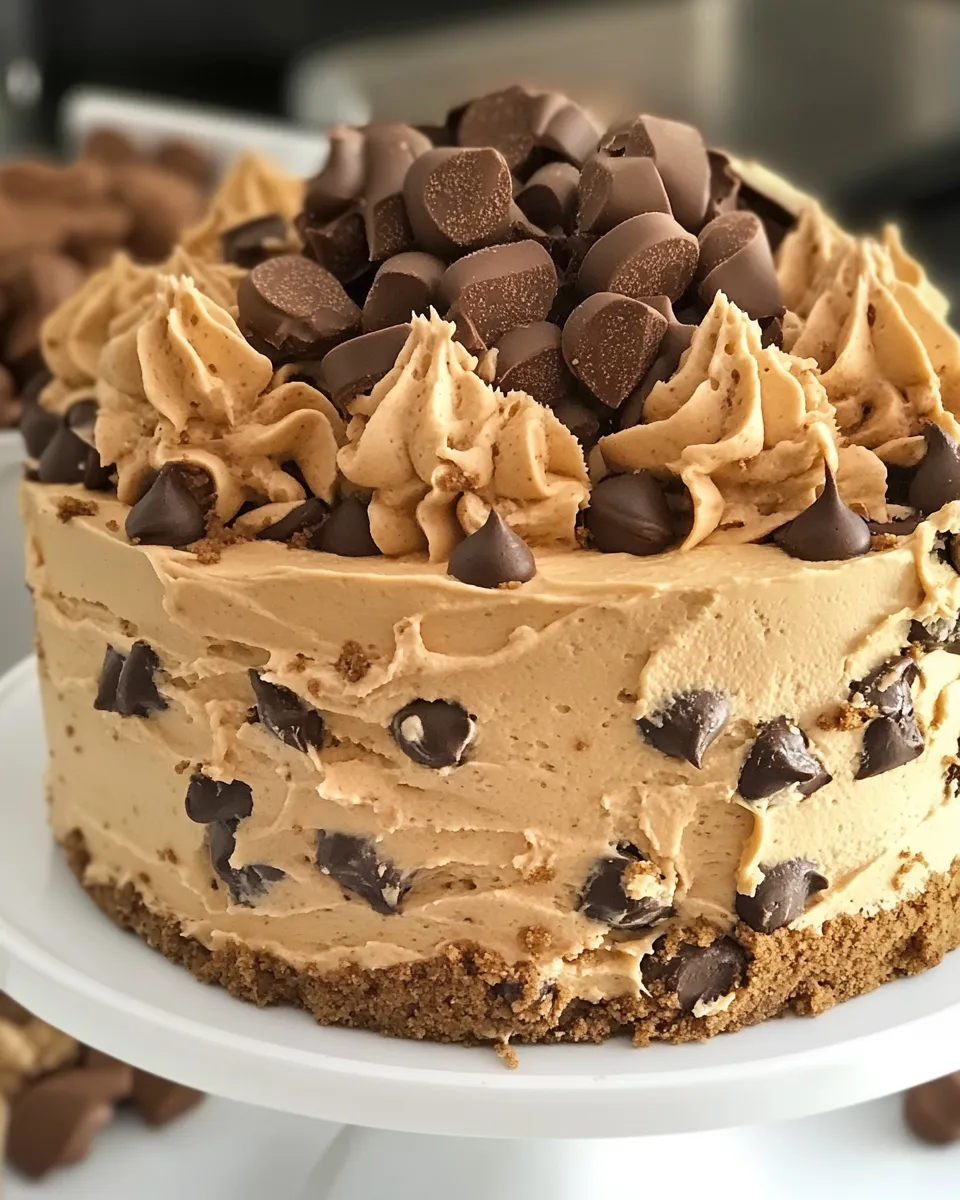
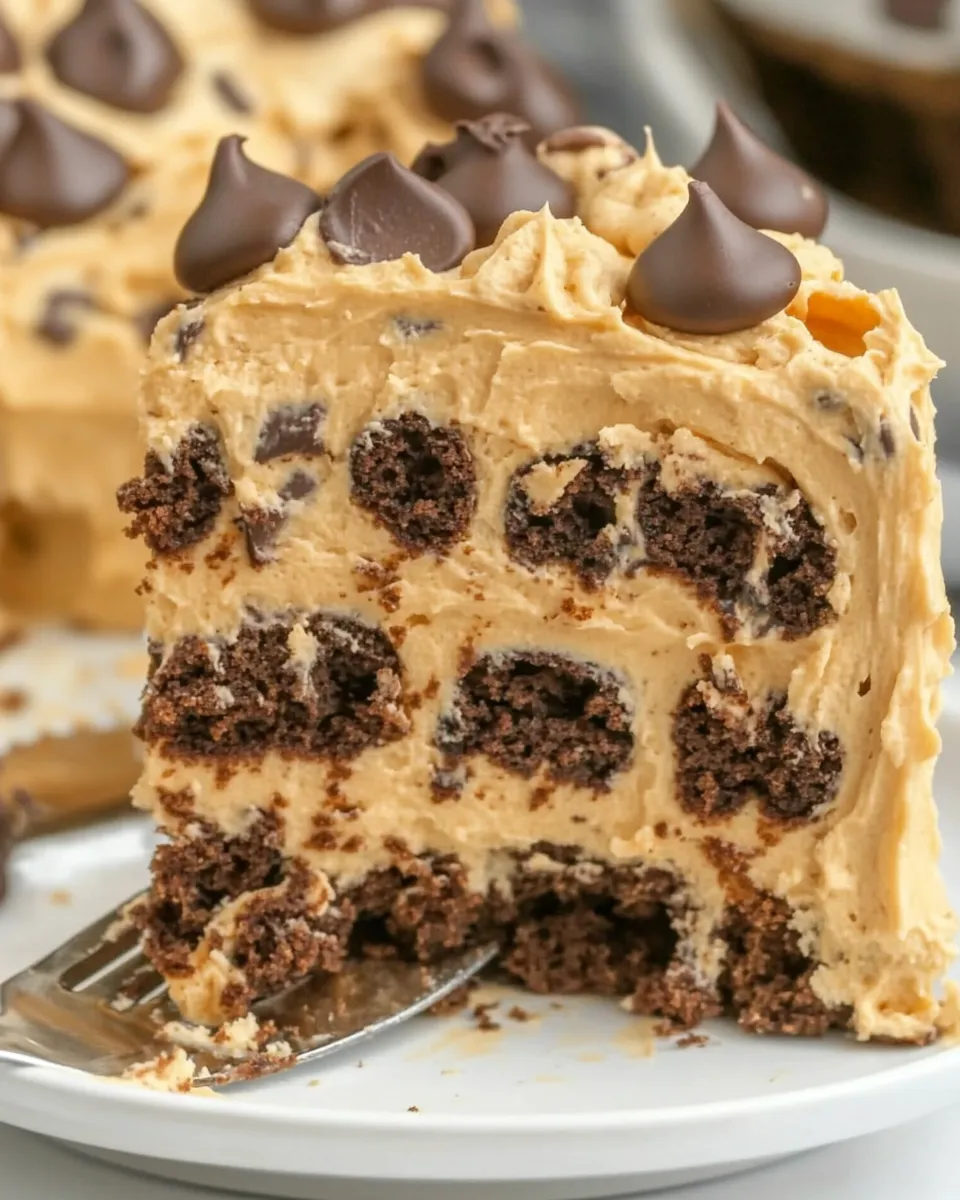
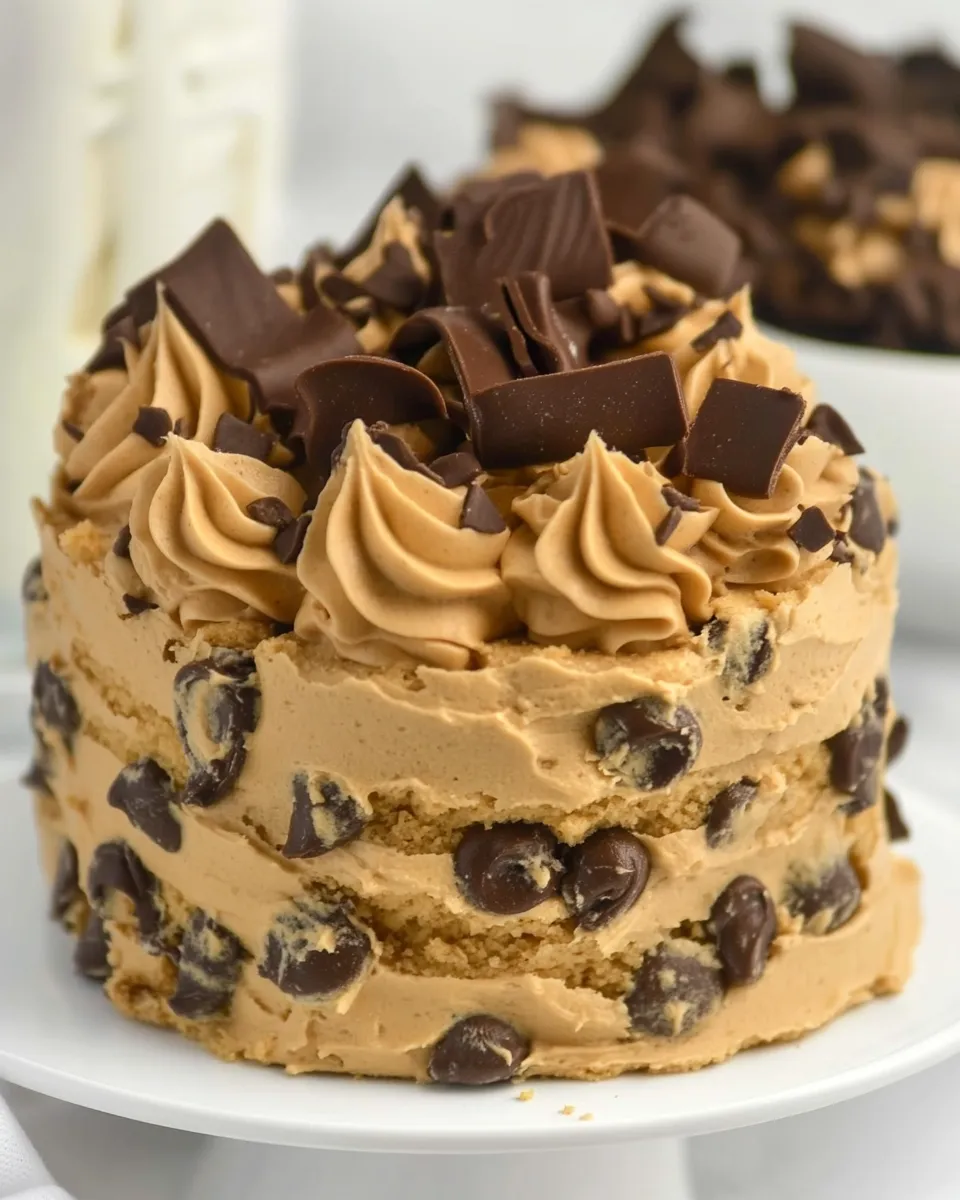
This cake is a chocolate layer cake filled with edible cookie dough — the kind you can eat straight from the bowl, but way more impressive on a plate. It’s built from dense, fudgy cake layers, a simple chocolate frosting, and a rich, safe-to-eat cookie dough that sits between the layers. No balled cookie portions here: this is a mashup dessert that’s meant to be shared and sliced.
I tested and refined this to be straightforward in a busy kitchen: melt, whisk, bake, heat-treat the flour, mix a quick cookie dough, assemble, chill, and slice. The steps are linear and forgiving if you follow the order. Expect chocolate on your hands, but also a cake that keeps well — ideal for parties and birthday celebrations.
Below you’ll find a clear ingredient rundown, exact step-by-step directions from the tested source, substitutions, gear notes, troubleshooting tips, and storage guidance. Read the method once through, then follow the numbered steps when you bake.
Ingredient Rundown
Ingredients
- 3/4 cup + 2 tablespoons coconut oil — melts into the chocolate to make the cake batter glossy and tender.
- 3 cups chocolate, chopped — primary chocolate for the cake; melts with the coconut oil to create the base.
- 2 1/4 cups sugar — sweetens and helps create a slightly crackly top on the cake layers.
- 6 large eggs — provide structure and richness; added one at a time for a smooth batter.
- 6 tablespoons cocoa powder — intensifies chocolate flavor and contributes to the cake’s deep color.
- 9 tablespoons cornstarch — lightens the crumb and keeps the cake tender without making it cakey.
- 1 cup butter — creamed into the cookie dough for classic bite and flavor.
- 1 cup light brown sugar — adds moisture and a caramel note to the cookie dough.
- 1/3 cup sugar — used in the cookie dough to balance sweetness and texture.
- 2 teaspoons vanilla extract — flavor lift for the cookie dough.
- 2 tablespoons milk — loosens the cookie dough for spreadability between layers.
- 2 cups all-purpose flour (heat-treated — see notes) — essential for edible cookie dough; heat-treating removes bacteria risks.
- 1 cup chocolate frosting — used as a thin layer under the cookie dough to glue it in place and boost chocolate flavor.
Cookie Dough Cake — Do This Next
- Preheat the oven to 350°F (180°C). Grease three 8-inch cake pans with cooking spray (line bottoms with parchment if you like) and set aside.
- Measure and set aside 1 cup of the 3 cups chopped chocolate for the cookie dough. Put the remaining chopped chocolate and 3/4 cup plus 2 tablespoons coconut oil in a microwave-safe bowl.
- Melt the chocolate and coconut oil in the microwave in 20-second intervals, stirring between intervals, until smooth and fully combined.
- Whisk 2 1/4 cups sugar into the melted chocolate mixture until combined.
- Add the 6 large eggs one at a time, whisking well after each addition until the mixture is smooth.
- Whisk in 6 tablespoons cocoa powder and 9 tablespoons cornstarch until the batter is smooth and uniform.
- Divide the batter evenly among the three prepared pans and smooth the tops. Bake for 23–25 minutes, or until a toothpick inserted in the center comes out with a few moist crumbs.
- Let the cakes cool in their pans for 10–15 minutes, then run a knife around the edges and transfer the layers to a wire rack to cool completely.
- While the cakes cool, heat-treat the 2 cups all-purpose flour for the cookie dough: spread the flour in an even layer on a baking sheet and bake in the oven for about 5–7 minutes (allow to cool completely). (Use this cooled, heat-treated flour in the cookie dough.)
- Make the edible cookie dough: in a stand mixer or with a hand mixer, cream together 1 cup butter, 1 cup light brown sugar, and 1/3 cup sugar until combined and slightly fluffy. Add 2 teaspoons vanilla extract and 2 tablespoons milk and mix until incorporated.
- With the mixer on low, slowly add the cooled, heat-treated 2 cups all-purpose flour and mix just until combined. Fold the reserved 1 cup chopped chocolate into the dough with a spatula.
- Assemble the cake: place one cooled cake layer on your serving plate. Spread a thin layer of the 1 cup chocolate frosting over the layer, then spread half of the cookie dough evenly on top of the frosting.
- Place the second cake layer on top, repeat with a thin layer of frosting and the remaining half of the cookie dough. Top with the final cake layer.
- Spread any remaining chocolate frosting on top of the cake (and on the sides, if desired).
- Refrigerate the assembled cake for at least 1 hour to firm up before slicing. Store leftovers refrigerated.
The Upside of Cookie Dough Cake
You get the nostalgia of cookie dough without the safety worries. Heat-treating the flour makes the dough edible while keeping the familiar texture. The cake layers are dense and fudgy, so they hold up to the cookie dough filling — no sliding or squishing when you slice.
This is a great showstopper for birthdays or potlucks: it looks like a layered celebration cake but tastes like a deluxe cookie-and-cake hybrid. It’s also forgiving; the cake layers are tolerant of slight overbake and the cookie dough fills gaps between layers.
Substitutions by Category
- Fats — If you prefer, you can use unsalted butter in place of the coconut oil used to melt with the chocolate; use equal volume. Coconut oil gives sheen and a slightly different mouthfeel, but butter works.
- Chocolate — Any baking chocolate you like will work: darker for more intense flavor, semisweet for balance. Reserve 1 cup for the cookie dough as directed.
- Sweeteners — Light brown sugar adds moisture to the cookie dough. You can use dark brown sugar for a deeper molasses note, same volume.
- Flour — For the cookie dough, any all-purpose equivalent that you heat-treat works. If you need a gluten-free option, use a 1:1 gluten-free blend (heat-treat it the same way), but expect slight texture differences.
- Frosting — Store-bought or homemade chocolate frosting is fine. The recipe uses a thin layer to help the cookie dough adhere.
What You’ll Need (Gear)
- Three 8-inch round cake pans (or two, baking in batches)
- Cooking spray and parchment rounds or sheets
- Microwave-safe bowl for melting chocolate
- Stand mixer or hand mixer for the cookie dough
- Spatula and offset spatula for spreading frosting and dough
- Wire rack for cooling the cake layers
- Baking sheet for heat-treating the flour
- Toothpick or cake tester to check doneness
- Serving plate or cake board and a refrigerator for chilling
Watch Outs & How to Fix
- Cake too dense or gummy — Make sure eggs are added one at a time and fully incorporated. Overmixing after dry ingredients are added can tighten the crumb.
- Underbaked centers — If the toothpick comes out with wet batter, give an extra 2–3 minutes and check again. Oven temperatures vary, so use the toothpick test, not just time.
- Cookie dough too loose or greasy — Chill the dough briefly before spreading if it feels too soft. If it separates, a quick 10–15 minute rest in the fridge firms it up for spreading.
- Frosting sliding off — Apply a thin crumb coat or chill the cake 15–20 minutes before finishing the sides. The cookie dough layer benefits from a thin frosting layer beneath it to keep it from sticking to the cake and shifting.
- Raw flour worry — Don’t skip step 9. Heat-treating the flour is non-negotiable for safe edible cookie dough.
Seasonal Serving Ideas
- Spring — Serve thin slices with a handful of fresh berries on the side to cut through the richness.
- Summer — Offer small wedges with a scoop of vanilla ice cream for a cool contrast.
- Fall — Add a dusting of warm cinnamon sugar to the plate or a drizzle of salted caramel when serving.
- Winter — Top slices with toasted nuts or a scatter of coarse sea salt to balance the chocolate.
Method to the Madness
Bake the cake layers
Melt the chopped chocolate with the coconut oil in short bursts. The goal is a smooth, shiny mixture. Whisk in the sugar, then the eggs one at a time — this builds a glossy batter. Cocoa powder and cornstarch finish the batter and set the structure. Divide evenly and bake until a toothpick shows moist crumbs, not raw batter.
Heat-treat the flour
Spread the 2 cups of all-purpose flour on a baking sheet and bake for about 5–7 minutes at the same oven temperature. Let it cool completely before using. This step kills potential bacteria and keeps the cookie dough safe to eat.
Make the edible cookie dough
Cream butter and sugars until slightly fluffy, then add vanilla and milk. With the mixer on low, add the cooled, heat-treated flour just until incorporated. Fold in the reserved 1 cup chopped chocolate. The dough should be spreadable, not stiff; if too stiff, a splash more milk will loosen it.
Assemble and chill
Spread a thin layer of frosting on each cake layer before the cookie dough. This acts as an adhesive and sends a chocolate signal in every bite. After assembling, chill the whole cake at least an hour so the cookie dough sets and slices cleanly.
Prep Ahead & Store
- Make ahead — Bake the layers a day ahead and wrap them tightly. Prepare the cookie dough and refrigerate overnight; bring to room temperature briefly to spread.
- Assembly timing — Assemble the cake up to 24 hours ahead and refrigerate. Chilling helps the layers settle and makes slicing neater.
- Storage — Store leftovers refrigerated, well wrapped, up to 4–5 days.
- Freezing — You can freeze slices wrapped tightly for up to 1 month. Thaw in the refrigerator before serving.
Common Qs About Cookie Dough Cake
- Is the cookie dough safe to eat? — Yes, because the recipe requires heat-treating the flour (step 9) and does not use raw eggs in the cookie dough. Follow those directions exactly.
- Can I use a different pan size? — You can, but baking time will change. The recipe is designed for three 8-inch pans for even, same-height layers.
- Can I skip the chocolate frosting? — The thin frosting layers help the cookie dough stick and keep a clean slice. Omitting it is possible but expect the cookie dough to press into the cake more.
- How do I heat-treat flour safely? — Spread it on a baking sheet and bake at 350°F (180°C) for about 5–7 minutes, then cool completely before using.
- Can I make this gluten-free? — Use a 1:1 gluten-free flour blend and heat-treat it the same way; textures will vary slightly.
Time to Try It
Follow the numbered steps, treat the heat-treating step as mandatory, and give the cake at least an hour in the fridge before slicing. The contrast — fudgy cake, creamy frosting, and chewy chocolate-studded cookie dough — is worth the few extra minutes of patience.
When you slice into this, you’ll get clean layers and a crowd-pleasing combination of flavors. Try it once exactly as written, then adapt substitutions to your pantry. If you make it, take a picture, slice carefully, and enjoy the applause.
Cookie Dough Cake
Ingredients
Ingredients
- 3/4 cup + 2 tablespoonscoconut oil
- 3 cupschocolatechopped
- 2 1/4 cupssugar
- 6 largeeggs
- 6 tablespoonscocoa powder
- 9 tablespoonscornstarch
- 1 cupbutter
- 1 cuplight brown sugar
- 1/3 cupsugar
- 2 teaspoonsvanilla extract
- 2 tablespoonsmilk
- 2 cupsall-purpose flourheat treated * see notes
- 1 cupchocolate frosting
Instructions
Instructions
- Preheat the oven to 350°F (180°C). Grease three 8-inch cake pans with cooking spray (line bottoms with parchment if you like) and set aside.
- Measure and set aside 1 cup of the 3 cups chopped chocolate for the cookie dough. Put the remaining chopped chocolate and 3/4 cup plus 2 tablespoons coconut oil in a microwave-safe bowl.
- Melt the chocolate and coconut oil in the microwave in 20-second intervals, stirring between intervals, until smooth and fully combined.
- Whisk 2 1/4 cups sugar into the melted chocolate mixture until combined.
- Add the 6 large eggs one at a time, whisking well after each addition until the mixture is smooth.
- Whisk in 6 tablespoons cocoa powder and 9 tablespoons cornstarch until the batter is smooth and uniform.
- Divide the batter evenly among the three prepared pans and smooth the tops. Bake for 23–25 minutes, or until a toothpick inserted in the center comes out with a few moist crumbs.
- Let the cakes cool in their pans for 10–15 minutes, then run a knife around the edges and transfer the layers to a wire rack to cool completely.
- While the cakes cool, heat-treat the 2 cups all-purpose flour for the cookie dough: spread the flour in an even layer on a baking sheet and bake in the oven for about 5–7 minutes (allow to cool completely). (Use this cooled, heat-treated flour in the cookie dough.)
- Make the edible cookie dough: in a stand mixer or with a hand mixer, cream together 1 cup butter, 1 cup light brown sugar, and 1/3 cup sugar until combined and slightly fluffy. Add 2 teaspoons vanilla extract and 2 tablespoons milk and mix until incorporated.
- With the mixer on low, slowly add the cooled, heat-treated 2 cups all-purpose flour and mix just until combined. Fold the reserved 1 cup chopped chocolate into the dough with a spatula.
- Assemble the cake: place one cooled cake layer on your serving plate. Spread a thin layer of the 1 cup chocolate frosting over the layer, then spread half of the cookie dough evenly on top of the frosting.
- Place the second cake layer on top, repeat with a thin layer of frosting and the remaining half of the cookie dough. Top with the final cake layer.
- Spread any remaining chocolate frosting on top of the cake (and on the sides, if desired).
- Refrigerate the assembled cake for at least 1 hour to firm up before slicing. Store leftovers refrigerated.
Equipment
- 8-inch cake pans
- Mixing bowls
- Microwave-safe Bowl
- Stand mixer or hand mixer
- Baking Sheet
- Parchment Paper
- Wire Rack
- Spatula
- Knife
Notes
* To heat treat flour
: To heat treat flour, spread it into an even layer on a baking sheet and bake at 350F for 5-6 minutes. Allow it to cool before using.
TO STORE:
Leftover cake should be stored in the refrigerator, covered, for up to 2 weeks.
TO FREEZE:
Place the cake in a freezer-safe container and freeze for up to 3 months. Let the cake thaw overnight in the fridge before enjoying it.