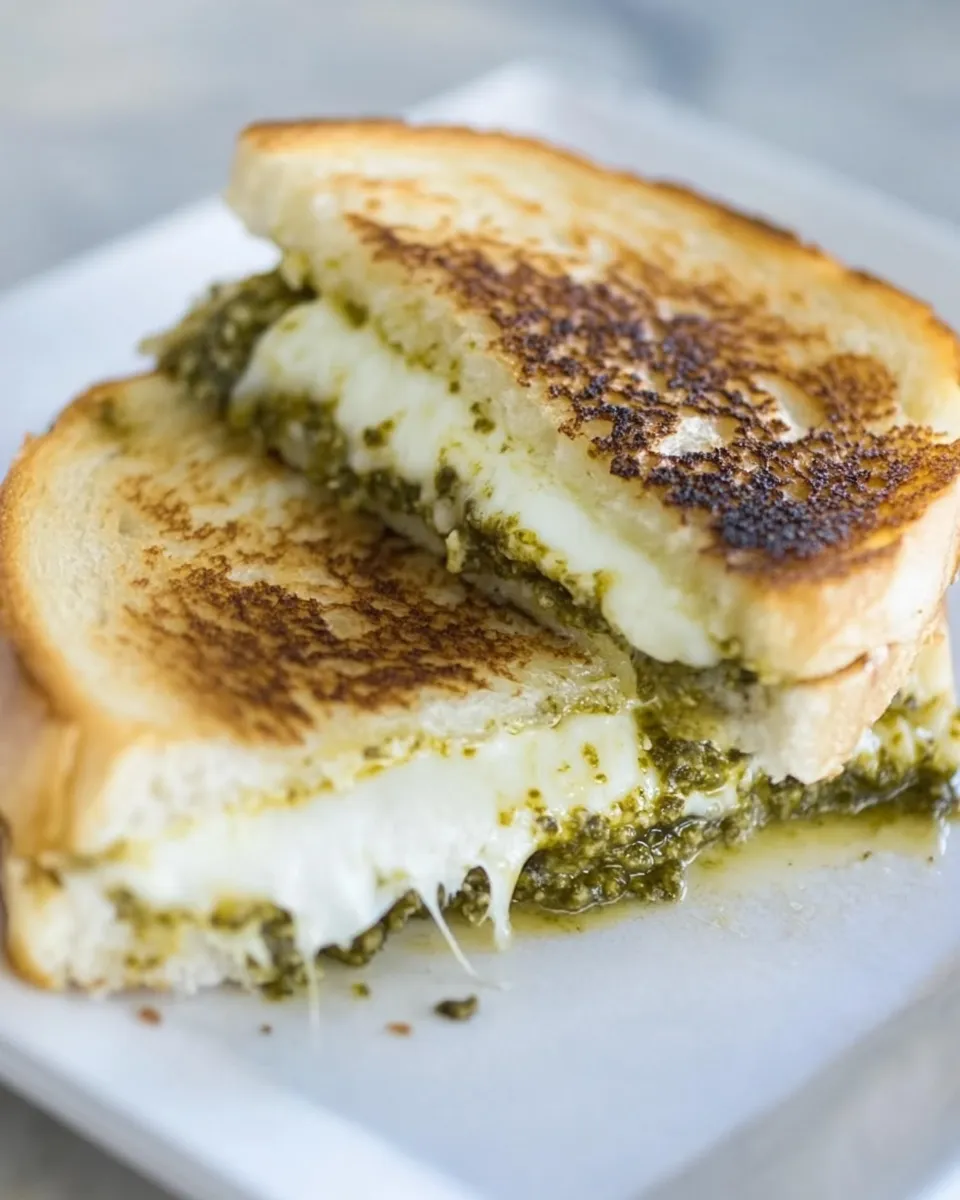
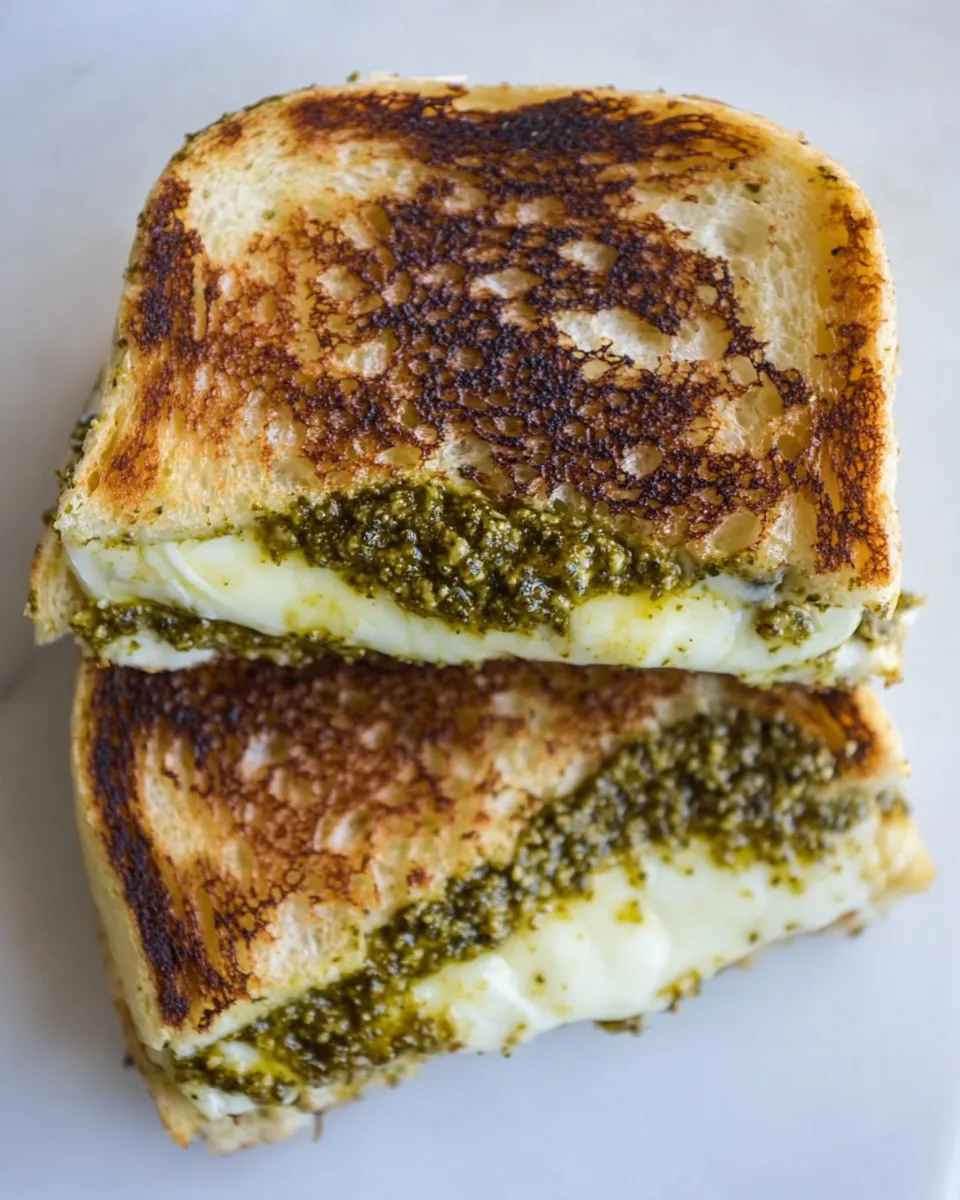
I make grilled cheese a lot. Not the nostalgic school-lunch kind every time, but the kind that feels deliberate: crisp bread, molten cheese, a bright hit of herb that cuts through the richness. This Pesto Grilled Cheese is exactly that — simple, fast, and remarkably balanced. It’s the sandwich I reach for when I want something comforting that still tastes like I put a little thought into dinner.
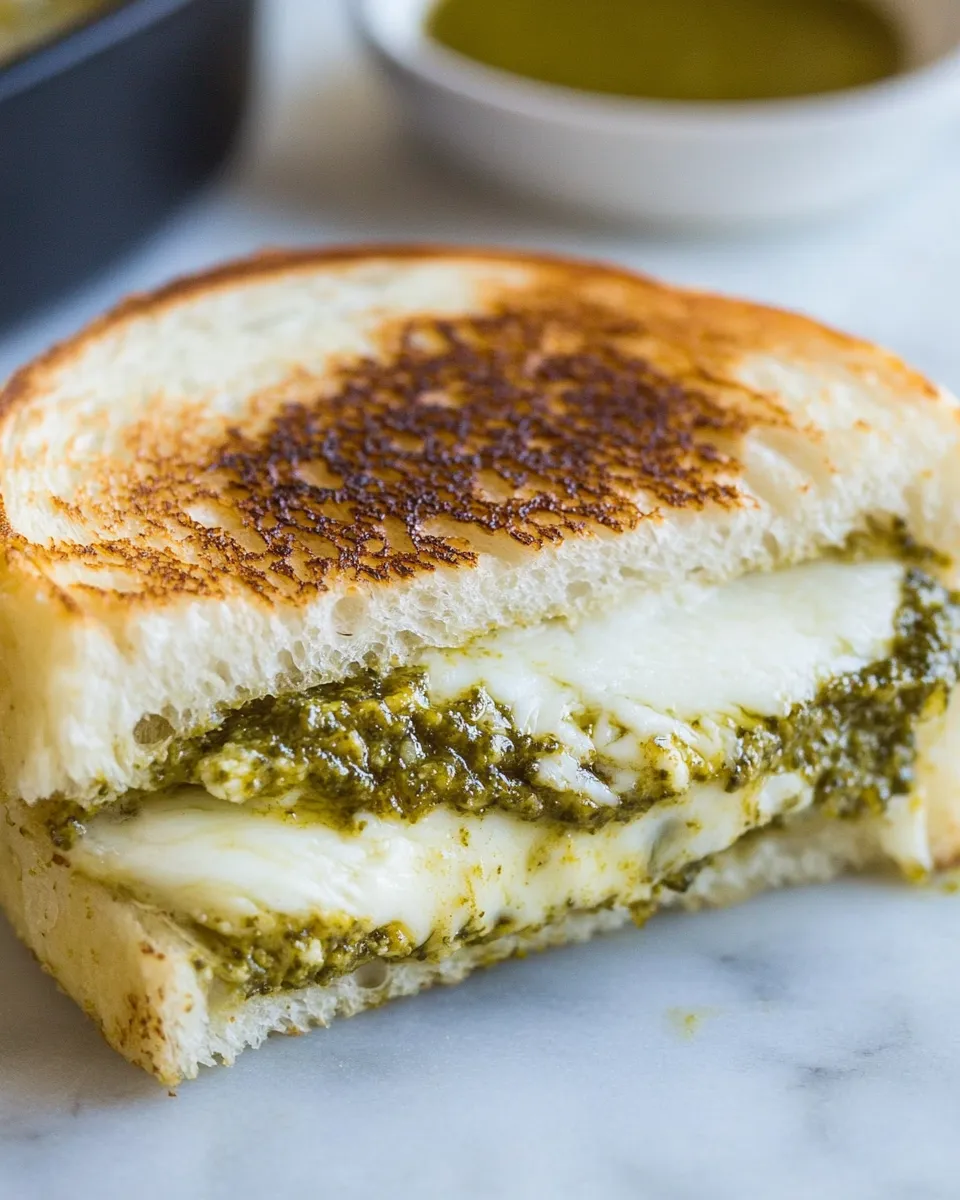
This recipe leans on very few ingredients and a straightforward technique. That matters. With just the right bread, two slices of Sargento® provolone and homemade or store-bought pesto, you get a finished sandwich that’s golden, crunchy, and saucy in the middle. The steps below are short, but they make a big difference in texture and flavor.
If you’re comfortable with a skillet and a spatula, you’re already qualified. Read through the ingredient notes and the short step-by-step, then give it 15 minutes. I’ll include practical tips for preventing the usual grilled-cheese mishaps — burnt exterior, cold center, or limp bread — plus a few seasonally appropriate variations. Let’s get to it.
Gather These Ingredients
Ingredients
- 2 slices of your favorite bread — I like to use crusty sour-dough; the sturdy crumb holds up to melting cheese and pesto.
- 2 tablespoons pesto — provides concentrated herb and nut flavor; spread evenly for consistent flavor in every bite.
- 2 slices Sargento® provolone cheese — mild and melty; it creates that silky interior without overpowering the pesto.
- 1 1/2 tablespoon of butter — used to toast both sides; use unsalted or salted depending on how seasoned your pesto is.
Pesto Grilled Cheese in Steps
- Lay out the 2 slices of bread. Evenly spread 2 tablespoons pesto over one side of one slice.
- Top the pesto with the 2 slices Sargento® provolone cheese. Close the sandwich with the other slice of bread (pesto side facing the cheese) and press firmly to seal.
- Heat a medium skillet over medium-low heat. Add 1 tablespoon of the butter and let it melt, swirling to coat the pan.
- Place the sandwich in the skillet, buttered side down. Press down gently with a spatula.
- Spread the remaining 1/2 tablespoon of butter over the top slice of bread (the side facing up in the skillet).
- Cook for about 5–6 minutes on the first side over low to medium-low heat, until the bottom is a golden, crispy brown and the cheese begins to melt. If the bread browns too quickly, reduce the heat.
- Carefully flip the sandwich and cook another 5–6 minutes on the other side, until that side is golden brown and the cheese is fully melted. Remove from the skillet, let sit briefly if desired, then slice and serve.
Why Cooks Rave About It
This sandwich hits several satisfying culinary notes. The pesto brings brightness and herbal complexity; the provolone melts smoothly and stretches without becoming oily. Bread that’s properly buttered and cooked low and slow achieves a deeply caramelized crust while the interior softens into a creamy center. The technique — pressing gently, adding butter in two stages, controlling the heat — turns a few humble ingredients into something reliably great.
It’s also forgiving. You can use jarred pesto or homemade, sourdough or a soft country loaf, and still end up with a terrific sandwich. That adaptability is why home cooks keep returning to this version: consistent results with minimal fuss.
International Equivalents
The core idea — bread, melted cheese, and a concentrated herb flavor — is universal. In Italy, you’ll find panini that combine basil pesto with local cheeses and pressed on a grill. In France, a croque-monsieur swaps béchamel for pesto and is baked until bubbling. In the U.S., grilled cheese traditions vary by region, but adding a herby spread like pesto feels like a Mediterranean twist on an American classic.
If you want to evoke a different regional profile without changing method: use a smoky provolone for Italian-American heat, or swap in a firmer country cheese and add a thin smear of Dijon for a French-inspired tweak. The cooking method stays the same — low, even heat to encourage full melt.
Cook’s Kit

- Medium skillet — heavy-bottomed (cast iron is ideal) for even heat and good browning.
- Spatula — use a sturdy one to press and flip without ripping the bread.
- Butter knife or small offset spatula — for spreading pesto and butter evenly.
- Cutting board and chef’s knife — to slice the finished sandwich cleanly.
Pitfalls & How to Prevent Them
Main problem: bread browning too fast while cheese stays firm. Solution: lower the heat. Medium-low is deliberate. Slow heat lets the cheese melt fully before the crust gets too dark. If your skillet is very hot, move it off the burner for 30–60 seconds or reduce the flame.
Another common issue: soggy center. That usually comes from spreading too much pesto or from overly soft bread. Measure your pesto (2 tablespoons is sufficient) and use a bread with some structure — sourdough or a country loaf will give the sandwich proper resistance so the cheese sets without steam building up.
Finally, flipping can be messy. Press lightly rather than forcefully, and use a wide spatula to support the sandwich. If the two slices separate, press them back together for a few seconds before resuming the cook time.
Warm & Cool Weather Spins
Warm Weather
In summer, make pesto from bright basil and grill light, crusty bread. Add a thin slice of fresh tomato inside before serving (place it after cooking to avoid sogginess) for a fresh contrast. Serve with a simple green salad dressed with lemon and olive oil.
Cool Weather
When it’s cooler, use a heartier bread and consider a smokier provolone. Serve the sandwich with a cup of tomato soup for dunking — the warm, seasoned broth complements the herbaceous pesto and melty cheese. You’ll appreciate the comfort-factor as temperatures drop.
Little Things that Matter
Even distribution of pesto is crucial. If you mound it in the middle, the edges will taste underseasoned. Spread it right to the edges so every bite is balanced. Also, butter both sides: one tablespoon goes in the pan at the start to brown the first side, and the remaining half tablespoon brushed on top ensures the second side crisps up once flipped.
Pressing matters, but press gently. The goal is to increase contact so heat transfers evenly and the cheese melts into the bread. Too much force squeezes the filling out. After cooking, let the sandwich rest for 30—60 seconds; that short pause lets the molten cheese settle so you can slice cleanly.
Storing, Freezing & Reheating
Leftovers keep in the fridge for up to 2 days. Store wrapped in parchment and then foil to protect the crust. Reheat in a skillet over low heat with a tiny pat of butter; cover with a lid for the first minute to encourage reheating of the interior, then remove the lid to crisp the exterior. Avoid microwaving unless you accept a softer crust.
Freezing a fully assembled sandwich is possible but not ideal because pesto and bread can pick up moisture. If you want to freeze, assemble without cooking, wrap tightly, and freeze for up to one month. Thaw overnight in the fridge and cook exactly as the original directions instruct — cook a bit longer if needed to make sure the cheese melts through.
Common Questions
Q: Can I use a different cheese? A: Yes. Provolone melts well and is mild; mozzarella will also melt nicely but is milder in flavor. A sharper cheese like fontina or a mix of provolone and a touch of Parmesan will intensify the profile. Keep the cheese quantity the same to maintain texture and melt behavior.
Q: What if my pesto is very oily or very salty? A: Taste first. If it’s highly salted, skip added salted butter (or use unsalted). If it’s oily, blot slightly with a paper towel on the underside before spreading; too much oil can make the bread soggy during cook time.
Q: Can I make this vegan? A: The cooking technique works with plant-based butter and a vegan provolone or mozzarella alternative. Texture and flavor will differ, but the method — low heat, press gently, butter both sides — remains the same.
Q: How do I get extra-crispy edges without burning? A: Use a cast-iron skillet and keep the heat low. If you’re impatient, preheat the skillet, then reduce to low before adding the sandwich. This gives you stable heat without pockets of excessive heat that burn quickly.
That’s a Wrap
This Pesto Grilled Cheese is reliable and quick. The technique is small but meaningful: spread the pesto, layer the cheese, use butter thoughtfully, and cook slowly. The result is a sandwich with a crisp, golden exterior and a warm, flavorful interior. It’s a weeknight winner and a small project that rewards attention.
Make it once exactly as written, then experiment. Try different breads, adjust the pesto amount to taste, and match the sandwich to a simple side. You’ll find this one becomes a go-to when you want an elevated grilled cheese without complication.

The Best Pesto Grilled Cheese
Ingredients
Ingredients
- 2 slicesof your favorite bread I like to use crusty sour-dough
- 2 tablespoonspesto
- 2 sliceSargento® provolone cheese
- 1 1/2 tablespoonof butter
Instructions
Instructions
- Lay out the 2 slices of bread. Evenly spread 2 tablespoons pesto over one side of one slice.
- Top the pesto with the 2 slices Sargento® provolone cheese. Close the sandwich with the other slice of bread (pesto side facing the cheese) and press firmly to seal.
- Heat a medium skillet over medium-low heat. Add 1 tablespoon of the butter and let it melt, swirling to coat the pan.
- Place the sandwich in the skillet, buttered side down. Press down gently with a spatula.
- Spread the remaining 1/2 tablespoon of butter over the top slice of bread (the side facing up in the skillet).
- Cook for about 5–6 minutes on the first side over low to medium-low heat, until the bottom is a golden, crispy brown and the cheese begins to melt. If the bread browns too quickly, reduce the heat.
- Carefully flip the sandwich and cook another 5–6 minutes on the other side, until that side is golden brown and the cheese is fully melted. Remove from the skillet, let sit briefly if desired, then slice and serve.
Equipment
- Skillet
- Spatula