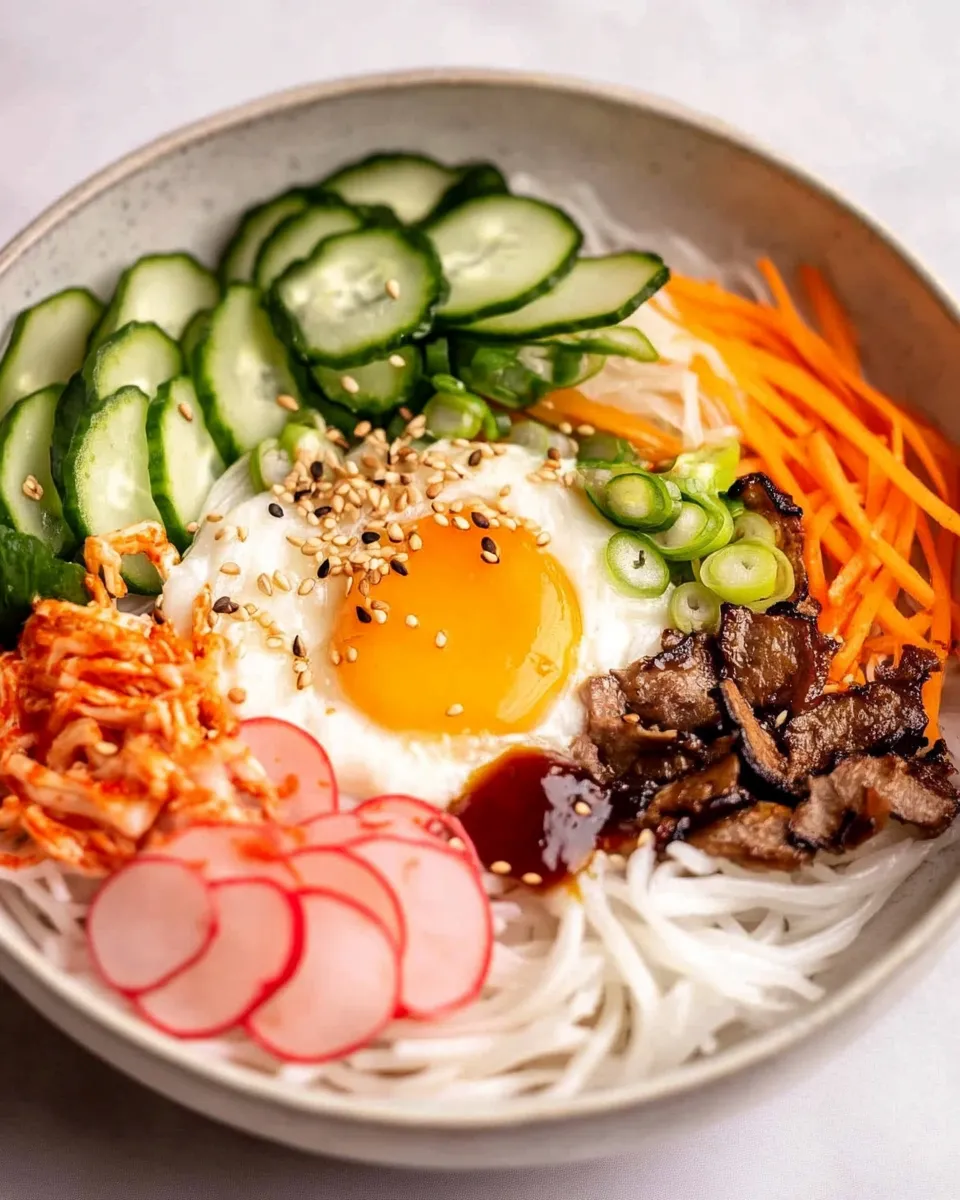
I fell in love with bibimbap the first time I stirred a bowlful of warm rice, crisp vegetables, and a runny egg into a spicy, gochujang-bright sauce. It’s one of those dishes that looks assembled yet tastes like a careful composition — texture, temperature, and seasoning all playing a part. For home cooks, it’s forgiving and rewarding: you can make components ahead, swap ingredients, and still end up with a bowl that feels special.
This version is practical and focused. I’ll walk you through exactly what I use and the simple order I follow so none of the elements overcook or go limp. You won’t need complicated prep or exotic tools — just a skillet, a few bowls, and patience for a good egg.
If you’re short on time, the method below still works; if you want to stretch it into a weekend project, add roasted vegetables or homemade gochujang-based sauce. Either way, you’ll be able to plate a bright, satisfying meal in under 30 minutes once the rice is ready.
What You’ll Need
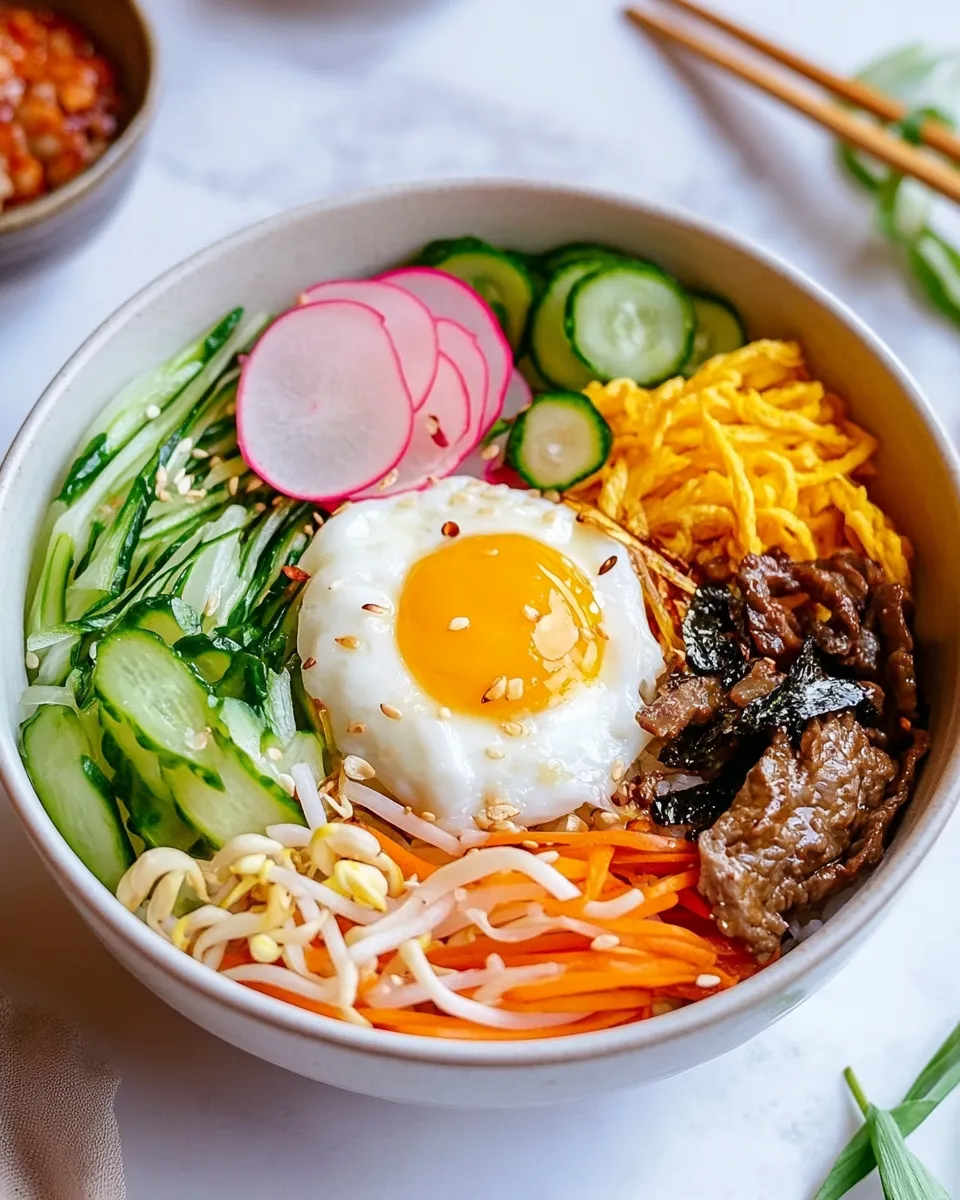
Ingredients
- 1 cucumber, thinly sliced — provides crunch and a refreshing counterpoint; toss right after slicing so it stays crisp.
- 2 teaspoons rice vinegar (divided) — mild acidity for quick pickling the cucumber and carrots.
- 1 1/2 tablespoons sesame oil (divided) — gives a toasty aroma; use half for cooking mushrooms and half to finish if you like.
- pinch of sea salt — brings out vegetable sweetness; split between quick pickles.
- 3 ounces shiitake mushrooms, sliced — meaty, umami-rich mushrooms that brown quickly in sesame oil.
- 1 teaspoon soy sauce — for seasoning mushrooms and adding depth.
- 2 eggs — fried sunny-side up to top each bowl; yolk acts as the final sauce when broken.
- 2 cups white rice, cooked — the neutral, comforting base; short-grain rice works best if you have it.
- 1 cup mung bean sprouts — crisp, slightly nutty; divided between the two bowls for freshness.
- 1 carrot, shredded — bright color and texture; toss with a bit of rice vinegar to perk it up.
- 1 tablespoon scallions, chopped, for garnish — a little sharpness and color on top of each bowl.
- Black and white sesame seeds — for garnish and tiny toasty crunch.
- Gochujang sauce, to taste, for garnish — the spicy-sweet anchor; add gradually until the bowl sings.
Bibimbap Made Stepwise
- In a small bowl, combine the thinly sliced cucumber with 1 teaspoon rice vinegar, 1/2 tablespoon sesame oil, and a pinch of sea salt. Toss to coat and set aside.
- In another small bowl, combine the shredded carrot with the remaining 1 teaspoon rice vinegar and a pinch of sea salt. Toss and set aside.
- Heat 1 tablespoon sesame oil in a medium skillet over medium-high heat. Add the sliced shiitake mushrooms and cook, stirring occasionally, until browned and cooked through, about 5 minutes. Add 1 teaspoon soy sauce, stir to coat, then remove the mushrooms from the pan and set aside.
- Return the skillet to medium heat (use the same skillet). Crack the 2 eggs into the skillet and fry sunny-side up until the whites are set but the yolks are still runny, about 3 minutes. Remove from the skillet.
- Divide the 2 cups cooked white rice between two bowls. Arrange the cucumber, 1 cup mung bean sprouts (divided), shredded carrot, and shiitake mushrooms evenly over the rice. Top each bowl with one fried egg.
- Garnish each bowl with the chopped scallions (1 tablespoon total divided), black and white sesame seeds to taste, and drizzle gochujang sauce to taste.
The Upside of Bibimbap
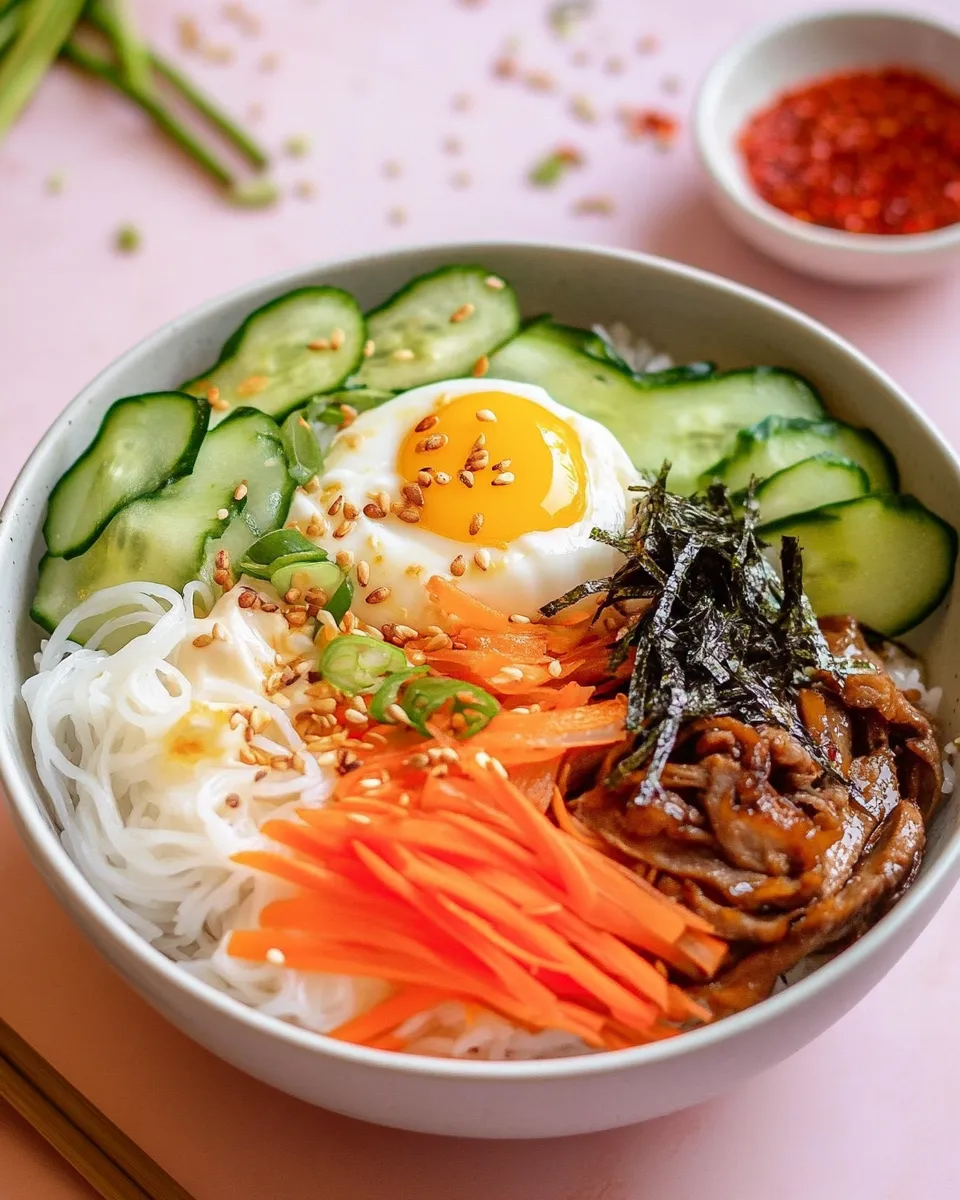
Bibimbap is one of those dinners that hits many marks at once: it’s colorful, balanced, and scalable. You get starch from the rice, protein from the egg and mushrooms, and plenty of vegetables for vitamins and crunch. The dish is also visually satisfying — the way ingredients are arranged around a central egg makes a bowl feel deliberate and elevated even if everything was prepped in 15 minutes.
It’s flexible. The method separates the quick-pickled elements from the sautéed ones, so you can vary textures without wrecking the bowl. It’s excellent for using leftovers too: roasted winter vegetables or a spoonful of kimchi stand in beautifully if you have them. And the final mixing — else called “breaking the yolk and stirring in the gochujang” — turns disparate elements into a cohesive, exciting mouthful.
Allergy-Friendly Substitutes
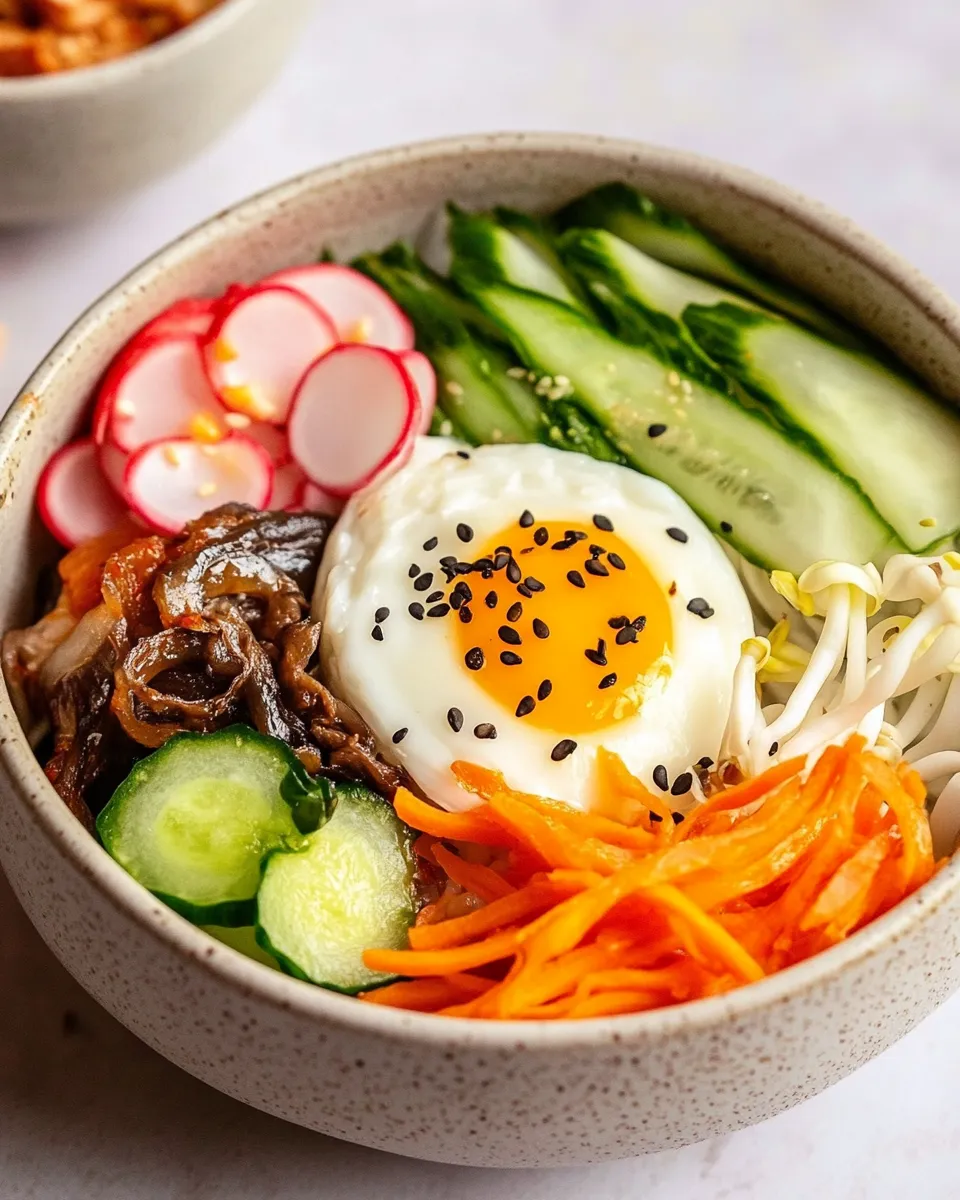
Soy & Gluten
If soy or gluten is a concern, swap the soy sauce for tamari labeled gluten-free or coconut aminos. Both bring savory depth; coconut aminos are sweeter, so use a touch less or cut with a splash of rice vinegar.
Egg-Free Options
For an egg-free bibimbap, pan-fry slices of firm tofu in a bit of sesame oil until golden and slightly crispy. You can press and marinate the tofu briefly in a mix of soy substitute and a pinch of sugar to add richness in place of yolk’s creaminess.
Sesame & Nut Allergies
If sesame oil or seeds are off-limits, replace sesame oil with neutral oil plus a drop of toasted sunflower seed oil if tolerated; otherwise use a neutral oil (canola, grapeseed) and finish with a splash of rice vinegar for brightness. Skip the sesame seeds for garnish and use thinly sliced scallion whites for a bit of texture.
Equipment & Tools
- Medium skillet — for mushrooms and frying the eggs.
- Two small bowls — for the cucumber and carrot quick-pickles.
- Rice cooker or pot with lid — to make the rice reliably fluffy.
- Sharp knife and cutting board — for fast, even slicing and shredding.
- Serving bowls — wide bowls make arranging components simple and pretty.
Learn from These Mistakes
– Overcrowding the pan: if you toss all the mushrooms in at once, they’ll steam and never brown. Give them room to caramelize.
– Making everything the same temperature: serve hot and cold elements intentionally. Warm rice and mushrooms, cool quick-pickled cucumbers, and a hot egg create contrast.
– Over-salting early: you can always finish a bowl with soy or gochujang; salting ingredients too much before assembling can make the final dish one-note.
– Frying the egg wrong: the yolk is part of the sauce. If you firm it up too much, you lose the silkiness that binds the bowl. Aim for set whites and runny yolks as in the steps.
Holiday & Seasonal Touches
– Fall and winter: add thin wedges of roasted butternut squash or sautéed kale to make the bowl heartier and seasonally comforting. A small drizzle of browned butter (if you like) plays nicely with mushrooms and squash.
– Spring: swap mung bean sprouts with blanched snow peas or snap peas for a tender-crisp, bright bite. Fresh herbs like cilantro or a touch of thinly sliced shiso lift the bowl.
– Summer: serve chilled rice (or slightly chilled rice) with additional fresh cucumber ribbons and a squeeze of lime alongside the gochujang for a lighter take.
These are ideas to nudge you — keep the structure the same and you’ll maintain the dish’s balance even with seasonal swaps.
Cook’s Commentary
This recipe is intentionally simple: short ingredient list, quick steps, and a reliable order that keeps textures intact. I favor dividing the vinegar and sesame oil so both the cucumber and carrot get bright, complementary seasoning without being soggy. Browning the mushrooms in the full 1 tablespoon sesame oil gives them body and aroma; the 1 teaspoon soy sauce is just enough to deepen their flavor without making them overpowering.
If you want to scale it up, keep the ratios roughly the same and cook mushrooms in batches. The eggs are best done last in the same skillet — they pick up a bit of the pan flavor and you avoid extra washing. When assembling, think about contrast: a flat pile of ingredients won’t excite the palate the way a mix of crisp, soft, salty, and spicy will.
Keep It Fresh: Storage Guide
– Rice: Store cooked rice in an airtight container for up to 3–4 days in the refrigerator. Reheat with a splash of water in the microwave or steam it briefly to revive moisture.
– Vegetables: The quick-pickled cucumber and carrot keep well for 2–3 days refrigerated. Mung bean sprouts are best used within a day or two of purchase; rinse and store in water if you need to extend freshness.
– Mushrooms: Store cooked shiitakes in a sealed container for up to 3 days. Reheat gently to avoid drying them out.
– Assembled bowls: I don’t recommend storing fully assembled bibimbap for more than a few hours. The textures change once the egg is broken and sauced. Keep components separate and assemble when ready to serve.
Ask the Chef
Q: Can I use brown rice instead of white?
A: Yes. Brown rice works — it will change the texture and cook time but provides nuttier flavor and more chew. Use pre-cooked brown rice and expect heartier mouthfeel.
Q: Is gochujang necessary?
A: Technically you can enjoy the bowl without it, but gochujang provides the spicy-sweet backbone that lifts bibimbap. If you’re avoiding it, add a mix of chili paste and a little sugar or honey plus a splash of soy substitute for depth.
Q: How do I make this vegetarian?
A: This recipe already leans vegetarian if you keep the eggs; for strict vegan, replace the eggs with pan-seared tofu and ensure your gochujang and soy substitute are vegan-friendly.
Q: Can I prep ahead?
A: Yes. Quick-pickles and mushrooms refrigerate well. Cook rice ahead and reheat; fry eggs just before serving.
Final Bite
Bibimbap is a smart weeknight solution and an impressive dish for company. It’s built around simple techniques: quick pickling, pan-browning, and a careful egg. Follow the stepwise order here and you’ll keep textures lively and flavors balanced. Make the gochujang your own, and don’t be afraid to swap seasonal vegetables — the bowl will forgive you and taste all the better for it. Enjoy the process of arranging, then breaking, and finally stirring everything together into a vibrant, homey meal.
Bibimbap Recipe
Ingredients
Ingredients
- 1 cucumberthinly sliced
- 2 teaspoonsrice vinegardivided
- 1 1/2 tablespoonssesame oildivided
- pinchof sea salt
- 3 ouncesshiitake mushroomssliced
- 1 teaspoonsoy sauce
- 2 eggs
- 2 cupswhite ricecooked
- 1 cupmung bean sprouts
- 1 carrotshredded
- 1 tablespoonscallionschopped for garnish
- Black and white sesame seedsfor garnish
- Gochujang sauceto taste for garnish
Instructions
Instructions
- In a small bowl, combine the thinly sliced cucumber with 1 teaspoon rice vinegar, 1/2 tablespoon sesame oil, and a pinch of sea salt. Toss to coat and set aside.
- In another small bowl, combine the shredded carrot with the remaining 1 teaspoon rice vinegar and a pinch of sea salt. Toss and set aside.
- Heat 1 tablespoon sesame oil in a medium skillet over medium-high heat. Add the sliced shiitake mushrooms and cook, stirring occasionally, until browned and cooked through, about 5 minutes. Add 1 teaspoon soy sauce, stir to coat, then remove the mushrooms from the pan and set aside.
- Return the skillet to medium heat (use the same skillet). Crack the 2 eggs into the skillet and fry sunny-side up until the whites are set but the yolks are still runny, about 3 minutes. Remove from the skillet.
- Divide the 2 cups cooked white rice between two bowls. Arrange the cucumber, 1 cup mung bean sprouts (divided), shredded carrot, and shiitake mushrooms evenly over the rice. Top each bowl with one fried egg.
- Garnish each bowl with the chopped scallions (1 tablespoon total divided), black and white sesame seeds to taste, and drizzle gochujang sauce to taste.
Equipment
- Small Bowl
- Medium Skillet
- Serving bowls