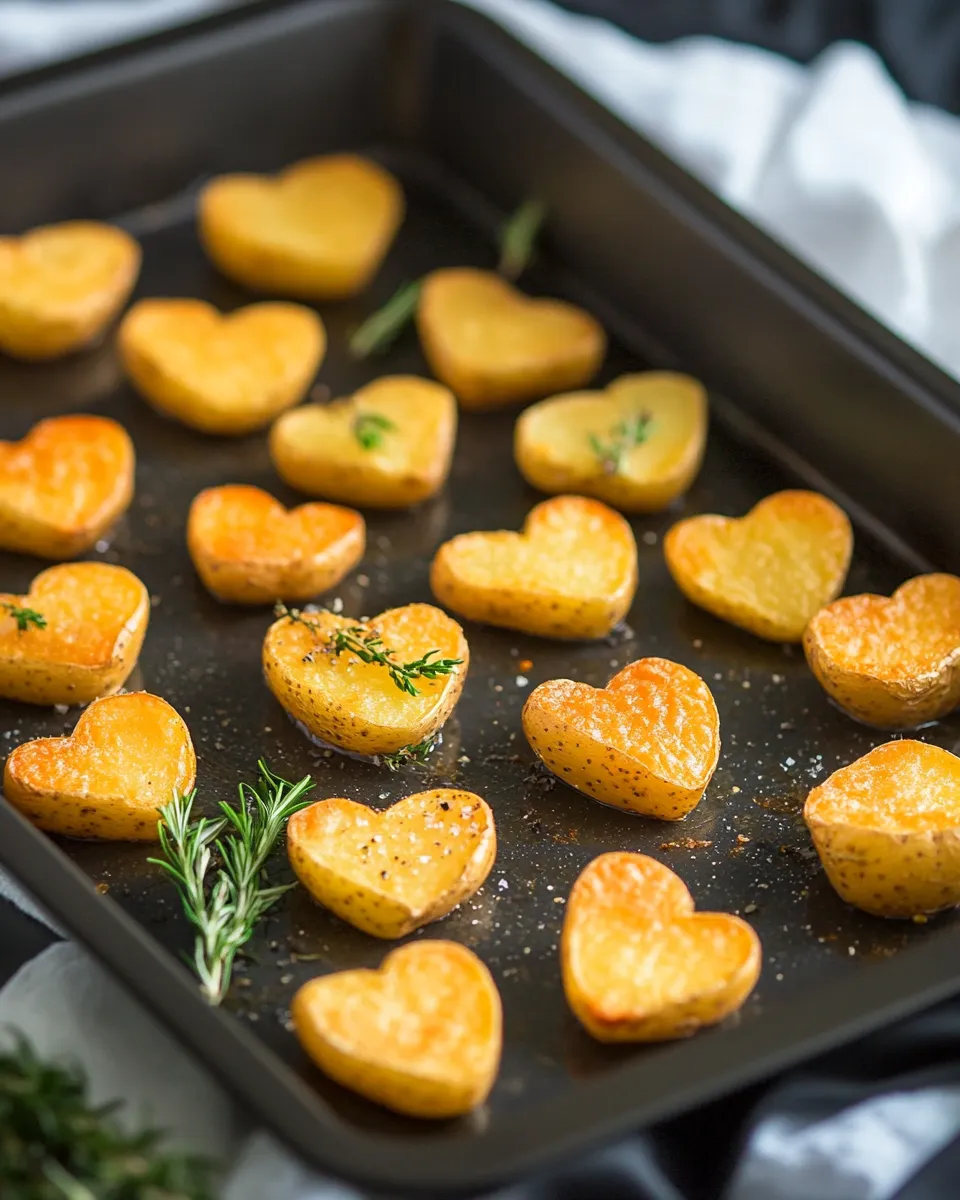
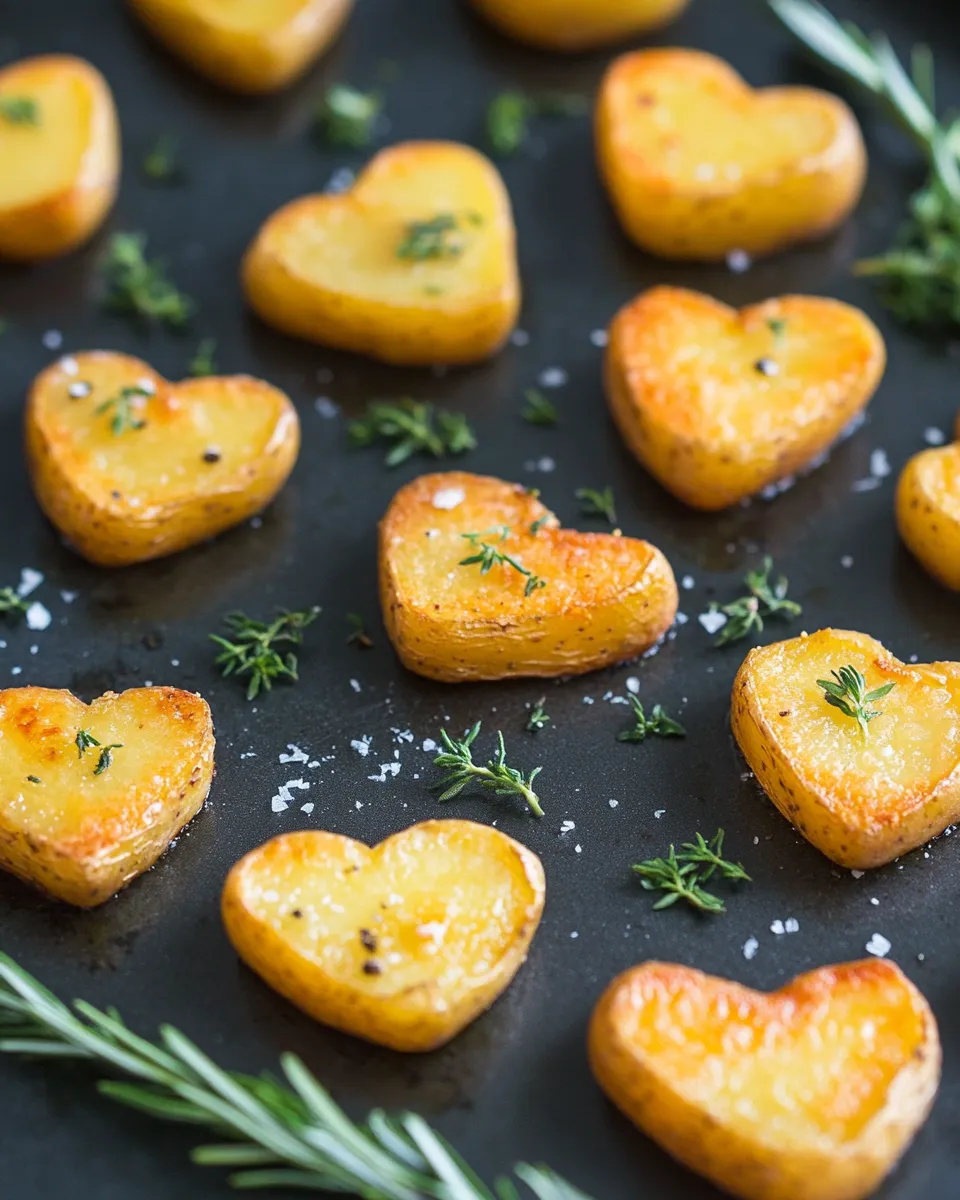
These roasted heart potatoes are the kind of small, thoughtful recipe that brightens a weeknight plate or makes a brunch feel special without adding work. Crisp edges, tender centers and a simple rosemary-paprika seasoning turn everyday potatoes into something unexpectedly charming. If you want a recipe that reads like comfort food with a tiny bit of whimsy, this one will do the job.
I make these when I want something pretty and practical: they travel well to a potluck, they pair with roasted chicken or a green salad, and the heart shapes make them a hit with kids and grown-ups alike. The method is forgiving—parboil, dry, oil, season, and roast—and the results reward a little patience and a hot oven.
Below you’ll find the exact ingredient list and step-by-step directions I use in my kitchen, plus practical swaps, troubleshooting tips, and notes from testing. No unnecessary steps, just clear guidance to get crisp, golden potatoes every time.
Ingredients at a Glance
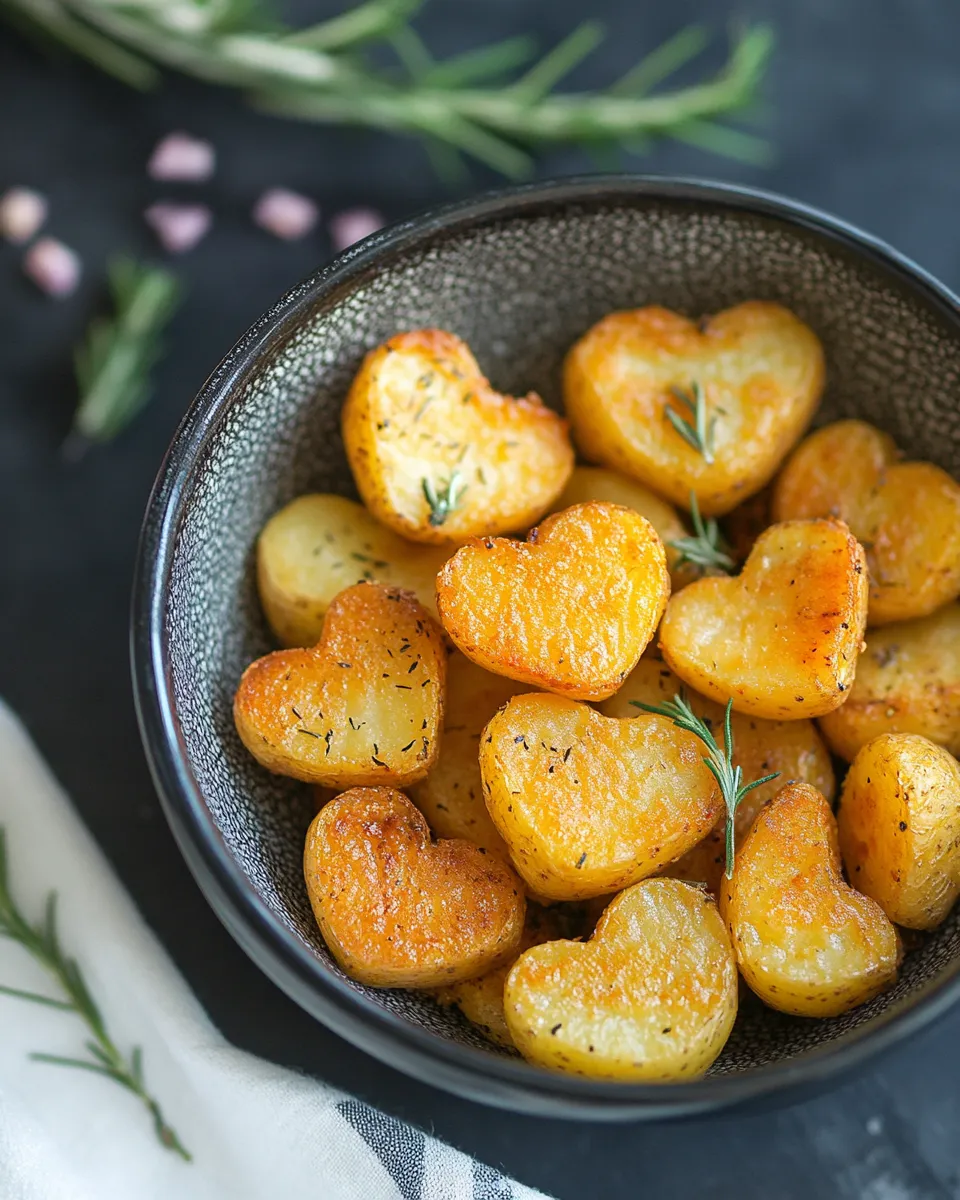
- 4 medium potatoes — The base of the dish; choose a starchy or all-purpose potato for a good crisp and tender interior.
- 2 tablespoons olive oil — Coats the potatoes so they brown evenly and develop crisp edges.
- 1 teaspoon salt — Seasons the potatoes; the recipe instructs not to add salt to the parboil water and to use this amount in the seasoning instead.
- 1 teaspoon paprika — Adds color and a mild smoky-sweet note without overpowering the rosemary.
- 2 teaspoons chopped rosemary leaves — Fresh rosemary gives aromatic lift; chopping the leaves releases oils that flavor the surface.
Roasted Heart Potatoes: How It’s Done
- Preheat oven to 350°F (180°C). Prepare a baking sheet by wiping or lightly oiling it with a little of the olive oil, or use a nonstick baking sheet.
- Wash and peel the 4 medium potatoes. Either: a) slice the potatoes into rounds thin enough to cut shapes from (use a cookie cutter to cut hearts and keep the scraps), or b) cut the potatoes into roughly 1-inch cubes (keep any scraps).
- Place the cut potatoes (and scraps, if using) in a pot and cover with water. Bring to a boil, reduce the heat, and simmer for about 3 minutes to parboil. Do not add salt to the boiling water (use the 1 teaspoon salt in the seasoning instead).
- Drain the potatoes thoroughly and let them steam-dry in the colander for a minute or two, or pat dry with a clean towel so the oil will adhere.
- In a large bowl, combine 2 tablespoons olive oil, 1 teaspoon salt, 1 teaspoon paprika, and 2 teaspoons chopped rosemary leaves. Add the drained potatoes and toss until evenly coated. Let them sit about 5 minutes to marinate.
- Spread the potatoes in a single layer on the prepared baking sheet, leaving small gaps between pieces for even roasting.
- Roast in the preheated oven for 15 minutes. Turn the potatoes with a spatula or tongs, then roast 10 more minutes (about 25 minutes total) until golden brown and tender when pierced.
- Remove from the oven and serve.
The Upside of Roasted Heart Potatoes
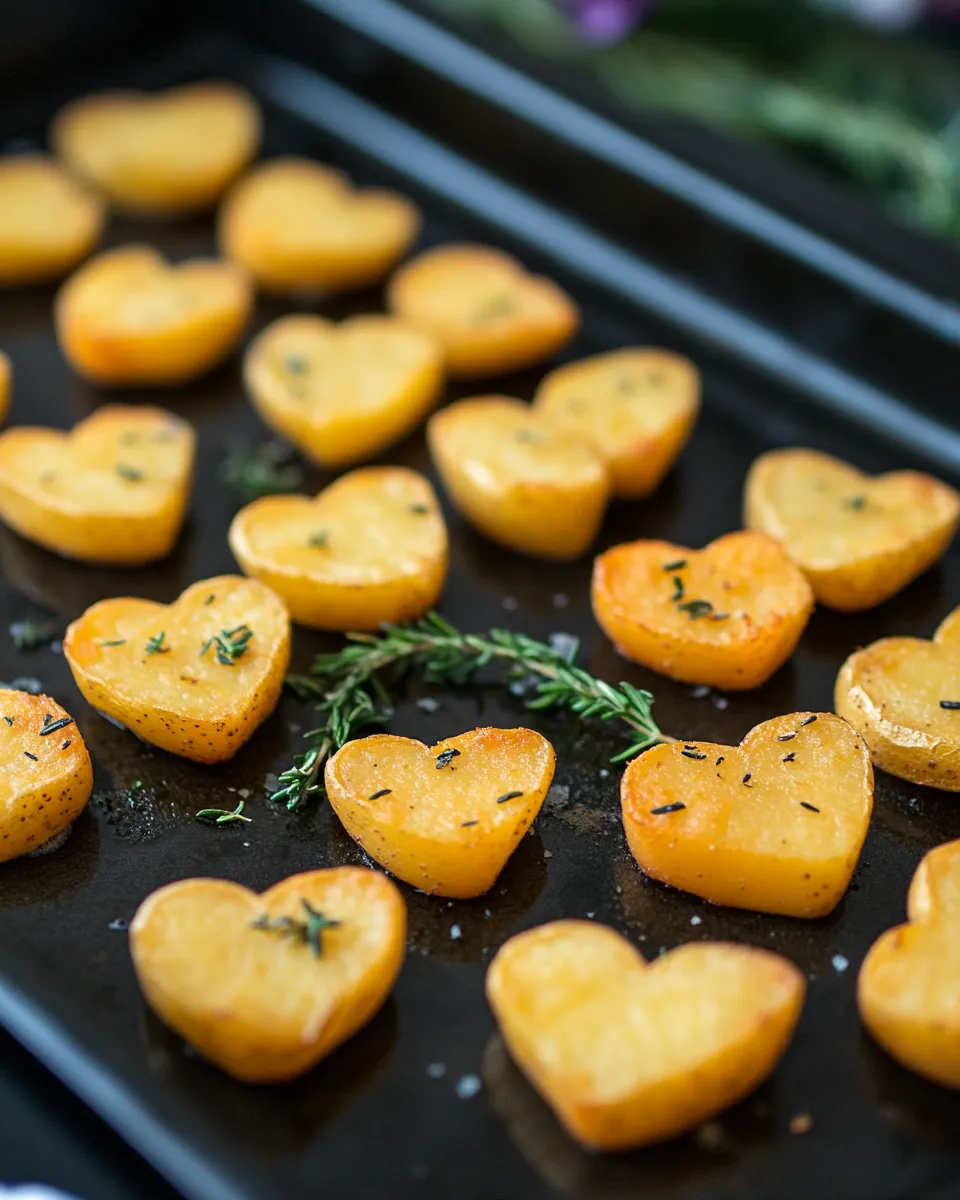
There are a few straightforward reasons I keep this recipe in rotation. First, it’s quick to prep—most of the work is slicing and a short parboil—so you can get it from raw potato to the table in under 45 minutes. Second, the ingredient list is tiny and inexpensive. You don’t need specialty pantry items to make the dish sing.
Third, it’s versatile. The seasoning is simple and classic; the paprika and rosemary give a warm, aromatic profile that complements proteins, salads or a simple egg breakfast. And if you make the heart shapes, they elevate the dish visually with no extra flavor work—just a small touch that makes weeknight meals feel cared for.
Finally, the technique builds skills you’ll use elsewhere: parboiling to control interior texture, drying so oil adheres, and single-layer roasting for even browning. Once you get the rhythm, the results are consistently good.
Budget & Availability Swaps
Potatoes are forgiving when it comes to swaps. If you don’t have medium potatoes as called for, two small or three smaller-plus pieces to reach similar volume will work; aim for roughly the same total weight rather than getting hung up on count. Yukon Golds and red potatoes roast differently than russets—Yukon Gold gives a creamier interior and crisp exterior, while russet yields a fluffier center; both will be tasty.
If fresh rosemary isn’t available, you can use about 1 teaspoon dried rosemary in place of the 2 teaspoons chopped fresh—crush it lightly between your fingers to release flavor. If olive oil is low, a neutral oil with a higher smoke point (like canola or avocado oil) will work for browning, though the flavor will be slightly different. Paprika can be swapped for smoked paprika for more depth, or a pinch of cayenne for heat, but keep quantities small so the potato flavor remains front and center.
Must-Have Equipment
- Large pot — For parboiling the cut potatoes.
- Colander — To drain and let potatoes steam-dry briefly.
- Baking sheet — A rimmed sheet works best to catch any drips and allow airflow.
- Spatula or tongs — For turning the potatoes midway through roasting.
- Cookie cutter (optional) — If you want heart-shaped rounds, a small cutter is handy for shaping.
- Clean kitchen towel or paper towels — For patting potatoes dry so oil adheres properly.
Common Errors (and Fixes)
Overcrowding the Sheet
Error: Piling potatoes too closely prevents air circulation and leads to steaming rather than roasting.
Fix: Arrange in a single layer with small gaps between pieces. If you need more space, roast in two batches rather than crowding one sheet.
Oily or Soggy Surface
Error: Not drying the parboiled potatoes thoroughly or using too much oil can cause limp, greasy edges.
Fix: After draining, let the pieces steam-dry in the colander for a minute or two or pat them with a dry towel until they stop shedding steam. Measure the oil—2 tablespoons is sufficient for even coating.
Undercooked Centers
Error: Skipping the parboil or cutting pieces too large will lengthen cooking time and risk uneven doneness.
Fix: Follow the parboil step for about 3 minutes as directed. If pieces are larger than roughly 1-inch cubes, increase parboil time slightly, testing with a fork so pieces are just beginning to soften before roasting.
Burnt Edges, Raw Center
Error: Oven too hot or pieces uneven in size.
Fix: Keep the oven at the instructed 350°F (180°C) and cut the potatoes into uniform shapes or sizes so they cook at the same rate. Turn the pieces at the 15-minute mark for even color.
Spring to Winter: Ideas
Spring: Brighten the finished potatoes with a gentle toss of lemon zest and chopped fresh parsley, or serve alongside a peppery arugula salad. The light herbs make the dish feel fresher for warmer nights.
Summer: Mix roasted cherry tomatoes and a splash of balsamic glaze after roasting, or add thin slices of red onion to the pan in the final 10 minutes for sweet-roasted bites that pair well with grilled meats.
Fall: Swap rosemary for a mix of sage and thyme or toss with a little browned butter right after the potatoes come from the oven. The earthier flavors suit heartier mains and seasonal produce.
Winter: Add halved pearl onions or small carrots to the pan so everything roasts together. Finish with a drizzle of good olive oil and a sprinkle of flaky sea salt to amplify the cozy notes.
Notes from the Test Kitchen
I tested this recipe with both cubed potatoes and heart-shaped rounds. Cubes give more surface area for crispy corners and are faster to cut and roast. Heart-shaped rounds are a bit more work—slice evenly thin so the cutter can cleanly remove shapes—but they look delightful on a holiday plate or for a special breakfast.
One practical test tip: after parboiling, plunge the potatoes briefly into cold water only if you need to stop cooking because you’re prepping other items. Otherwise, drain and let them dry; the residual steam helps open the surface so oil and seasonings cling better. Timing mattered most in my tests: the five-minute sit after tossing in oil and seasonings lets the flavors adhere without turning greasy.
If you want extra-crisp edges, finish under a broiler for a minute or two—watch closely and rotate the pan for even color. I only recommend this once the potatoes are already nicely golden so the broiler just adds a final char.
Save for Later: Storage Tips
Cool leftover potatoes completely before storing. Place them in an airtight container and refrigerate for up to 3–4 days. They reheat well in a hot oven (about 400°F/200°C) on a baking sheet for 8–10 minutes or in a skillet over medium-high heat until warmed through and re-crisped. Microwaving will warm them but can make them soft rather than crisp.
Freezing is possible but changes the texture; if you want to freeze, flash-freeze the single-layer roasted pieces on a sheet, then transfer to a freezer bag. Reheat from frozen in a hot oven until hot and crisp, though note they won’t be quite the same as fresh-roasted.
Roasted Heart Potatoes FAQs
Q: Can I skip the parboil? A: The parboil is short but important. It starts the cooking process so the interior becomes tender while the exterior crisps in the oven. Skipping it can leave you with browned but undercooked centers.
Q: How do I make heart shapes cleanly? A: Slice the potatoes evenly—thin enough that your cookie cutter can punch clean shapes. If the cutter gets sticky, press it straight down and twist slightly to release, and save the scraps to roast as well.
Q: Can I double the recipe? A: Yes. Roast on two baking sheets rather than overcrowding one. If space is limited, roast in batches for the best browning.
Q: Are these vegan? A: Yes—the recipe as written uses oil and herbs; no animal products are required.
Q: Can I add garlic? A: You can add minced garlic after the parboil or in the final 5–10 minutes of roasting so it softens without burning. No quantity is specified here; add to taste.
The Takeaway
Roasted Heart Potatoes are a simple, reliable recipe that turns humble potatoes into a dish with great texture and a warm flavor profile. Follow the small set of clear steps—parboil briefly, dry, toss with measured oil and seasonings, and roast in a single layer—and you’ll get golden, tender potatoes every time. Whether you cube them for weeknight dinners or cut hearts for a special touch, this method scales and adapts easily. Keep the basic technique in your repertoire and you’ll find yourself reaching for it again and again.

Roasted Heart Potatoes
Ingredients
Ingredients
- ?4 mediumpotatoes
- ?2 tablespoonsolive oil
- ?1 teaspoonsalt
- ?1 teaspoonpaprika
- ?2 teaspoonschopped rosemary leaves
Instructions
Instructions
- Preheat oven to 350°F (180°C). Prepare a baking sheet by wiping or lightly oiling it with a little of the olive oil, or use a nonstick baking sheet.
- Wash and peel the 4 medium potatoes. Either: a) slice the potatoes into rounds thin enough to cut shapes from (use a cookie cutter to cut hearts and keep the scraps), or b) cut the potatoes into roughly 1-inch cubes (keep any scraps).
- Place the cut potatoes (and scraps, if using) in a pot and cover with water. Bring to a boil, reduce the heat, and simmer for about 3 minutes to parboil. Do not add salt to the boiling water (use the 1 teaspoon salt in the seasoning instead).
- Drain the potatoes thoroughly and let them steam-dry in the colander for a minute or two, or pat dry with a clean towel so the oil will adhere.
- In a large bowl, combine 2 tablespoons olive oil, 1 teaspoon salt, 1 teaspoon paprika, and 2 teaspoons chopped rosemary leaves. Add the drained potatoes and toss until evenly coated. Let them sit about 5 minutes to marinate.
- Spread the potatoes in a single layer on the prepared baking sheet, leaving small gaps between pieces for even roasting.
- Roast in the preheated oven for 15 minutes. Turn the potatoes with a spatula or tongs, then roast 10 more minutes (about 25 minutes total) until golden brown and tender when pierced.
- Remove from the oven and serve.
Equipment
- heart shaped cookie cutter
Notes
Do not add salt to the parboil water; salt is added in the seasoning step.