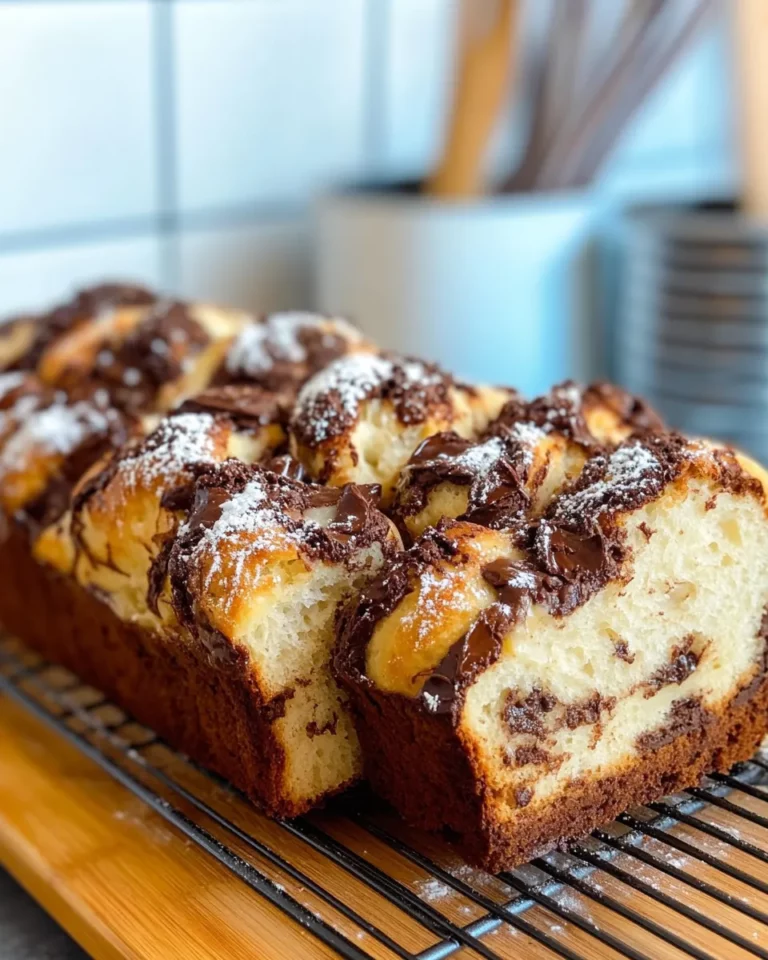
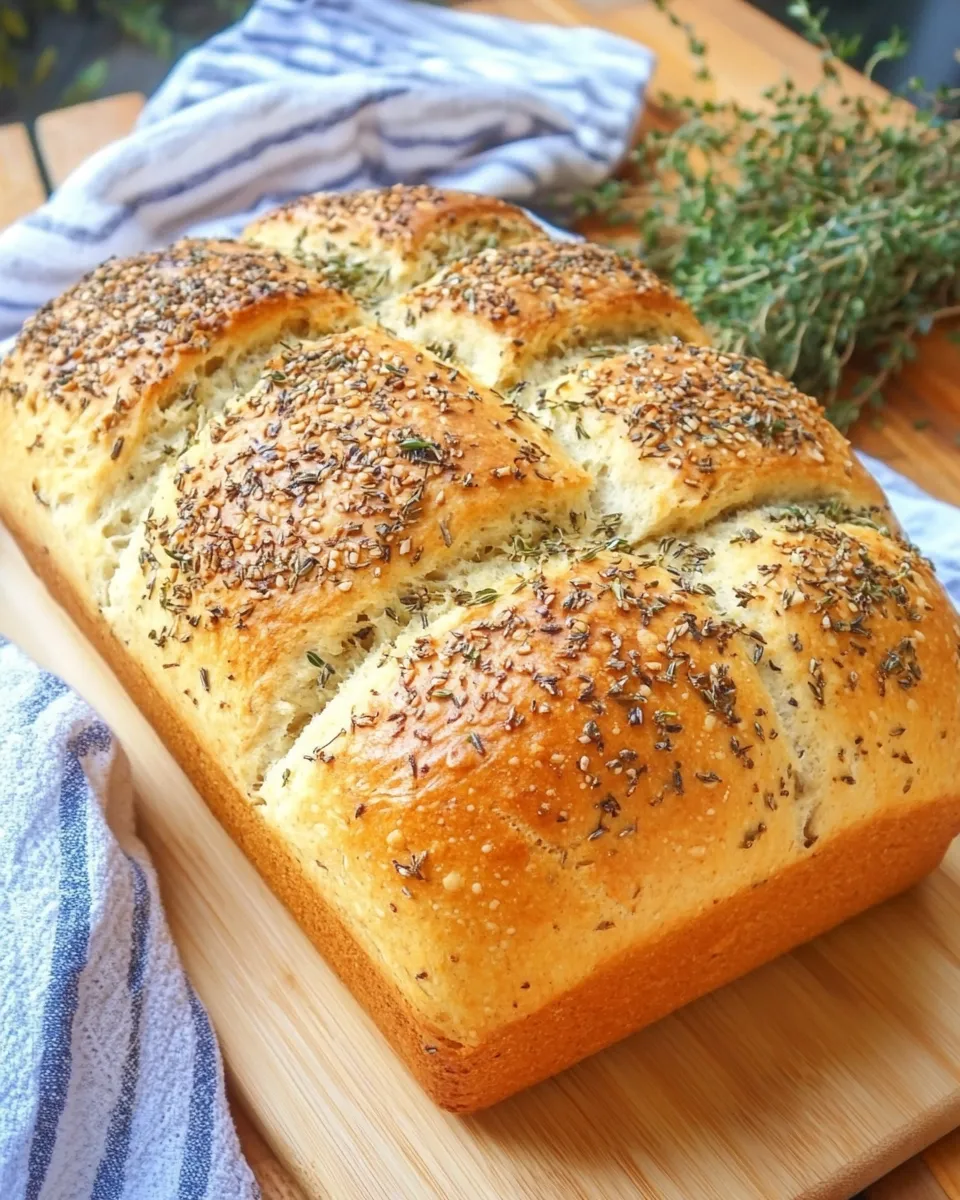
This thyme bread loaf is the kind of everyday loaf I reach for when I want something fragrant, sturdy, and unfussy. It makes sandwiches that hold together, toasts that crisp up beautifully, and a soft crumb that still carries a bit of chew. The dried thyme on top gives a concentrated leafiness that perfumes the crust without demanding fresh-herb prep.
The method is straightforward: mix enriched milk and butter with flour and yeast, knead until elastic, fold in seeds, let rise twice, then brush and top with oil and thyme before a hot bake. It rewards attention at the kneading and shaping stages more than exotic ingredients or long ferment times, so it’s a good loaf for weeknights and relaxed weekends alike.
Below you’ll find the exact ingredient list, step-by-step directions, practical equipment notes, troubleshooting tips, and storage advice. Read the steps through once before you begin and keep a clean surface for kneading. Let’s get started.
Ingredient List
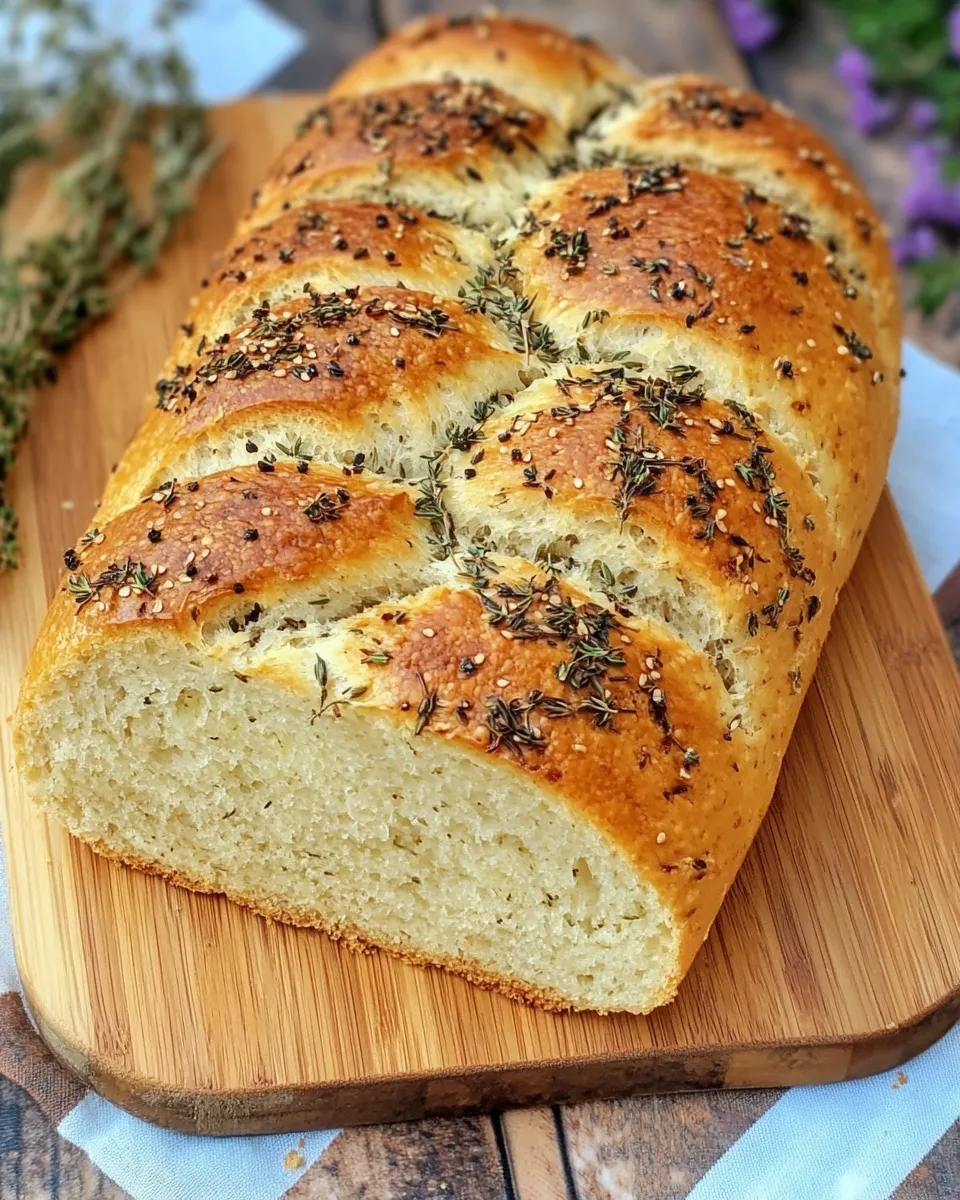
- 60 grams butter (room temperature) — adds richness, tenderizes the crumb and improves flavor.
- 2 tsps salt — controls yeast activity and seasons the dough; measure accurately.
- 1 tsp honey — feeds the yeast for a reliable rise and adds a touch of sweetness.
- 310 ml fresh milk — provides moisture and a softer crumb than water; use whole or reduced-fat as available.
- 470 all-purpose flour — the bulk of the structure; scoop gently to avoid packing.
- 1.5 tsp instant yeast — fast-acting, so you can mix directly into dry ingredients.
- 2 tbsp flax seed — gives nuttiness and texture; toast lightly if you prefer more aroma.
- 2 tbsp dried thyme — concentrated herb flavor for the crust; sprinkle evenly for best aroma.
- 2 tbsp sesame seeds — add crunch and a toasty note; they also create visual contrast.
- 1 tsp extra-virgin olive oil — for glazing the loaf before the final rise; promotes a crisper, shiny crust.
Thyme Bread Loaf: From Prep to Plate
- Preheat the oven to 220°C. Line a loaf pan with wax paper and set aside.
- In a medium bowl, beat the 60 grams room-temperature butter with the 1 teaspoon honey and the 310 ml fresh milk until combined.
- In a separate bowl, whisk together the 470 all-purpose flour, 2 teaspoons salt, and 1.5 teaspoons instant yeast.
- Gradually add the dry flour mixture to the wet mixture, stirring until just combined. Do not overmix.
- Turn the dough onto a lightly floured surface and knead for 10–15 minutes, until smooth and elastic. During the last few minutes of kneading, work in the 2 tablespoons flax seed and 2 tablespoons sesame seeds so they are evenly distributed.
- Place the kneaded dough in a clean bowl, cover with a damp cloth, and let it rise in a warm place for 1 hour, or until roughly doubled in size.
- Gently deflate the dough, shape it to fit the prepared loaf pan, and place it in the pan.
- Brush the top of the dough with the 1 teaspoon extra-virgin olive oil and sprinkle the 2 tablespoons dried thyme evenly over the top. Cover and let the dough rise in the pan for about 30–45 minutes, until puffed.
- Bake at 220°C until the top is golden and the loaf is cooked through (a skewer inserted into the center should come out clean), about 25–35 minutes.
- Remove the loaf from the oven, transfer to a wire rack, and cool for 30 minutes before slicing and serving.
Why It Deserves a Spot
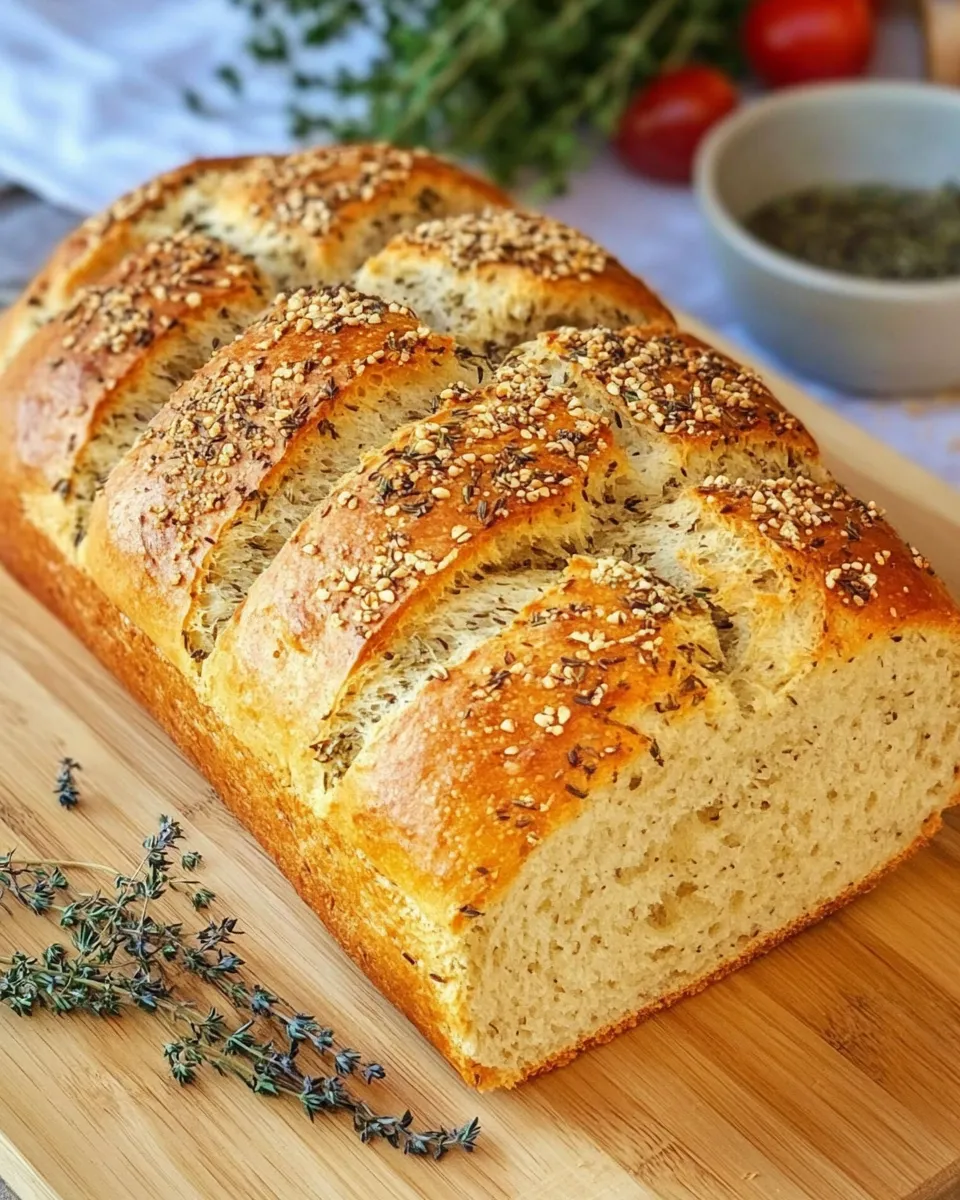
This loaf is reliable and versatile. It isn’t a fussed-over artisan bread, and that’s its advantage: it turns out well for home bakers who want clear results without an all-day commitment. The milk-and-butter enrichment keeps the crumb tender, while the flax and sesame seeds add texture and a hint of nuttiness. The dried thyme on top elevates the aroma in a way that carries through to the crust and first few bites.
It holds up to sandwiches, toasts beautifully for a quick breakfast, and pairs well with both savory spreads and sweet butter. Because the method is straightforward and forgiving, it’s a good daily loaf — one you’ll make repeatedly and still enjoy the familiarity of.
What to Use Instead
- Butter — you can substitute an equal portion of olive oil for a dairy-free version, though the crumb will be a bit less tender and more open.
- Milk — use water or a plant milk (unsweetened soy, oat) if you prefer; expect a slightly different crumb and less richness.
- All-purpose flour — for a heartier loaf, try replacing up to 150 g with whole wheat flour, but increase kneading time and expect denser texture.
- Instant yeast — active dry yeast will work if dissolved in the warm milk first; use about 25% more active dry yeast by weight to match rise times.
- Flax seed — chia seed or sunflower seeds make good substitutes and change texture and flavor in pleasant ways.
- Dried thyme — substitute dried rosemary or oregano if you want a different herbal profile; use sparingly as they vary in intensity.
Must-Have Equipment
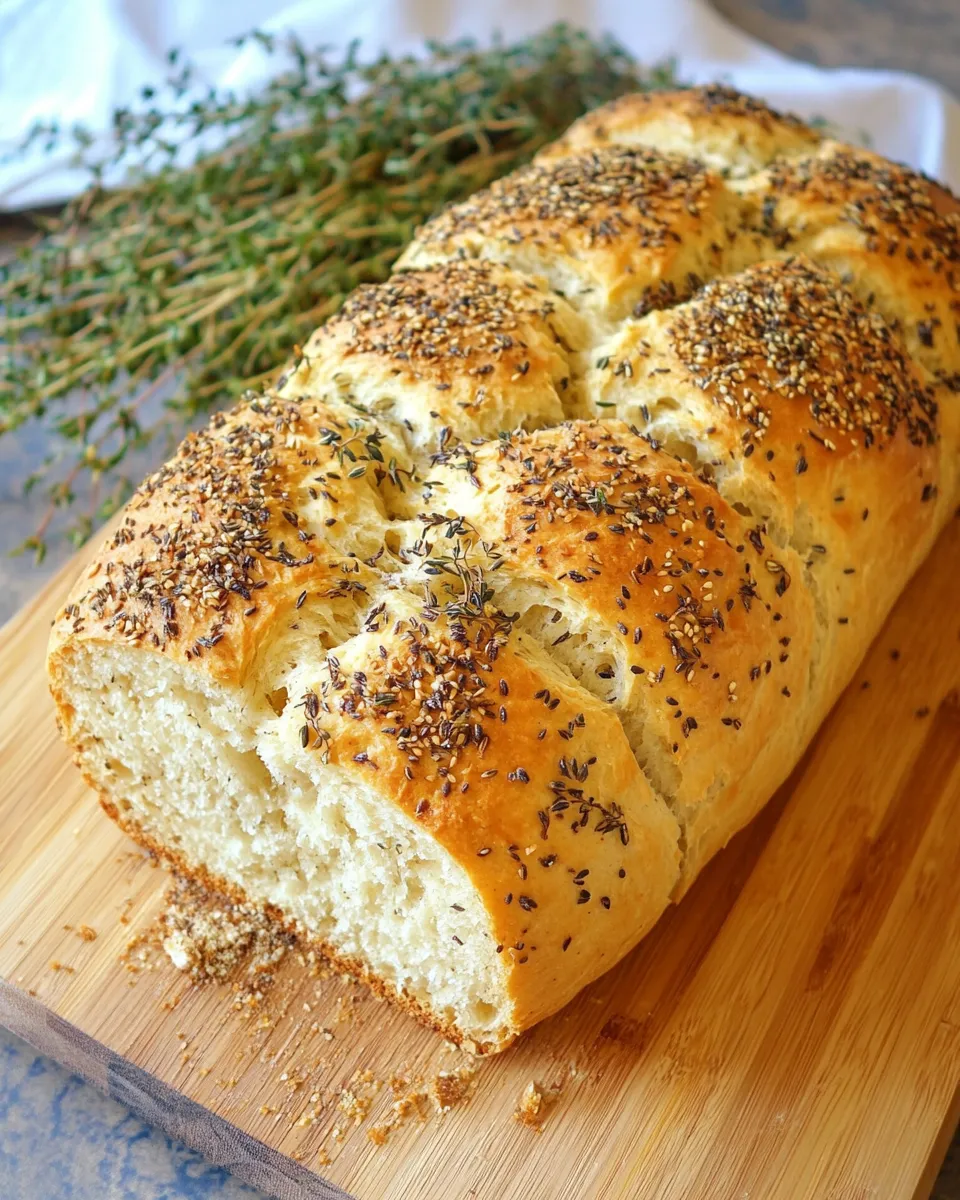
- Loaf pan — a standard 9×5-inch (or similar) pan fits this recipe; line with wax paper for easy removal.
- Bowl for mixing — one for wet ingredients, one for dry; helps with clean assembly.
- Work surface — a lightly floured counter or pastry board for kneading.
- Bench scraper or spatula — handy for turning and folding dough during kneading and cleanup.
- Kitchen towel or damp cloth — to cover dough during rises.
- Wire rack — essential for cooling so the bottom doesn’t become soggy.
Avoid These Traps
Under-kneading is the most common issue. The recipe calls for 10–15 minutes of kneading — enough to develop gluten so the dough becomes smooth and elastic. If the dough stays shaggy and tears easily, knead longer. Use the windowpane test: stretch a piece thin; if it can hold without tearing, you’re done.
Don’t overmix when you combine wet and dry ingredients. Step 4 warns against overmixing; once the flour is hydrated, stop. Overworking a wet dough at that stage can make the final texture tight and overly chewy.
Watch oven temperature. An oven running hot will brown the top before the center finishes. If your oven tends to overcook on top, tent the loaf loosely with foil after 20 minutes and continue baking until a skewer comes out clean.
Year-Round Variations
Spring: Fold in 2 tablespoons of chopped chives or scallion greens into the dough during the final knead for a fresh, mild oniony note. Finish with a sprinkle of lemon zest on the crust after brushing with oil for brightness.
Summer: Replace the dried thyme with 2 tablespoons of mixed dried herbs (oregano, basil) or use fresh thyme sprigs pressed lightly into the top before baking for a fresh-herb perfume. Serve with chilled tomato salads and soft cheeses.
Autumn: Fold in 1–2 tablespoons of toasted pumpkin seeds in place of some sesame seeds, and add a small teaspoon of ground cinnamon to the dough if you want an unexpected warm undertone. Pair with roasted root vegetable spreads.
Winter: Swap some of the milk for buttermilk (same volume) for tang and a richer crumb. Toast the sesame and flax seeds before adding them for a deeper, more pronounced nuttiness that complements hearty winter soups.
Behind the Recipe
This loaf blends straightforward home-bakery technique with a few thoughtful accents: milk and butter for tenderness, seeds for texture, and dried thyme used as a finishing flourish rather than mixed into the dough. That last choice concentrates the herb on the crust, giving your first bite a clear flavor note without diluting it through the crumb.
The recipe’s rise times and single-knead approach reflect a middle ground between quick breads and slow-fermented artisanal loaves. You get structure and a light crumb without the long bulk fermentation that requires planning ahead. It’s designed to be practical yet flavorful.
Storage Pro Tips
Let the loaf cool fully before storing. Warm bread sweats and becomes soggy if sealed right away.
Short-term (2–3 days)
Keep the loaf in a paper bag or wrapped loosely in a clean kitchen towel at room temperature. This preserves the crust better than plastic and keeps the crumb from drying out too fast.
Freezing (up to 3 months)
Slice the cooled loaf, wrap portions tightly in plastic wrap, then place them in a labelled freezer bag. To use, toast frozen slices directly or thaw a few at room temperature for 30–60 minutes before reheating in a low oven (160°C) for 10–15 minutes to refresh the crust.
If you plan to keep the loaf longer than a couple of days and want to preserve the crust texture, freeze sliced. It’s the simplest way to keep fresh bread on hand without daily baking.
Your Top Questions
Q: Can I use active dry yeast instead of instant yeast?
A: Yes. Dissolve active dry yeast in the warm milk first and allow it to bloom for 5–10 minutes. Use about 25% more active dry yeast by weight to match rise time; monitor the first rise and adjust if needed.
Q: My loaf is dense. What happened?
A: Dense loaves often mean under-kneading, not enough rise, or too much flour. Knead until the dough is smooth and elastic, give it the full hour for the first rise in a warm, draft-free spot, and avoid packing flour into your measuring cup.
Q: Can I add fresh thyme to the dough?
A: You can, but fresh herbs in the dough will get dispersed and soften. The recipe places dried thyme on top intentionally to concentrate the aroma. If using fresh thyme, add a tablespoon of finely chopped leaves during the last minute of kneading.
Q: How do I know when the loaf is done?
A: The top should be golden and firm. A skewer inserted into the center should come out clean. You can also tap the bottom: a hollow sound is a good indicator of doneness.
The Last Word
This Thyme Bread Loaf is a dependable, flavorful loaf that earns a spot on the regular baking rotation. It’s forgiving, versatile, and built around accessible pantry ingredients. Follow the steps, watch your kneading and rise, and you’ll have a loaf that makes everything from a simple buttered slice to a composed sandwich feel a little more considered. Bake once and you’ll see why it becomes one of the breads you reach for again and again.
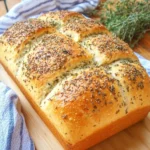
Thyme Bread Loaf
Ingredients
Ingredients
- ?60 gramsbutterroom temperature
- ?2 tspsalt
- ?1 tsphoney
- ?310 mlfresh milk
- ?470 all purpose flour
- ?1.5 tspinstant yeast
- ?2 tbspflax seed
- ?2 tbspdried thyme
- ?2 tbspsesame seeds
- ?1 tspextra-virgin olive oil
Instructions
Instructions
- Preheat the oven to 220°C. Line a loaf pan with wax paper and set aside.
- In a medium bowl, beat the 60 grams room-temperature butter with the 1 teaspoon honey and the 310 ml fresh milk until combined.
- In a separate bowl, whisk together the 470 all-purpose flour, 2 teaspoons salt, and 1.5 teaspoons instant yeast.
- Gradually add the dry flour mixture to the wet mixture, stirring until just combined. Do not overmix.
- Turn the dough onto a lightly floured surface and knead for 10–15 minutes, until smooth and elastic. During the last few minutes of kneading, work in the 2 tablespoons flax seed and 2 tablespoons sesame seeds so they are evenly distributed.
- Place the kneaded dough in a clean bowl, cover with a damp cloth, and let it rise in a warm place for 1 hour, or until roughly doubled in size.
- Gently deflate the dough, shape it to fit the prepared loaf pan, and place it in the pan.
- Brush the top of the dough with the 1 teaspoon extra-virgin olive oil and sprinkle the 2 tablespoons dried thyme evenly over the top. Cover and let the dough rise in the pan for about 30–45 minutes, until puffed.
- Bake at 220°C until the top is golden and the loaf is cooked through (a skewer inserted into the center should come out clean), about 25–35 minutes.
- Remove the loaf from the oven, transfer to a wire rack, and cool for 30 minutes before slicing and serving.
Equipment
- Oven
- Loaf Pan
- wax paper
- Medium Bowl
- Bowl
- Whisk
- Wire Rack
- damp cloth
Notes
If you own a bread making machine, all you have to do is mix the ingredients in sequence above, choose dark crust, and size of 1000 grams (1kg), switch it on and let it do its thing.