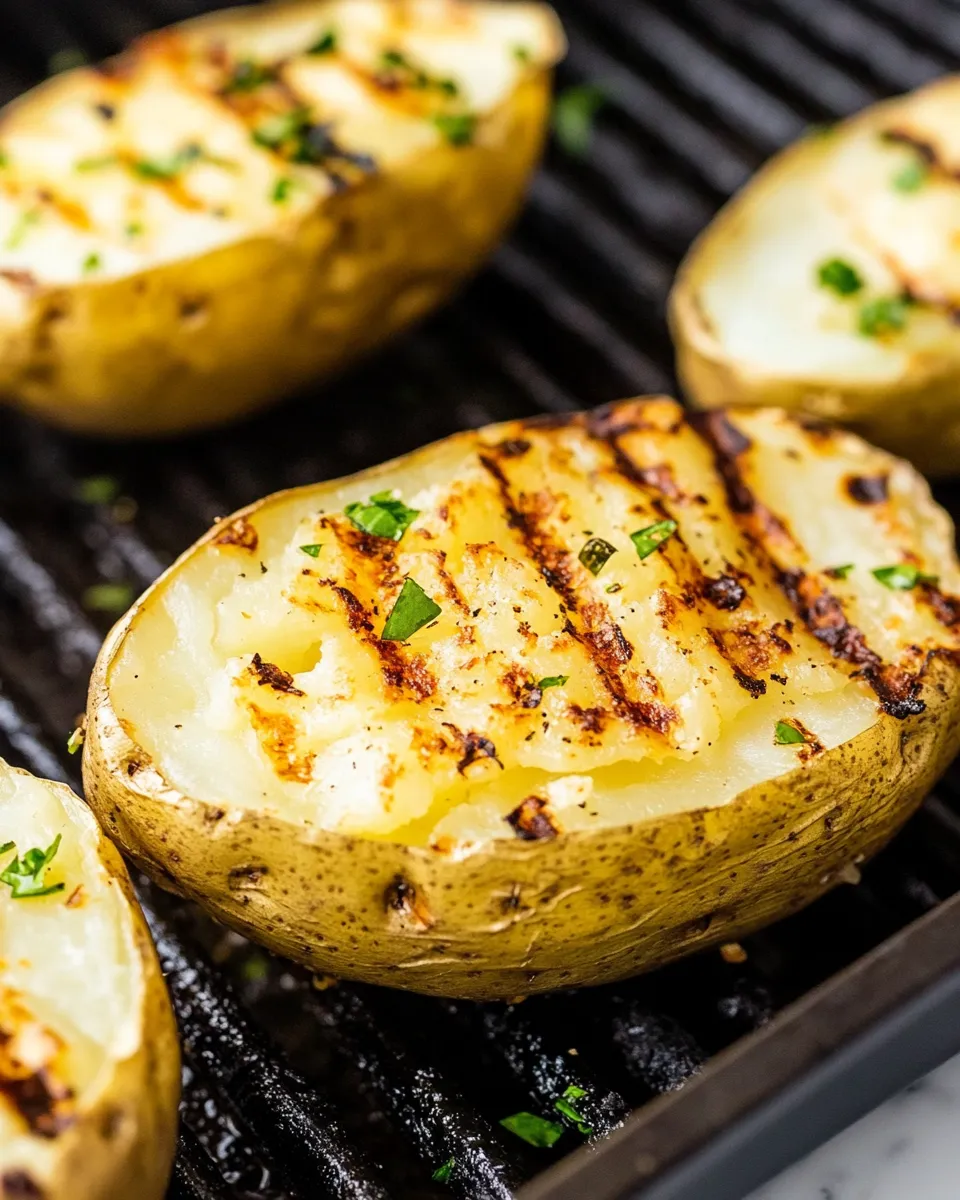
There’s something reassuring about the smoke-sweet crust a potato gets when it meets an open flame. Grilling baked potatoes is one of my favorite weekend kitchen shortcuts: minimal fuss, reliably tender interiors, and a little extra flavor that you just don’t get from the oven. I cook them often when dinner needs to be relaxed but still delicious.
This recipe is straightforward and forgiving. Wrap the spuds tight, give them time on the grate, and you’ll pull out steaming bundles of silky potato ready for butter, cheese, or anything else you love. I’ll walk you through the exact steps, what gear to use, how to avoid common pitfalls, and a handful of ideas to riff on the basic method.
Read on for a clear, practical guide — ingredients, the precise grill steps, troubleshooting, and a few seasonal twists so you can make these on a gas or charcoal grill with confidence.
What’s in the Bowl
Ingredients
- 6 potatoes — the main ingredient; medium-to-large russets or other starchy varieties give the fluffiest interior.
- 2 tablespoons neutral oil — helps the skin crisp and prevents sticking; neutral oil keeps flavor clean.
- ½ teaspoon sea salt — seasons the exterior so the interior isn’t bland; use flaky or fine depending on preference.
Baked Potatoes on The Grill Cooking Guide
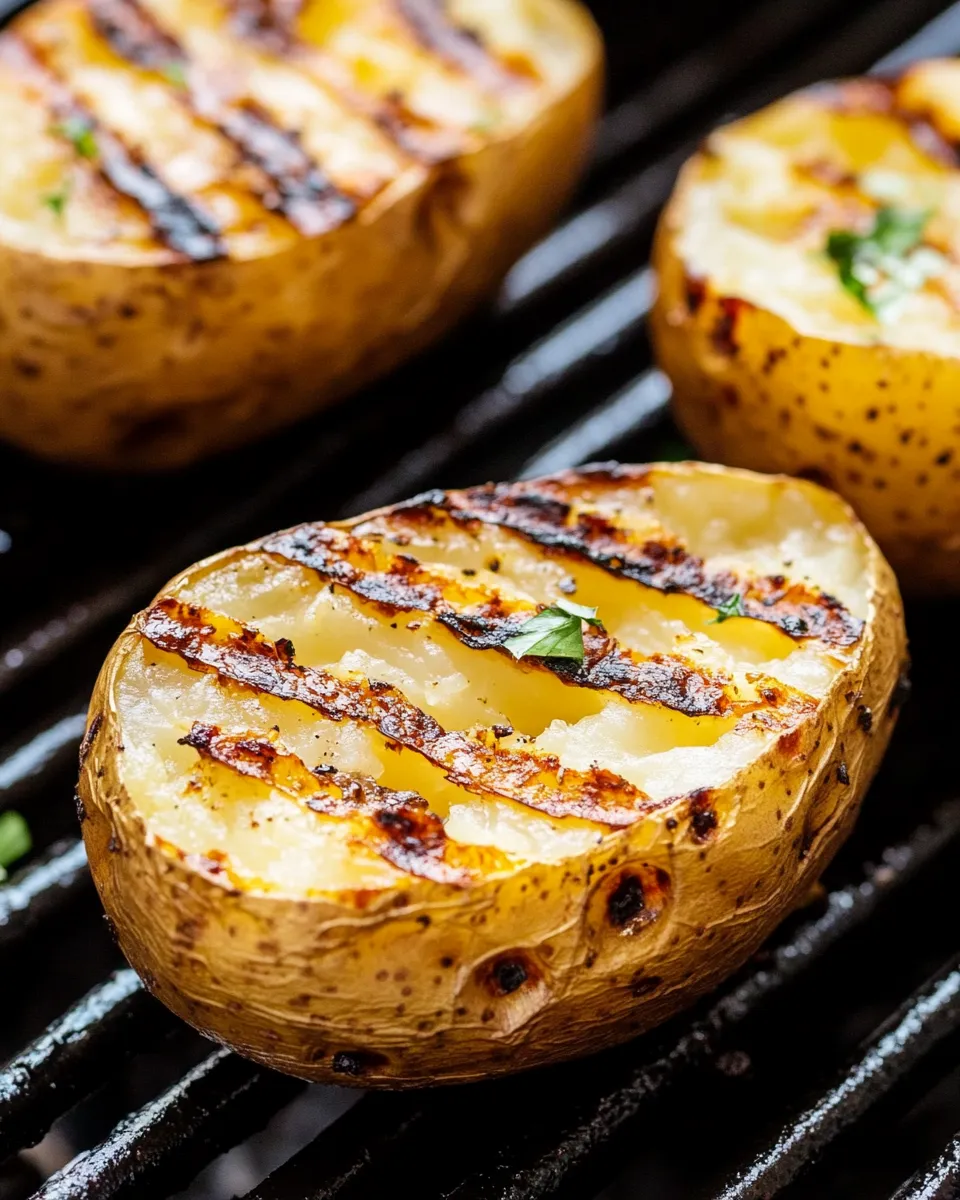
- Preheat the grill to 390°F (200°C) and let it run for 15 minutes.
- Scrub and wash the 6 potatoes, then pat them dry with paper towels.
- Pierce each potato 2–3 times on all sides with a fork to allow steam to escape.
- Brush or rub the potatoes with the 2 tablespoons neutral oil so they are evenly coated.
- Sprinkle the ½ teaspoon sea salt evenly over the oiled potatoes.
- Wrap each potato individually in two layers of aluminum foil.
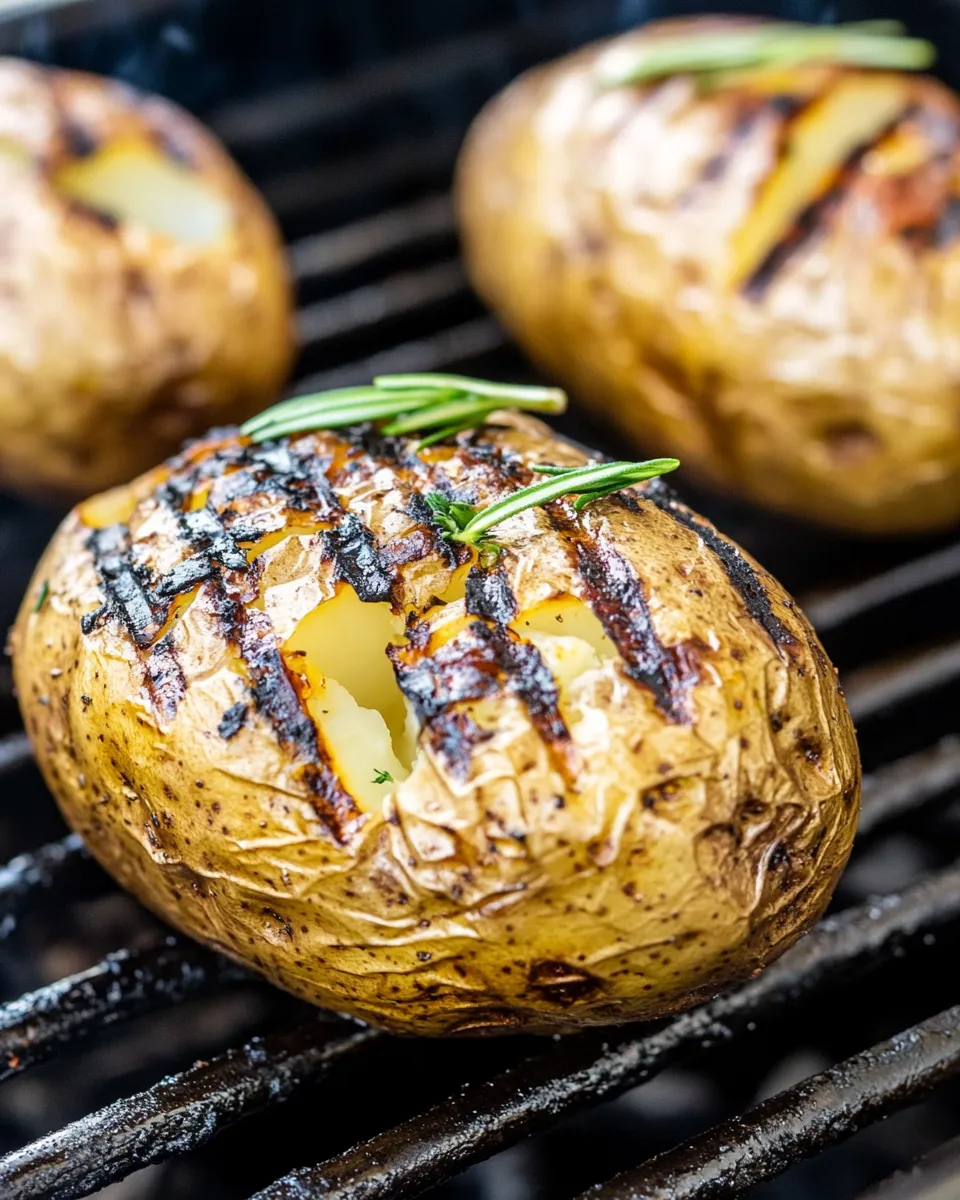
- Place the wrapped potatoes directly on the grill grates, close the lid, and cook for 45–55 minutes, turning each potato once about halfway through cooking. They are done when a knife or fork pierces the center easily or the internal temperature reaches about 205°F (95°C).
- Use kitchen tongs to remove the hot potatoes from the grill and let them cool until you can handle them with your hands.
- Carefully unwrap each potato (watch for hot steam), cut it open, lightly fluff the interior with a fork, and serve.
Top Reasons to Make Baked Potatoes on The Grill
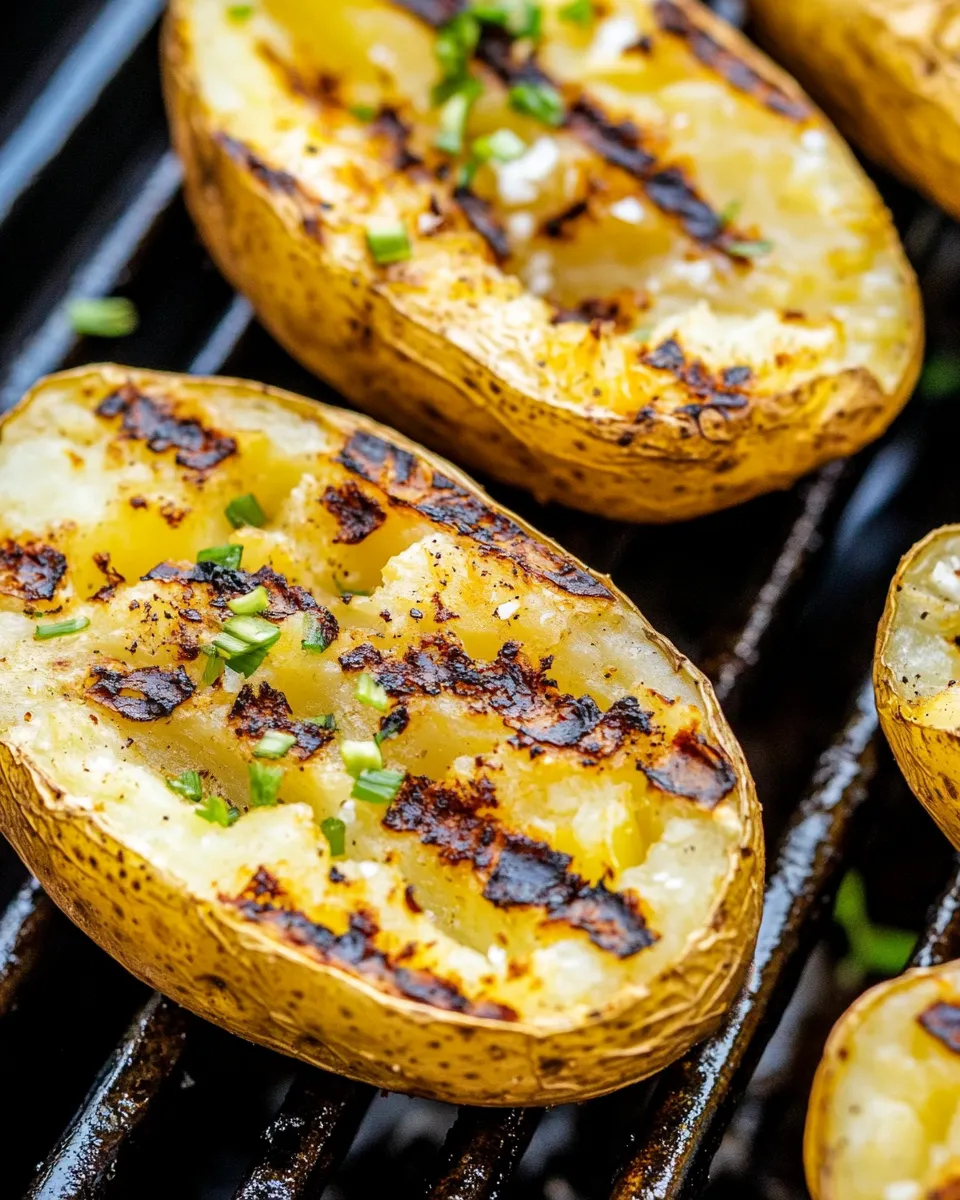
Quick summary: they’re hands-off, flavorful, and versatile. Here’s why I reach for the grill instead of the oven sometimes.
- Smoky flavor: Even wrapped in foil, potatoes pick up a subtle smoky note that elevates their simple comfort-food profile.
- Less indoor heat: On hot days, firing up the grill keeps the kitchen cool and dinner simple.
- Feeds a crowd: You can fit a lot of wrapped potatoes on a large grill and let them cook while you tend other things like steaks, vegetables, or a salad.
- Consistent texture: The inside gets evenly tender and fluffy when cooked at the steady temperature recommended here.
- Kid-friendly and customizable: From plain butter to chili and cheese, everyone can dress their own potato.
Flavor-Forward Alternatives
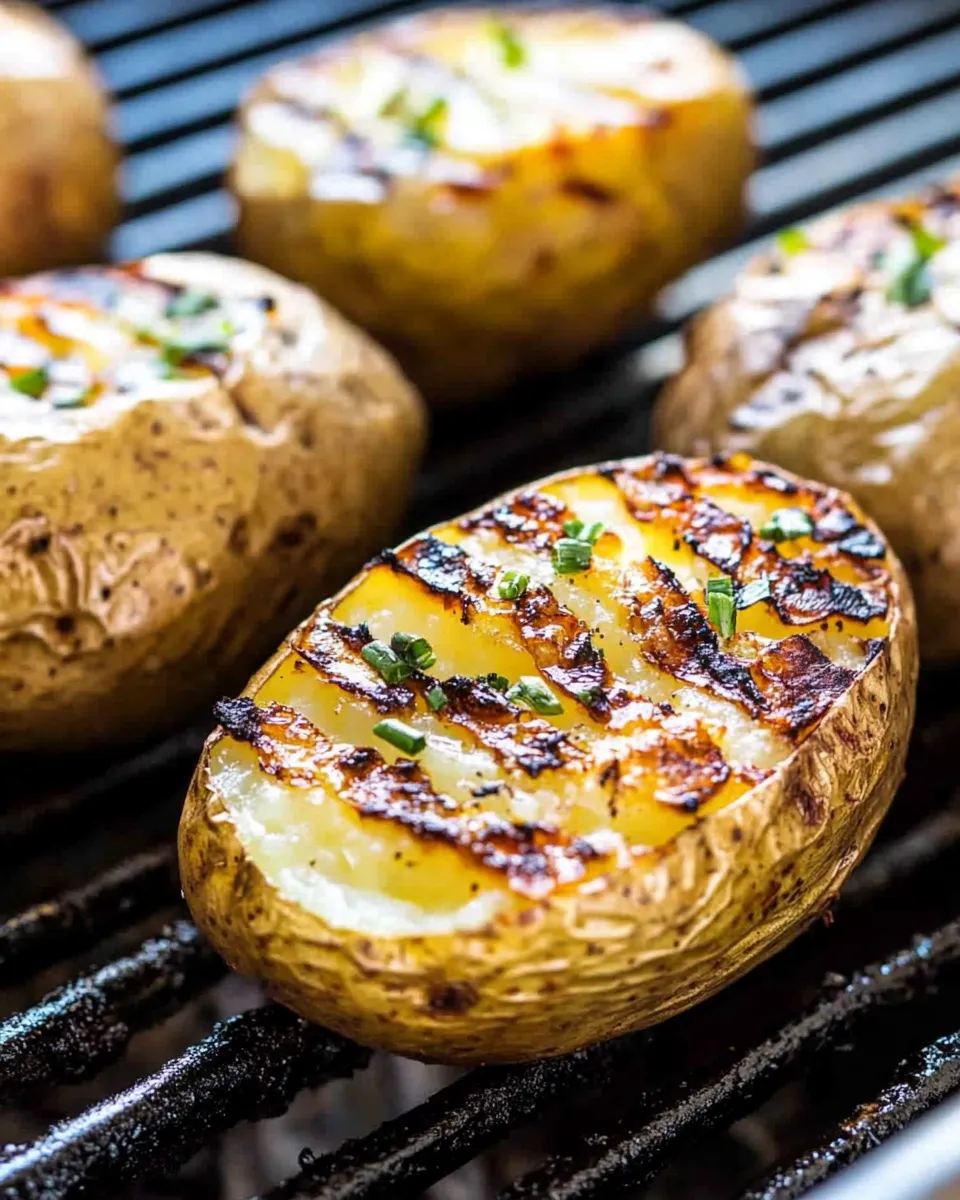
You don’t have to stop at butter and salt. These small switches give you different flavor directions while keeping the grilling method intact.
Topping ideas
- Sour cream + chives + cheddar — classic and reliable.
- Olive oil, lemon zest, feta, and parsley — bright and Mediterranean.
- Smoked paprika, butter, and crispy bacon bits — smoky and textural.
- Chili, grated cheese, and sliced scallions — hearty and satisfying for colder nights.
- Plain yogurt, cucumber, dill, and a squeeze of lemon — cooling and fresh for summer.
Cooking tweaks (if you want a different crust)
- For a crispier skin without foil: unwrap in the last 10–15 minutes of cooking and place directly on grates to firm the skin.
- For herb-infused skins: toss the potatoes with oil and finely chopped rosemary or thyme before wrapping.
Equipment at a Glance
Minimal gear is needed, and most of it is probably already in your kitchen.
- Grill (gas or charcoal) — must be able to maintain about 390°F (200°C).
- Aluminum foil — two layers per potato as directed for even cooking and to trap steam.
- Kitchen tongs — for safe removal of hot wrapped potatoes from the grates.
- Fork and peeler (optional) — fork for fluffing, peeler if you prefer to remove skin after cooking.
- Instant-read thermometer (optional but helpful) — to check internal temp of about 205°F (95°C) for reliably tender potatoes.
Missteps & Fixes
Grilled baked potatoes are forgiving, but a few mistakes can cost you texture or timing. Here’s how to fix common issues.
Potatoes aren’t tender inside
Cause: temperature too low or potatoes too large. Fix: increase grill heat slightly, return the wrapped potatoes, and add 10–20 minutes. For very large potatoes, plan for the full 55 minutes or longer; an instant-read thermometer helps here (target ~205°F / 95°C).
Soggy or limp skin
Cause: too much steam trapped or over-wrapping. Fix: unwrap for the last 10–15 minutes and place potatoes directly on grates to dry and firm the skin. Alternatively, reduce wrapping to a single layer if you’re comfortable monitoring closely.
Burned exterior
Cause: direct flare-ups or too high heat. Fix: move potatoes to a cooler part of the grill or lower the temperature to about 350–375°F (175–190°C) and extend cooking time accordingly. Keep them wrapped to avoid char if that’s a concern.
Uneven cooking
Cause: inconsistent potato sizes or crowded grill. Fix: choose potatoes of similar size, leave space between wrapped potatoes on the grate, and rotate them halfway through as directed.
Fresh Takes Through the Year
Potatoes are seasonal in a way — not by harvest alone, but by what you pair them with. Here are ideas to match the seasons.
- Spring: Top with lemony herb ricotta, chopped radishes, and young greens.
- Summer: Serve with grilled corn salsa, chopped tomatoes, and a dollop of yogurt.
- Autumn: Add caramelized onions, sautéed mushrooms, and a sprinkle of sage.
- Winter: Go hearty with roasted root veggies, melted cheese, and warm chili.
Behind-the-Scenes Notes
A few practical notes from my own testing so you can replicate the result without guesswork.
Choose the right potato: starchy varieties (russets, Idaho) produce the fluffiest interior; waxy potatoes hold their shape and suit stuffed or twice-baked preparations. I use russets for this method unless I want chunkier texture.
Oil and salt serve two jobs: they help the skin develop texture and add a base layer of seasoning. Use neutral oil to avoid altering the potato’s clean flavor, especially if you plan bright or delicate toppings.
Foil keeps the heat even and speeds cooking, and double wrapping prevents small ruptures or juice loss. If you dislike foil, you can use a covered cast-iron pan on the grill instead, but cooking time may vary.
Refrigerate, Freeze, Reheat
Storage is simple and flexible.
- Refrigerate: Cool to room temperature, wrap in plastic or place in an airtight container, and store for up to 4 days.
- Freeze: For long-term storage, scoop the potato flesh out and freeze as mashed or twice-baked filling. Whole foil-wrapped potatoes can be frozen but may suffer texture changes; freeze up to 2 months.
- Reheat: Reheat wrapped in foil in a 350°F (175°C) oven or on the grill for 15–20 minutes, or unwrap and microwave on medium-high for 2–4 minutes depending on size. For a crisp skin, finish directly on the grill grates for 5–10 minutes.
Ask & Learn
Common questions I get:
Can I skip piercing the potatoes?
Don’t skip it. Piercing 2–3 times on all sides lets steam escape; otherwise you risk splitting or an uneven cook.
What if I only have a small grill?
Cook in batches or use the indirect-heat method by moving coals to one side (charcoal) or turning off one burner (gas) and placing wrapped potatoes over the cooler section. Expect slightly longer cook times.
Can I season inside the potato?
Yes. After opening, fluff and stir in butter, salt, pepper, herbs, or grated cheese. If you want to stuff them before cooking, par-cook first to ensure thorough doneness.
Final Thoughts
These grilled baked potatoes are comfort food with a little extra character. The method is direct: prep, wrap, and give them time on the grill. Follow the exact steps for reliable results, then use the toppings and tweaks here to make the dish yours.
I hope this guide makes grilling baked potatoes approachable and repeatable. They’re an easy way to stretch a grill session into a full meal or provide a satisfying side that’s both hands-off and crowd-pleasing. Let me know how you top yours — simple butter and salt, or a full-on chili-and-cheese masterpiece?
Baked Potatoes on The Grill
Ingredients
Ingredients
- ?6 potatoes
- ?2 tablespoonsneutral oil
- ?1/2 teaspoonsea salt
Instructions
Instructions
- Preheat the grill to 390°F (200°C) and let it run for 15 minutes.
- Scrub and wash the 6 potatoes, then pat them dry with paper towels.
- Pierce each potato 2–3 times on all sides with a fork to allow steam to escape.
- Brush or rub the potatoes with the 2 tablespoons neutral oil so they are evenly coated.
- Sprinkle the ½ teaspoon sea salt evenly over the oiled potatoes.
- Wrap each potato individually in two layers of aluminum foil.
- Place the wrapped potatoes directly on the grill grates, close the lid, and cook for 45–55 minutes, turning each potato once about halfway through cooking. They are done when a knife or fork pierces the center easily or the internal temperature reaches about 205°F (95°C).
- Use kitchen tongs to remove the hot potatoes from the grill and let them cool until you can handle them with your hands.
- Carefully unwrap each potato (watch for hot steam), cut it open, lightly fluff the interior with a fork, and serve.
Equipment
- Foil
- Grill
Notes
If you have a kitchen thermometer,the internal temperature should be around 200-210F(93-100C).
If you have leftovers, store in the fridge for up to 3 days and reheat in the microwave, oven, or air fryer.