
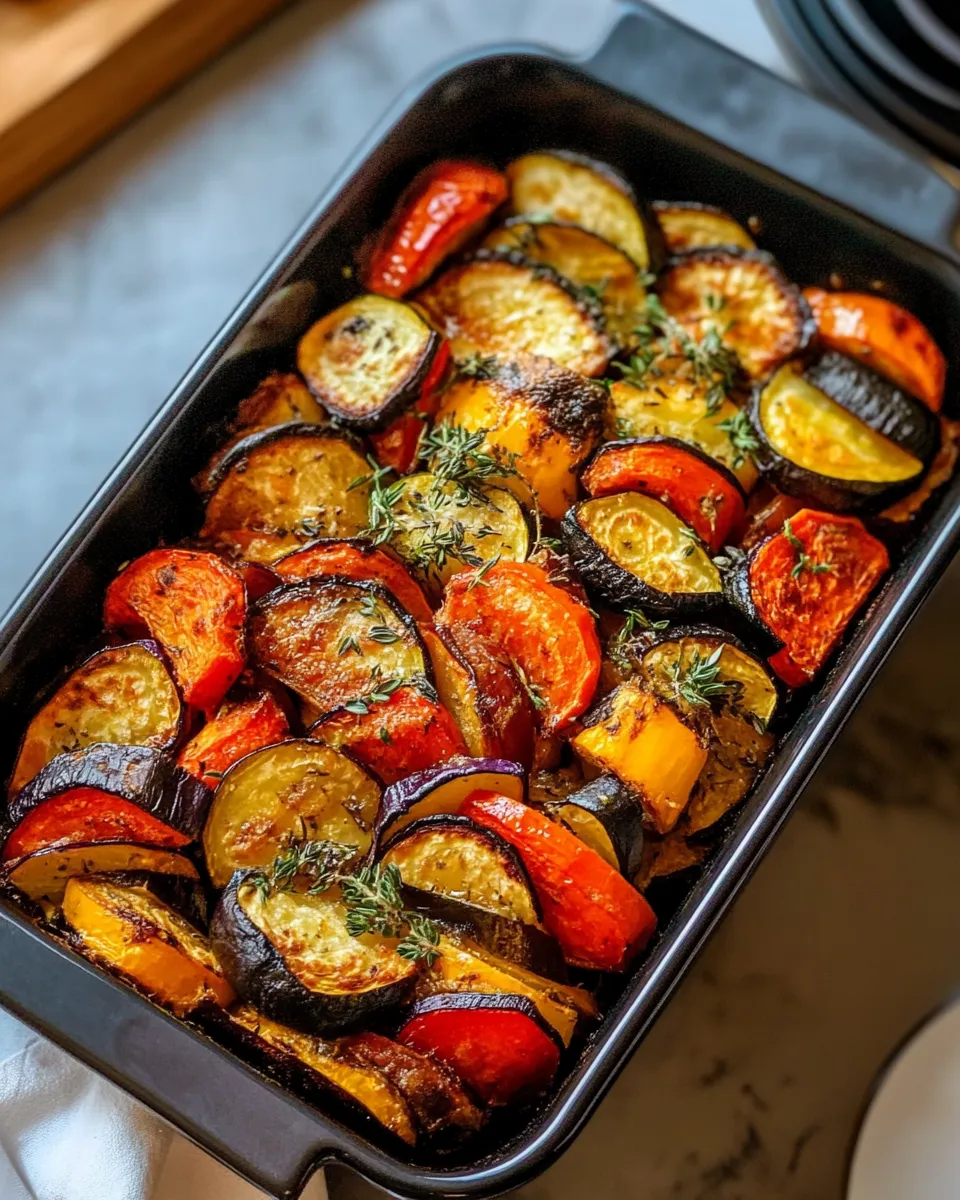
Briam is the kind of dish I turn to when I want something simple, honest, and loaded with summer produce. It’s a layered oven bake of potatoes, eggplant, zucchini, tomato and onion, all gently poached in olive oil and tomato. No fuss, just good technique and time in the oven. The result is tender vegetables with caramelized edges and an intensely savory tomato base.
I like this recipe because it scales easily and plays nicely with the week’s produce without demanding exacting precision. You can follow the steps and know what to expect: tender potatoes, melting eggplant, and a fragrant tomato-herb backbone. It rests before serving so the juices settle, making it easier to plate and taste every layer.
Below you’ll find a clear ingredient list, a faithful step-by-step build using the original directions, practical swaps for lower-carb eaters, tools that make the job easier, and troubleshooting answers for common problems. Read through once, then get your hands in there—this one rewards a straightforward approach.
Gather These Ingredients
Ingredients
- 1 large potato, sliced into rounds — provides body and a starchy, comforting base; slice evenly for even cooking.
- 1 eggplant, sliced into rounds — soaks up olive oil and tomato; salt lightly if you prefer to draw out some moisture.
- 1 zucchini, sliced into rounds — adds tender texture and mild sweetness; slice to match the thickness of the other vegetables.
- 1 medium red onion, sliced into half-moons — gives a sweet, aromatic backbone as it softens and caramelizes.
- 1 large tomato, sliced into rounds — fresh tomato adds bright flavor and a bit of texture among the cooked veg.
- ½ cup (120 ml) extra virgin olive oil — the cooking medium and flavor carrier; don’t skimp unless you’re deliberately cutting fat.
- 1 clove garlic, minced — adds a sharp, aromatic note that infuses the oil and tomato.
- 1 teaspoon dried oregano — classic Greek herb that anchors the tomato-vegetable mix.
- ½ teaspoon salt — seasons everything; adjust slightly to taste but remember the tomato sauce will add flavor too.
- ¼ teaspoon ground black pepper — rounds the seasoning with a gentle heat.
- 1 14.5 oz can (400 g) tomato sauce or passata — forms the moist, flavorful bed the vegetables steam and roast in.
- 3 sprigs thyme — tucked among the vegetables for an earthy, aromatic lift.
Build Briam (Greek Vegetable Bake) Step by Step
- Preheat the oven to 390°F (200°C) and ready a 9×13-inch (23×33 cm) oven-proof baking dish.
- Slice the vegetables: slice the potato, eggplant, and zucchini into rounds; slice the tomato into rounds; slice the red onion into half‑moons. Aim for similar thickness so they cook evenly.
- In a large mixing bowl, combine the sliced vegetables with ½ cup (120 ml) extra virgin olive oil, the minced garlic, 1 teaspoon dried oregano, ½ teaspoon salt, and ¼ teaspoon ground black pepper. Toss gently until the vegetables are evenly coated.
- Pour the entire 14.5 oz (400 g) can of tomato sauce (or passata) into the prepared baking dish and spread it into an even layer on the bottom.
- Arrange the seasoned vegetables over the tomato sauce in rows or overlapping slices (alternating types if you like) until the dish is filled.
- Tuck the 3 thyme sprigs among the vegetables. If any olive oil remains in the mixing bowl, drizzle it over the arranged vegetables.
- Cover the baking dish loosely with foil (tent the foil so it does not press on the vegetables) and place the dish in the preheated oven.
- Bake covered for 30 minutes. After 30 minutes, check the potatoes by piercing with a fork — they should be tender.
- Remove the foil and continue baking uncovered for 20 minutes, until excess liquid has reduced and the vegetables begin to brown at the edges.
- Optional: for additional browning or crisping, place the dish under the broiler for up to 5 minutes, watching closely to prevent burning.
- Remove from the oven and let the briam rest and cool for 20 minutes before serving.
Why This Recipe is a Keeper
This briam hits a balance between hands-off cooking and purposeful technique. The simple seasoning—olive oil, garlic, oregano, salt, and pepper—lets the vegetables shine. The tomato sauce on the bottom creates steam and a saucy cushion so nothing dries out. Tent the foil and the first covered bake softens the root vegetables while preserving shape; the uncovered finish concentrates flavor and gives texture at the edges.
It’s forgiving. If one vegetable is slightly thicker or thinner, the overall meld of textures still works. It’s also terrific warm, at room temperature, or cold from the fridge, which makes it ideal for batch cooking, picnics, or a make-ahead side that travels well.
Low-Carb/Keto Alternatives
If you’re watching carbs, you don’t need to invent new flavors—adjust proportions instead. The simplest move is to reduce or omit the potato and double up on zucchini and eggplant to keep volume and mouthfeel. The tomato sauce and olive oil remain the flavor base and are naturally low-carb.
Keep the same seasoning and bake times will be slightly shorter without potato—check tenderness at 20–25 minutes covered. If you remove potatoes entirely, the dish will become lighter and you’ll want to monitor so the thinner vegetables don’t overcook during the uncovered bake.
Essential Tools for Success
- 9×13-inch (23×33 cm) oven-proof baking dish — the specified size ensures the vegetable layers and tomato base are proportionate to the cooking time.
- Sharp chef’s knife — even slices make for even cooking and a prettier final presentation.
- Large mixing bowl — for tossing vegetables with oil and seasonings so everything is evenly coated.
- Aluminum foil — you’ll need to tent the dish so steam does its work without flattening the slices.
- Oven mitts and a baking rack — for safe handling and resting the hot dish after baking.
What Not to Do
Don’t skip the tented foil during the initial bake. That covered phase is what softens the potato and creates that tender mouthfeel. Without it you’ll risk dry or unevenly cooked potatoes and over-browned edges before the insides are done.
Don’t overcrowd the dish with extra-thick slices. If slices are uneven—very thick and very thin—some pieces will overcook while others remain firm. Aim for consistent thickness and stagger slices if you need to fit everything.
In-Season Flavor Ideas
Work with what’s ripe and local. In mid-summer, use juicier tomatoes and extra zucchini for sweetness and moisture. In late summer, when eggplant is at its best, let it take center stage—its spongy flesh soaks up olive oil and becomes silky when roasted with the tomato base.
When thyme is fresh and abundant, use the sprigs as directed for aromatic notes. If your oregano is fresh, add a sprinkle toward the end of baking to lift the finish. These small timing tweaks work with the recipe without changing its structure.
If You’re Curious
Briam is a traditional Greek vegetable bake, similar in spirit to ratatouille but with its own regional character and techniques. The key is low-and-slow mingling of olive oil and tomato with seasonal vegetables. In homes across Greece, briam varies from household to household—sometimes with parsley or a squeeze of lemon after baking. This version keeps the classic backbone intact so you get the expected, comforting flavors.
Save It for Later
Cool the briam to room temperature, then store in an airtight container in the refrigerator for up to 4 days. For longer storage, portion into freezer-safe containers and freeze for up to 2 months. Thaw overnight in the fridge before reheating.
To reheat, place portions in an oven-safe dish and warm at 350°F (175°C) until heated through, about 15–20 minutes depending on portion size, or microwave on medium power in short bursts. A quick broil at the end restores some of the browned edge texture if desired.
Troubleshooting Q&A
Q: My potatoes weren’t tender after 30 minutes covered. What went wrong?
A: Potatoes vary. If your slices were thicker than typical or your oven runs cool, extend the covered bake in 10-minute increments until a fork slides through. You can also parboil the slices for 5–7 minutes before arranging if you want to guarantee tenderness faster.
Q: The dish is too watery after baking.
A: Remove the foil for the uncovered bake, which concentrates the liquid. If it’s still loose, continue roasting uncovered for another 10–15 minutes or use the brief broil option, watching closely so edges don’t burn.
Q: Vegetables browned but the center is still soggy.
A: That can happen if the dish is layered too densely or if slices are uneven. For even cooking, arrange slices in a single layered pattern with a small amount of overlap. If you must stack, reduce the overall depth or shorten the slicing thickness.
The Last Word
Briam is reliable and forgiving. Follow the steps, respect the oven time, and give it the 20-minute rest at the end—those minutes make serving clean and the flavors settle. It’s a weeknight hero, a potluck favorite, and a showcase for seasonal produce. Make it as written the first time. After that, adapt boldly but intentionally: fewer potatoes for lower carbs, extra eggplant for silkiness, or a quick broil for a crisp finish. Enjoy it warm, at room temperature, or the next day—all perfectly valid ways to love this simple Greek vegetable bake.

Briam (Greek Vegetable Bake)
Ingredients
Ingredients
- ?1 largepotatosliced into rounds
- ?1 eggplantsliced into rounds
- ?1 zucchinisliced into rounds
- ?1 mediumred onionsliced into half-moons
- ?1 largetomatosliced into rounds
- ?1/2 cup 120 mlextra virgin olive oil
- ?1 clovesgarlicminced
- ?1 teaspoondried oregano
- ?1/2 teaspoonsalt
- ?1/4 teaspoonground black pepper
- ?114.5 oz can 400 gtomato sauceor passata
- ?3 spigsthyme
Instructions
Instructions
- Preheat the oven to 390°F (200°C) and ready a 9×13-inch (23×33 cm) oven-proof baking dish.
- Slice the vegetables: slice the potato, eggplant, and zucchini into rounds; slice the tomato into rounds; slice the red onion into half‑moons. Aim for similar thickness so they cook evenly.
- In a large mixing bowl, combine the sliced vegetables with ½ cup (120 ml) extra virgin olive oil, the minced garlic, 1 teaspoon dried oregano, ½ teaspoon salt, and ¼ teaspoon ground black pepper. Toss gently until the vegetables are evenly coated.
- Pour the entire 14.5 oz (400 g) can of tomato sauce (or passata) into the prepared baking dish and spread it into an even layer on the bottom.
- Arrange the seasoned vegetables over the tomato sauce in rows or overlapping slices (alternating types if you like) until the dish is filled.
- Tuck the 3 thyme sprigs among the vegetables. If any olive oil remains in the mixing bowl, drizzle it over the arranged vegetables.
- Cover the baking dish loosely with foil (tent the foil so it does not press on the vegetables) and place the dish in the preheated oven.
- Bake covered for 30 minutes. After 30 minutes, check the potatoes by piercing with a fork — they should be tender.
- Remove the foil and continue baking uncovered for 20 minutes, until excess liquid has reduced and the vegetables begin to brown at the edges.
- Optional: for additional browning or crisping, place the dish under the broiler for up to 5 minutes, watching closely to prevent burning.
- Remove from the oven and let the briam rest and cool for 20 minutes before serving.
Equipment
- 9×13" casserole dish
Notes
You can enjoy Briam as a main dish or a side dish. If you’re roasting awhole chicken, fish, or some kind of meat, then Briam makes a great side dish. Or enjoy it as a main dish with a piece of crusty bread, and crumbled feta. You can also serve it with yogurt, and olives.
Store in the fridge in an airtight container in the fridge. Or freeze, and completely thaw when you’re ready to reheat. To reheat in the oven, add a bit of water and reheat until it’s warmed up.