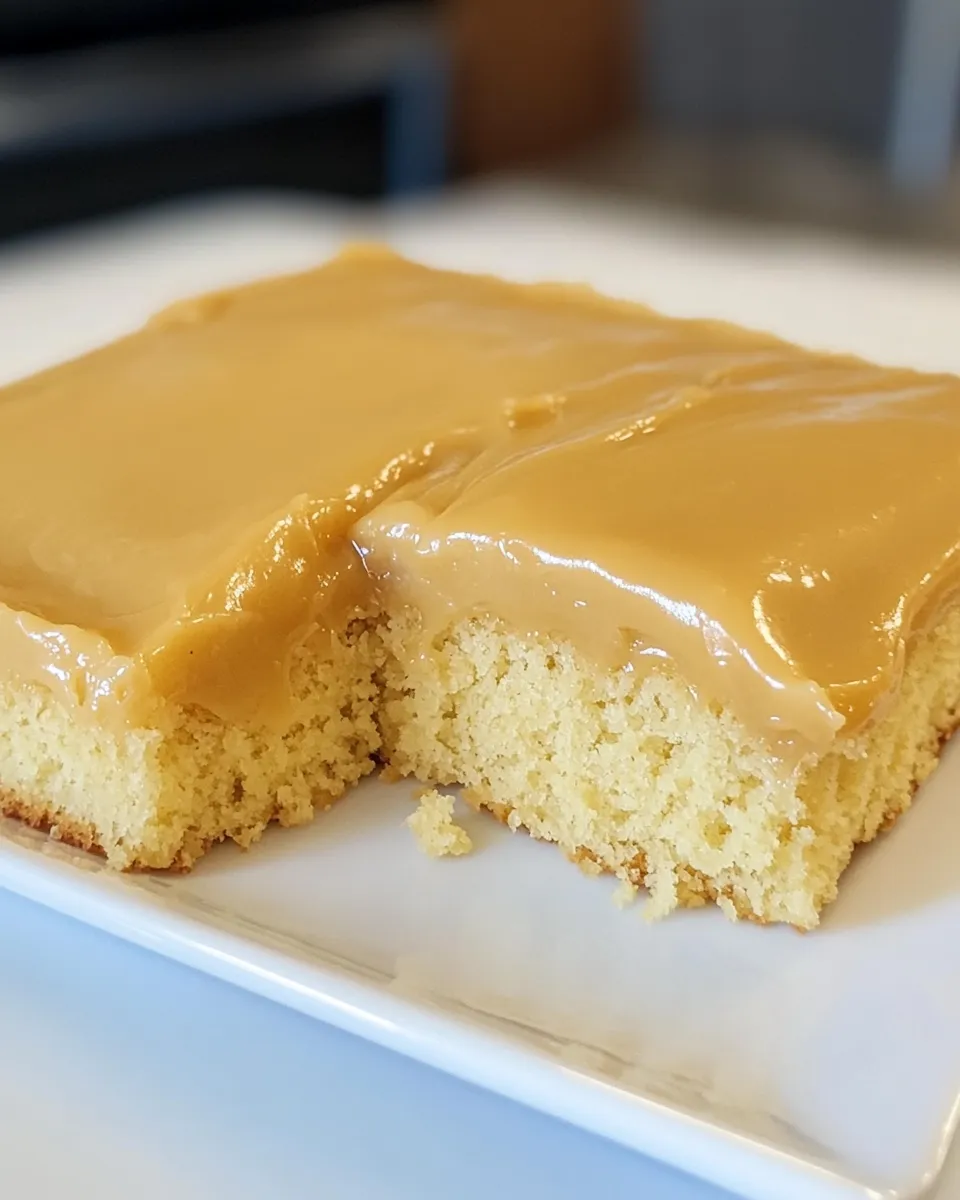
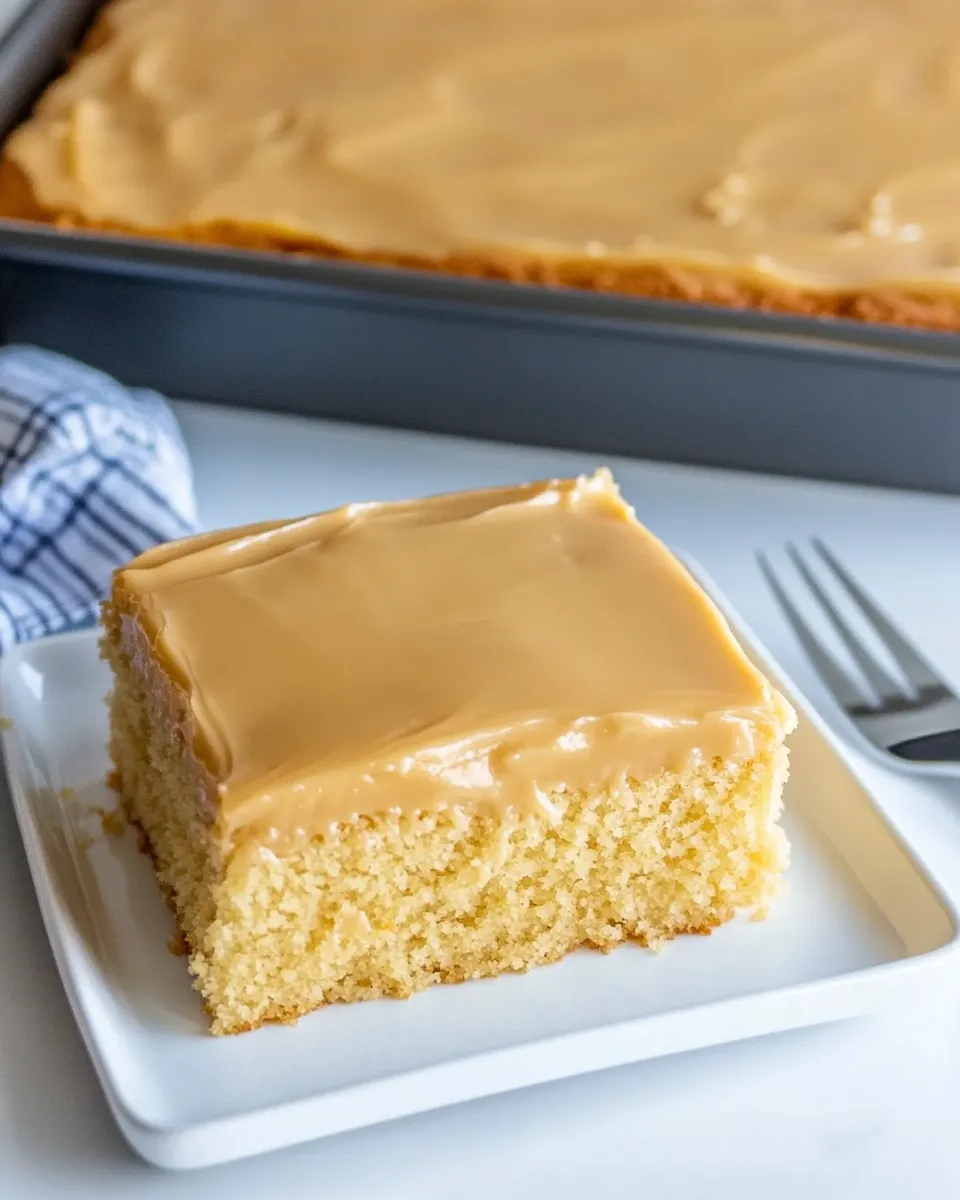
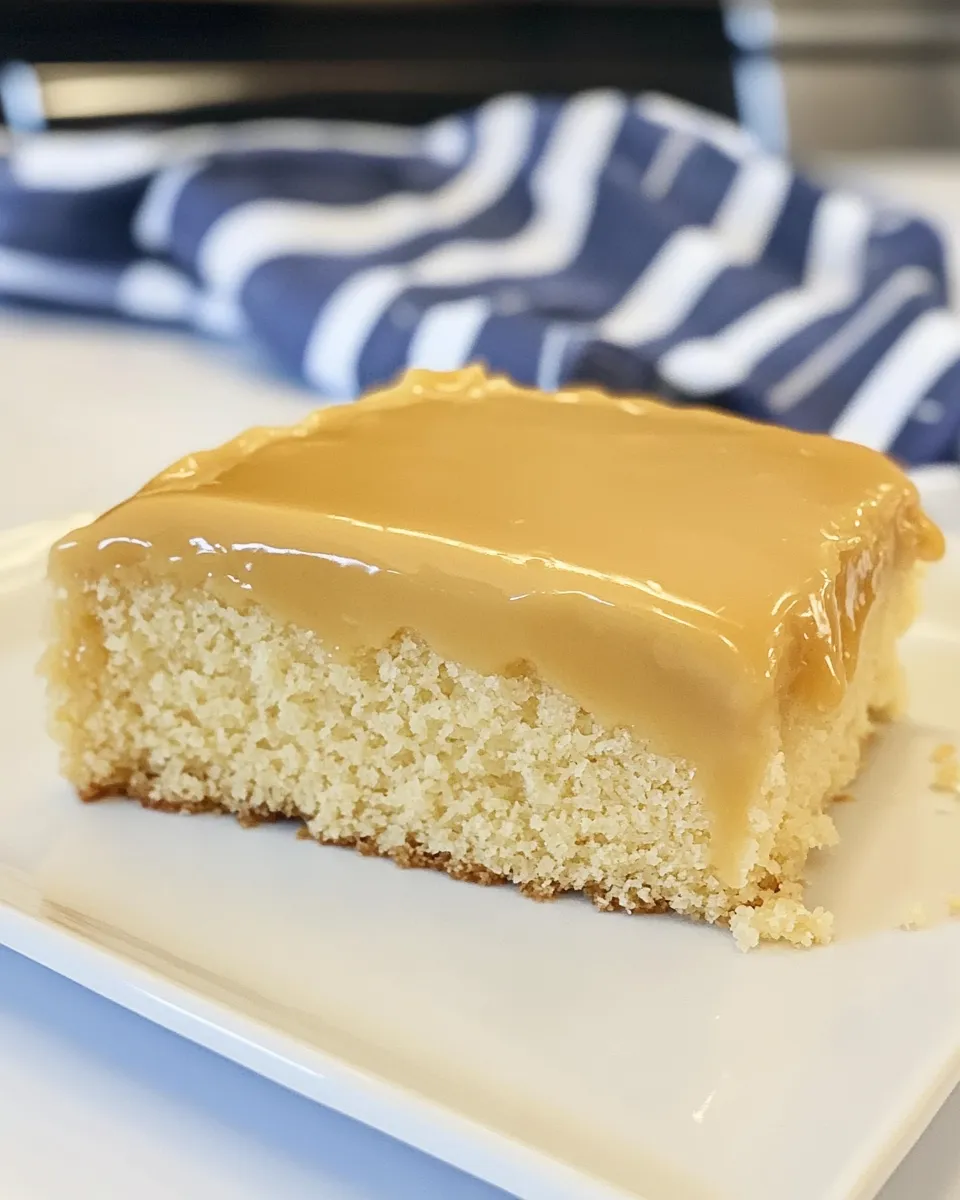
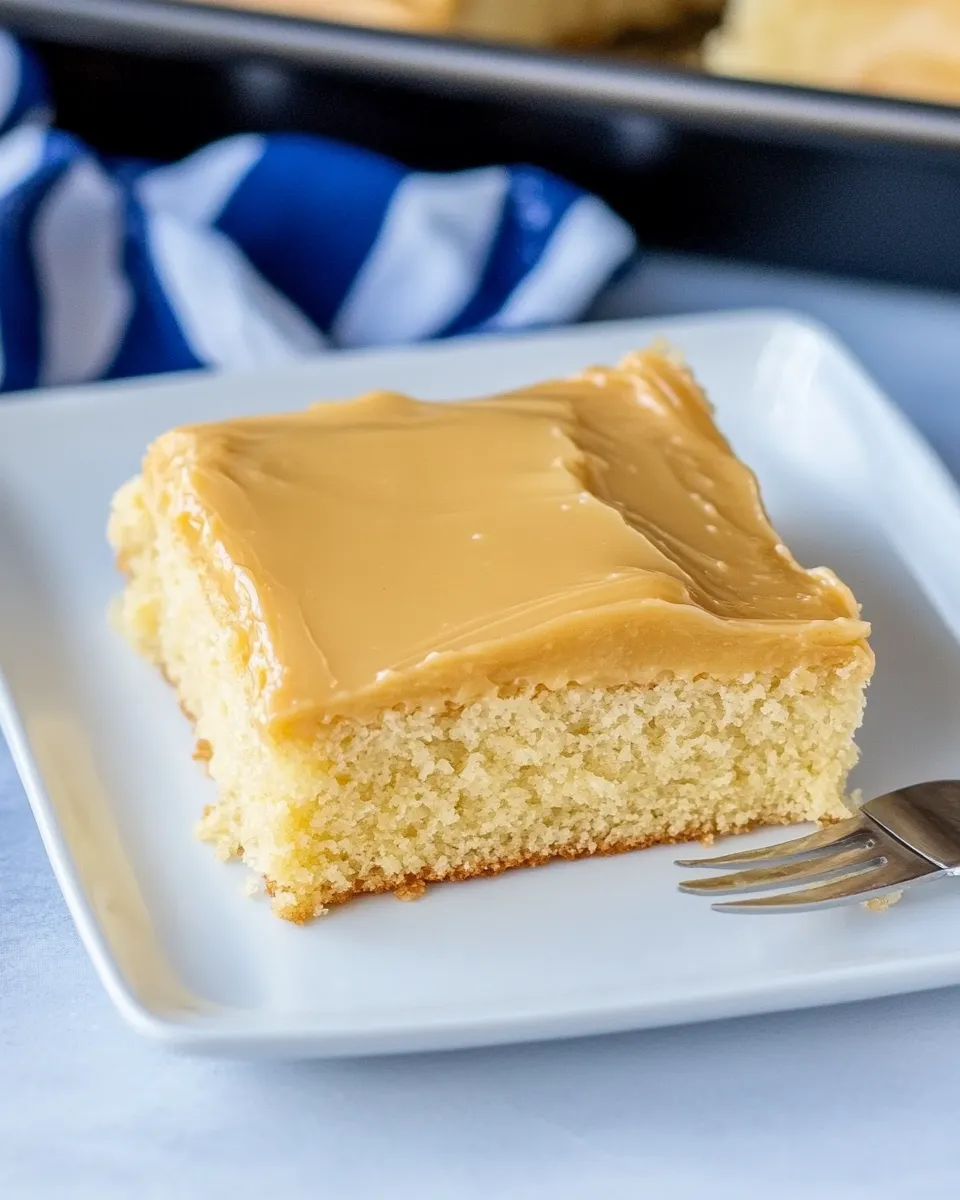
This sheet cake is the kind of dessert I make when I want something comforting, straightforward, and crowd-pleasing. It’s a tender, buttery cake made with buttermilk, baked in a 13×9-inch pan, and finished with a silky caramel icing that sets into a glossy, slightly chewy top. No fancy decorations, just dependable flavor and texture.
I like this recipe because the method is forgiving but specific where it matters: creaming the butter and sugar until light, folding in the eggs, and finishing with a warm caramel icing poured over the warm cake so it settles into every crack. It’s a reliable recipe for potlucks, birthdays, or an unexpected weeknight treat.
Below you’ll find the exact ingredients and directions to make it, plus practical swaps, troubleshooting, and storage tips so you get consistent results every time.
Ingredients at a Glance
- 3/4 cup (1 1/2 sticks) butter, softened — for richness and structure; room temperature for easier creaming.
- 1 3/4 cups sugar — sweetens and helps create a tender crumb when creamed with the butter.
- 3/4 teaspoon salt — balances sweetness and enhances flavor.
- 2 1/2 teaspoons baking powder — primary leavening to give the sheet cake lift.
- 2 teaspoons vanilla extract — adds rounded, warm flavor.
- 4 large eggs — provide structure, moisture, and richness.
- 2 egg yolks — add extra richness and tenderness.
- 1 1/2 cups buttermilk — keeps the crumb tender and gives a subtle tang.
- 2 3/4 cups all-purpose flour — the body of the cake; measure accurately by spooning and leveling.
- 6 tablespoons (3/4 stick) butter — used in the caramel icing for flavor and silkiness.
- 1 cup packed light brown sugar — contributes caramel notes and moisture to the icing.
- 1/4 cup milk — thins the icing and helps dissolve the sugar.
- 1 3/4 cups powdered sugar — thickens and sweetens the icing to a spreadable consistency.
Method: Buttermilk Sheet Cake with Caramel Icing
- Preheat the oven to 350°F. Spray a 13×9-inch baking pan with baking spray.
- In a large bowl, use an electric mixer to beat 3/4 cup (1 1/2 sticks) softened butter, 1 3/4 cups sugar, 3/4 teaspoon salt, 2 1/2 teaspoons baking powder, and 2 teaspoons vanilla extract until light and fluffy, about 5 minutes.
- Add the 4 large eggs and 2 egg yolks one at a time, beating well after each addition and scraping down the bowl as needed.
- Add 1 1/2 cups buttermilk and mix on low speed just until incorporated.
- Add 2 3/4 cups all-purpose flour and mix on low speed just until combined; scrape the sides and bottom of the bowl to ensure an even batter. Do not overmix.
- Pour the batter into the prepared 13×9-inch pan and smooth the top. Bake for about 35 minutes, or until the cake springs back when pressed lightly in the center (or a toothpick inserted into the center comes out with a few moist crumbs).
- Remove the cake from the oven and set it on a wire rack. While the cake cools slightly (it should be warm but not piping hot), make the icing.
- For the caramel icing: melt 6 tablespoons (3/4 stick) butter in a small saucepan over low heat. Turn the heat off and whisk in 1 cup packed light brown sugar and 1/4 cup milk until the sugar is dissolved and the mixture is smooth.
- Stir in 1 3/4 cups powdered sugar until the icing is smooth. If the icing is very runny, let it cool a couple of minutes until it thickens slightly, but do not let it set.
- Slowly pour the icing over the warm cake in the pan and spread gently if needed. Let the cake cool completely so the icing sets before slicing and serving.
What Sets This Recipe Apart
There are a few deliberate choices here that make the cake perform well. The use of both whole eggs and extra yolks gives a richer texture without weighing the cake down. Buttermilk adds tender crumb and a gentle tang that balances the sweetness.
The caramel icing is cooked only briefly and then thickened with powdered sugar. That approach produces a glossy, slightly chewy top that adheres to the warm cake and seals in moisture. It’s quick to make and dramatically improves the final presentation.
Finally, the recipe is written for a single 13×9-inch pan. That means predictable baking time and an easy, crowd-friendly serving size.
Substitutions by Category
- Fat: For a dairy-free option, use a solid baking-style dairy-free spread in place of the butter in the cake and a compatible margarine in the icing. Texture will vary slightly.
- Milk/Buttermilk: If you don’t have buttermilk on hand, a cultured buttermilk or low‑fat buttermilk can be used. You can also use plain yogurt thinned with a little water in a pinch.
- Flour: All-purpose flour is specified for structure. For gluten-free, use a 1:1 gluten-free flour blend that includes xanthan gum and follow the manufacturer’s recommendations.
- Sugar: The brown sugar in the icing gives the caramel flavor. If you prefer a deeper flavor, you can try dark brown sugar; expect a slightly darker icing.
- Eggs: Eggs contribute structure and lift. If you need to avoid eggs, use a commercial egg replacer designed for baking and follow its platform instructions, but texture will be different.
Tools & Equipment Needed
- 13×9-inch baking pan — the recipe is scaled for this size.
- Electric mixer (stand or hand) — for creaming butter and sugar and incorporating eggs.
- Large mixing bowl and a smaller bowl for any mise en place.
- Measuring cups and spoons — accuracy matters for flour and leavening.
- Spatula and whisk — for scraping and making the icing smooth.
- Small saucepan — to melt butter and warm the brown sugar for the icing.
- Wire rack — cools the cake evenly before icing.
Watch Outs & How to Fix
- Cake too dense: Likely from overmixing after adding flour or packing the flour when measuring. Fix: Be gentle and stop mixing as soon as the flour is incorporated. For the current bake, serve slightly warmed with sauce or whipped cream to offset density.
- Gummy center or underbaked: Oven temperature can vary. If the cake is underbaked, tent with foil and bake in 5–10 minute increments until a toothpick shows only a few moist crumbs.
- Icing too runny: Let the icing cool a couple of minutes off the heat to thicken slightly before pouring. If it’s still too thin when cooled, whisk in a bit more powdered sugar a tablespoon at a time until it reaches spreading consistency.
- Icing sets too hard: That happens if it cools completely before being poured, or too much powdered sugar was added. Warm it briefly over low heat and whisk until smooth, then pour immediately over the warm cake.
- Cake sticks to pan: Make sure to spray the pan well with baking spray. If it still sticks, run a thin offset spatula or knife around the cake edge while it’s warm, then cool completely before inverting if desired.
Dietary Customizations
- Lower sugar: You can reduce the sugar in the cake slightly, but know it will change the balance and texture. The icing relies on sugar for structure, so adjusting it will affect finish.
- Gluten-free: Use a trusted 1:1 gluten-free flour blend and allow the batter to rest 15–20 minutes before baking to hydrate the flours better.
- Dairy-free: Swap in a baking-style dairy-free spread and a plant-based milk for the milk in the icing. The caramel flavor will be milder.
- Egg-free: Replace each egg with a commercial egg replacer or an appropriate substitute recommended by its manufacturer. Expect a different crumb and texture.
Cook’s Notes
- Creaming time matters: Beat the butter, sugar, salt, baking powder, and vanilla until light and fluffy — about 5 minutes. This traps air and helps the cake rise evenly.
- Room temperature ingredients: Softened butter and room-temperature eggs combine more uniformly. Cold ingredients can lead to a lumpy batter and uneven bake.
- Scrape the bowl: When adding eggs and flour, scrape down the sides and bottom so everything incorporates evenly.
- Test for doneness: A toothpick with a few moist crumbs or a gentle spring-back in the center are the best signs this sheet cake is done.
- Pour icing while warm: The cake should be warm, not hot. Pouring when the cake is too hot can cause the icing to soak in too deeply; too cold and it won’t spread and set as nicely.
Save It for Later
- Room temperature storage: Cover the pan with plastic wrap or a fitted cake dome and store at room temperature for up to 2 days.
- Refrigeration: For longer storage, refrigerate covered for up to 5 days. Bring to room temperature before serving for best texture.
- Freezing: Slice into portions and freeze individually on a tray. Once frozen, wrap tightly and store in a freezer bag for up to 2 months. Thaw in the refrigerator, then bring to room temperature.
- Refresh: Warm a slice in the microwave for 10–15 seconds to soften the icing and refresh the crumb.
Frequently Asked Questions
- Can I make this in two 9-inch pans? The recipe is formulated for a 13×9-inch pan; using two 9-inch pans will alter depth and bake time. If you do split it, monitor baking time closely and test for doneness earlier.
- Why is my icing grainy? Graininess can come from not fully dissolving the brown sugar into the butter and milk. Whisk thoroughly while the mixture is warm until the brown sugar dissolves, then add powdered sugar.
- Can I make the icing ahead of time? You can make it ahead and refrigerate. Rewarm gently and whisk to loosen before pouring over the warm cake. Don’t let it set before pouring.
- How do I get even slices? Use a sharp knife and wipe it between cuts. For neater edges, chill the cake briefly so the icing firms up slightly before slicing.
Time to Try It
Put the oven on and gather your ingredients. The baking and the icing come together quickly, and the payoff is a classic sheet cake that’s both easy and satisfying. Follow the directions exactly for dependable results, but don’t be afraid to make it your own in future batches once you’ve seen how the base behaves.
Send a photo or note about how it turned out. I love hearing what tweaks worked for you and any questions that come up while you bake.
Buttermilk Sheet Cake with Caramel Icing
Ingredients
Ingredients
- 3/4 cup 1 1/2 sticksbutter, softened
- 1 3/4 cupssugar
- 3/4 teaspoonsalt
- 2 1/2 teaspoonsbaking powder
- 2 teaspoonsvanilla extract
- 4 largeeggs
- 2 egg yolks
- 1 1/2 cupsbuttermilk
- 2 3/4 cupsall-purpose flour
- 6 tablespoons 3/4 stickbutter
- 1 cuppacked light brown sugar
- 1/4 cupmilk
- 1 3/4 cuppowdered sugar
Instructions
Instructions
- Preheat the oven to 350°F. Spray a 13×9-inch baking pan with baking spray.
- In a large bowl, use an electric mixer to beat 3/4 cup (1 1/2 sticks) softened butter, 1 3/4 cups sugar, 3/4 teaspoon salt, 2 1/2 teaspoons baking powder, and 2 teaspoons vanilla extract until light and fluffy, about 5 minutes.
- Add the 4 large eggs and 2 egg yolks one at a time, beating well after each addition and scraping down the bowl as needed.
- Add 1 1/2 cups buttermilk and mix on low speed just until incorporated.
- Add 2 3/4 cups all-purpose flour and mix on low speed just until combined; scrape the sides and bottom of the bowl to ensure an even batter. Do not overmix.
- Pour the batter into the prepared 13×9-inch pan and smooth the top. Bake for about 35 minutes, or until the cake springs back when pressed lightly in the center (or a toothpick inserted into the center comes out with a few moist crumbs).
- Remove the cake from the oven and set it on a wire rack. While the cake cools slightly (it should be warm but not piping hot), make the icing.
- For the caramel icing: melt 6 tablespoons (3/4 stick) butter in a small saucepan over low heat. Turn the heat off and whisk in 1 cup packed light brown sugar and 1/4 cup milk until the sugar is dissolved and the mixture is smooth.
- Stir in 1 3/4 cups powdered sugar until the icing is smooth. If the icing is very runny, let it cool a couple of minutes until it thickens slightly, but do not let it set.
- Slowly pour the icing over the warm cake in the pan and spread gently if needed. Let the cake cool completely so the icing sets before slicing and serving.
Equipment
- 9x13 inch Baking Dish
- Electric Mixer