
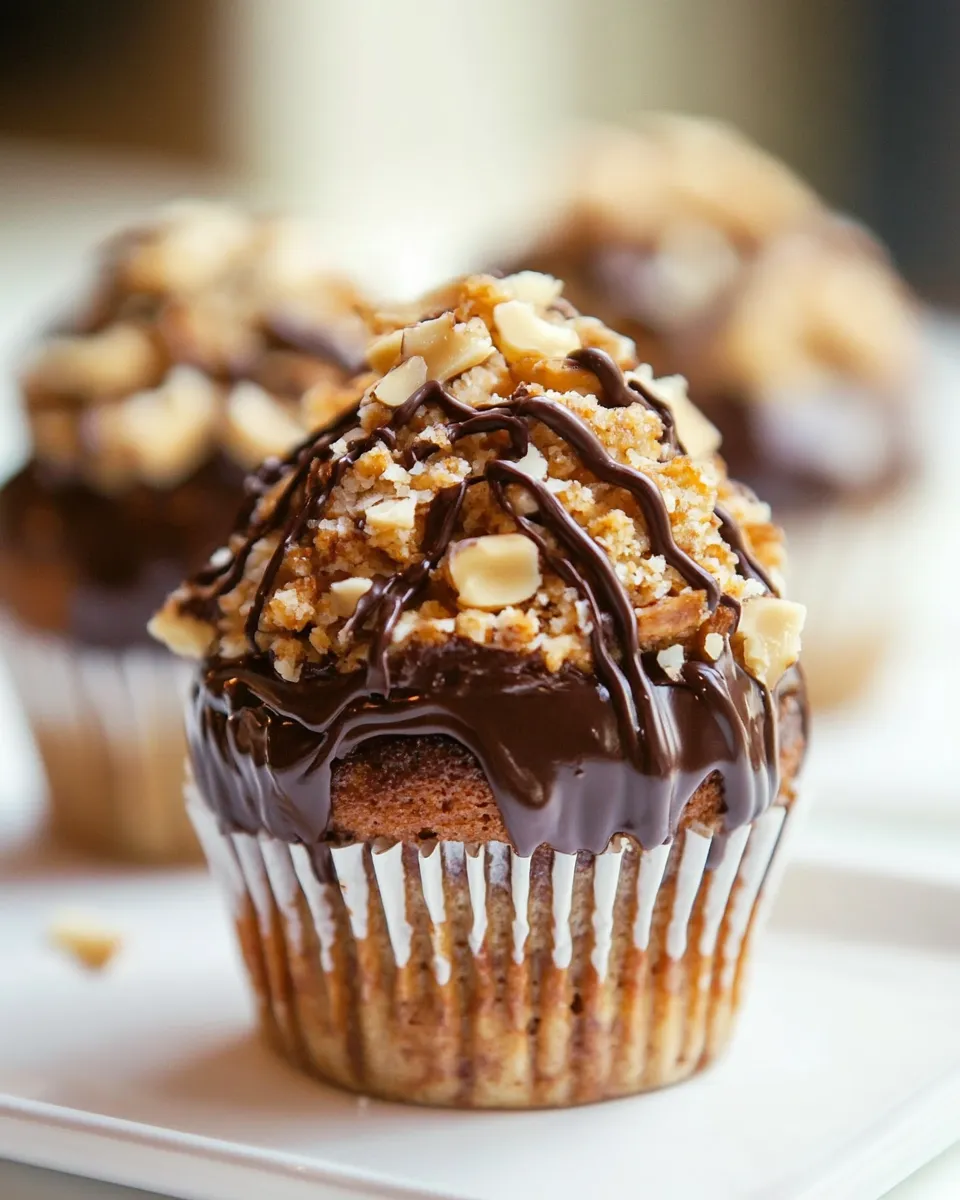
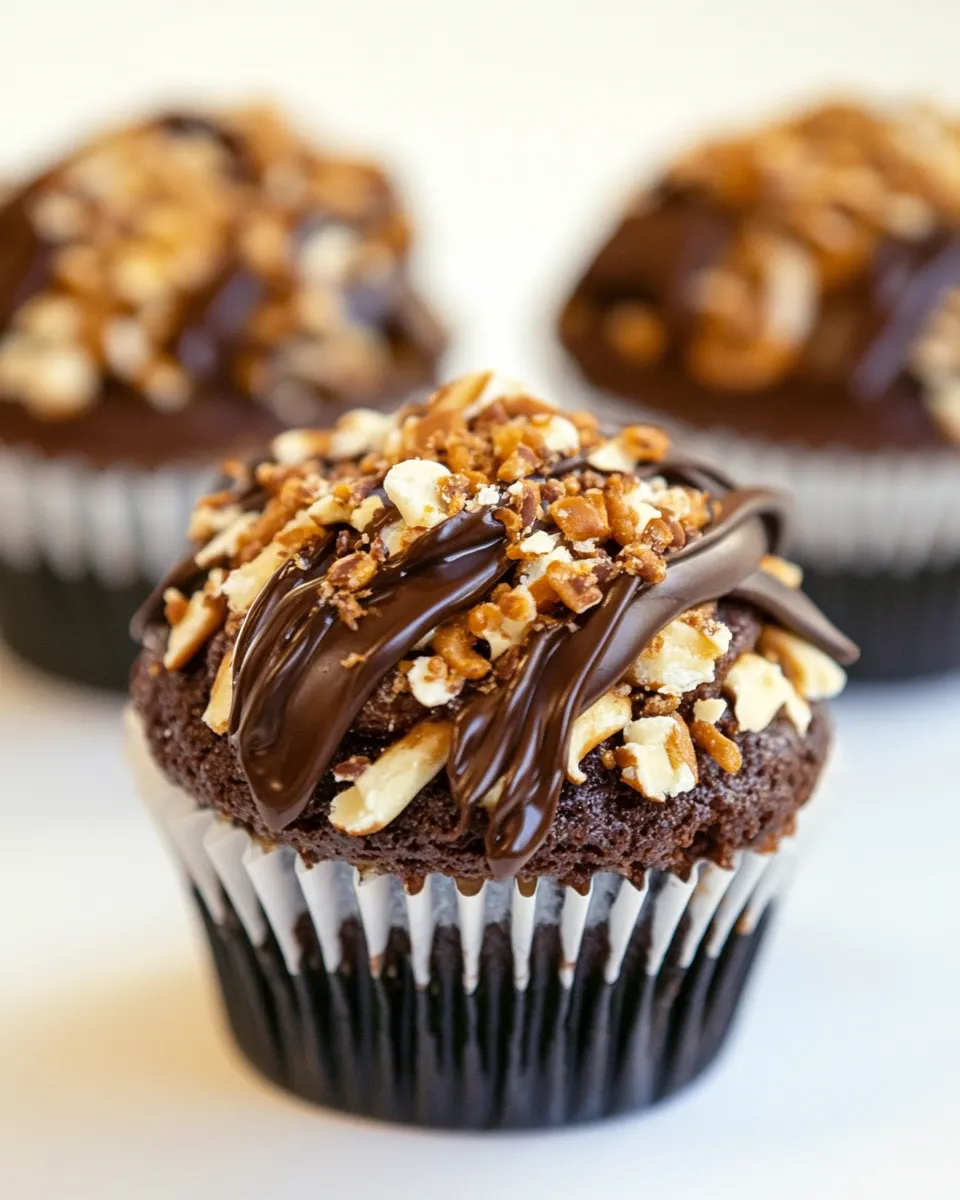
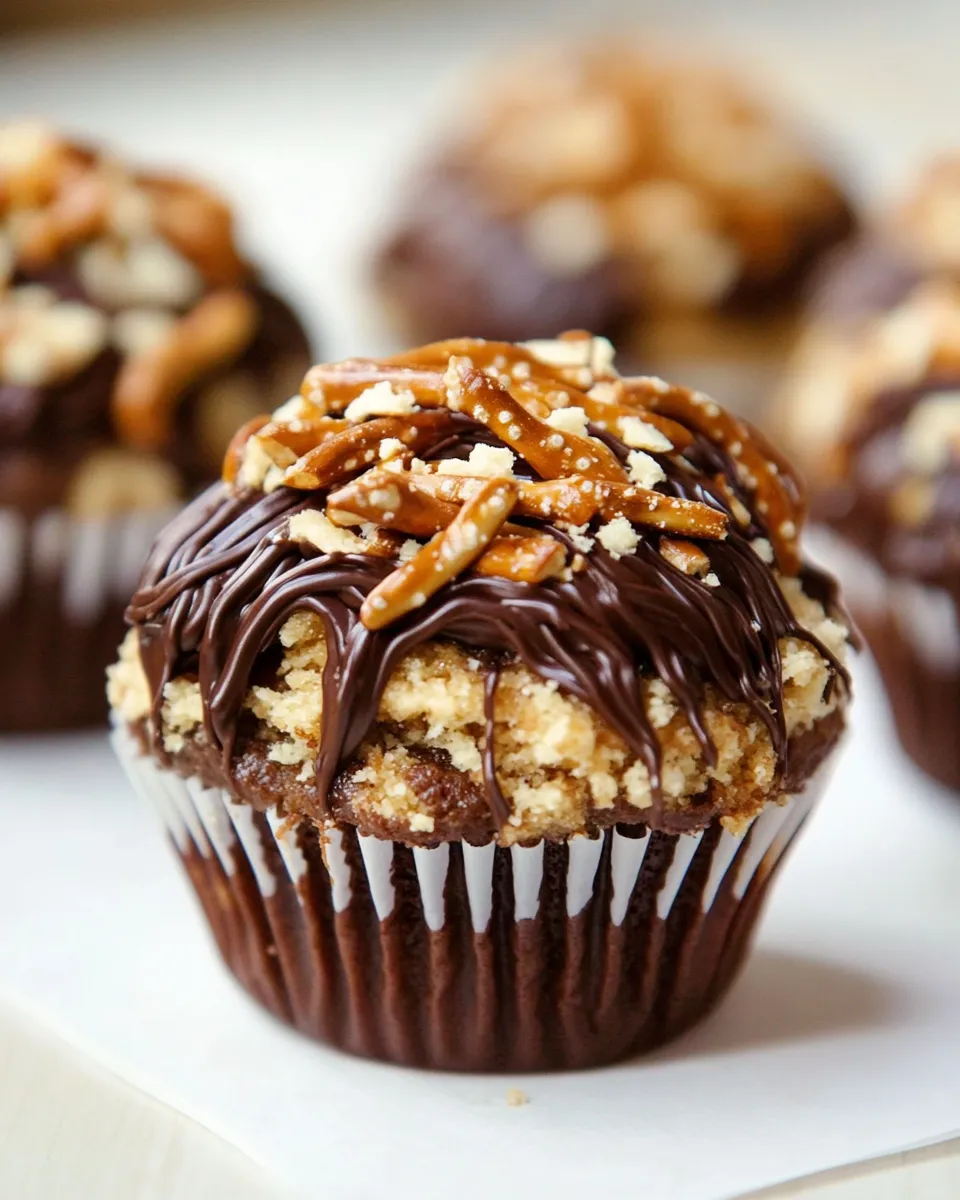
I make these cupcakes when I want something that feels both comforting and celebratory. The batter is straightforward, the buttercream is a little technical, and the result is worth every minute: deep chocolate cupcakes topped with a stabilized peanut butter buttercream, crunchy pretzel and peanut crumb, and a glossy drizzle of dark chocolate ganache. They balance sweet, salty, bitter and creamy all at once.
This recipe is practical. It uses pantry staples but asks for a short list of specific steps — especially for the buttercream syrup and emulsification — so read through once before you start. The cooling and chilling steps matter: they make the buttercream pipe cleanly and hold the toppings in place.
Below you’ll find a precise ingredient checklist, step-by-step instructions (kept in the order given so you don’t miss a beat), troubleshooting notes, and ideas for seasonal variations. If you’re new to sugar syrups or stabilized frostings, don’t worry — I include pacing tips so you can follow along without stress.
Ingredient Checklist
- 3/4 cup (75 g) Dutch-process cocoa powder — provides the deep chocolate flavor and dry structure for the cocoa paste.
- 2/3 cup (160 ml) very hot coffee — blooms the cocoa and intensifies chocolate notes; hot but not boiling is fine.
- 2/3 cup (160 ml) buttermilk — adds acidity and tender crumb; combines with the cocoa-espresso paste for a uniform batter.
- 1/2 cup (125 ml) vegetable oil, such as canola or grapeseed — keeps cupcakes moist and tender; neutral-flavored oils work best.
- 1 teaspoon vanilla extract — lifts and rounds the chocolate and peanut flavors.
- 1 large egg — structure and binding for the cupcake batter.
- 1 large egg yolk — extra richness and fat for a softer crumb.
- 1/2 teaspoon kosher or sea salt — balances sweetness and enhances flavors; used in the batter.
- 1 1/3 cup (190 g) all-purpose flour — the primary dry structure for the cupcakes.
- 1 3/4 cups (350 g) sugar — sweetens and contributes to texture; used in the cupcake batter.
- 3/4 teaspoon baking powder — leavening for lift.
- 1/2 teaspoon baking soda — reacts with the buttermilk for rise and crumb.
- 1 cup (250 ml) water — for the sugar syrup used in the peanut butter buttercream; follow the heat stage precisely.
- 2 cups (400 g) sugar — the bulk of the syrup that will be cooked to 235°F (soft-ball range).
- 2 tablespoons light corn syrup — helps prevent crystallization of the sugar syrup.
- 1/4 teaspoon cream of tartar — stabilizes the sugar syrup.
- 5 large egg yolks — the base for the Italian-style buttercream when combined with the syrup.
- 1 large egg — whisked with yolks to add volume and structure to the buttercream base.
- 1/8 teaspoon xanthan gum — a tiny stabilizer added to the whipped eggs before the syrup to improve texture.
- 1 1/2 pounds (680 g) butter, cold — the bulk of the buttercream; add in slivers to emulsify smoothly.
- 3/4 cup (180 g) natural peanut butter, plus additional if necessary — flavors the buttercream; use natural style for a clean peanut flavor and texture.
- 1/2 teaspoon vanilla extract — for the buttercream; complements the peanuts.
- 1 teaspoon kosher or sea salt — balances the sweetness in the buttercream; adjust to taste.
- 3/4 cup (110 g) roasted peanuts — for the crunchy peanut-pretzel topping; pulse for mixed texture.
- 1 1/2 cups (90 g) broken up large pretzels — a salty crunch; break into large-ish pieces for textural contrast.
- 1/4 cup (60 ml) heavy cream — warmed and mixed with chocolate to make the ganache drizzle.
- 2 ounces (55 g) chopped bittersweet or semisweet chocolate — creates the ganache; bittersweet adds a pleasant bitter counterpoint.
- pinch kosher or sea salt — optional finish on each cupcake to highlight the sweet-salty interplay.
Make Chocolate, Peanut Butter and Pretzel Cupcakes: A Simple Method
- Preheat the oven to 350°F (180°C). Line two 12-cup muffin pans with cupcake liners.
- In a medium bowl, whisk the Dutch-process cocoa powder and very hot coffee together until it forms a thick, smooth paste.
- In a separate bowl, whisk together the buttermilk, vegetable oil, 1 teaspoon vanilla extract, 1 large egg, 1 large egg yolk, and 1/2 teaspoon salt. Gradually stir the buttermilk mixture into the cocoa paste until smooth and uniform.
- Sift together the all-purpose flour, 1 3/4 cups sugar, baking powder, and baking soda into a large bowl. Stir the dry ingredients into the cocoa mixture just until combined; do not overmix.
- Divide the batter among the prepared muffin cups, filling each about two‑thirds full. (Use a measuring cup or a spring-loaded scoop for even portions.)
- Bake the cupcakes 20–25 minutes, until a toothpick inserted in the center comes out clean or the centers spring back lightly when touched. Cool the cupcakes completely on a wire rack before frosting.
- While the cupcakes cool, make the peanut butter buttercream. Combine 1 cup water, 2 cups sugar, 2 tablespoons light corn syrup, and 1/4 teaspoon cream of tartar in a heavy, nonreactive saucepan fitted with a candy thermometer. Heat over medium-high, stirring to dissolve the sugar, and bring the syrup to 235°F (113°C).
- Meanwhile, place the 5 egg yolks and 1 whole egg in the bowl of a stand mixer fitted with the whisk attachment. Whip on high until the eggs are thick and hold their shape.
- When the syrup reaches 235°F, briefly stop the mixer, add the 1/8 teaspoon xanthan gum to the whipped eggs, then restart the mixer. With the mixer on medium-high, carefully and slowly pour the hot syrup in a thin, steady stream into the eggs, aiming between the whisk and the side of the bowl. Pour gradually to avoid cooking the eggs.
- After all the syrup is incorporated, increase the mixer speed to high and whip until the outside of the mixing bowl feels cool to the touch.
- Switch to the paddle attachment. Cut the cold butter into small slivers. With the mixer on medium-high, add the butter pieces one at a time, waiting until each piece is mostly incorporated before adding the next. Continue until all 1 1/2 pounds (680 g) butter has been added and the mixture is smooth. If the buttercream looks separated at any point, continue beating and it should come together.
- Reduce the mixer speed to low and add 3/4 cup (180 g) natural peanut butter (plus additional peanut butter if you want a stronger flavor), 1 teaspoon kosher or sea salt, and 1/2 teaspoon vanilla extract. Taste and, if desired, add more peanut butter a tablespoon at a time and/or adjust salt to taste.
- Frost the completely cooled cupcakes. You may spread the buttercream thickly with a spatula or pipe mounds using a pastry bag fitted with a large plain tip (about 1/2-inch / 1.75 cm). Refrigerate the frosted cupcakes for 20 minutes to firm the frosting.
- Make the peanut-pretzel topping: pulse 3/4 cup (110 g) roasted peanuts and 1 1/2 cups (90 g) broken-up large pretzels in a food processor until you have a mix of fine crumbs and some larger pieces, or crush in a zip-top bag with a rolling pin. Transfer the mixture to a bowl.
- Press the tops of the chilled, frosted cupcakes into the peanut-pretzel mixture so the pieces adhere. If the buttercream is too firm for the topping to stick, let the frosted cupcakes sit at room temperature a few minutes, then press on the topping.
- Make the ganache: warm 1/4 cup (60 ml) heavy cream in a small saucepan until it is just starting to simmer. Remove from heat, add 2 ounces (55 g) chopped bittersweet or semisweet chocolate, and let sit 2 minutes. Stir until smooth. If the ganache is too thick to drizzle, stir in a little additional warmed cream, a small amount at a time, until it reaches a drizzling consistency.
- Use a teaspoon to drizzle the ganache over each cupcake. Finish each cupcake with a light pinch of kosher or sea salt, if desired.
Why This Chocolate, Peanut Butter and Pretzel Cupcakes Stands Out
There are a few reasons these cupcakes work so well together. First, the Dutch-process cocoa plus hot coffee creates an intense chocolate base without adding extra moisture that would require recipe adjustments. The oil and extra yolk keep the crumb tender and moist even after the cupcakes cool.
Second, the buttercream is essentially a stabilized, Swiss/Italian hybrid. Heating a sugar syrup to 235°F and slowly incorporating it into whipped eggs builds a stable base that can take a lot of butter without becoming greasy. The cold butter and the gradual incorporation are what give you that glossy, satiny frosting that pipes beautifully and holds the heavier pretzel and peanut topping.
Finally, the combination of textures — soft cake, smooth and creamy frosting, crunchy peanut-pretzel bits, and a thin ganache drizzle — gives each bite contrast. The pinch of salt at the end is small but transformative.
If You’re Out Of…
- Buttermilk — make a quick substitute by adding 1 tablespoon lemon juice or vinegar to 2/3 cup milk and let it sit 5 minutes; the acidity is what interacts with baking soda.
- Natural peanut butter — a conventional creamy peanut butter will work, but the stabilized buttercream flavor will differ slightly; if it’s saltier or sweeter, adjust the added salt to taste.
- Light corn syrup — the syrup helps prevent crystallization; if unavailable, increase attention to stirring and temperature to avoid crystals, or use an equal amount of glucose syrup if you have it.
- Roasted peanuts or pretzels — any roasted nut or sturdy, salty cracker can provide crunch; keep pieces relatively large for textural contrast.
Recommended Tools
Essentials
- Stand mixer with whisk and paddle attachments — the whipping stages and the heavy butter addition are much easier with a mixer.
- Candy thermometer — precise syrup temperature is critical for the buttercream.
- Heavy-bottomed, nonreactive saucepan — prevents hot spots while cooking the syrup.
- Muffin pans and liners — two 12-cup pans keep baking even and manageable.
Helpful but optional
- Food processor or zip-top bag and rolling pin — for crushing the peanut-pretzel topping.
- Pastry bag and large plain tip (~1/2 inch) — for tidy mounds of buttercream.
- Instant-read thermometer — useful if you prefer to double-check oven temperature or ganache stability.
Don’t Do This
- Don’t pour the hot syrup into the eggs too quickly. A thin, steady stream prevents scrambling and ensures a stable emulsion.
- Don’t add all the butter at once. Large pieces at a time emulsify better; rushing this step can separate the buttercream.
- Don’t frost warm cupcakes. The buttercream will melt and topple the decorations; fully cool the cupcakes first.
- Don’t skip chilling the frosted cupcakes briefly before applying the topping. The chill helps the topping adhere without sinking or sliding off.
Seasonal Twists
Winter: add a pinch of cinnamon or a 1/4 teaspoon espresso powder to the cocoa paste for warmth and depth. The spices pair beautifully with peanut butter.
Spring/Summer: swap the pretzels for toasted coconut flakes mixed with chopped peanuts to lighten the visual and textural profile. Skip the extra salt if your coconut is already sweetened.
Fall: fold a tablespoon of brown butter into the ganache for a nutty autumnal edge. Do this by browning a small amount of butter and letting it cool slightly before whisking into the warm ganache.
Chef’s Rationale
I built this recipe to play to strengths: simple cupcake batter techniques and a slightly advanced buttercream. The syrup-to-egg method creates a stable emulsion that can carry a lot of butter and still hold up at room temperature for service — important when you want to decorate with heavier toppings. I recommend the incremental additions and the rest periods because they reduce risk of separation and make the process reproducible, even for people who don’t make buttercream every day.
Texture is intentional: soft crumb for comfort, dense satin buttercream for mouthfeel, crunchy topping for contrast, and a thin ganache line for a clean finish. Each element is scaled so nothing overwhelms the others.
Make-Ahead & Storage
You can bake the cupcakes a day in advance and store them in an airtight container at room temperature. Frosting is best made the same day you intend to decorate; however, the buttercream keeps in the refrigerator for up to one week in a sealed container. When ready to use, bring it to room temperature and rewhip briefly to restore texture.
Once frosted and topped, store cupcakes in a single layer in an airtight container in the refrigerator for up to 3 days. Allow them to come to room temperature for 20–30 minutes before serving so the buttercream regains softness and the ganache loosens slightly.
Ask & Learn
Common question: “Why use a candy thermometer?” Because the sugar stage defines the texture of the final buttercream. At 235°F the syrup is at soft-ball stage — hot enough to cook the egg base properly without overcooking. Another frequent question is whether the xanthan gum is necessary; the tiny amount helps with stabilization and keeps the whipped eggs from collapsing when you add the hot syrup.
If your buttercream splits, don’t panic: keep beating. Often continued mixing brings it back together as the butter reaches a stable temperature and the emulsion reforms. If it remains broken, chill the bowl briefly and then continue beating while adding a teaspoon of boiling water or a small cold butter piece to coax the emulsion back.
Final Bite
These cupcakes are a study in balance: bold chocolate, nutty peanut butter, crunchy salty pretzel, and a glossy chocolate finish. They reward a little attention to technique, especially the buttercream, but they also reward shortcuts — use a bench scraper to top off messy piping, or swap a simple buttercream if you’re pressed for time (just skip the sugar syrup steps and use a standard creamed-butter method). Either way, the flavor profile is the goal: familiar, satisfying, and slightly elevated.
Make these for a small crowd or a big celebration. They’ll disappear fast, and you’ll get asked for the recipe more than once.

Chocolate, Peanut Butter and Pretzel Cupcakes
Ingredients
Ingredients
- 3/4 cup 75 gDutch-process cocoa powder
- 2/3 cup 160 mlvery hot coffee
- 2/3 cup 160 mlbuttermilk
- 1/2 cup 125 mlvegetable oil, such as canola or grapeseed
- 1 teaspoonvanilla extract
- 1 large egg
- 1 large egg yolk
- 1/2 teaspoonkosher or sea salt
- 1 1/3 cup 190 gall-purpose flour
- 1 3/4 cups 350 gsugar
- 3/4 teaspoonbaking powder
- 1/2 teaspoonbaking soda
- 1 cup 250 mlwater
- 2 cups 400 gsugar
- 2 tablespoonslight corn syrup
- 1/4 teaspooncream of tartar
- 5 large egg yolks
- 1 large egg
- 1/8 teaspoonthxanthan gum
- 1 1/2 pounds 680 gbutter, cold
- 3/4 cup 180 gnatural peanut butter, plus additional if necessary
- 1/2 teaspoonvanilla extract
- 1 teaspoonkosher or sea salt
- 3/4 cup 110 groasted peanuts
- 1 1/2 cups 90 gbroken up large pretzels
- 1/4 cup 60 mlheavy cream
- 2 ounces 55 gchopped bittersweet or semisweet chocolate
- pinchkosher or sea salt
Instructions
Instructions
- Preheat the oven to 350°F (180°C). Line two 12-cup muffin pans with cupcake liners.
- In a medium bowl, whisk the Dutch-process cocoa powder and very hot coffee together until it forms a thick, smooth paste.
- In a separate bowl, whisk together the buttermilk, vegetable oil, 1 teaspoon vanilla extract, 1 large egg, 1 large egg yolk, and 1/2 teaspoon salt. Gradually stir the buttermilk mixture into the cocoa paste until smooth and uniform.
- Sift together the all-purpose flour, 1 3/4 cups sugar, baking powder, and baking soda into a large bowl. Stir the dry ingredients into the cocoa mixture just until combined; do not overmix.
- Divide the batter among the prepared muffin cups, filling each about two‑thirds full. (Use a measuring cup or a spring-loaded scoop for even portions.)
- Bake the cupcakes 20–25 minutes, until a toothpick inserted in the center comes out clean or the centers spring back lightly when touched. Cool the cupcakes completely on a wire rack before frosting.
- While the cupcakes cool, make the peanut butter buttercream. Combine 1 cup water, 2 cups sugar, 2 tablespoons light corn syrup, and 1/4 teaspoon cream of tartar in a heavy, nonreactive saucepan fitted with a candy thermometer. Heat over medium-high, stirring to dissolve the sugar, and bring the syrup to 235°F (113°C).
- Meanwhile, place the 5 egg yolks and 1 whole egg in the bowl of a stand mixer fitted with the whisk attachment. Whip on high until the eggs are thick and hold their shape.
- When the syrup reaches 235°F, briefly stop the mixer, add the 1/8 teaspoon xanthan gum to the whipped eggs, then restart the mixer. With the mixer on medium-high, carefully and slowly pour the hot syrup in a thin, steady stream into the eggs, aiming between the whisk and the side of the bowl. Pour gradually to avoid cooking the eggs.
- After all the syrup is incorporated, increase the mixer speed to high and whip until the outside of the mixing bowl feels cool to the touch.
- Switch to the paddle attachment. Cut the cold butter into small slivers. With the mixer on medium-high, add the butter pieces one at a time, waiting until each piece is mostly incorporated before adding the next. Continue until all 1 1/2 pounds (680 g) butter has been added and the mixture is smooth. If the buttercream looks separated at any point, continue beating and it should come together.
- Reduce the mixer speed to low and add 3/4 cup (180 g) natural peanut butter (plus additional peanut butter if you want a stronger flavor), 1 teaspoon kosher or sea salt, and 1/2 teaspoon vanilla extract. Taste and, if desired, add more peanut butter a tablespoon at a time and/or adjust salt to taste.
- Frost the completely cooled cupcakes. You may spread the buttercream thickly with a spatula or pipe mounds using a pastry bag fitted with a large plain tip (about 1/2-inch / 1.75 cm). Refrigerate the frosted cupcakes for 20 minutes to firm the frosting.
- Make the peanut-pretzel topping: pulse 3/4 cup (110 g) roasted peanuts and 1 1/2 cups (90 g) broken-up large pretzels in a food processor until you have a mix of fine crumbs and some larger pieces, or crush in a zip-top bag with a rolling pin. Transfer the mixture to a bowl.
- Press the tops of the chilled, frosted cupcakes into the peanut-pretzel mixture so the pieces adhere. If the buttercream is too firm for the topping to stick, let the frosted cupcakes sit at room temperature a few minutes, then press on the topping.
- Make the ganache: warm 1/4 cup (60 ml) heavy cream in a small saucepan until it is just starting to simmer. Remove from heat, add 2 ounces (55 g) chopped bittersweet or semisweet chocolate, and let sit 2 minutes. Stir until smooth. If the ganache is too thick to drizzle, stir in a little additional warmed cream, a small amount at a time, until it reaches a drizzling consistency.
- Use a teaspoon to drizzle the ganache over each cupcake. Finish each cupcake with a light pinch of kosher or sea salt, if desired.
Equipment
- Oven
- two 12-cup muffin pans
- Cupcake liners
- Mixing bowls
- Whisk
- Sifter
- Stand mixer
- whisk attachment
- paddle attachment
- heavy nonreactive saucepan
- Candy thermometer
- Wire Rack
Notes
Serve the cupcakes at room temperature. You can chill them for up to a day or two before serving, although the pretzels on top will soften. If you plan to refrigerate them for 1-2 days, frost cupcakes the cupcakes and chill them, then dip in the peanut-pretzel mixture the day of serving.
Notes:
The Robicelli’s recommend that you use “European-style” butter in their French buttercream, which has a higher fat content than regular butter. A number of brands in the United States make
European-style butters
, which are available in supermarkets. And, of course, there are brands imported from Europe, such as Kerrygold.
I dialed up the amount of peanut butter in the buttercream. If you’d like it even more peanut buttery, you can add more, until you’re satisfied with the flavor.
I had a good portion of peanut butter buttercream leftover. (The Robicelli’s are more generous than I am.) Additional buttercream can be frozen in a ziptop freezer bag for up to 4 months, and used to ice a batch of brownies, a loaf cake, or a future cupcake project.
The authors mention that if you add the butter too fast, it can curdle. That didn’t happen to me but they advise if it does, turn the mixer to medium-high speed and add bits of butter, piece-by-piece, until it comes back together.
Natural peanut butter is available in natural food stores and well-stocked supermarkets. “Natural” refers to peanut butter than doesn’t have additional fat or oil added. If you don’t have natural peanut butter, use commercial peanut butter, and realize that you’ll need to add more – to taste – for additional flavor.
To tell if your cocoa powder is Dutch-process, it will either say so on label, or an alkalizing agent will be listed in the ingredients. For more information, check out
Cocoa Powder FAQs
.
The xanthan gum is added to their buttercream to help stabilize it. I don’t know if it’s entirely necessary (I’ve never added it to buttercream I’ve made before.) So if you don’t have it, or can’t find it easily, you could probably omit it. (You can buy it at natural food stores or on
Amazon
.) If you do try it without the xanthan gum, let me know in the comments how it works out.
I got a little OCD with the pretzel-peanut mixture and sifted it through a mesh sieve to remove any small nut dust and crumbs, for a neater appearance. To avoid being left with smaller pieces for the last few cupcakes, give the mixture a stir between dipping the cupcakes.