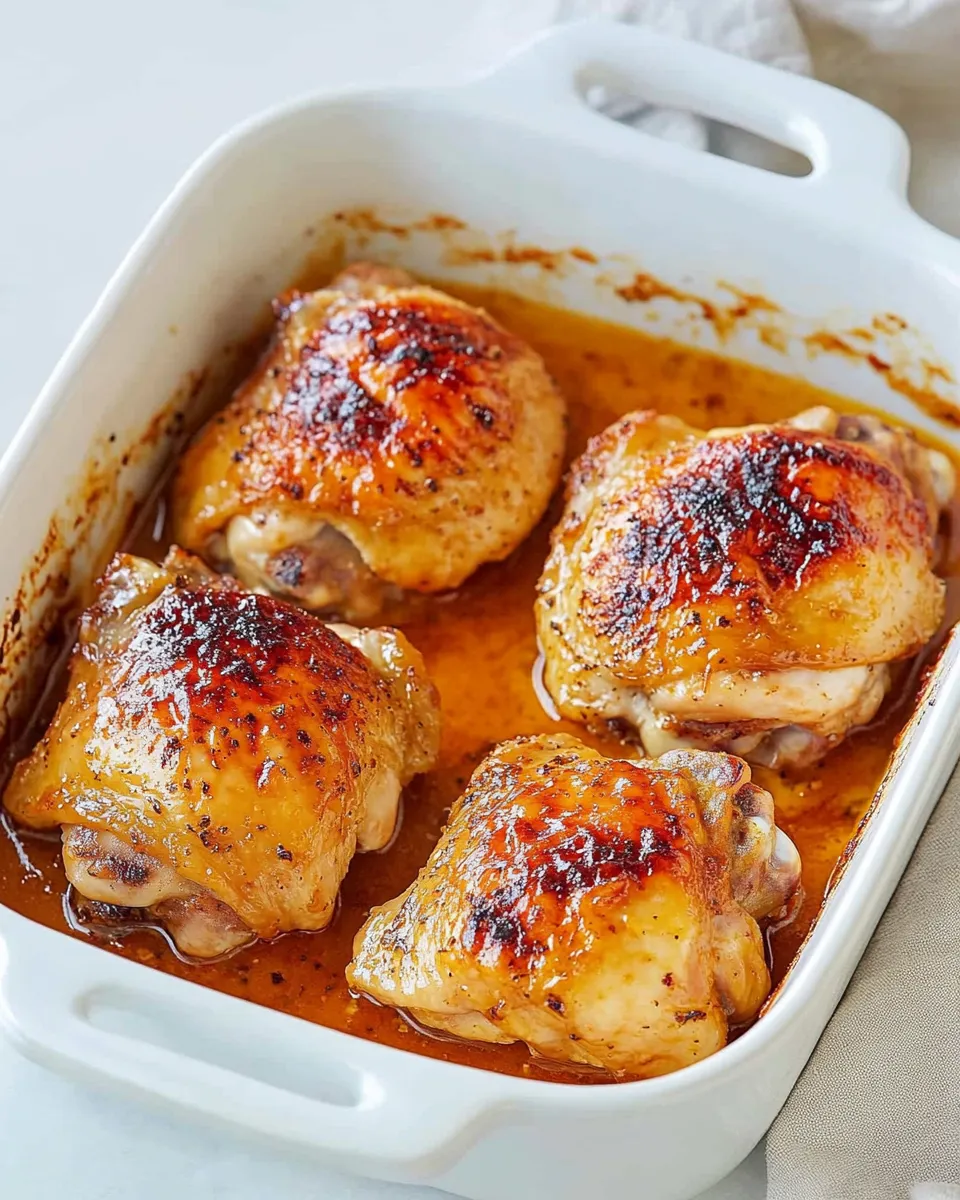
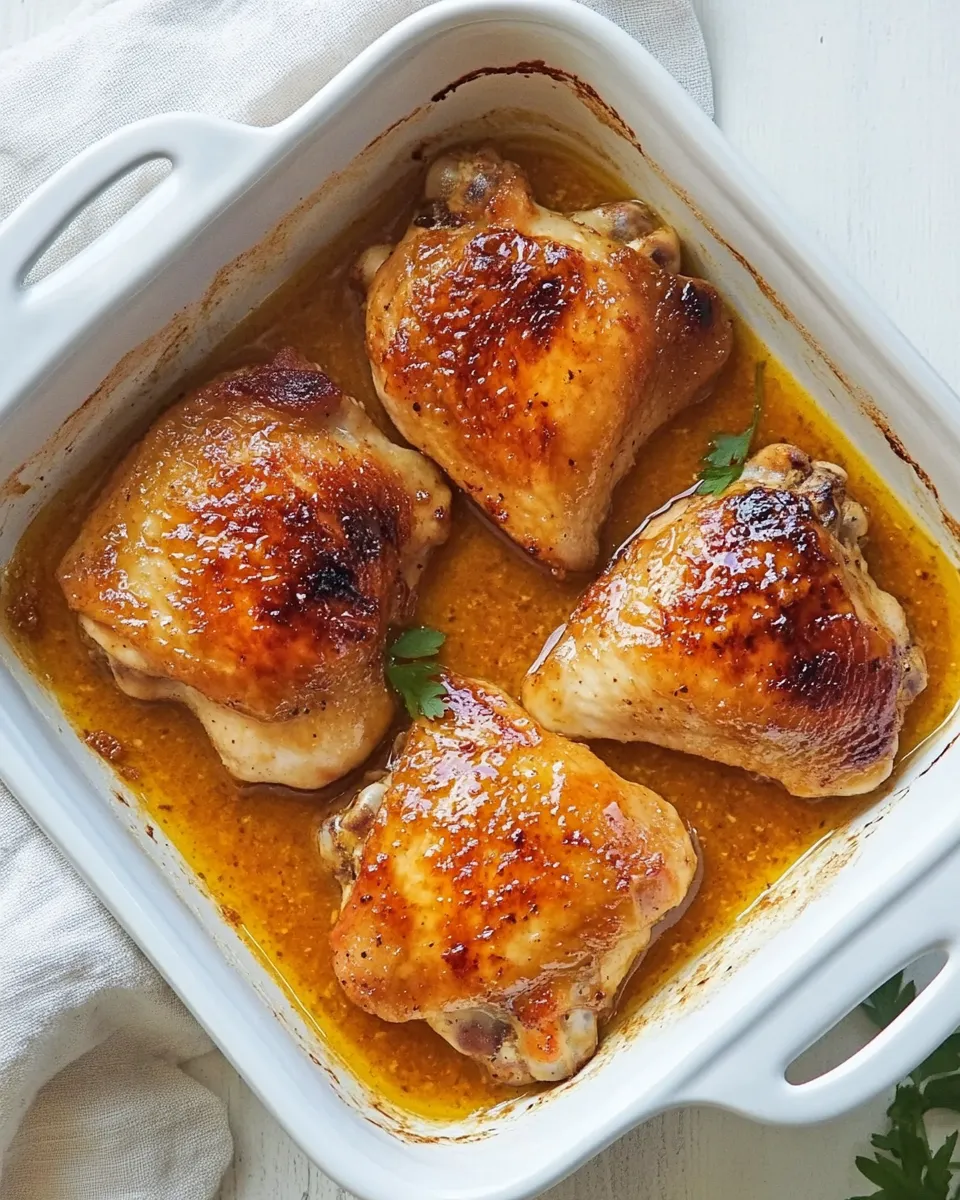
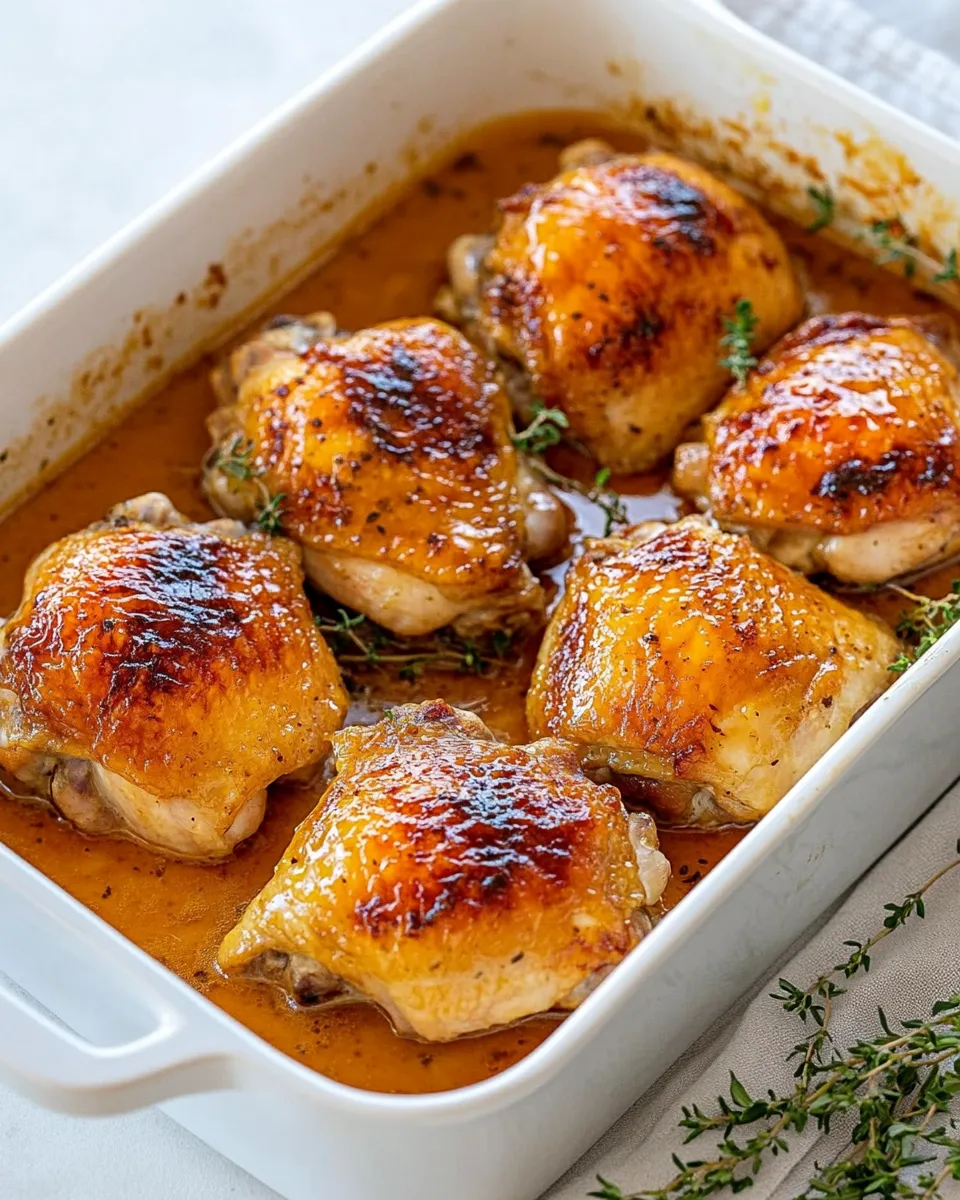
There’s a reason this combination—sweet honey, bright Dijon, aromatic rosemary—shows up in weeknight rotations. Dark meat with skin keeps the thighs juicy in the oven while the honey-mustard glaze caramelizes into a glossy, savory-sweet finish. It’s forgiving, fast to prep, and reliable enough to serve to friends without second-guessing.
I test variations until the technique sings, not the ingredient list. This recipe sticks to a few pantry staples and a single pan. You’ll find clear steps below, plus notes on timing, common mistakes, and ways to adjust for allergies or seasonal sides. Read through once, then you’ll breeze through the whole thing in under an hour.
Keep the dish simple: pat the skin dry, season well, and coat generously with the glaze. The heat does the rest. If you like a little extra browning, a quick broil at the end gives the thighs a restaurant-quality finish.
Ingredients at a Glance
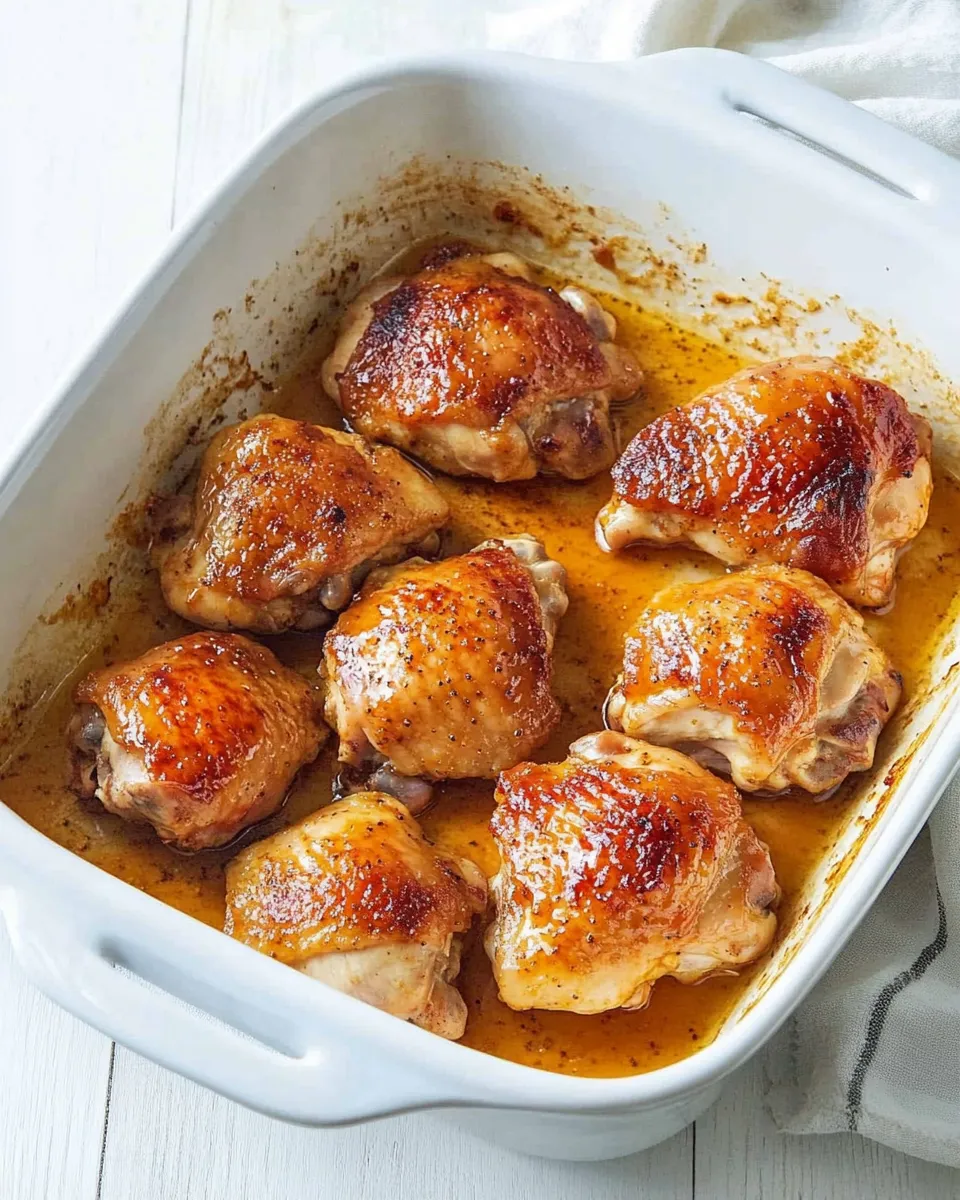
- 3 lbs bone-in skin-on chicken thighs (8 count), trimmed of excess skin and fat — dark meat stays moist and the skin crisps under the glaze; trim only obvious excess skin or fat for even cooking.
- 1 tsp fine sea salt — seasons the meat; use fine sea salt for even distribution.
- 1/2 tsp coarsely ground black pepper, plus more to garnish — adds a peppery edge; reserve a little for finishing if you like visual contrast and bite.
- 1/4 cup Dijon mustard — provides tang and body to the glaze; use classic Dijon for a smooth, sharp flavor.
- 1/4 cup honey — sweetens and helps caramelize the exterior; runny honey spreads easily for even coating.
- 1 Tbsp olive oil — mellows the mustard and helps the glaze brush on smoothly.
- 3 garlic cloves, about 1 Tbsp minced — adds savory depth; mince finely so it distributes through the glaze.
- 1/2 tsp dried rosemary, or 2 tsp chopped fresh rosemary — woody, fragrant note; use fresh if you have it for a brighter finish, dried works fine.
Cooking (Honey Mustard Chicken Thighs): The Process
- Preheat the oven to 375°F. Pat the chicken thighs dry with paper towels and place them skin-side up in a 9×13-inch baking dish, spacing them evenly. Season all over with 1 tsp fine sea salt and 1/2 tsp coarsely ground black pepper.
- In a small bowl, combine 1/4 cup Dijon mustard, 1/4 cup honey, 1 Tbsp olive oil, 3 garlic cloves (about 1 Tbsp minced), and 1/2 tsp dried rosemary (or 2 tsp chopped fresh rosemary). Stir until well combined.
- Brush or spoon the honey mustard mixture generously over the top and sides of each chicken thigh.
- Bake for 40–45 minutes, until the chicken reaches an internal temperature of at least 165°F (you may cook to about 175°F for more tender dark meat). If you want browner tops, broil on high for 1–2 minutes—watch closely to avoid burning.
- Remove the dish from the oven and let the chicken rest a few minutes. Spoon the pan sauce over the thighs, garnish with additional coarsely ground black pepper if desired, and serve.
Why This Recipe Is Reliable
The method leans on three fundamentals: dry skin, even seasoning, and temperature control. Patting the thighs dry removes surface moisture so the skin crisps instead of steaming. A light but even dusting of salt and pepper seasons the meat through the cook rather than only on top. Baking at 375°F gives enough time for the glaze to reduce and brown without overcooking the interior.
The glaze itself is balanced. Dijon’s acidity cuts the honey’s sweetness and the olive oil adds a bit of silkiness so the glaze spreads and clings. Rosemary and garlic are robust flavors that stand up to the long, gentle heat without burning when mixed into the glaze.
Finally, the internal temperature guideline—165°F for safety, up to 175°F for tenderness—lets you tailor texture. Cooking thighs slightly higher yields more fall-apart tender meat because dark meat benefits from a bit more carryover heat.
Allergy-Friendly Substitutes
If you or someone at the table has an allergy, these swaps keep the spirit of the recipe without inventing quantities:
- Replace honey (for bee allergies or vegan diets): Use pure maple syrup or agave nectar in equal measure for comparable sweetness and caramelization.
- Replace Dijon mustard (for mustard seed allergy): Try a tablespoon of plain unsweetened applesauce mixed with a teaspoon of apple cider vinegar and a pinch of ground turmeric for color and tang—note this changes flavor but keeps acidity.
- Olive oil sensitivity: Use a neutral oil like avocado or light vegetable oil as a one-to-one swap.
- Garlic intolerance: Omit garlic and add a pinch of asafoetida (hing) if tolerated, or extra rosemary for aromatics.
Setup & Equipment
Minimal gear required. Gather these before you start so the process stays smooth.
- 9×13-inch baking dish — roomy enough for 8 thighs to fit in a single layer for even roasting.
- Paper towels — for patting thighs dry.
- Small mixing bowl and spoon — to whisk the glaze.
- Basting brush or spoon — to spread the glaze; a spoon works fine if you don’t have a brush.
- Instant-read thermometer — optional but recommended to check doneness accurately.
- Oven-safe tongs or spatula — to move or adjust thighs if needed.
Errors to Dodge
- Skipping the pat-dry step: Wet skin won’t crisp, and the glaze may slide off. Pat them thoroughly.
- Overcrowding the pan: If thighs touch, they’ll steam instead of roast. Use a 9×13 dish and space them evenly.
- Applying too little glaze: The recipe calls for generous brushing—don’t skimp. The glaze both flavors and helps browning.
- Broiling without attention: Broil only if you want extra color and watch closely—sugars in the honey burn quickly.
- Ignoring resting time: Cutting immediately pulls juices out. Let the chicken rest a few minutes to redistribute juices.
Fresh Seasonal Changes
Adjust sides and garnishes to match what’s ripe. In spring, serve with roasted asparagus and lemon wedges to cut the richness. Summer calls for a light tomato-cucumber salad with herbs. In autumn and winter, pair with roasted root vegetables or a warm grain like farro tossed with chopped parsley.
For the glaze, swapping dried rosemary for chopped fresh thyme or a pinch of smoked paprika changes the aroma profile nicely. Keep the amounts small—these are accents, not main players.
Testing Timeline
Plan your time as follows:
- 5–10 minutes: Trim thighs, pat dry, season, and preheat the oven.
- 5 minutes: Mix glaze and brush onto thighs.
- 40–45 minutes: Bake at 375°F. Check with an instant-read thermometer after 35 minutes and again at 40.
- Optional 1–2 minutes: Broil for extra color—watch closely.
- 3–5 minutes: Rest the chicken, spoon pan sauce over the thighs, then serve.
Keep-It-Fresh Plan
Store leftovers promptly. Cool the thighs to room temperature no longer than two hours after cooking, then refrigerate in an airtight container for up to 3–4 days. Reheat gently to preserve moisture: place thighs in a 300°F oven for 12–15 minutes until warmed through, or microwave on medium power in short bursts, covered, to avoid drying.
For longer storage, freeze cooled, wrapped thighs in a freezer-safe container for up to 3 months. Thaw overnight in the refrigerator before reheating. Rewarm in a moderate oven to help the skin re-soften and the glaze loosen into a pan sauce.
Your Top Questions
Can I use boneless thighs? Yes. Boneless thighs will cook faster—start checking doneness around 20–25 minutes. They won’t have the same juiciness or crisp skin as bone-in.
What if my glaze separates? Whisk it back together before brushing. A quick stir re-emulsifies the mustard and oil.
Can I make this ahead? You can make the glaze and trim the chicken ahead, but for best texture, glaze and bake close to serving time. Partially prepare up to 4 hours ahead: season the thighs and keep them uncovered in the fridge so the skin dries further for crisping.
How do I know it’s done? The safest check is an instant-read thermometer—165°F minimum in the thickest part of the thigh. For fall-apart tender, cook nearer to 175°F.
Bring It to the Table
Serve the thighs straight from the baking dish for a rustic, homey presentation. Spoon the pan sauce over the top so each piece carries glossy flavor. Finish with an extra crack of coarsely ground black pepper for contrast and a few small sprigs of fresh rosemary or chopped parsley for color.
Simple side pairings
- Roasted potatoes or mashed root vegetables to soak up the sauce.
- Steamed green beans or sautéed spinach for brightness and texture.
- Light grain salads—quinoa, farro, or couscous tossed with herbs and lemon.
Leftovers make a great sandwich or salad topper. Shred warm thighs and toss with a touch more mustard and honey, or slice and layer on crusty bread with arugula for a quick, satisfying lunch.
Honey Mustard Chicken Thighs Recipe
Ingredients
Ingredients
- 3 lbsbone-in skin-on chicken thighs (8 count), trimmed of excess skin and fat
- 1 tspfine sea salt
- 1/2 tspcoarsely ground black pepper plus more to garnish
- 1/4 cupdijon mustard
- 1/4 cuphoney
- 1 Tbspolive oil
- 3 garlic cloves about 1 Tbsp minced
- 1/2 tspdried rosemary or 2 tsp chopped fresh rosemary
Instructions
Instructions
- Preheat the oven to 375°F. Pat the chicken thighs dry with paper towels and place them skin-side up in a 9×13-inch baking dish, spacing them evenly. Season all over with 1 tsp fine sea salt and 1/2 tsp coarsely ground black pepper.
- In a small bowl, combine 1/4 cup Dijon mustard, 1/4 cup honey, 1 Tbsp olive oil, 3 garlic cloves (about 1 Tbsp minced), and 1/2 tsp dried rosemary (or 2 tsp chopped fresh rosemary). Stir until well combined.
- Brush or spoon the honey mustard mixture generously over the top and sides of each chicken thigh.
- Bake for 40–45 minutes, until the chicken reaches an internal temperature of at least 165°F (you may cook to about 175°F for more tender dark meat). If you want browner tops, broil on high for 1–2 minutes—watch closely to avoid burning.
- Remove the dish from the oven and let the chicken rest a few minutes. Spoon the pan sauce over the thighs, garnish with additional coarsely ground black pepper if desired, and serve.
Equipment
- 9x13 inch Baking Dish
- Small Bowl
- Measuring Spoons
- basting brush or spoon
- Oven
- Meat Thermometer