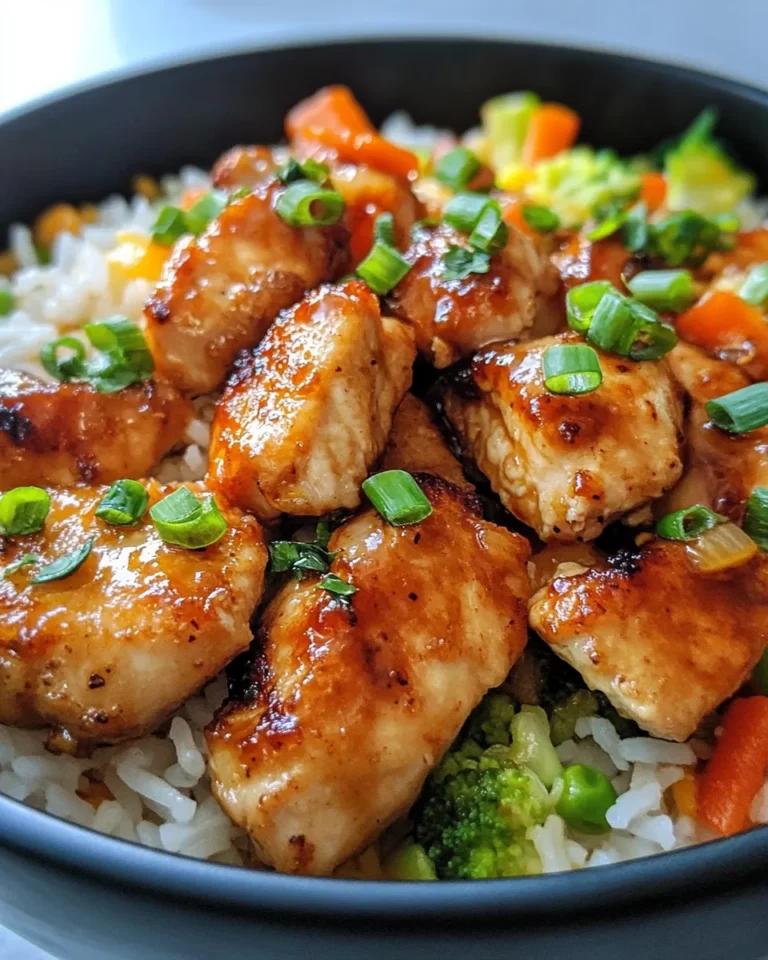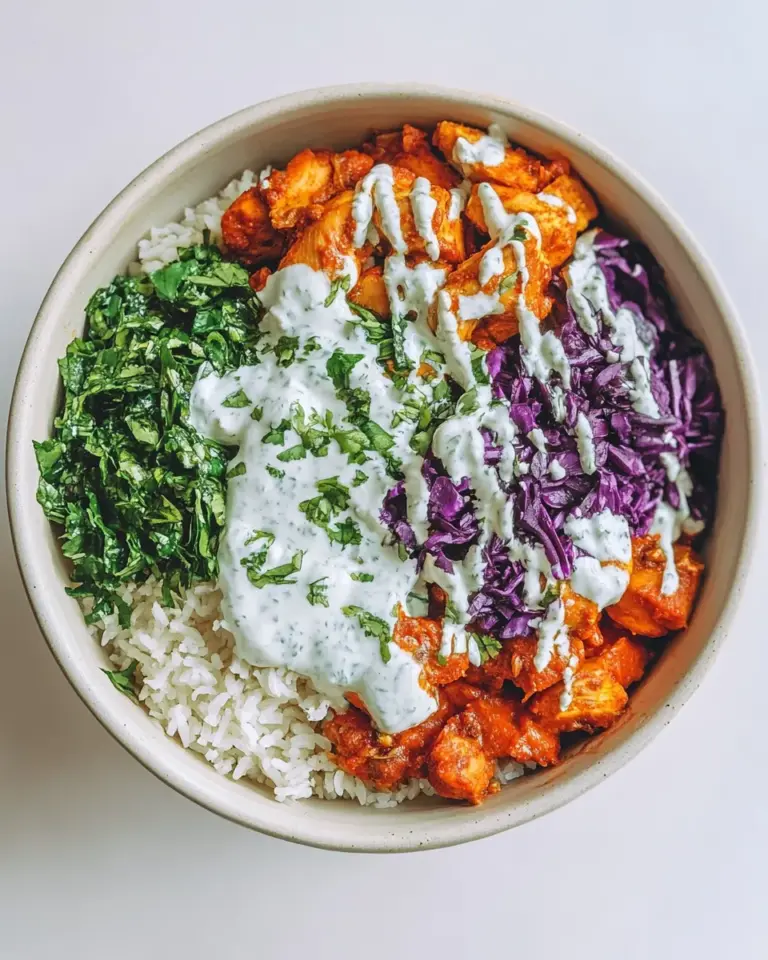
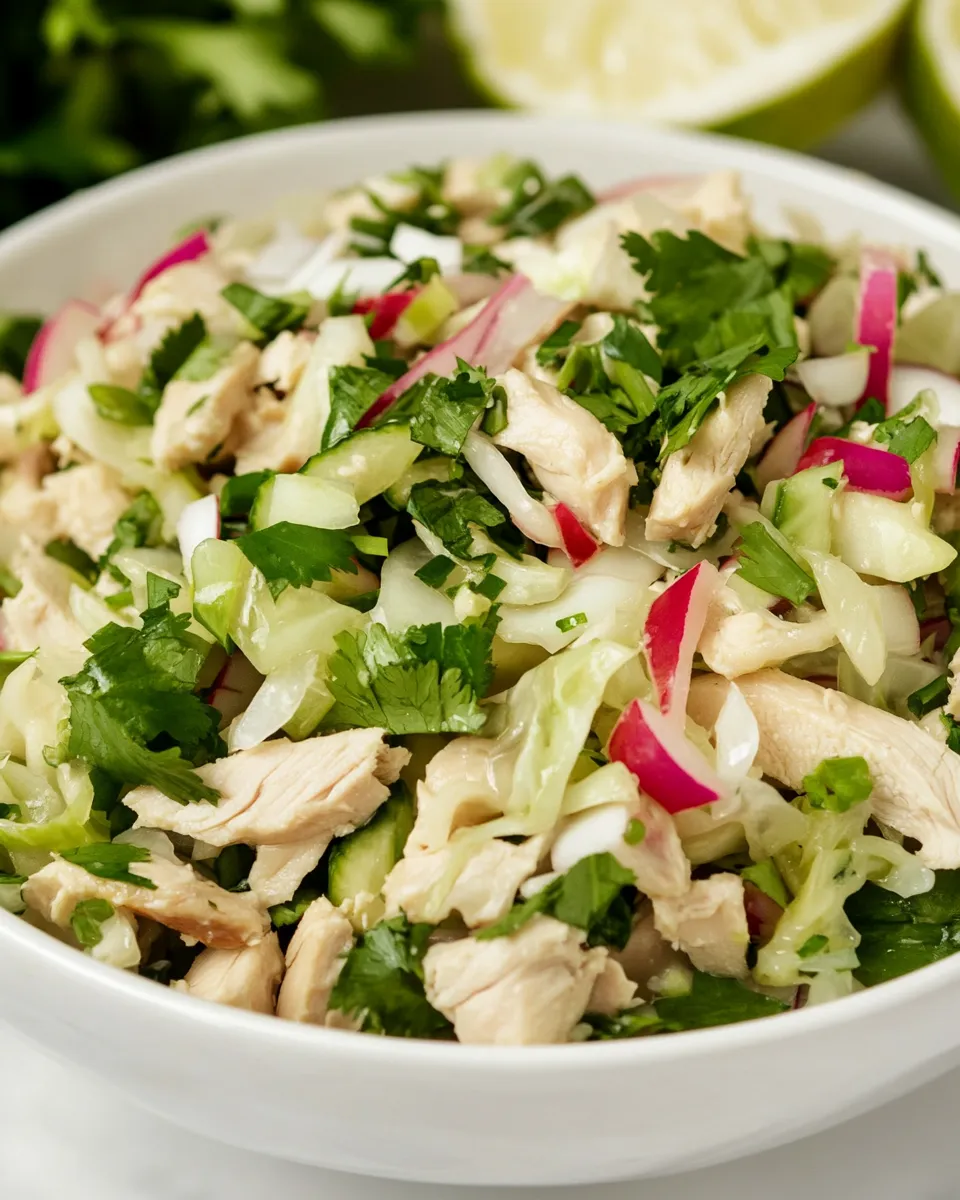
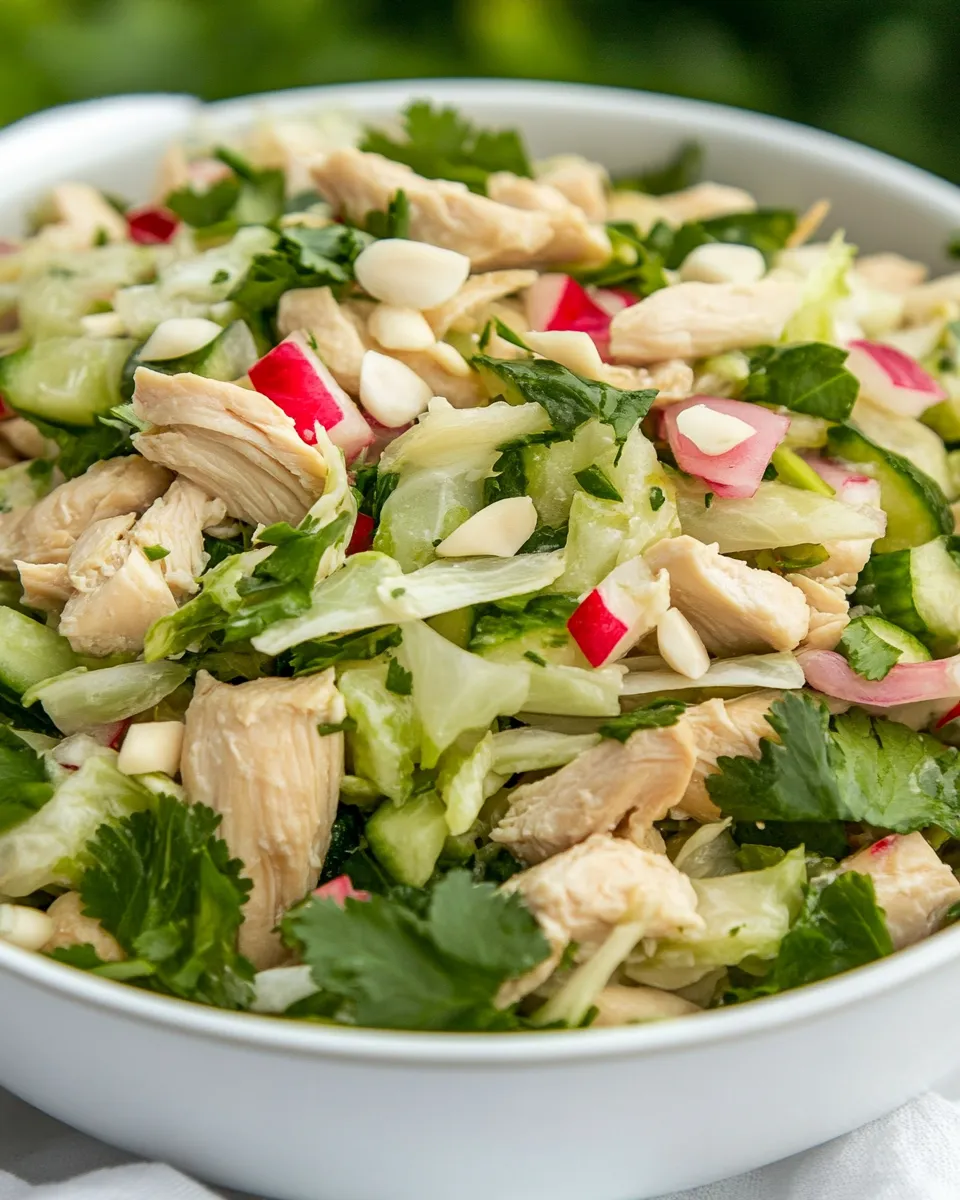
This salad is one of those weeknight go-tos for me: bright, crunchy, and impossibly easy to pull together. The dressing—salty, sweet, acidic, with a touch of heat—does the heavy lifting. It wakes up plain shredded chicken and sturdy cabbage and turns them into something lively and satisfying.
I keep the dressing components measured and ready so assembly takes minutes. You can use leftover roast chicken or quickly poach breasts while you shred the cabbage. The textures are key: crisp cabbage, tender chicken, and a dressing that clings without making everything soggy.
No fuss, no long ingredient lists. This post walks you through what to gather, how to make the dressing exactly as written, simple swaps, and tips to keep the salad fresh and flavorful. Read on for practical notes and answers to the questions readers always ask.
What You’ll Gather
Before you begin, line up the basics. Have a medium bowl ready for the dressing and a whisk or fork on hand. If you plan to shred chicken, a pair of forks or your hands work fine. A wide shallow bowl or a rimmed platter makes mixing the salad easier and helps keep the cabbage crisp.
Prep space matters. Keep the dressing bowl near your chopping station so you can taste and adjust quickly. If you want to chill the dressing, a sealed jar with a lid saves steps and stores neatly in the fridge.
Ingredients
- 1 tsp. Sriracha Sauce (or more, to taste) — adds controlled heat; start with the amount listed and increase if you like it spicier.
- 1/2 tsp. minced garlic — provides a savory backbone; use fresh for best flavor.
- 3 T Monkfruit sweetener, or sweetener of your choice — balances the acid and salt; swap with your preferred sweetener if needed.
- 3 T unseasoned rice vinegar (not sweetened) — gives gentle acidity without overpowering the lime.
- 3 T fresh lime juice (see notes) — brightens the dressing; use freshly squeezed for clean citrus flavor.
- 3 T fish sauce (see notes) — supplies umami and salt; essential for authentic savory depth.
- salt and fresh ground black pepper to taste — to finish and adjust seasoning.
The Method for Vietnamese Chicken Salad with Cabbage
- Measure into a medium bowl: 1 tsp Sriracha Sauce, 1/2 tsp minced garlic, 3 T Monkfruit sweetener, 3 T unseasoned rice vinegar, 3 T fresh lime juice, and 3 T fish sauce.
- Whisk the ingredients together vigorously until the Monkfruit sweetener is fully dissolved and the dressing is smooth.
- Taste the dressing and season with salt and fresh ground black pepper to taste.
- If you want more heat, add additional Sriracha a little at a time and whisk after each addition (the recipe lists 1 tsp to start).
- Transfer the dressing to a serving bowl or a sealed container; use immediately or refrigerate until ready to use.
Why It Works Every Time
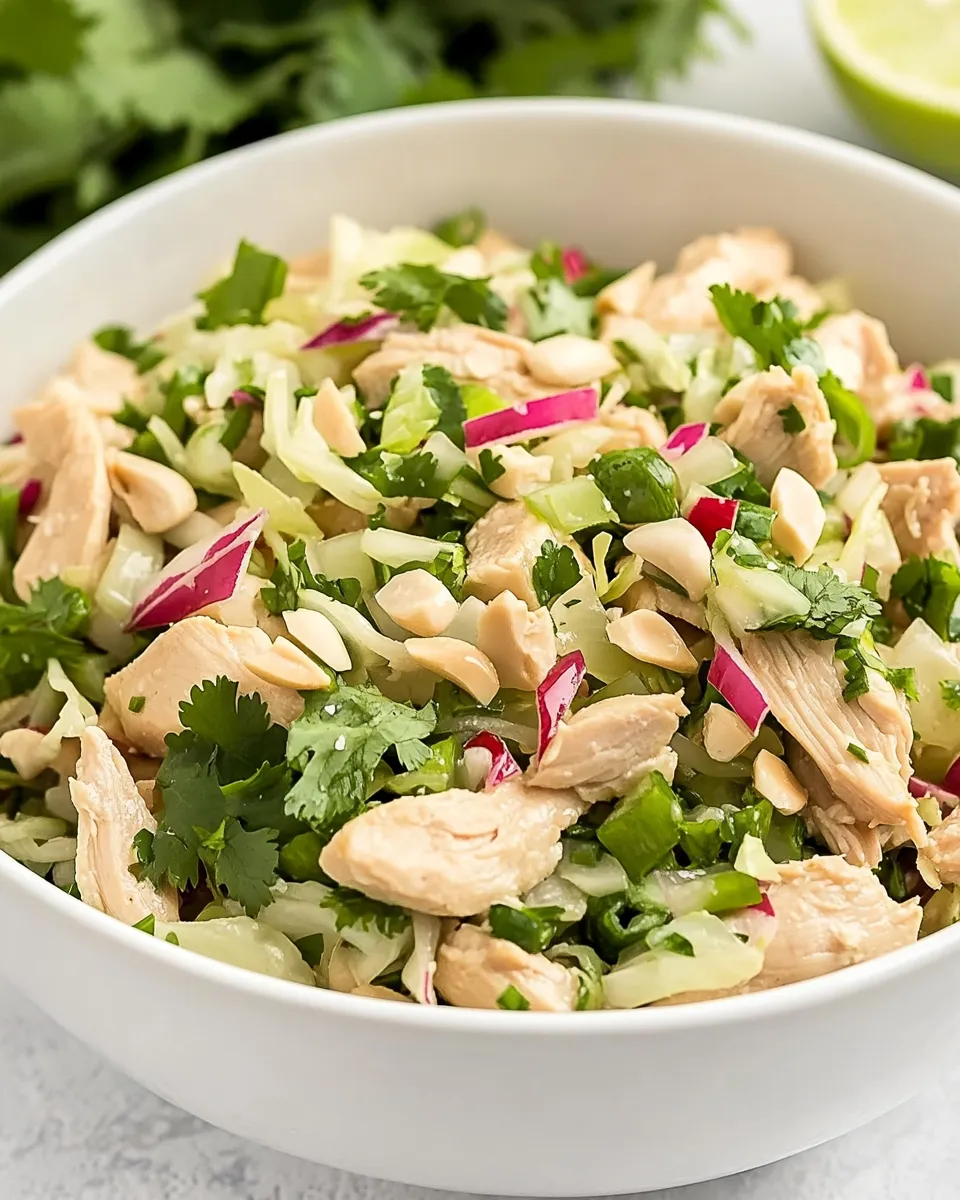
The balance here is deliberate. You have acid from both rice vinegar and lime juice, sweetness from Monkfruit, salt and umami from fish sauce, heat from Sriracha, and garlic for aromatic lift. Each element plays a clear role and none overpowers the others when you follow the amounts provided.
Whisking vigorously dissolves the sweetener and emulsifies the liquid components so the dressing coats cabbage and chicken instead of pooling at the bottom. The initial modest heat level lets you tailor spice to the table; add more Sriracha only after tasting.
Finally, the use of fish sauce is key. It reads salty on the palate but brings a savory depth that plain salt alone can’t replicate. Together with the acid and sweetener, it makes a dressing that’s lively on first bite and still gentle enough to marry with crunchy cabbage.
Quick Replacement Ideas
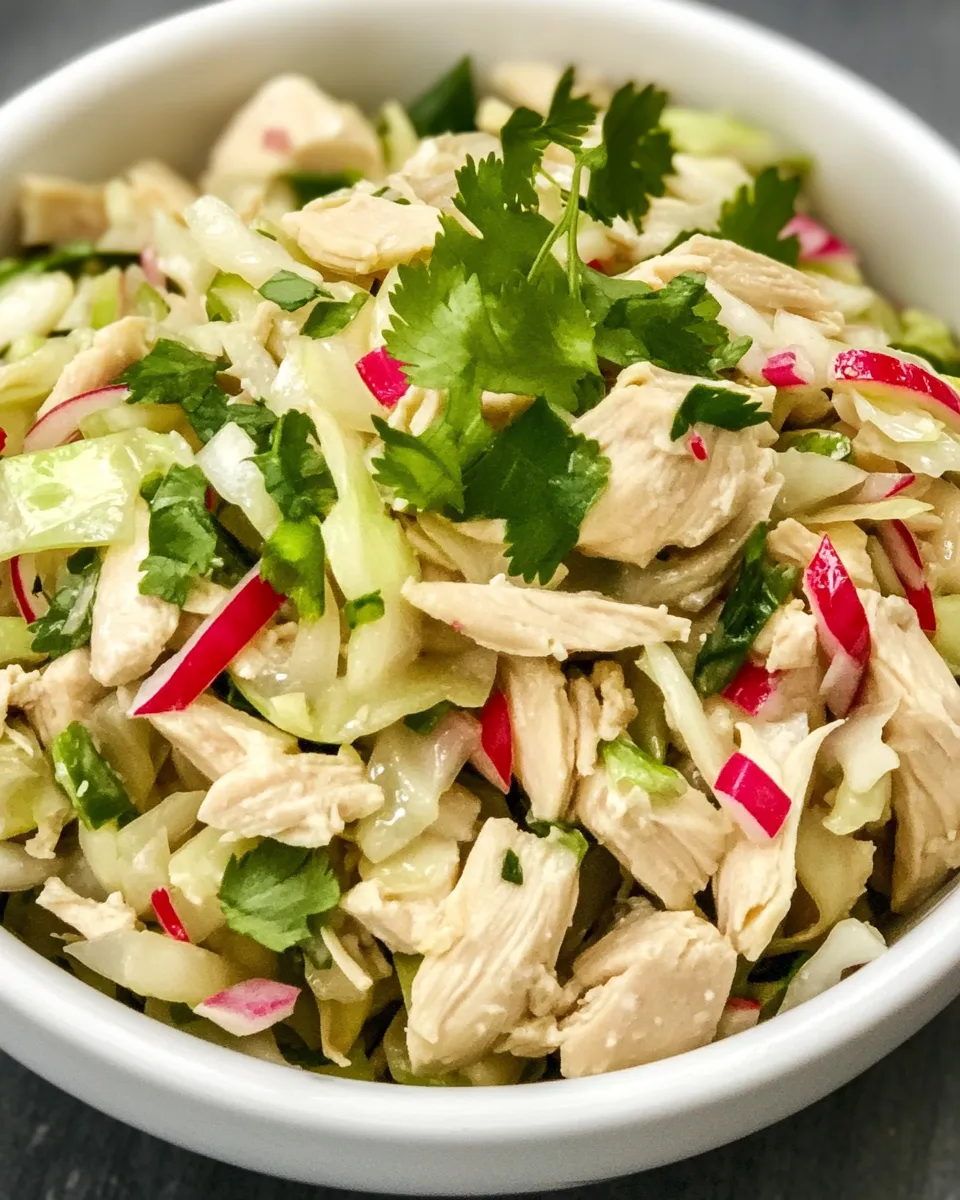
- Sriracha — substitute with another chili sauce or a pinch of chili flakes; add gradually and taste.
- Monkfruit sweetener — use an equal measure of another granular sweetener you prefer (adjust to taste).
- Rice vinegar — white wine vinegar can work if that’s what you have, though rice vinegar is milder.
- Fresh lime juice — lemon juice is a workable swap, but expect a slightly different citrus profile.
- Fish sauce — if avoiding anchovy-based condiments, consider a splash of soy sauce plus a pinch of sugar for a similar salty-umami note (see adaptation section for diet swaps).
Cook’s Kit
These tools will make prep quicker and cleanup easier.
- Medium mixing bowl — to whisk dressing and check seasoning.
- Whisk or fork — a whisk helps dissolve sweetener and emulsify the dressing.
- Measuring spoons and tablespoon — measure precisely to keep balance.
- Sealable jar or container — for storing dressing and giving it a quick shake before use.
- Sharp knife and cutting board — for shredding cabbage and trimming chicken.
Errors to Dodge
Too much salt is the usual pitfall. Because fish sauce is already salty, add any extra salt sparingly and taste as you go. If the dressing tastes flat, it usually needs more acid or sugar; add in small increments and whisk between additions.
Don’t skip the vigorous whisk. If the Monkfruit isn’t fully dissolved, the dressing can taste gritty. Also, avoid overdressing the salad. Toss gently and add dressing incrementally so the cabbage keeps its snap.
Finally, don’t make the dressing and let it sit unrefrigerated for hours. Fresh lime juice and garlic are best when handled properly; store the dressing in the fridge if you’re not using it right away.
Adaptations for Special Diets
Gluten-free: The base recipe is naturally gluten-free if your fish sauce and Sriracha are certified gluten-free. Always check labels.
Vegan: Replace fish sauce with a vegan alternative—look for commercially prepared vegan fish sauce or use low-sodium soy sauce plus a touch of seaweed (if you have it) to mimic the umami. Do not add new measurements beyond taste adjustments; add gradually and taste.
Sugar-free: Monkfruit is already a no-calorie sweetener. If you prefer a different sugar-free sweetener, substitute volume-for-volume but taste and adjust because sweetness intensity varies.
Recipe Notes & Chef’s Commentary
On lime juice: Fresh makes a noticeable difference. Bottled juice will work in a pinch but loses some of the bright citrus edge that lifts this dressing.
On fish sauce: If you’re new to fish sauce, start with the amount listed and be cautious with extra salt. The complexity it adds is worth the initial leap. If you must avoid it, use soy sauce and accept a different but still enjoyable profile.
Make-ahead: The dressing keeps well covered in the refrigerator for up to 5 days. If separation occurs, give it a quick whisk or shake in a jar and it’s ready to dress the salad again.
Leftovers & Meal Prep
Leftover dressed salad can become mushy, so if you’re prepping meals ahead, store components separately: dressing in a sealed container and cabbage (and other crunch elements) in an airtight container. Keep cooked chicken in its own compartment. Combine within an hour of eating for the best texture.
Storage guide
- Dressing: refrigerated, sealed — up to 5 days.
- Prepped cabbage: refrigerated, sealed — 2–3 days for best crunch.
- Cooked chicken: refrigerated, sealed — 3–4 days typically, depending on initial cook method and storage.
Your Top Questions
Q: Can I make the dressing without Monkfruit? A: Yes. Use your preferred sweetener in the same quantity and taste for balance. If it’s sweeter or less sweet than Monkfruit, adjust accordingly.
Q: Can I add herbs or vegetables to the salad? A: Absolutely. Fresh herbs like cilantro or mint pair beautifully, as do thinly sliced carrots or cucumber. Add them at assembly time so everything stays crisp.
Q: What’s the best chicken to use? A: Shredded rotisserie or leftover roast chicken are fastest. Poached chicken breast or thigh also works; shred or thinly slice before tossing.
Q: My dressing is too salty. How to fix? A: Add a little more acid (lime) or a touch more sweetener, whisk well, and taste. You can also dilute with a teaspoon or two of water while stirring to mellow the flavor.
The Last Word
This Vietnamese Chicken Salad with Cabbage sings because of its simple, balanced dressing. Follow the measurements and whisk thoroughly. Taste, then tweak—small adjustments go a long way. Keep the components fresh and separate when you’re meal prepping. Once you find your preferred heat and salt level, this becomes a reliably quick, bright, and satisfying meal.
Enjoy building from the base dressing. It’s versatile, forgiving, and a fast route to a weekday dinner that actually feels special.
Vietnamese Chicken Salad with Cabbage
Ingredients
Ingredients
- 1 tsp. Sriracha Sauce or more, to taste
- 1/2 tsp. minced garlic
- 3 T Monkfruit sweetener or sweetener of your choice
- 3 T unseasoned rice vinegar not sweetened
- 3 T fresh lime juice see notes
- 3 T fish sauce see notes
- salt and fresh ground black pepper to taste
Instructions
Instructions
- Measure into a medium bowl: 1 tsp Sriracha Sauce, 1/2 tsp minced garlic, 3 T Monkfruit sweetener, 3 T unseasoned rice vinegar, 3 T fresh lime juice, and 3 T fish sauce.
- Whisk the ingredients together vigorously until the Monkfruit sweetener is fully dissolved and the dressing is smooth.
- Taste the dressing and season with salt and fresh ground black pepper to taste.
- If you want more heat, add additional Sriracha a little at a time and whisk after each addition (the recipe lists 1 tsp to start).
- Transfer the dressing to a serving bowl or a sealed container; use immediately or refrigerate until ready to use.
Equipment
- Medium Bowl
- Whisk
- serving bowl or sealed container