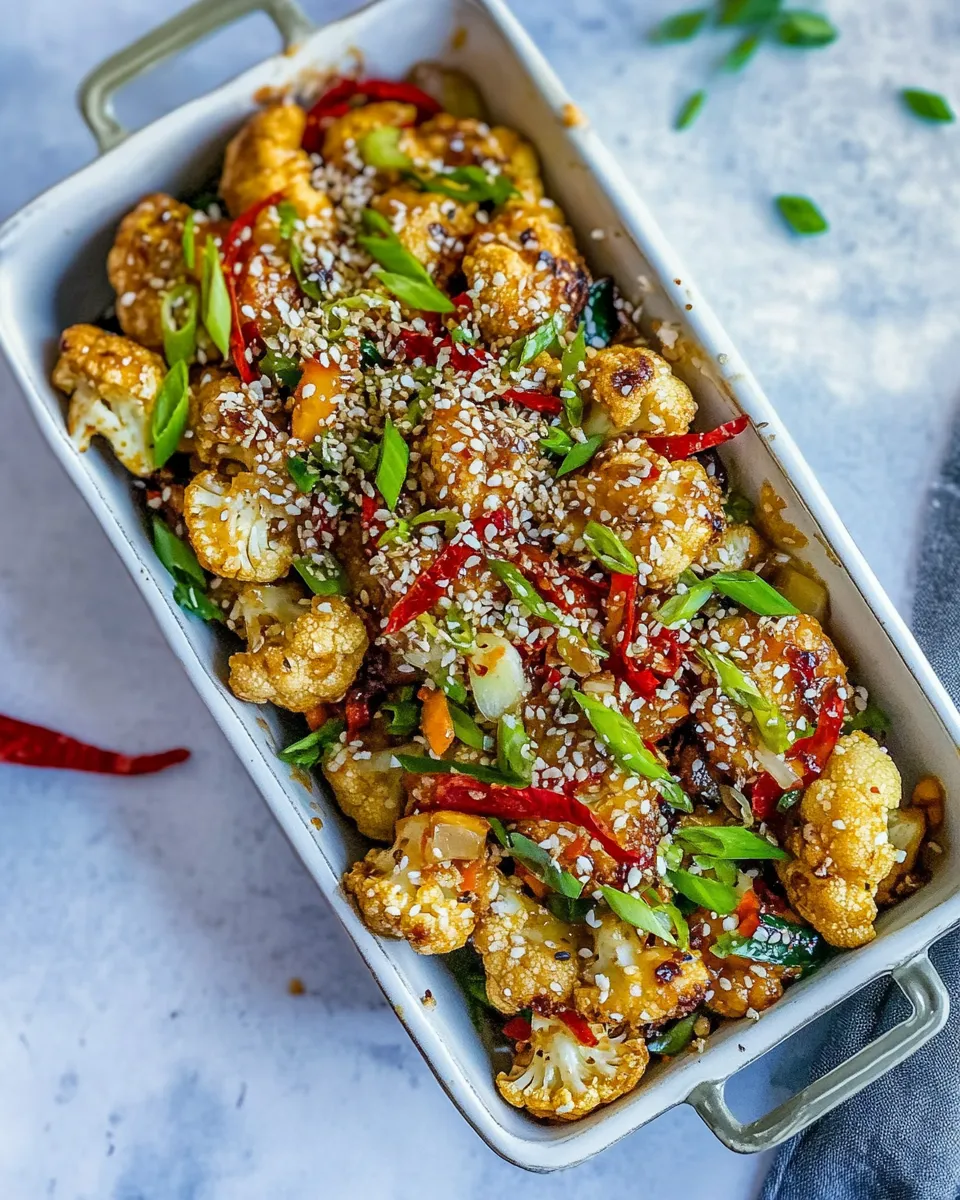
When I want the heat, crunch, and sweet-salty punch of classic Kung Pao but need it to be meatless and weeknight-ready, this Kung Pao Cauliflower is my go-to. It hits the same flavor notes — caramelized bits, a glossy, slightly sticky sauce, and that satisfyingly nutty crunch — while staying quick and forgiving. The recipe leans on pantry essentials and one short blanch, so you get bright green beans and perfectly browned cauliflower without babysitting the stove for an hour.
I cook this when I want a vegetable-forward main that still feels substantial. Canned chickpeas add body and a nice contrast to the florets, and dry roasted peanuts bring the texture that makes a Kung Pao dish sing. The sauce comes together in a small bowl and thickens quickly once it hits the pan, so prep everything first; once the wok is hot you’ll move fast.
This post walks you through everything — ingredients, exact steps, common mistakes, and smart tweaks for lower sodium or nut-free needs. Read the Essentials, then follow the Made Stepwise instructions. The outcome: a saucy, crunchy, colorful stir-fry that keeps well and reheats beautifully for lunch the next day.
The Essentials
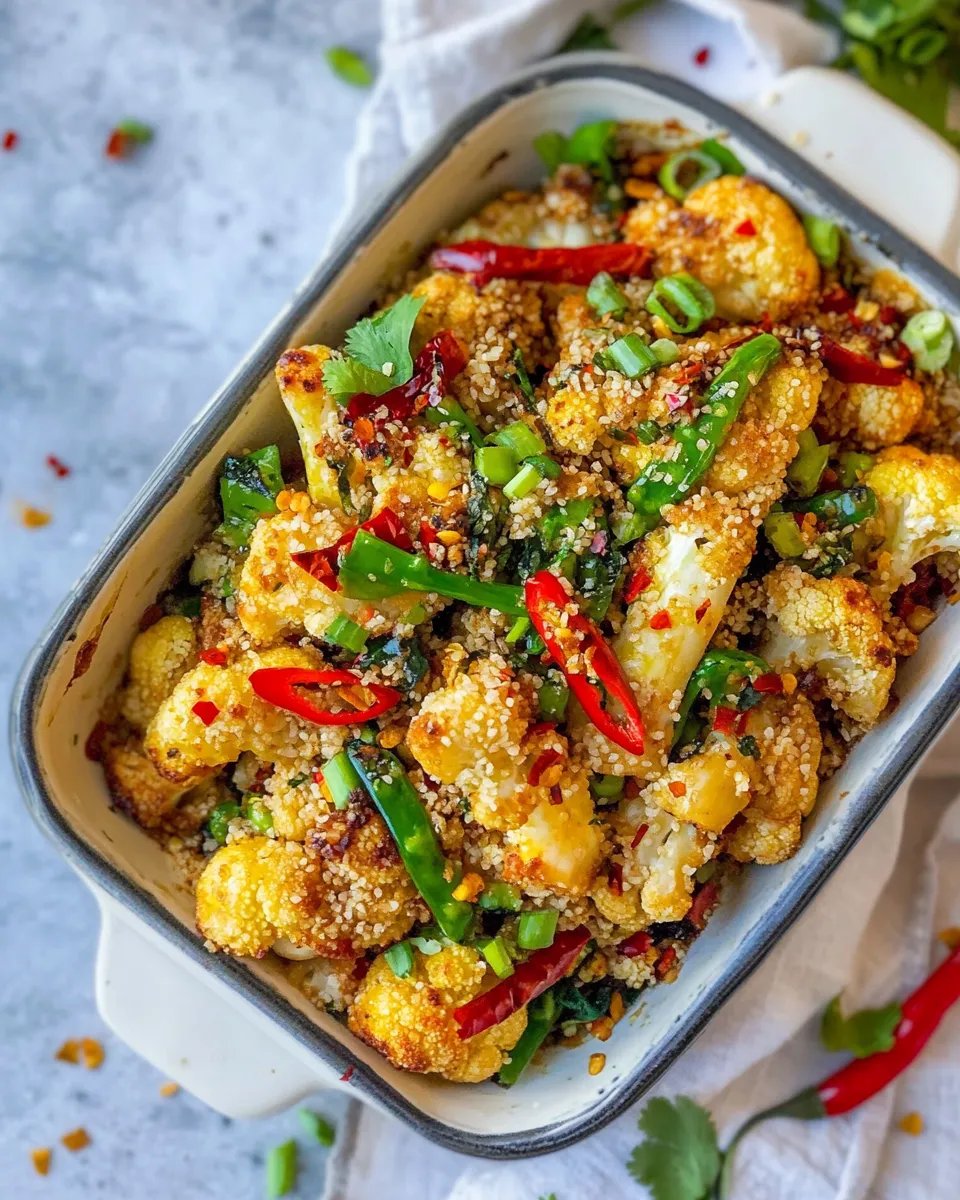
A quick list of what matters most before you start: prep the cauliflower into bite-sized florets so they brown evenly; have your sauce whisked smooth so the cornstarch doesn’t clump; and blanch the green beans to preserve color and texture. A roomy wok or large frying pan and medium-high heat are your friends here. Timing is short once everything hits the pan, so mise en place saves stress.
Ingredients
- 21 oz cauliflower — cut into bite-sized florets so they cook evenly and brown well.
- 5 oz green beans — trimmed and cut into 1-inch pieces for a crisp-tender contrast.
- 1 cup chickpeas (canned) — drained and rinsed; add protein and a softer bite.
- 1 onion — peeled and sliced; provides sweetness and depth.
- 2 cloves garlic — minced; sharp aromatics that bloom in hot oil.
- 2 Tbsp vegetable oil — neutral oil for high-heat searing without smoking flavors.
- 4 Tbsp soy sauce — use tamari to make it gluten-free; the main salty backbone of the sauce.
- 2 Tbsp cane sugar — or vegan honey; balances the soy and adds glossy caramelization.
- ½ cup vegetable broth — carries the sauce and helps deglaze the pan.
- 1 Tbsp rice vinegar — brightens the sauce with acid.
- 2 Tbsp corn starch — thickens the sauce so it clings to cauliflower.
- ½ tsp ginger powder — warming spice; use ground ginger for convenience.
- ⅓ cup dry roasted peanuts — crunchy finish; stir in at the end to retain texture.
- ⅛ tsp hot chili powder or flakes — provides heat; adjust to taste.
- Salt and Pepper — to taste; salt carefully since soy sauce is salty.
Kung Pao Cauliflower Made Stepwise
- Prepare ingredients: cut 21 oz cauliflower into bite-sized florets; trim and cut 5 oz green beans into 1-inch pieces; peel and slice 1 onion; mince 2 cloves garlic; drain and rinse 1 cup canned chickpeas; measure 1/3 cup dry roasted peanuts and set aside; have 2 Tbsp vegetable oil, 4 Tbsp soy sauce (or tamari), 2 Tbsp cane sugar (or vegan honey), ½ cup vegetable broth, 1 Tbsp rice vinegar, 2 Tbsp corn starch, ½ tsp ginger powder, ⅛ tsp hot chili powder or flakes, and salt and pepper ready.
- Make the sauce: in a small bowl whisk together 4 Tbsp soy sauce, 2 Tbsp cane sugar (or vegan honey), 1 Tbsp rice vinegar, ½ cup vegetable broth, 2 Tbsp corn starch, and ½ tsp ginger powder until the cornstarch is fully dissolved and the mixture is smooth.
- Blanch the green beans: bring a pot of water to a boil, add the cut green beans, and cook 3–4 minutes until tender-crisp; drain and set aside.
- Heat the pan: place a wok or large frying pan over medium heat and add 2 Tbsp vegetable oil.
- Cook aromatics: add the sliced onion, minced garlic, and ⅛ tsp hot chili powder (or flakes) to the hot oil and cook, stirring, 1–2 minutes until the onion begins to soften and the garlic is fragrant.
- Add cauliflower: add the cauliflower florets to the pan, season with salt and pepper to taste, and cook 5–6 minutes, stirring occasionally, until the cauliflower is browned in places and tender-crisp.
- Thicken with sauce: raise the heat to medium-high, stir the sauce briefly (the cornstarch may settle), pour the sauce into the pan, and cook 3–4 minutes, stirring frequently, until the sauce thickens and coats the cauliflower.
- Finish the dish: return the blanched green beans to the pan and add the drained chickpeas and 1/3 cup dry roasted peanuts; stir and cook 1–2 more minutes until everything is heated through and coated with sauce.
- Serve: taste and adjust salt and pepper as needed, then remove from heat and serve.
Why It Works Every Time
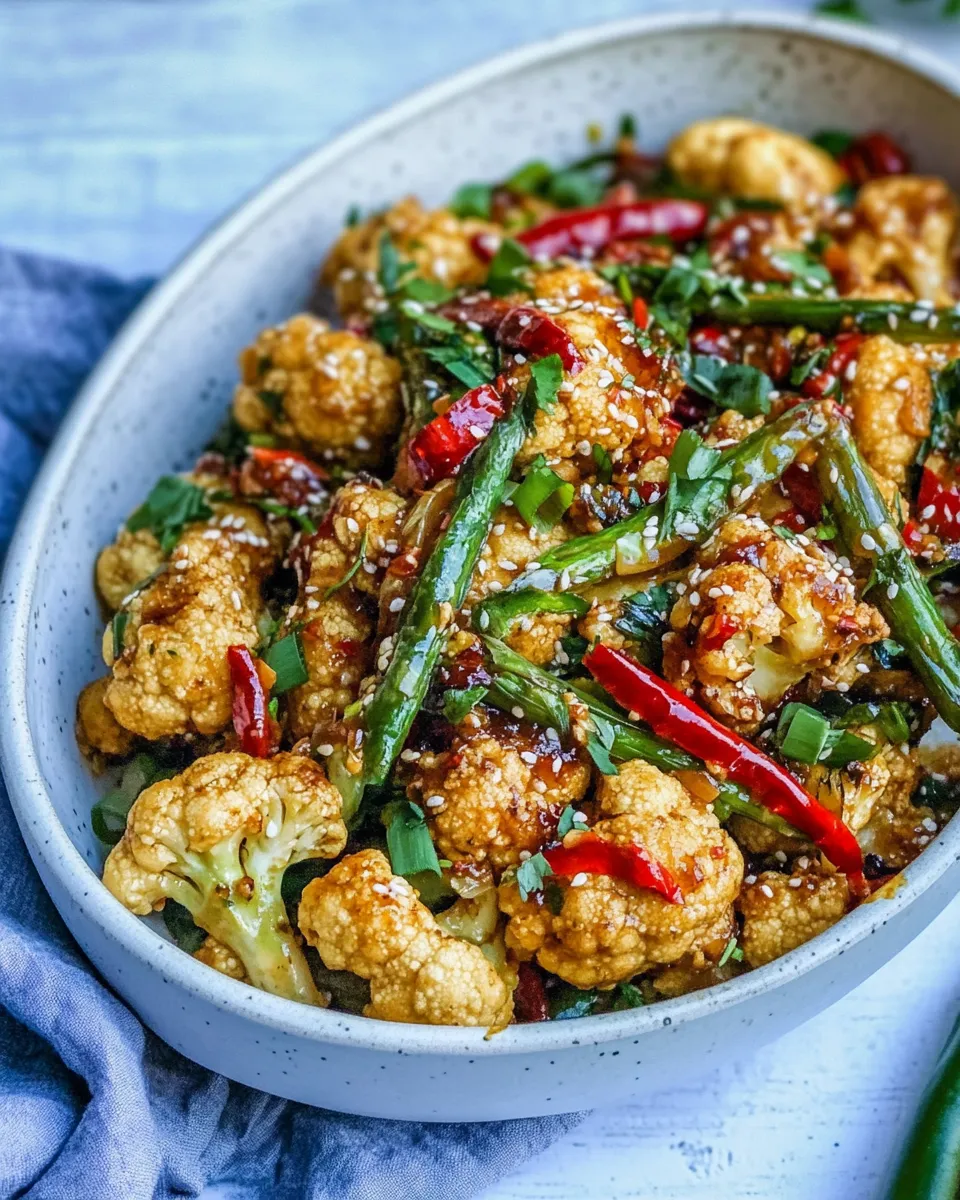
Every element has a clear job. Blanching the green beans first locks in color and shortens their time in the wok so they stay crisp-tender next to cauliflower that needs more direct heat to brown. Browning the florets develops caramelized sugars and a deeper flavor that a steamed cauliflower can’t match. The sauce is a simple balance: soy for umami and salt, cane sugar for sweetness and sheen, rice vinegar for brightness, and cornstarch to bind everything into a clingy glaze.
Using a small bowl to mix the sauce is important — you’re dissolving cornstarch before it hits hot liquid. If you add cornstarch dry to hot broth it will clump. A hot, oiled pan and medium-high heat ensure you get some char on the cauliflower rather than steaming it. Finally, tossing in dry roasted peanuts at the end keeps their crunch, creating the contrast that makes this dish feel complete.
Easy Ingredient Swaps
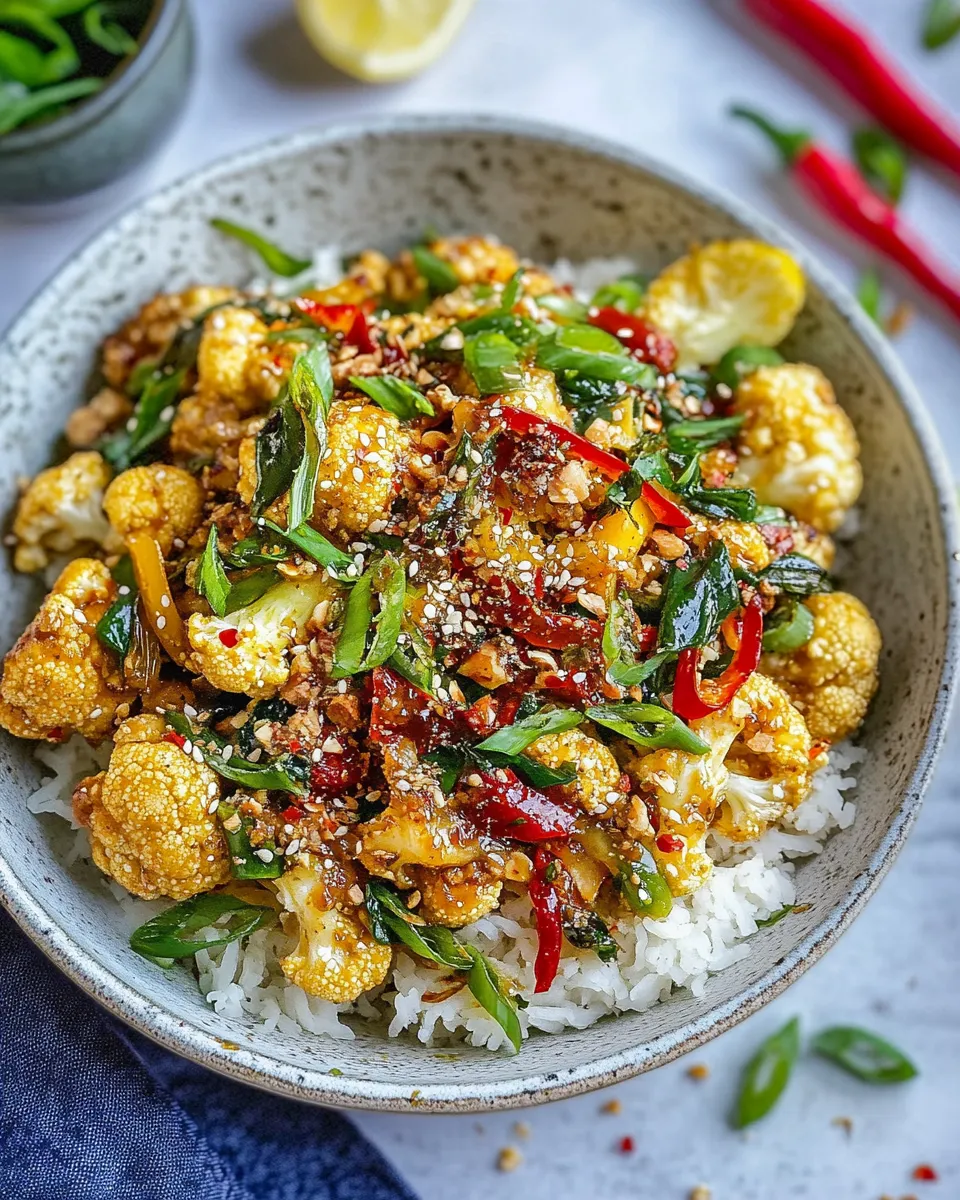
- Soy sauce → Tamari: listed in the ingredients as a gluten-free option; swap 1:1 for a gluten-free dish.
- Cane sugar → Vegan honey: the recipe notes this substitution; use the same amount (2 Tbsp) if you prefer the flavor or texture.
- Peanuts: if you need to avoid nuts, omit the ⅓ cup dry roasted peanuts — the dish will still be satisfying thanks to chickpeas; add extra chickpeas for bulk.
- Salt control: choose low-sodium soy sauce when watching sodium — keep the same volume but taste before adding extra salt.
Equipment at a Glance
- Wok or large frying pan — for high-heat searing and even stirring.
- Pot for blanching — to par-cook the green beans.
- Mixing bowl and whisk — to dissolve the cornstarch and emulsify the sauce.
- Knife and cutting board — for efficient prep of cauliflower, beans, and onion.
- Colander or strainer — to drain chickpeas and blanched beans.
- Spatula or wooden spoon — sturdy tool for stirring and scraping the pan.
Frequent Missteps to Avoid
Don’t skip dissolving the cornstarch. If it goes into the pan lumpy you’ll end up with a starchy mess instead of a glossy sauce. Stir the sauce in its bowl until completely smooth, and give it a quick stir again before pouring — corn starch settles fast.
Next, don’t overcrowd the pan. If you pile in too much cauliflower, it steams instead of browns. Cook in a single layer or use a very large pan so each piece makes contact with the hot surface. Also, resist the urge to add the peanuts too early — they go soft if warmed in the sauce for long. Toss them in at the end so they stay crunchy.
Nutrition-Minded Tweaks
If you want to lower oil or sodium, a few practical adjustments make a big difference. Use 1–1.5 Tbsp vegetable oil instead of 2 Tbsp and increase the heat a touch to maintain good browning. Swap the 4 Tbsp regular soy sauce for low-sodium soy or tamari; taste before salting. Reduce the cane sugar to 1 Tbsp if you prefer a less sweet profile — the sauce will still coat nicely but with less sweetness.
For more fiber and protein without changing the recipe structure, keep the chickpeas at 1 cup drained; they’re already listed and bulk up the dish. To reduce calories, increase the proportion of green beans to cauliflower and skip any extra garnish oils or sides.
Method to the Madness
Stage 1 — Prep
Everything in this recipe is fast once cooking starts. Cut the cauliflower into uniform florets, trim and chop the green beans, mince the garlic, and slice the onion. Whisk the sauce until smooth and set it near the stove.
Stage 2 — Blanch and Brown
Blanch green beans for color and a quick finish later. Then brown the aromatics and cauliflower in hot oil — this is where most of the flavor develops. Work with medium to medium-high heat and keep ingredients moving.
Stage 3 — Sauce and Finish
Raise the heat for the sauce to thicken quickly. Pour, stir, then return blanched beans, chickpeas, and peanuts. Heat through for a minute or two and you’re done.
Prep Ahead & Store
Prep-friendly steps: cut the cauliflower and trim the green beans up to a day ahead and store them in separate containers in the fridge. Whisk the sauce and keep it covered in the refrigerator for up to one day; give it a good stir before using since the cornstarch may settle.
Leftovers keep well. Store cooled leftovers in an airtight container in the fridge for up to 3–4 days. Reheat gently in a skillet over medium heat, adding a splash of water or vegetable broth if the sauce has thickened too much. Microwaving works, but the peanuts will lose crunch; if you want to preserve texture, add fresh or toasted peanuts after reheating.
Quick Q&A
Is this vegan? Yes — the recipe is vegan as written if you choose cane sugar (or vegan honey) and tamari instead of regular soy sauce if you want gluten-free. The ingredients list includes vegan-friendly options.
Can I make this nut-free? Yes. Omit the ⅓ cup dry roasted peanuts listed. You can increase the chickpeas slightly for extra bulk or sprinkle toasted seeds at the table if tolerated.
How spicy is it? The recipe uses ⅛ tsp hot chili powder or flakes. That’s a gentle heat; increase the chili to taste if you like it hotter. Add chili earlier for integrated heat or at the end for sharper, fresher spice.
Can I roast the cauliflower instead? You can, though the stepwise instructions provided call for pan-cooking to get quick browning. Roasting concentrates sweetness and gives more even char, but you’ll need to adjust the timing and finish everything together in the pan with the sauce.
The Last Word
This Kung Pao Cauliflower is a practical weeknight recipe that doesn’t skimp on texture or flavor. It’s built around straightforward techniques — blanch, brown, and thicken — that give reliable results every time. Once you’ve made it a couple of times you’ll know how to push it spicier, saltier, or crunchier to match your mood. It’s a flexible, pantry-friendly dish that proves vegetables can carry punchy, satisfying flavors without fuss.

Kung Pao Cauliflower
Ingredients
Ingredients
- 21 ozCauliflower
- 5 ozGreen beans
- 1 cupChickpeas canned
- 1 Onion
- 2 clovesGarlic
- 2 TbspVegetable oil
- 4 TbspSoy sauceuse tamari to make it gluten-free
- 2 TbspCane sugarorvegan honey
- 1/2 cupVegetable broth
- 1 TbspRice vinegar
- 2 TbspCorn starch
- 1/2 tspGinger powder
- 1/3 cupDry roasted peanuts
- 1/8 tspHot chili powder or flakes
- Salt and Pepper to taste
Instructions
Instructions
- Prepare ingredients: cut 21 oz cauliflower into bite-sized florets; trim and cut 5 oz green beans into 1-inch pieces; peel and slice 1 onion; mince 2 cloves garlic; drain and rinse 1 cup canned chickpeas; measure 1/3 cup dry roasted peanuts and set aside; have 2 Tbsp vegetable oil, 4 Tbsp soy sauce (or tamari), 2 Tbsp cane sugar (or vegan honey), ½ cup vegetable broth, 1 Tbsp rice vinegar, 2 Tbsp corn starch, ½ tsp ginger powder, ⅛ tsp hot chili powder or flakes, and salt and pepper ready.
- Make the sauce: in a small bowl whisk together 4 Tbsp soy sauce, 2 Tbsp cane sugar (or vegan honey), 1 Tbsp rice vinegar, ½ cup vegetable broth, 2 Tbsp corn starch, and ½ tsp ginger powder until the cornstarch is fully dissolved and the mixture is smooth.
- Blanch the green beans: bring a pot of water to a boil, add the cut green beans, and cook 3–4 minutes until tender-crisp; drain and set aside.
- Heat the pan: place a wok or large frying pan over medium heat and add 2 Tbsp vegetable oil.
- Cook aromatics: add the sliced onion, minced garlic, and ⅛ tsp hot chili powder (or flakes) to the hot oil and cook, stirring, 1–2 minutes until the onion begins to soften and the garlic is fragrant.
- Add cauliflower: add the cauliflower florets to the pan, season with salt and pepper to taste, and cook 5–6 minutes, stirring occasionally, until the cauliflower is browned in places and tender-crisp.
- Thicken with sauce: raise the heat to medium-high, stir the sauce briefly (the cornstarch may settle), pour the sauce into the pan, and cook 3–4 minutes, stirring frequently, until the sauce thickens and coats the cauliflower.
- Finish the dish: return the blanched green beans to the pan and add the drained chickpeas and 1/3 cup dry roasted peanuts; stir and cook 1–2 more minutes until everything is heated through and coated with sauce.
- Serve: taste and adjust salt and pepper as needed, then remove from heat and serve.
Equipment
- 1Wok